Alignment Summit Chats: Technology & Politics with Keith Rabois (Founders Fund)
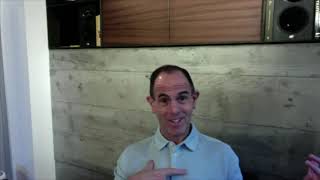
Keith Rabois breaks down how the 2020 election's three possible outcomes would reshape tech funding, capital gains taxes, and the venture ecosystem. He flags California's fiscal crisis, the K-shaped recovery's hit to founders, and why IPO timing matters in uncertain quarters ahead.
Chapters
And I thought what we would do today is just talk about all the little nooks and crannies around this major event coming up and how it would impact, you know, Founders, smaller investors, larger VCS, growth investors, and, and various types of LPs in the ecosystem, you know, let's say, over the next four months and then 2021, that's kind of the the thing we'd be looking at, okay?
Absolutely.
And so I initially started, you know, taking notes with this Keith and I was thinking, okay, well what are the possible political scenarios we could be entering? And I realized that there's a larger one in reading some of the research from the financial markets and the larger banks is that the immediate focus is not necessarily on what the going forward scenarios are, but actually Will the next month and next few months be orderly in manner? Do you agree with that?
Well, I think clarity is important. I think the worst would be a condition of complete uncertainty of who's won an election. I think the world can evolve around either scenario, but uncertainty creates volatility, variability, unpredictability. Generally, those are not friends of financial investors. That said, you make a lot of money during times of volatility. So either day traders on Robinhood or in Europe and trade republic absolutely will make a lot of money trading very actively during volatile time. If someone has a hypothesis that's both correct and a little bit contrarian, can massively win a fair amount of money during those times. But generally, it's probably not good for society. So I think either scenario, either a clear Biden win or clear Trump win would be more useful in some ways, leading to predictability. Same thing is true of the Senate. If the Senate outcome is more clear, even with the presidential outcome more debate, it allows for clarity around policy changes, how radical policy changes are we likely to see, etc.
Got it. And then after the election, let's just assume the results are clearer rather than murkier. Do we expect volatility during transition?
I don't think so. I think it's pretty obvious what another Trump administration would mean, and I think it's pretty clear what a Biden administration with a Democratic Senate would mean, and probably pretty clear what a Biden victory with a Republican majority means, which is very limited policy changes, at least domestically.
Got it. And so let's talk about those potential scenarios. And the way I laid them out are there's a blue wave scenario, there's a status quo scenario, and then there is a Biden administration with a split Congress scenario, correct? In those situations, like how has the polling from 2016 versus 2020 changed? I mean, I've been reading a lot about that the pollsters have changed their weights and that there's been less volatility in the polls. Would you agree with those conjectures?
Not necessarily. So if you look at the polls as of today, and the best source, just in one quick split second, getting up to speed is real clear politics. Just collects everything in one place. You don't have to kind of hunt around or figure some crazy Twitter with. But in any event, Trump is actually running ahead of 2016 by about 70 BIPS in the way they're defined as ballot ground states, which is somewhat underreported, especially if you follow like media on Twitter. That said, in 2016, effectively two-thirds of the undecideds all broke in Trump's favor in the last, call it 48, 72 hours. That's less likely to happen. This time, typically undecided to break against the incumbent, not for the incumbent. So I think it depends on which framework you want to use. In some ways, he's better off being less in 2016, which will sound very weird to people who just follow Twitter. But in other ways, I think it's significantly less likely that all of the undecideds who are already very familiar with who President Trump is and is not suddenly decide to break massively in his favor. But if you look at the last couple days, things are definitely improving for the president's re-election prospects in those states, Florida, North Carolina, Arizona, Pennsylvania are clearly getting closer. I don't know if you can close the gap in Pennsylvania, Arizona, probably does win Florida, probably does win Ohio, North Carolina and Georgia are very, very close and hard to tell, but absolutely have to win them to have any shot at the presidency.
And as we think through those scenarios, again, blue wave kind of status quo and a Biden plus a split Congress, how would you rank those in terms of percentage likelihood looking at a site like RCP and what you've been reading?
There's a good study today, good poll by Rasmussen, that basically shows that the biggest delta for Trump and his biggest problem is he's losing 4% of Republican registered voters. And he cannot win re-election with 4% of registered Republicans abandoning him. If he can clearly communicate the Trump re-election, message, he can split the 4% down to two pretty easily. These are real Republicans, they're registered Republicans, they tend to be Republicans. Some fraction of them will never vote for Trump, but 4% is just way too high and it's a function of his campaign and his incompetence. Close strongly on message, which has sometimes been challenging for him. He can definitely narrow that, but Raskin says the election would be 50-50 right now if those Republicans were not abandoned him. So he doesn't have to persuade independents, doesn't have to persuade Democrats, he just needs to get Republicans to vote in the key states. And we'll see, but that's not any conceivable task at all.
Yeah, I guess the way you frame it there, it's pretty narrow and geographically focused. Yeah, I mean, the reason he is.
Running on a negative drag coefficient in Texas, North Carolina, Ohio, well, Ohio is actually not negative versus last year's polls at this time, but he is definitely down four to six points at least from where he is at a typical Republican state. Partially because of people's frustration with him for many reasons, partially because the COVID drag on his performance is absolutely real in the associated economic disaster. But fundamentally, many of those hurters may come back. There's this other trend that's tricky to assess of the registrations, the early registrations, the late registrations in these states. are not pro-Democrat, which is very counterintuitive. There's been a pretty significant surge in registrations in Florida and Pennsylvania particularly, and they're heavily weighted towards Republicans, which defies conventional wisdom. Let's see what that actually means in practice. But going back to, and this is an important part of the answer to your polling question, the hardest part of polling is every pollster has an assumption about what fraction of the electorate is Republican, Democratic, And when you see these divergent polls, if you just spend 30 seconds double clicking on them, it's almost always the difference is they used a different weighting of what fraction of the electorate is naturally Republican, what fraction is naturally Democrat, and what fraction is still independent. That's really difficult to get right. And so if you see the outliers like Trafalgar, which is a pro-Trump kind of poll, typically runs three, four, five points higher in their polls. It's because they just assume there's more Republicans out there at the end of the day. And then there's some survey methodology result differences. Do you use telephone calls, live online surveys and stuff like that? At the end of the day, it comes down to a preexisting belief about how many Republicans there are in a particular region. And that's easy to screw up, actually. Especially when you have weird scenarios where a lot of Republicans, lifelong Republicans, don't.
Support the president or vice versa. Got it. And this is kind of a segue to where I wanted to go with this. So if we assume for the sake of this next part of the discussion, like a Biden administration with a split Congress and you were mentioning limited policy, kind of two areas I want to explore on the economic relief side and then the pandemic and health response side, because I think that'll tie into what we talk about for the investors in the Zoomcast today. So if that is the case, when do you think that pandemic relief bill will be signed? And what would the shape of it look like? 'Cause it seems like they're trillions of dollars apart. I mean, I haven't followed the absolute latest, but it also seems like we're potentially more in a rebound than a true recovery. And so I'd love to get your views on the timing of that and what the impact could be.
Yeah, I mean, obviously right now there's this, multi-party debate about whether to sign, you know, whether to construct a bill right now. And I suspect the Senate Republicans are seeing polls that are leading them to not want to get a deal done unless it's on their terms. Like I saw a quote this morning that they really believe that it's more important to confirm Barrett to the Supreme Court than to pass, A bill and put aside the merits just for a second, just the politics of it. I suspect they are seeing real data that supports that view. They're not insane. They're not irrational. The Senate is up for grabs. If anything, the Senate Republicans are a little bit on the defensive right now and are more likely to lose the majority than to win it, although not inconceivable they prevail. They are probably more attuned to polls than ever before at the moment. and the fact that they don't want to give in to the Democratic policies demands suggests they have a little bit more confidence. So because the economics, they can split the difference. I mean, at the end of the day, you can just split the difference on these trillions of dollars and have a deal quite quickly. But I think it means the Democrats are obviously want to achieve some other benefits, which is why Pelosi keeps vetoing stuff. And the Republicans, I think, are seeing polls that are suggesting their voters do not want an at all costs deal with Democrats.
And so if that were the case, we could see this potentially be legislated in January, February timeframe at the earliest?
Possibly. I mean, I think the reality is once the Senate's stabilized, and you won't really know until December, because it's going to be at least a runoff in Georgia. So it's, but once it's stabilized, then I think everybody's incentives to cut a deal, you know, are pretty clear. Right now, because in Trump's, the president's views versus the Senate Republicans views may be slightly different, the president may actually, you know, not even really care anymore because I don't know if he signs a deal now, if the economic benefits start kicking in in a way that it'll be obvious before the election. But once the election passes, there'll be some deal because really the benefits of holding out really don't accrue to any of the obvious three party constituents. So I expect you wind up with a deal if you don't get one today.
And that's kind of where I was going with this around the timing because it already feels like a month or two late. Like how long can the economy run? And especially like if you think of this as more of a K-shaped recovery with half accumulating and half being sort of on the losing end of it, How long can the bottom half of that K withstand what's going on economically?
Well, I think that's a superficial way to look at it because fundamentally, it's by region right now. Like you can go to many states in the past with an unemployment rate of 4%. Take Georgia, 4.3%. California, 16%, but that's because of government policy.
Because of lockdown, right?
The governor and the various mayors here, are just incredibly conservative and as a result, lots of people are unemployed. But you can go to lots of states where the unemployment rate is high vis-a-vis where it was in 2019. It's not high by historical standards. And so to some extent, and that's what's somewhat motivating Republicans to hold out is, it's like, look, if you have stupid policies in California, we're not gonna subsidize that and take money from people in Georgia or Iowa or wherever. So I think that's part of the debate. is some of this is self-inflicted. California really has effectively shut down the economy much more aggressively than anywhere in America, even NYC in New York. You can do various versions of apples, apples to apples, apples to compare, and they're not in California's favor. So that's part of the debate. The other issue is eventually inflation kicks in. So the government can do whatever it wants. and giving money to people, once inflation starts kicking up, it actually loses control of this as a lever. And I actually suspect that there's more inflation going on than people are realizing. But once it becomes stark, like once a traditional government index of inflation starts going up, the government, A, the debt load, it becomes very meaningful because of course, it's the amount of debt times the interest rate is what you pay. So the debt load becomes very stark, almost impossible to fund. And then B, Inflation is kind of this spiral where you just can't print money anymore. And so you have to actually start cutting services and cutting things. And a lot of very smart people, Peter Thiel, Stan Druckenmiller, all believe that we already have inflation and it's just being masked by a variety of things. I'm not savvy enough to figure out whether they're right or wrong. Typically, if Peter and Stan agree on something, associated with the economy, it's probably at 99% right.
Yeah, well, you said two interesting things in there, and I'm glad you made the geo point to like drill into the K-shaped sort of term. Because I think I noticed like at the beginning of the pandemic when California shut down, there were something like, I don't know the exact number, but somewhere between four to seven million people unemployed just in the state of California. I would imagine it's at the lower end of that bound now. But it's kind of what you're saying to clarify that A lot of this is not necessarily like one side benefiting, one side losing, but it's a lot of it's geographical in nature and potentially concentrated in a few states.
I think it's absolutely the case that this is partially partisan, because obviously who represents who is moderately correlated or highly correlated with GIA. But fundamentally, the differences are very stark. We see this in our data in portfolio companies. I have several portfolio companies. that serve long-tail merchants. And so we get quite interesting data about what's going on on a per city basis, year to year, region to region, city to city. Some of this data is public, like for example, Square's payment volume. Square serves long-tail merchants all across the United States, particularly offline, not online. So put aside the SaaS revenue or Square Cash stuff. Just fundamentally, look at Square's gross merchant volume, and you can see what's going on in the economy. OpenTable's been publishing their data publicly. Several hedge funds and investment banks publish credit card data. But if you cut the data, you can absolutely see the Delta is tremendous. So last time I looked at the data on OpenTable, for example, year to year in San Francisco, we're down 83% in booking reservations. New York's about 82%, I think, last time I looked. But something like Denver, it's down 25%. So radically different. There's also some data about like percentage of people in offices. So for example, in Dallas, 40% of all workers are back in their office, which for those of us who live in San Francisco seems like unfathomable actually. I can't even conceive of 40% of my friends being in their office right now.
Maybe we should move into the California part and then come back to the national health response, because I actually wanted to go here. I'd just be curious since a lot of the people who are listening right now, Keith, are either direct investors or limited partner investors where a lot of their capital is being deployed. historically in California, increasingly in New York, what's the shakeout gonna be in those two states? What do people think about the next 10 years? 'Cause it seems like, at least in California, it seems set up for a more prolonged, I don't know what the word is, but pain.
Yeah, I mean, California's bankrupt. The only people who don't know it are the politicians in Sacramento. When they actually reconcile their numbers at the end of the year, in the first quarter next year, They're going to be bankrupt and debt states can't run deficits. And so this is a real, real fundamental problem and it's just getting worse. The longer California shuts down, the more California has rolling blackouts and fires and stuff, the more people will just move away. And that just reduces revenue, let alone the online, let alone sort of the sales tax revenue, just income tax. And so California is out of money. Typically, Typically what happens when a state entity is out of money that can't use debt, they have to go to austerity. But the politics of progressive California are not going to allow for austerity politics here unless there's an absolute crisis. In addition, you have these sort of commitments to pensions and things that are extraordinarily difficult to rearrange legally, in which account for a reasonable amount of California's budget. So fundamentally, this state's in deep, deep, deep trouble. There's almost no easy, there's no, it's always a thought, it's always impossible to figure out a solution because the progressive politics just will not allow cutting budgets and services and the revenue is just not there. And insofar as you try to raise revenue by raising taxes, the people who are most likely to leave are the people who pay the taxes already. And California is a very concentrated budget. Certainly some 1% of the tax payers in California are funding at least 44% of the entire budget. And the governor knows this. I mean, actually, I've learned this stat originally four years ago talking to Gavin directly. like one of the ones that actually shared the numbers with me. So he's not, you know, not blissfully unaware of how concentrated his budget is from a very small number of people. But those are fairly mobile people. And what COVID has taught us, and I include myself in this, because I'm probably will move outside California, is the handcuffs were more psychological about moving outside California than practical. In fact, many, many people thought they had to be here, Bay Area, California, Bay Area, California, concentrically, and then have started to realize, well, maybe that's not true. And then also a lot of people on a temporary basis started to move outside California, during COVID and quarantine, and they realized, oh my God, there's so many better places to live. Like, I get a backyard, I have access to this or that, I don't have traffic. And they get addicted to it and they're basically concluding, I don't want to go back. And so all of this is combining to create a massive crisis for California. New York's a little bit different. First of all, the governor there is more aware, even more aware than Gavin about the tax sensitivity. And he actually, quote, was publicly quoted as there's 500 taxpayers that pay for a reasonable fraction, literally 500. that pay for a reasonable fraction of the entire New York budget. And it's like they're the most mobile people on the planet. So I am not allowing anybody to raise taxes on them. California and New York have already very high tax rates. California's been flirting with raising them again, which would be extremely counterproductive. But I don't think New York will try to raise taxes. Hedge fund people, wealthy financiers have always had more mobility, whether it's to Connecticut or to Florida. So that's not new. The tech folks recognizing that they can move. whether they're entrepreneurs or VCs, is more a novel, novel concept.
Let's talk about those kind of founders, investors. For folks who may kind of be more optimistic and have a long-term view and say they're long in California, what are the details that they're missing or potentially not considering in making those kind of statements?
Well, I think that we had a network effect running in California that was partially real and partially mental. And the mental part, psychological part, has completely been eviscerated. And the longer quarantine and lockdowns continue, the more the changes become permanent. Like, I don't think you change human behavior, you know, in a month. Three months, maybe, six months, we're going on nine months. In California, it's probably going to be at least a year, meaning first quarter next year is almost surely going to be subject to significant restrictions. So you have humans living away for a year and they're going to realize that at least half the asserted benefits of California are just false. And then the more people do it, of course, it's recursive, the more other people leave, the less reason to be a magnet here. I mean, we've looked at our portfolio of investments over the last called two funds. And in the last two funds, the most important companies, 50% are outside, well, more than 50% are outside the Bay Area and an increasing percentage close to 50% is outside California. That maybe we're unusual in that regard or, you know, we got fortunate in other geos or we're more anti-California, maybe, but in any event, it's sharp because that's probably up from, I haven't looked at the three funds ago numbers, but that's probably up from, Carp 10 and 15%.
But you had tweeted maybe a month or two ago that a number of your own, in your own portfolio, maybe Angel or Founder Fund portfolio, had been maybe keeping their HQ here, but also now distributing more of the workforce across the country.
Yeah.
Can you talk a little bit about that?
That was happening before COVID For other reasons, housing costs, scarcity of talent, et cetera. People were interested in alternatives. One of the better alternatives is something that Squares Cash App had pioneered, which is they basically have centers of excellence all around the globe. So you have to be in an office and you have to be concentrated with people who practice the same craft you do. So all engineers are co-located, all designers are co-located, all marketing people are co-located. But they have their engineering team, let's say in Australia, and their designers in New York, and et cetera. So I think that model of like a hub and spoke sort of model can be very effective.
Going back to the pandemic stimulus and whenever that happens, how is that gonna line up against, and again, in the scenario of a Biden administration and a split Congress, what happens in terms of the national COVID response? Or will it still be kind of more of a state by state play?
It's a good question because in some ways it's obviously easy to critique the current administration on COVID. some of it fairly, some of it unfairly, but clearly not a stellar performance. It's not totally obvious if you listen to Biden and his advisors, what exactly he would do differently. They're pretty vague stuff. I mean, yeah, they would stop the stupid, I mean, to some extent, yes, they would stop a lot of stupidity and a lot of noise and chaos. But when you actually ask them what they would do differently, it's not really clear at the margin. I mean, they flirted with this national mask mandate, And then they realized it's probably unconstitutional to do that. So they kind of walked that back. They might be a little bit more coordination, whatever that means. But in practice, it's not clear that the Democrats have an explicitly different policy. They're certainly not going to roll out a national tracing policy, even if the federal government could. I don't think that's a Biden-esque thing to do. So it'd be interesting to isolate exactly other than removing the sounded fury and distractions, which can be a healthy thing, truthfully. Fundamentally, at a policy level, at a substantive level, it's not totally clear what they would be doing differently. So, plus or minus, you may get better results at the margin, but- We'll.
Still be in a world where states largely in their counties are deciding.
What.
Those local policies are.
I mean, there's some things the federal government, FDA definitely has preemptive authority. Like, FDA is actually the classic example of legal preemption. So, things within the FDA's mandate, have been preempted from the states, but the FDA doesn't govern all health issues in the United States. It governs certain things related to, let's call it the conventional drugs and various things, but where it has authority, it can absolutely preempt state and local authority, but it doesn't have a limited authority at all. So I think a properly formed executive branch has to be conscious of what they're legally entitled to do. And I don't think we want to extend executive power in anything. The one refrain of both the Obama and Trump years put together, somewhat in a bipartisan or nonpartisan perspective is there are a lot of dangers to, you know, sort of an unfettered executive branch. And so I'm not sure that everybody wants to enthusiastically champion more powers to the executive.
Okay, so now as we come into the second half of this discussion, Keith, and maybe we started a little bit of this with California, but let's go micro now into our world of founders who have already started their companies, potential founders, the smaller investors and larger VC funds that invest in them and the limited partners that support those activities behind the scenes. Do you anticipate just a continuation of business as usual for that, those sectors of people in 2021 moving forward? Or do you think that next year, the next few years could potentially look a lot different?
I think it's going to be radically different if Biden wins in this Democratic Senate. He's going to, first of all, raise capital gains taxes to income tax levels, which is going to be cash traffic for the US economy. So I think, and then people are starting to pay attention, like actually, There have been so many other issues in America that that alone had almost gotten no attention at all from the media, the low mainstream voters. I even know a lot of policy-oriented people, friends of mine, that hadn't even focused on that until recently. I saw Bloomberg covered it yesterday and therefore some influencers like saw 50 Cent tweeting about it or Instagramming about it. That's pretty radical. The public markets absolutely will have a massive sell off in 2020. if the Democrats win the Senate and Biden is the president, because you can't have a 40% capital gains tax rate in having to base.
Is that a FICA complie or like?
I think it's pretty FICA complie. I mean, it's on his website today. He actually personally seems to believe in it. And there may be a possibility of stripping off two to four Democrats from supporting that in the Senate. So I guess it depends on the size of the Democratic majority. If it's like a one vote majority, maybe you can kind of interfere on this. But if Democrats have like three, four or five extra votes.
So if we assume then like a Biden administration with that split Congress or like non-majority Congress, is a world in terms of startups and funding. And I sort of obviously realize that's not the entire world, but for this audience, Do you anticipate that sort of just moving along with the pools of capital are locked in?
Maybe.
I think there'll be some movement.
I don't see how with a 40% capital gains tax rate, it's efficient to allocate money to venture capital. Because you should be looking at investments, sort of net of fees and taxes or tax adjusted or whatever. And if we're literally paying 40% percent plus on very high risk illiquid investments. I just don't see how that makes sense.
And what about for, let's say, endowments and foundations, like at traditional schools or other places that rely on doing a lot of events and in-person marketing, do you feel like the pandemic will, and going back to campus and things like that will affect those capital pools as well, either psychologically or balance sheet wise?
Well, at least some balance sheet wise, and that's probably on the university, I think there's still a handful of universities that are so removed from reality because of their brand, et cetera, and maybe the endowment size, but that's only a handful. At some point it becomes pretty meaningful, like the revenue associated with tuition and actually just room and board, that the endowments are going to be under pressure to fund things. fund actual expenses, not just create more now but growth. And so I do think that's real, a real problem because I think campuses will be under significant healthcare oriented pressure. Again, it's also unlocking a mental change in many people that maybe this tuition stuff isn't such a great idea. Peter made this point, I guess in 2009 or 10, the universities don't make sense for most people. Like the ROI of the cost versus the reward is for most people. And most people find you like ridiculed them actually. He sort of said that Teal found that, you know, took all as an example. But like people like Larry Summers and stuff were otherwise pretty smart were ridiculing him to some extent. And the truth is now both the left and the right pretty much agree with Peter that it makes no sense to spend $50,000 a year on university education and pay debt on that for almost any university in America. And so because of COVID where people have to think about, well, what am I actually getting for that $50,000? Am I actually learning anything? Etc. There's an opportunity to reinvent American higher education that didn't really exist because of these perceived mental framework issues before COVID.
What about for, you know, we always hear kind of in the startup world that like the macro doesn't really affect, you know, the new creator creating something innovative or a fund like Founders Fund investing in that founder. I assume like for that kind of work and investments, it will just be business as usual regardless of the political climate.
For a period of time, I agree that funding seed and series A entrepreneurs, it doesn't make too much sense to adjust for macro developments because we're basically funding things for their prospects five to 10 years down the road and trying to predict five to 10 years in the future is fool's errand for anybody. I've never seen anybody who really accurately predicts five to 10 years in the future on a consistent basis. So that's true. That said, if you look at, let's look at our real world experience, when I first moved to Silicon Valley, For a variety of reasons, the internet bubble collapsed. From 2000 to 2004, it was not particularly easy at all to raise any seed capital for anything, let alone a Series A capital. So in that particular case, absolutely the macro did trump the micro. And it wasn't really until arguably four or even into five that the capital here was deployed at the kind of rates that you'd expect for seed in Series A companies. I mean, this is what allowed Peter, me, Reid Hoffman, et cetera, to sort of start our careers as investors is we were willing to write checks if everybody else was. I don't think any of us would have cut through the clutter because there were so many people who were good at writing checks except for the fact that there's this complete intellectual vacuum and we just stepped in.
People hadn't come to us whether they wanted to or not. And what about maybe for the larger technology ecosystem at large in a Biden split Congress scenario, what happens, is there teeth to the regulatory discussion that's been going on? I mean, it feels like it's been going on for five years and there's a new story every quarter. But will that come to a head and does that impact the equation?
I don't know because there's a weird divide. I mean, Peter has this kind of funny way to describe it, which is the reason why almost nothing's happened on the regulatory front is Democrats hate Facebook, Republicans hate Google, and Trump hates Amazon. And so there hasn't been an alignment. Maybe, I guess, given the news this morning, maybe Trump agreed to hate Google too. But fundamentally, at the end of the day, it's partially because the targets have been somewhat divided. And it's not, I don't think anybody really notices what Biden personally thinks about tech. I mean, I think it's an open question. I think he has a couple of actually tech roundtables. I think some are publicly announced, some are private this week with a lot of tech influential type of people. And so I think it'll depend upon who he appoints. I mean, at the end of the day, especially with a 78 year old president, people are policy. It's true in companies, but it's definitely true with a 78-year-old president that depending on who he puts in key positions, those people's views, preferences at the margin really do matter. And so I think it's unclear how his administration gets staffed with tech regulators and pro-tech people, et cetera, because he can clearly pick for any of the top positions from both camps.
Going back, kind of going back to the beginning of the discussion, but do you Do you feel like in some, in the period of after the election, you know, two-part question, when will we kind of know what it is? And two, will it go to the courts? Do you anticipate that?
Well, I think they don't absolutely go to the courts, at least at some state levels, right? Because typically, I think people misunderstand how this works, but typically you have a dispute about the election results in one state. and you can challenge them under some statute, some there's some legal reason to challenge the federal court, but typically they're challenged up to the state Supreme Court. And then in theory, the Supreme Court of the United States can grant search warrant already over a state court Supreme Court decision. That's actually what happened in 2000 was the Supreme Court of the United States only got involved after the Florida Supreme Court made its final decision. So I think you'll see state by state stuff. I don't know if you see like a federal court or Supreme Court other than if it's important enough because I don't think the Supreme Court grants cert on any of these state cases unless the macro election matters. So if you have like Georgia's state court deciding something in Texas is Supreme Court and you saw this, the Supreme Court sort of pseudo actually in Pennsylvania, if those state court decisions don't matter in the grand scheme of who has an electoral majority, electoral college majority, then I don't think the Supreme Court grants cert on any of them. Right.
So, so, and in that specific case, this is a question that came up while you were explaining that is, do the electoral college of a state like Georgia, for example, have the ability to override what a Georgia state court says?
Great question in some ways. Depends on what the court ruling is on what basis. It's very, it's never, I don't think it's ever been litigated. Oh, we actually there's one case, relatively recently, recently, about whether you could order an elector to vote a certain way or not. So there's at least some precedent on that that's worth consulting. But at the end of the day, if it's disputed, there is a mechanism. Not many people have studied it because it hasn't happened realistically since the 1800s, but it has actually been used at least twice in American history. There is in the Constitution a mechanism for resolving disputed elections. It's not because of a foreign, you know, the founding of a country. So effectively, anything that's not clearly an electoral majority would go to the House of Representatives. They vote in a way that's not intuitive. So I think people assume that they would vote for a Democrat, like Biden. It doesn't work that way. The state, you kind of assemble the state delegation as a whole. and then they cast one vote. So California would get effectively one vote, I think. And it depends whether you're a majority Democrat or Republican in that delegation. So you kind of have to look at the composition of the state delegations that you can't just look at the majority of the house. That's pretty complicated.
Yeah, I mean, it's simple math once.
The election results are in, but it's not like you can just look at, okay, the Democrats have, you know, 32 votes and that's a majority, so they would like Biden. and so you have to go state by state and see who has majority of the delegation. So basically, both as a delegation. And then there's a process for resolving it beyond that. Historically, occasionally what's happened in the US is you basically find it with a compromise. We haven't had anything like that in, you know, basically, again, since the 1800s, very common outside the US to see, like the South in Israel, where they basically had three elections in a row with inconclusive results. And eventually, Netanyahu and his opponent basically reached a compromise, which I'll just like serve two more years and then we take over. And we don't have a system for doing that. You can imagine the US with all the Trump agreeing, I'll serve two more years and then Biden can take over. We just don't have a release like that, the parliamentary system typically has.
And on that point too, one question I always want to ask you, and I feel like it's something that comes up in private discussion, but They're not really able to discuss online, but just stepping back and looking at the country, do you anticipate a period of civil unrest either around the election or after things that, and how would various authorities respond to that?
Well, I definitely, so if Trump gets re-elected, I think the extreme left will go crazy. Just out of pure frustration, like at the end of the day, we sort of obviously for the people who give money, people who protest, et cetera, they would just have ideological views. They've been building for this for four years. And if somehow Trump in a relatively legitimate way wins reelection, I think the left will go crazy because it's just going to be incredibly damning to their brains. And then I do think also as a result of being re-elected, Trump will crack down pretty aggressively insofar as federal government has authority. Obviously, local policing is not the authority granted to the, for the most part, the executive branch of the United States. So there are limits. But I suspect re-election would embolden him. But I think the left will absolutely just be, you know, I have this expression I borrowed from this great author, Brent Ellis, Trump Derangement Syndrome, which I think he coined. But in any event, the Trump Derangement Syndrome will insane, you know, explode if Trump wins an election in a way that looks pretty credible. Other side, I don't think so. If Biden wins, I think we're probably likely to have at least some period of calmness. I think that a lot of Americans actually have all stripes, partisans, kind of want to return to maybe normalcy is too pejorative, but just more calmness. It's like I heard someone express it, a friend of a member who basically had been having these food fights for four years, like a dinner at food fights. At some point, even though food fights can be fun for a while, they become exhausting. And I think a lot of the majority of America is kind of exhausted by the food fights, which is some of why I think Biden won the democratic primary is he was the least food fighty of the Democrats running for president. And so I think, or him and maybe Rudy Giuliani were the two least food fighting. And then I think even among Republicans, there's a desire to get rid of the food fighting all day long every day. And so I think we'll get some of that relief. In fact, I actually think Biden probably has a better message that he should be using, which is we're just gonna get rid of all the craziness. Like, my main goal, I'm running for president, and I'm just gonna get rid of all this silliness. and that is a pretty bipartisan message at the moment. That's probably like a 70% message rather than specific policy debates. So I think there's a decent chance. Now, the election is massively contested. Whereas, I mean, there's a reasonable possibility this happens because of the speed between people who are voting early, allegedly, and people who are going to vote on election day, allegedly. If you have Trump winning 65% of the votes on election day, And then all of a sudden, when you cast all these early ballots, people announced that Biden has suddenly won, I think that's gonna cause massive turmoil. If the election day results are closer and more comparable to early voting or vice versa, then I think things will be pretty calm and peaceful. But I think it's gonna be very difficult to have this whiplash experience if one candidate wins decisively on election day. and then is outvoted, you know, by ballots cast by paper.
And walk us through what happens if it is a, like an information whiplash scenario where even to someone who's looking at different sources, there could be whiplash versus like narrowly focusing in on the new source. What, how can that unfold?
Well, I think you need to go, then you start going state by state. That's really what DNC and RNC and all the lawyers will do is which states are most vulnerable to contesting the absentee ballot, early ballots, and see if they can shift one or two states by excluding a set of voters. If again, if the zone of debatable states is small enough vis-a-vis the other margin, then it won't matter. And I think things become calm. But if you have a couple key contested states where the margin is pretty thin and there was a split between the election day results and the early voting and flipping the state would change the overall election, you know, all hell's gonna break loose.
So it'll make 2000 look like a steroids.
First of all, you know, the country is much more partisan. We divided, there wasn't social media, you know, 2000 basically, that amplifies everything. And it was basically narrowed down to one state. So this is like, you know, order of magnitude, two orders of magnitude, three orders of magnitude, more problematic. Right.
Okay, as we're wrapping up here, I have some questions in the Q&A. So just to kind of bounce a little bit all over the place, Keith. So Ashmeet was asking regarding a potential capital gains rate increase or income tax increase? How does that negatively impact VC investing? Can you break that down for us?
Yeah. Our job is to return, we have a target cash on cash or IRR returns for our LPs. And those are both risk adjusted, which is what the LPs are doing. That's why IRR and cash and cash matter, both. but it's also net of taxes. Now some of our LPs actually, many of our LPs are tax exempt, which is nice for them. So think Stanford or somebody like that. So it has different impact depends on sort of where the taxes are imposed. Like that's why I think this is a little bit different in changing carried interest, but fundamentally it depends where you impose the tax. But let's say you have LPs are not nonprofits. They will care a lot about what the net of taxes returns are. And there may be better asset classes to invest money in for a profitable LP. Again, in the top tier VCs, a lot of our LPs are actually nonprofits. So that allows for consistency and stability there.
Right, great, great. And then from Judith, in a scenario where Biden does become president, who's actually the brain trust behind calling the shots?
Great question. I think you should look at the Senate staff. I mean, one of the virtues, you know, of being in the Senate and being vice president for 46 years is he has a lot of loyal people that he trusts and trusts him, etc. And so I think those are the people that are most influential. If you want elected politicians like Chris Coons, the other senator from Delaware, is clearly very influential with him. You also look at the first few appointments to his transition team. Obviously, you tend to expand your transition team over time for optics, politics, etc. But the first four, five, six announcements signal who we really trust.
Okay, going back to this world where the net results potentially go down with higher taxes and capital gains, do you see in either founders fund in your portfolio or just talking to entrepreneurs that Europe could be a more attractive option for that capital and capital formation?
Yeah, I mean, we're seeing that already. We've had some success over the last couple of years investing in Europe, which is almost, I wouldn't say negligible because we invested in Spotify, but typically historically, we've found this one has been basically negligible for us. And now we're spending a fair amount of time. One of the more interesting investments I've made is based in Germany. We have a principal who is primarily focused in Europe, which are all big sea changes from us. I could see us locating a GP or comparable person there at some point. I think there's definitely some attraction there right now for us. And some of it's a function of the US being a massive function of maybe Europe doing things better.
Got it. Going back to a Biden administration and your point about potential inflation already underway right now, do you think the Fed would respond differently If that is the case?
Oh, absolutely. I mean, no doubt. So I think it's the question, that's why it's so important. When does this become transparent? When does it become measured by the kind of traditional government metrics? Because then absolutely all policy changes start kicking in. The Fed can do whatever it wants or even printing money as long as there's no inflation.
Another question from Judith is, I think in all the run up to the election and the pandemic, we sort of forgot about a lot of topics including like our country's stance towards other countries, mainly China. How could that potentially change or stay the same during a Biden administration?
That is the epic question. China, you know, as a geopolitical Challenger, threat, adversary, fill in whatever verb you prefer, has become much more stark, much more top of mind for everybody from a policy landscape to everyday Americans. Actually, all across the globe. Ian Bremmer, if you like to follow him on Twitter, has these nice stats about how threatening China is in different countries. And this is not a US, not a Trump thing. all across every Western democracy on the globe. China has negative perceptions of about 70% of the population, which has shifted massively in three years. So someone's going to have to confront China. Biden historically has been very weary of confronting China. He's basically been, like many established Republicans, establishment Democrats, been a fan of this engagement strategy of China, which has been an intellectual, you intellectual disaster, intellectually bankrupt. The basic argument was if you had more ties to China, more economic ties to China, they would liberalize, eventually become more democratic. Truth is, completely false. And since he was one of the architects of that strategy, it's unlikely that he's going to look in the mirror and say, oh my God, I was wrong for 40 years. So I-- there are, there's hate in the foreign policy advisors around him about what to do about China. It's almost age centric of the younger foreign policy advisors around him concerned about China than the more traditional pacifist dubs, the older people around Biden, around Biden, it may be a generational thing in the Democratic Party, the younger up and coming Democratic Party, foreign policy elite, really does think of China as a threat. And the older people are like back in communist days thinking of like their counter to the Soviet Union that never got kind of got off that train. So that's gonna be a phenomenal debate. I think what you wind up seeing is a split of like the State Department becomes sort of pseudo pro-China and defense department becomes very hawkish on China. And Biden's gotta figure it out, you know, a lot of vigorous cabinet debates.
But this is a real problem for anything. It seems like this is just a debate that will intensify over the next decade, regardless of who's in power?
I think it will intensify. The question is, what do you do about it? Every day, they don't do anything, trying to get stronger, we're getting weaker. There's a whole Soviet concept called the correlation of forces. And the debate, almost the meaning is almost what it sounds like from a connotation standpoint. But the correlation of forces is getting better in China's favor and worse in our favor. So the faster we act, the better off we are. Time has been more on their side than our side. And one of the benefits of Trump has been, at least he's been willing to call attention to this problem. Since 2016, he actually ran on an anti-China campaign. There's some funny YouTube videos where they splice together his speeches. It's like China, China, China, China, China. They're really kind of amusing to watch. But fundamentally, we've neglected China as a threat for decades. And now we're actually not as well situated. We can't produce PPE. who can't produce antibiotics. They have a lot of technical investment in infrastructure all around the globe that threatens us in the back end. They have investments in things on the front end, TikTok, et cetera, to manipulate public opinion. They have a lot of strengths. They've been building harbors and bridges and tunnels all across the globe from Israel to Africa to Latin America. This is a serious problem. They have a 350-boat Navy. We're finally catching up to that. These are real, real, real fundamental problems.
Yep. Two final questions as we wrap up here. Ashmit has another one, very narrow question. If California problems continue to persist, which it sounds like it's a fait accompli, what US GEO or other GEO excluding China would be the number one beneficiary from that exodus?
It is a really good question. It's a very common question, hot topic among founders. all day long. If there was an easy answer, I think you'd already see a massive, you know, kind of immigration and immigration because there isn't, you're seeing dispersion, which isn't, I know, like you see a lot of people moving in Denver, some in Utah, definitely some in Texas, some in Miami actually, maybe counterintuitively. New York might have been a good place for some, but given New York has its own set of issues, New York's not really where people are moving to. You see, yeah, those are probably the most common places.
Surprisingly, so two related to that.
You don't really see Seattle very commonly, although a little bit on the investor side.
Right, okay, and as we wrap up, Keith, I think what would be great to hear from you is, you know, what's the advice you're giving your portfolio CEOs right now is, you know, Q4 is typically the murkiest quarter. We're layering in a bunch of risks and sort of next year, what are you guiding your entrepreneurs and your portfolio to be planning for?
Well, so what we've basically been working on for the later stage companies go public. You may have seen almost every company that I'm involved in that's later stage is trying to go public as fast as possible. At least, you know, many of them are public, have publicly filed S-1s or equivalent docs. And if there's, more mid-stage companies, they've been raising capital in the last three months. Like, you know, every VC I think feels like delusional at the moment. You know, I actually have never been more delusional with investment opportunities in 20 years from either 13 years as an angel or seven years as a professional. It's because everybody I think is following the strategy from June, past June, everybody's like, I gotta raise money, I wanna raise money, I wanna raise money, I wanna raise money for the election. So, our portfolio, my portfolio has been doing that. Anybody who has metrics to support financing has been fueling themselves before the election. The IPO timeline is a little harder to land or playing exactly before the election. So we'll see if these get done, but we're trying pretty hard to, you know, aggressively land a few more public companies before at least the end of the year.
And then for those people just starting.
Out, Starting out, I don't think you should obsess on some of this macro stuff. I think you need to execute, which is build a team, build product, acquire customers in a scalable, durable way.
Same as it ever was.
Yeah, I think it's basically internal, look in the mirror, block and tackle. There's going to be almost surely enough capital to support you if you're really executing and, you know, in the top, call it 1% to 10% of companies, and that's more under your control. I actually think there are opportunities right now where the inertia of change is less, the inertia against change is less powerful because of COVID So I think it's possible to sell a new product, new service to enterprises, traditional industries, or consumers. And so in some ways it's actually easier to get traction.
Interesting. Well, Keith, this has been amazing, not a surprise. Thanks for the time and all the insights and thanks everyone for joining and I'll ping you later today.
Great, thanks.
Good to see you, Keith. Thanks. Thanks everybody.
I'm going to.
More from Keith

This Billionaire Trains His Body Like He's Building A Billion-Dollar Startup | Keith Rabois


Vinod Khosla and Keith Rabois on Building and Investing in Enduring Companies | Ep. 40



