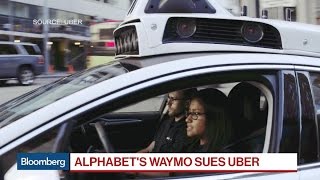
In this conversational video, the hosts discuss Waymo's lawsuit against Uber, in which Waymo alleges that a former Waymo employee stole roughly 14,000 confidential files related to self‑driving technology and brought them to Uber, generating about half a billion dollars in revenue for Uber. Keith Rabois explains how this case differs from typical patent‑infringement disputes, noting that Silicon Valley has an informal ethos that discourages offensive patent litigation but treats outright trade‑secret theft as unacceptable and prosecutable. The panel also touches on the broader talent war in autonomous‑vehicle development, highlighting how many companies—Google/Alphabet, Tesla, Apple, Uber, as well as traditional automakers like Ford and Delphi—compete for a limited pool of engineers. They debate employer liability, emphasizing that if Uber knowingly hired an employee who brought stolen documents, it could be held responsible, whereas ignorance of the theft might mitigate culpability. Throughout, the discussion frames the lawsuit as a litmus test for how aggressively tech firms will protect trade secrets and enforce cultural norms around IP in the rapidly evolving self‑driving car industry.
Chapters
Tell me what this is about. So... You've got the suit.
I do, it's right here, it's glorious. So Waymo claims that Uber has taken their technology for self-driving cars, and that's led to about half a billion dollars in profits and revenue, sorry. They claim that a former executive from Waymo stole about 14,000 confidential files from their server and took it over to Uber. or they are building a similar program?
We've heard these stories before, Keith. I can't think of how many companies. I mean, Fitbit, right? That sounds like the Fitbit Jawbone lawsuit, where an employee moves over, Jawbone claims, Fitbit claims, hey, they backed their stuff up to the server. We didn't know they even had it. We turned it over right away.
But these suits can sometimes be really serious. Well, I think these suits are very different than patent infringement. I think there's an ethos against patent infringement in Silicon Valley. So I would have been shocked if Google had sued, or Alphabet had sued Uber directly for violating some IP. But theft, I think, is something that is culturally acceptable to police and prosecute. And so I think that's unacceptable and a line that Alphabet's going to enforce.
What about an ethos against patent infringement?
Google's employees would have gone ballistic if Google had sued Uber directly. I think it's just unacceptable to use patents offensively in most Silicon Valley software companies. Just like you saw this outpouring of more outrage on the immigration order, there's that kind of outrage against using patents offensively in Silicon Valley.
That's interesting. But patents are there for defense. So talk to me this kind of suit. As I mentioned, we've seen a lot of these suits like this.
We have. We've seen, as you mentioned, the Fitbit, Jawbone, Fitbit. But this is sort of the first suit we've seen come out of Google, where they're really taking the offensive, as you've said, how this shakes out is going to be a huge question. There's a lot of tech at stake. There's a lot of money at stake.
And when we see so many companies working on a limited pool of talent resources, where, you know, for just in Silicon Valley, right, Ford and Delphi, two companies you don't think of as Silicon Valley, but they've hired hundreds of people in Silicon Valley. Of course, you've got Google, you've got Tesla, you've got Apple, you've got Uber. all right here, all trying to go after people who know how to make self-driving cars?
Well, I think there's a difference between what you might have in your brain, which is really hard to police and enforce versus actually taking copies of documents. I think there's a pretty bright line there, and I think those who violate that line should be fired, and it's perfectly proper to pursue their employer for using any of that information. There's a question of knowledge. Sometimes the company doesn't really know that the employee has taken this information and started to use it in their new job. That would obviously be a problem if Uber had awareness of that.
But what you're saying is, if Uber knew an employee that they'd hired from Google came with documents, Uber should hire.
A fire that person. Absolutely. I know of many companies that have done that, where they found an employee took information from a prior job. If they found out about that, especially if the employee deceives the company about it and tries to hide it, absolutely a firing offense.