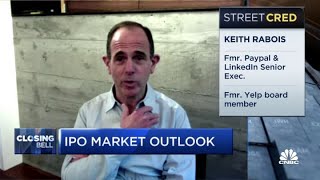
In a CNBC interview with Andrew Ross Sorkin and Shepherd Smith, venture capitalist Keith Rabois discusses several themes. He argues that high‑profile tech companies such as DoorDash, Airbnb, Palantir, and others were fundamentally strong before the pandemic and will remain so. Rabois explains his personal move from California to Miami, citing the state's high taxes and regulation and the new flexibility remote work provides. He makes a long‑standing case for companies going public as early as possible, highlighting three core benefits: increased transparency and discipline, a public‑stock currency for strategic acquisitions, and the permanence that a public listing can confer on an iconic, generational business. He notes that seed and Series A valuations are currently very attractive for entrepreneurs, with unprecedented competition among investors since June. On tech policy, Rabois dismisses the idea of a dedicated Secretary of Technology, suggesting that existing economic cabinet roles (Commerce or Treasury) need a deeper understanding of software‑driven economics. Finally, he describes his investment style as bottom‑up and founder‑driven, focusing on team quality rather than macro trends, and hints at the next wave of potential “Airbnbs” and “DoorDashes.”
Chapters
Yeah, absolutely. These are fundamentally very sound companies, whether it's DoorDash, Affirm, Open Door, Airbnb, Rish, Palantir. None of these companies are propelled uniquely by the pandemic. Obviously, some companies have benefited in the short term, think DoorDash when there was no options except to order takeout through DoorDash. But fundamentally, the company was extremely healthy before March and it'll be extraordinarily healthy in two years.
It's been. Recently, you have made some headlines by a decision to defect San Francisco for the beaches of Miami. What's driving your decision?
Well, California is the most overtaxed and overregulated state in the country. There's no doubt about that. Those are both pure political statements. But I think many of us were psychologically restricted in thinking about the places to live before COVID and before working remote. And once we realized that maybe one could work successfully from a lot of different places in the network effects associated with San Francisco Bay Area in California might not be. It unlocks lots of options of where one wants to work, live, raise a family and San Francisco is probably not the best place.
We were talking in the last block, Keith, about how overpriced or well priced the market might be at the moment. And clearly there have been quite a few IPOs in this past year and the IPO ETF is up. They've been successful IPOs overall. Are you encouraging some of your VC and portfolio companies to go public as soon as they can while this market environment is fairly attractive?
Sure. Well, I'm not a fan of timing the market. I don't really profess to be a public market investor. I'm a seed and series A investor typically. So basically the very beginning when you know the canonical two kids in a garage or starting a company. So that's my expertise. However, I have this long-standing view, along with venture capitalist Bill Gurley, that companies generally go public as early as possible. So I've been arguing this for 10 years, published a chapter in a book called High Growth Handbook by Bill Gurley that argues substantively why this is a good decision. So all of my companies have been hearing the virtues of going public for me for two, three, four, five years. And now finally everybody's realized it's a great idea.
Well, I will say though that the cohort of companies that are going public are no spring chickens. What do you think is the key benefit of going public earlier as opposed to waiting until maybe even profitability?
Sure. So I think there's lots of benefits of going public and in fact the reasons that go public are fact excuses. So the reasons to go public are first of all transparency and accountability are always good things, whether they're imposed privately or publicly, but the idea that there's discipline in the company is a great thing and transparency yields better discipline. Second, it gives you a currency to use for acquisitions. And then the acquisitions can be incredibly strategic. Think of Google buying, let's say, YouTube or Facebook buying Instagram. Those transactions are very difficult to consummate as a private company. Third is it gives you sort of a permanence, which is basically all of my companies, all the founders I work with want to build an iconic company that's going to last for generations. And the first step in building an iconic permanent company is to be a public company. Basically, once you achieve an IPO, the chance that you pursue sits for 20, 30, 40, 50 years, a generation or more, is very substantial. Whereas if you're a private company, the chance that you're a permanent entity and your transforming industry is very small.
What are valuations like, Keith, in your space in the early stage VC investing space? I mean, clearly a lot of sectors, private and public, have had a great run over the last decade and even over the last few months. Valuations are kind of rich at the moment.
They're extremely attractive for entrepreneurs right now. Since, I'd say, June, there's been an explosion in competition among investors to invest in the highest potential companies. And we see that from seed stage rounds to the very, very beginning of capital formation to growth rounds. Growth rounds are obviously more tied to public company multiples, and so it's a little bit more rational. But even at the very, very beginnings of a company's history, seed and series A fund raisings right now are as competitive as I've ever seen in 20 years of my life.
There's no denying that technology has been increasingly pervasive in our lives in 2020. With regard to this new administration, do you think there needs to be a secretary of technology, a position within the cabinet that would focus on the world of technology and innovation?
I think that's probably a bad idea. Truthfully, technology is eating, yes, the proverbial software is eating the world.
Right.
So I think the Secretary of Commerce or the Secretary of the Treasury really needs to understand technology because the entire economy is predicated on software and technological innovation these days.
What are some of the next gen investments that you're looking at right now? What do you think are going to be the Airbnbs, the DoorDash, the Affirms of the world in, say, five years?
There's a few. I'm not a macro sort of hypothesis generating investor. I'm basically a bottom-up founder driven investor. So for me, the key is what's the quality of the founding team versus some top-down belief about the future of the world.
Shepherd Smith here. Thanks for watching CNBC on YouTube.