Billionaire Investor on Mastering your Mind & Overcoming Stress | Keith Rabois
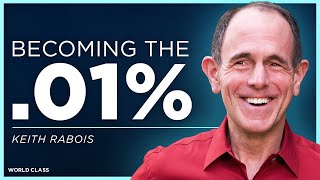
In this interview, venture partner Keith Rabois shares vivid anecdotes and personal philosophies that illuminate his approach to entrepreneurship, risk, and personal growth. He recounts a founder who pursued a perfect GMAT score as a metaphor for relentless execution, describes taking on a high‑risk defamation lawsuit against Red Herring while at PayPal, and outlines the qualities he admires in a hypothetical "championship" team of entrepreneurs (Steve Jobs, Elon Musk, Andy Grove). Rabois emphasizes the centrality of reading and writing, critiques modern public‑school curricula, and proposes an early‑age, rigor‑focused education model. He delves into stress management, distinguishing hormetic from toxic stress and advocating a mental‑frame shift that treats challenges as puzzles. He reflects on his most fulfilling career chapters (PayPal, Square, Khosla Ventures), and details his ongoing quest for self‑improvement through athletic metrics, cross‑domain learning, and a work‑ethic‑first mindset. The conversation is peppered with metaphors from music, basketball, and fast‑response cultures (e.g., Sequoia’s five‑minute reply rule), underscoring his belief that speed, effort, and continuous learning are the true drivers of world‑class performance.
Chapters
How do I discover what my superpower is? I have a technique that I teach people. The happier, healthier and wealthier you want to be, the more stress you want in your life with the right mental model. In life, you're either decaying or improving.
And there's nothing in the middle.
Comfort seems to be your enemy. Yes. I've gone to life worth living.
Either do something worth writing about or.
Write something worth reading. What do you think your edge is? I am a founder driven investor. My job to find them, assess them, and give them either advice, money, or both, that helps improve the probabilities that they succeed.
If you had to assemble this championship team of the five greatest entrepreneurs that are alive, who would you hand pick for that team?
Right? Good.
Like it. What is up, guys? Welcome to the World Class Podcast, first ever episode. Today, I sit down with Keith Rabois, legendary operator and investor. He's currently the Managing Director at Khosla Ventures and the CEO at OpenStore. Prior to that, he was a general partner at Founders Fund and the co-founder and chairman of Opendoor. Prior to that, Keith had executive roles at PayPal, LinkedIn, and Square. He's a member of the PayPal Mafia with legends like Reid Hoffman, Peter Thiel, Elon Musk. Keith is also a Midas List investor. invested in over $20 billion companies from the early stage like Airbnb, Palantir, Lyft, Ramp, and many more. And today we are going to dive deep into Keith's mind to figure out what it takes to be a world-class investor and operator. All right, Keith, welcome to the show.
Pleasure to be here.
I'm very excited, man. I've been looking forward to this conversation. So I wanna start with this. I heard a crazy statistic that you have either founded or invested and a billion dollar company every year for the last 20 something years.
So the statistic is true on average. So if you take all the companies that I've invested in, divide by, I've been in tech for 23 years, it's more than one a year. It's not like every single year though.
Yeah, per year, okay, that makes a lot of sense. So either way, you've been able to find a way to systematically crank out unicorns, right? So everyone gets lucky to some extent, but that doesn't seem like luck, that seems like there's a system behind it. So I'm just curious, from how you perceive your own success, what do you think your edge is? It's a great question.
So at the end of the day, I'm a founder driven investor and many people say that, but what it means for me is I'm just assessing the person who's building the company. And if I think they have an unfair advantage versus the rest of the world, I'm likely to want to invest and partner with them. And that was true when I was an employee. So I'd like to join the company. It was true when I was an angel investor and I was deploying my own capital. I'd invest in companies like Airbnb, et cetera, or YouTube. And it's true as venture capitalists because that's what I do all day long is try to find these N of 1 people that can reinvent an industry or reinvent the world. If you think about it, it's kind of ridiculous to wake up one day and say, Hey, I'm going to reinvent financial services and we're going to reinvent oil and gas. I'm going to reinvent aviation. But there are people who do it and there are people who actually have a non-zero probability of succeeding. And that's my job to find them, assess them and give them either advice, money or both that helps improve the.
Probabilities that they succeed. You mentioned N of one people. I think it kind of takes one to know one and spot one. You have to have the character traits, skill sets, mindset to identify that. I'm curious for you, what is an N of one person? And for you, I don't think most people are born that way, right? You have to create that within yourself. I'm curious your own evolution and how you actually created yourself as one of those people.
I think everybody who really succeeds in any field has a spike on one dimension. So how do you compete in basketball? How do you compete in music as a DJ? How do you compete in politics as a politician, elected official? How do you compete as a technology startup founder? You have something, you have some trait that is top 1%, top 10 basis points, ideally, and you're just doubling and tripling and quadrupling down on it. So it can be different per version, just like it is in basketball. Like if you took the top 50 players of all time, they're different of why they've been successful. The same thing is true of the top 50 founders of all time. The trait they're doubling or tripling down on is different. But so first is identifying it. Like what is my unfair advantage versus the rest of the planet? And then how do I amplify that every single day? And if you have one of those traits, you can be very successful. It's like matching that trait to the right market, to the right product, and.
Maybe the right field. So what was that within yourself? Like what was, what did, How did you discover what your superpower was and.
How did you cultivate that? So I have a technique that I sort of teach people, because I get asked this question a lot, like how do I discover what my superpower is? And a technique that's pretty horizontally applicable to almost anybody is just talk to your five or 10 favorite people in life. They can be friends, they can be colleagues, it can be both, and ask them what do they like most about you? And just don't think, just write down word for word what everybody says in a notebook. Then after you've finished five or 10 people, look for common refrains, common constellations of words, and that's going to be your answer. And it's a really fun process because it's not like asking people like what your flaws are, which can be a complicated process for lots of reasons. People like to tell you what they like about you. So it's a pretty easy process to go to your favorite people and say, what is best about me? And then once you have 5, 10, 15 interviews sort of, then look for the common traits and the common word choices, and that's almost surely gonna be the direction for the right answer.
I feel like that self-awareness is very key, and you didn't start by just jumping into YC and starting a company in your 20s, right? You started in law, you went and operated within 10 years, you were an executive at PayPal. It wasn't until later where you co-founded companies, got into investing. Like from a macro picture, how did you architect the vision for your career and know what sequence to kind of follow?
Well, I was initially a lawyer. I went to law school, clerked for a well-known federal appellate court judge and practiced law for three and a half years after that. So I wasted most of my 20s in the practice of the pursuit of law. So I don't recommend that path necessarily, And there are some advantages of that experience, and I do try to parlay those advantages and double and triple down on them. So there are some unique attributes of having been a top-tier lawyer. But secondarily, then I did jump at the height of the internet bubble in actually 2000, February 2000, into the world of technology startups and had to reinvent myself from scratch. Because building a company, running a startup, running a part of a startup is very, very different than practicing law. I was a litigator, which is even more removed from building a company. I didn't do any corporate stuff. I didn't know how to do transactions, I didn't know how to negotiate deals, none of that stuff. So it was pretty radical. And then I did that for 13 years, so increasingly broad responsibilities across different companies. Initially a mediocre startup, jumped into PayPal. PayPal was a wonderful forging experience, built a new network, developed under pressure a lot of traits and skills because it was a very complicated business. to interact and succeed at, then join LinkedIn as the 20th or 21st or something employee, then spent some times in the wilderness at the company called Slide, which got acquired by Google, was not very successful, and then jumped in as the 20th employee and COO of Square. So I did that for 13 years. Also joined some boards along the way, helped my friends, former colleagues, build companies like Zoom, which was a remittance company, not the video sharing company, Yelp from scratch. And so I got a new vantage point on company building And then along the way was a pretty active angel investor and fortunately invested in some good companies, which gave me the license to pursue a career in venture. And then 2013, so roughly almost 11 years ago to this day, I started in venture and had to learn, venture is different. It's adjacent to these fields of angel investing or building a company, but it's different and how to start from scratch again and learn a whole new industry.
Do you think people should jump right into venture? Do you think it's just a badge of honor, you should go operate in companies? so you can actually add tangible value to founders.
I think it's a very difficult career path to jump right into venture. I wouldn't recommend it. I think it's very hard to be insightful to founders. So if you're in a business, my business is to be as bold as possible, as early as possible, and as impactful as possible with founders. It's very difficult to be impactful with founders if you haven't actually done things with your own hands. I think your advice tends to be mundane, sometimes actually not very accurate or directionally wrong. You don't have the credibility or wisdom. You learn a lot of things when you have to do it for yourself. So that said, if you believe you're running a fund that the only thing that matters is selecting the right companies and you're not going to, you're not going to try to work with the founder, you're not going to be a consigliere or mentor to the founder or not going to build a business in partnership with the founder, then maybe you still have to close and you have to win and you have to figure out what's your comparative advantage in winning, but it's possible. But if I've studied, I've studied the history of venture pretty carefully. I am actually, unfortunately, old enough that I grew up early in my career with the people who built Silicon Valley and certainly built the modern version of venture capital. They were at the tail end of their career and so I got to watch and learn from them. And the one thing that I've sort of noticed is everybody who succeeds in venture again has their own comparative advantage and they realize what that is and they double and triple down on it all the time. So you can be a very different kind of venture capitalist or to venture capitalists who have been very successful who are technologists and they're trying to predict technology waves. There's some who are people driven investors and are trying to predict the future of this founder. Is this founder going to be unreasonably successful? And there are some who are market or product market investors who are looking at this market opportunity and analyzing things. If you are excellent at any one of those and you know it, you can actually be a successful investor because you have a comparative and competitive advantage. Venture as a whole is not a very good asset class. The median returns are extraordinarily mediocre.
What are the median returns?
It depends on what vintage. So it's very important in venture to, it's like a wine sort of, there are grapes in different seasons that it's really hard to compare across different other seasons. But if you had, let's say, a 10 double digit, low double digit returns, that's pretty mediocre, especially when you can earn that in a risk free or moderate risk free way. To be an excellent venture capitalist, you really need to be in a 20 to 30% IRR consistently and probably closer, if you're truly risk adjusting it, probably closer to 30 than 20. But if you're in that zone, you have a shot and you have to do that every year for like 20 years.
Yeah, people think it's glamorous as a.
VC and easy, not the case. It's easy to have a job with low stress for a while in venture. It's extraordinarily difficult to be consistently successful in venture. The chances of being successful in venture are about like being the equivalent odds or probabilities of being like an NBA all-star. Yeah. It's a very comforting lifestyle in the short term to be a venture capitalist. So I wouldn't recommend someone just jump into it. My friend Delian, who's a partner at Founders Fund, wrote a blog post many, many years ago, like lessons he learned from me. And one of the blog posts is like, how do you get into venture? He probably wrote this like five, six, seven, eight years ago. And it's still pretty instructive. But the basic answer is maybe you try it for two years as an associate, then jump into a startup if you have that opportunity. then learn how to do stuff. And then you have both the education of what being a VC is, because it's a little bit different than people think. Yeah. And you have the experience of a high growth startup where you've learned things, observed things, you even know what great is. I mean, so one of the things that's really difficult for a VC that doesn't have experience in an actual high growth company is what should a high growth company look like that predicts success? And it's not an atomic unit of a successful large company. I think there's a misperception that if you take like a Google or an Apple or Amazon or Facebook and decompose them. Like, a startup is a microcosm. It's not. It's a very different animal. And so I think, therefore, if you haven't experienced what the animal is supposed to look like, it's really hard to know whether this chaos is intentional and likely to predict success or it's a mess and likely to cause traumatic failure. And there's an art there and giving feedback, pulling that back to a founder and being insightful is based upon a lot of experience. there were VCs back in the day, I'd say before two, if you started your career in Venture before 2005, there were successful VCs that did not have startup experience. If you date VC performance post 2005, I think there's at best one or two VCs that have been very successful without startup experience. I think there was an inflection in who became a venture capitalist, what Founders were looking for in their VCs and how the competitive world of venture capital emerged. You touched on something I want to.
Double click on that I think is really important. You said you had to reinvent yourself. And I think when I look at the height of someone's success, it's how many times can you reinvent yourself, right? You're an operator, then you're a true executive, then you're a founder. And then when you're a founder, you got to be a CEO. Now that CE, the founder to CEO jump is huge, complete identity re-transformation. equipping new skill sets, new mindsets, everything, right? Do you have a process for reinventing yourself or how do you think through jumping to your next evolution?
Yeah, I think reinventing yourself is pretty critical. I have a general philosophy that in life you're either decaying or improving and there's nothing in the middle. So there's no such like complacency basically means you're decaying. So one way to force yourself to not decay is to challenge yourself to reinvent yourself. So one of the nicer compliments, it's a little edgy that My friend Siobhan Banister commented on me once, she said, you,'re the Madonna of tech. It's kind of like she reinvented her career or Lady Gaga or somebody like that, where you have to reinvent yourself once a decade to stay relevant. I kind of like the Teesto metaphor better, which is like he's 54 and he's still competing with people who are in their 20s and he's actually probably doing better than, you know, virtually all of them. So he's more aspirational to me than probably Madonna, but the quote was instructive. But in any event, so you have to challenge yourself and I intentionally look for challenges. Like for example, moving to Miami is a challenge. It was like reinventing my network. It was like it could stay in Silicon Valley, meet the same people, have the same network, same information flow that I had for arguably 20 years, but certainly seven or so as a VC. Moving here is like, okay, you got to rethink everything and that's a good thing. It's a good process. Changing funds has a bit of that dimension. becoming CEO is completely different. At the end of the day, the CEO job is like nothing else in the world. And so until you've tried that, until you've figured out how good or proficient you can be or tried to master it, you don't really know. It's actually really hard to project as a VC too. Like there are people who've been very successful as VPEs or very successful CMOs or VP products and they want to be CEO. It's not the same role, very different.
I think, yeah, this show is really all about helping people unlock their greatness. And I feel like what holds a lot of people back is self-belief and they're looking back to their past for evidence they can do the next thing.
Right.
Even when I started my company, I'd been successful recruiting, but going out on my own was terrifying. Right. Especially during COVID when every piece of hiring froze everywhere, fundamentally had to, like, kill the old self and recreate myself. And I feel like people have a hard time declaring a vision in the future and then later backing it up with evidence. So for people out there that either want to start companies or they're just on the fence and they haven't really cast a line over, what advice would you have to those people?
I think doing a cold turkey may be the best. So like we talked about, I used to be a lawyer. Yeah. Jumping as a, as a technology startup, jumping into a technology startup in the, like, sort of a business development role is about as radically different as being a litigator as you can be. and I just did it overnight. I'm just like, I'm doing this cold turkey. No transition into Corp Dev, no transition into, like, being assistant GC or anything like that. I was like, let's do this for real. And then learn. It's a little bit like there are people who learn to swim, but you throw them in the deep end and they Thrive. There's other people who actually learned in a different way. Yeah. Both are perfectly fine. Like, if you like the sports metaphor, there are quarterbacks you draft in the first round, and some of them you play actually the first year as a rookie. and it's a very difficult learning experience. I've actually studied the performance of first round draft picks as quarterbacks in their first year if they play, if they start, and it's really not interesting. It's like they usually have a 50 50 touchdown interception ratio, which is horrible, but they turn out to be really successful often. Then there's some who sit on the bench for two or three years in their first year that they actually start. It's actually pretty good. It's not their best year of their career. but it's usually pretty damn good. There's trade offs like you wait two, three, four years, but your first year you don't screw up the team. You start a rookie quarterback, they are definitely going to screw up that team. They're going to throw way too many interceptions, period. And there's almost no exception to the history of the NFL. So there's different styles and different needs. Now, in football, teams may have different needs, too. Like, you know, football team can be in a rebuilding phase and it's perfectly fine to have your quarterback learning, whereas if you're like a playoff ready around around the rest of the team and your quarterback's a rookie, and messing up all the time, can't have that. So it's not just, it's not a pure A/B test in that sense. But that said, I think there's benefits to both. And some people will be better learning by like just learn to do this. And some people like need some osmosis based learning to thrive. Right.
Going back to motivation to get you over the edge and to go for things, I read a great book called Choose youe Enemies Wisely by Patrick Bet-David. And on the quarterback note, he talks about you always need to have an enemy you're aiming towards, right? Tom Brady being drafted, I think, fifth, sixth round. Sixth round, right? Like his enemy was all those quarterbacks drafted ahead of him. But you fast forward, and this is actually a lot of parallel with you. Fast forward, he already won multiple Super Bowls. Garoppolo gets drafted. That's gonna, the guy who's gonna take his spot. Now he's his enemy. Like, that's not, that guy's not taking my spot, but he already had Super Bowls. But each different Super Bowl required him. to find a new enemy, right? Do you feel like that's the truth with you and your career? Have you always had different enemies or.
Different targets you wanted to conquer? Yes, enemies lost. I think in companies that have had enemies where it's like, we have a competitor, you know, we need to beat X, Y, and Z. I think you can rally the cult around that. It makes it easier some ways as a manager or executive leader when you have a defined enemy. As a person, I usually just have challenges like, I want to do X or Y. And sometimes they're framed intrinsically, and sometimes they're framed framed extrinsically. Yeah. So I like to challenge myself outside just professional stuff. Sometimes it's actually very transferable. Like, so I'll challenge myself in fields like Fitness.
Yep.
And I'll want to perform better than other people I know or everybody I know in different dimensions. And it's the same process. In tech, I have certain challenges, but they're not usually, like, an enemy. I mean, you can. There are ways of ranking Venture capitalists over their career.
I want to be this funds RR. Like, I want.
I want it, well, I want to produce better outcomes than anybody else that's in the field, period. There's a measurement issue because it lags so much in venture. Like when I retire, let's say, if, God forbid, that ever happens. If I ever retire, the good news about being a VC is there's, you know, one metric. It's like basically the returns, which is money. Yeah. There's like a professional metric, a little bit like a baseball, like stats, your stats are kind of what they are. the problem is unlike seasonal stats in baseball, you actually get stats like every 10 years or so. And there's things you can do to predict them and project them. And there's a correlation coefficient. So it's not like you literally sit back for like 20 years and you don't know. But at the end of the day, there is, there are metrics and, you know, I have some goals there, which I'd like to achieve.
But that's not the primary motive. Because I feel like when it comes to motivation, emotional motivation is everything, right? Emotions are fuel. So we need to learn how to alchemize and harness those emotions. I feel like we're either building from inspiration or desperation. Yep.
Right.
You're trying to get away from something and you're running away and you need to prove somebody else wrong or you are inspired to create impact. I know at least in my earlier career, I wanted to prove everyone wrong. Right. It was kind of like that dark fuel. No, I agree with that. And it really fuels you.
But then you kind of have to transition at some point because it burns you out. Did you experience anything like that? Well, I think adventure is a really good prism. I mean, I'd like to prove people wrong. So I have this, maybe a slightly more positive version of that task, which is When I invest in a company, I want to believe that half of the people I compete with in venture will laugh. That's how I know, A, I'm taking enough risk and B, it gives me that license to prove them wrong because it's like, oh, you're laughing. Well, we'll see about that. So I actually use that perspective all the time. Most of the people I compete with in venture are actually friends of mine. The people I really compete with are the people I know really well. So I can actually tell whether they'll laugh or not. But I'm running this algorithm through my brain when I meet an investment. And if it doesn't feel like they'll.
Laugh, I'm like, that's too obvious. It's probably not going to be one.
Of these iconic companies.
That'S a great point too, because you talk a lot about contrarian thinking. It's kind of like this a little bit esoteric concept to many, right? But if you're going to have asymmetric outcomes, you have to be crazy to other people, right?
That's why I use the laugh test, because you can tell. The laugh test. We actually borrowed this from law school. It's actually shockingly very transferable. There's this test, it's literally something you learned in law school called the laugh test, which is a way of gauging a legal argument. is it good enough to actually proselytize and build a foundation on? Is actually, can you articulate it without laughing? You actually learned this at Harvard Law School. So I was like, I kind of used the flip side of that is I want my competitors to be laughing at me.
Interesting. What's an example to bring that to life of a company that you invested in that was contrarian, where you saw something that somebody else didn't?
Well, I mean, the famous examples would be like Airbnb. Obviously nobody liked it, the way Brian described this both publicly and to the company, the whole company wants is like, Keith is the only one who actually liked what we were doing. There were other people who liked them, like the founders, Brian, Nathan, Joe, like, and would be willing to invest or work with or mentor them as people, but they didn't like the idea. Actually, I liked the idea. I was like, this is going to work. I told Brian, like, less than 3 minutes into his monologue that this is the coolest thing since YouTube, like literally 3 minutes into meeting him.
It's like, this is the coolest thing that's happening in technology.
What did you, why did you believe that was going to work and most others didn't? he marshaled some very compelling evidence, even the very beginning. So he had a couple of data points that really clicked in my brain. One was the number of people on Craigslist that were actually posting, like writing in post, saying that they wanted to rent someone's place. He had a good stat about how many people were doing that in the Bay Area, which showed latent demand. Second, he had evidence that the people who were using the most early version of the product were not the sofa couch surfing people stereotype. It was like 40 year old lawyers. It was this woman, 40 year old lawyer was a typical so I was like, oh, this is much more mainstream. Third is he had, he was smart enough and savvy enough to build an internal payments product when there were just three of them, which is sounding crazy. This is before the days of, like, really stripe and brain trade. And so really significant commitment to build a payment product. But he's like, look, there's no way I can show up with 250 to go to Austin in cash. I'll meet my host on a Friday night and expect that to be a mainstream product. we have to do payments. So they had to build it. And then the fourth thing was their commitment level that was just off the charts. So they were flying to New York, which is their best market, basically every week. They'd rotate which founders would fly there every week. Because Paul Graham actually gave them the advice that they need to be in New York. Second, though, I asked them a question. You must get a lot of customer support calls. And they're like, yeah, I'm like, well, who answers them? And they're like, us. And I'm like, they were living in an apartment together at the time. And so they just woke up 24/7 because you think about the different time zones. The phone was ringing all the time. I was like, this is what makes a great CEO. So the combination was just boom, boom, boom, boom, boom. I need to invest. How do I invest now? But most people thought that was crazy. YouTube, everybody hated. I actually tried to share. I said I committed to investing, but at the time I was just an angel investor and couldn't write a big enough check to really make the seed round happen on my own. So I was trying to proselytize to all my friends, like VCs, angel investors. and everybody was rejecting me. It was really rare when anybody's like, oh, that actually is cool. Unfortunately, Sequoia thought it was really cool. Like, Rohlf really liked it. But fundamentally, everybody else I tried to get to invest was like, no, no, no, no, no. And the reason why it was obvious to me right away was first, I'd been a lawyer. And so this is one of those black box lawyer things where I had actually been an IP litigator. So when they were discussing the legal risks that was terrifying everybody else. I didn't call any outside counsel. I knew I was doing the diligence in my brain and I got most of the diligence correct. There was a little piece I screwed up, but fundamentally I got it right. I even represented the company on the diligence calls with Sequoia's outside counsel to explain to them how the IP litigation would play out. Secondly, they built the company on this foundation of flash. and it was copied intentionally from the way we thought about product development back at PayPal. So we actually have this term called x-click, which was the embeddable button, HTML button that sort of distributed through eBay. And they thought about the YouTube fully functional players x-click for the web, but for video, and said that the metaphor snapped. I'd been looking for something based on flash because Max left you taught me that there was going to be this cool flash products somewhere. Certain characteristics. And I was like, I finally found it two years later. Took me two years to find a flash product. But over coffee in 2003, told me to look for flash. I was like, I found my flash.
And later they.
So sometimes. But. But nobody liked this. Nobody liked YouTube as an investment. Another one, more recent one is two recent ones. Ramp. Yep. So maybe the most courageous investment I made, because everybody was like, Brax, Brax, Brax, Brax, Brax. you know, like how are we gonna beat Brex? It had this high momentum company. And fortunately, Ramp was in an area that I understand pretty well, financial services, no writing. Yeah, so I was like, I knew what I was looking for and I knew why Brex would fail. And so I was like, I'm gonna go find founders who can pull this off correctly, which has turned out to be correct. I mean, we're sitting down the street, you know, for two of the more important people at Ramp. And then another one was Fair. Thayer was like retail matchmaking, like long tail retail with goods, like products, the brands that they can sell in the retail store. And everywhere it's like Amazon, blah, blah, blah. Isn't Amazon eating retail? Isn't Amazon eating retail? The truth is Amazon's not eating retail at all. Independent booksellers, for example, are doing better than they ever have in American history. What Amazon has done is destroyed big box retail. Very different. But everybody's like, Amazon, Amazon, Amazon. The future's all online. The future's all Amazon. And fortunately, the founder was savvy enough to understand that's false and then be able to convey that. But as soon as he did, it clicked with me and I had the advantage of having worked with Max, the founder, and Jeff, one of the other co-founders at Square. They both played soccer with me and worked for me. So the team plus enough data to prove that the rest of the world was way overrating Amazon, like locked in my brain, but everybody thought like that's a ridiculous investment.
It seems like a pattern here is extreme levels of competence are like the precursor for greatness. You have to have extremely refined knowledge in an area for you, because you're looking, you're playing across so many sectors as an investor too. Do you focus on reading timeless books, recent books? Is it more about interviewing subject matter experts in fields or how do you accelerate your rate of learning?
I like to read old books. Like basically, if you want to be a contrarian, my general cheat sheet is read books that other people don't read. if you read the same stuff online, listen to the same podcast, you're gonna have the same views. It's impossible not to react to the raw material. But if you go back to like a lot of original sources and read stuff that's differentiated, you might actually have spark of unique views. So I try to read as much as possible things that other people don't read. I will read some mainstream stuff just in case there's lessons there. I saw recently an interview with Marc Andreessen where he was kind of talking.
About his barbell strategy.
His barbell reading a strategy. Yeah. Yeah. That kind of makes sense to me. go find old timeless classics and then read some modern stuff. But I'm always looking for an unfair advantage of like, how do I develop my brain in a way that other people will miss? I used to work in politics a bit and one of the things I used to do and be pretty good at is coming up with original ideas, which is really hard in politics because there's both a credibility, there's an originality test, like something that other people who are, you know, in a competitive industry haven't thought of. And then a credibility, like, could this actually work? Yeah, you have to have both. But the way I used to come up with these ideas is I'd just read voraciously everything about history, everything about policy, and I'd have all these highlighted books I just pull off my shelf. So someone called me up, a candidate or a politician, called me up and say, Hey, I want to talk about drug policy. Do you have any original ideas? And I would just pull off 10 books off the shelf. And I'd be like looking through my highlights. I'd be like, well, maybe this. Or like, how to write a speech that was original about China policy in 1999. and speaking originally on China is very difficult with credibility and authenticity. So I just read everything, like literally everything about China, and then pulled all my highlighted notes together. This process takes like a month to come up. It's very by hand. So there's, you can't really do this every day in politics. You kind of have to have a specialization and know when you're looking for originality. But that is the same process in technology. Just read really great works. And one day or another, you'll connect the dots. You know, sort of this famous Steve Jobs commencement speech, 2005 at Stanford, where he talks about how you connect the dots with that. Yes, always. It's a little bit like that. I read interesting books across many fields. And then all of a sudden, something clicks in my brain. Oh, well, there's this old, there's this thing over there. I think it's in this book. Maybe it's on that shelf. Yes. I go walk to my library, pull it off, kind scan through the book trying to find it. That's how I come up with original ideas.
I think that is the most underrated thing I've heard because people are always trying to study just business, business, business. But I'm like, what are the other disciplines that give you an unfair advantage? For me, I started studying universal laws. I'm like, how does the universe work? How does quantum physics work? Yeah, physics.
Like these things are critical to understanding how we manifest things in our lives. We just read Shakespeare. Humans are. Yeah, philosophy. Humans are humans. Right? And like Shakespeare conveyed everything about humans you need to know. So like every possible motion, every possible interaction, it's all in Shakespeare. So if you master Shakespeare, you can figure out like how to build a product for consumers.
That's so interesting. I think too, once you start studying things in one industry, you can just like, where else can I apply that? One of my first clients was ClickUp, early investor in those guys, and they followed, I think Parker Conrad coined the compound startup, right? Building multiple startups in one, building an ecosystem and a flywheel. And I was working with ClickUp and at first the VCs wouldn't give them a dime. They're like, pick a lane, you can't build 20 products in one.
Right?
And I was told the same thing in recruiting and I was like, I'm going to take the model of ClickUp and apply it to recruiting. How can I create verticals in every.
Function from the scale side, ICs through C-suites? But how can I take their mental model that's clearly working and apply this to my industry? That's 100% a great idea. Very few founders are capable of pulling that off. There's one I'm actually very excited about right now. I won't name it because it's like maybe a competitive process. But I found one that's exactly that strategy. We're building all the integrations at once. And I really like that strategy when the founder really understands why.
Yes. I want to go a bit more tactical into your operating career, especially when it comes to like building and developing teams, because I think you're world class at that. Everybody wants to hire a players. I don't think people know what an a player even is. Sometimes you call them barrels, right? You find these barrels, these complete game changers and build around them. How would you distinguish between an A and a B player and how do you find these barrels?
Well, finding barrels is really difficult. I mean, I think, for example, a very healthy company might have between two and five of them. Wow. At PayPal, you know, which arguably we have this incredible talent density and, you know, the historical track record 20 years later probably supports that. But if I was strictly grading PayPal, there was between 12 and 15 barrels.
Of PayPal, which is completely asymmetric compared to most companies.
Yeah. So I actually looked a couple health, very successful companies right now that are growing up in the billions of dollars. And they typically have between two and five barrels, like you're strictly grading. And so it's really rare, but that defines the number of parallel projects you can execute against. Because basically you can only shoot through barrels. And so you can have all this ammunition. This was an answer to why do CEOs get frustrated all the time when they hire more and more people and they feel like they get less and less done? it's like you can only get more things done through barrels. So adding more engineers, if you don't have more barrels, is not going to help you. So that's why these barrels are so valuable. And it really is a metaphor that you can lock in. Okay, I can do three projects. I have three barrels. Or there's one. There's one project I really want to do at open store right now. I just don't have the barrel to do it. I. I just, like, the project makes sense, like, logically, coherently. I understand why one of my board members really believes in it. I actually don't disagree. I just don't have the barrel. Like everybody who has the barrel capability to open store is busy on something that's probably more important and I need to go find someone who has the right DNA to pull this off. Otherwise it's going to be, you know, set up for failure. And so that's how I think about it is versus the A versus B more conventional analysis. The other problem with the barrel identification is it's somewhat culturally specific, meaning someone who thrives, let's say at Google may not thrive and probably won't thrive at Apple or vice versa. and so part of the problem is you need to have this person in your culture to know whether they're a barrel. Now, once they start, you can, there are some things you can look for. There are some key signals, and you see, you can identify the potential Barrel. And then what you do, something Dave Sachs taught me at PayPal when he was COO, is once you find someone with potential, just keep expanding the scope and complexity of the responsibilities to see how much they can handle. and just keep pushing, pushing the envelope, more and more important projects, more and more complicated projects, more and more difficult challenges until they can't handle it. And then, so you're basically constantly challenging people. But when you have those, you want to double, triple down on them and find more, but there's no easy way to find outside the company new barrels other than just hire the best people you can and then watch and learn. One of the reasons why I believe in in-person companies versus remote companies, is the signals you usually see about potential barriers are almost impossible to identify on a Zoom.
Interesting. What are those?
So the number one signal I use is do people start coming to person X that don't report to this person and just asking for help? Like, do people walk by their desk basically at the end of the day? Like, because that, what that is, is a signal that this person has impact and potential impact that people are asking and soliciting their feedback. And that's a signal that this person is actually really important, even if they're the most junior person in the company.
Our barrel, is there a distinction between an A player and a barrel? Because I like that quote you said, you have to shoot through barrels. And you spoke to my soul when you said that, because I know what it means to hire more people. You got less time. It's because you don't have the barrels taking it off your plate.
They can fully own it. Yep.
And they can take that vision and run with it without-- that's the definition. Anybody-- so there are like 10x individual contributors that are complete rocks in companies that you need for delivery for product. But would you distinguish them from barrels who actually have more elasticity and can scale and take on more responsibility?
Yeah, I think there is a difference. I think you can define an A-player as someone who's mastered their craft. So sometimes you need a world-class designer to do axe. And there's A-plus designers, there's A-grade, there's A-minus, et cetera. And you can talk about how you evaluate that. If the person is going to build, be the product designer, champion the whole product from scratch, and bring the whole company with them on the vision, then it'd be a barrel. But if they're executing someone else's vision, but like perfectly, then it can be A or A+ without being the barrel.
I really want to touch on your view on culture. I think it's played out. It can get really fluffy when people talk about culture. The root word is cult. You're a fan of making cultures cults.
Yep.
I fully believe that. You've got to be fully sipping the Kool-Aid. For you, how do you create a cult? Like what did that look like at PayPal? Because you guys certainly had that.
Yeah, so this is a philosophy borrowed from Peter Thiel, which is every successful startup is a cult. And what a cult really means, and he defines it pretty carefully in Zero to One or his lecture notes from startup engineering or startup, whatever it was called at Stanford, is you have a shared secret about the world that other people don't believe in. that's what a cult is. And that's what drives the culture is we believe X is true and nobody else in the world believes it's true. And you have to be both right and contrarian. And that's what, that's what makes the cult. So it's what, what is that secret that you believe? And then you amplify it so you can build around it, you can protect it, but you still have to have a secret that there's a foundational secret.
That'S, I've never actually heard a part that way. I'm actually gonna have to journal on that after and figure out what that looks for us. You talk about CEOs needing to drive for perfection, right? You have to create this standard of excellence in a company. And I think CEOs leaders tend to want to over manage everything, right? Every detail matters. On, on the other hand, you don't want to create a culture of micromanagement, right? I'm in slack looking at every single message, scrutinizing every detail. Where's the balance there? How do you find harmony in creating world-class standards but not like being overly micromanaging?
So my favorite book for founders to read is called Score Takes Care of Itself, basically authored by Bill Walsh, who's an extremely successful football coach of the San Francisco 49ers. And he wrote a book that was published posthumously that explains how to build a world-class organization. I think it applies to football and applies to startups. And the main point, the most counterintuitive point is how he starts the book. He took over the 49ers when they were like two and 14. And the year before they were something like three and 13 or whatever, like the worst football team in the planet. And what was the first thing he did? He taught the secretaries, they used to have secretaries back then in the 1970s, how to answer the phones properly. It was like, that's how you build a world-class organization. is everybody's going to do everything perfectly because if the secretary's answering the phone perfectly, all of a sudden your receivers are going to run seven yard routes, not six and a half and not seven and a half. And if they don't run seven exactly, the ball's going to get intercepted. But you have to have everybody consistently executing perfectly. And so you had standards of excellence for every single position, every single part of the organization. And that's why I really, really highly recommend this book to founders. that's my philosophy. It's the pixel perfect philosophy. Now you're gonna have to delegate some things. Yeah, especially as a company scales. I think the first 20 employees, CEO can actually pixel perfect match everything, audit everything. I developed a framework for this that borrowed from a couple different places. It's a bastardization of like an Eisenhower matrix to bastardization of some stuff from high output management. But I taught this class in 2013, I think, in how to operate for YC.
Okay.
And in there, I have this grid about when do you make decisions yourself as CEO and when you delegate it. And basically in the two by two matrix, it's basically like your level of conviction, high and low, let's say. And on the other axis, it's the importance, like incredibly asymmetric upside or downside or not. And then if you fill in the grid, when the important, when you have high conviction about the, the correct answer, Mm-. And it's really important. You have to make that decision every time. Low conviction, low importance, you should delegate every single time. And then you can debate what you do in the other two quadrants. But anyway, I recommend watching or read, there's a good transcript out with the.
Slides for people who are interested in this topic. Yeah, I like that speech you did. Was it at Stanford or YC? It was at Stanford. It was at YC. It was at YC, Stanford.
Yeah. And you talked about one other concept I think is useful for people, like writing versus editing.
Yes.
Right. Can you distinguish that? Yeah, sure. So this is a metaphor that Jack Dorsey taught me at Square, which is you want to be an editor, ideally as an executive, not writing. And there's a lot of benefits to this metaphor. First of all, most people intuitively know the difference between writing and editing. Like you know whether you're in writing mode or editing mode. So it's a really easy metaphor to apply. As an executive, you want to be editing and you want to edit less and less over time. Like the more red lines you're putting on a piece of paper, usually the worse the first draft is. So you can kind of also tell how well is a function performing by is your editing increasing, your redlining increasing or decreasing? Increasing or decreasing. Interesting. And are you always editing the same part of the organization? Right. So it's a really strong metaphor. Also, editing can notes simplification. So typically editors are almost always called 80% of the time telling you to take things out, like removing. Very rarely are editors saying add. And so simplifying, it works for simplification. And then third thing is what you do as an executive is resource allocation. And what editors also do is decide, I'm going to fund this book, not that book, or we're going to invest more resources in covering the Middle East versus technology or vice versa. And so that's also what you do as an executive.
So the metaphor is really, really strong. It's a really profound metaphor that Jack developed. Yeah, I've been thinking about that a lot. I actually applied that to my business and did a whole audit. I was like, I need to edit way more. I want to shift a little bit into investing because I think there's a lot of data points and questions that founders or investors could ask founders. You've mentioned that people are, it's a lot of fluff and bullshit, right? Like people are just asking the wrong questions. It's not really the most important thing. So when an investor is looking at an early stage founder, what are the data points? What are the questions they should be asking?
Well, so we have a philosophy at KV that at least Vedot taught me and we insist upon sort of universally, which is almost any company can be evaluated on three key questions. It's like, what are those three key questions? And then what you want to do is spend all your time getting as sharp as possible, as insightful as possible on those three questions. The rest of the diligence rounds to zero versus being as getting the probabilities right on those three questions. But depending upon what the company is trying to do, aspiring to do, the questions vary. So there's an art in and of itself of isolating what are these three questions. So for example, sometimes the question can be like, can this actually be built?
Like sometimes- Is it physically possible?
Is it actually possible with certain performance characteristics? Often that's not the case in modern technology, but it can be, and especially in deep tech, it can be. Sometimes it's can you cut through the clutter, like a consumer app? Like is there a way to cut through the clutter in an efficient way? can be a very important question. What does the company know, believe, or have they proven that they can do on that question? So you're always trying to find, well, can this be done profitably? It does matter by stage and company and market, but that's the art, is really what are those three questions in spending like 80% or more of your effort trying to be as sharp as possible. It even allows you to assess the team, which is does this team have an unfair advantage? in conquering these two questions. So if you look, you want to see the illustration, Delian, when he started and founded Varda, used this metaphor as the way to cast the Varda Seed deck. So I recommend anybody finding, I think it's online somewhere, the Varda Seed deck, because it's framed this way exactly.
So interesting. When you're assessing founders, because you mentioned there's some like technology investors where they have some vision into where the tech is going, Vinod is probably one of those. you're more of a people person. I'm not technical by nature too. I'm much more of a people person. I want to bet on the founder. I'm curious if you've noticed any contrarian patterns in hyper successful founders. For instance, a lot of the unicorn founders that I work with, I noticed a lot of them have a lot of childhood trauma, but they responded to it in a positive light. They interpreted those events and it gave them meaning. Or Harry Stebbings from 20VC, he mentioned a lot of the best founders that he's met were obsessed with video games. I think another founder mentioned like half the founders who knew that had created billion dollar companies were drug dealers at one point.
Oh my God. I certainly don't use either of those features. Just to be clear.
Well, I'm curious if you notice any like contrarian signals.
Yeah, I mean the signals I'm looking for, I'd say do vary because what again, what I'm trying to isolate is, is there something this person is top 10 basis points? And so it can be like they're the most tenacious person ever. It can be they're the smartest person ever. It can be they're the best at assessing people ever. It can be the best storyteller ever. It can be very, very different.
Or they're the best at something.
Something. That's what I'm looking for is a spike. Like if my ears don't perk and say, wow, then the chances person is going to change the planet rounds to zero, which means I shouldn't be in balance. Now, that said, I do find that most founders who are successful are somewhat disruptive in their own way, meaning, like, you have to have a screw loose somewhere. Somewhere. Like, if you wake up in the morning and say, I'm going to reinvent the entire banking industry on the planet.
Yeah.
You're probably not the most conventional thinker. Like, it is like that. It doesn't occur to normal people. So usually they're fairly uneven. So there's some traits that are extraordinary.
Yeah.
And it comes at the expense of something. But that, those Founders can be very successful if they're a self-aware and then B, you can. find the complement to that skill. So for example, Steve Jobs, when he came back to Apple was obviously phenomenally successful, perhaps the most successful executive ever that run, you know, for when he came back in 98 to whenever he had to unfortunately retire in 2012 maybe. That run is epic and multiple generations of products. Absolutely just perfect. The most important thing he did when he came back to Apple was he hired Tim who's, who's an obscure at the time executive at Gateway. And the reason why he did that was he, his diagnosis of why his first run at Apple was mediocre was Apple was never proficient operationally. And it just kept screwing things up and therefore not making money or not making enough money. And so he's going to go get the most operationally competent person ever. And we're not making that mistake again. So that's what powered a lot of the success. And so you have to be self aware.
Yeah. Having some sort of unique advantage. being self-aware about your gaps and then having the ability to surround yourself and attract those people to fill those.
Exactly.
Brilliant. I am curious, there's a few things that you touch on that I like. I think the upside of stress you mentioned is one of your favorite books. I do think the ceiling to your success is your level of stress management. If you want bigger success, you're taking on bigger problems, right? So for you, what's your relationship with stress and how do you handle the mountains of stress on your plate, the more the better.
I mean, I really believe, you know, I really highly recommend reading the upside of stress, which is basically the argument is the, the happier, healthier and wealthier you want to be, the more stress you want in your life with the right mental model.
The right mental model is key because there's hormetic stress and then toxic stress.
Like, hormetic is positive, but it's mostly mental. Like, how do you, how do you frame the stress? Is this a challenge to be better.
Or do you think, oh, my God.
Like, my so bad.
It's the mental frame, isn't it?
It's all mental frame. And she shows this chapter by chapter, refutes every possible objection to this theory and can show even at the biochemical level just by changing your mental framework, your chemistry in your body actually changes of how you react to stressors. So on performance tests, everything just by telling people embrace the challenge, they perform better on tests than people who are told this is going to be a difficult task that that aren't told, like, embrace it. So literally with just mental queuing, you can change the outcome. So that's why I think this book is phenomenal. So I'm always trying to find more challenges and more stress. I am merely a bit of an adrenaline junkie. And, you know, so I'm looking for adrenaline. I don't. For my non-complacency point, like, like anybody else in the world, it's easy to get comfortable. And so the way the antidotes of.
That is to challenge yourself.
Comfort seems to be your enemy.
Yes. oh, I hate comfort.
Complacency. Complacency and comfort basically means decay to me.
So interesting. The language reframe, I think, is an important thing to dial in on because your perception of your life is your life, right? And so for me, I recently had this language reframe where I said, I don't have problems, I have puzzles.
Right? That's good.
Like problems are something to be feared, avoided. They activate cortisol in your body.
Yeah, it's terrible.
Puzzles are exciting. I want to solve something. There's dopamine being released.
Yeah, yeah, yeah. I really like that. I'm like, what puzzles am I going to solve today? I'm borrowing this. You're taking that on?
Yeah, yeah, I'm taking the puzzles. You start using it today. But I've been thinking about that.
A lot of it is just simply your perception around what your life is. Yep.
And then you get to define your life. But the puzzle is a really good reframing. On a more personal note, I'm curious. You talk about building a healthy, wealthy, happy life for you. That means taking on a lot of stress and challenges. you got to clearly be growing. But I'm just curious which chapter of your life, it could be a year, it could be a decade, it could be a moment really, but like what chapter of your life do you feel like you've been the most fulfilled?
I don't know if there's any like better or worse, like they're all different. Obviously the PayPal years were very challenging and very fulfilling because it was very difficult and we were able to, you know, really take on the ridicule of the world. There were some magazine covers that made fun of PayPal. Everybody thought we were crazy. We had a lot of anti-establishment views about how to build a company.
Yeah.
So our friends thought we were weird and we were kind of misfits. So that was very invigorating. And the fact we were very successful was rewarding. Square, we were on a really significant rocket ride where it's one of these epic companies where we really pulled everything together in a really interesting cultural mix. blend of design-driven culture with empirical analysis and analytical rigor, which is very rare, which I think why a lot of my Square colleagues have gone on to great success as founders. So in then, adventure, I think at KV, because of the composition of the managing director team, the senior team in my first six years there, I think we were able to create really impressive performance because all six of us had very invested in, we were very complimentary and invested together in a lot of very successful companies. And so I think it was the combination, which is very rare in venture, getting, you know, sort of a lot of multiple people in their prime versus one or two people. And so I think that was, you know, kind of proud of our work product and the companies we funded and the success those founders had. So we'll see, but I'm always looking for more.
It's interesting. So the two things I took from that, in how you equate fulfillment. It's like the most challenging, difficult times have been the most fulfilling for you. And it's been more about the company on the journey than actually the destination. That's probably true.
I mean, a metaphor that's very broadly applicable is I think you ask most people who their favorite teacher was, like high school, college, whatever. It's usually the professor or teacher who's the most challenging. Like almost always. You're right. Sports coaches, you ask who's the best coach if you played a lot of sports. usually the most demanding coach.
Yeah.
So I think there's a common refrain there. Yeah.
Because most people, I think, again, our mental models of success Define our behaviors.
Right.
I think most people think of fulfillment as having the IPO, selling your company, then having all the free time to hang out on the beach.
Oh, that sounds awful.
And Turks and Caicos.
Right.
But like that.
Yeah.
It's so interesting because that is not fulfillment. And I think that this constant strive to become more I've started to reframe that the destination is not some revenue goal. The destination is the person I want to become.
Yep.
And that always moves and there's always the next version to chase. And so there's no one accomplishment that can buy me out. You know, I think that, I think that's a huge mental reframe that'd be helpful for people.
Yeah, I know. I really like both of those frames, but I think fundamentally it is the more you challenge yourself, it's like muscle building. you know, you need to, you want to build muscles, you have to increase the fatigue on the muscle one way or the other. And that's how you, you know, improve. If you want, like, a lower rest, your heart rate or better two minute recovery, you, you have to do Hill Sprints. They're not particularly fun. Yeah.
Increase the stress levels.
Yeah.
Well, to point to that, I think greatness, like becoming world class, I think a lot of that is how you respond to the hardest moments. I think you hit your ceiling and you either break through or you go backwards and say, Hey, this is my limit. And it's how we respond to those really hard times where most people would give up and what we push through that actually define us.
Yeah, so I have kind of a funny illustration. So one of the founders I really enjoy working with is like the tenacious gene on steroids, like just won't stop. and the example like that was very obvious before he founded the company, but that he would be a very successful founder was he thought he wanted to go to business school. God knows why. Unfortunately, he didn't go to business school. But when he was on the crusade to go to business school, he took the GMAT eight times to get like the version of the perfect score. And like everything about his company is like, I'm just going to keep doing this eight times until it's perfect.
Interesting. What for you, what was like one of the more challenging or dark times in your career that you had to like push through?
I don't know. They're all the same. I mean, there's a lot of, I remember a lot of PayPal ones. There's like, I was responsible for some significant asymmetric risk, like where if something went wrong, it could really blow up the company. And there you're dealing with probabilities. Like you never have a silver bullet. It's just like, more likely than not, if I do axe, it probably helps us, but it could backfire. And you're playing that game all day long. So for, let me give you an example.
Roulette every day.
Let me give you an example. yeah, hopefully with better odds. But I'll give you an illustration. It's dated enough. There was this publication called the Red Herring back in the day. It was very popular in the internet bubble. And they wrote a very defamatory piece about PayPal. And Peter challenged me to go fix it. Fixing the media was not the easiest thing ever. Trust me. And so, you know, we basically put together a serious defamation case. and we're on the precipice of filing it, which everybody thought was crazy. Like literally everybody internally, I was like the most unpopular person because everybody thought this is really risky, like taking on the media. But Peter was adamant we needed to fix this. And he asked me just point blank question and said, Is it possible? And I actually said yes. And all my exact colleagues were like, you should have told them no. And I said, no, the answer is yes. I didn't say it's easy. And I didn't say it's gonna work. He asked a very specific question. throttle. I'm like, yes. So we actually did it and we got them to retract the piece. But that's a very high wire act. I wouldn't do that. Don't recommend doing this every day. I love it.
I want to go into some fun kind of hypothetical questions to get in your mind a bit more. I'm just curious because you've worked with some of the most remarkable people on planet Earth, Peter Thiel, David Sachs, Elon, all these guys, right? If you had to assemble like this championship team, of like the five greatest entrepreneurs that are alive, who would you hand pick for that team?
Well, you know, as I mentioned, Steve clearly qualifies, you know, based upon lot, for lots of reasons. Elon, based upon like just the consistency of success across decades now, industries now doing it horizontally, like nobody's really done that before. Andy Grove is probably the most impactful person in the history of Silicon Valley. Most of the the ways we think about company building, the ways that Silicon Valley works. He pioneered many of them and obviously Intel still one of the most important companies. Those are the most obvious three to me that are clearly significantly better than everybody else.
Yeah, that's a hell of a team. You don't even need the other two.
Just get those. The sports team for this is going to be you can use replacement value players.
Yeah, just put any two guys in there, you're fine with those guys. All right, well you've seen Men in Black, there's a pen called the Denuralizer, and when you get hit with this pen, it erases your memory, right? So before your memory is wiped out and you have to start over, you get to write down one piece of advice to yourself to take into your next life. What would you write down?
Read, read, read and write.
Interesting, why that?
Well, I think per my point, if you want to have original ideas, if you want to understand the world, reading is the best thing you can do. And the more voraciously you read and the earlier you start reading in your life, it just compounds. And it's not intuitive necessarily. So that's why I remind myself, I got addicted to reading, fortunately when I was about in sixth grade. And that has, I think, propelled me. And then writing, if you can write and express, that's an unfair advantage. in any field. And, but the reading, reading, right. The reading actually trains you to write. Like, there's almost no good writers who don't read.
Great point. And in that thing, read, read, read, write. Kind of like do a shit ton of research.
Yeah, we just figure out. Just read thoughtful stuff. It can be fiction, it can be.
Shakespeare, but read, read, read every single day. And then actually process that reading, figure.
Out how contextually it makes sense for you. Or just like the base, it can bake in your brain. Like, I remember also growing up, I've read this. this autobiography. It's not really an autobiography. It's half autobiography by Richard Nixon. And the introductory chapter, he describes his days in the White House where he literally, as White House, you know, president, as president of the States, he would allocate at least an hour a day to read. And that stuck with me when I was growing up in, like, junior high.
School, like, president United States can read an hour a day. I certainly can find an hour a day to read. I love it. I think that education system today is not setting up people for success. I don't know if you would agree with that.
Sure.
A lot of antiquated information, a lot of propaganda, not a lot of placement on skill sets that help people thrive. If you were appointed to run the whole worldwide education system, I'm curious, how would you modify the curriculum? What would you want to teach in schools?
Well, I think most public schools are babysitting services and, you know, primarily babysitting services and less educational, and that's why you get the outputs. I think the most important thing is to challenge people as early as possible. So I have two kids, they're two and a half years old, and they can learn much more than people realize. They can't communicate necessarily backs, which is why parents don't teach them. But if they start learning, absorbing, mastering things at an early age, that's just going to come out for the rest of their life. So I want them to learn rigorous math, rigorously read. They already can swim proficiently. They've started learning the piano, they're learning a second language. all of this is like, don't limit, don't artificially constrain people early in education, and then have a curriculum that challenges people as much as possible. The Russians, actually, Soviet Union, there's a reason why I believe that almost all cutting edge physics for like a century was Russian papers in Russian discoveries was because the Soviet Union put elite children on a very advanced math curriculum starting at two years old. They also did this with athletes, which is one of the reasons why the USSR won a lot of gold medals. But in math, this seems more radical. But I definitely want our kids learning real math.
It's interesting because the society right now we live in, I feel like is pandering more to have a nine to five, have work-life balance, all these things and they're trying to make life easier for people.
Sure. If you don't want to accomplish anything, that's great. One other proverb that I learned early in my life from reading originally was from Ben Franklin. And he wrote, if you want a life worth living, either do something worth writing about or write something worth reading. And that's basically been my philosophy.
That's a great model.
That's all it comes down to.
So before I ask my last question, where can our listeners find you, engage with you online?
Primarily places Twitter @raboyraboy or aboas is the best. I do occasionally pay attention on LinkedIn, but Twitter I'm on 24/7 for better or for worse.
Perfect. To be world class, I think that means to constantly strive towards the next version of yourself, constantly be striving towards goals, clearly that is your DNA. So for you, what would you say your next level is and how you're going to have to continue to evolve to reach it?
I like to find new challenges. And so at some point, maybe that's a new field. There are fields I'm interested in, you know, energized about music, sports, politics. It's like reinventing myself at large. I don't know when and how. Sometimes these things are opportunistic and you don't plan them, they just kind of happen. I like to challenge myself as I get older or try to get younger. Not in the blueprint sense, although I'm intrigued more in the sense of I want my performance athletically, physically to improve every year. So you're fighting uphill, which requires you to be better and better because obviously things naturally decay, but you can fight uphill really well. said, I want a lower resting heart rate every year. I want a better two minute recovery. I want to be stronger. I want to be faster and constantly try to push myself to be better than anybody I know.
I love the focus on holistic success there. Like every area, it's the same thing. Just push to be a little bit better every day, every year.
So one lesson I've got fortunate, you know, having had some success is I get introduced to people who've had success in other fields. And the reason why I often enjoy those meetings is I try to learn. from, let's say, successful DJs or successful athletes or successful politicians or successful lawyers. What are the traits that lead to success in this field? And it's amazing how common the, the, how common the refrains are. Like, they feel like you're having, I literally feel like when I'm talking to a top tier DJ that I'm talking to a top tier founder, there's almost no difference.
What's the commonality do you typically see?
Well, the work ethic, you know, shocking, shockingly common. characteristics.
You build 365 hours in January 1999.
Yeah, as a lawyer, January 2000.
You're still on all the time.
I don't recommend the building 365 like every month. But it is a really good challenge for yourself is how do you thrive and what does it mean to be a world class lawyer? And as you're breaking through in the field, it is often related to just how hard you're working. And like, because I actually was a pretty talented, like, and ambitious lawyer and certainly like able to compete intellectually with lawyers. But even if I, if I took my foot off the gas pedal a bit, there were lawyers that I compete with internally and externally that could take advantage of the fact that they were outworking me, even though I might have been like more insightful just conceptually as a lawyer and maybe even a better writer. two or three hours more effort would offset my, like, natural advantages. And I. I could feel it. I could see it.
Right.
I think work ethic beats Talent to a large extent.
You need.
I do.
You want both.
You want to clarify where your talent advantage is, and then you want to double and triple down on it. But that's like effort. Yeah.
It's like Talent without ambition is a bird without wings. Salvador Dali. You know, I think there's a lot of talented people that don't give it the juice.
Yeah, it's speed. Like I saw a quote from Sam Altman recently, which is he doesn't know basically anybody successful who's not fast.
Yes, I know you reply, your chief of staff saying you're replying like 30.
Seconds at any time of the day. I can't do that all the time, but it is instructive of some of the most important decisions in my life and people in my life were a function of immediately responding to things. It's something actually I've learned truthfully from Sequoia. Sequoia's had this model as a culture. that five minutes or less, you get a response from any Sequoia partner, and they're really adamant about it. And, you know, I actually think that over at least 50 years or 60 years, they've been, you know, phenomenally successful. So I generally like to emulate people and firms and organizations that have been successful. Like, what can I learn from them? And so I picked that up 20 years ago and still try to adhere to it.
I love it, man. Honestly, you're, you're just voracious learning. as far as you are in the game and how you're just trying to pick up from every single person in your life. I think that's inspiring. I think that's a good place to end off because I think a lot of people put greatness on a pedestal. They think they had to be born into it or have some really unique qualities from day one. But it's just work ethic and learning.
Learning. It's like music. So I think music is a good metaphor. And most people are interested in music so they can apply this. If you're a top tier artist, you probably listen to a lot of music. Yeah. And when you're listening to music, you see something or hear something, you're like, oh, that's kind of interesting. Or I'll give you a basketball metaphor to close on. A friend of mine got to be in the locker room with the Lakers during the Kobe era and told me this story about Kobe, which they were watching the locker room after the Lakers game was watching the McDonald's All-American game, so high school elite. And Kobe saw this move that he really liked, and he had them replay it, you know, reverse, you know, reverse the videotape and stuff. and the coach is George, I think it was George Carl at the time, said to Kobe, like, there's a lot of young players. He's like, explain what's going through your mind. Like, what do you like about the move and why? And so he tried to get him to gauge the players. And then he find final question from the coach was, how, how long are you going to practice that move? Because Kobe's like, I like that move. I'm taking it. And coach says, you know, how long your practice? And Kobe looks up and says, until Wow. That's it.
That's the interview. Wow, that was incredible. I love it. Keith, thank you so much for coming on. This has been so insightful.
Pleasure. Thank you. Thank you.
Hey guys, I hope you enjoyed this episode of the World Class Podcast. Don't forget to like, comment and subscribe across all our platforms. Hit that notification bell so you can get updates on our new episodes and we'll see you next week.
More from Keith

This Billionaire Trains His Body Like He's Building A Billion-Dollar Startup | Keith Rabois


Vinod Khosla and Keith Rabois on Building and Investing in Enduring Companies | Ep. 40



