Creating Impact and Building in Miami w/ Keith Rabois, General Partner @ Founders Fund
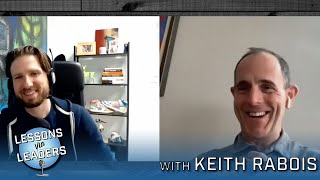
In this February 2021 interview, Keith Rabois, a General Partner at Founders Fund and veteran entrepreneur, discusses the rapid emergence of Miami as a vibrant tech hub and his personal commitment to building there. He explains how remote‑work trends are freeing founders from traditional geographic constraints, allowing talent to gravitate toward Miami’s high quality of life without professional compromise. Rabois outlines his investment philosophy—favoring founder‑centric, high‑growth companies—and shares concrete plans for launching a new venture in Miami, targeting an April product launch and rapid team assembly. He offers practical advice for entrepreneurs seeking his attention, emphasizing email as the most reliable channel, and reflects on broader venture‑capital outlooks for 2021, including public‑market timing and macroeconomic considerations. Throughout, he stresses the importance of community building, attracting diverse talent, and maintaining an ambitious yet lifestyle‑balanced approach. The conversation closes with Rabois expressing enthusiasm for the next few years in South Florida and a commitment to supporting founders who want to make an impact in the region.
Chapters
The team you build is the company you build. So people get distracted with markets and spreadsheets and technologies and products. Ultimately it comes down to the talent. It's a lot like sports in that sense. You can do a lot of fancy thinking, but I'd still rather have talent.
Welcome to Lessons Via Leaders, a show where we bring you a new entrepreneur, founder, or thought leader each and every week. We're incredibly excited about our episode this week as we have Keith Ruboy from Founders Fund joining us. Keith is a serial entrepreneur and investor working in investing in companies such as Airbnb, Lyft, YouTube, Wish, Yammer, DoorDash, Stripe, Affirm, and more. He's worked at companies like PayPal, LinkedIn, and Square, and I can say unequivocally he is one of the most respected.
People in the tech industry.
We're incredibly excited to have him here. Keith, thank you so much for joining us today.
It's a pleasure to be with you.
Thank you very much. Thank you. Thank you so much. So I'd like to start with everyone's favorite topic right now, the topic du jour, which has been the topic du jour for the last month or so, which is Miami and the tech scene here in Miami. And I gotta say, Keith, I'm kind of holding you responsible for starting this trend because I've been following, obviously, I'm based here in Miami and I follow a lot of the local tech guys and I just saw, you had mentioned, I think it was maybe like, A couple of months ago that you were looking at Miami to relocate. And that led to, I think, your partner's tweet, Delian from Founders Fund, who said that, Hey guys, why don't we just relocate all of Silicon Valley to Miami? The mayor picked up on that, retweeted, and now we have this whole national spotlight. But I feel like you were the origin of it. So I want to talk about it a little bit and talk about your thoughts on Miami, what brought you here, and all the excitement behind it.
Sure, so yeah, we moved here a month ago. We announced we were moving here about two months ago, and fortunately a lot of people have decided that we made a smart decision and they want to follow us and replicate the idea of moving to Miami. We certainly weren't the first. There's lots of successful entrepreneurs, angel investors here in Miami. There were several people who moved ahead of me actually and were smart enough and prescient enough to meet me here and also helped persuade me to move here. My friend Jack Abraham from Atomic actually moved here in March and bought a house in September. And he helped catalyze my own thinking on why Miami could be the future. We were looking for something that had actually a vibrant community, a diverse, vibrant community. And obviously Miami is an incredibly cosmopolitan city, lots of immigrants from Latin America, from Cuba, from Europe, from New York. You can call them immigrants or not. And now we have immigrants from California at scale. I think I meet someone new who's moved from California every single day. We came out here late October to go house shopping. We were fortunate enough to find a property that we liked and then just said, okay, we're moving. And now how do we make it? You know, how do we make this successful in terms of building a new tech community that can rival Silicon Valley, Tel Aviv, some of the more successful places on the planet. And we're excited that the political leadership, the community leadership has embraced the idea of high paying jobs, embracing the future, which is basically all industries are going to be technology driven, software driven. Software has really already started to eat the world and that's going to continue in the entire 21st century. And so we'd like Miami to be the centerpiece of the future.
I love that. I love that. So on that note, how do you feel at Miami's potential as a tech hub? How do you see it evolving? I've been here all my life. I'm born and raised in Miami. We've heard the naysayers for so long. There was that, you know, thinking back 10 years ago where you had to be in the valley, you had to be in New York, obviously that thinking has changed. Investors are now investing all over the world, being more location agnostic. But Miami in particular, how do you feel about its potential as a tech hub? I feel like there's really no reason it can't be. And if so, what are some of the strengths that Miami could position itself as? Are there certain themes or verticals you think we should really be doubling down on?
Sure, absolutely. I think Miami has all the raw ingredients to be a successful tech hub community meeting, you know, pioneering light for the future of technology. So for example, we have an art and natural art and design culture here in Miami. Everywhere you look from, you know, Design Center to Art Basel to to just the style of homes, the quality of thinking around the skyscrapers, for example. So all of that is very important to the future of consumer-driven products. Not every consumer-driven company is engineering-led. Some are actually design-driven. You can argue Apple is certainly Airbnb is Square was. And so I think those kind of companies will thrive here. Designers would prefer to live here and certainly in the Bay Area and probably New York. Second, there's a history of medical innovation, robotic innovation, medical innovation. There's several important hospital systems here as well that can deploy, test and deploy cutting-edge technologies. So I think that's another area to look at, robotics and medical. And then third is I think we can build a community around starting companies that the rest of the world isn't going to appreciate right away. I mean, we focus on this at Founders Fund a lot. our core emphasis is where do we have a comparative advantage? And our comparative advantage derives from having a bunch of independent thinkers that don't follow a herd mentality. So one example is we had co-founded within the fund, a company called Anorak in Southern California that really helps the United States defend itself against future adversaries using technology. And many in Silicon Valley are sort of anti-government, anti-defense, anti-protecting America. And so we felt like that company, we would be well suited to both build outside the Bay Area but also as investors, we would have a comparative advantage versus the typical Silicon Valley herd mentality. And so we're looking for companies that people in Silicon Valley would miss because they have intellectual ideological blinders on. So those kind of companies I think would also thrive here. And then I think there's a set of people who just prefer quality of life. Like at the end of the day, there's two elements, you know, to where you want to locate yourself. General life, which is variety of, let's say, activities, food, weather, Whatever hobbies people have, whatever things people care about, including education for their kids, safety, security, or lack of traffic, lack of distractions. Then there's professional aspirations, goals, ingredients. I think Miami actually blends both together, whereas many cities require a massive trade-off between the two. Tel Aviv has been a successful tech hub for decades. And I think actually Miami in many ways reminds me of Tel Aviv.
Yeah, definitely. Actually, I was reading your interview that you did on pull request and it reminded me that the mayor recently tweeted out that he feels like Miami is the Tel Aviv of the United States, which I love that sentiment. Tel Aviv has an incredible tech scene. Do you feel like what ingredients from Tel Aviv do you feel like we could replicate here in Miami, like specifically?
Well, I think first of all, Tel Aviv is a beach community. It's a city built on palm trees. Palm trees, people live on the ocean, condominiums. Actually, it's very, very comparable in that sense. Weather is somewhat comparable. So I think the natural attraction of a city that is on the ocean, that has water, that has weather that one can enjoy oneself outdoors is important for people's lives. And that is important for some of my partners as we were debating where we could create an alternative. Second though, I think you need immigrants. Immigrants have a natural propensity to create new things, to defy rules. So Tel Aviv, obviously lots of immigrants from Europe over the last 50, 60, 70 years, and antisemitism has been on the rise in Europe. A lot of people immigrated to Israel. That was the whole point of the founding state. So I think there's an immigrant mentality here, some people escaping communism, some people escaping Silicon Valley, some people escaping Europe together becomes an interesting melting pot where people have aspirations, goals, objectives, and something to prove. And that's a core ingredient as well. There are a lot of natural advantages, as we talked about in terms of art and design, but I also think there's more engineering talent here than people realize. So there's a significant number of graduates per year that have technical degrees. Those can all be, you know, we can create companies here that become a magnet for those people. And Miami's always produced leaders in tech. As Mayor has pointed out, Sheryl Sandberg's from here, Jeff Bezos is from Miami. Several of my CEOs are actually from Miami, some of which I actually knew. So I probably work with about 16, 17, 18 CEOs. I'd say 25% are from the Greater Miami area originally. About half of them, I actually knew that in advance. And the other half I learned post-November. But they're all excited to come back here. They were born and raised here and loved it. And they historically didn't believe that they could be successful here professionally, so they moved to Silicon Valley. But that was not their first choice. So if we can just keep homegrown.
Talent here in Miami, I think we can thrive for a very long time. No, I think that makes a lot of sense. I started a company, exited here in Miami. I never once felt like there was a lack of talent. It always felt like it was an excuse that was thrown around, lack of funding, lack of talent. But I always felt like you could find the great talent. It's here. Most of them did leave and they went to Silicon Valley, but it's good that we're starting to give people a reason to come back and that's a big deal. I'm curious on that note, because we don't know what this post-COVID world is going to look like and a lot of companies will be built remotely. They'll be entrepreneurs that have their base here in Miami, but they'll be able to hire engineers from really anywhere. How do you feel about that when you're looking at companies to evaluate, when you're looking to build your next company? Is this going to be a remote, completely location agnostic thing where you're just like, I want the best talent regardless of location? Or do you feel like, let's say a new company's based here in Miami, you want to focus on Miami talent and engineering?
I believe that most companies that thrive and are irrationally successful will not be purely remote. There may be exceptions. GitLab has been a phenomenal exception. And they built a remote culture from literally day one. And I think it's possible. However, I think more often than not, what we're going to see for successful companies that really change the world and transform industries is a hybrid model where they may work together for several days a week and then allow people to work from home or for wherever other days of the week, or they may distribute their talent. So they may have an engineering hub in Miami or a design hub in Miami, an engineering hub in New York or vice versa. They may have some people in Sydney, but there's going to be like central locations where people work together. People want to work on it as part of a team. A lot of people do. A lot of people crave that interaction with teammates. It's why people play team sports versus individual sports and the same history of companies. So I think you're going to see blended models. Like one of the best companies I'm involved in is called Fair. Fair is based technically headquartered in San Francisco. However, the entire engineering team from day one has been built in Waterloo, Canada. And I think you're going to see more examples like that where you have an engineering team in place X and you might have some of the leadership or product or marketing or design somewhere else. And that way you can take advantage of distributed talent.
Right. And I think Miami plays a big role in that because if you could choose where you live and you're like, Hey, I'm going to work remotely two days out of the week. You could work by the beach and then have the hub in Wynwood or somewhere and you could just go in. when you want to go in.
So yeah, I think we're gonna, nobody really knows what the mix of successful companies will be in terms of work styles. This is all something that we're all gonna have to learn by trial and error, but I suspect it will not be purely remote.
Agreed, I agree with that. There will be some kind of hybrid model that we're gonna have to figure out. We see a trend these days. Again, investors believe in companies need to be located in places. Now it's location agnostic. Investors are looking everywhere for companies. Is it the days of you need to be in Silicon Valley, you need to be in New York, is that over? Can entrepreneurs just think about not hearing that? Because that was the big feedback that you got. If you were located in Miami or you were in Middle America, you got to be in the valley, you got to be in New York. Are those days over or are we still going to hear a little bit of that from those regions?
I mean, you may hear it, it doesn't mean it's true. I mean, there's people whose self-interest is in promoting that. However, I think the facts will betray that argument. Just looking at our own portfolio of companies over the last 25 years, at least 50% of the most interesting, most successful companies are not based in the Bay Area. Some are in California, Southern California as we sort of talked about, but they're not in the Bay Area. And the percentage of most important companies in our portfolio that are not in the Bay Area has been increasing over the last decade. So I think that trend will increase. I saw even YC's recently published top 100 YC companies in history, which is obviously retroactive going back 12-15 years, only 64% of all of them are actually in the Bay Area. And again, that's lagging 12 to 15 years. So I think if you looked at the most recent cohorts of successful companies, you certainly wouldn't see even 64%. So I think that rate is going to decline even for YC companies. So I think that trend is over. There are challenges when you build a company somewhere else. The biggest challenge actually that I can see it is when you're hitting product market fit and accelerating growth and really know that you're onto something important, recruiting high growth executives who can manage high growth in a high growth environment, which is very different than a stable environment or predictable environment, is often a challenge because there's a lot of those people that lived in the Bay Area or have traditionally resided in the Bay Area. So I think then the key is building a community in a vibrant community of technology oriented to people in a city that is attractive to people who want to move. So I don't have any trouble imagining that I can recruit a VP of product to move out to Miami right now.
Right.
Or Miami marketing. It's a very easy sell, both to the executive and his or her significant other. So I think if you were in a place where it wasn't attractive to move to, so you can ask query, for example, why Pittsburgh has never been a startup hub despite CMU, which is a very successful CS and engineering department, arguably one of the top three or four in the country. There's never been really a startup culture there. I think it's partially because you can't start a company there and really recruit a lot of executives to move to Pittsburgh. Maybe one day that changes, but I don't have any issue challenge recruiting people to move to Miami. And if anything, it's getting incrementally easier. So I think that excuse, which is true, is basically dying. Then on the other hand, you can also look at something like, what's the most important company in the last five years? It's probably something like Shopify. And Shopify is based in Ottawa, Canada. So good luck explaining under the old school model of you must be in New York, you must be in Silicon Valley, the success of Shopify.
Agreed. Agreed. Great companies are being built anywhere. And I think that separates if there's a great founder, it doesn't matter where they're located, they're going to get it done. If they believe in the mission and they believe in what they're building, they'll find a way. regardless of any constraints.
Absolutely. The most important investment I made last year in 2020 is in Berlin. And the founder is exceptional and he can recruit exceptional people, extraordinary people. I have one of my close friends moving to join the company in Berlin from Silicon Valley because the company was so extraordinary. The opportunity was too good to, you know, to climb. Yep.
Berlin's another up and coming city with a great Tech scene.
It's a little cold for my taste, but I prefer warm weather and probably a little chilly most of the year.
I'll tell you a quick story, Keith. When I started my last company, Live Ninja, we had just raised the $500,000 seed round. We just started getting going. And right after we raised the funding, I went to my co-founder and CTO. I said, okay, you need a right hand to be your VP of engineering. We need to hire some more dev work. We were looking at who the talent would be. We would put, we put out a, you know, an opportunity, like a little job list thing. We got some inbounds and then we saw an AngelList that there's this job matching tool. So we found a bunch of people on AngelList. We hit on a few people. One of them was this recent computer science graduate from Clemson. And we hit him up. We got on a Skype call with him. Did the interview. I went to my CTO. Do you like this guy? He said, yes, let's try to get him in. So I booked a Southwest Airline flight for 200 bucks round trip to Miami. I spent $200 to get him a ocean view hotel at what was called the Ganzovert Hotel in South Beach. I checked them into, I picked them up from the airport, I checked them into the hotel. We went on the balcony. I said, Ryan, how would you like to be employee number four at Live Ninja and move to Miami and we could do this together? And it was the easiest sell when he's looking out at the ocean At six o'clock at night, you know, kind of Miami kind of sells itself, you know?
Yeah, exactly. Well, you're now in charge of recruiting for me.
That sounds like a really good skill set right there. Absolutely. Just pick the right hotel with the right view and, you know, the rest.
Is kind of on autopilot.
Oh, yeah, I'm taking notes right now. Love it, love it. I want to talk to you a little bit about these last 12 months. 2020 was obviously a year like we've never seen before. It's just, it's been crazy. Obviously, tech, has had a huge year in 2020 just due to the nature of the pandemic. We have to use tools like we're using now, Zoom, and obviously the valuation has gone through the roof and other companies have benefited from the shift obviously in our lives. I'm curious, based on all these trends that you've seen in the last 12 months, are you kind of looking at companies or cautioning some companies that it seems like product market fit, but maybe it's a little bit of a false positive, maybe it's more pandemic market fit, or are you just kind of saying, Maybe it's a combination and this is the new world. I'm curious how you're advising companies where their valuations have just skyrocketed in the last 12 months, but we've also been in a climate that we've never experienced in the last 12 months. So curious how you're thinking about that.
My perspective on the COVID acceleration for technology adoption is that much of the change is permanent, but some of it will not be. And the mental model I use is The inertia of adopting new tools and products is usually pretty strong. Like one of the hardest things to do as an entrepreneur, one of the biggest challenges is overcoming the inertia. So people have their tools, they have their allocation of time on apps, and you have to interrupt that and alter it. And there's only a fixed amount of time in a fixed number of tools that people are going to use. So Zoom, I had never actually used Zoom once before COVID And obviously now I use it every single day of my life. But I was forced to try a new tool and that inertia now, I will probably continue to use Zoom, at least for some set of calls, meetings, et cetera, permanently. So there's an inflection driven by COVID, but some of that will stick. Now I'm gonna regress back down to maybe 10% of my meetings by Zoom or 15%, not persist with like 80 to 100%, which has really been my model for the last nine months or so. So I think that's true of many industries. So for example, in the fitness industry, a lot of people bought weights to do at-home training, Peloton bikes, do at-home training because they didn't actually have a choice, right? Their gyms were shut down, their berries were shut down, they had no option. I suspect when people have been vaccinated and COVID isn't a primary concern, a reasonable fraction of people, even including those who purchase Peloton bikes or weights at home, will substitute some of their time back to gyms into boot camps and various alternatives. maybe not 100%, so maybe it'll be 50-50, but it's not going to be Peloton's not going to keep all their users as addicted when there was no chance and no opportunity to go to SoulCycle, for example, in person.
Yeah, that makes a lot of sense. Basically, it's hard to unscramble this egg that we've just done where we've, you know, if you can't put it back in the box, you know, there is this now flexibility that we're all getting used to. I'm sure you are seeing an uptick in board meetings via Zoom, obviously, and I'm curious, how you plan on doing that in the next 12 months? I mean, the next 12 months may be not fair because we don't know the acceleration of the vaccine and all that. But how do you see yourself just as an investor and board member participating in these kind of things? Do you see less travel for the next five years?
It's a very good question. I mean, yeah. So we immediately switched from all real world board meetings, I would say prior to March 14th or so last year to 100%. I haven't done an in-person board meeting since COVID basically infected the US. And I think that most of the most many of those will switch back to in-person. I think they are better board meetings. Zoom board meetings are very good for disseminating information. They're not very good for debating, especially among multiple participants, complicated topics. So I'm looking forward to getting back to real-world board meetings when it's politically acceptable and health-wise acceptable to have, you know, a congregation of six to ten, 12 people in the same room. So I suspect I'll be traveling, you know, to attend board meetings, whether they're in New York or Berlin or in the Bay Area, as soon as it's, you know, prudent from a health perspective to assemble the management team and board members in one place. I don't think I'm going to want to, you know, quote unquote, dial in or zoom into board meetings as soon as it's safe, you to resume those meetings. That may mean trying to bash them. I would prefer to go to Berlin once, not every other day, et cetera. But I have a constellation of companies in New York that I'm already involved in. It's incrementally easier to add some now that I'm in Miami. I have a constellation of companies in the Bay Area. So I'll try to probably compress board.
Meetings into a few days. Yep, that makes a lot of sense. That makes a lot of sense. And I think, again, it facilitates... There are things that it helps with. And I think you're right. The in-person meetings are just a different Dynamic in general, and I think you need to pick your spots on, on when you do that. Want to shift real quick to kind of the, the last 12 months, just the venture climate, the, the climate for, for going public. We've seen a lot of companies go public in 2020. There was kind of a, a huge fever pitch the last 12 months. Big congratulations on open door. You took it public via SPAC. I'm an investor, by the way. As soon as it was public, I made sure to, to get some investment on that. I'm very excited. I want to talk about Open Door a little bit as well. But 2020 in a way was kind of the year of the SPAC. And now you have all these different ways of going public. The direct listings are more and more popular SPACs and IPOs. How do you think of that? Because I know you've been on record by saying that you think a company should go public sooner than other investors really advise. I think you're on record by saying as soon as $50 million in revenue, you want to see the company go public. So how do you think about all these different vehicles, direct listing, SPACs, IPOs? What's your preferred method? I mean, we just saw Open Door.
Via SPAC, but I'm just curious on how you distinguish between these three. Yeah, I think these are all tools in the arsenal of a CEO and management team. There's no one size fits all for every company. So some companies, for example, need to raise capital as part of their IPO process. And so that's a little bit easier to do through a traditional process, a little bit possible to do through direct listings now, some regulatory changes. And it has some ability with a pipe added onto a SPAC to do that. So that's one angle. Second is the dimension of speed. There are differences in timing with various of these options. And then third is the ability to guide into the future. And some companies are pretty much you create the value, the discounted cash flow sort of bottom-up valuation from a linear extrapolation of their current metrics. And some are basically not yet ready for prime time in the market, so they want to discuss what the potential technology is when the technology is ready to be sold. So I think depending upon some of these moving pieces, you might choose a different method. I think they're ultimately gonna converge a bit. You can already see some of the regulatory convergence happening so that if you used to be able to draw a line, you know, with poles and like traditional IPO over here and the stock over there, they're starting to blend together much less of a binary decision. We just did a traditional IPO this morning with a firm. that's about as by the book traditional IPO as you get. So, you know, I've been involved in all different permutations of this, but the key insight, I think, is where you started is my belief is companies should go public much earlier than they've traditionally been advised, at least by Silicon Valley type advisors. And generally, that's above $50 million of what I'd call predictable revenue. And I believe increased transparency and accountability is a very good thing for both management team, for employees, Increased liquidity is a good thing for companies in terms of degrees of freedom, engaging in acquisitions, engaging in different corporate strategies, offering debt. There's things that are just tools that become unlocked once you're a public company. And then at the end of the day, I believe that the goal of any founder is to create an iconic company that persists and transcends maybe their life, but certainly they're working on lives. And the evidence is just incredibly clear that if you become a public company, the duration that you're going to last in the world is significantly greater than the chances as a private company. Not that there's not, there's obviously private companies have been around for a very long time and have been quite durable, and there's public companies that didn't last all that long. Although if you subtract out public companies that are fraudulent, you actually wind up pretty long durability among the public companies. But in any event, if your goal is to change the world and transform the world and build, you know, this permanent durable entity, being public is a key step most companies.
I think that makes a lot of sense. Of all the things you mentioned, again, there's just so many benefits of taking the company public, the transparency, like you said, the options for all these employees to get some liquidity, take some life-changing money off the table. Definitely a big deal. I want to talk about Opendoor on that note, since again, you took it public via SPAC. I'm really excited about Opendoor. I like to talk from a customer perspective. I have my house on the market. We're trying to sell our house. And what and antiquated kind of experience that is so ripe for disruption. Just to share with our listeners a little bit about Open Door and why you started that company. Can you talk a little bit about it and then what the plans are for the future? Because I tried to sell my home on Open Door. I put in the address here in Miami, but unfortunately it wasn't ready yet. It said, you, Neighborhood's not yet available. But we'd love to talk more about Open Door in your future because I think that's really exciting.
Yeah, so we'll be bringing Open Door to Miami. It's live in several cities in Florida. We're live in 23 cities in the United States and hopefully be expanding to double that as soon as possible. The basic concept of Open Door is we allow you to trade in your house like you can trade in your cars. Almost every American knows that when they want to purchase a new car, no longer need their car, they can drop their car off at a car dealership or use one of these modern online services and get basically an instant offer for their car. And that convenience allows you to, you know, Buy a new car, knowing that there's liquidity whenever you need it, gives you confidence in purchasing a new car. So with a home, there's never been a way to get like an instant offer, really. So if you decide you need to move either professionally, personally, or for optionality reasons, you want to move, it's been very difficult. Traditionally, you list through what's called MLS, which is basically you hire a broker. They put you on this sort of vertical version of Craigslist, and it's no better than Craigslist in many ways. and you wait on average in the United States 84 days to sell your house. 84 days is a very long period of time, especially if you have things you're trying to arrange in your life, like buying a new home, moving across country, et cetera, getting your kids ready for a new school, whatever. So we allow you to immediately get an offer same day and you can have your money in your bank account in as quickly as three days. So whatever you need to synchronize in your life is no longer stress free. You don't have to have open houses. You don't have strangers with COVID coming through your house. You don't have to wait. You don't have to wonder how much money you're gonna get as you're trying to project your budget in the future. So we solve all of that for you immediately. And that's basically what open door has done really since 2014 when we started.
In Phoenix and then expanded across the United States. I think it's much needed in the space for sure. Just to the point you said, like my wife and I, you know, we have the house on the market, but we also need to buy a home simultaneously. How do you really link the two things up? And then depending on the conditions that you're also paying on top of that six on average to a broker. This has just been something that hasn't been tested really in the last 50 years. It's always been the same model.
Right.
It's a specific example.
The specific example that you and your wife have is a very common, maybe the most common use case for open door, which is we aspirationally want to purchase this new house.
Right.
But we can't really do it until we sell our old house. But the timing dimension of how do I make an offer on a new house, not knowing when and how fast how much money I can sell my current house is very scary and therefore it leads people to either procrastinate or get terrified not even buy the new house. So we allow you to instantly know how fast you can sell it, choose, how much money you're going to get exactly, and then you can decide when you want to buy your new home with complete confidence and conviction.
No, that's amazing. And what factors does Open Door put in when they make that initial offer? Is it just kind of like fair market value? you see like on Zillow, for example, have the Zillow price or whatever is, does Open Door have their own proprietary algorithm that, you know, puts a price in place?
Yeah, so Open Door prices using a variety of variables to create what we think is a fair market offer. Like what is your house actually worth using all the data that's available, both proprietary and non-proprietary data mixed together, blended together using modern statistical statistical techniques, and then we give you that offer subject to a fee. We charge a fee for our service, which is resembles what a realtor or cost. It does vary by market and by timing. But on average, I think if you look in our public filings, on average, it's probably a little over six and a half percent right now is what we charge. But you have immediate certainty. You don't have to pay your mortgage while the house is on the market. You don't have to have these showings. You don't have to clean your house. Sometimes, You put a lot of effort and money into getting your house ready to be sold. We don't force you to do any of that. You can just sell your house as is. Love that.
Love that. No, this is way overdue. As soon as I heard about it, I know immediately I'm like, I got to get a piece of this as soon as it hits the public market because I believe so much in the future. So great job with that. I want to shift into kind of the investment side and your operating side. You have experience on both sides of the table. So I'm curious. For folks that have been in tech for a while, they're thinking about their next career move, there's always those pulls. Do I go on the venture side? I have opportunities there with a fund, maybe start a fund, or I got this great offer with this company and be an operator, or to found another company to start another company. I know a lot of people that are kind of in that fork in the road. Since you've been on both sides of the table, what advice do you usually give people like that that helps them choose one career path versus the other? Are there certain qualities you feel works best for the investor versus the founder? It's a timing-based decision based on where they are in their career. Just curious your thoughts on that.
There are several dimensions to the advice that I would tend to provide on a one-on-one basis on that question of whether they should start something, operate something, or maybe try to be a venture investor. So my basic advice is, first of all, most people are probably much better at one than the other. There are some people who probably could do either successfully But that's pretty rare. Most people either like to master a topic and double down on that and become the world's expert on X, Y, or Z, and they enjoy getting better and better at something. And those people are better as executives or founders. And then there's some people who have ADD and are super intellectually curious and actually enjoy a different topic, different stimulation, different people every hour on the hour. Those people can be very good event, potentially quite good investors, certainly psychologically happy as an investor. If you don't enjoy context switching all day long every day, I think it's going to be challenging to be an investor and be happy whether or not one can be successful. And then I think there's a skill set question, which is what makes a good venture investor? And typically one needs to develop, there's a lot of people who are VCs, it's a fairly competitive industry. The people who thrive tend to have a comparative advantage viS-A-Vis other very talented people. And so being able to isolate, well, how am I going to compete with all these people who are very good at what they do, who are very smart, who work hard, et cetera? Having an answer to why me or why us as a fund, why are we going to win is really important. Sometimes people forget that level. And then there is a experience level kind of question. I think venture takes a while. The feedback loops are long. which is another thing that people have to get acclimated to if they're going to transition and operating. You get metrics, KPIs, hourly, daily, weekly, monthly, quarterly. In venture, best cases, you can measure your performance on an annual basis and even not stretching it. I think more like three to five year doses is more accurate at least. And you might get a higher fidelity signal, you might get some fidelity signal in one to three years, but you're not going to have super high fidelity for three to five, maybe seven. So fundamentally, some people will really feel lost, like drowning until they can get feedback that's empirical. It's going to be very challenging to be a successful investor if you need data to validate your decisions in a short horizon. I have to make decisions every day. Should I invest, should I not invest, should I invest, double down in this company, should I do our portfolio, et cetera. And the feedback loop to measure whether I'm right or wrong is measured in years. And so it's a very different kind of decision making than being an executive or founder where you actually do get pretty immediate feedback on almost every decision you make from hiring to marketing. And so I think some people are just more well suited for one or the other. From a career trajectory standpoint, because the feedback loop is so long, you do want to join venture with enough time to both learn and react, and that's probably call it 10 to 15 years. So you need to pretty much be young enough or energetic enough that you can easily Envision devoting 15 years of your life to something. If not, Venture is probably not a good choice. I mean, I'm only eight years in right now, almost exactly eight years in, and I'm finally, like, figuring out what I should do more of and less of, so. hopefully the next eight years will be better than the last eight years.
Definitely, definitely. That's a great point. And what do you feel about this new breed of entrepreneurs? Again, because the market is so hot and there's so much capital sloshing around these days, you see a ton of entrepreneurs with their own fund. They're doing these rolling funds on the side. They're deploying capital at the seed stage. What do you think of these new breed of entrepreneurs that are both building companies at the early stage, but then also have this this side fund, this little pre-seed fund that they're doing. Do you think that's something that's a good sign? Should we see more of that? Or do you fear dilution of focus.
For some of those entrepreneurs? Well, I shouldn't be too hypocritical because most of my career is exact. The 13 years I was an executive, I was a pretty prolific angel investor. Although the difference with an angel investor is you're investing your own money. So I had no obligations to invest money. I had no LPs to report to. I didn't have to. invest or have accountability. It was all coming out of my bank account. And so I think that's more compatible truthfully with a full-time job, whether you're CEO or executive. Then once you have a fund, you have fiduciary obligations, you have obligations to people, and having two jobs at the same time is not for everybody. Obviously, some people like Elon Musk and Jack Dorsey have done phenomenally well, but most people I know, even most very good people I know are not Elon Musk or Jack Dorsey. and they really shouldn't be trying to be.
Yep, yep. No, that makes sense. It's just that it's what AngelList is doing kind of democratizing the fundraising process and allowing everybody to kind of start these rolling funds. I just see them popping over left and right, and I just, I'm curious in long term, how are these things going to perform when the entrepreneur is spending so many hours building their businesses?
I think building your business is the most important thing, and typically you're much better off doing the most important thing most of the time. so I think it can be a distraction. There are obviously some people who are suited for this context switching. There are occasional advantages of investing. You may learn things, meet people that you can, you know, apply to your business. But I think that it's typically overrated.
No, I think that that's spot on. You mentioned recently that this is the hottest Venture Market you've seen in, in your entire career. Do you still feel this is the case heading into 2021? And do you feel like this is the best time if you're an entrepreneur and you're looking to raise capital, this is the best time ever to do so? Or is there also caution for entrepreneurs raising money in such a frothy market?
Well, the market is obviously incredibly attractive right now for high growth companies that have proven evidence of success. I mean, we saw a firm this morning, basically our opening price I think was double, roughly double where we the IPO last night. And I think that's actually not atypical these days. So there's a lot of demand for high quality stocks, which are really high quality management, proven evidence of success, big market opportunity. If you're in that zone right now, public and private investors really appreciate you. Interestingly enough, what this really means is that private investors have been, if anything, cheap or more conservative, notwithstanding the media coverage, and public market investors are evaluating the companies I'm involved in. at much higher prices than what I was willing to invest in, for the most part, my peers. So I think the public markets are more enthusiastic about the future of technology transforming society than even private market investors have it. Now that's notwithstanding that if you're starting a company from scratch, none of this matters. The reality is you're five to 15 years away from being a public company and worrying about what late stage growth investor type people think about. and try to, I mean, if anything, lesson number one from 2020 and even the first few days of 2021 is don't try to predict the future. If you try to predict the future five years, seven years, 10 years in advance, good luck with that one. I mean, that's a fool's errand. And by the way, if you could do that accurately, you certainly don't need a company to make money. There are plenty of ways to make infinite money if you can predict the future five years in advance. and a lot of them are a lot less stressful than building a company.
For sure.
So I think early stage entrepreneurs shouldn't be thinking about this, worrying about this. There's plenty of capital to support their vision. They need to think about what are the right ingredients from a talent perspective, from a DNA perspective, and how much capital is appropriate to validate the assumptions, achieve milestones, and then raise incremental capital. I think as you get into later stage rounds, there is a tighter connection between what the public world's like and the availability and pricing of late stage capital, but not necessarily for seed stage companies.
Right, right. No, that makes sense. I mean, when I was raising money for my company, this was five years ago, there really wasn't a term pre-seed. And now there's just a pre-seed thing. And it's like, you know, we're going in that direction. Soon it's going to be thought stage, you know, investing, you know, where this thing is heading.
I'm totally into the minority report. thought stage of investing. I love that. So speaking of investing in early stage.
Startups, you're here in Miami. I'm sure there's a lot of entrepreneurs are really like, oh, Keith in Miami, I want to see if he could look at my startup. What do you typically look for when you're evaluating a startup? Like early on, again, it seems like startups are much, investors are much more focused on early stage these days. I saw you reply to a Pomp where he's Pomp, Anthony Pompilano, he said, My goal is to be your first check. You're like, Hey, you stole my tweet. My goal is to be your first check. So with that criteria, people want Keith to be the their first check, what are you looking for when you're evaluating early stage startup and how would they get an investment from you?
I mean, the primary thing I'm looking for at certainly early stages, but actually true even later stages is just the quality of the founding team.
Yep.
So the core DNA of the team, is there evidence that these people are irrationally likely to succeed? And there are different ways of communicating that, but fundamentally that's the question. And the earlier you go, the more important that is. the only question in many ways. So typically though, to be specific and practical, I typically like to see an investor deck even at very early stages. I think it allows me to digest what is this entrepreneur and team trying to accomplish in the world? How likely is that? How much understanding do I actually have of that opportunity? What questions do I need to get smarter at? to evaluate it properly. And then is the team well calibrated for that specific objective? And so without a DAC, I feel my job is very challenging and difficult. And so I really strongly prefer to see a DAC before really engaging and meeting with entrepreneurs. But obviously different investors have different preferences and different styles.
Right. So it's really team and kind of market first and foremost and everything kind of goes from there, right?
Team against the market. Like, so if you're going to build FaceX competitor, the skills you'd want on your core team might be different than if you were building a Facebook competitor, as an example.
No, that makes sense. That makes sense. The show is called Lessons Via Leaders. So we talk about kind of lessons we've learned along the way and highlight those. Being that you've worked with so many great people, you invested with many successful people, what are one or two traits that you've learned along the way that separates really great entrepreneurs from mediocre ones? Like the traits that you look for. when you meet with folks?
They do vary a bit. I think every great entrepreneur, every truly outstanding entrepreneur spikes in some capacity. They are just incredibly off the charts on at least one dimension, sometimes two dimensions. But it may vary what dimension they're off the charts, you know, impressive on. But at the end of the day, I think common denominators are typically work ethic, a bit of paranoia, internal paranoia. So even when things are going really well and people are singing their praises publicly, they are always paranoid about what could be better, what should be better, what needs to get better. Speed, alacrity, which ties to work ethic, but it's a little bit different concept. Their ability to ship things, fix things, move the needle fast, recruit, hire, close, etc. Seems the tempo basically is pretty critical. and then I am a strong believer in raw IQ of like at the end, one of the ingredients, not the only ingredients, because there are others, as I was highlighting, is the ability to see things other people don't see. And some of that can be a function of intelligence. Sometimes it's experience, like having lived through acts you see an angle that other people will miss. And sometimes it's just pure, like, logical reasoning.
No, that makes sense. Again, there's this talk about Founder market fit. You hear more and more these days, specific founders that know a market or that have an insight that nobody else does, or there's an unfair advantage that that founder has versus another one. So I think absolutely that's key. Other things, many successful people, they often refer to a piece of advice that a mentor gave them once that they kind of hold near and dear to themselves when it comes to making crucial decisions, whether that's starting a new company, invest, make a big kind of executive decision. Do you have any one of those like, you know, mantras that you hold near and dear to your heart that you share from, you know, mentor you've had in the past?
Well, there's several. I mean, probably the most important and applicable one related to the conversation we've already had is the team you build is the company you build. So people get distracted with markets and spreadsheets and technologies and products. Ultimately, it comes down to the talent. It's a lot like sports in that sense. You can do a lot of fancy thinking, but I'd still rather have talent.
Yeah, no, that makes a lot of sense. You mentioned you're working on a new company that will be based here in Miami that's launching later this year. Any particular info you could share about that? I know a lot of people are excited about that and they want to get more info. Any hints you can give us?
Sure. I think the key is if someone is interested, they should email me, Keith@foundrespond.com. especially if they have an engineering, sometimes a marketing background, we can use some of that capital markets background. I think if you look at the last two things I've been heavily involved in, Open Door and Square, they basically took a very complicated process that took a long period of time and distilled it to immediate and instantaneous. So we're going to do that. So Square, getting a merchant account used to be incredibly painful. You used to have to apply, take a couple of weeks, et cetera, and we made it available to everybody instantly. Open Door, same thing as we talked about. The process of selling home took 84 days on average in the United States. It was painful. Lots of issues, challenges, and we made it immediate and simplified it. So in this case, we're going to do the same thing for a different vertical that really where there's a long-tail group of businesses that don't have a lot of options. And if they wanted to pursue the options, it'd be incredibly painful and complicated.
So we're going to make it immediate and instant. Love that. Love that. So make sure you're following Keith on Twitter for more stuff and then email Keith@foundersfund. if you want to learn more on that. Before we wrap up, I want to do a quick rapid fire session, hit you with some questions and then we'll close things out. So, so far, favorite restaurant in Miami? Where are you hitting up these days?
I'm not sure if I should give this away because I won't be able to get any responses. Oh, it's true. But yeah, I've tried a decent number so far. I'm trying not to repeat. I've only repeated one, I guess, so far. There's so many good ones. Oh my God, of all types and verticals and, You know, like I found my favorite pizza place, favorite like formal place.
Okay. Favorite pizza spot.
You got to do the favorite pizza spot. Uh, fortunately it's right next to Barry's.
Boot camp, which is my favorite workout program. So people can try to figure that out themselves. I think I know which one. Yeah.
Awesome. Okay. Book you find yourself most often recommending to founders. The upside of stress. Um, so it's somewhat counterintuitive, but basic point by Kelly McDougall, processor Stanford is. the more stress you have in your life, the healthier, wealthier, and more successful you'll be. Stress is kind of a mindset. And embracing stress as a challenge is critical to success. So all the advice most people are given, which is lower your stress, is really counterproductive and bad for people. Also, like why We Sleep by Matt Walker, I fundamentally believe that the most important thing you can do to live a healthy life, happy life, and successful life is sleep as much as possible, like up to Yeah, these eight hours. And so Matthew Walker really explains why and how in the book. Awesome.
I'm gonna add both of those to my Amazon cart right after this meeting. Favorite podcast at the moment, what do.
You find yourself listening to? This is gonna be boring. I listened to 20 Minute VC. It's a great one. Yeah, I mean, obviously quality varies by the guest, but Harry does a great job preparing for all of his guests. And there's usually some really interesting insights.
From entrepreneurs or VCs actually. What's your favorite hobby when you need to take your mind off work?
Barry's Bootcamp. It's the only time I take my mind off work pretty much. Definitely to the regret of my friends and significant others. A significant other. Pretty much I'm always thinking about work unless I'm in Barry's Bootcamp. It's just too intense to think about work, which is the idea that the music's too loud, the energy drain is too high to actually think about work. which is probably a good hour or two a day to take my mind off work.
If anybody's followed Keith on Twitter, you know he's a big proponent of both Miami and Barry's boot camp right now. So, you know, definitely want to check out Barry's if you're in the Miami area. I know you're a Knicks fan. All right. Yes. Sorry about that for the last decade or so. I'm a heat fan, obviously, based in Miami. 20 years problem. 20 years. Listen, I'm a huge heat fan. Those brawls that we used to have in the 90s, you know, all I could think about is Jeff Van Gundy holding onto Alonzo Mourning's leg in the middle of those brawls. Is there a way we can get you be rooting as a Heat fan now that you're in Miami when you're.
Not rooting for the Knicks? Very potentially. I mean, so, I mean, the Knicks are hopeless and have been hopeless for 20 years. And unfortunately, it's like a true generation, whereas, like, you know, as I was growing up, Knicks actually were quite interesting and provocative franchise. And in the 90s, you know, were amazing. But in any event, my hero, at least basketball wise growing up, was Pat Riley. So I read his book, the Winner Within, which is the first book I think he published.
I have that right here.
When I was in high school and really some of the lessons in there and his advice resonated with me. So I would love to see him, meet him.
I'm sure now that you're here in Miami, I'm sure that's going to happen at some point for sure, for sure. Any other big plans for 2021 or things you wanna shine a spotlight on before we wrap up?
No, I mean, my goals are pretty transparent at the moment right now, really accelerating the momentum towards Miami. Number one objective, getting our company off the ground as fast and as successfully as possible, which is really exciting, invigorating, hoping they really have it live by like April, which is pretty quick. Teams coming together really fast, making a lot of progress. number of people that are extremely talented, that are interested is quite a process. But building it here so that people feel that there's no professional compromise in moving to Miami for the quality of life, for the cosmopolitan nature, for the diverse, you know, set of characters you meet here, plus a high growth, very highly ambitious company.
That's really exciting stuff. So before we, we end, Keith, for entrepreneurs, Founders that want to get in front of you to share, share with you what their what's the best way to get in touch? Is it Twitter, LinkedIn, email?
Email's the best. Just Keith the founder respond. I mean, certainly I'll respond to tweets. I'm going to check LinkedIn fairly infrequently, so it's probably the least productive way to do it.
I will eventually check my LinkedIn messages, but not regularly. So email, I read every day. Awesome. Awesome. Well, Keith, thank you for joining us. I got to say, as a long-term Miami founder and resident, we're really excited that you're here. and not just the fact that you're being here, but the fact that you're bringing so much vigor and excitement and passion about building here in Miami. It means a lot, not just to me, but I'm sure to a lot of founders. So thank you for all that you're doing and for being as vocal as.
You are about what you could do here in South Florida. Great. Thanks.
It's been a pleasure to be here. We're thrilled to be here and can't wait to spend the next few years here.
Awesome. Awesome. We'll drop all of Keith's info in the description if you want to get in touch.
And again, thank you so much, Keith. Thanks. Pleasure.
More from Keith

This Billionaire Trains His Body Like He's Building A Billion-Dollar Startup | Keith Rabois


Vinod Khosla and Keith Rabois on Building and Investing in Enduring Companies | Ep. 40



