E1057 Keith Rabois on stock market, US/China, 2020 election, IPOs, recipe for startup success & more
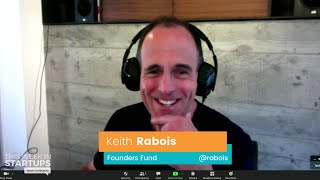
In this interview with Jason Calacanis, Keith Rabois argues that there are no valid reasons against taking a company public, citing examples of innovative public firms and the strategic advantages of public markets such as access to capital, clearer valuation for M&A, and a tool for managing employee morale. He critiques the mental‑health fallout of COVID‑19 lockdowns, warning of rising suicide, substance abuse, and long‑term health costs, and dismisses universal basic income as a shallow solution that ignores the human need for purpose. Rabois highlights the rapid expansion of homeschooling and telemedicine as pandemic‑driven opportunities for lasting innovation. He then shifts to geopolitics, describing how U.S. companies are hostage to Chinese market pressures, the need for reciprocal content policies, and the limited impact of entanglement strategies. The conversation moves to market outlook, with Rabois predicting a volatile, possibly W‑shaped recovery and noting that many portfolio companies are experiencing both collapse and acceleration. He discusses why large tech firms may be hesitant to pursue M&A in a crisis due to operational mismatches, and concludes on a hopeful note that volatility creates fertile ground for new ideas, especially in education and health tech.
Chapters
This Week in Startups is brought to you by: SenPro Online from Pitney Bowes. Save time and money no matter what you ship or mail. Try it free for 30 days and get a free 10 pound scale when you visit pb.com/twist LinkedIn Marketing To redeem a free $100 LinkedIn ad credit and launch your first campaign go to linkedin.com/thisweekinstartups and Silicon Valley Bank, who, in partnership with Founders Pledge, has formed the COVID-19 Global Impact and Innovation Fund. This fund will deliver resources directly to organizations that can help make the most immediate impact in the fight against COVID-19. Learn more at SVB.com/impact.
Hey everybody, hey everybody, welcome to another episode of this Week in Startups. We are here in month two on day 56 of my shelter in place quarantine and I'm losing my goddamn mind. This is not easy for me, 100% extroverted on the Myers-Briggs test. But I have found great joy in doing the podcast and continuing on. And it's really great to see how we've really mitigated against the coronavirus here in the Bay Area. And it seems like we're gonna start getting to work or going back to work slowly, and I'm looking forward to that. And today we're gonna have a wide ranging discussion with long term friend of the pod, Keith Raboy. He's obviously a general partner over at Founders Fund, serial chief operating officer, I think is probably what you're known for just being a great operator and a great thinker. Welcome back to the program, Keith.
Pleasure to be with you.
How are you holding up under this? I'm assuming you went into shelter in place. in the beginning of March, like the rest of us, that second week or so? Or did you go a little earlier, a little later?
March 16th, so right on time, not before, not after. I'm going a little bit insane, stir crazy, even though I'm very introverted. Being deprived of human beings and any human contact is not particularly productive. I also enjoy working with founders and meeting with them in person to problem solve and consider new investments. you know, remote board meetings, remote pitches is just not an adequate substitute.
It's brutal, yeah. And I think people, I was talking to Ruloff, our mutual friend who you worked with at PayPal and is now at Sequoia, and he told me he feels exhausted. Like he feels like an hour on Zoom is like three hours in the real world just because you have to look at the camera and it just, it feels more exhausting. And after, I don't know how many, what's the largest number of hours you've done on Zoom in a day now?
That's a good question. I think it's probably about, I try to keep it to about six or so because it is so exhausting. There's so many more, you have to pay so much more attention to extract information versus all the nonverbal cues that you pick up on when you're in real life with people. You do save some time, at least for broadcast of information, dissemination of information. It's fairly efficient. You don't have as much chit-chat and distractions. However, for dialogue, discussion, debate, decision making among controversial alternatives, it's definitely not a substitute. And I like the interactive debate, discussion, sort of triangulation to the best possible answer. And video conferencing doesn't work very well. And then also being a founder-driven investor where I'm primarily evaluating the qualities and characteristics of a founder or founding team. It really deprives me of my oxygen. I think it's much easier for people who are technology or market-driven investor to survive in this new world order, but I found it incredibly challenging for myself.
It's exactly my experience because I too feel like my superpower as an investor is reading people and getting to know people in those subtle tells of like, is this person going to quit? Do they really care about this idea? Zoom removes all passion or nuance from a discussion. I feel like I'm getting no energy and it really reminds me of online poker players versus in-person poker players. The online poker players are looking at math, they're looking at metrics just like you're saying. Maybe the equivalent might be a market driven person, but if you're trying to get a read or a tell on a person and understand the relative strength based on what they're saying and how they're saying it, you just can't do it.
It's brutal. Yeah, I agree. That's probably an apt metaphor. I mean, I'm obviously not a very sophisticated poker player like you are, but that seems right to me. So for example, I have a former colleague of mine who is outstanding in interviewing and assessing people. And truthfully, he actually speaks during most of the interview. Nevertheless, he always walks away with the most insightful, accurate sort of description of the people I send in. and I'm always confused by this or it took me years of being confused because I would talk to my friends and they were the candidates and say, you know, what'd you think of meeting with X? And they'd say, well, I didn't say anything. But then I'd get this beautifully, you know, articulated summary of people, sometimes candidates I've known for like a decade and with these bullet points that were so pressing and it's so accurate. And I was trying to figure out how he does it. And I think what he actually does is he can just watch your eyes and between how you react, he can tell whether you grok concepts or not or how fast you pick up on concepts. and he's kind of watching your face, face in eye motion, and he can completely read you that way. I think that's impossible basically to do in a video conference.
Leads me to kind of a related question. You know, you and I, I think, are of a similar Gen X cohort. And we live through, got a number of crises from the 2008 financial crisis where the stock market people forget the NASDAQ I think it was around 5,000 and went down to 1,500. I mean, it was a two-thirds loss, I think much greater than 50% at the peak. That seemed like it was going to be totally cataclysmic. And of course, we came out of that with an incredible run that we've just finished up, a 12-year run or so, the longest bull market of our lifetimes, and I think since World War II. And we lived through the dot-com bust with 9/11 after it. It's a double whammy. And people say everything's gonna change, everything's gonna change, nothing will ever be the same. And I had this flashback to 9/11 when everybody said nothing would be the same. And to 2008 when people said nothing was the same, and the dot-com, and everything became the same. So is this time a black swan of black swans, or are we gonna go back to normal?
I suspect this is certainly more like 2000 or 2003, which is a sustained, sort of devastating nuclear winter for Silicon Valley. And then eventually right around 2004 and five, so roughly four to five years later, we emerged actually quite strong and arguably stronger. But it wouldn't have been that pleasant to be an investor, entrepreneur, or executive or individual contributor from 2000 to 2004. And I suspect that's more like what we're going to see than 2008 was more like a three to six month blip in Silicon Valley and the technology companies Probably because the financial services crisis, the global financial crisis was really a crisis for financial services that had indirect or collateral damage on other fields, other verticals like technology, whereas 2000, 2003 was a direct assault on technology, the quote unquote internet bubble, and therefore was much more meaningful, much more protracted in terms of its impact on our landscape. Right now, because software has eaten the world, Marc Andreessen is basically right. The entire economy is predicated on technology, software on down, and therefore anything that affects the economy as a whole absolutely has massive impact in Silicon Valley to entrepreneurs, to investors, to employees.
And what was magical about the time period you're talking about, the 2000s? post 9/11 emerged the Web 2.0 movement and a whole new cohort of founders who were some of the alumni, of course, of PayPal. You saw Jeremy do Yelp. You and Max were working on, I think, Slide in the 2005 time frame about, or was that 2007?
Max started in 2005. I joined in 2007-8. I was at LinkedIn, which is another one example.
Absolutely.
You launched LinkedIn in 2003, there's obviously Steve, Chad and Javed who launched YouTube. The whole PayPal crowd was back to work and back in business pretty quickly, which is actually the rationale I have of why a bunch of misfits, because most of us were misfits, we weren't really connected to the establishment in Silicon Valley in any material sense, were able to move more to the middle of the ecosystem because everybody else was terrified and afraid. They really believed that there wasn't going to be another generation of technology innovation or certainly not a consumer wave of innovation. And so everybody was literally refusing to write checks other than basically us and very few people were starting companies. And so the people who were starting companies, we became a magnet for advice and for capital. And because there was another wave, in fact, probably a larger wave, It allowed us to become pretty critically important to the entire ecosystem in Silicon Valley.
It's pretty hilarious too, because you define that group as a bunch of misfits, and then in this last five, 10 years, you guys have been, coordinated the establishment and the old boys club, as it were. Knowing many of you from Elon to Peter to, Sachs, misfit's a great description. It's fairly accurate. You guys are a bunch of misfits, absolutely unmanageable, unable to work for other people, you know, argumentative, chess playing, maniacs.
And- Pretty accurate. Yeah, I mean, there's this famous cover story that Peter really liked and still enjoys, I think, telling stories in anecdotes about, but there's a cover story of Red Herring, which was Earth to Paypal. And this was 2001 or 2, but it basically conveyed, you know, how crazy the rest of Silicon Valley's establishment, because Red Herring was a Silicon Valley establishment publication. It wasn't like an East Coast media pub. And it was conveying like, these people are crazy. They think they're building a company in post-2000, they think they're gonna go public post-2000, they think this is gonna be an important company. Who are these weirdos? And, you know, from every, from every angle, from our confidence and belief to our management style and the way we operated the company, all of this was very heretical to traditional Silicon Valley norms. Some of this stuff has become much more common. Some of it was actually ahead of its time and quite prescient. But in any event, the revisionist history, which is like the PayPal people had some network, had some can access this is simply false. The eBay group was more like the mainstream establishment, Princeton, MBAs, management consultants. And, you know, we are the Israeli debate society or something.
Yeah, no, South African immigrants, yeah, just.
A bunch of all immigrants, basically all immigrants except me. All immigrants, very confrontational culture.
Debate culture. It was the Debate Club was like a really good, I mean, like literally the best debates I've had in my life come from my friendships with I think that group of people, very independent thinkers, I think, as well, and willing to mix it up, which is obviously a great strategy, but it's sort of like, what's the quote from Game of Thrones? Chaos is a ladder, I think is that.
I wish I was his, talented and articulate at debating as I was back in 2000 to 2003. My emails, I occasionally get the chance, an opportunity to read an old email thread and that and then up to Kate so badly just to keep up with that crowd required a precision of thought insight at a whole nother level than what I what I've been doing for the last decade.
With SenPro online from Pitney Bowes, you can simply print postage stamps and shipping labels even when you're working remotely. Yes. For as low as 4.99, that's 4.99 a month, you'll get access to special discounts and save up to 40% off USPS priority mail. Plus, for being a this Week in Startups listener, you'll receive a free 30-day trial to get started and a free 10 pound scale to ensure that you never overpay, which always made me crazy. Some SendPro Online benefits include printing shipping labels and stamps, even when you're working remotely. Scheduling packaging pickups is easy, and tracking shipments from departure to arrival is seamless. And you're going to save up to five cents on every letter and up to 40% off USPS Priority Mail. If you don't know what Priority Mail is, it's a great deal. Starting at $4.99 a month, that's $4.99. You can also calculate the exact postage online, print right from your PC or Mac, and avoid trips to the post office. Go ahead and visit pb.com/twist to access this special offer for a free 30-day trial, plus a free 10-pound scale to get you started. That's pb.com, a really short domain name, slash TWISTTEK. to experience huge savings in your shipping costs with a free trial of SendPro Online from Pitney Bowes. Let's get back to this amazing episode. Well, and I think what's interesting about this is going to be kind of a weird segue, but when you look at here we are 20 years later, two decades later, everybody grows up, everybody's got a, you know, a range of impressive to, you know, outlier success in that group, And then we superimpose that upon the dialogue around coronavirus, around the once in a lifetime pandemic. And there's a group of people straight down the middle, and I'll call it Silicon Valley debaters, Silicon Valley Debate Club, of people who got on coronavirus early and got on a lot of what was fundamentally going on and what possible solutions were and that we should be even paying attention to that. And then you look at the other cohorts, the politicians who have equally gotten it wrong, left and right. I'd like to get into that with you and try to define your politics because it is a little hard to pin down. I think all of ours are hard to find now. And then on the other side, you have the media, which in its wokeness and hatred of Trump seems to have lost any ability to really consider any position that isn't anti-Trump. So then you're left with this group of people who are down the middle, whether it's you or Sachs talking about masks or Balaji who we had on the podcast two weeks ago, talk to me about what you think has happened in the intellectual space when a crisis happens and people start discussing it. I would rather go to the entrepreneur class, I'll call it the entrepreneur class, to get my information to debate the subject than to go to the media or the government.
I agree. I think especially in a novel newfangled, rapidly emerging threat, it's unlikely more slow moving, more traditional people who basically apply preexisting paradigms are unlikely to be right. I mean, basically what makes you a quote unquote expert is you're typically an expert in the prior paradigms. And when you have something new that's basically unprecedented, almost by definition, the prior paradigms don't work. And so the people who are typically most blind are actually the incumbents or the experts. And this is what we see in Silicon Valley across any industry. So the more volatility, the higher the velocity of change, the more unlikely it is that preexisting institutions that are large are likely to be right. So if we saw coronavirus number two, that was a species of coronavirus one, I suspect more of the establishment would get things more right because that's what establishment people know how to do and establishment institutions are adept at processing. But when you confront a new problem that's never been confronted before, you need first principles thinkers more often than not.
Explain for people who are hearing that term first principles but haven't looked it up. How do you think about first principles, what it is, why it's important?
I think it's important basically to get, it's basically the application of logic and thoughtful logic to a set of problems. And it starts with basically asking a series of why questions or why not. And basically you keep digging until you get to a why not or why not that's thoughtful and sort of like ground truth. It's a technique that a lot of executives who are very successful apply, which is lots of people with an organization will say, well, we can't do X. And the we can't is either a substitute for I don't want to do X, that the pain of X is very high. Other people have told me that X can't be done. It's very rarely a actual factual determination. that X is metaphysically impossible. And so what tends to get one promoted and lead to success in Silicon Valley is constantly asking the next question, which is, why not? And then digging and driving and driving. So there's a really funny and amusing example that some of my colleagues and friends tell about my days at Square, when we had a really important deadline in shipping some very complicated new hardware products to meet some mandates that basically Visa and the media sort of imposed on us. And we had to do a pretty hard swap of our hardware in a very compressed period of time. And so we had to build a lot of hardware inventory really, really quickly and then completely switch out, swap out 10 different retails, store to store chains, change our shipping process to individual users. And so it was pretty messy and there was a very specific deadline and we weren't going to meet it. And the hardware team is very adept. The hardware team is led by a great guy from Apple. The team's really, really competent, but they were just going to be short. And I didn't have a lot of negotiating rope with Visa. And so we're trying to triangulate what to do. We had several meetings on problem solving. And we were sitting through these meetings, and I would ask a series of questions about, well, how many lines are we running per day? How many days per week, blah, blah, blah, blah, blah. and the math would add up and they'd say, we can get 300,000 units by this date, February 15th. And I could say, I needed 500,000. And so constantly running to, I'd constantly be probing, probing, probing, probing for arguably hours at end. And then finally in the middle of one meeting, I looked up and said, are we running production on Sunday? And the team looks back and says, no. And I said, well, why can't we run production on startups?
You can't.
Yeah. Well, and they actually looked up and they said we could, but it would cost 15% more. And I said, well, there was no part of me that said there was a cost requirement for this hard swap because the difference between 300,000, 500,000 and 15% is a rounding error in the grand scheme of life. Long term, the cost matters, but to meet the deadline imposed by Visa, it obviously does not matter. But they, despite Like a decade plus of expertise of shipping hardware for Apple at infinite scale. Like I'm talking like billions of pieces of hardware. They actually had never considered running the line on Sunday. And then it took an amateur, like Keith, who knows nothing about hardware, certainly back then, who literally knew nothing about hardware, to just ask a basic question. Like you said six days times three shifts, there is a seventh day. Have you thought about that? And the answer is, oh shit, no. So we actually, we made our deadline.
We started working on Sundays. as a fresh eyes on a problem is one of the great investment theses, these eyes, is that the plural of theses? One of the great theses I've had, which is, hey, a person who has not been in the taxicab business might have a fresh approach to this. And a person who is not a meditation expert might be better to run a meditation app than somebody who spent 30 years in an ashram meditating. Like they might not have the secret cows to say, oh no, it can only be done this way. Oh, you cannot do it that way.
I totally concur. I almost never, both as an angel for 13 years or now as a professional investor for seven, have funded somebody with domain expertise. I believe people with domain expertise basically learn what you can't do, not what you could do. Even when I do diligence, I very rarely will consult with experts in quotes. And if I do, I ask a species of the same questions we just went through, which is explain to me why this can't work. I don't want to hear anything else. I literally don't want to ask them questions about whether they think it would work or what the probabilities are. I want them to explain with a simple factual statement what is actually blocking it from working. And occasionally a good expert will highlight something that's a very specific, very narrow, I've got an intractable problem. But if they don't have an answer like that, they're not going to invest.
Yeah, it's almost as if in what we do looking for outlier results, the incumbents and the super knowledgeable people believing in the idea means it would have existed already. Whereas, and it can't possibly be breakout. If it's already existed and it's already in their wheelhouse, then it's not necessary. It reminds me you have of your pinned tweet, which is something to the effect of, hey, listen, if you want to find a great industry to go after, find one with a low NPS score and just verticalize it and make it better. Explain, unpack that tweet for us.
Yeah, okay, let's start. First thing, I'll give you a PayPal anecdote. At PayPal, we had 254 people in the Bay Area and then another set in Nebraska. Of the 254 people in the Bay Area, only three had any degree of financial services background. So to me, that's about the proper ratio.
One percent.
Yeah, three of 254. One was our general counsel, which made some sense.
Landmines.
So same rough ratio, by the way, at Square. If you included me as someone who had some financial services expertise, which is definitely debatable, you probably in the first 300 people had, again, like two people. So I think that's a good dynamic. So that's kind of my philosophy on the tweet. I realized that a lot of the best investments that I made had some common characteristics. Square certainly, this would apply to, which is find a very fragmented industry that has typically extremely poor customer satisfaction, whether you use NPS or proxy for it. and then figure out how to improve the experience by creating an end-to-end solution, roughly verticalize it. And that's a great formula if you can figure out how to do that. And so I sort of described the key components in a tweet when I was actually on vacation a few years ago and realized that it actually applied to many, many businesses that I had had indirect sort of success with as either an executive or an investor, but without a clarifying overarching theory. And then I try to distill it all together. So now for the last two or three years, I've applied it more proactively and sort of filter things that way.
I need to tell you the world is changing and that businesses are being forced to adapt in many different ways. It's uncertain times, but we're going to get through this and you to make sure your marketing gets results right now. You need to have that tight so you can keep your business vibrant during these challenging times. And LinkedIn can help you reach people who are looking for opportunities to help their business. With over 62 million decision makers on LinkedIn, you're able to connect with the right business leaders. 71% of people use information on LinkedIn to inform their business decisions. I, I can't believe this is not a hundred. I use it all the time to make business decisions. And with LinkedIn ads. You can make sure your messages are getting through to these decision makers. LinkedIn marketing can help you build campaigns using objective based advertising. That means you can customize the campaign experience based on the actions you want your customers to take. So an example of that might be for angel.university, which I'm trying to get people to come to to learn how to be angel investors. I might want them to watch a video of the angel podcast. I might want people to fill out a form to learn more. Or I might just want people to visit the website and then retarget them over and over again. You have all these different goals and you can do that objective based advertising with LinkedIn marketing. They have great targeting tools that will help you focus the objective based advertising down to the job title. So in this case, I could take somebody who is an investor already, an angel investor in their title, and then I can say to that person, I want to generate a lead. You can also do it by company name, location and more. Maybe I'm doing Angel University in the northeast corridor. I want to hit Boston, New York, and DC. You get the idea. LinkedIn ads can help with all these types of businesses, and you'll get the marketing results you need. Today, here is a ridiculously generous call to action. Oh my Lord. See how LinkedIn can help you with a free hundi. That's right. $100 a bean from your boy, Jay Cow and the team at LinkedIn. $100 in LinkedIn ad credits for your first campaign. Visit linkedin.com/thisweekinstartups. No spaces, no dashes. That's right, linkedin.com, you got that domain, you know that one, it's in your history. I just want you to add slash this week in startups. One word, linkedin.com/thisweekinstartups. Okay, thanks again, LinkedIn for supporting the podcast. It's almost like if you had the customer support information on a company and customers were extremely dissatisfied and complaining constantly, Boy, what a great industry to go after. And if you think about the airline industry, which is once again going to get bailed out in all likelihood, they are hated so universally that when somebody with even a modest, modest amount of consideration for them emerges, like Virgin America or, you know, I'm trying to think of another airline, Ryanair, I guess, in Europe, Southwest originally in the '70s, Just thinking slightly about the passenger experience and making it marginally better, they become these rebels and incredibly loved. Yeah. If you could follow all the complaints on the Twitter about a company, you might be able to find the verticals. What verticals have you found this in and applied it to as an investor?
Healthcare. I think healthcare, like for example, primary care is quite fragmented. And the NPS isn't quite as bad around primary care physicians as some industries, but it's very fragmented and certainly the experience can be improved by verticalizing it. Similarly, Do you have a bet in that yet? Yeah, I think forward health would qualify. So forward is basically creating an end-to-end experience where we invest in technology, innovation across the board. to create a better version of the healthcare system where we're responsible for everything, surprisingly and delighting the customer basically. So you feel like when you go for a vacation, you feel more like you're going to Starbucks or a sauna, you know, high end like retreat, then sitting in, you know, an old doctor's office and getting exposed to germs like left and right and waiting a half hour for your position. But we actually use innovative technology to improve the experience for our customers as well. So I think there's many, I mean, as I said, this was kind of a revisionist theory that I had applied with hindsight to a lot of my best investments and realized that there was common denominators versus like a prescriptive formula. And then only in the last two to three years have I actually applied it, like, prospectively.
It's so funny. I just did a tweet the other day. Or no, I did it in my private Slack channel and I said, what is something you subscribe to that is not Netflix, Spotify, and obvious Apple Music that you are absolutely in love with and cannot live without? And one of them was Forward. And I went to the Go Forward website and I looked at it and I was like, oh my God, listen, I've done well for myself. I have a, what's called a concierge doctor, which means I pay I don't know, 10 or 20 grand a year to have a person I can text and basically just go anytime I want to get whatever I need. And they'll come to the house and take care of family. But Ford looked like that. It was almost concierge doctor in a, I think it's $199 a month. They do your blood work and they monitor everything and you go in and you go on a scale and they do a whole proactive thing, correct? That's kind of the value prop.
It's basically like scaling a concierge level quality service, but it's now $150 a month. And unlike most concierge doctors or perhaps any, we actually invest in technical innovation. So the average concierge doctor is a very proficient doctor. I've had one since 2003 as well. But he doesn't really know how to invest in technology. He knows how to get the latest expertise and do research on particular long tail issues. But he's not like creating a new version of acts that's going to be innovative. So forward forward has an R&D team. You know, we hire engineers at Google and Apple, etc. And then create a whole new customer experience. But it's also significantly more affordable. If you take $150 a month times 12, you know, that's like low thousands of dollars versus 10 to $30,000, which is where a traditional concierge doctor would price, you know, him or herself.
Right. And it's really interesting because My poor concierge doctor has to deal with me listening to Tim Ferriss and other folks.
Doing like, I'm so sorry.
Like Kevin Rose and all these like maniacs. And I'm like, tell me about Metformin. Should I be on this or not? 'Cause these guys are all Metformin now.
And they said that this is the anti-aging drug. Yep. That's a classic example. In fact, my concierge doctor in 2015 convened a panel of experts for me to debate by email whether I should take metformin.
Where did you wind up on this? It seems like a no brainer to lower your insulin. Is that what it does?
And just, well, so in 2015, they convinced me not to do it. And I actually do intend once this virus stuff is over to revisit the topic. I've read recently a great book by David Sinclair out of Harvard entitled Lifespan, which basically argues that aging is a disease. And like any disease, it's actually preventable if you do the right things. One of the things he highly endorses is taking metformin. So that alone has re-motivated me to seriously consider it.
All right, I got to just CC me on that one, because I need to get in on that as well. Let's talk a little bit about, I want to get geopolitical for a second, and then we'll get into the coronavirus. I have long been, I guess, a hawk on China. because I don't believe in enabling authoritarian human rights violating countries and governments, whether it's Saudi Arabia, and you and I have had this conversation before, and we're in alignment on it, and I also put China into that. And now we see with this pandemic that our dependency on China has.
You.
Know, impacts that we may not have taken into account, whether it's PPE, you know, and just like a face mask that we can't build face masks in this country or ventilators and we need to get Elon Musk rallied up to start making ventilators or all of the drugs are made there, recreational and prescription. Like we're in a situation where we've optimized the supply chain, these God bless some people at Apple who are who can get you your iPhone 12 or 11 or whatever the latest one is. three days after it comes off the line, but we may have optimized this too far to our own detriment and risk with a country that in this case, either murdered, jailed, or suppressed whistleblowers who would have changed the outcome of hundreds of thousands of people dying. Am I wrong? Right? And how do you feel about it?
Yeah, no, I tend to agree, as you know. So let's start with first principles and first historical principles. Our entire rapprochement with China was predicated on the idea that we had this mortal enemy in the Soviet Union and that we would counterbalance the threat posed by the Soviet Union, which was quite lethal and quite scary, by aligning a little bit more with China, starting in 1972 with President Nixon and then throughout the 1970s. Post the collapse in 1989 of the Soviet Union and the, you know, pretty much elimination as certainly as a fatal threat of Russia slash Soviet Union, nobody took a step back and said, why are the Halloween business with China in the first place? Like, no one really revisited the theory, which the theory was arguably sound, that if you have a mortal enemy, you know, one might need to find allies. And that might be, you know, an interesting way to solve problems across the globe. You know, we had various allies in World War II. A lot of them were not wholly within now. You know, we had to pick our out. We couldn't choose, you know, everybody to be perfect in World War II, because we had a mortal threat, you know, posed by Nazi Germany and Japan. So no one said, wait, wait, wait, wait, wait, wait, the Soviet Union doesn't exist anymore. Why are, you know, why are we dealing with this authoritative regime? In addition, there is a thesis posed by, you know, several well-meaning government officials and academic types, that the best way to deal with authoritative regimes generally was to expose them to economic liberties. That by definition, applying a free market to authoritative country, authoritarian countries, would over time lead to democratization. Very controversial, very debatable. There's some examples where it seems to have actually been true. And the theory was by, you know, sort of engaging with China, we would wind up with a less threatening hostile authoritarian China. I'm not sure that was true either. And again, the original idea, maybe call it the 1980s and 90s, wasn't like intellectually broken. It was like a theory and maybe even worth trying. However, by like 2005, 6, 7, 8, or 9, the evidence was that the theory wasn't working. So again, people were very slow in taking action based upon data when the world and the evidence and the weight of the evidence was different than the theory would have predicted. I don't have any objections to the theory per se, but I think it was a mistake in a pretty severe miscalculation to go from, like, call it 2008, 9 or 10 to roughly the election of Trump in 2016 without ever revisiting the question of whether entanglement engagement actually worked and it certainly worked vis-a-vis China to his credit. As you know, I'm not the biggest proponent of Trump, but I'm willing to give him credit for the few things that he does very well. One was even as early as the campaign was emphasizing the threat posed by China. You know, there's several speeches.
Yeah, he's 100% correct on it. I mean, and listen, I, there's nobody who I would rather see not be in office than Trump.
Like on the China issue, he is like, get on from his campaign. He was like China, China, China, China. There's some witty YouTube videos. Yes. People extract, you know, extract these parts of his speech, put them all together. So he's been laser focused on it from the time he started running for office. And, you know, even in Silicon Valley, among most of my friends who really don't like Trump, I would say somewhere over the last two years, 40 to 60% of my friends and colleagues agree with Trump. on China.
Right. And these are the most liberal of liberal elites we're talking about. We're talking about people who would wish him harm.
Like, yeah, pretty much close to that. I mean, don't call the Secret Service yet. Right. But yeah, but just sure of that.
Just sure.
I mean, their natural agreement level with Trump is probably runs at about 10% on a policy, you know, policy. And I try that's 50, 60%. So, you know, he's basically been writing and being willing to criticize the prior approaches to China to really study the evidence and to confront China, which I think China does pose a threat economically to the US, does pose a threat intellectually on the IP side. And I think we did take our eye off the ball on the manufacturing side. There is a theory of liberal or libertarian economics called comparative advantage, which is mostly right. that philosophically and from an economic efficiency standpoint, you want countries to develop expertise in some products and services, and you want them to do as much of the production in those products and services where they have a comparative advantage on a cost structure basis. However, that doesn't, and that is, that does create economic efficiency for everybody in the planet.
Sure. We design the iPhone here, and they put it together there, right? That would be the perfect example.
Exactly, very strong argument, very intellectually powerful. However, it doesn't layer into account a strategic dimension, which as an example, we kind of went through this debate ourselves with the dependence on foreign oil in the 1970s. So oil also has the same characteristics. In theory, it should be produced in the place that can produce it, you know, with the greatest deposits and produce it and extract it from the land at the lowest possible cost at scale. However, in the 1970s, due to a variety of geopolitical factors, many people in the United States came to the conclusion that we did not want to be, quote unquote, dependent on foreign oil. And so we invested a lot in other techniques to create a strategic petroleum reserve in the US to innovate around the process of extracting oil, think fracking. And actually we wound up 30 years later to be the largest exporter of oil.
Mission accomplished.
And in fact, Nobody in the Middle East has any leverage on us anymore, but that was a conscious decision from a geopolitical standpoint to invest in things that might not have been economically efficient. So now let's talk about manufacturing, particularly around the drugs. That's become a recognition that almost nobody was paying attention to. Like what fraction of prescription drugs are manufactured in China? Well, it turns out every version of penicillin, the more modern versions, we do not have the capacity to create antibiotics in the United States at the moment. That's obviously not a great situation, let alone the PPEs and the ventilators, which have specific kind of triage issues. But we've basically not been paying attention to vulnerabilities that we've created by using economic efficiency writ large. And I think another point that you made in passing, which is worth highlighting explicitly, is a lot of the recreational drug problems we have in the United States almost surely emanate from China.
Fentanyl is made there. It's actually, I believe, made in Wuhan, and then they ship it to Mexico.
Yeah, no, absolutely. So the entire opioid crisis in the United States is to some extent the responsibility of China. 70% of all of it is manufactured in China with the government's consent.
Yeah, well, nothing in China gets done without the government's consent. Let's be clear, they've got their thumb on the scale. So if we just pause on this for a second, and then we're gonna seem like superhawks now. But if we were to take the death toll in the last two years from coronavirus and opioids and attribute them on a percentage to their origin, which I think some people feel is xenophobic, but the origin is the origin. If you're making the fentanyl, that's the origin of it. And if this disease came out of Wuhan and specifically out of a lab in Wuhan and you suppressed it, you're guilty of the two things that, you know, outside of suicide might be two of the, what are they, two of the top five killers in the United States right now?
Absolutely. So, like, let's, let's be very specific on the fentanyl. This is not a drug that can be manufactured under the radar. It requires very sophisticated industrial equipment. So, first of all, nothing goes on in China without the knowledge and awareness of the CCP.
And approval, because if they're aware of it and they don't like it, you're in jail.
So, well, as we've seen in many, many cases, however, like, this is not something you just do in your garage. There are some kind of.
Not meth labs.
This is not that. This is like high quality, high production, very expensive equipment. And so one way or the other, someone has to account for this. You know, I, I think this is so fundamentally destructive to the US and such obviously the fault and responsibility of the Chinese government. And no one has really held them accountable for this. Then, of course, you have the coronavirus, which is debatable about exactly how it originated. Although I think it is quite interesting and arresting that China suppressed every piece of information designed to get to the origin of the virus. Now, if you would think, if you're a normal human being and there's this new virus that's killing lots of people, you would sort of want to figure out how did this start? Like how do we prevent it from happening again? So what is instead, what is trying to do? It basically jails murderers or expels anybody who's interested in doing research, whether like scientific research or journalistic research on the origins of the virus. Clearly there's something to hide that they're hiding and masking. I personally believe it's probably more they're hiding and masking negligence or gross negligence or reckless disregard for human life than a conscious strategy. But anytime the government expels all the journalists, bans scientific research, and jails people who are trying to whistleblow, it's not because the government has nothing better to do.
As we navigate unprecedented times, Silicon Valley Bank believes that collective action is the best way to overcome the challenges we're all up against. This is why Silicon Valley Bank, in partnership with Founders Pledge, has formed the COVID-19 Global Impact and Innovation Fund. This fund will deliver resources directly to organizations around the world that can help make the most immediate impact in the fight against COVID-19. Silicon Valley Bank has made an initial $1 million investment to fund this critical work and invites you to join them in helping those in need. Silicon Valley Bank continues to offer solutions that support small businesses and the innovation economy. For more than 35 years, Silicon Valley Bank has supported countless innovators with a passion for solving the world's biggest problems and today remains committed to helping its clients and employees and our communities manage through these uncertain times. To learn more about the Silicon Valley Bank COVID-19 Global Impact and Innovation Fund, visit svb.com/covid19 slash impact. Yeah, let's take a moment and pause on this and unpack it for a second. If a pandemic broke out in any other country, you know, Africa, the United States, wherever Europe, and the government disappeared the whistleblowers, how would a rational court of law or public opinion or just any just basic common sense look at the disappearance of a whistleblower in the United States, as screwed up as our system can be at times, we make movies and heroes out of whistleblowers. It is a core fundamental relief valve in democracy to have these and to champion them. And you don't even have to agree with them. I mean, I'm no fan of Julian Assange or what's his name, who's the other big whistleblower in Russia right now? Oh, Snowden. Snowden. Like, I'm no fan of either of them. I think they're both in Russia's pocket and have always been. I'll put that aside because that's a debatable one, at least in the, in some circles. But it feels like they are directly responsible, the Chinese government. And this is not, this is no longer a conspiracy theory for experimenting with these strains of the virus in that laboratory and disappearing whistleblowers. These are now irrefutable and covered widely in press, but we're not talking about it.
Yeah, I think there's lots of legal principles that would apply here, but certainly.
And you're a litigator, right? Weren't you a litigator at some point?
I was.
For a brief minute?
For three and a half years after clerking. So, unfortunately, four and a half years. I sort of wish I could have applied that four and a half years to another startup.
I was about to say being a lawyer is just like, You look at your time and you're like, what came out of that, right? Uh, you know, sometimes something does, right? Yeah.
I mean, I actually enjoyed practicing law more than some of my colleagues. Like Peter Thiel was a lawyer for three months and four days and David Sachs went to law school but never practiced law. So arguably they were much sharper and smarter and valued their time more than I did. But I actually enjoyed the process of practicing law as a litigator and that's why it probably took me four and a half years to extract myself from it. And there are some lessons that apply. Unfortunately, I would say over the last 30 years, almost every part of American society is heavily infused with law and regulation. And being relatively adept at asking questions about law and regulation can be helpful both as an entrepreneur and executive and investor. It's not by accident that many of my best investments have derive from fields that are heavily regulated, think financial services, housing, IP. So I think- Finance, yeah. Yeah, it can be a strong, unique perspective. However, four and a half years plus three years of law school, the opportunity cost of seven and a half years probably isn't justifiable. But I actually try to leverage- It made you sharp.
I look at my journalism time in a similar fashion, 'cause It made me a very inquisitive person who mastered communications that then served me well viS-A-Vis this podcast and other things in my later in my career. Would it not be, or what do you think the probability is that when all is said and done, if we do find out that there was negligence on the part of China, what would the proper reaction of the rest of the world be toward China to forgive it and say, hey, it could happen to anybody or to say things need to change here and, or we're just going to start the process of disengagement, because Japan, from what I understand, has now started the disengagement process and is subsidizing the moving of their companies factories out of China to other locations. And there are plenty of places with low, low cost labor that would love to have factories. Sri Lanka, Vietnam, Etc. Pakistan, India. They would love to get some of this work. Should disengagement now be the, the new approach to China? Is the slow untangling of this engagement and is that dangerous because it could send them further into the wrong direction?
I, I believe that that's exactly what we're going to see is disengagement. Japan is not a Let's call it reckless country. They're pretty conservative in their geopolitical actions over the last 50 years.
100%.
India is also going to do the same thing. I think the United States is going to be actually a bipartisan initiative to rebuild manufacturing in the US, at least for national things that are perceived to be relevant to national security. I think people have been moaning the lack of consensus and bipartisan cooperation. Ironically enough, one of the areas where you're going to see jointly sponsored legislation in both the House and the Senate is going to be around rebuilding our manufacturing capabilities in the United States as a function of not wanting to be derivative independent upon China. So I think it's actually going to be one of the rare bipartisan cooperation, sort of instant, which would be wonderful.
If we could unite under that concept of America, and it's not xenophobic, it's we need to have some security for our citizens that if things go poorly, we can sustain ourselves. And by the way, we have the southern neighbor who we've had a wonderful relationship for a long time who also likes to build things. Why are we not deepening that relationship and building factories there, which are a hop skip from Texas?
No, I think we will. And we'll also use some automation. One of our competitors strengths is doing some manufacturing, not all manufacturing can be done yet by robotics, but we'll definitely use that. And that may allow the economics to be not as severe as what they might otherwise be if we solely manufactured in the US. But I think there's going to be, certainly if Trump wins reelection, this is going to be a major priority for the United States. I think Biden is guilty of really being quite favorable to China over his career. Trump rolled out a new ad that I think is going to be the arc of the general election campaign where he's going to call You know, nickname Biden, Beijing Biden. Wow.
That'll stick.
I think that is going to be the primary debate if it's Trump versus Biden is Biden's been so wrong for 40 years on foreign policy and particularly on the question of China. And as China becomes the top level concern that many Americans have, the basic Biden is going to be a real problem for for the Democratic candidate. Now, it depends on who he selects as the VP. There are some VP candidates that are actually pretty hostile to China themselves and actually have a pretty good track record of criticizing China where appropriate. And there's some that are much down the middle of Beijing Biden. So for example, neither of these two senators do I like, but Elizabeth Warren has actually been pretty critical of China and has put out some pretty strong statements. about China and Hong Kong and, you know, various issues, whereas Kamala Harris is a Beijing Biden, you know, groupie. Yeah, she's very, she's very friendly to China, doesn't see anything wrong with China, Etc.
It's amazing to be the people who don't see on the left, who don't see anything wrong with a country that has a million people in jail because of their religion and will pick up somebody in Hong Kong who has a bookstore and re-educate them for three years. and will put somebody in a gulag for selling a VPN. And this is the left. They have totally sold out their entire position on human rights.
The left is so hypocritical on China, on human rights issues. I think the Hong Kong, it became manifest to many Americans in some of the Hong Kong debates last year, with the NBA and how the NBA acted. I think it really clarified that there's right and wrong in the world, and China certainly isn't on the right right side for many, many people where it had been a bit obtuse, a little bit abstract. You know, for example, you know, I find one of the most unfortunate moral acts by the United States in my lifetime anyway was the 1979 agreement not to recognize Taiwan. So we basically took a Democratic government and made them the black sheep of the international to appease China. And very few people have been willing to revisit that until the Hong Kong protests emerged and until China started cracking down, there's now a lot more attention to this issue. I think what we're going to do, fortunately, someone gave me the spark of a great idea recently on Twitter, which seems to have some legs, which is, I think, admitting Taiwan into the World Health Organization.
Oh, it's a no brainer. It's a no brainer.
Yeah, it's such the brilliance of that strategically is so great. And the momentum behind it is going to be almost unstoppable and it's going to drive the Chinese leadership absolutely insane.
Here's the thing about the Chinese.
They can't stop that. Like, whereas the UN and various other world bodies, they would absolutely be able to stop. The WHO is such a brilliant idea. And I actually got it from a more left-leaning journalist.
No, I saw it trending on Twitter. And it's such a brilliant idea. And if you think about that with Hong Kong and the protests there. Daryl Morey, who is, I believe, the greatest GM in the league, I mean, you're talking about somebody who's assembled superstar after superstar, gets thrown under the bus by the NBA for simply tweeting that he supports the rights of the protesters. An American is ostracized for defending freedom of assembly. It's unconscionable.
It's insane. It's like, you know, this is the problem with the entanglement strategy and the basic Biden problem is Americans were told that if we allowed American companies to generate profits in China, that the Chinese regime would liberalize.
We would have influence. We would have influence.
We have influence and therefore they would eventually become less authoritarian. But that's just not true. And in fact, you could argue they turned it around so that the the companies in the US that are derivative on US profits think like Hollywood and the NBA, particularly the entertainment sector, are actually more likely to be held hostage to the Chinese leadership than to the American government.
It's such a brilliant point because if you think about it, and now you want to talk about liberal elites and just how bankrupt they are, the liberal elites in Hollywood are more than willing to change the endings of their goddamn and corrupt their art to get the incremental, call it 10%, 20%. I mean, we're not talking 50% of the revenue. We're talking about like an incremental 10%, 20%. It'd be like you and I getting an extra point in a company or two. I mean, it's not that big of a deal. How much money do you need as Tom Cruise? How much money do you need as the NBA, as LeBron James, whoever it happens to be, to not come out and stand for human rights? It would be better, literally, to leave China and make 10% less money than to be in China. And for LeBron James to have to be, I mean, he came out upset at Dara Morrisey, which is just insane. We need to stand for human rights in this country. What do we stand for if we do not stand for basic human rights? And this engagement has now flipped on us to now I mean, entanglement's one word, but being held hostage is the other word.
Yeah, no, I mean, there's someone else pointed out and observed that you look at all the Hollywood movies, you know, created over the last 40 years, it's almost impossible to find a Chinese villain, whereas like the canonical villain is like a Russian, you know, mobster, Russian, you know, oligarch, Russian somebody. And that's the function and that's the result of the Chinese market being lucrative, Chinese ownership of some of these companies, they basically used it to basically edit scripts.
Right. Why on earth would we allow TikTok in this country if we're not allowed to have Twitter, Snapchat and Facebook in China?
Yeah, no, I think that's going to become also an area for bipartisan cooperation. There's going to be a quid pro quo requirement that, you know, censorship works. We don't believe in censorship. The United States should not be involved in censoring Chinese companies. I actually believe China should be allowed to express itself and disseminate its propaganda here. However, if they're going to borrow content from the United States to be disseminated in China, we should have somewhat of a reciprocal policy.
100%.
I mean, but I do believe, I'm not somebody who believes that Twitter should be censoring Chinese government viewpoints on Twitter, for example. However, definitely Chinese companies, if they want to compete in the US, the similar or comparable companies must be allowed to share information in China.
It makes no sense to censor the Chinese government on Twitter or YouTube. We want to see exactly how they're doing their propaganda. We want to put a spotlight on it. Better, I mean, you probably saw that meme where they were making fun of us for not putting on masks. And they're like, we told you to put on masks. It feels like this War when it does go down is going to be a meme war on Twitter.
Yeah, no, I mean, and many wars have been, you know, propaganda battles before this isn't completely unprecedented. Like in the 1970s, we created radio free Europe to broadcast into the Eastern bloc.
Yeah, Berlin.
Yeah, and it worked. It was very effective. So, you know, there's always some degree of propaganda framing ideological battles. that go into a cold or hot war. So I wouldn't be surprised if that happens here. But I don't believe that the US government or tech companies should say, just because you're owned or driven by Chinese leadership, that you shouldn't have a voice in the United States. But I do think that therefore at the same time, American enterprises need to be able to express other viewpoints in China otherwise we're kind of distorting the marketplace of ideas.
100% we need to think about this relationship deeply. Let's talk about startups, just to put a cherry on top. I would not be opposed to taking our stimulus bill and then cutting and pasting it into an invoice and shipping it to China and saying, here's an invoice for fentanyl, here's the number of deaths, at 10 million per death. We're taking this off the debt. And then here is the the stimulus package. If you guys did in fact suppress this disease and the people who are the whistleblowers, we're going to expect a little bit of a credit here on the debt. Crazy idea or do you think that's something that will come up as a debate point in the next year, especially with the election?
It's definitely going to be debated. It's definitely on the table. I'm not sure about the wisdom of like repudiating debt. even for good reasons. That said, there are examples through history where versions of restitution and reparations have been used, sometimes better than others. Obviously, there's a theory of history that says World War II was somewhat a function of inflated reparations imposed on Germany. You can debate the theory and what the appropriate cause was and whether it would have happened absent reparations anyway. So one has to be careful with what one does. I don't think the answer of exactly what policy to proceed with is easy, but I think there absolutely will be a specific reaction that the administration, and with some degree of bipartisan consensus supports.
Yeah, I guess it would be based on if it's negligence, gross negligence, or literal Yeah. Supressing of this information. Why is the stock market having a V shaped recovery? When everybody was saying I was talking to Sachs, our mutual friend and Chamath, I was saying feels like we're going to have like a W or a Charlie Brown sweater type situation. Sachs said he thinks it's going to be an L or a U. Chamath was in the U category. I was like, I think we're kind of a W. Where do you stand on the shape of the chart? Why is it going so bonkers right now and everything's coming back so delightfully?
So I agree that the recovery is likely to be suppressed and protracted. So more like 2000 to 2003 versus like an instant rebound absent like a heroic discovery of a vaccine quickly that can be manufactured quickly and has like 99% applicability, which is so unlikely that, you know, that's the only thing I see that would create a quick spark. That said, and I think this is pretty critical, I think what the stock market is doing arguably is a defense of the old corporate finance theory, which is in theory you value a public equity by the discounted cash flows over like 20 years. And in theory, there's nothing about this crisis that should affect the ability of tech companies to earn profits over a 10-20 horizon versus a one to three year horizon.
Makes total logical sense.
Now, most people don't totally believe in efficient capital markets anymore. And corporate finance theory has its proponents and certainly its critics. But to some extent, you could look at the evidence and say, if anything, maybe there is a step function acceleration in the adoption of technology and digital transformation of various industries. Think telemedicine as an example. And that we've moved, like Morris had a good quote about maybe accelerated X years into the future as a function of a crisis. You can stitch this stuff together into somewhat of a coherent theory, but to me it defies a lot of logic. So I'm somewhat unpersuaded and therefore I'm more nervous that eventually there's a trigger that really crashes the markets again. And then we look a lot more like 2000 to 2003, because what happened in 2000 Just to remind people or, you know, inform people that weren't around yet, we saw a substantial market correction in late March. I think it was like March 28, 2000.
June.
There was a second drop in June that was really the stake to the heart of the technology, NASDAQ window. And it wasn't until the second drop that everybody agreed that this was a completely new world. And so I think we may see another significant market correction, even if right now everything looks great. I mean, I was looking at some stock prices today, and some people were hitting nine month and 12 month highs.
Which is- Makes no sense.
Yeah, that's a little strange.
It feels a little strange, and it's got to be perplexing When you look at your own portfolio, and I don't know if you're having this experience, three or four founders call you and they're doing layoffs, furloughs, and they're called up in a ball, you know, and they need a hug. And then you got another group call you and say, we've had our three best months ever under coronavirus and pandemic, and I feel really guilty about it. I don't want anybody to know, but we're hiring. Are you having the same thing in your portfolio?
Well, across a wide portfolio, obviously we have over 100 companies in the founders fund portfolio. And we see everything from complete collapse, like 80% to 90% of revenues completely evaporated overnight, basically starting March 16, to some acceleration in some companies. And then somewhere it's basically in the short term neutral, like you can't see any metrics change it, any empirical changes.
Which I would assume is the SaaS businesses, right? Like it's not like people are racing to cancel their Slack or something in the short term.
I think it would take longer for the churn to materialize. But we have a lot of companies, I tend to like to fund companies that invest in technology and tools and services for micro merchants and SMBs. They're clearly impacted relatively severely, at least in the short term. Across the portfolio, we've seen everything. I'd say there's a clear weight, though, towards the negative side in the short term. It's not 50-50. The distribution tails are very, very different. There's a couple of outlier companies where arguably this has accelerated their growth and opportunity. Most, it's a much more fundamental challenge. And even in the some of the positive demand shock companies, they have their own set of challenges that are actually potentially just as fatal. So I'd say it's very, very rare to see something like a DoorDash with where this is an unequivocally positive development for DoorDash. There's not that many of the DoorDash's in, you know, in the March and April time frame.
I know you were an angel in Lyft, I believe Lyft at six, seven billion dollars, which you kind of dipped down to and now it's a nice little rebound. Why is Lyft not been purchased by, you know, Amazon or Google or something like this at this depressed valuation? Wouldn't that be like the ultimate takeout candidate or to with a DoorDash or GrubHub?
I think there's more nuance there than most people realize, and this applies to Uber as well. If you think about two reasons why there's much more nuance. The delivery of food peaks at certain times of day, and some of those peaks, particularly the dinnertime peaks during the week at the same time people travel.
Right.
So you don't have excess supply in a normal world.
Bummer.
I think there are some weekend times where there's some differences between food delivery windows and peak travel times. But during the week, the dinner hour is rush hour commute. And so you don't really unlock logistical delivery.
And you slow people down too, right? So the delivery is twice as long.
Yeah, so I think that's one. Secondly, in the driver pool, whether they're DoorDash dashers, or drivers. There's some people who will definitely have to be providing either service and it's just a question of which company treats them better, pays them better, etc. Very normal considerations. There's some people who strongly prefer though to be sitting in their car and not have to get out and there are some people who strongly prefer not to have customer contact. I mean, customers are a pain in the ass. People can be jerks, people can be drunk.
You gotta talk to people, right?
So I think there's somewhat of a bimodal distribution in who wants to drive. like an Uber or Lyft and who wants to deliver food. So it's not quite as simple as just acquiring to get the logistical capacity.
Will we see big M&A coming out of this? It seems like such an opportunity. I mean, I know Apple is just brain dead when it comes to deploying capital intelligently, but Zuckerberg has been incredible. Microsoft has been incredible. Google has been incredible historically with M&A. why would those companies not be stepping up to the plate right now and, and trying to grab some of these assets? Do we think we'll have an M&A Renaissance in the next year or just people too scared to make big bets?
I think people are scared and terrified to make big bets, particularly like the logistics companies, because companies that are not acclimated to running, I think a bits and atoms, like there's companies that are all software. It's bits and very different management challenge, different type Employee pools than people have bits and atoms where you have real people in the real world that require supervision. So Amazon, you know, has been a company for a long time that's through warehouses had to run like a lot of normal people. Yeah, Apple, when they got into retail, had to learn how to do that, but they actually kind of run the business very separately in retail versus Apple, Apple. Google has never really been a bits and atoms company. And every time they try, they fail miserably. I think Facebook would suffer. the same set of challenges. Zillow, when they tried to compete with Open Door, has had massive challenges in going from a bits, you know, advertising based business to having lots of people at scale in the real world. And, you know, Open Door is just dominating.
So Amazon has that opportunity. Imagine if Amazon bought Airbnb out of this. What an amazing brand combination.
It's not the craziest idea. Amazon can certainly afford it. They've, there's several key executives at Airbnb that are long time Amazon veterans. And so there's probably some, you know, trust there. But I don't think, I don't think Airbnb really wants to sell, which, you know, you really can only buy what's for sale in some ways, I think.
But did Airbnb make a mistake not going public last year, not doing the direct listing, waiting too long, being too scared to go public? Was the criticism I heard?
Do you think they were scared to go public? I won't comment specifically on Airbnb as a While the meaningful shareholder, but I will say globally, the Keith view of the world is very similar to the Bill Gurley view of the world. And for 20 years, I've been advocating companies should go public as early as humanly possible, period.
Why? Why?
Well, let me walk you through. And in fact, I have a chapter for those who really want to dig into this. And Eliot Gill wrote a great book called the High Growth Handbook. There's one chapter in the book that is basically my views expressed at length. So someone who's seriously considering going public should read the chapter versus like this 30 second description. 30 second description is every reason not to go public is an excuse. There is no good reason not to go public. So for example, let's start with like the most commonly broadcast excuses. Oh, it's difficult to innovate. Well, what I always start with people in Silicon Valley when they say that I say, okay, give me your list of the top five or six most innovative companies in in the world. Inevitably the list is Amazon, Tesla, maybe Google, maybe Apple, Facebook, et cetera. All, literally all, other than SpaceX that ever get on the list are large cap, market cap, publicly traded companies. Nobody ever names a company that isn't named SpaceX that's private ever. I interview hundreds of people, talk to them, they get the list. There's never a private company on the list except SpaceX. So it's obviously possible to be innovative while being a public company. Secondly, being public is a binary process. Once you're out the door, the market will fluctuate and your market cap may fluctuate, but you're permanently able to tap into the advantages of being a public company, which include access to capital in different ways, debt and equity under different scenarios that a private company wouldn't have access to, degrees of flexibility around M&A, It's very rare for a private company to engage in M&A because you're just like, what am I worth?
What's my stock worth versus yours? How overpriced is my valuation versus yours? And where am I in the stack.
Versus the last round of investors? Yeah, it wasn't by accident, for example, that when eBay finally acquired PayPal back in 2002, we'd gone through two years, this is public in Chronicle, we've gone through like two years of acquisition talks with eBay and it never landed anywhere. The only time it had a shot of actually working was after PayPal went public. And there's a fair market value stamped on us so they could no longer debate at least what we were worth. The only question then was what's the premium, the acquisition premium?
And that's always 30%, right? I mean, it's always 30%.
It was less in our case, but fundamentally, there's a band around what the acquisition premium should be. It's a lot tighter than what the hell are you worth. So, I think that the other excuse you hear is, oh, employee morale will fluctuate based on stock price. And I think, first of all, that's just a management weakness. If your employee morale is completely derivative on your stock price, someone's not doing a good job explaining the vision, communicating the vision, the priorities, et cetera. But more importantly, as an executive, I liked being able to look at our.
Stock price and kind of understand where morale is. Yeah, that's like saying an NBA team would do better if We didn't have a score for the game and it was, every game was a, it was a, everybody be happy, everybody be happier if nobody won or lost performance would go up.
It's like, no performance goes up when there's winners and losers. Of course. And then in addition, I actually liked as a manager, being able to see the stock price because I knew I could counter manage it if I could tap into it versus a lot of things that create a morale are very soft and difficult to detect for a while. Like for example, at Square, there's this famous demoralization error when like I changed the menu on our food and stopped serving bacon. and up for breakfast. And all the engineers like went crazy. Yeah. And it took like two weeks to try to undercover why the engineers are going.
Literally when your company is debating the cafeteria or parking, like when somebody brings up parking to me or I see a founder come to me with the designs and they're debating the designs of the lobby, I'm like, oh my Lord, do not even think about the lobby of this company. That is the least thing that you need to worry about? What do you think the outcome of a 20 or 30 million unemployment, 20 or 30 million people being unemployed, unemployment being in that 15 to 20% range over the next year will be for specifically startups and people running mom and pop businesses? What is the impact of those people being pulled out of the consumption pool and/or working class. Plus and minus.
Let me start with a different prism on it. I think the impact is going to be catastrophic, but not necessarily from an economic standpoint as much as a health care perspective. So the reason why is I think the evidence has been clear for 50 years that people's psychological happiness is derived from having meaningful work.
100%. That is not even up for debate. It's proven.
But some people forget this all the time. They're like, if we just give people money, they'll be happy. I'm like, absolutely not. People's sense of worth is derivative from.
Constructing things in the real world and providing goods and services. And being affiliated with those people building as well. If we just look at Maslow, the.
Affiliation and the joy of being part of something. There's so much evidence that, like, for example, when people retire, you can do.
These A/B studies, people die earlier.
They commit suicide, they start drinking. Yeah, so many catastrophic consequences. There's a study I tweeted today out of Australia that Australia, which went into lockdown and has had pretty good, or a moderate version of lockdown, said pretty good success in reducing, you know, the spread of the virus. Suicides are actually up 50% in Australia. Of course, of course. It's like what happens if you isolate human beings and tell them to sit at home by themselves, they're gonna have all kinds of health issues from suicide to depression, to diabetes because they're sitting on their sofa. There's so many bad things.
Opioid abuse. If you're feeling all that pain from losing your job, you're gonna wanna turn it off.
So alcohol is gonna go through the roof, right? So the problem is a conversion funnel. We're measuring the top of the funnel, which is the easiest to measure short-term deaths, hospitalizations associated with the virus. All these are very long term, other than suicide. Actually, one of the reasons why it actually popped in the study was suicide tends to happen faster. Right. Versus depression, diabetes and all that stuff. It takes heart disease, all it takes longer time. But we're going to have catastrophic problems because of what we're doing to human beings. And so we need to put people back to work. We need to allow people to engage with their friends and their family, to join associations and group. As you said, it provides joy playing soccer, whether it's playing soccer with people. Greats joy, exercising with people creates joy for some, but people are social animals. And there are studies about, like, if you don't have, you know, a certain number of friends, you tend to have more healthcare issues, you tend to die earlier. All this research is well established, yet all of the healthcare policy professionals are.
Forgetting it every day. It's so weird. And the whole dialogue is around, you know, it seems like the people who work behind keyboards at the New York Times are more, and you probably saw my little debate with the social media critic there who now has blocked me. But she was very quick to point out, you know, how dumb poor people were to want to go back to work. And I said to her, I was like, you know, said the person making six figures writing about memes from the New York Times.
Like, oh, it's crazy. Like, so here's how I framed it on Twitter. And I've yet to see who's the single most prominent advocate for keeping the economy locked down. who has lost their job or had their income cut by 50%. Name a single person who's trying to keep the society closed and commerce closed who literally has suffered personally.
Yeah, you're not gonna find it. And this is the crazy thing about, you know, where we are today with media collapsing. And they're so clueless as to how they're perceived that they could literally, whether it's Hollywood or the New York Times, there's such a lack of empathy for everybody who lives between those two pinpoints on the map, who has to go to work in order to put food on the goddamn table. And you're sitting there writing about Snapchat memes for $100,000 a year, and you're calling these people dumb because they want to go back to work doing salt of the earth labor. It's insane, it's almost deranged. Obviously the person deleted the tweet because they got so much blowback, but we've lost the script I think on The impact of this, I said, is it possible that suicides and overdoses could exceed, and I like to form things in the form of a question on Twitter because it allows a little more discussion. Is it possible? Yeah. And it's a little bit of like a trolling technique as well. Is it possible that those two things could exceed it? And the immediate response from the liberal elites was, that's impossible. And then I said, well, if we're looking at 150,000 deaths, It seems completely conceivable to me that you could have 150,000 ODs, obesity deaths, smoking deaths, and suicide deaths from that. That actually seems in the range. It could be 50, it could be 100.
Yeah, no, I think it depends on your timeframe. I think some of this is classically, we're just forgetting about some things are very bad for people. It just takes a longer timeframe to materialize, but we're going to see cohorts of people with massive issues. And that's why I think like things like UBI are like really stupid. It's like just giving people a check is not creating self worth. It's not creating that that part of the joining of a movement and accomplishing things that is fundamental to human happiness and has been for centuries. It's very weird when I understand the.
Intellectual curiosity of UBI. And I understand wanting to study it. So I don't blame Sam Altman and some of these folks, even Elon is like, maybe that's something we should look into. Fine with looking into it, but man, an idle mind, whenever you see 20% of young males in a society have that kind of free time, it leads to riots in the street. Whether it's in Greece or the Middle East, it leads to or France.
France, like you had the protesters running at large. I mean, France did UBI 20 years ago. It didn't work. And like, this is not like some novel new idea that's never been tested. Humans need meaning in their life. And meaning comes from creating things. And yes, it, the creation process is linked to economic subsistence. But if you just provide one without the other, you're actually worse off.
Yes. Literally scooping ice cream. If we did have a UBI situation, having those people, because I said, if you want to have UBI, why don't you just triple the number of teachers in society and increase the number of years that school's available to people. Because then you get a double impact. People don't go into the workforce for another four years because you get more years of education and you've tripled the number of teachers. You created more jobs and those are some of the most fulfilling jobs in the world. As we wrap here, tell me what is your most positive outlook on the world going forward when you are sitting there at home, losing your mind like I am and many others. what hope do you have for the future that keeps you positive? Let's end this on a positive note. I do think there are some positive developments and there always are.
Anytime there's volatility and flux in the ecosystem in the world, there's opportunities for innovation. Because basically inertia, gravity is not your friend as an entrepreneur. So typically when there's platform changes or cultural changes, it's easier to break through with new ideas. So for example, I'll give you tangible home schooling. So I've been a long time proponent of home schooling. I think the evidence about outcomes, both social and academic, is unequivocally positive. Home schoolers will outperform virtually any school in America. And it's been a steady growth. Home schooling has grown considerably over the last 20 years to 4 million Americans. I think last year were home It's a pretty considerable audience. But this new world order is unlocking the opportunity- 100%. Homeschooling on steroids. Because people are realizing that basically a lot of schooling is- Babysitting. It's babysitting. And the reason why we don't have innovation and next generation entrepreneurs and cutting-edge scientists and breakthrough, you know, Nobel Prize winning people is our schools are regressing to the middle of the bell curve. They're not teaching excellence like we did post Sputnik. And I think the homeschooling movement will allow us to create more thoughtful, more original, more brilliant thinkers and allow parents to have more control, which is also a good thing. So I'm excited about that. As an example, as I said, I've been looking for a company to fund for two to three years publicly on Twitter.
I actually have one Dexter, you got to check it out.
I actually did find one for the virus, but I think now you can see the world coming together in a way that would be very good for everybody. So I think that's the key is to find the opportunities where you can improve. Telemedicine, same thing.
For sure.
Telemedicine had been growing. You know, a pretty good clip. There's some publicly traded companies have done fairly well. However, the ability to conveniently get a diagnosis, for call it 30 to 50% of conditions, as opposed to taking time off work, commuting across the city, sitting in a waiting room for a doctor.
More efficient for everybody.
And other sick patients. Yeah. So like, for example, I saw public data that Cleveland Clinic went from roughly 3000 video calls a day to 64,000. The ratio at Stanford went from about Stanford Hospital went from about 1500 a day to about 70 something thousand a day. So this is a permanent transformation and that's good. Amazing. It's going to be good for access, it's going to be good for cost, and it's going to be good for customer convenience.
Yeah. All right, on that note, Keith Robois making his quarterly visit to this week in startups. So you can mark your calendars 90 days from today. We have sent an invite to invite calendar to you, Keith. Let's just do it every 100 days.
That sounds great. I hope I can do the next one. I hope I can do the next one in person.
That would be fan freaking tastic. I cannot wait to go to a Warriors game and go have some fucking ramen. I cannot take it anymore. I'm losing my goddamn mind. Keith Raboi, everybody, follow him on Twitter, R-A-B-O-I-S. He's investing and just one of the great thinkers and agendaless participants in this podcast. That's what I'm always looking for is the person who comes on here is intellectually honest and not trying to sell something. And that's actually something you can do too. Go to thisweekinstartups.com/slack and enjoy the conversation there. Thanks again, Keith.
Stay safe.
Okay, brother?
Pleasure.
Thank you. All right. We'll talk soon. Cheers. Bye.
More from Keith

This Billionaire Trains His Body Like He's Building A Billion-Dollar Startup | Keith Rabois


Vinod Khosla and Keith Rabois on Building and Investing in Enduring Companies | Ep. 40



