E1093: Keith Rabois on China’s grand plan, Taiwan, Big Tech & more
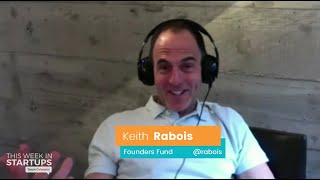
In this August 2020 episode of This Week in Startups, host Jason Calacanis interviews investor Keith Rabois. The conversation opens with a critique of the United States’ fragmented and prolonged COVID‑19 response, discussing psychological impacts, the feasibility of regional lockdowns, and the legal limits of mask mandates and travel restrictions. Rabois then shifts to China, arguing that the United States should adopt clear, reciprocal trade principles and enforce national‑security safeguards on TikTok, while warning that China’s strategic ambitions—ranging from industrial espionage to geopolitical pressure on Hong Kong, Taiwan, and the global supply chain—pose a long‑term threat. They debate the economics of comparative advantage, the risks of over‑reliance on Chinese manufacturing, and the need for a strategic domestic manufacturing reserve. The dialogue moves to Taiwan’s semiconductor monopoly, U.S. policy inconsistencies, and the potential for nuclear deterrence. Rabois critiques mainstream media, especially the New York Times, for biased coverage of China and technology issues, and then examines the four dominant tech firms (Google, Apple, Facebook, Amazon) on antitrust, market share, content moderation, and data privacy. He proposes a “book‑publishing” standard for permissible online speech, discusses fair‑use concerns over Google’s snippets, and suggests policy predictability as essential for investment. Throughout, the tone is conversational yet analytical, with Rabois expressing cautious optimism about technology’s benefits but strong skepticism toward China’s intentions and U.S. policy inertia.
Chapters
This Week in Startups is brought to you by: Gusto Running a startup is hard work, but thankfully Gusto makes payroll easy. They also offer flexible benefits, onboarding, and so much more.
Twist listeners get three months free at gusto.com/twist.
Dell for entrepreneurs.
Level up your hardware today and save up to 43%.
And Twist listeners can save an extra.
5% by going to dell.com/twist and LinkedIn Jobs. A business is only as strong as its people, and every hire matters. Get $50 off your first job post at linkedin.com/twist. Hey everybody, welcome to this Week in Startups. It's your boy, Jason Calacanis here. and we have a fan favorite with us back again on the podcast. Keith Rabois is with us. He is an investor at Founders Fund and considered one of the great operating officers here in Silicon Valley, along with people like Sheryl Sandberg and our friend David Sachs. You can follow him on the Twitter, Rabois, R-A-B-O-I-S. And Keith, welcome back to the program. We were on in May and we had like a really great discussion about COVID-19 and what we thought was gonna happen with the pandemic. Well, here we are, it's August, and it seems like we have not learned much and we don't wear masks in this country and we're having massive amounts of outbreaks. What's your take on America's reaction to the pandemic?
Yeah, that's right. It's a pleasure to be back with you. I don't think that's much has changed since May, which is probably a sign of the times. It feels like all time is sort of collapsing. and May, June, July, April, August all kind of all together. Right now, it's pretty obvious that we're going to be going through the version of rolling blackouts or rolling COVID or rolling lockdowns for months, if not sustained period of years. There's clearly no light at the end of the tunnel. No one has visibility into the timeframe. And I think that's causing a lot of psychological, issues for people, for companies, for founders, for real people, because with no visibility, it's very difficult to sort of hold your breath, not knowing how long you have to hold your breath for. And people don't know whether they should be making permanent changes in their lives, i.e., moving locations, changing roommates, planning to work remotely or not, because the timeframe is very uncertain.
When you look at other countries that have beaten it, and America seems to be learning its lessons by region, New York learned its lesson the hard way. Northern California, we did spectacular. I think everybody here is pretty obedient and believes in science. Southern California seems to have gone buck wild. Florida and Texas seem to not believe in masks at all. But do you think what the psychological or maybe even the behavioral analysis of this is, you have to experience it firsthand. to understand the nature of it. You just can't trust any kind of reality because a pandemic, number one, we've never experienced it in our lifetime. And number two, we have this polarization and the media and the experts and the politicians all polarizing around their team and their team position as opposed to just learning and science.
Yeah, well, I think it's very true that people are sort of using politics and political issues as the new sports or the new tribal religion. And partially that's a vacuum created by the lack of sports and other religions. But secondarily, you know, we're seeing a resurrection of the virus in places like Northern California and in international markets, like I think Australia and probably soon in Europe, where people Israel, where people felt that the virus was under control and that adherence to a set of principles around quarantining, mask wearing, contact tracing, testing was effective, but it doesn't appear that anything short of a reasonable fraction of a population getting exposed to the virus is really going to stop it in its tracks, except in smaller countries, like let's say call it a population of below 10 million, where it does appear to be the case that you can kind of insulate the entire population from the virus, but in all countries above 10 million, it looks like there's gonna be another wave, a third wave, a fourth wave of the virus until we have either therapeutics or vaccines that are much more effective.
So that's an interesting observation. It goes against everything the United States stands for to restrict people's access to travel inside the nation. But it turns out in a pandemic, breaking the country up into regions and saying, hey, we need people to stay in their zone until this passes might actually be the most effective thing to do.
Yeah, it might have been the most effective, especially initially. It's certainly shutting down international travel corridors from China and then Europe would have been more effective than if they'd been done faster and more thoughtfully, meaning with less escape valves. But by the time it was really implemented, it might have been too late. And then possibly we could have cordoned off some of the virus to the places where people coming from China and to some extent Europe were moving towards. But past March, I don't think the travel stuff would have been super effective. You could have created zones, maybe within the US, although there's some severe legal constraints on that. It's not obvious to me that creating internal US travel Restrictions is actually constitutional. I think there's a very serious debate about whether that can actually be done.
Yeah, I don't think it could be done legally. It would have to be something we would opt into as Americans or we would lightly regulate because we don't even seem to be able to mandate people wear masks. That seems to be a lot for a grab.
Yeah, I mean, the wisdom of masks, I don't think is up for grabs. I do think there's a very serious also legal debate about whether the federal government has authority to mandate masks. I think the better side of the legal argument is probably not, but the practical argument about efficacy is very strong. I think possibly you could have reduced air travel. Perhaps federal government has a lot of authority over air travel in the United States, and that would have allowed people to only travel by car, but it seems like people were self-selecting against air travel anyway. I mean, TSA was reporting data of something between like one and 5% of typical traffic on a per day basis. So to some extent, shutting down air travel would have only been a small fraction of the migration problem.
Would you consider flying commercial in 2020?
Yeah, I've read a lot of the research about the sort of safety of that. And there's like many things these days, there's experts, true experts on both sides of that debate. There's some who are pretty convinced that among many possible activities, it's fairly low risk. And then there's a few experts who actually think the risk is more moderate. Moderate. So it's somewhere between low and moderate risk, probably closer akin to having a backyard barbecue outside with maybe 10 to 12 neighbors.
Which seems like a very low risk activity. I've expanded my quarantine circle and done a number of backyard type barbecue situations.
With.
Families who are in relative quarantine. It seems like a low risk behavior. Where are you on your personal risk taking during a pandemic, if I may ask.
Yeah, my general approach has been not no risk. I think it's very difficult to live your life in complete fear and approach problems with zero risk. If you did, you would never drive a car, for example. Certainly below the age of 50, 60, 70, one of the most dangerous things you can do is get in a car and drive. So, I don't think you want to live your life with completely zero risk. I think that's not a very productive way to live your life. So I think below roughly six to 10 people in small groups is moderate to low risk. Obviously, outdoors is significantly safer from all the evidence than indoor activities. In the weather, fortunately, at least in the summer in California, it's pretty amenable to primarily outdoor activities that will change, you know, various parts of their country, it becomes insufferably hot. Think Arizona or Florida over the summer. And then fairly soon in the winter, between rain and cold weather, cold conditions, it's not going to be possible to be living primarily outdoors. But insofar as one can do that, I've tried to do as many outdoor activities as possible. But I definitely will in small doses in small groups. spend time in real life with people?
I went and I ate my ramen at Tai Shoken in San Mateo, my favorite ramen joint. Outside this past week was like I think the first time, second time I ate at a restaurant, I took my daughter for sushi one time outside. And man, it was delightful to be amongst people. I forgot how nice it was to just be out and be social. There's something about our species where we are not meant to be isolated like this?
Oh, no, of course. I mean, if you like to read, you know, you can read sapiens or any, any research, humans are basically herd animals. And, you know, you see this on Twitter, you see this in investing. There's, there's definitely a pop psychology to humans that Darwinistically evolved. And so isolating humans into solo behavior or very small group, extremely small groups, does cause real friction or potentially damage. I don't think anybody knows. We're running a massive social experiment in terms of what is the long-term impact and isolating people in extremely small doses of people for sustaining what's gonna be a sustained period of time. So I think there's a lot of counter instincts. Now it did switch. There's a reason why we've always had families and tribes across almost all known cultures is people want a safe group of people around them. And generally speaking through most of history, Until very modern times, if you'd see a human, another person that was not somebody you recognized, you would generally think of them as much more of a threat than a friend. And then in the last two to maybe four or 500 years, which is again, a very small fraction of human history, that has inverted so that generally speaking, without other signals, we don't treat strangers as threatening.
Hmm.
However, with things like COVID and potentially, you know, more lethal or more transmittable viruses to come in the future, I think humans may revert back to their normal Darwinistic, sort of the evolved state, which is to think of someone they don't recognize and don't know as a potential threat.
Oh, so dystopian given how we've grown to love to go to an arena with 20,000 people and watch a basketball game or go to a music festival or a burning Kingman or even just a movie. When we get back from this break, I want to know what you think of the TikTok and China rift when we get back on this week's start-ups. Hey, look, 2020 has been the year of many things, but if you own a start-up, this could also be the year you switch to a better payroll provider. And Gusto is that provider. They weren't built just for small business.
No.
They were built for the people behind them. Their online payroll system is so easy to use, we use it ourselves, and Gusto can automatically calculate paychecks and file all your payroll taxes, so you get that right. Three out of four customers say they run payroll in 10 minutes or less, which means you'll have more time to run your business, focus on your customers, and build an absolutely delightful product or service just like Gusto is for us. Plus they offer unlimited payrolls for one monthly price. There are no hidden fees. Gusto does way more than just payroll. Nope, they're gonna help you with time tracking, health insurance, 401ks, onboarding your new team members, of course, commuter benefits, which some people love. Offer letters, which are super important. They make you look professional and you get access to HR experts when you need them. And if Moving from another provider, they can transfer all your data and they'll do all that for you make it easy breezy. And it's no surprise that 94% of customers are likely to recommend Gusto to another founder. Because you're a listener of this week in startups, you get three months totally free. All you have to do is go to gusto.com/twist G-U-S-T-O.com/twist again gusto.com/twist I'm telling you, you're gonna love it. Get started today. I use it, I love it. It makes everything easy breezy for us. Okay, let's get back to this amazing episode. All right, investor operator and super opinionated and intelligent Keith Rabois is back on the program. A regular, if you want to hear some of his previous episodes, the double feature episode 904 and 905 from back in February of 2019. And of course, in the COVID Episode 1057 back in May of 2020. We just got through thinking about the sort of ramifications of the COVID But before we get even deeper into the pandemic and what life will be like, we've had a pretty crazy relationship with China in the last couple of months from the start of the COVID-19 slash Wuhan slash China virus emerging and now Somehow, people are starting to realize that maybe there needs to be some reciprocity if we're going to allow TikTok to be on everybody's phone, maybe American companies should get to be on phones in China. And maybe it's not in the best interest of Americans to have spyware on their phones with access to their microphones and cameras and locations. for a communist country. What is your take first on the reciprocity issue? And then let's go on to the reality of a communist country's access to data of a company in a communist country like China.
Yeah, I think there are several dimensions to the tick tock debate and what to do about China. One is there a simple Trade, trade policy, just like we believe we're a capitalist country, we believe in free trade. And if there's going to be countries in the world that don't allow for free trade, then the question is, what do we do about that? And what's the US reaction? And some degree of reciprocity or reciprocality is probably required. And so, you know, China has notoriously banned most content, well, basically virtually all content based US companies from operating within China. and restricted access or put fetters or required concessions by other products and services from American companies that want to operate or sell goods and services in China. And for many, many years, I think the American executive branch ignored this in partially For several reasons, the executive branch was pretty much in denial and didn't really want to confront China. And Trump has been very attuned to this issue personally before he was president, before he even ran for president. If you watch interviews with him conducted over the last 20, 30 years, he's always been sensitive to China's sort of unfairness in treating American companies. And he used to talk about this all the time. And then he campaigned in 2016 about the issues and threats posed by China. And there's some funny YouTube clips where you see people serving various parts of his speeches and stitching it together. It's like China, China, China, China, China on the Trump boys. So I think this is sort of an un, it's kind of a neglected area of American politics and foreign policy for about 30 years. And Trump correctly put a lot of tension on it. One just simple principle is if any country is not going to allow a set of American industries to operate there, there is a question of whether we should allow a comparable set of companies to operate here. That has almost nothing to do with the national security complexity. You can imagine a country, let's say Germany, that becomes very protectionist. and doesn't allow American cloud operating companies or American search engines to operate in Germany, what would be the proper reaction where we don't really think Germany poses a national security threat to the US. It's just purely an economic free trade sort of situation. So that's one dimension. Second, of course, on top of that is what's become very obvious in the last two years to a huge swath of the American people and derivatively a reasonable fraction of the American elected political class, is that China poses a serious threat to the United States from a geopolitical national security perspective. And this should have been obvious 10, 15, 20 years ago, but it's become starkly obvious in the last two years. I think China's influence and behavior associated with Hong Kong and their ability to intimidate the NBA a year ago started to wake people up. China's increasingly hostile slash genocidal treatment of minorities within China has become indefensible or transparent and indefensible. Three, China's willingness to export and to export its influence across borders has become more obvious. Think India most recently, but certainly there's other examples. their investment in AI and other technologies which could pose other existential threats to the US again have become more stark and more clear. And so you put all of this together and then you actually read or listen to the explicit strategy of the CCP, the Chinese Communist Party. It's very clear that they have an agenda over the next 30 years to be the dominant influence in the world. And that dominant influence includes explicitly suppressing what they would call liberalism, I think democratic liberalism in rough translation. And so if you put together both the tactics and the explicit announced strategy, there's no way of denying that China is posing a significant threat to the American way of life. And for 30 years, we sort of avoided or suppressed or intentionally suppressed this information. averted our eyes, adhering to a 40 year old strategy of engaging with China that was designed to liberalize China. That has proven you had that work out for us. It's proven to be an unmitigated disaster. The original logic was that if you expose China to more and more information, to more and more economic freedom, that by definition, the country would have to liberalize. and the ties, the dramatic constraints imposed by the Communist Party would be eliminated or significantly reduced. If anything, the opposites happened. In addition, the original even impetus for associating with China, which dates back to Richard Nixon and going to China, was to align explicitly as a counterbalance against the Soviet Union. And basically, you could argue the biggest part of intellectual bankruptcy in our China policy has been once the Soviet Union collapsed in 1989, nobody really reassessed, like, what was the purpose of aligning with China in the first place?
Yeah, and the globalists got a really great free pass of, like, hey, here's some borderline slave labor, the cheapest labor in the world, which In a way, humanity should want labor to go to the cheapest place that is the most efficient for humanity. So it's great that hundreds of millions of Chinese went from being really poor to being middle class. But that was an opportunistic move. Now we feel this crazy dependence on them. So when it comes to the TikTok issue, and I think you set the stage beautifully, What are you in favor of doing with TikTok at this very moment? And then what do you think our ongoing strategy should be with China?
So my personal opinion is that the president of the United States should announce a very clear set of principles that require adherence to both reciprocity and address our national security concerns. and that the Chinese government in consultation with TikTok's owners should choose and elect what path they prefer. So the principle should basically be that to some extent, reasonable American versions of the same products and services must be allowed to operate in China. And then on the security side, no engineers, no data, no servers about American citizens should be allowed to be stored in China. And whether that turns into an independent public company, which would be my preference, because TikTok has done so well and generates fairly significant revenue, it could easily justify being an independent public company. Or whether it leads to an acquisition by a US company or a shutdown, a ban, because it can't adhere to those principles, is totally up to the Chinese government. They can decide. I don't think the president should be negotiating a deal, like trying to.
Yeah, that's kind of silly. I mean, that's just, that plays to his instinct of I want to get.
Credit for being a deal maker, blah, blah, blah. It's the kind of thing. Yeah, that's a bad precedent. I don't think that's the right way to purchase. I think you should announce clear, straightforward principles and sort of let the chips fall where they are. And if the chips are, the product is banned, that's fine. If SNAP or Microsoft or some consortium of independent investors wants to purchase and turn it into an independent company, I think there should be a timeframe explicitly by X, the following criteria must be satisfied to operate within the US. And I think that's the better way to go. But net net, it's probably relatively similar in this specific example to what's going on. I think the key of having neutral principles is you can apply it to a lot of other examples in the future. Rather than this complex morass that doesn't basically set a precedent that everybody understands what the rules of the road are. I'm a big fan of predictability. The rule of law is about predictability. I think it's critical that we have predictability in our policy. I don't like it.
It's easier to invest, right, when there's predictability and when there's the rules don't change, people can invest and feel safe, which is one of the things, one of the reasons I've never invested in Chinese companies that get offered all the time. You probably do as well is I'm not on the ground there. I don't have any buddy there to look after me. It feels like that system is completely rigged and people have their thumbs on the scales. When we get back from this quick break, I want to know if you think we're the suckers at the poker table when it comes to China viS-A-Vis. Hey, we own the iPhone. We get all the profits here. They get this very low profit building iPhones over there. Or if we should move to the Elon Musk model and say, you know what? Yolo, we're going to build factories here and we're going to skip and leapfrog and get ourselves disconnected from China so that we don't have a dependency when China does to Taiwan what they did to Hong Kong, which is basically roll over them when we get back on this week of startups. Hey, everybody, are you ready to upgrade your workstation? It's time and I can get you up to 48% off right now. if you go to dell.com slash twist. Yes, Dell for entrepreneurs is an actual program run by my friends over at Dell. You know, I love my Dell laptop. I got the Chrome OS on this one. I got these giant Dell monitors all over the office. And I've been a fan of Dell forever. And I love the laptops having all the ports on the side, USB-C, the old USB ports, HDMI cables, ethernet ports, all built in, no dongle for me. I got the whole shebang right here on this laptop. And what they do with Dell for entrepreneurs is they're trying to support founders by providing resources and financing and tools to help your startup grow with their technology. So if you're scaling your company, that doesn't mean just hiring, you know, you're gonna have to get high quality laptops, monitors, storage, all that important stuff, networking, printers, and they will give you also free IT consulting with Experts, and they will help you do things like analyze your cloud spending and save you money. You're probably spending too much. Of course, Dell has Dell Financial Services. What this means is qualified founders can finance their entire hardware project and pay for it in low monthly installments. What an amazing thing to do. Don't blow all your capital on buying a bunch of new machines. Pay for it monthly over time. Great idea. And These Dell machines are up to 48% off right now, this summer, right now, get there, dell.com/twist. Twist listeners can get up to 43% off and take that extra 5% off right now at dell.com/twist. Thanks to Dell for making awesome products that I personally love and I've been using for decades, as well as running a great company and providing this great support to the founder community. That's part of this week at startups. It really means a lot to me. Okay. Let's get back to this amazing episode. All right, I'm here with Keith Rabois. We're talking pandemics, politics, China. Before we went to break, I was wondering who you think NetNet won the most in this past 20 years of the iPhone being created in China, pharmaceuticals being created in China. This seemed to send a massive amount of profits to the United States. It also made them a ton of money. We own that intellectual property. They have no qualms in stealing it. And so was this a mutual sort of taking advantage of each other, and then can it possibly be decoupled?
Well, look, it's been beneficial to both parties in many ways, at least in a short-term perspective. That's the whole point of comparative advantage in economics. When you learn macroeconomics, comparative advantage basically means that every nation should specialize with whatever they can do at the lowest possible cost and that net creates a byproduct of consumer surplus for everybody. So we have lower cost phones in our pocket, lower cost plasma TVs, lower cost electronics of various types because of this relationship. However, that's a very narrow perspective. The only variable that matters or ingredient in the world is not just the cost of a product. So for example, in the 1970s, we built up what's called the National Strategic Petroleum Reserve. because the US was very dependent upon OPEC as a source of oil. And it led to fear that we could be blackmailed by the Arabians in a foreign policy context. And that was just unacceptable. Right now, because we've outsourced according to the comparative principle, many strategic productions, including electronics, but also antibiotics. So from medical, pharmaceutical to electronics and the future of computing, we've outsourced a lot of production and manufacturing. We no longer have the ability to just drive American foreign policy according to the best interest for the American people because we can be blackmailed and threatened. And that's not a very sustainable place. So I think the mistake was to allow our manufacturing capability to disappear. And we should have had a minimum viable reserve capability of production so that in the worst case, we could always sustain ourselves in produce in any of these dimensions. There's a second level where it's helped the Chinese people arguably more. Certainly, the rate of growth in their economy over the last 20 years has been astounding. The improvement in the lives of the Chinese people of all 1.2 billion has been in very oppressive. So it has absolutely improved the welfare of 1.2 billion on the planet by this relationship and symbiotic relationship with the United States. So that's a very strong positive. But the Chinese CCP has used very aggressive industrial espionage techniques to learn sort of the secrets, the IP, behind a lot of American technology and progress. and that has the capability of being used very unfairly to compete in the future. And that is probably something that everybody, well, it's something everybody did know. It's been widely chronicled. It's probably worse than what's been chronicled. But again, we made little flashes of concern were expressed by the government of the United States, but we never really treated it super seriously. But again, it's the combination of these things, the decline in American manufacturing ability, the dominance of the Chinese supply chain across industrial grade, military grade dual use technologies, across pharmaceuticals and medical equipment like PPP, all PPE, all of this stuff has combined to put the United States in a very precarious position. which requires offsetting the marginal economic benefits of a comparative advantage.
Yeah, but easily, I believe it should not be that hard to reverse if we have all the capital, we have a number of people out of work in this country right now, and we have rare earth materials here. We just decided it was cheaper for them to rip them out of the ground than for us to do it. We could very easily, as we're printing these trillions of dollars earmark some of it to build factories here again. I mean, if Elon can make rockets and cars here, I don't know that we can get silicon chips up and running as fast, but certainly pharma and PPE, these things are not going to be difficult to make here. We just have to have the will to do it. We need to have a plan. And this seems to be the one issue in our bizarre left and right Republican and Democratic fight that we all agree on. Is that a green shoot for you?
Yeah, I think there should be a comprehensive plan. I think a lot of these, several of these things are easier to fix than others. Consumers are just going to absolutely have to pay a higher price, though, for some products. There's going to be, there's definitely going to be an implicit tax on Americans welfare, especially in the short term. I mean, part of it relates to just the price of wages. One of the reasons why manufacturing in China is and hence, quote unquote, more effective is the price of labor is substantially less. And with a lot of activists in the United States wanting to raise the price of labor artificially, that's going to be more challenging. Now, if we can layer in some automation and make incremental advances in robotics and other automated technologies, maybe the blended cost of labor and manufacturing won't be that devastating to having a competitive cost structure. But I think we're just going to have a surcharge. It's just going to be a strategic surcharge that either consumers are going to have to pay or the government's going to have to fund or both, so that we have strategic independence from the threat posed by China. So I think that there is a bipartisan consensus emerging, mostly actually ironically from the far ends of the political spectrum, which sometimes get dismissed and/or unfairly criticized. It's the most conservative members of Congress and in some ways, the most liberal members of Congress that are most deeply concerned about the threat posed by China, the middle of the bell curve of the political establishment that's been in power for most of the last 30, 40 years, are the people most responsible for the China mess. And they're the ones who've most defended China from scrutiny and from criticism throughout all these years. So I think there's- and they also.
Cashed the checks, let's be honest. They were the ones getting their donations that put them into power. and that's another flaw in our system is the lobbyists who are sending them donations. They're not doing it out of the goodness of their heart. They wanted to have this globalistic sort of approach and have that be considered, you know, the ultimate for humanity is to just anybody can do anything except when you're up against a communist country, that's not actually how they think. Is there a chance though that if the world, because Japan is also realizing this dependence. India is banned TikTok and they seem to be pretty aware of this threat. If Japan, India and the United States all say en masse, hey, we're gonna start producing products outside of China, and we would like to see you change these behaviors. And we did that as a group. What do you think the reaction from China will be? Will they come to the table and say, you know what? Okay, we'll talk about what's happening with the Uighurs. Am I pronouncing that correct? Uighur, I think I'm pronouncing it correct. And we'll talk about human rights and we'll talk about Hong Kong and, or do you think they'll just say, you know what? We've been here a lot longer than you guys and we got a billion people. We don't care.
Well, I mean, I think there's a lot of codependency here. So, China's economy, if China was completely insulated from the US or India's economy, it would pose actually more problems for China than for the US. That's a fraction of GDP and things like that. That said, it'd be a very painful experience for all involved. It's not something to look forward to at all. I do think that China miscalculated, however, on some of their most recent adventurers and didn't expect this level of scrutiny and push, you know, the level of pushback they're seeing from India and now the U.S. partially because for the last 30, 40 years, they hadn't received any. So, you know, they've been very adventuresome all across the globe in developing South China Sea. Yeah. Developing strategic relationships throughout Africa, building ports. There's a lot there. A lot of their strategy has gone. quite well for the last 20, 30 years. Yeah, why not try?
I mean, listen, it's like being at a poker table. If you bet and everybody folds, you'd keep betting. But then if somebody stands up to you and if somebody is the sheriff, well, then maybe you're gonna curtail your behavior. So China does have a lot to.
Lose here if they don't get in line. Absolutely, a ton to lose. But if you just look at even last year, they were able to basically blackmail the NBA into-- which was ridiculous. It is absurd. They're basically convincing American athletes and the NBA executives, that they needed to stop criticizing China about its human rights violations in Hong Kong, or the NBA just wouldn't make as much money in China. And basically 99.9% of the NBA went along with this, despite their ability to protest everything else and every other civil rights violation. They somehow were completely willing to be censored and suppress other people's speech. as it relates to China, that ship has sailed. Even Steve Kerr, who's one of the worst offenders, actually had to apologize last week for at least some of his behavior last year.
Yeah, that was interesting. Daryl Morey came out and just said, hey, all he did was tweet a GIF or something that was like, we support Hong Kong, we support freedom. And the NBA came down on him like a ton of bricks. And it was everybody from LeBron to Steve Kerr, and it was like, hey guys, you're protesting.
For.
Very valid issues of racism here in the United States and freedom, you can't have it both ways. You can't, for the incremental 20, what are they making, 20% of their revenue from China?
Probably.
Who cares? Let the 20 cents go. It's not worth it. I mean, anybody who makes a lot of money to sell your soul for the extra couple of million bucks, it's just not worth it. And if they don't respect the way we do things in America, They started blocking all the Rockets games because Daryl Morey did it. What 100% of the NBA should have done was they should have just said, hey, we support freedom and we support human rights, period. And so we're not going to point to any specific country, but we're going to point to all countries, including our own. 100% human rights needs to be addressed in the United States. And then look what happened. Zion Bannister, a friend of ours, mutual friend of ours, she started buying thousands of Hong Kong t-shirts and having people giving them out at Warriors games. You can't squeeze people like this and not expect them to respond. Do you think what happened in Hong Kong and the ease at which China rolled in there and basically just gangster style took it over, they're going to be able to do to Taiwan? Answer that question when we get back after this quick break. Come on, you all know in jobs is the way to find great talent. But I wanted to read for you today an amazing customer testimonial from somebody who's a member of the this Week in Startups audience. His name is Aaron and he is the founder and CEO of Emma AI. And this is a startup that uses artificial intelligence to optimize travel time on your work schedule. Sounds like a pretty good idea to me. Well, Aaron recently hired a machine learning engineer and they started in July and they have hit the ground running and they are making things happen at his company. He received 110 relevant applications in four days and he got great value. That is why LinkedIn jobs is the number one way to hire. I tell all my startups start with LinkedIn jobs and then you're not going to need to do anything else because LinkedIn has hundreds of millions of members, 690 million people worldwide. Your company is only going to go as far as the talent you are able to recruit. And the greatest recruiting tool on the planet right now is LinkedIn jobs. And you can put your job in front of qualified members every day. So it's seen by people who are looking for jobs like the one you have. So here is your call to action. Let me give you $50 right now. I'm gonna give you the 5-0 by visiting linkedin.com/twist. That's right, a fitty for you, 5-0. Again, linkedin.com/twist to get the fitty. Take the 50 right now. Okay, let's get back to this amazing episode. All right, Keith, Hong Kong, just heartbreaking to see what happened there, to see those students out there fighting, being arrested, being beaten, being shot. being dragged to prisons in mainland China just to try to maintain their way of life. Heartbreaking for anybody who has a conscience. And now Taiwan, an independent country, according to the West, but a territory of China, according to the CCP, hangs in the balance. What do you think, given where we're at today with TikTok, India, and Japan spending money, government money, to get people in Japan to stop building stuff in China. We're starting to see this little contingent saying, hey, we're going to have to, you know, pump the brakes here with China's ambitions. Do you think China rolls into Taiwan? Or do you think that after what's happened with Hong Kong, they're emboldened or with India and the United States, maybe they'll pump the brakes on that one? Because Taiwan produces an awful lot of silicon chips, don't they?
Yeah, I mean, Taiwan at the high end of the silicon has a monopoly at the high end of silicon chips at the moment. If you want to read some amazing coverage of this, Ben Thompson's Stratechery is the go-to source. So I think that- He's based there too, right? Yeah, exactly. So he's an expert in every possible way on the topic. And he's been writing about this thoughtfully for years. So highly recommend reading the original. I think typically the Chinese strategy has been pretty incremental. So insofar as they push and probe and hit resistance, they've typically been unwilling to force the issue because they believe traditionally that time is on their side. So, you know, don't artificially have an aggressive timeline that leads to incremental sort of sacrifice and pain. However, Taiwan's a very complicated topic for the US. I mean, we've sort of sold Taiwan out in 1979. And one of the most aberrant decisions in American foreign policy history, we basically told China, we're not going to treat Taiwan as an independent, freely elected democratic government and implied that you kind of do what you want because we're not going to defend them. And that completely amoral, arguably immoral American foreign policy decision. hasn't been reversed yet. And the establishment, you know, of the left and the right in the middle of the bell curve that we were speaking about before really doesn't want to revisit that. And they get very allergic and immediately nuclear reactive if you suggest this. I, you know, I tweeted about this a year ago that I think absolutely we should be reversing this. We, America, America needs to stand for principles. And the principles mean the whole point of a principle is you do things that are uncomfortable. and painful, it's easy to have principles where there's no pain and no sacrifice. The whole point of a principle is to prove that you actually mean it, and so that we need to recognize Taiwan as a democratically elected government that's legitimate. However, there is a geopolitical complexity of given the geospatial limits of where Taiwan is and where China has power, and even with the incredible brilliance and technical innovations behind an aircraft carrier group. There is a lot of limits to trying to defend Taiwan from one or two aircraft carrier groups versus the geo-proximity of China. It could be done, but it'd be a very expensive, painful move to defend Taiwan. There's some clever, maybe theater-based technologies that we could either sell or provide Taiwan, that might make them more capable of defending the island. But even that's controversial. There is always the debate, would an American president really use nuclear weapons to defend Taiwan, which is probably what it would take, at a military level, either an explicit and very credible threat to use nuclear weapons or the actual use of a tactical nuclear weapon. is what it would probably take for the United States to prevent China from invading Taiwan and push Carrie Bush. Yeah.
And I don't think the American people are going to want to get into a nuclear Holocaust over an island that they don't even know the history of.
And that was the justification for the 1979 policy, like insofar as there was justification was, look, at the end of the day, Jimmy Carter and many people were not going to defend Taiwan with nuclear weapons. and once you admit that you're not going to defend it with nuclear weapons, the ability to defend the island with conventional weapons is highly dubious, not maybe impossible. You can debate it a little bit, but highly unlikely. And so if you know that you can't defend it, you know, are you really going to Bluff and, you know, support their Independence where, you know, some of your call you on.
You get called on that.
Yeah, at least with respect to Western Europe and NATO's explicit policy, which always called for the use of nuclear weapons, people sometimes forget this, but NATO's explicit policy was if the Soviet Union invades Western Europe, we will use nuclear weapons to defend ourselves. That was at least partially credible. I don't know if that had ever been a factual case. which president would have authorized the use of either tactical or intermediate range nuclear weapons? Who knows? Maybe some would have, some might not have, but it was at least partially credible. I think most people find it incredible that we would defend Taiwan with nuclear weapons.
It's one of the great features of nuclear weapons is that the fact that they are so destructive mutually, the mutually assured destructive nature of them makes threats with them almost shallow by design because I don't think anybody on either side wants to get involved in that kind of the interchange. But building up and investing in Taiwan and having a presence in Taiwan and then maybe buying some of the companies there or bringing their technology to the United States and other places and having them offshore some factories and take their knowledge to other places. Boy, that would be a power move, would it not?
Yeah, and some of that's happening. Some of that stuff is moving to Arizona and Japan is funding substantial investment in Japan, manufacturing capability, other technical improvements. It doesn't really help the people of Taiwan, really. At the end of the day, actually taking the strategic economic value out makes them more vulnerable probably, not less. So they might not love this strategy, but it's probably good for Americans in the short term. as a strategy of convenience and for, you know, National American Independence. So that makes sense. But I think this is a very complicated problem. I suspect that China doesn't want to roll the dice right now, which Taiwan is certainly not with this president, because I think they can. One of the features or bugs with Trump is he's very unpredictable. Yeah.
Having a crazy guy on your team, just having grown up in Brooklyn, like when you got a crazy guy on your squad. Like, people don't want to fight you. I was that guy.
Yeah.
Yeah. That guy's crazy. Don't get in a fight with them.
I don't think you really want to invade Taiwan with Trump as president because anybody who tells you that he wouldn't immediately react in a quite vigorous way is probably wrong and certainly cannot be predicted accurately. So I think the deterrent effect is actually quite high with Trump viS-A-Vis Taiwan. which is really what you want right now, but that could change over time. So I don't think that issue gets forced. But I think the genocide continues in China. Many of the other unfortunate developments in China are going to continue unless an American president and a sustained bipartisan consensus aggressively pushes back with both vigor and consistency. A one week news story about TikTok is not going to change this dynamics. It has to be a sustained strategy measured in months, quarters, years.
I think it's a good segue to how ridiculous the New York Times has become. I don't know if you had this experience where you're watching videos of Uighurs being bound, blindfolded, and having their head shaved before boarding trains, which just obviously evokes A Holocaust, God forbid, like trigger in any reasonable person who has even the most basic knowledge of history. When you see people getting on trains to be re-educated, doesn't take a genius to realize that this is a precursor or perhaps an actual piece of evidence of genocide occurring. These individuals are forced to eat pork and are beaten and the sadism and sadistic nature of what's happening is insane. And the videos, just like the faxes coming out of Tiananmen Square, that kind of public awareness of it does make a difference. And at the same time, we have New York Times journalists lamenting the losing of follower counts of Kombucha Girl and other TikTokers. Any thoughts on the media's failure to take this seriously?
Yeah. The New York Times has had an incredible distortion of technology measured at least for the last five years, probably longer, but the last five years have been so stark and basically non-controversial. Several years ago, they wrote this, what's going to look like one of the more embarrassing pieces in journalism history, called this front page in the New York Times, Chinese citizens happy despite or happy with their restricted internet access. It's like a whole feature on how you can be happy. I mean, this is really going to be in the annals of history, like the New York Times praising Hitler, which they did do. This is going to read that way. They did this expose of like maybe an authoritative regime controlling the internet. is superior. We interviewed 20 Chinese citizens and they say they're happy. QED. That's literally how this article reads. I'm not exaggerating. It's one of the most embarrassing things written in the English language. And now three years later, everybody knows how biased that was and how insane actually it was to write that. I think that was the high watermark for me of how bad the New York Times technology coverage is. that they're basically defending an authoritarian communist genocidal regime and making up facts to support it, which is absurd. So anyway, they've continued notwithstanding in supporting China. It's a little inconsistent. It's interesting. The worst offenders are in the tech journalism in quotes section, whereas on this particular topic, there was one of the journalists who's actually, she appears to be quite good at her job, covers cyber security. And she wrote a critique of one of her colleagues, you know, dismissing the concerns associated with the CCP, Espionage, CCP cyber attacks and Tick Tock, at least on Twitter. So that at least somebody over at the New York Times is doing.
Yeah. I mean, the, the naivete, they were like, well, I think they're using Amazon web services to store the data. So how could they ever have access to that? And it's like they could download it.
Yeah, well, let me also make another point. Make another point that's kind of been neglected in the public conversations about TikTok. Personally, I think the data that TikTok has as just a silo is not incredibly sensitive. However, if you stitch that together with all of the other sources of data China has and some of the hacks that have been confirmed that the Chinese government has intentionally performed on American targets, if you put all that data together, I think you could create a very threatening situation for us and for us citizens, US politicians.
And to make it explicitly clear, I don't know if people remember in like one of the Dark Knight Trilogy of Batman films, there was a moment where Wayne Enterprises had been able to turn on every single cell phone and basically listen in on everybody. Hey, geniuses, like every politician with kids who have TikTok on their phones and then they get their parents to install it and it's got microphone access. What makes you think that they can't get a microphone turned on and then do espionage in this fashion or root your phone or do any number of Hacks, when you, I don't know if you saw Barry Weis's resignation letter or Andrew Sullivan's or the recent one from Arianna Piacari from MSNBC. But I wonder if you think there's any self-reflection on the part of late-stage journalism and late-stage journalists or the editors of these publications when they see extremely liberal individuals leaving and on the way out burning their bridge and saying, I'm leaving because I feel bullied at the New York Times by liberals. I feel like people have closed the Overton window to an extent that I can't even, in Andrew Sullivan's cases, as a gay man, have a reasonable opinion about something controversial. Do you think there's any self-reflection or do you think it's they've just all got Trump derangement syndrome? or they're all pandering for pages or some combination there.
Well, two combinations. I think the Batman syndrome is actually very possible, especially on Android devices. There is a relatively witty line that Peter Navarro, who is very controversial, but relatively witty line he used in an interview yesterday about the CCP knows where your children are, which is kind of a play on the old TV commercial public service announcements. It's like 10:00 p.m. Do you know where your kids are? Yeah. So I think that's one of the main concerns, but I think it's the combination of data sources stitched together that's most threatening. And so looking at any of these in isolation may not seem as scary, but the hacks, the cybersecurity hacks and the data from the app and the root access, et cetera, et cetera, combined could be extremely threatening. And so that I'd be a little bit more concerned about than any specific app. But on your more macro point, obviously, you know, I have read those resignation letters and I think, you know, journalism has severe bias in the United States at the moment. And for people who don't share the overarching popular sort of intellectual theories of journalism, you know, they're going to be suppressed at the moment. It's kind of a, binary outcome in a sense of you're either a believer or not believer in, in, in those circles. And so I think we're going to see more of this, which is going to lead to a renaissance in traditional journalism, where people actually try to get to the bottom of the facts and put together a story and let readers judge what the meaning of the story is. And that, you know, is going to be led by whether it's Substack or other You know, innovations, but it's not the ideological journalism will appeal to 20% of the American people that share that specific ideology. But at some point, the middle of the bell curve of the American people are going to reject it. I think you're already sort of seeing that. I mean, in some ways, the Trump election was a revolt against traditional journalism being conscripted as well. I think a lot of people who are Trump voters absolutely just didn't believe things they were reading in the New York Times because they understood that the New York Times had such an animosity towards a certain set of views that they couldn't believe some of the probably correct indictments of Trump that were embedded in some of this coverage. 10, 20, 30 years ago, I think, If a mainstream journalist, like the Washington Post, New York Times, had run exposes on a presidential candidate like someone like Trump, it would have been more devastating to that candidate even within the conservative party. But because these organs of ideology are so distrusted and disliked and despised in some ways, by people who have religious views who are pro-life, who are conservative, pro-Israel, et cetera, that they just don't care what the New York Times writes. And so it doesn't have the impact that it would have had. And it should have because some of it is incredibly valid.
True. Some of it's definitely true.
Some of it's very obvious. I mean, you grew up in New York, too. I mean, both of us grew up with Donald Trump on the radio all day long.
Yeah.
And so, you know, there's nothing surprising about Trump to me.
I mean, anybody who was in New York City can be absolutely certain that Trump was involved in financial shenanigans. And I think we all knew who ran the concrete business in New York, especially as somebody who grew up in Brooklyn and, you know, watched the Fulton Fish Market accidentally burn down.
Yeah, anybody who grew up in New York in the 1980s absolutely knew what Trump as president would be. I mean, that's why, you know, I tweeted in May of last year, May of 2016, sorry, you know, Trump was a sociopath. It's, it was, you know, it, it, it, it, none of this is a surprise. But I think the, the transmission of this information to the American people and voters was discounted massively because of all the bias over all these years that led to this. basically rejection. Occasionally, the New York Times may get something right, but if you don't believe them because they've got eight things wrong over the last two years, it doesn't do any good for anybody.
You saw the tech hearings. Four major companies up there. You got your Google, Facebook, Microsoft, and Amazon. Of those four, which one deserves, which one had the worst performance and/or deserves to be under the most scrutiny, which one, which executive did best and which one maybe deserves the least amount of scrutiny and is great for society? Well, I mean, Apple, not Microsoft, sorry.
I mean, sorry, all four companies, I think, are incredible, have done amazing things for Americans and society, period. And I think Bezos' statement before our testimony, I think, describes this, distills it perfectly. Everybody should read the statement in its entirety. It is a vigorous defense of technology and Amazon, specifically of what it's done to improve welfare for everybody. I think that's true for Apple. I think it's true for Facebook. I think it's true for Google. I think Mark had the best, I agree with basically the Streisand Effect coverage, which won't surprise anybody. that Google is the most vulnerable because basically it has no friends. The left doesn't like, you know, has decided for whatever set of reasons that large, large successful businesses are threats and bad, which is somewhat antithetical to the last century of American history. And the people who know better and should know better and should be articulating a vigorous defense against that, you know, erosion. are Republicans, but Google has burned so many bridges with conservatives that the Republicans are exasperated and just saying, well, I'm not going to waste my social capital defending you. You guys refuse to help our defense department, you fire conservatives, you have a monoculture, you censor conservative content on YouTube, et cetera, et cetera. And so, as Ben Thompson summed up his piece today, Google has absolutely no allies. the left doesn't like them and the right doesn't like them.
And it's the most obvious.
And by the way, they have a market share that looks like a monopolist. Whereas Facebook does not have a market share that looks like a monopolist in any relevant market. Apple has a minority of a market in every market they serve. And Amazon correctly understood probably has single digit market share. So none of the other companies really should have even been there. But I think Mark's statement to the committee was also quite elegant about how technology companies, including the ones through acquisition, allowed them to compete successfully with large entrenched businesses that have not been serving their customers very well for a long time. And I highly recommend people read the excerpt of his testimony about that.
Yeah, when looking at it, I don't think that because of Zuckerberg's track record and the fines he's gotten on privacy twice and all those settlements, he has the credibility. And because he has both the Democrats and the Republicans feel like the thumbs on the scale for the other party, he felt like he was at risk as well for me. When you look at Google, well, they've straight up lied and obscurified and been opaque about how they put their rankings. I mean, Matt Cutts for just a decade lied to me and everybody and said, we didn't change organic search when all they did was put 400 pixels worth of ads above organic search. And everybody knows 90% of the clicks occur in the first, whatever, 100 pixels. They seem to be super at risk. I thought Amazon was incredible. I thought Bezos His opening statement was like the opening scene in his movie when they do the 10 part Amazon series or whatever treatment they do where Tom Hanks plays Bezos or whoever winds up. I don't know who's the best person maybe to play. I gotta think of somebody young. You're saying a ball Tom Cruise?
No, I like the Tom Hanks idea.
Tom Hanks is just so All-American. You just have to get buff. You gotta get rid of the dad bod. I don't know if he's capable of it. But the thing that I thought Bezos should have just said to them, because when they were going at him with the third party, you know, acquisition accusations that they were copying other people's products, it's like that's called capitalism. We all try to make better products. And what would you have us do, not allow third parties to sell on our platform? Because we can press a button and turn off the third party. and the millions of businesses that have been built off of that could go away. So what do you suggest, you know, to, to all these politicians? What do you suggest we do? Should we turn it off? Because we can turn it off right now. I could just make a phone call. We'll turn off their party, and all those people will lose their jobs and they won't compete.
Well, it does a good way of reframing it. In addition, I found a tweet that I retweeted the other day that showed the percentage of third party goods sold on Amazon versus Walmart versus traditional retail. And Amazon, it's like 1 or 3% or something like that. And all these other are like 30%. So, you know, people are, politicians are distorting the facts or, you know, be willfully ignorant of them in complaining about practices that have been extremely common in dominant business practices actually for 50 plus years.
Like house brands. When they talk about Amazon Basics, it's like, well, Whole Foods has 365, Kroger's, Target, everybody has a house brand. And the house brands at those supermarkets and department stores was typically 20 or 30% of sales. I was just told by a CEO who works in Amazon that the house brands on Amazon, Amazon Basics, is less than 1%.
That's correct.
Anybody who's used Amazon, Amazon Basics products know they're a great deal, but they're not the best products. They're kind of janky. No, it's a silly concern.
You know who I got?
I got JK Simmons. JK Simmons as an older Bezos and as a younger Bezos, that's what we need to cast. Like a Gordon, who's that? Gordon Levitt. What's that kid's name, Nick? Joseph Gordon-Levitt. Joseph Gordon-Levitt as a young Bezos. Then you get JK Simmons on some steroids, what do they call those things? The athlete's steak? Yeah, get him on a little HGH and then you got him playing an older Bezos. For Apple, they said they don't have market share, but they do have the lion's share of app revenue and the profits in phones. Part of this is also how do you define market share, right?
Arguably, the app revenue is a little tricky to create a market out of, but you could reframe it probably around profits. Typically, it's not done. Typically, market share is calculated by revenue or sales, but it's not that crazy a leave to do it on a kind of adjusted contribution margin kind of basis. But typically, they don't have the dominant market share, which most antitrust analysis doesn't even begin unless you have like 40% market share. The lowest end market reported antitrust case is like around 30%. And the 30% and 40% cases require you to take concerted action with other people, basically like a concerted boycott or something like that, unilateral action. you definitely need market share more than 50% in the United States, at least for 60 plus years. So, I think making an antitrust case against Apple in the United States is pretty unlikely. You can find these niche markets, like for example, there is one that at least stated a claim, which is just the first level bar in the book publishing space. But I think what would happen is if Apple really had legal risk in some of these niche markets, they would just, might as well just shut down the business rather than, you know, live with a government investigation.
All right. So it's obvious that this is going to continue the scrutiny of big tech. I've been thinking about how each big tech company can preemptively offer something that would make things feel, because a lot of this is about feelings. It feels unfair, but nobody can really pin these companies. If they did, they would already have done antitrust cases. A lot of this is about feelings. I think that this is unfair. I want you to think about each of these four major companies and what you think they could make as a concession that might feel good. I'll give you mine first. When I look at a company like Facebook, if they woke up one day and said, If you want to pay $10 a month or whatever Netflix or Spotify costs, eight bucks, 12 bucks, you can use an ad-free privacy guaranteed. We store none of your data on Instagram, WhatsApp and Facebook. It's like a collection and therefore there are no issues around consumer privacy. Do you think that would make people feel good? You think that would call off the hounds?
Maybe some, I mean, they're still like the left wing still wants to cry and try to find excuses for Hillary losing. And so they tend to blame Facebook and they don't like the fact that people tend to share articles on Facebook that are not approved by the New York Times. So that's kind of, there's two groups. There's the privacy, you know, sort of concerns, which your suggestion would absolutely help reframe that narrative. but a lot of it's around content and whether you got a solution for that one? No, because I don't think they should cave. I think at the end of the day, the media hates Facebook because Hillary lost and the media is no longer a gatekeeper to content. So whether it's Facebook or Twitter, there's nobody who can stop you from generating attention, you don't need to ask permission to generate attention for ideas and for your own publications anymore. And the media hates that because they've always had a monopoly. Speaking, it's kind of ironic. They had the biggest monopoly in the United States who were basically people in the media. Some of it government conferred. If you think about like TV station radio stations, you had to have a license. and often quite monopolistic license. Not true of print, but true of other forms of media.
So would another opportunity for them to be, because it was a pretty harsh removal of Alex Jones, who's a conspiracy theorist, a whack job doing performance art, I think, to his own admission, that it's performance art. whether no matter how you feel about it, you know, the Sandy Hook parents was a false flag, like insanity. They had like Milo Yiannopoulos, who was like a performance. I knew him back before he was a performance artist. It was like performative art, like super trolling. And then there were a couple of other people on the right who got bounced off of YouTube. Would it have been a power move for YouTube to say, Hey, YouTube has this one level for everybody. And then there's a sub-level where if you're a paid person or even you just go into your settings and say, I want questionable content or I want content that has been flagged and just, hey, there's a way you can turn it on if you really want to see it and it's gonna live over here. Would that not have been a better move for him? Or do you think they did the right thing taking Milo and Alex Jones off the platform.
Well, I think that's an interesting idea because leveraging defaults is something that technology companies have already done to compete with either political perception or large entrance incumbents. We used very clever default setting back in my PayPal days to prevent Visa MasterCard from eliminating us. So it's a very, very classic move to do something like what you suggest. I think it depends on specific cases. I wouldn't necessarily lump all the people that had banned Facebook together. I think fundamentally I have a very simple principle, which I've explained at length among other places in an interview with Kara Swisher on Recode. If the content can be published in a book in the United States, it should be allowed on Facebook. And if it wouldn't be allowed to be published in a book because it's obscene, libelous, etc., Then it shouldn't be allowed on Facebook. And we've lived with that sort of construct for three, 400 years, very successfully. If you include the UK, you can go back further. And it works. We understand what content is publishable. And if it can be published in a book, there's no reason Facebook or Twitter should treat the content any differently.
Well, I wonder if Kara was quick enough, because she's pretty smart, to respond that books typically have editors and publishers who would then act as an intermediary who would have massive liability? They did for many parts of history.
But actually the beginning they didn't, and then at the end they did, and now they don't really in many ways. But yes, there was gatekeepers in the publishing industry, but you could self-publish, pamphlets were self-published. The American Revolution was predicated on pamphlets, actually anonymous or pseudonymous pamphlets, where the key common sense and things like that were, Federalist Papers, et cetera, were indispensable to American history. And I don't think there is a traditional publisher behind those. So I don't think that's totally true, but there were absolutely gatekeepers. But I think the legal standards have been well established, significantly framed. I mean, when the printing press came out, it did cause revolutions. At the end of the day, it was the first time that a normal person could proselytize at scale. and there was worse fought because of the printing press in many ways. So I think there's consequences to allowing people to publish new and provocative ideas, but we've had as a society had well-established standards and there's no reason to change them for Facebook or Twitter.
I mean, if we did not have the ability to publish the murder of George Floyd in that eight and a half minute video of him being murdered, we would not have the ability to do the change we want to see in policing. You know, this ability, this freedom of publishing cuts both ways.
Yeah, publishing, I mean, broadening exposure to access to information, broadening to people who can be writers or publishers is a very good thing. And I think we've already adopted significantly successful standards on, you know, can't have child porn, you can't have obscenity, you certainly can't defame people.
We've even- you- can't threaten to hurt bodily harm somebody. I mean, I've had people threaten to punch me on the face on Twitter. I'm like, by the way, You know, it's probably not a good idea to do that. I think you can have a knock on your door if you do something like that.
Yeah, I mean, certainly any imminent threat of violence is unacceptable. You couldn't publish a book calling for it either if it was imminent. So I think we have like the principles. And so when someone doesn't want to use traditionally successful principles, it means to me that what they really want to do is suppress ideas, that they're actually trying to censor ideas. because they know for a fact that the standards we normally employ would absolutely enable this content to be published. Now, I do think there are lines that absolutely can be drawn, but the lines are, is this clearly defamatory or libelous? Is this obscene, et cetera? And if not, if a user wants to share some content with his or her friends, They should be able to do that. And you don't have to be friends with someone on Facebook. There's no requirement that I'd be friends with you on Facebook, or I don't have to follow someone on Twitter. If I don't like their content, I.
Absolutely shouldn't have to follow them. All right, here's my best idea for Google to get themselves out of hot water. Let me run this one up the flagpole and see what you think. Google, when you type in internal temperature, smoking brisket, when I do it on my barbecue, It pulls the actual answer, the paragraph, they call it a snippet or a one box, and they put it right there on my mobile phone. Internal temperature should be 195 degrees. Let that meat sit for an hour and you're good to go. Not only do they do that, they take the next four or five questions that I would have asked. They put a little carrot next to it. You click the drop down and it gives you another snippet for it says, what is it to do well done brisket or medium rare brisket or whatever it is. In other words, they make it absolutely unnecessary for me to go visit those websites. And the whole defense they had was, hey, we send information, now they're actually profiting from it. I think if they want to use snippets, they should pay some amount of money. Let's call it $1 for every 1000 times it's seen, 25 cents for every time it's seen, or just share the revenue because they already share revenue when you put ads on Google ads on your site, they give you 60, 70% of it. Maybe when they use the content on their site, they should just pay you a little vig. What do you think about them being generous and doing something like this to share the wealth? I think it would certainly appease some of their critics.
It wouldn't appease all of them because a lot of people are trying to build destination websites and want traffic. It's not just a marginal economic calculation, but for many publishers it is. But there is just like my point about Facebook, there are some well-established principles here and maybe they need to be litigated to see the application. But there's a concept of fair use, you know, that's been well established for centuries. And arguably, maybe Google is not complying with fair use and how they're doing snip it's in one box, because to some extent, if you're taking a primary fair use is not measured just by.
The percentage of the content. It's a four part test. Is there confusion on the part of the user? The percentage you're using, is there an educational purpose? And are you impeding the other person's ability to do commerce? And you're sticking to that fourth one, I'm no lawyer, I know you are, but I have enough background on this from getting legal letters and Gadget and other publications.
Yeah, the fourth principle is if they're taking and depriving people of economic value by showcasing the primary import of the content on their site, that actually would not be a fair use. And so I think there are test cases that particular publishers might want to try litigating against Google. And look, Google's got deep pockets, so it's a pretty good litigation. I might invest in some of that.
Let's do it. I'm going to write a blog post and then you and I could fund this because it actually, I see two Achilles heels for Google. The first one is also, if you were to ask people to search and you own the company Traeger Grills, the smoker I use. I'm not saying it's the best one. It's what people told me is the best one, but there's some other ones that are particularly good as well. And if I search for Traeger Grills and they sell that keyword to another person, people don't actually know because the chicklet for an ad is like this tiny now. It's like it literally looks like a Tic Tac. And they may even call it that, a chicklet or a Tic Tac where it says AD. I would say 50, 60, 70% of people, if you were to survey them after them, Is what you clicked on an ad or not would not know, or they would misattribute it. This is a clear violation of advertising law. So they have two huge Achilles heels. And if somebody had the chutzpah to go after them with two lawsuits, Google would lose, I guarantee it.
Yeah, so I think there's some promising litigation. So you don't need to apply this complicated antitrust analysis. As I said, there's a lot of very straightforward, well-established for centuries principles. You just named two of them. That could be used to improve the situation. I do think, though, that Google does have 70%, 80%, 90% market share in search. It's almost surely the case that search is a relevant market, divorced from just general advertising. So, I think that's an easy monopoly case to bring.
Yeah, so we got three swings at bat there. Amazon, what would you think is a reasonable solution? I have one, but I don't know if it's as good as the other two I put forth of how they could avoid some issues with their Basics product. But do you have any ideas for them to make it feel more fair and to take the heat off?
Well, I think they're doing a really good job, as you pointed out, Business's opening statement probably reframed a lot of people's opinion very quickly about do they really want to mess with Amazon, specifically around, by the way, we're more popular than you guys are.
That was the greatest dunk ever. He's like, the only people who people love more than us are the people who go and defend the country at war, military people. And the press is like number 20 on the list.
Yeah, especially among Democrats.
This is a great troll.
Politicians are pretty good at understanding, you know, who's vulnerable and who they should attack and who's more popular than they are and it's going to backfire. Yeah. So I think that was part of their strategy was like, look, we're pretty damn popular. Americans depend on us a lot right now. They really like they really like us. You want to have a battle? Let's have a battle. Let's see who wins this one. This is caving. And I think sometimes tech people have the wrong instinct, which is to cave. You have to know, like, is history on your side or the correlation of forces to use an old Russian concept. on your side. If Amazon wants to battle a bunch of Democrats, I think Amazon wins that in most people's minds. Bezos in some ways like, you want to have a fight? Let's have a fight right now.
Here's the one I have with the Basics product line and the house brands. And this is a double trolling dunk. We will make no profit on our Amazon Basics products. We'll just make them, we'll provide them at cost just so that more people and consumers have more choice for the basic things in their life because that's good for society. We're not gonna underprice them, which is illegal.
Right, of course.
But we're gonna sell them at cost, just like Costco does. Costco is supposedly you pay the membership fee at a cost. So as part of an Amazon Prime, if you're Amazon Prime, you get Amazon Basics at the verified cost that Amazon spends on that USB-C cable?
I think that's a pretty good idea. Some people criticize, does cost effectively mean below cost? Because a lot of people have these other. But anyway, I think that's a good framing, especially since it's 1% of their products. It's not going to matter that much in the grand scheme of for Amazon. But I think that's a reasonable approach. It certainly would magnify the consumer welfare and the popularity to the consumer of Amazon, which is part of the strategy. And I think you could see this also in Apple strategy. Apple is obviously a very well-approved, well-liked brand. Tim was pretty much playing a no hits, no runs, no errors kind of strategy.
Yeah, very milquetoast. Very milquetoast.
I'd be right down the middle. I know the American people like my company, and they like me. I'm not going to to say anything that changes that. I don't want attention here, like, why am I here, you know, kind of thing. And so I think, and their political strategy usually reflects that, even though Tim's been somewhat outspoken on some issues that he cares a lot about, obviously. Typically they found a way to have a bipartisan, you know, lobbying and political donation strategy across the board. so that they don't generate the animosity that Google does among Republicans and Twitter to some extent, and YouTube particularly at.
Google and Facebook and Zuckerberg. I mean, it is amazing when you think about it. Tim Apple is like sitting next to the president at every economic conference. Then he's going out and speaking about, you know, important issues, gay rights and social justice. And he doesn't get barbecued for sitting next to Trump because he doesn't say anything. He just sort of sits next to him and says, like, yep, we want to support Americans and, you know, we're here to help. I had the masterful, I think, one liner for him, which was, we have a closed ecosystem because we want to protect children from porn and things they shouldn't see. Android has an open ecosystem. Google's an open ecosystem. If you are apparent, you can pick the open ecosystem. If you want a curated experience, like Walt Disney World, where there's no smoking, or there's no pornographic material, or there's no adult content, there's no R-rated features at Disneyland and Disney World or on Disney+, that's what we're providing. And it's just something different. But so we need to have those controls. But you can buy an Android phone and you can load whatever you want. So there's that. And then my second point, as Tim Cook would have been, and by the way, we have a developer mode for iPhones now. You click on developer mode and you can load any app store, but you don't get any support from us. So when you click I'm in developer mode and you pay $29 a year, it gives you a warning that you're now, your privacy is up, you can do whatever you want with your device, but we're not going to support it. Wouldn't that have been just an easy dunk for him?
Yeah, I like the first one much better than the second. The second one is a similar principle though. It's like playing with defaults. Very few people are going to choose that, but you get the optics of reframing it to be completely optional, even though very few people would elect for the inferior choice. So yeah, those kind of moves typically are very effective.
Okay, we're both investors in companies and we have our companies compete against these big companies, which can, obviously, sometimes buy them for a large amount of money, which is great for investors and for those teams, but they can also compete against them and destroy them very quickly if they choose to. We see that once in a while, maybe it's a little more overblown. Do you think for our industry, venture capital, technology, entrepreneurship, it's good to have these giant players out there who can write 10-20 billion dollar checks to do M&A, or would it be better if We had some new rule that said, if you are over $500 billion, you can only buy companies up to this amount, 20 billion in market cap, or maybe it was a percentage. If your company's worth a trillion dollars, you can buy anything that's 10% of the value of your company, or 20% of the value of your company, or some sort of throttling that were to occur for the big giants who are running the table and getting so big that people have this concern that they're, you know, basically mitigating too much of American life.
Yeah, but I think history just proves that's factually not true. I mean, what's the biggest thing Apple's ever purchased? It's actually this ridiculous purchase of Beats. Yeah, it's like wasting money and a very small amount of money, a very small fraction of market cap, and you know, so literally the most important tech company in many ways, doesn't buy anybody. Amazon, you know, I did buy Whole Foods.
13 billion and they went up 20 billion that day.
Yeah, so they bought Whole Foods, but before Whole Foods, like the most they'd spent on acquisition was like about $1,000,000,000.
So you're talking like a rounding error. Facebook's the only one, right?
WhatsApp, that was bold. Yeah, I'm not sure WhatsApp was worth 19. I'm not sure it was worth doing, but you can debate that. Instagram was brilliant. you know, clearly, although now people are applying hindsight. I remember tweeting and I have to find it because Twitter search is so broken. The day of the acquisition of Instagram, I remember tweeting how brilliant it was. And so many people, including some very smart people I know, thought I was crazy.
Like literally, the ultimate brilliant hedge. It was 1% of their market cap at the time, right?
Yeah, it was 30 million users, which isn't that much. They got some other things. And it was 13 employees with basically no revenue. So for a billion dollars, to me it was very extremely profound and I tweeted some of this, but it was extremely controversial at the time. So applying hindsight isn't really like a productive exercise that everybody's doing now. I think that's like, you know, kind of.
But if you take the two, 19 billion for what's that?
20 billion total roughly.
Yeah, when they were at 100 and change, I think in market cap, if you just averaged out the two for 10% each, it was a smart move.
And then they wasted money probably on Oculus. So to some extent, it's not like they've been, other than Instagram, which would have been a potentially competitive threat if it could scale users scale. Well, with scaled users, scaling employees, as you know, is really hard. Going for 13 people to 300 people is very painful. Going for 300 people to 3,000 people is very painful.
I think Rule of Three had just put 50 million $1 million in like the week before they got bought.
Yeah, but you still needed people, you needed to manage people, things tend to go wrong. There were risks.
There were risks.
And they had no revenue, they didn't have a credit. Google's been fairly effective in buying some things. YouTube was a very smart acquisition. 1.6. Yeah, I think DoubleClick probably was a very smart and borderline anti-competitive acquisition. For sure.
I think those two... Android.
Yeah, Andrew. But Android was like a more like an R&D product at the time they purchased it. True. And they spent, they spent like roughly 400 billion total on it, maybe even a little less. There is a, you know, the most important thing they bought in some ways was the pioneering engineering talent into some extent IP and probably deep mind or AdSense. No, no, no, no, no, no, no, no. Way back.
Oh, the AdSense competitor in Santa Monica. What was it called?
It became AdSense.
Applied semantics.
Yeah, that was probably the most important thing they purchased.
That was like 100 million bucks or something.
Yeah, yeah, yeah. So no one was free. And Google had like no material revenue at the time either. So it's like, you know, in some ways they wouldn't have qualified under any antitrust doctrine for anything. But it was by far the most influential. Again, Android was our D product, extremely influential and extremely powerful, but wouldn't have.
Been disqualified by any neutral principle. What's your advice to founders now that we've got these SPACs everywhere and the IPO windows open? Retail investors have shown up thanks to Robinhood. Shouldn't companies just start going public and using that public equity to then go make more acquisitions and be more independent and drive value? Isn't that better for us in the investment community and society at large to have five times as many public companies to choose from?
Yeah, of course. I mean, I've for 10 years been arguing that most founders should take their company public as rapidly as possible. Basically, Bill Gurley and I have been on this crusade for a decade. And, you know, most founders have rejected that advice. I explained my views at length in a chapter, a full chapter on this topic in Eli Gill's high growth handbook, which I highly recommend reading. I also have a couple of answers that are probably about a decade old on Quora. that try to distill this. So you can see it's not revisionist history. I actually published these answers in 2010. But so in any event, maybe now some founders are realizing the wisdom of the girly Keith views of the world.
But yeah, I mean, look at Shopify. Look at Nicolo. I just had the Nicolo founder on. His company's worth 10, $15 billion. They don't even have a product in market yet. I mean, that's scary.
That's a little scary. look, you can look at things like Shopify or like Carvana or Square.
Slack.
Yeah, Square went public at three and a half bill. It's now 55 or 60 bill. You know, Shopify is at 120 billion or so. You know, with public, probably.
Stay independent and go public. It's such an obviously the best move. If people want to buy your company, it's because they see you as a massive opportunity or a threat or both.
Yep, yep, they're linked together. The ability to have a successful acquisition is related to your viability and prospects as an independent entity as well.
Why hasn't Microsoft bought Slack? Seems like, is it too expensive?
No, well obviously not from a market cap perspective, but I suspect it's more... What about Google? Well now I think it would be hard from an antitrust perspective. Now that they have teams to get away with Slack, I think it would be too high visibility. Google could probably buy Slack, although Google probably anything they try to do at any price point, you know, that's meaningful gets scrutinized.
Salesforce maybe.
It's a classic like, you know, we could build this kind of decision. Salesforce probably, you're probably does make actual some sense there.
Yeah, because it's becoming the dashboard. I can't believe that somebody hasn't taken in this pandemic, Slack off the table because I don't know about when you are working now remote, work is Slack. Like that's your office now. Like what is that worth?
Yeah, no, I think Slack is a desirable target.
Zoom?
Well, Zoom's got lots of tricky issues. They have engineering centers and engineers in China. There's been some concerns about how they've suppressed certain kinds of content and protests.
Yeah, they've been reversing those decisions real quick. I mean, they see the liability.
Yeah, I think that one is probably better staying as an independent company. I think unless you want to really take on the burden of the optics and the substance of improving those things, I think it's highly risky right now. We use Zoom for most of our pitches, but presumably the CCP doesn't care when I'm investing in.
Have you invested during the pandemic?
Yeah, I'd say in a moderately uncomfortable way, certainly Founders Fund as a whole, as a collection of partners, is mostly a founder driven, a team driven investor group. So the most important criteria for us is the quality and caliber of the founders. And, you know, remote investing is extremely challenging to ask.
Why is it hard for you?
Because I think a video conference just is not a substitute for gauging someone's abilities versus in the real world meeting.
Yeah.
And so I think those of us that compete mostly on our ability to assess people feel like we're at a comparative disadvantage during COVID Which is somewhat frustrating. I mean, obviously not that much we can do about it, but fundamentally, I feel like I'm competing with one hand, sort of broken, like a broken hand playing a sport or something. And it's been difficult. I have led two important investments in the last, I guess, four or five months of COVID which for me is a very slow pace, typically probably something closer to one a month on average.
But you knew both those founders and met in the real world before that, or have any of them been pure Zoom?
There's two specifically that I have never met in person. In one case, fortunately, Matt, Matina Staff had worked with her before. and she and her co-founder both worked at Facebook. And so we're like a concentric circle removed from people I know very well. Second recent one that's not announced yet is in a domain and market that I understand very well. I've had significant success in that kind of market before. So although it's somewhat annoying to have to make an investment decision via Zoom, I also similarly have several people in common. There are several angel investors in the company that I know very well, as well as other people associated with this person's background, but still not ideal at all.
All right. So we're not going to have, as we wrap up here, less than 100 days until the election, we're not going to have a crazy socialist you know, ban the billionaires, Bernie Sanders or Elizabeth Warren in the White House. Maybe the slim chance Elizabeth Warren would be the VP, but I doubt it. Chances Trump wins and how would he thread the needle? Chances Biden wins and what would be the best strategy for him to win?
So I think the chances are a little bit higher than people. Right now, a lot of people are writing Trump off and Trump is clearly in decay. His performance has been abysmal for the last three to six months on many of these dimensions. That said, I think there's a couple pieces of volatility and wild cards still significantly in play. A Biden immediately is going to announce a vice presidential pick. And if he mishandles that and chooses the wrong candidate and things sort of spiral in a negative way, that would introduce a lot of uncertainty back in the race. Secondly, the health care front, which dictates the economic front, if by the October jobs report, the economy looks to be back on track, it's not going to be all the way back. But if the first and second derivatives are positive, I think the election will be very close. If not, I think Trump has a severe problem because basically the number one predictor for presidential re-elections is the right track, wrong track percentage. And right now, for lots of really good reasons, most Americans think we're on the wrong track. But if you can fix that quickly, or people are feeling optimistic again, I think that would help substantially. Third is almost surely there should, there will be at least one presidential debate. You know, Biden's been in isolation for a long time.
Seems like a wise strategy.
Which has worked in the short term, but once you get divorced from stress and difficult questions, it gets harder. You don't just snap that agility, the mental agility, et cetera, back instantly like a light switch. So if he underperforms massively in the first debate, I think that could really hurt him. And if he tries to avoid debating, I think it'll backfire. It'll be the equivalent of Hillary not going to Wisconsin because he's overconfident.
That's the one I wonder about because I do agree with you that you need to use that muscle. If you look at what happened with Bloomberg, he just got demolished and he just wasn't prepared to fight in those debates. And he was clearly the most qualified person, I believe, on the Democratic side. I mean, I think that's the person Trump feared most if he was just sharper, but he hadn't tuned that muscle.
Because he jumped into the race at the last minute. He hadn't been under stress and scrutiny for a very long time, and he's aging. A similar thing happened in 2016 with Jeb Bush. He had been like an investment banker for X years. In the prime of his career as a politician in Florida, he was actually a pretty good debater and pretty good Speaker, but he totally lost that, you know, that ability. It's like a boxer is like retired.
This is why you need to do a podcast twice a week.
You gotta keep you- you- gotta stay sharp. Okay, Matt, schedule me a few podcasts a week. They'll be much better than this one. No. And then the last two a week. The last piece of volatility will be, you know, insofar as things escalate with China. Yeah. And there's a real confrontation. especially if Biden mishandles his positioning on China. I think Trump wants to run against Beijing Biden. And Biden's got advisors on both sides of this equation, some who are more realistic about the threat posed by China and some who are traditional establishment foreign policy bureaucrats. And depending on where he ultimately lands, he'll either be more or less vulnerable to punches from Trump on China. But if China makes some aggressive decisions and does some things that, you know, alienate the American people and Trump is perceived to be the most anti-China candidate, that could be very important for his reelection.
I wonder if China wants him to win.
I have no idea. I think it's tricky. I think they like the fact that they're surely embracing the fact that he seeds distrust and a lot of social conflict. And that's been part of China's intentional strategy for at least the last five, 10, maybe 15 years. So Trump as a candidate and Trump as president absolutely causes divisions. That said, you know, he's been pretty aggressive recently.
He's a hawk.
Yeah. On China and, and pretty attuned to a lot of this sort of stuff they're trying to get away with. And, you know, I think Biden would be maybe certainly less confrontational, but maybe might even borderline fall into an appeasement camp. And they might be willing to roll the dice that they'd rather have an appeasing president of the United States. than a unpredictable and hawkish president. But Biden would also allow for less social divisions, more unified, more unified America, and that would be inconsistent with a lot of China's strategy.
I have another theory. It's a crazy conspiracy theory, but I think you got to exhaust all of these because we live in a crazy world. You notice that Trump started wearing a mask two weeks ago and then just totally reversed his position on it? and he was like, I'm gonna wear a mask and you should totally wear a mask and here's my mask and take a picture of my mask. Doesn't it look cool on me? That was, he started doing that 60 days out from the first debate, which I think is September 29th, if my memory serves me correct. It takes like three, four weeks for mask wearing to like work and it takes two or three weeks for people to die from COVID I think it's 10, 20 day window. He might have timed this perfectly because I don't know if you noticed, the caseloads are coming down as testing's going up. and we just had a plateau in debts after it went up a little bit. He might time this perfectly so that he gets everybody to start wearing masks. He's just make Trump 2020 masks. Then he could claim victory that he defeated COVID or he ran it down to, let's say, under 100 deaths a day or under 200 deaths a day from this peak of 1500. And then the stock market would rip And then maybe that's his window.
Yeah, well, his biggest mistake, his single biggest mistake from a political perspective and somewhat some of his perspective was he should have embraced wearing a mask before anybody else. It's a very conservative approach to a really tricky problem. A mask is individualistic. It's not something, it's very inexpensive. It's not something the government needs to provide you. So it should have been like the big Democrats who want to shut down the economy. with a one size fits all mandate.
Sledgehammer.
That are interfering with economic progress versus me who's saying, go buy a simple mask, wear it, and we don't need to do all these government interventions in the world. And it would have been a very both substantively successful probably policy, but very ideologically consistent with his you know, sort of most likely voters. It's like, who needs governments? You know, we know how to produce a mask. We know how to build a mask.
Adam's got a bandana.
Get your Leonard Skinner Bandana. Let's go. Or Adams, the shoe company now does.
High-End masks or, you know, Nike produces masks.
The American Genius. I got my Adam's mask right here. I buy them 10 at a time for my whole team.
Right. They're really good, actually. Right on brand.
So I even have a Barry's Bandana that I wear.
Oh, Barry's Boot Camp. How are you doing without your berries?
Dying. I'm dying.
Did you Peloton? What are you doing? Remote berries?
I've done a lot of remote berries. The classes are pretty good. They have classes via Zoom with weights and the instructors are quite good. It's obviously not a substitute for the real world in many ways, but for most people, you know, at least keep-.
We both love basketball. You watched a couple of these first games. It's a little bit weird. But it's great to have it back.
Yeah. Well, I think all sports, I mean, I've been watching mostly baseball. I'm a phenomenally addicted, fanatically addicted Yankees fan. And, yeah, for the Yankees are quite good. I'm really hoping the baseball historically doesn't fall apart at the moment because the Yankees are absolutely the best team in.
Baseball and it's really exciting to watch them.
So why didn't they do a bubble? They should have just bobbled it. who knows? You know, the machinations, it's like classic, you know, commissioner problems, union problems. In any event, hopefully they can hold it together. Basketball, you know, we're both Knicks fans and both deprived of watching the Knicks.
You like the tibs? You like the tibs acquisition?
I don't know. I like the Jeff Van Gundy response, which is this roster needs a lot of work. So, yeah, they're, I mean, coaches can only do so much.
I like Barrett. I like Barrett and Mitchell. I think Mitchell getting 30, 40 minutes a game could be really interesting this.
Season if he can handle it. I think the basic problem with the Knicks has been, I mean, the owner, it starts from the top, like, sure, like sort of like the Trump administration. Yeah. And, but secondarily, I think they've been on strategies that made sense for about six months at a time, and then they throw up their hands and revise the whole strategy. So dumb. so they never make any progress. And we wind up trading, you know, occasionally we've stumbled into some pretty good players and wind up trading them. Yeah.
How do you trade Chris Part, if you get Chris Taps Porzingis at number three or four in the draft and everybody says you're an idiot and then he turns out to be like a once in a lifetime player, once in.
A generation player, and then you trade him because he doesn't like you. F that. Yeah, it's crazy. You're staying. You're staying. It was insane. You have to build, you know, if anything, you the last dance, you know, with Jordan, basketball teams particularly need to be built around the talent. And we occasionally by accident, you know, get talent.
We stumble into it.
And then we throw it away. And so, you know, it's been 20 years and wasted 20 years as a Knicks fan. Other than like three weeks of Jeremy Lin, like, it's been really hard.
And, you know, Mellow with Steve Novak and that whole crew, J.R. Smith, they actually played like, what did that, that had that 50 plus win season and.
Yeah, we had one season and that was pretty reasonable. I mean, 50. When I was growing up as a Knicks fan, 50 wins is like the low bar.
Yeah, I know. It's like, yeah, Oakley, Mason, Ewing, Harper, star. I mean, that you did not want to go.
Even before that, Bernard King, I mean, we're more like.
Or even after that Marcus Camby is Spruill Larry Johnson.
Yeah, so we had a pretty good run other than when Bernard, you know, unfortunately damaged his knee for a couple of years, you know, from the mid 80s on to 2001, the Knicks were, you know, a real franchise. But that's a long time ago.
Well, we have we have all the assets. We got all the draft picks. We got some decent young players to build off of. I mean, just be patient. I mean, we're not going anywhere, which is year 20 of pain. we can deal with two more years of paying 10 more pain to have a playoff team. Just take it. I think that's, I think that's why they went with Tibbs is I think they think he's that player developer and we're just going to stick with the five-year plan and let, and let's just hire people slowly and develop Talent. On that note, Keith Robo, let's pray for our Knicks for next year. Let's pray for an end of the pandemic. And you're always a great guest, and.
We'Ll see you shortly. Thanks again for coming on. We'll see you all next time. Bye.
More from Keith

This Billionaire Trains His Body Like He's Building A Billion-Dollar Startup | Keith Rabois


Vinod Khosla and Keith Rabois on Building and Investing in Enduring Companies | Ep. 40



