E904 Keith Rabois (Khosla/PayPal) advice for anti-VC/anti-hustle climate, Thiel, Trump, Thatcher-PT1
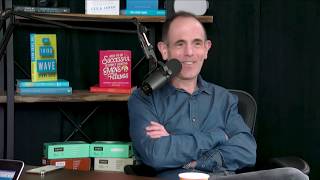
In the second half of his interview with Jason Calacanis, venture capitalist Keith Rabois expands his discussion beyond startup funding to explore political leadership, gender dynamics, and international relations through the lens of entrepreneurship. He uses a powerful female leader as a metaphor for overcoming discrimination and predicts a conservative female U.S. president, possibly Nikki Haley. Rabois critiques Donald Trump, likening him to a charismatic but undisciplined founder: he possesses strong marketing instincts and bold ideas but lacks intellectual depth and self‑discipline, which he argues limits his effectiveness. He contrasts Trump with the voracious reading habits and intellectual heft of Ronald Reagan and Margaret Thatcher, suggesting that true leadership requires deep, self‑driven knowledge. Drawing parallels to startup management, Rabois describes how CEOs should identify and empower “free‑radical” innovators within an organization while managing inertia, using football metaphors of running the ball versus throwing long passes to illustrate incremental versus breakthrough strategies in both business and politics. He evaluates Trump’s unconventional diplomacy with North Korea, proposing that appealing to personal ego could be a viable tactic, and discusses the broader U.S.–China trade conflict, noting Silicon Valley’s mixed views on Trump’s hardline stance. Rabois also reflects on the stability of the Chinese regime, its economic leverage, and the potential geopolitical fallout. Finally, he acknowledges specific policy actions, such as moving the U.S. embassy in Israel, as examples of decisive leadership amid controversy, and teases the upcoming continuation of the interview.
Chapters
This.
Week in Startups is brought to you by: Mixmax the 1 Gmail-based productivity application that declutters your email, prioritizes tasks, and automates your day. Go to get.mixmax.com/twist for $100 in credits. Digital Ocean providing the easiest cloud platform to deploy, manage, and scale applications. Sign up today and receive a free $100 credit at do.co/twist. And LinkedIn. LinkedIn has marketing tools to help you target your customers with precision. To redeem a $100 LinkedIn ad credit and launch your first campaign, go to linkedin.com/thisweekinstartups.
Hey everybody, hey everybody. It's another episode of this Week in Startups. We do the show twice a week. We've been doing so for 900 episodes and 10 years. My great joy in life to sit down with smart people and talk about the future of technology, entrepreneurship, and today you're in for a huge treat. One of the things I've noticed is the more successful in life people become, the less they are candid and honest, and in fact, the less they talk. It's a negative correlation, as they say. More success equals less outspoken. And my next guest, Keith Rabois, is one of the most considered thoughtful and brave and honest thinking people. I know. And we're not like close friends or anything, but we spent time on social together, which makes it, I feel closer to you than we are. I don't think you and I have ever had dinner one-on-one. Nope.
Lunch, nothing.
Nope. But I feel very close to you in some way. I know that's a little bit weird, but I think social media actually works sometimes.
Yeah, it works sometimes. And it's fortunate, I guess, 'cause also you're a Knicks fan, so you're commiserating.
With me all the time. God, that poor Zinga's trade. I literally woke up, I see that as I'm at the Upfront Summit, Marc Schuster's event. And for the first time, I opened up Twitter and actually felt like I was gonna throw up.
Yep.
I mean, it's nonsensical.
Yeah, the whole Knicks franchise has been screwed up since 2000, really. So you forget how old we are, but it's like 20 years. So it's now been 20 years. Like two generations of kids are used to the Knicks just being a laughingstock. And it's like, yeah, it's horrible since, like, realistically 2000 to 2001.
When you and I were in New York, going to games where Patrick Ewing, Charles Oakley, Anthony Mason, John Starks, Derek Harper, then the Charles Sprewell, Alan Houston, Larry Johnson. I mean, the garden felt like the roof was gonna come off.
Oh, yeah, the garden was like the epicenter of New York City. When the Knicks are doing well, it becomes the cultural center of the city, realistically. And there's a little true brief moment in the '80s, Bernard King, before Bernard got injured. Same thing, the excitement around the Knicks, but without an ownership change, I don't think that franchise is ever realistically going to improve.
Right. And I was thinking about retiring. You must have these thoughts sometimes too about retiring, because you're successful.
Sure.
And I'm sitting there and I'm thinking about this, like, hey, Uber IPO is coming, I just hit my seventh unicorn with Calm.com, the meditation app. Maybe I should retire. And then I just thought, no, you know what? I read that Mike Ovitz book, Yeah. Which you read too. We were talking about that. And I said to myself, Mike Ovitz built, he just changed the game, right? He built an empire. I'm gonna try to do that in my early stage investing. And I started calculating, Shamath was making fun of me, our mutual friend. I don't have your friends with Shamath or not. Yeah, definitely. And he's like, oh, owning a team, it's like the most expensive franchise. And I'm just like, $4 billion, let me work backwards. 13 more unicorns, gotta double my stake in each, gotta double my, I got a quadruple my participation in my own funds. And it's actually possible.
It is, although you still have an order that has to want to sell. You can't buy something that's not for sale. So that's part of the problem too.
Yeah, I think, yeah, I was thinking about that as well. I'm trying to figure out my strategy to befriend Dolan and make it seem like it's his idea and that he wants me involved.
That sounds like a good idea to me.
As opposed to going in and be like, Fire Dole. And he sucks. It's like, you know, Jim did the best job he could given the circumstances. A little bit of bad luck in there. Alan Houston's knees, I'm just making this up.
But maybe.
Let's talk about this Ovitz book. Yes. What did you think of it?
What was your main takeaway from who is Mike Ovitz? So I loved reading the book. I've known Michael a little bit over the years, so it's great to read the whole story. I'm not as much of a cinema buff as you, but kind of an amateur, you know, sort of interest in the history of the industry. So that part was interesting. But the takeaway from sort of an entrepreneurial perspective and a VC perspective was the line between success and failure and how thin it is. So one of the things that's incredibly compelling about the book is when he tells the stories behind very successful, very famous movies and how they barely got made and how much heroic effort by both him, his, you know, his business, CAA, and certain directors, producers, actors, writers that actually made these epic movies and how most of them really shouldn't have been made or wasn't, weren't going to be made. and went through years of purgatory. And that felt a lot like startups, that it's only the heroic efforts of a handful of individuals that make the difference in creating these companies that we now think of, you know, sort of God given. And of course, the world's going to have. But like movies and these are most of the most famous movies over the last 50 years.
Rain Man, Jurassic Park, these were all.
Incredibly controversial that nobody wanted to make and that he had to through like just sheer tenacity. put together and pulled together. And that was the most impressive sort of takeaway from the book. Because I didn't really know that history very well and hadn't realized how similar the movie production business is to our business.
Yeah. The thing I liked about it, too, was this trying to think about the structure of how the agencies worked and their role in the ecosystems. And this must not have been lost on you either, because we've both been on both sides of the table as founders and investors. And he really thought, oh, When I worked at this other agency, it was every man or woman for themselves. And then he said, no, CAA is gonna be a team and we are gonna so overperform for every client. And then not only are we gonna overperform, we're all gonna be working as one for the clients. We're gonna bundle our clients together. And so they know, like, hey, listen, Jurassic Park is Spielberg plus Crichton.
Yep.
You know, Dustin Hoffman plus Barry Levinson. What's your takeaway with that in terms of analogous to our industry? Did you start thinking about that like I did?
Yeah, I did. Absolutely. In fact, I was debating this with sort of a VP of people last Friday over coffee who kind of came from the movie industry originally before he moved out here. And whether it was possible to sort of monopolize talent in the way CAA did. So, you know, we always have this adage at Coastal Ventures, the team you build is the company you build. Or if you think about the PayPal, my friends at PayPal, why were we successful? We were able to, martial critical density of talent in one building and sustain it for a period of time. And that's extremely difficult to do. So I've been debating how would one monopolize talent and could you do that in some unique way where you're packaging talent together? When a VC does his or her job really well, in some ways they're doing that already. So what I'm often doing when I'm getting involved in a company is helping founders recognize where the missing gaps in their DNA versus their vision are. And they may not have the network that has the superbly talented people. So for example, if you're an early stage engineer and you need a finance guru, you may not know someone who's a CFO. I know lots of CFOs. I've interviewed tons of CFOs. I've worked with lots of CFOs. So a critical success factor for a company is a CFO or a general counsel. I have that network and I can help evaluate people and bridge that gap. But maybe there's a way to do that at scale, sort of like almost like co-founding a company where you take what's given in a vision and then you're helping improve the odds of success by matchmaking, just like the movies. When you're packaging talent, what they're doing is increasing the odds of the movies of blockbuster by putting the right writers, the right directors and the right cast together. The chance of success is very, is almost preordained. And I think that's true of startups. People talk typically that startups fail or succeed one to 10% of the time. You can use different metrics. Sure. I actually think if you put together the right founding team, it's more like a 35 to 40% chance of success. And that's a big delta and that's only just a function of getting the right people involved at the right time. And I think a good VC can help do that.
Yeah, it's like five to 10 times better odds when you think about it. And then if you think about that, who is going to help you do that? This whole anti-venture capital meme that's going on, I don't know if you saw this ridiculous story in the New York Times about zebras and about founders who don't want venture capital and venture capital firms that don't want outlier success. And I was trying to figure that out. I was like, well, That's great, Bryce. If you want to not have unicorns, can you send me the unicorns? And then I'll agree to send you.
The people who don't want to build unicorns. That's a pretty fair trade. I feel like that's a pretty good trade. Yeah, no, I would take that trade all day long. I actually like Bryce and I like what he's doing, but I would take that trade all day long, partially because I have a filter and we at Coastal Ventures have a filter on impact. And roughly speaking, the impact in society is highly correlated with the economic success of the company. And so if you're aspiring to change the world, by definition, you're kind of funding and looking for unicorns. So, I really want to work to change the world. And if I'm working to change the world, by definition, I need companies that have that scale. And that scale produces economic value usually.
It's interesting. You have this blitz scaling, go big, change the world, contingent. And now you have this anti-venture blitzkrieg thing. And I'm wondering, I actually think I've seen this before in Web 1.0 and many times over this last 30 years that I've been in the business. I think we've been in the business both since the '90s, since web happened, it feels like they're just cyclical. People are just like, you know, it got too big, there's too much bad behavior on the edges, whatever. They just take the VeriNose example or Facebook's worst year, Uber's worst year, and they just sort of paint that brush. But hasn't Silicon Valley built the perfect machine to create wealth and game changing companies and products? Is there something wrong with the machine we've created here?
I don't see it. Well, the machine by any standards in human history is amazing, whether it's perfect or not, right? You can always get better. There can be another generation that's even better than the generation that came before, but no one's ever seen an economic machine that transforms the world almost always positively and actually reinvents industries from scratch. I mean, imagine Tesla, right? So Elon has built by any metric the best car on the planet. Any consumer reports, any evaluation says it's the best car ever built. Built it from scratch with a bunch of people that had no experience and has actually beat every other auto manufacturer that's been around forever. And we do that every day, like literally every day we fund.
It's kind of table stakes. It's the expectation in a way.
Yeah. Now it's hard and it doesn't always work and it takes incredible dedication, talent, ambition, and sacrifice actually to succeed. But we take it as a given that in any industry, whether it's insurance, financial services, Automotive, I think SpaceX, Rockets, you know, interplanetary travel, whatever the case is, that that's going to happen. It's just finding the right opportunities and the right people. But what it does happen is when the market gets hot in Silicon Valley, people fragment and start their own companies a little bit too much. And their availability, Capital, Capital propels this. So it's more difficult to assemble and Marshall the critical density of talent. I was talking about, which we were.
Talking about before with which is what made PayPal successful.
What made Michael successful was the ability to do that in Hollywood. And what made PayPal successful was the ability for at least a place in time for us to do that in Palo Alto and Mountain View. And the companies that really succeed become this magnet for talent and they're able to sustain it for a significant period of time. But if too many people fragment, it creates almost like an artificially low number of super successful, important companies. So to some extent, it's actually easier to be successful when the macro market cools down a bit. because your ability to get talent in one place and keep it in one place is actually improved. Yeah. And so it would be almost like.
In the Hollywood metaphor, if all of a sudden Spielberg's like, I'm gonna write my own screenplays and Crichton's like, I'm gonna start directing. It's like, well, it would be better if you guys worked together and kept that talent base together.
If you look at the Warriors.
Yes, the Warriors are a good sports example of this. They've actually been able to keep I sat courtside at the game just the other day, and I was just watching this game versus the Spurs, and I looked at it as like five all-stars are on the court at the same time. Steph Clay, Draymond, Kevin Durant, and then they put Boogie in there. It was just bizarre to watch. They scored, I think, 25 baskets in a row or something ridiculous, and you're just watching it going, God, this is such a moment in time.
Yeah, it's very rare, especially when you have this artificial constraint of a salary cap, which doesn't apply as much in the business world. that's designed to sort of spread and create more mediocrity. By definition, that's what a salary cap is designed to do. It can cheat at the edges and be brilliant at the edges as the Warriors have been. But in the startup world, you don't have that artificial constraint. You could actually monopolize talent. And that's one of my goals in life. Speaking of Michael Ovitz, I've always joked with my friends about one day I.
Want to figure out how to monopolize talent. I haven't quite figured that one out yet. A cap table that can fit everybody. A salary cap. A ball that can be shot by five people concurrently. I mean, it's like there's only one ball.
Yeah, it's very difficult to do. And figure out how to scale it too, like generationally, like right, people get older and you want to find up and coming undiscovered talent, like you draft people out of high school and basketball and how to do that in a scalable way. I'd love to all figure out how to put this all together before I quit this job.
When we get back after this break, we're going to talk about socialism, Trump, Teo, Elon, and then Hustle and Balance.
All the easy questions.
I'm gonna just give you all the work. We're gonna do like word association. Like this is a therapy session.
I'm gonna be like, Trump, you speak.
There's gonna be a lot of people triggered with this. Hashtag trigger warning. I'm gonna add trigger warnings and identity politics to the list. But I told you from the beginning, he's candid, he's thoughtful, and it's gonna be a great discussion when we get back on this week in startups. My sales team is obsessed with Mix Max, M-I-X-M-A-X. It's a Gmail based productivity application and it provides massively powerful campaign analytics and it supercharges your efficiency in really three areas, sales, outbound sales engagement, automation and analytics for bringing in new business. Wouldn't 70% open rates and 50 to 60% reply rates be great for your startup, for your sales team? Well, go ask them. and many customer success teams do not have a one-to-one relationship with customers. That's what you want. Recruitment as well, scheduling, availability, it keeps you super busy. Well, imagine you get an email that says pick one of these dates, boom, or vote on which one of these dates you want. Thumbtack sales teams uses it, and so does their HR team, and they love it. Our sales team loves it. And Grant from my team said their sales efficiency and Effectiveness has taken off since switching to Mix Max.
They love it.
Through simple email sequencing and automation, they've achieved absurdly good results. I mean, ridiculous. 91% open rates, 20% click rates, 30% reply rates, 10% outbound emails to meeting conversion. That's the key. You want to get those emails to conversions going. And one out of every 10 cold emails converts into a meeting now. and we're tracking all this. This is the pipeline management and this is the sequencing that high-end sales teams are doing. Well, it's available for everybody with Mix Max. So I want you to go to get.mixmax.com/twist, get.mixmax.com/twist, TWIST, and you're going to get $100, a C note, a hundi in credits with a minimum of three annual licenses. There's no strings attached. No credit card required to get a demo. And it's great for your sales team, it's great for executives, recruitment, customer success, all of that. So start tracking. Get.mixmax.com/Twist. You're gonna love this product. Okay, let's get back to this amazing episode. Hey everybody, welcome back to this Week in Stars. Keith Rabois with us. You can follow him on the Twitter, R-A-B-O-I-S, Rabois. That's it, easy to pronounce. And he is a partner of our Coastal Ventures. He started Open Door, correct? Which is brilliant.
We talked about that a few years ago.
A few years ago. And if I remember correctly, the concept was, I tell you, this is my home. You give me a price and give me my money now.
Yep.
Then on the other side, if people want to buy it, you tell them, go to the house anytime you want, here's the code, this camera's in there, just so you know, don't like- Exactly.
So we talked about this a couple of years ago.
What happened in the last four years?
Yes, we had just launched the company when we talked about it. probably summer of 2016. We were in two markets, Phoenix and Dallas. We're now in 18 markets in the US. So last year in 2008, we went to all 18 markets. This year, we're going to go to at least 30 markets. So it's basically available pretty soon almost everywhere except the Bay Area. The Bay Area is a little bit anomalous in terms of real estate prices and days on market and a variety of issues. But basically what we provide is instant liquidity for your house. So if you want to sell your house, we make it pain-free, friction-free. You can go to the website, give us your address, we'll give you an offer. If you like it, you can have your money in three days. And then you can decide when you want to move out. So it makes it as easy as trading in your car, which is the original vision. And now that we're in 18 markets, we're doing this everywhere. It works everywhere.
It's really resonating. Yeah. What's the scale of it? How many homes have you bought and.
Sold or just bought, I guess, let's put it that way? Is it hundreds or thousands and thousands? I mean, this year, We'll probably buy $10 billion worth of homes this year. So that's a rough scale. Wow.
$10 billion in homes. So what's the talk about?
You wanna buy some?
Exactly. Well, actually it's interesting, like when you hold them, what have you learned about buying so many homes that you didn't know going in?
The buying part I think we got right, like I had this vision back in 2003 that really was the genesis of the company. That part I think we got right, which is that the thesis was that you could use data to model a home sight unseen accurately enough to purchase it safely. And we were right about that. I think we learned more about selling a house that there's a lot of operational complexity in selling a house. It's a little more like Instacart or DoorDash or in some ways Uber or Lyft. You have people on the street that are selling a house. So you have people making sure the grass is cut or the pool is clean. And there's a lot of operational complexity that you need to be masters at or you can lose a lot of money. So DoorDash is very successful. Instacart is very successful. because they figured out how to deliver food on time in an affordable way consistently.
Yeah.
That's very difficult to do at scale. And selling homes and maintaining homes has some of those characteristics. The buying part is actually a lot easier, at least for us.
Yeah. You just know the square footage, you know the location, you have the comps, you have all that. But on the other side, there's an emotional thing that happens when people walk on a property and say, I'm going to spend a decade or two here, raise my kids here.
That'S true. That's a good insight. I think the decision to sell a house is more utilitarian. So how easy is it going to be, how convenient and how certain am I about this? And is the price fair? And once you have that all locked and loaded and know how to do that reliably, it's a pretty just rational decision. The purchase of a home can be very emotional, which has a lot of different flavors to it than just purely, is this the right size for my family? Is this the right vibe? You know, and that there's a lot.
Of soft variables there that you have to get very good at. Yeah, like the schools are one thing that is quantifiable, right? Sure.
So, yeah, there's no like, sources that tell you about the quality of the local school district.
Yeah, but no, when you buy it, that's why they're constantly, like when you're state now that I've bought and sold a couple of homes, like the staging and how people perceive their life in there. So, like, this room is where you're gonna play poker. Yep. And then this is your man cave and this is your theater and this is your yoga room. I'm like, anybody really have a yoga room? Anybody really have a massage room in their house? Like, I mean, come on. But they set them up in the staging like, this could be a fifth.
Bedroom or a fourth bedroom, but it's really a massage. It's aspirational, right? So it's a little bit of sexy appeal. It's like merchandising, right? Like you go to a department store and part of what they're doing when they're really good at what they're doing is merchandising. You discover things and you kind of want to be a certain way. And that's part of buying a home. And we've gotten much more proficient at it. There's a lot of learnings there that we didn't know when we started the company.
Yeah. And so you got to figure that.
Part out, the sales part. We're good at it now. I mean, we sell our homes faster than on average. Like so we use a benchmark of how fast is a home turnover in the market and we should be better at it than the average real estate agent. But it's hard.
There's no doubt it's challenging. Interesting. What do you think of this hustle? It doesn't have anti-hustle. It doesn't have to be crazy at work. meme that's going around. So there's a group of people, you and I are both Gen Xers, and we came in after the boomers and it was kind of like, hey, we're gonna have to bust our asses to actually create our own world. Now you have this millennial and Gen Z and it's kind of this like lifestyle experiences first. That's quite charming, but does it have to be crazy at work? Do you have to hustle? Can you build a Tesla or a Facebook and not sacrifice a large swath of your time and life in that pursuit?
Well, so there's two answers to that question. One is you don't have to sacrifice everything, but it depends what your ambition in life is. There are a lot of people who want to change the world. There are some people who want to build the next Tesla, Facebook, a better Facebook, whatever. Those tend to be incredibly difficult exercises. There's people who want to be NBA basketball players, and there's people want to be high school basketball players. if you want to play, you know, on the NBA All-Star team, you're probably committing a lot of your time to practice. You're probably working out, you're probably eating while you're sleeping, and you're taking 500 shots a day, typically. 500 shots a day is incredibly draining. 100 shots a day for me is incredibly draining. But like, if you want to be- and monotonous. Yeah. And if you're like, imagine you want to be Olympic gymnast from the time you're like four years old, you do nothing except train. for the Olympics. And so it depends what your goals in life are. But the idea that there's no sacrifice or no trade-offs is crazy. If you want to do unreasonable things, and most of these goals are unreasonable by any normal definition, there's unreasonable commitments and sacrifices that come with that. And it's up to any individual what they want to do with their life, whether they value X versus Y. But to tell people that they can achieve without the sacrifice is just misleading and borderline fraudulent.
Why is it that people are holding billionaires and successful people in contempt at this moment? Farhad in the New York Times wrote this ridiculous story about like, we got to ban billionaires. And I started thinking about that and I was like, wow, isn't the whole entire American dream predicated on there is no cap to the success? And isn't that what makes us punch above our weight on the global stage with only 300 30 million people, we're the dominant force, even as effed up as Trump and everything is right now. And why is this happening right now that everybody doesn't believe in the American dream when America's never had better employment, never had better productivity, and the standard of living is better for everybody objectively? It's very weird to me.
It is a weird dynamic. So I'm not sure how popular a dynamic is versus like, the people who have sort of an amplified microphone tend to disproportionately share it. So I think the American dream is still very aspirational for most Americans. I think that billionaires are people and successful people in any field are people we should emulate. So my belief in life is that if you want to be more like a successful person, you should copy their traits. And so if you want to be a successful company, you copy the traits of successful companies, not failed companies. and if you want to succeed in life, you copy the traits back to the days of Ben Franklin. I mean, like Ben Franklin was like, you get up early, you know, you know, like this stuff. I think also there's not a lot of Secrets, meaning, like, the keys to success aren't secret. They're painful. So you have deferred gratification versus immediate gratification. So let me give you a mundane example to start. Let's say someone wanted to be, for whatever set of reasons, a cover model for Men's Health.
Got it.
With the right diet and the right program and the right sleep, most people can achieve that. It may take years of training, but the gratification comes after the years and the sacrifice comes up front. Same thing these days, if you wanted as we're both getting older, if you wanted to live five to 10 years longer, there's a pretty reasonably proven methodology for doing that, which is intermittent fasting, severe caloric restriction. There's a lot of evidence that that would extend your lifespan, not forever, but for five to 10 years.
And you'll have a higher quality of life.
Higher quality life while you're active. Like you have more quality years actually. Now that said, you have to restrict your calories to 1200 calories and you have to do that for years to get the benefit. So I think most of life is can you trade gratification, long-term gratification for short-term sacrifice? And can you compress the feedback loop? And that's a product feature level is just compress the feedback loop. allows more people to stay on the program and not churn and go back to regress their behavior. So I think there is a formula for most success, but it entails trading off short-term and long-term gratification, and you just have to decide where on that dollar you want to be.
Yeah. Silicon Valley, is it a meritocracy?
Well, it's more meritocratic than any other industry in America. I worked in law and in politics professionally. and as a result of representing other industries as a lawyer, certainly had exposure to the financial services industry, which a lot of our clients, aviation industry, which a lot of my clients, by far more meritocratic. And the definition of meritocratic would be, can you go from literally nowhere to success overnight? And the answer is absolutely yes. I mean, one of the most interesting things about Silicon Valley is you meet people very early in their career sometimes, And you wake up a couple years later and they're more successful than you.
A magnitude more.
Oh yeah. I have former interns of mine that are super successful.
Does it crush your soul or does it inspire you?
No, it's very inspiring. It's inspiring in a couple dimensions. It actually makes me more ambitious and challenges me to be better at my own job and performance. It gives me energy to help people earlier in their career. like if I can teach or mentor a couple things that allows them to accelerate their own learnings, you can see the benefit of that where they go further and faster.
Yeah, it's interesting to me as well because it seems like this is the most helpful industry I've ever met as well. There's like this really, I mean, beautiful tradition here of helping people who are new to the industry. And it also makes me wonder why the industry is kind of got this rap of like not being a meritocracy, being an old boys club, and like that you have to know somebody to make it here. It's like- We didn't know anybody at PayPal.
I keep pointing this out. We were a bunch of misfits that had no pre-existing relationships. Oh, were you ever?
Oh, yeah.
I mean, I know your friends. I'm good friends with David Peter or whatever, Max.
Everybody.
Yeah.
Jeremy.
Oh, my God. Everybody was a misfit. And, you know, even the media picked up on that. There was like, CoveR stories and magazines about Earth to PayPal because we were that different. And we made our own network and we made our own success. And then we rebuilt a network ourselves, but we didn't have any connections. And then, you know, I've seen like ridiculous books written that say, oh, well, we went, some of us went to Stanford. Actually, truthfully, less than half the company went to Stanford. Most went to University of Illinois, which is a large state school in the middle of America. Um, that's where all the engineers came from. None of them came from Stanford. Secondly, and there's 40,000, I think, graduates or 40,000 students at the University of Illinois at any given time, only one of them was Max. So the idea that that was some advantage or Stanford, there's 6,000 undergrads at a time. Peter created PayPal, not the other 5,999. So the idea that Stanford's some major advantage is just ridiculous with the math being one to 5, 5999.
Yeah.
So I think people make their own sort of success. And Silicon Valley welcomes that. I mean, you look at the immigrant stats, there's all these different ways to cut the data. But at the end of the day, almost every important Silicon Valley company in the last 50 years had at least one founder that was a first generation immigrant.
Elon, Steve Jobs, David Sachs. I mean, none of these people were.
The entire, everybody immigrated from India. I mean, like, you have a bunch of refugees from communist countries. We had the stat, the famous PayPal stat of half the founders of PayPal built bombs in high school. Oh boy. Yeah, they did. But you have to remember, most of them were building bombs in communist countries, which is probably a reasonable thing to be doing.
Freedom fighters, not terrorists.
Exactly.
All right, when we get back, God, I don't know if I want to go there, but the Trump phenomenon is relevant in your friendship to Peter, that's one. And then there's also this Khashoggi, Saudi Arabia involvement in America and China. And all of this is really, for some reason, landing in Silicon Valley as much or more than in Washington, DC. So we're gonna talk about those non-controversial, just easy breezy topics when we get back with Keith Rabois on this Week in Startups. You know what you need for your startup. You need to scale. your infrastructure to match all your explosive growth? Well, if you want the best cloud platform to deploy, manage and scale applications, that is Digital Ocean. 150,000 businesses are using Digital Ocean, over 150,000, and they are one of Inc's world's fastest growing startups. You get free round-the-clock tech support for all of the customers that use the service, regardless of the spend. and there's a huge learning community with resources and tutorials ready to go. It's business ready and it's here ready to scale with you. Very straightforward billing. You're always going to know what you'll pay. Get a hyundai, a hundred dollars right now by going to do.co/twist. Yes, go to do.co/twist. They got the nice short domain name. And here is an amazing customer testimonial. Listen to this everybody. since moving to Digital Ocean, our setup is ultimately more capable than what we had before the migration. Downtime has become a rarity and our hosting costs have decreased by more than 90%. What? You're going to save a ton of money, you're going to get better service and you're going to love how easy and simple it is to use Digital Ocean. An amazing company. We've had Mitch Weiner on the program a couple So, we're going to talk about times, great guy, great company, great founders, they raised a ton of money, and they are building the world's greatest cloud platform. So go ahead and get that hyundi right now by going to do.co slash twist. Go ahead and get that $100. That offer may not last, so I need you to do it right now today. Do.co slash twist. Okay, let's get back to this amazing episode. All right, welcome back Keith Forboys with us. CEO of Square worked on Slide back in the day, LinkedIn, PayPal, what a career. You know what? I'm just thinking about the funny thing we were talking about the meritocracy. But it was, those are all our men. So there was a female founder issue in this town for a long time. It seems to have changed radically in the last five years. I've invested in 10 times as many women in the last five years and seen 20 times, 30 times more female founders. It feels like we've made progress there. Yeah. Yeah.
I mean, I would love to see actual stats. I mean, unfortunately, like, I've looked at our own internal stats, and we We haven't gone back over the years, tracked everything in a way that makes it easy to parse everything. But my impression has been that the female founders that have pitched us have received term sheets at a higher rate, actually, than the average male founder that pitches us. Certainly the ones who make it to the partnership meeting stage, absolutely, our propensity to extend a term sheet is higher.
Do you have a theory on that? Because I do, but I want to hear yours.
No, I do think that there is, Absolutely, there's a desire to fund people from a variety of different backgrounds.
And so people here are working on equality issues and they're tuned into it in a major way.
Oh, absolutely. People are very attuned to it. And they have been, which is a good thing. I've only been a VC for six years now and certainly been true, I think, all six years I've been a VC. I don't have as much context. The 13 years I was running stuff, I was an active angel investor, but I wasn't really tracking like what venture capitalists did and what they funded. And so I can't abine as accurately, but in the six years I've witnessed, I think there's a significant receptivity to finding, identifying and funding and mentoring people with different backgrounds.
Yeah, people were underrepresented.
Yeah. And there's different dimensions to underrepresented. You know, like we have Actually, like a Coachella, even though we don't have a female partner, which occasionally, you know, people point out, we actually don't have a establishment white male, either partner. No, it's just white male. We don't have one Christian white male partner, like from the U.S. We don't have one American Christian white male partner.
It's crazy. I know. I got looped into that. They were, when they were looking for partners, when they formed it, I got a little phone call from an executive search firm.
I was like, I'm a cis white male. They're like, We're looking for one, but.
You don't make the cut.
Yeah, we literally don't have one central casting American Christian. Wow.
Yeah, it's the end of the line.
We're obviously discriminating.
My thesis on this is when I meet female founders, I think there's a lot of dipshit guys who are not qualified to be founders who will fight their way to get that meeting. So, like, they figure out a way to get to me, and then I meet them and I'm so unimpressed. In aggregate, the average male, white male coming to me is below average, like massively. And then there's such a smaller sample that I think the women who are drawn to be founders and take that seat are so much higher quality and they take the work so much seriously. A lot of these like guy founders, they meet, they all want the, speaking about the reward issue you're talking about, they want the reward before they've done any work or have any skill.
Well, there is definitely, It's like an entitlement. There's definitely a post-social network, you know, startups being cool. Phenom, where people move to Silicon Valley or start companies and become founders because it's cool. And that was something that certainly wasn't true when I was growing up, which I would date until about, maybe until I was 35, maybe 40. The only people who became founders were weird. Like literally weird. In fact, when I was graduating Stanford, the people who became founders were the people who couldn't get a job. It was like the myth. They couldn't get a Goldman job or a McKinsey interview. and they had no choice but to found a company. And that shifted. And then, you know, the first internet generation shifted it positively. I think. I think the second generation in the internet with, like, social media and other attention in the mainstream media may have brought what, you know, our friends at Sequoia call the tourists to Silicon Valley. Oh, God, it's interesting. And that definitely, you know, has an adverse selection element to it. And so I think there's a lot of Founders I meet. Hopefully I can filter them out before I meet them, but make mistakes that want to be founders and want to start companies because they think it's prestigious or cool versus they want to change the world and really fix problems.
How hard is it for you to check that? Is there a technique? Is there a question, secret question or something? What are your techniques for filtering?
I think it is at the margin not that difficult. I think there are people who are, like anything else, there are people who are better and worse at framing things. how much, how excellent you are at, you know, reading between the lines varies a lot. And you're, anybody's gonna make mistakes like drafting players.
Yeah.
And, you know, football or basketball or baseball, even, even if you're very good at drafting, you're clearly going to have some errors.
Yeah.
So you definitely make mistakes, but there are, there are ways to tease out motivations and values. And if you, if you do that across a pool of Investments, you wind up with a positive skew.
Yeah.
Of like the right motivations are here for the right reasons or building the company in the right way.
Yeah, I ask people. So why are you doing this idea?
That often leads to a good, that is a great way to start. I do think that there are- They talk and talk and then all of.
A sudden you're like, wait a second, I'm looking you in the eyes like a poker player and I'm like, I.
Don'T think you have it. Yeah. Well, the one way, like for example, one way I don't, one thing I don't love is people who become founders in search of an idea. It's like, we're gonna start a company. I'm like, well, what are you gonna do? And they're like, we don't know. We're gonna spend a couple months thinking about it.
I'm like, when that works, that rarely works. Bezos, I think, is the only one that you can point to, because I think he was looking for an idea coming out of, was it D. E. Shaw? Yeah, D. E. Shaw.
He's like, I need an idea. But then he just felt like, who knows the folklore of these things? Yeah, there's a lot of folklore involved, and it's usually a conflict. A couple of things, like I might want to be a founder, and I kind of have this problem, and maybe I have this, like, sleepless night where they come together. So for me, it opened door. Peter really started my process of thinking about real estate. Peter Thiel back in 2003, he basically said, come up with an idea that's going to innovate in residential real estate. I said, why? And he said, well, it's the largest part of the US economy that's been unaffected by technology, which was true in 2003 and was also true 2009 or whatever. But fundamentally, he was right. But also he was right about, or what he didn't know is, or might not have remembered, is when I joined PayPal, which was right after Peter had come back as CEO in September 25th, 2000, Peter came back as interim CEO of PayPal. Peter and I had this negotiation about me joining PayPal. And we went back and forth. We agreed on title and equity compensation and cash compensation. And at the time, I was living on the East Coast, owned a property in Washington, D.C. And Peter basically said, well, so I'll see you on Monday. and I was like, what are we talking about? Like, I thought I could start in two to four weeks. And Peter's like, nope, can't start on Monday. Forgot the whole thing. I had a very Peter Dale moment. Yes, classic Peter. Like, totally classic Peter. So we compromised. I had to start on Tuesday, not Monday. Okay, great. So they gave me Monday to sell my house. Wow. So, you know, in Open Door, the idea of selling your house instantly, it wasn't like that experience was exactly what predicated the Open Door sort of insight. But maybe it wasn't accidental that when Peter was like, start something in real estate, come up with an idea in real estate, the idea of instantly selling your home, like, occurred to me because I had actually gone through that pain and dealt with it, like, personally, and.
Having to join PayPal or sacrifice, you know, my future. Yeah. All right. When we get back, we'll talk about should Silicon Valley companies take money from Chinese or Saudi investors, something I've been thinking about a lot. because my biggest investment, Uber, has a lot of money. Took a lot of money from in two rounds. They took it from the Saudis directly, then they took it from Masa, who took it from the Saudis. Right. And I didn't sit well with me, but I want to hear your opinion when we get back on this week's startups. We love LinkedIn for marketing and advertising our products here at launch. Let me show you how using it because there's 500 million people every day on LinkedIn. And it's not just for jobs, it's also for marketing. They have an ad platform that is second to none. It lets you do really interesting things like target people not only by geography, which a lot of people do candidly, but by job title and what company they're at. So we want people to come to Launch Festival Sydney. You know, we brought the Launch Festival to Sydney and we started buying some ads in New Zealand, in Australia, obviously. And we decided we wanted investors, right? Because we do angel investing, Angel University. We also found entrepreneurs, sales executives and startups. And now we've built an ad. We upload a video and target just those people. So here is Presh, our CMO, putting up the ads for Launch Festival Sydney. And we put in the headline, the call to action, learn more. and we figure out, oh look, there's 330,000 people who match that very targeted ticket purchaser for our event. And our tickets for our events are, you know, whatever, $300 up to $1,000 maybe. Well, we can easily make that money back by using LinkedIn marketing and reach customers we didn't know were out there. That's the great thing about the ubiquity of LinkedIn, and that's the power of of LinkedIn marketing. So here's your call to action. It's unbelievable, I know. But LinkedIn is going to give our audience members a hundred bucks, a hundi, a bean right now. Get that air credit by going to linkedin.com/thisweekinstartups. You gotta spell it out. linkedin.com/thisweekinstartups. No spaces, no dashes, no nonsense. linkedin.com/thisweekinstartups. You can create a campaign in minutes and Four out of five customers on LinkedIn, they're decision makers just like you. So you're building relationships with people that really matter and you're not wasting your ad spend on people who will never buy your product or service. Okay, go get that hundi. Get that hundi. That hundi is not gonna be available forever. I can tell you that. That's a generous offer. LinkedIn.com/thisweekinstartups. Okay, let's get back to this amazing episode. Okay, we're winning so much, winning so much on this episode with Keith Rabo, okay? And we're gonna build the wall and Keith Rabo is gonna pay for it. You are, people think you're pro-Trump because you're, I think, a conservative. I think I'm gonna try to unpack this here based on your social media. You're anti-Trump, you were never Trump. You're conservative, but libertarian and small government, but solutions based. So I'm trying to parse you because you're a solutions based person, but you're conservative. and you're a gay man.
Yeah, I think I'm a, so I'm definitely conservative and definitely was anti-Trump. I funded, I might have even been the first never Trump funder. Oh, wow. I might have wrote the first check. But, yeah, I mean, to me, Trump really was unprepared to be president of the United States, both personally and professionally, and was basically border, borderline sociopath, which I tweeted, you know, while he was running for president. And I think that's proven to be accurate. It doesn't mean he doesn't occasionally stumble into a better writer, a right answer, maybe by accident, or maybe because he's hired some smart people. But fundamentally, yeah, I would not have voted for him. I didn't support him. I was very much opposed to him. And I think he just doesn't have the right demeanor in many ways to be an inspiring leader. That said, I think a lot of other people are flawed. and mostly they're flawed because they have bad ideas. So you have maybe better character from some of the candidates he opposed, but their ideas may have been inferior. I sort of kind of compared it to rolling the dice, which is if you were very unhappy about the future of America, rolling the dice with some random candidate might have been a reasonably rational thing to do, which is somewhat what Peter did. It's kind of a Ross Perot thinking.
Like, hey, let's put somebody different in there. Let's try something different.
I don't like the current state of affairs. I don't like the trajectory we're Yeah. Let's try something else. It might be better. Right.
Hiring somebody's son or spouse for three or four generations to run the country, it starts to look more like, I don't know, like, yeah, royalty. Yeah.
So people wanted to roll a lot of people wanted to roll the dice. And I think they got some of the things they expected and maybe some things they didn't expect. But that's not what I would have done. It's not what I would support. I'm an I kind of an ideological conservative. And by that I mean, specifically, I tend to believe that there's right and wrong answers in life. I tend to believe that there's a benchmark of merit. I tend to believe that markets and freedom produce better outcomes than a top-down philosophy of how to arrange assets. And those things combine into being a proven philosophy. My hero growing up was Margaret Thatcher. I think when I get depressed, I just reread a great Margaret Thatcher speech. I have a collection of her speeches and they always inspire me.
What is it about her that makes her so inspiring to you?
So a couple of things. One was the baseline state of affairs that she inherited in Britain was so bad. And Britain was really the sick, you know, considered to be the sick man, quote unquote, of Europe. It was a socialist country that was paralyzed by unions that had no economic future and progress was diminishing an influence in the world. And she overnight changed that just by force of will. enforce a philosophy. She really understood the ideas that she was supporting in their historical providence and her power in expressing them in her relentlessness and tenacity. Like a very good founder, she just walked through walls and said, no one's stopping me. She had this great phrase I liked, which is very relevant to today's world, where she said, I don't read the papers. They might deter me. And I think that immunity from what other people think is what leads people to be unreasonably successful. I think, you know, per this diversity discussion we had, I think also she was subject to more discrimination and more Britain is still in the UK today, certainly back then in the 70s and 80s, but even today is still much more hierarchical establishment driven culture.
Yeah.
And there was a lot of gatekeepers and they tried their best, but she was just so good and so powerful. and so personally powerful that she was able to break through every possible constraint. But the revenge, when she basically got fired and dumped by her own party, was a function of alienating these powerful men by refusing to back down to them. So I think it's a great sort of metaphor for how one can succeed in despite discrimination. And I think we'll see that in the United States, too. I think the first female president here is going to be a conservative. Hopefully it's Nikki Haley. I think she'd be great, but I think you will see that dimension play out here too.
It's interesting when you look at Trump because he does have some savant-like ability to communicate, but it's not based on intelligence or a thorough understanding of anything, apparently.
Well, he's got a great marketing instinct.
So when we were on stage... Marketing.
Would be better than... When we were on stage the summer of 2016, Yeah, I compared Trump to Uber, which actually turned out to be even a better comparison than I realized at the time. Um, but I think Trump, like a very strong founder who has great strengths and incredible weaknesses, has some great strengths. And that's why he was able to beat 17 candidates in the primary and then go back, then go through the general election and beat Hillary is like, you clearly can't do that without some skill, but his lack of discipline. creates more unforced errors than any professional politician I've seen in my life. You can imagine how effective and dangerous, depending upon your perspective, Trump would be if he had a little bit more self-discipline. They had same ideas, same principles, but just was a little bit more disciplined. If you read, oh my God, would he be dangerous?
Or if he surrounded himself with qualified people instead of alienating them and making them leave and write books about what a terrible human he is.
Yeah, yeah, no, he definitely...
He had a lot of talent in that place, right?
He could have. I mean, so people forget that, you know, one of the things that A. Lady Thatcher did, and certainly President Reagan did before they were elected, was read. They were voracious readers. And, you know, people used to dismiss Reagan not really understanding how much intellectual heft he had. And then after he died, a lot of his handwritten notes and speeches came out. Where it's very clear that the intellectual work product behind his run, his gubernatorial campaigns, his successful two terms as governor of California and running for president were really driven by him. It wasn't like, you know, a staff thing. And the same thing was true of Lady Thatcher. She was the inspiration and the staff had to keep up with her. And so I think, like, Trump completely lacks that intellectual heft. And that's frustrating because I think there are really good ideas that can solve problems and make America make the world better. But you need to read, you need to find them and you need to decide to prioritize them. It's a little bit like when you're running a startup. You have these random free radicals in your organization that have better ways of doing things. And the traditional organization structure, hierarchical structure is going to filter some of those out. And a really good CEO though will look for those free radicals and those great ideas and embrace one or two a year. And use their credibility and social capital to make those radical and innovative ideas happen. And so I think that that's what a- Unleash them. Yes. you're unleashing them against these organizational inertia. And every successful organization has inertia. And what you want is someone who has the intellectual curiosity to go find those and embrace a few and power them through. And that's how you get breakthrough success in a startup or in politics. And I really wish we had a president who would look for those ideas because I think there are solutions to health care that people could embrace. that could change, you know, everything versus like some ridiculous socialized future. Yeah, I see that the trick is.
To not burn the building down while you're letting those free radicals out because it is a little bit of an experiment, right? You're like, okay, let's let this fire brand out. Like just don't burn the ship.
So I use a football metaphor for this, which is most organizations are proficient at running the ball and you optimize for running the ball like you optimize the more skill you have. the more optimization actually gets you success. And you can free yard run.
Yeah, four yard run.
Three and four yards, you're just so good. You're off the first round. A lot of first downs, just so good. You're just going to move the ball forward. And if you run the ball forward six times, you're going to wind up in a better place than where you were. So every month, every quarter, you feel like you're making progress. But you really need to be an iconic company. You need to throw some passes and you throw them all downfield. Take some risk. And it's sometimes hard to prove to people that this past stuff, it feels like the 1960s and 70s Ohio State Michigan games, like with Bo Schembechler and Woody Hayes, like this idea of like throwing the ball down a field, like would have seemed foreign and crazy. And they'd be like, what are these Florida people doing? Why are these people like, like trying to do this stuff? And then, but those passes work sometimes. Yeah. 30, 40 yards. Yeah. And then 10x results. All of a sudden, you know, you have a very different, you know, ball game, really. And you can change the dynamics and you can change the skill sets you need. And I think a healthy company does a mix of throwing passes downfield and running the ball. And the same thing I think is true in politics.
I thought Trump's approach to Kim Jong Il, un?
Yes.
Il, or un, it's un. Who's the latest? Kim Jong Il, I always get this wrong. Anyway.
To North Korea.
To North Korea. I said long before Trump was even in office, this kid loves movies and basketball players. Let's invite him to Sundance and the Oscars or the NBA finals if he gives up his nukes. If he could come to America and go to the All-Star game, Six Courtside, he would do it. Or if we brought Tom Hanks and some movies over there for screenings, he'd go for it, he'd fall for it. What did Trump do? Trump's like, I'm gonna play to his ego, I'm gonna get him out of his shell. That actually seemed kind of brilliant to me, that approach. And the China actually standing up to China saying, Hey, We're gonna demand some things here in terms of fairness, like where's our cars in your country? It seemed like he was getting some things right. I think that's right. I think so many things wrong.
Well, I think let's talk about North Korea for a second. I think in North Korea, the establishment in Washington, D.C. has been ignoring a really severe problem in North Korea since at least the 1990s, arguably since the 1950s, and the problem's been getting worse, not better. And Trump, to his credit said, like, look, every day this is getting worse, not better. So we need to do something different. Just throw a pass.
Yep.
And let's try it.
Yeah.
And I think it may turn out to be more successful. It's certainly not going to be less successful than the last 40 years of just ignoring the problem in China. I think you actually see this in Silicon Valley when I go to dinner with my friends who are more liberal or more representative of the distribution of views in Silicon Valley. About half the people think China Trump is right on China. in pushing back. Like, I think, again, the foreign policy establishment in Washington is so corrupted by Chinese money and Chinese influence and the potential of the Chinese market that the willingness to take a stand has been compromised on both parties. And Trump's willing to push back, and he's more right than wrong on China. And I think he will get most of what he wants from China because I think China realizes that they're disproportionately exposed. to our economy and they will actually lose more than we will in a massive sort of economic war. There are places in the short term.
There are places Apple could build the next iPhone that are not China.
Yep.
And that would not be good for China.
No, and the Chinese leaders are very, very savvy. They understand that they run basically an authoritative regime, but as long as the 1.2 billion people are improving their lives every year, It's a fairly stable regime.
That's all they want.
If they produce the standard of living increases, the food increases, they think there will not be another Tiananmen Square. And they're probably right. So everything they can do to increase the welfare of all 1.2 billion people, they're very obsessed on and focused on. And therefore, when they run into someone like Trump who threatens that, they panic a little bit. And you can fuel, if you go to China, and several friends of mine have been to China the last year, you can feel the panic a bit from the top down because they realize there's some instability and that instability could lead to another Tiananmen Square, which is their worst fear. So I think some of this will work in his favor. But asking some questions of things we take for granted, or at least the Washington establishment has taken for granted, particularly in foreign policy, is a very healthy dynamic of this administration. I think there's a lot of negatives to the administration. And, you know, we talked about a few. But I think there are some positives. Moving the embassy in Israel was, at least in my view, very important to actually say something and deliver on it, to realize who your friends and who your enemies are and be able to back that up despite people complaining and whining. So I think there's a lot of successes there, but they're marred by so many errors that it makes it hard to have a net positive view.
Be sure to catch Part 2 of Jason's action-packed interview with Keith Raboy of Coastal Ventures and PayPal in our next.
Episode of this Week in Startups.
More from Keith

This Billionaire Trains His Body Like He's Building A Billion-Dollar Startup | Keith Rabois


Vinod Khosla and Keith Rabois on Building and Investing in Enduring Companies | Ep. 40



