E905: PT2 Keith Rabois PayPal/FoundersFund: censorship, secondary shares, selling, getting into tech
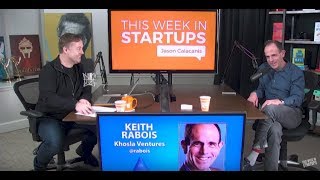
In this episode of "This Week in Startups," host Jason Calacanis interviews veteran investor Keith Rabois. The conversation weaves through a range of topics: the moral dilemma of operating in China and handing over dissident content, the hypocrisy of Silicon Valley taking money from authoritarian regimes such as Saudi Arabia, Russia and China, and how venture capital funds source capital (endowments, family offices, sovereign wealth). They discuss the evolution of secondary‑share sales, the cultural impact of founder liquidity, and the importance of neutral criteria for employee sell‑offs. The dialogue shifts to macro‑economic concerns, warning that the U.S. economy may be on borrowed time as monetary policy tools are exhausted. They examine emerging tech – self‑driving cars, the role of ubiquitous personal devices in safety, and why Apple’s acquisition strategy may be too cautious. Keith shares personal anecdotes about work ethic, his Jewish‑Irish‑Greek upbringing, and his fitness obsession, using them to illustrate broader points about founder resilience. He describes his adrenaline‑seeking nature, competing in sports with founders, and obsessively tracking his two‑minute heart‑rate recovery as a health metric, positioning physical performance as a proxy for mental sharpness. The episode ends with concrete career advice: prioritize mentors and bosses over companies, identify a personal value‑proposition, and stay adaptable, while acknowledging that even seasoned investors make costly mistakes (e.g., missing early investments in Stripe and Robinhood).
Chapters
[Speech] this Week in Startups is brought to you by Segment. Segment's startup program has exclusive deals with the best tools and resources to become a data expert. To see if you qualify for a free account worth up to $25,000, go to segment.com/twist Walker Corporate Law. Specializing in the representation of entrepreneurs. Visit walkerlaw.com and Capterra, the leading free online resource to find your best software solutions. Visit Capterra.com/Twist for free to find the right tools to make 2019 the year for your business. And now, part two of Jason and Keith or Boy of PayPal, Open Door, Kosla Ventures, and just announced Founders Fund.
When I was in Hong Kong two weeks ago, I didn't go to mainland China. I had the opportunity to go to mainland China for some speaking gigs, and I was, like, talking to my wife about it. I don't know if you saw they up to the security level. Yep. And then we have this Huawei CSFO, who's the daughter of the founder. And then. And so he got, she got picked up in Canada. Then a Canadian who was doing drug trafficking got arrested in 2014 has been sentenced to death. Yep. this month. Yep. So this is like, wait a second, this is really starting to escalate. I just thought about, and I wrote a blog post about the Dragon Project at Google that I have yet to publish because I don't know my exact position on it of should we engage China with our software and, you know, services, whether it's Google, which has taken a stance, or Facebook, which desperately wants.
To be in there.
Yep. And I was just thinking about, like, when I wrote the first draft, I was like, Engaging China when you're going to have to turn over dissidents, outspoken people, people who own bookstores, that's something I would not be willing to do as owning a company. But Facebook, obviously, Zuckerberg has no problem doing it. He learned Chinese.
Google has been trying to get into China. It's played out in the public domain a little bit. They may have had a backtrack from that a bit.
Should they? Is engagement the right answer? Because would you be comfortable if you were running Facebook or on the management team or on Google, to keep it fair, would you be comfortable bringing a product there that resulted in you having to hand over a journalist to the government for being outspoken?
No, I wouldn't. I don't think that depends on the product to some extent, like the reasonable expectations of the product. So for example, if you're running a content site, I wouldn't filter my content to be in China.
Which Google is willing to do.
Yeah, but I wouldn't do that. Now, if I was running a different product where the value proposition to end user was not freely dissemination of content, yeah, or an iPhone even some extent, I can see a different perspective on that because that's not what I'm selling to my consumers. So I wouldn't back down on the value proposition that I promised My consumers and the people I've recruited in the company, if we're a free discussion platform, let's say Twitter, I wouldn't edit Twitter.
To be in China.
Yeah, it's untenable. Yeah, and in fact, it's actually powered lots of revolutions. The free dissemination of ideas has actually empowered the change of governments. And so I think it's very important that Twitter stand for free speech.
All right, let's round the horn here. I kept talking about the SoftBank discussion. I'm a super fan of Masayoshi Son. I always have been a lot of respect for that guy. Really bold, lost 99% of his wealth, built it back up. I've met him a couple of times, super smart. But this idea that the Saudis who don't let women drive whip bloggers with 500 lasses- Execute gays. Yeah, which I think was at the core of Peter Thiel's problem with Nick Denton back in the day, because I think Peter had in Clarium some investors from the Middle East, I was told, and they outed Peter in a pretty brutal way. that could be life threatening for Peter traveling in the Middle East at that time. Maybe not today, but at that time he could have been literally rounded up and killed.
Yeah, no, I think like I, my number one perspective on this is I think a lot of people in Silicon Valley have been very hypocritical. They complain about states like North Carolina that have different laws about bathroom labels, yet they'll take money from Saudi Arabia where explicitly women are discriminated by law, where gays are prosecuted criminally. Yeah. Where, you know, let alone the anti-Semitic and various other issues. So I was like, if you have principles, you have to apply them.
Yeah.
Or they're not principles. To me, there's nothing any US state has done in the last 50 years that compares in the same scale to what Saudi Arabia does explicitly by law. Right. So I think you're just being incredibly hypocritical, like the employee bases and the founders, et cetera. So to me, I think you have to reconcile those things. So if you're fine taking money from Saudi Arabia, that's a reasonable decision. It's not the decision I would make, but it has consequences into how one resists in the United States. And I think you have to be intellectually honest about this. So personally, I think Saudi policies are not acceptable and I wouldn't take their money directly or indirectly. Now, you can define indirectly. My interpretation of SoftBank is that 80% of the money is really Saudi. So to me, that qualifies as same as directly. If it was more like 20% and they were a fund that had 20%, I think I could get comfortable with something like that.
Right. A fund of funds.
A fund of funds where you live in a global minority where a minority investor is objectionable, I think is okay. Different than a majority investor where I think it's the same as being direct. Yeah, I thought it was fascinating.
I was watching like Tim Cook and a bunch of other folks who are like very human rights based. Tim's gay too. It's like, but on the other side of the coin, it was like, well, this guy MBS is going to change everything. He's gonna allow women to drive, everything's gonna change. So you wanna reward people for doing the right thing. And then this idiot, I mean, I hate to call the prince an idiot, but if he did in fact, and it looks like he did.
Almost surely did.
Almost surely did. What a rash, horrible decision to make to reverse all of that goodwill that was built up.
Yeah, I mean, I think that to me it wasn't surprising, 'cause to me it was consistent with the policies, right? But you could have made a case that, oh yeah, over time things are getting better and, you know, just a question of time and et cetera. But I think it kind of revealed that, you know, things aren't quite as progressive as the Saudi spin and apologists were pitching. And I think it forced a lot of people to recognize that, which was, is probably a healthy dialogue to have. The same thing is in some ways true. You know, I was asked a question about, well, a lot of this late stage money is money laundering from other authoritative regimes, whether it's China or Russia. Oh, really? And there's some truth to that, right? Like if you think about where the money from, I don't know, DST comes from, Yuri Milner's firm, yeah, he was.
A Russian oligarch and now it's his.
It's all legal money. Like, I mean, Facebook did their diligence. There's nothing wrong in quotes with the money from DST. In fact, you know, I've worked with DST. I like them. But I think now that if people did the diligence, they would find a reasonable fraction of its sources back to Putin. Yeah. And the perception in America about the wisdom of taking money from him has changed.
Yes.
And famously, Obama made fun of Mitt Romney in 2012 for being nervous about Putin and his aspirations. So I think that's more like the world has shifted around the money from Russia. Same thing is true of China, though. It's like a lot of this money is coming from places where the current regime would not be acceptable to most Silicon Valley type people, but I don't think they paid as much attention to it as they do to developments in the US, which I think is ironic, counterproductive, and certainly hypocritical.
Yeah, I've been thinking about this a lot because I have LPs now in my funds. And I met with, this is categorical funds of funds that maybe the audience isn't aware of, but they're people who get pools of capital, many different people in them, and then they find fund managers like ourselves who say, Here's some money. And I guess they get a little vague along the way. And I asked them actually in a meeting, Can you tell me where this money's from? And they're like, oh yeah, it's family offices. I was like, Any of those family offices in Russia or Saudi Arabia or in other authoritarian places? Just curious. He's like, We have one Saudi family. Okay, interesting.
Yeah, which also depends on who do you want to make money for? I mean, there's a reason why a lot of top-tier venture capitalists raise money from endowments of like Ford Foundation. Harvard Stanford, well, charitable foundations, universities, Harvard Stanford, think, you know, the classically, or actually hospitals in various medical institutions and sometimes pension funds. But typically a lot of us are propelling forward non-profit endeavors in trying to make a lot of money for those endeavors because they're pursuing goals that we find rewarding. A lot of VCs are successful enough that they don't have to work, and I'm not sure they would be as thrilled about working if they were making money for people that they didn't really believe in.
Yeah, I think that's the key. If you could work for Memorial Sloan Kettering or any of these kind of endowments, God, that would feel so much better.
And those are the people, those are the LPs that are the the core of almost all top tier VCs. Yeah. Like 70 to 99% of top tier VCs are funded by endowments. The endowments of Memorial Sloan Kettering or Stanford, Harvard, Vanderbilt, Duke, name, you know, favorite university, Michigan, or some pension funds for some, you know, union and you're basically buying the retirement. Yeah, something like that.
For people in Salt Lake City who are teachers.
You're not making more money for billionaires typically.
When you're building your startup, you have a ton of questions. about your users and how they're using your product. Who are these people? How are they using it? And are you working on the right things? Many times I meet founders and they have 50 different features in their product and they don't know who's using what and when and how often. Well, that's what Segment helps you do. It helps you answer these critical questions so that you can put your dev resources, you can put your people, designers, et cetera, the management team, the sales team, you can get them all aligned by studying your user data and figuring out what to focus on. You can cut down on annoying integrations and just have your developers get back to work by using Segment. You just boom, put it right into your product and it's easy to use. And they've recently launched a startup program. That's why they're here on this Week in Startups as a partner. And early stage startups can get access to a free Segment account worth up to wait for it, 25 large, 25 dime skis, $25,000 complete with exclusive deals with the best tools for startups and resources to become a data expert. It's the ultimate analytics setup at a startup's favorite price. To see if you qualify for Segment's account worth up to 25,000 large, check out segment.com/twist S-E-G-M-E-N-T.com/twist. I mean, they got the name segment.com that's a really good domain name. segment.com/twist. Get that application in and see if you're going to get that $25,000 worth of segment. Okay, let's get back to this amazing episode. Here's another reason why people don't understand what's going on in Silicon Valley is that those rich people then have the freedom to say no to money sources. It's kind of one of the perfect pieces of the puzzle here. Yeah, I mean, people, there's a nice.
Luxury of like working for yourself, which is you get to choose. Yeah. Where do you want to take money from or who, if at all? But if you want to make money for other people with your efforts, you can choose to align with other people's projects, initiatives, and values if you want to, which is a nice freedom that not everybody in the world gets.
Universal Basic Income. Our mutual friend Sam Altman is kind of thinks that this is the way to go, or possibly ran an experiment with somebody's money to give people free money. What do you think about this?
So I think, you know, Sam's a good friend and I think he's 99% of the time right on this one. He's 100% wrong. It's not as if this hasn't been tried. Europe's played around in different versions of this forever and the work ethic in Europe is awful. The unemployment rate in Europe is almost always awful. Yeah, it's 20% somewhere. It's like 20, 30%. Like, I mean, riots in the street. We have three. We actually have 3% unemployment in the U.S. in like France and Spain or like, you know, you're talking like 30% unemployment. So this is not like some novel project, but the most important thing to me that's wrong about the idea is self-worth and psychological happiness has been proven through all kinds of psychological studies over centuries to be the core of, to be driven by work and satisfaction in producing things. And I think if you give people money and they don't produce things and they don't work, they wind up with a depressing life. And those things are intimately connected. The byproduct of your toil is what makes you human in many ways. And if you just pay people not to work, you're actually destroying their self-worth. Yeah.
And we've seen what happens when there's a real direct correlation between young men in the 20s not having jobs and unemployment and riots and terrorism. Like, it literally is perfectly core, whether it's Greece or the Middle East or Spain, anywhere, people in that young category of aggressive men, you know, young people feeling hopeless, they're going to get angry and they're going to burn cars.
I also don't believe that robots or AI are taking over everything. I actually think it does change the nature of work and what's valuable and where people want to hire. But I'm not this technologist that believes that suddenly there's going to be no need for human labor. It's just going to shift just like it did. I mean, you know, it is somewhat ironic that at one point Bill Gates tweeted about like supporting some tax on robots, which is the most amusing thing I've ever seen because basically when I was growing up, people had secretaries. Yeah. What got rid of secretaries was Microsoft Word. Yeah. We should have taxed Microsoft Word out of business. But his logic was, he taxed Microsoft Word out of business. But all the secretaries have jobs. Like they just don't call them secretaries. They do different functions now. Yeah. But when I was a lawyer, I actually had a secretary. There was a typing pool. Yeah, no, I had my own photocopy room. I had my own, yeah, there was that too. Yeah, we had photocopyists and people staffed the photocopying machine. Messengers. Yeah, like all of that. All those people have job, by definition, we have an unemployment rate that's basically negligible now. So all those people have clearly found work and they probably get paid more money actually. But so I think technology shifts will produce dislocations and different prioritization, but not make the concept of work away. Like we've had farmer. I mean, like, most Americans used to farm. We used to have to produce our food.
Now it's less than 1%.
Yeah, you used to wake up at 4 a.m. until the fields and blah, blah, blah. We now eat more and spend less money, you know, efficiency, technology. And it's not like the, it's not like 96% of the people that were farmers now don't have jobs and are sitting around all day. So I'm, I'm somewhat less concerned about the idea that all jobs just disappear.
It could be that this self-driving thing, which seems like, even though people think it's next year, it does feel like in 10 years it is going to be here.
I agree with that. A funded one autonomous driving company. Yeah. And I think the progress is outstanding. We haven't announced it yet publicly, so it's not one of the super famous ones, but they have a differentiated approach with an awesome founder, and we'll be ready to talk about it more publicly sooner rather than later. But I just watching this one. prism in the progress, I think it's inevitable that we will see self-driving cars just because roughly 40 to 70% of all accidents are driven by lack of attention. So drivers get distracted by text messages, they get distracted by drugs or alcohol, they get distracted by changing radio, the Spoutify station, by talking to their passenger. So if you just eliminated distractions, which is not that hard to do with software, by definition, half the accidents go away. So that alone, like 40,000 Americans, you know, roughly 30, 40,000 Americans die.
Bonkers.
At least half of those is completely unnecessary. It can absolutely be fixed overnight with.
50 less funerals a day. Yeah, just there.
Just there right now.
You know what the crazy thing is? I had somebody on who's doing a project with this and he's like, oh yeah, you know, in some countries they're just drawing a line in the middle of the lane, the driving lane. I'm like, Can you explain that? And they're like, yeah, if you draw a line in the middle of the lane, the car knows exactly where to be.
I'm like, so if we drew four extra lines on the 101 and the 280, Or it'd be eight for the direction. By putting a center line, it can constantly recalibrate.
We would have self drive, and like.
The fidelity of self-driving would go up double digits.
That's absolutely true. And then you think about accidents in cities, like when you go to Hong Kong or Tokyo, there are fences between the pedestrians and the street because pedestrians walk into the street and get clipped by buses. It happens here in San Francisco tragically all the time. Yep. We could actually solve this with just a little bit of a functioning government.
Yeah, or you could put, I mean, most people walk around with a cell phone or the iWatch. You put little chips or repackage some of the chips to be broadcasting. You don't have to recognize, I mean, the computer vision problem of recognizing pedestrian, pedestrian intent, velocity, all that stuff. Solvable, but challenging, certainly. If we're all walking around with devices 99% of the time, why not just use electronics in the device, which is a sort of a solved problem, how do you mathematically calculate that? Like, what's a human? Like, we do this in wars, like all of all the American troops have a specific chip they wear so that we eliminate friendly deaths by friendly fire so that you can absolutely recognize from above, like who's an American soldier and who's not.
And they all do this at scale.
So, oh my, we're all carrying around these. Hasn't had a startup yet? Yeah, I mean, we're carrying around these devices all day long. I mean, Apple could put this in.
All iOS devices right away.
Brilliant. And every self-driving, you know, startup could tap into it or vice versa. Is anybody doing this? It's such a great idea. No, not really. Not really. Somebody clipped. You would want to, like, make it so So it's compatible with iOS and maybe Android, you know, et cetera. Because you need to work with them. Did you just come up with this idea? Yeah, pretty much on the fly.
Oh my God, clip this video startups. Clip this video clip, somebody out there, Keith and I will give you a hundred thousand each to do this for whatever 3% each. So we'll give you 200,000 for 6%, go build this, come to us with a prototype and we're gonna fund this startup. It's the obvious idea and you just make it open source, like anybody can put the standard in.
And then if a car is whipping down the street and the person is distracted, They recognize a pedestrian, they can slow down your trajectory more accurately than.
You do with computer vision. Yeah, or set the alarm off. Or yeah, or like how the driver. Both people get the alarm. Imagine if you're looking down at your phone, you're in the crosswalk and a.
Car is speeding towards you and there's not enough time. Your phone goes, look out, look to your left. It's just like if you've been on planes, right? All these planes now have this audio calculation or reporting to the pilot. It says 500 feet, 400 feet, 300 feet. The reason why- Yeah, just to avoid a catastrophic mistake. And it's a very simple piece of technology. It's literally calculating the height of the plane and just announcing it to the pilot to make sure the pilot doesn't artificially cross the plane.
And most of the time the pilot's like, Yes, I know I'm landing the plane. Yeah, I know I'm on the ground. I get it. They're testing those systems. Hey, everybody, you need to have great representation for your startup. You need to have a great attorney. Well, I know one. His name is Scott Walker. And Scott has been supporting this podcast, this week in startups, for almost 10 years. He is a true mensch and a great attorney, and he encourages fixed fees. He doesn't waste your time with all these billable hours that reward inefficiency. No, he's got lawyers with 10, 20 years of experience on his team. and they will help you with mergers and acquisitions, licensing agreements, terms of service, privacy policies, all that stuff you need. They are a great boutique law firm that specializes in the representation of entrepreneurs and startups, and you can contact Scott Edward Walker directly at scott@walkerlaw.com Scott@walkerlaw.com or you can call him 415-979-9998 Scott Walker, great guy, great attorney. He's been helping startups I know for a long time and he's been supporting this podcast, gosh, since the beginning. So give him a call, 415-979-9998 or email him at scott@walkerlaw.com. He really takes his time and gets to know his clients. Visit his website, walkerlaw.com. .com as well. Thank you so much, Scott, for supporting the podcast. Okay, speaking of which, let's get back to this amazing guest. Listen, I could talk to you all day and I have. We've been talking for 70 minutes. As we end here, advice for young people starting their career who want to be in tech?
Yeah, to me, I think the most important thing is to find a good mentor and choose your boss. The person you work for, don't try to choose your company. That's too hard. It's hard for us. We've been doing this for 30 years. Trying to figure out which startups are gonna succeed and fail. And even when we're really good at it, maybe we're right 40% of the time. The idea that someone right out of school is gonna be great at picking the company, that's crazy. So what I would select then is the place and the person you can learn the most from. And if that's a solvable thing that's reasonable to expect that you can project, how much can I learn? How fast can I learn? And if you're wrong, make a change. But the faster you learn, growth compounds. And by the way, if you pick smart, talented people, they're going to want to take you with them. So as they navigate to successful, interesting opportunities, the first thing they're going to do is call you up and say, please, please, please come with me. I every time I've considered ever changing jobs in 20 years of technology, before I've ever committed to changing jobs, I've texted or called or met with some of the nicest smartest people that I've worked with. and said, Would you come with me to do X, Y, and Z? And watching how they react to the opportunity helps filter the opportunities I've said yes and no to. So I'm always paying attention to who are the smartest people I work with that have talent, and I want them to come with me. So they don't even have to choose wisely as long as I can choose wisely. So that's one way to propel yourself. Second thing is to figure something you're excellent at, and you may not know right away. You have to try different tasks in an roles, but figure out what you can be extraordinary at. Most people who do well figure that out at some point and can articulate it. And they can compare themselves to other talented, smart people who work hard and say, on this dimension, though, I'm the single best. And then you have a value proposition, like a product has a value proposition. And the more you clarify that value proposition, the easier it is to find opportunities that map to that value proposition. And then eventually you find the startups that need that value proposition to succeed where that critical skill is one of the three or four key risks for that business. And then everybody loves you.
See, this is the thing. People don't calibrate their skill level versus the market. They delude themselves into thinking that they're because they feel good about themselves or smart or whatever happened in their past that gives them some confirmation bias. They don't realize like, well, am I actually that good of a salesman or that good of a communicator or that good of a podcast host or that good of an investor? Calibrate your hits and misses. I started doing this as an investor. I started looking at the people I said no to and where did they wind up? So if you want to be actually good at forecasting if you're good at as an investor, your misses are super important. What's your biggest miss?
Biggest miss.
Got to be one that's super frustrating.
Well, the biggest one as a professional investor was because I was going to lead the seed round for a great company. and they required me to join the board, which we typically don't do in a seed round because obviously if I joined every seed round investment, I'd be on 40 boards, not 15. It turns out that company's done phenomenally well. So we had a signed term sheet. Everything was locked and loaded except they required me to join the board and in consultation with my partners, we decided I couldn't do it. It's now a several billion dollar company.
Could you say? It's Robinhood.
Oh, I'm an investor. Oh my God.
So yeah, so I screwed up. It's a $6 billion company.
You would have owned 20%. Yeah.
And Vlad asked you to be on the board and you didn't do it.
Exactly. So, oh my. Good news of all. Good news of this lesson is, Did.
You get a make good?
No, but I didn't make the second mistake. I didn't make the mistake a second time. So there was another opportunity. I won't quite name the company, but a couple years later, same sort of situation emerged where there's this cool, interesting company that was fairly competitive around. The Robinhood wasn't that competitive because nobody wanted to fund it. But this one was fairly competitive and the only condition was I had to join the board. And so this time I said yes, and I didn't even tell my partners. I just said, yes, I'm doing this. I'm not making the same goddamn mistake twice in my life. And it turned out this company is doing phenomenally well.
Absolutely. And you could always go back to them and say, listen, can I come.
Off the board or can I dial in? Or I got a new person. I may make other mistakes in life, but I'm not making the same mistake twice. So I lost sleep over Robinhood for like a year. Good. Like literally every night. Every single night. So when the second opportunity occurred, obviously I didn't know it was going to be as successful, but it will be as successful. But I was like, this just feels like the same decision again. And yes, we're not going to own enough and yes, we're not going to have enough money. But in this case, there was another but too, which I knew the founder and I knew he was going to text me anyway for advice. So I was like the incremental drag of joining the board was going to be small because I was going to be on the hook to advise him anyway. So I might as well just say yes and then Fortunately, I did not.
Say, how many board meetings a year?
Six or four?
This one's probably six. Yeah, you got to tell, maybe we.
Should do this four times in a quick phone call. Yeah, no, I mean, but it depends on the velocity of the business and how fast things change and how difficult are the problems. So there's no like a formula. But anyway, I was like, this time, absolutely, yes, I'm joining the board. I think this might be maybe the best investment I've ever made. Fantastic. So I'm very happy that I agreed to say yes. So you make mistakes like that. I think the biggest mistake I made as an angel was, more because I had a day job meetings I just was too busy to take. So it was like, I don't think I made too many mistakes. I've like told someone no that I should have said yes to, although I did turn Stripe down, which I had to go fix, had to go fix that years later. It was several, several thousand, like 100x multiple or something of what I said no to.
People want to scale this mistake. Like we're talking about mistakes that are on a personal finance basis in the tens of millions of dollars easily.
Easily. But the good news is I was smart enough to A, fix the stripe mistake. So I later wound up later investing. B, part of the anecdote that I actually had forgotten about was even though I declined to invest at the time, there was a very specific area of help and favor I did for the company that they really were able to benefit from that I was sort of using my connections and sort of social capital. to help them with, which I had totally forgotten about. And then years later, Patrick remembered and reminded me of. So I was still able to be helpful to them, even though I didn't invest. And so it turned out to be a good thing anyway. But yeah, that was a classic mistake. My mom corrected me, actually. My mom found out I passed on Stripe and she yelled at me. She's like, oh my God, this is ridiculous. Stripe is so good. How could you not invest in it?
Oh yeah, mom's a developer.
She's running small businesses herself. She yelled at me. And then so when I finally invested in Stripe, like people knew the story that, you know, I sort of rejected it initially. And, you know, the media was looking for some edge. And so I told the story about my mom that sort of defused the situation.
Keith, it's your mother. I'm in an Uber. You told me this is wonderful, Keith. And you passed.
Exactly.
You schmuck.
Yeah, pretty much. That's the conversation with my mom.
That's my mother when she I gave her a copy of my book. She's like, I need to talk to you today. I'm like, what is it? I have the manuscript. I have edited it. There are 17 F-bombs in here. You can have two. I don't want to give this book to my friends and with these F-bombs, okay? I taught you no F-bombs. Like if you did, if you said the word F in the house.
Oh, yeah, I forgot.
My mother would stand up. and give you a speech about the F-Bomb.
Oh, I'm sure. I mean, that's why partially this work ethic thing for me is like I had Jewish parents and the whole idea of not working hard for Jewish parents is like, it doesn't compute. It's like, of course you work hard, you have to get these grades and that's how you get ahead in life. And by working hard and getting grades, you can offset discrimination against Jews and blah, blah, blah.
So it's a whole philosophy. Well, and I was Irish and Greek. so on the Irish side, my mom worked four jobs.
Yep.
And on the Greek side, you have a business or a diner or whatever, and everybody works in it all day long.
Yep. Yep.
So you wake up, you go have breakfast, you come back, it's just what you do. And so I just had it coming from both sides, the work ethic thing, and I just always carried it with me. So when I, as a manager, if I see people leave the office before.
Me, it was, it was, it was inconceivable to me. I remember this epiphany, actually. When I was, I would say it managed a lot of people over like 13 years. And the idea that you could ever leave the office before the person that you reported to just felt like suicidal. Like I was like, how did this, it never would have occurred to me growing up that you could do that.
It literally, like when I was a magazine editor in New York in the 90s, people would be like, they would leave, they would wait for me to use the bathroom or whatever, and then they would zip out. And the problem with that was, I would come back to the office. They think I was leaving at 6:30. I was gonna ask for a cup of coffee and come back.
I come back, I get in the.
Elevator door opens in the Garment District on 37th Street at Sokolow Reporter, and there's three people getting off the elevator with yoga mats. I say, oh, you guys going to yoga?
They're like, yeah. I'm like, oh, I'll see you when you get back. Should I order your dinner? That's actually how we did it at PayPal. It was possible to go for a run or do a workout or even.
Once in a while go to a Stanford basketball game.
But everybody came back to the office? At nine or ten.
Oh, absolutely. The work ethic is gone in this country. What has happened? People in China, I'm talking to them, and this guy said, Listen, Jason, all people care in China about is making money and increasing their standard of living and getting a roof over their head, a car, and having heat and hot water because they're cut. And I'm like, oh my God, this generation is so effed in America. They don't know what they're up against. If you're like me, you're constantly trying to make your startup more efficient. You want to do more with less. You want each person on the team to be a solid contributor. And the way you do that is through automation and efficiency through enterprise software. Everybody knows that. But how do you pick the best software to make your team efficient? Maybe you start doing Google searches, you ask some friends. What if you could find all of the different sales automation tools, CRM, backup, all the different software that you need for your team, task management, what if you could find that all in one place? Place? Well, that one place is captara. C-A-P-T-E-R-A. It's a leading online resource to find the best software Solutions you're looking for. Project management, email marketing, yoga Studio management. There's all this different Enterprise software out there. I know because I invest in those companies, and I also invest in bringing those products into my company. And you can find 700 reviews by real users who use the product and who want to have their two cents in the world. And look, we were looking for some sales automation tools and CMO Presh went in there and he said, online CRM, boom, and he found all these different categories. And then he said, well, of course we want things that have four stars enough. We don't want the one and two stars. We put in all these filters and it compares three different products and we actually found the one we want to use.
Use.
It's easy to use. They have great customer support and you can visit capterra.com/twist for free today to find the right tools to make 2019 the year your business breaks out. Capterra.com/twist Capterra T-E-R-R-A there's two Rs in there. Capterra.com/twist. Get in there, make your company more efficient, and get more out of every team member. Make them bionic with these amazing enterprise software tools. You will not regret it. Okay, let's get back to this amazing episode.
I think the world's going to change. I think some of that will become more starkly obvious. Mike Moritz has written a bit about this in the Financial Times.
He got a barbecue for that one.
Yeah, but he pretty accurately diagnosed the reality of the situation. The second thing that's going to change is eventually the US economy will cool. Right, so part of the reason I think that this is just factually true is the last 10 years have been pretty good in the US, right? Oh my god, what a good run. When I was graduating college, I got a work to get a job.
I got a really hustle to find a job. There were no jobs in the 90s.
People don't remember if you graduated in '91-'92 when we did '93. '91, yeah. I graduated from Stanford, right? Like, you know, so it wasn't- There were no jobs. And so if you got a job, A, you didn't get offered that much money, but B, it's like a heroic effort to get the job. You don't wanna lose it. Yeah, and so therefore, of course you were obsessed on it. If you've grown up in a decade where basically the economy has been growing, jobs have been easy, you forget that that isn't the native natural state of affairs. So when it shifts back, I think a different generation will grow up with different values. You're always a function. We grew up and went through the internet bubble and the collapse, and both are parts of searing experiences. And that stuff's part of your brain forever and imprinted there. And if you've grown up only in a hot market where everything's easy, It's not totally your fault that you don't understand that the world's going to change.
And we live with this fear that every seven years the market's gonna crash. So guys like me and you and maybe Bill Gurley, we're all sitting here.
Going.
The dance music's still playing, the sun's up. We've been dancing for 10 years. Is this party going to end? Or is this going to go to the next night? Because it feels like we're sort of... This feels like a rave. that the sun's gone down on the second time.
We're definitely on borrowed time a bit. But truthfully, but yes, but truthfully, nobody knows what the precipitating factor is going to be that changes everything. In retrospect, it'll be, or hindsight, it'll be obvious. And people say, well, of course, what's your top three? What's your top three? I'll give you my top three. Give me your top three. I don't have a specific cause. I just think there's more asymmetric risk on one side than the other side. So if you said, are things likely to get much, much better or much, much worse, I'd roll the dice and say they're much more much likely to get worse. I don't know what the cause will be except I'll give you one cause. The government has in the Federal Reserve and a bunch of decision makers have tuned most of the dials already. So when there's a blip, the tools at their disposal to modulate the blip have already been used. So what that means is the ability to sort of soften the blow of some crisis isn't really available. We've sort of spent that capital. And hence, the reaction is going to be much more severe because we won't be able to deafen the blow. And that scares me, and it scares a lot of my smart friends because they know how valuable those tools are and why they've been successful basically post World War II. Right.
We had this after the financial crisis where we had enough altitude that we could land the plane. And we were in the middle of the ocean. I was like, well, we have stimulus. And we have the Fed rate. Yep. These things we can play with and we can land the plane. We do smooth out the turbulence right now. We're like 3000 feet over the Atlantic Ocean in the middle. I mean, if something happens, there's no way to put the, where are we.
Gonna cut the rate from 2% to zero? We don't have, we don't have like, no room. We don't have excess fuel. We don't have excess oxygen on board. Like, and that's why I'm more nervous is I, I think people who are very attuned to what you would do as a pilot. realize that the backup systems have already been sort of spent.
Yeah.
And therefore we're more exposed than maybe obvious at a superficial level.
Yeah. On the other hand, these companies have so much cash. They're so, the earnings are so high. Like, why does Apple need $250 billion? Why are they not buying companies? They should be.
Truthfully, they have underinvested in acquisitions. I think it's a cultural drive, which is what makes Apple special in many ways is how they run the company. and they have a very distinct philosophy of how they build products and they're afraid and terrified almost of if they acquire entities that have skilled humans, that those humans won't act like Apple employees and hence you won't get Apple products that are distinctive. And it's a reasonable fear.
That got them here.
It doesn't mean though that one can't find structural ways to do this where you're acquiring companies, keeping them distinct and separate and leveraging them and figuring out how to in inculcate Apple values at scale. There may be solutions, but I think that's the number one driver. But it will come back and haunt them because that amount of those amount of resources could absolutely have been put to use in a way that would have propelled their core business forward and created even a bigger moat and a better network effect. But they haven't used the capital.
It's so dumb. They could have bought Tesla. They still could for 75 billion.
Yep.
And Can you imagine Tim Cook's supply chain management, Elon's vision, and the stores each having a Model 3 in them?
Yeah, no, and then the software and the intersection of the software. Yeah, I mean, there's lots of opportunities. When you have $250 billion, you don't even have to be right all the time. You can make three acquisitions if two work, you're a genius.
Yeah, by the way, Google bought Motorola. Oh, I forgot that.
Yeah, they also bought YouTube and Android. And both were indispensable. People would be shorting Google massively if.
They hadn't bought Both. Yeah, by the way, Facebook bought Oculus.
They're gonna lose everything. Yeah, that was useless. It's gonna be a zero. But Instagram, Instagram particularly saved the company. It is the company. Yeah. It's the company's future. WhatsApp's more of a debatable, but Instagram was absolutely the future of Facebook. And Facebook would be pretty much toast.
We think people would be talking about Facebook as Yahoo. In decline. Had they not bought Instagram. That's 1,000% correct. And can you imagine they sold it for a billion dollars, Instagram? And Rule of our friend who put.
Money in was like, Don't sell, we'll give you money.
He gives them a bunch of money and two months later they sell it and he doubles his money. I mean, that made him bonkers. Why sell?
Well, I think they sold, I mean, I'm friends with everybody involved in that. And I think the reason that's somewhat rational is Kevin Systrom at the time had 13 employees and he realized that he'd been on this magic carpet ride where everything had gone perfectly. And that if they were gonna go from 13 employees to this vision, They were going to A have to scale from 13 to 130 and then to 1000. And that would change everything. And maybe they do it well, maybe they wouldn't. But it was going to be a different world. And maybe he was getting paid to avoid the friction, the pain and the risk associated with that. So I can see it kind of rationally from everybody's perspective, but it could have clearly been more valuable. Same thing is true of YouTube. YouTube sold, obviously, for 1.4 or 1.5 billion. They had some legal risk. It would have been a pain in the ass. Truthfully, they were on the right side of history legally. They would have had to prove monetization at more scale. And truthfully, Chad and Steve didn't love monetization. They liked product and distribution.
And they were also PayPal guys.
Yeah, no, I mean, that's Javid. That's Javid. Yeah, that's why I wound up funding them, as I knew them from PayPal days. But they realized that intellectually they were less interested in monetization. And so Google could take care of monetization.
And the legal risk goes away.
The legal risk goes away. That said, you know, easily they could have gone along with that too and certainly produced more value than 1.4 or 1.5 billion.
Those two companies, if they were independent, YouTube and Instagram, publicly traded, what would they be worth today each?
Well, obviously counterfactual. Instagram probably about 100 bill, maybe two.
Yeah.
The YouTube one easily 100. maybe much more.
Maybe 250.
Yeah, yeah, yeah, much more. I mean, we did the same thing at PayPal.
Truthfully, we sold PayPal.
Or 2 billion or 2 billion. What did you sell for?
1.5 maybe.
Yeah. Then they spun it back out. But we, you know, significantly debated at the board level. Moritz, like, didn't want us to sell, was adamantly opposed to us selling, thought it was catastrophic mistake of all time. But we were stressed about, like, the risk from eBay and stressed from the governmental risk post 9/11. and we decided to sell. Clearly the company's worth a lot. It's trading at like 106 billion today. We sold for 1% of that. Yeah. So hold on, founders, hold on.
Yeah, Mike was right. Well, maybe.
I mean, we, you know, Reed Hoffman had a metaphor at the time, which is we were very good at deflecting bullets. So people were shooting at us left and right and none of the bullets had landed. But he's like, just because people have shot it, you know, five times doesn't mean the sixth bullet doesn't kill you. Wow. So there's a bit of, you know, you're playing with fire. And if you know you're playing with fire, you might eventually get burned.
You only need to get burned once. Back then, the idea of a founder.
Selling secondary shares was unprecedented, really. Abhorrent.
Extremely controversial. Yes. I remember Ron Conway and Fred Wilson, I believe, both came out when this started happening. We're like, don't. This is gonna ruin startups.
It's had the opposite effect. Yeah, I mean, it's. It's more. It's more nuanced, the effect, right? Because I think depends how you execute that, at what stage in the company's history are all employees eligible or just the founder do it? Like, for example, I always insist that there be a neutral set of criteria that everybody who qualifies can sell along with the founder. So I don't think you want a cultural disconnect between what the founder does and what everybody else does. So I think everybody should be eligible and you can sell the same proportion. I think that's a much more scalable, stable place. Not too early. Like, you need to be successful. I think you need to be like, we know we're going to be successful.
Yeah.
And it's just a question of magnitude now, not like we're still in the, we're discovering who we are. Stage.
If it takes the edge off money, that's fine. You just don't want it to be like dip secret Founders showing up with Ferraris.
No, you want to be successful already and you want to limit the amount, I think, like, to afford a house or, you know, like that kind of decision making. Not a very healthy, not. Yes. Not becoming wealthy, but being able to not stress about living day to day.
Yeah.
That's a very, that can be a very healthy dynamic.
2, 3, 4, 5, 10 million. Great. Once we get past 10 million, now.
People are starting to think about how do I spend this money? Where's the second house? No, no, no, exactly. And that, that obviously, you know, desperate, the outage of desperation, breeding innovation is clearly true. And you want people to be obsessively nervous and stressed that creates breakthrough companies. So if you remove that, I think one of the reasons why Elon's been so successful is he was willing to double, triple, quadruple down. He still does it. Yeah. Well, you know, but he's addicted to that. that he, and, you know, that may be obsessive, but, or excessive, but, like, that allows him to still be aligned with his employees because he's overexposed as well. Yeah. He's not some rich guy sitting around. No, he put his last 50 million.
He's got a loan.
Yeah, he's putting his whole net worth at risk. So he's just as leveraged as the employees who are betting on the company. And I think that's why he does really well.
It is why he does really well and why I refuse to teach him poker. We're like, one day we're like, he's like, maybe I should play poker. I said, I am never going to let you play poker, you can come to the game and hang. But you will put your entire net worth on the table to see what, and like he did that with Tesla and I'm like, I'm having dinner with him one night back when Tesla was gonna fail in 2008 and he's really like at the end of the rope and he's like, he's told the story publicly so again, I'm not speaking out of school, but he said, yeah, I'm living off a loan from Beep, you know, our mutual friend. And I'm at zero. And at the time I had sold Weblogs, Inc. I was like, I think I can lend you a couple million. Do you need, like, if I give you two or three million, I mean, it's big deal for me, but I can, he's like, don't bother, that's cool. You know, I got the loan and I'm gonna figure it out. But I was like, all right, if you need me to give you two or three million, I'll get, you know.
It'S like, I could go to the seat. That's kind of a big, it's coming out of 401k. I mean, yeah, but you gotta, I mean, like that, but that allows him to be successful because he's aligned with his employees. And typically, though, if you allow founders to sell too much or they're too successful, they're not in the same boat as their employees and that creates some really significant disconnect culturally and morale wise. And so I think that's why he among repeat founders is unusually successful.
All right, this has been incredible. We'll be right back after our fifth commercial break for our next 90 minute segment with Kevin Boy. It's gonna be a legend. I think this might have to go two parts, a two-parter. We can get this old man basketball game going. We should do the old man basketball over 40 and no injuries, so no hard fouls. You play defense, but no hard fouls. I like, I still like to play.
With the 20, 25 year olds as long as they don't land on my ankle and break my ankle. But, no, I, I'll, I'll play with all kinds of people, but I like to challenge myself. Um, one of the things that VC doesn't have compared to operating is short term stress and adrenaline. And I'm a little bit of an adrenaline junkie, having grown up in kind of the east coast and stuff like that. So I've found other ways of creating stress and adrenaline in my life. And one way is I like to play sports and compete with the up and coming founders.
Nice.
And that gets harder as you get older, definitely. I'm so in.
Also, you're like Barry Bootcamping.
Yeah, Barry's Bootcamp.
Because you have the Apple Watch and you share your heart rate.
And I look at it and I'm like, that bastard Keith. I've been obsessive for the last couple of years on lowering what's known as your two-minute recovery. which is you take your heart rate up to your maximum exertion and then you stop and you see how rapidly you return to normal. It's the single greatest data point about how healthy you are. And you can absolutely train for that. So you can make yourself effectively younger. Wow. And so that's why I share it.
Is I'm like, I'm really dedicated to-.
So- you- get up to like 170. Yeah. And then back down to 60. Yeah, that'd be that, that's very good. That's Michael Jordan level. That's better than Michael Jordan actually. So you can Google this and stuff, but roughly you want it, It'll basically date you versus your chronological, your biological versus chronological age, and you get a good feel for, am I younger than I should be or older? And then you can take steps to improve it, which is nice. So that's why I'm obsessive about it.
The high intensity training is what it's all about.
You gotta do like, bring your heart rate up, bring it down, bring it up, bring it down. I do it too. Sprint, you can do hill sprints if you like, if you can't afford, yeah, anything that's gonna bring your heart rate up. and then back down and do that cycle through, you know, 3 to 10 times. Great training for your health and actually mentally, I think it's actually good for your brain and neurons too.
Absolutely. All right, Keith, continued success. Everybody follow Rob Boy, R-A-B-O-I-S. And if you want to sell your home, go.
Can they do that? What states again? We can do it in 18 different cities.
We'll be in 30. So pretty soon anywhere. Open door.com, sell your home and get a great price and sell it today. We'll see you all next time thanks to the sponsors and Emmy Awarding producer Jackie and Sir Charles on the ones and the twos and nephew Nick, Big Nick, welcome to the team. And Matt and Grant for keeping the lights on, Sam for keeping everything organized. We'll see you all next time. Bye bye.
More from Keith

This Billionaire Trains His Body Like He's Building A Billion-Dollar Startup | Keith Rabois


Vinod Khosla and Keith Rabois on Building and Investing in Enduring Companies | Ep. 40



