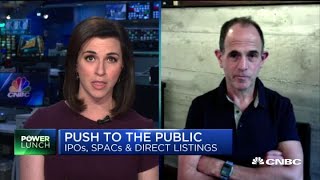
In this interview, Founders Fund general partner and early Palantir investor Keith Rabois discusses the landscape of public listings for tech companies, arguing that there is no universal solution and that each firm must weigh capital needs, speed, and pricing when choosing between IPOs, SPACs, or direct listings. He emphasizes the importance of transparency in SPAC compensation, suggesting that sponsor fees can be comparable to or better than traditional IPO banker premiums, and critiques the banking industry's historical monopoly on underwriting fees. Rabois then addresses the growing political scrutiny of big tech, noting that conservatives worry about a left‑leaning Silicon Valley culture and content suppression, while liberals invoke antitrust language that he, as a former antitrust litigator, finds unpersuasive given the lack of true monopoly power in most firms. Finally, he outlines his view of China as a serious geopolitical and economic challenger, describing a de‑facto cold war driven by China’s authoritarian regime, IP theft, strategic supply‑chain deficits, and a robust economic engine that could surpass the Soviet Union’s threat. Throughout, his tone is conversational yet analytical, offering measured confidence in his assessments.
Chapters
Our next guest is general partner at the Founders Fund, which invested early in Facebook, Palantir, Airbnb, Spotify, Lyft and others. He's also the founder of Open Door with a background also at PayPal. Keith Rabois joins us now along with our own Leslie Picker. Leslie, welcome and I'll let you kick it off.
Tyler, thank you so much. And Keith, really excited to have you here because as Tyler mentioned, it's been a very big year for you especially as it as it pertains to public listings. You've got Open Door via a SPAC, Palantir via direct listing, expected next week, DoorDash, which is reportedly seeking the traditional method of going public. Airbnb's process still a bit up in the air at this point. I'm sure you're aware of the debate amongst your peers in Silicon Valley about the drawbacks of various methods, the benefits of various methods. Which camp do you fall in?
Well, I don't believe that there's a one size fits all solution for all companies. All startups are different. Some companies need capital as part of the process going public. Some companies have a premium on speed. Some companies care about the pricing versus shareholder base. So there's a different solution that may be more appropriate for each company. So I think each company, that's why I believe I'll be involved in maybe somewhere between four and six companies, you know, in the public markets sooner rather than later. And I think each company's going to choose its own path.
You may have seen yesterday, SEC Chairman Jay Clayton spoke on Squawk Box where he said that the the regulator is going to be taking a closer look at SPACs. They're going to look particularly at compensation for the SPAC manager as well as disclosure. What do you make of this whole SPAC frenzy that we've seen this year? And are you concerned that this party could end badly next year?
No, I don't believe so. I think it's wise to have transparency in compensation and transparency to sponsors. The stocks I've been involved in and the ones I'll contemplated, I believe the compensation to the sponsor is comparable or better than the IPO premium that bankers usually extract. So I think some of this is driven by bankers not liking competition. Banking fees have been sort of a pseudo monopoly for decades. But I welcome more and more visibility. Shareholders should understand it's a complete transaction. and the compensation to everybody involved.
It's no secret that big tech has caught the ire of Washington, both in terms of content as well as competition. Do you believe that this scrutiny is warranted?
Well, I believe there's different concerns that different parts of the political spectrum have. So on the conservative side, people are concerned that there's a kind of a monoculture in Silicon Valley, a very left-wing monoculture. You just look at the contributions to various candidates, you can see a 90, 99% skew. and there's concern that content that content used that are more of a certain perspective are being suppressed. On the left, you hear these biggest bad kind of arguments and they try to use the vocabulary of an antitrust argument, which doesn't make much sense as a former antitrust litigator. These are fairly irrational arguments. The monopoly market share of almost all of these companies just isn't there. Google maybe you can create a traditional antitrust case. the idea that Apple, Amazon, Facebook posing monopoly is just ridiculous on its face.
And you had so many fascinating thoughts that you've shared in your own presentation on how remote working won't work for a lot of companies and how Covid has forced a lot of discipline in Silicon Valley. But on China, you're very hawkish. You call it a serious geopolitical threat to the U.S. And at a time when a lot of the Tick Tock debate is kind of being met with this eye roll and, you know, look at how messy this deal is and why are we talking about a goofy social media app? I mean, why do you think it's important that the US has a strong backbone, if you think it is when it comes to tick tock? And where is this kind of face off with China leading?
Well, I believe we're facing a serious confrontation with China, basically a cold war. China has global ambitions that are inconsistent with the United States. democracy. China is an authoritarian regime committing genocide. China wants to expand its influence and feels threatened by the United States' capitalist free market, free information, free flow. And this is an inevitable tension. And the United States has basically deferred to fronting this problem for 30, 40, 50 years. And finally, somebody is paying attention, which is great. But we basically have been asleep at the switch. So China has been investing in technology, under the hood infrastructure. Now they're investing, competing on the front end. They've been stealing IP for decades. There's no doubt that somebody's going to have to, whether it's this president or the next president, somebody's going to have to eventually solve this problem. We have a supply chain where we can't manufacture cell phones, but drugs, prescription drugs, PPE to protect people in the United States. We have a serious strategic deficit vis-a-vis China. They've been building a navy. One has to ask a question why they're building a navy. Navies are usually designed to export power, not designed to protect. So fundamentally, this is a real world problem. China in some ways may pose a bigger threat than the Soviet Union ever did because they have a better economic engine underneath the hood. The Soviet Union had an artificial economic engine with a lot of very smart scientists and they propped it up for half a century. China has a real economic engine, real innovation, real engineering talent, real AI talent. This is a world-class problem for the political world.