Finding Genius: VC Keith Rabois shares insights from early investments in Airbnb, Affirm, and Stripe
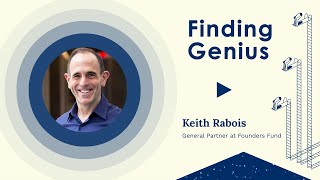
In this Finding Genius interview, Keith Rabois, general partner at Founders Fund, discusses a range of topics drawn from his experience as an investor and board member for companies such as Airbnb, Square, Stripe, Opendoor, and Forward Health. He explains the strategic trade‑offs between SPACs, direct listings and traditional IPOs, emphasizing that the choice should match a company’s revenue trajectory and capital needs. Rabois describes his board style as a "cartoonish mirror" that reflects founders’ narratives back to them, using a Socratic, probing‑question approach to surface blind spots around hiring, prioritization, and capital strategy. He identifies common patterns among successful founders – first‑principles thinking, relentless tenacity, and a willingness to confront "walls" – and reflects on how life experiences (e.g., immigration, early schooling) shape grit. He advises investors to double down on their strengths rather than fix weaknesses, and outlines his investment process: he rarely starts with a top‑down thesis, instead backing founders who present compelling hypotheses. Rabois also shares his perspective on the geographic decentralization of tech, noting a decline in Bay‑Area dominance and a rise of high‑impact companies in other regions and abroad. He briefly discusses his excitement about Forward Health’s top‑down healthcare model and mentions recent favorite books that influence his thinking. Throughout, his tone is conversational yet analytical, and his sentiment is largely confident and optimistic about founder‑driven innovation.
Chapters
Welcome back to the Finding Genius video series. Before we kick off the conversation, I want to thank our sponsor, Trinet. Trinet helps thousands of SMBs scale and lower their burn rate by offering a tech-enabled HR platform that streamlines employee benefits, payroll, and HR compliance. If you'd like to learn more about Trinet, feel free to reach out to me directly. I hope you enjoy the conversation today. Hi everyone, welcome back to the Finding Genius video series. I'm here with Keith Ruboy, a general partner at Founders Fund, who's currently based in Miami. Keith is known for early investments and executive roles at PayPal, LinkedIn, Square, Yelp, DoorDash, Firm, Stripe, and is also a founder of Opendoor. Keith, it's good to see you again. Coming off of all those companies, how many IPOs do you guys have going public this year?
Something like seven this quarter. Wow. It's all a function of work six, seven, eight years ago, nine years ago, 10 years ago. So, you know, that's not really a proxy for how well we're doing our job these days. We've got to find some new companies.
So with Open Door and the SPAC, could you share some more thoughts on that? You were coming off the Open Door IPO. Can you talk about building that company and your decision to go public via SPAC? And then maybe more broadly what you're seeing in the market. I know Airbnb was also approached by SPAC to go public too.
Yeah, Airbnb is doing a direct listing, I believe, but in SPAC's a great option for some companies, particularly companies that wanted to raise capital quickly. There's some ability to accelerate the time to go public with a SPAC of the truthfully with the right managers, with the right executives, with the right external advisors, you can go public in a traditional process more rapidly than people think. But in SPAC world, their expectation is six to eight, 12 weeks. The traditional IPO process should only take two months, but a lot of people tell you it takes six. But the real biggest delta is actually fundamentally about your ability to project into the future. Typically companies with significant revenue potential one to three years out might prefer a SPAC because you're allowed to guide publicly the potential of the revenue, whereas in the traditional S-1 you wouldn't be allowed to do that. So if you have a linear business where you can just extrapolate from your current revenues in let's say 2020, 2021, 2019, and you're just asking investors to extend that line. A traditional IPO works quite well, but on the other hand, if you have a deeply technology-based company, for example, where you have to have a technical breakthrough, a cost of goods breakthrough, and then everything works magically, those may be very well suited for a SPAC because you can explain this to public market investors, and you can talk about the revenue potential if you hit these cyclical milestones. And that's something that's pretty attractive kind of the durable advantage for stocks. Every company should choose what's best for their own situation. Some companies need to raise capital through an IPO process. Other companies are already profitable and the capital is extraneous, so direct listing can make more sense versus a traditional IPO process, which is combining the process of being a public company and transparency and accountability of being a public company with the capital raising. And so now there's going to be disambiguated and that may be a feature set that people choose.
And do you think this will change, make more private companies go public quicker? And does that impact the venture markets at all?
Well, I hope that more companies go public more quickly. I've had this longstanding view for over a decade that companies should go public as soon as they really are a sustainable business. And that's probably as low as a $50 billion run rate and some predictability into the future about their growth potential. I've shared this view with Bill Gurley at Benchmark. and it's been proven to be successful advice. Unfortunately, there are several companies that didn't listen to the advice and may have suffered because of it. But right now, I think a lot of founders are paying attention to this advice. They're seeing public companies being appreciated extremely well in terms of valuation, in terms of their ability to have access to capital, their growth potential. So they're seeing companies like, for example, Tesla being fully valued in the public markets. Companies like Carvana being fully valued at $42 billion in public markets today. Companies like Zoom being extremely valued in the public markets, Shopify. All of these companies are being appreciated by investors. So there's no real reason to buy the excuses of being a private company anymore. So I don't think whether it's a SPAC, direct listing, or traditional IPO process really matters that much. It's more a fundamental sea change mentally among CEOs, founders, and boards about the attractiveness of being a public versus private company. Right.
And then so in that regard, with Stripe, I think there's been some rumors or they might have announced already that they're raising at $100 billion valuation and maybe you're trying to push that process of going public for longer. You're an initial supporter of the company and been intimately involved with them. As you see all these companies that you've invested in, where do you think the decision changes for each different types of founder?
Personally, I think all companies should be public as early as possible, period. But it's not my, you know, I don't control any of these companies. All of my is a consigliere advisor, give feedback on the values of being a public company. But every founder, every CEO, every executive team needs to make decisions for themselves. What I've learned in 2020 is all of a sudden everybody realized I was right and has been scrambling for the last three to six months. In fact, I've been involved in many board meetings where the board meeting starts, well, the agenda today is to decide whether to go public. We've suddenly really want to and before Keith blasted us, we're all going to apologize to him because he told us this two years ago. Like I've been through several board meetings this year. So without talking about specific companies, I think generally this is true for all the companies I'm involved in, but all I am is an advisor, contingency and like a consultant to the CEO. Right.
And actually, I'm going to skip ahead a little bit then because that's something that you had brought up last time we spoke about being a mirror to a founder as a board member. Could you go into that a bit more also?
Yeah, fundamentally, I'm basically a feedback loop of consigliere, the CEO. I have no power. All I can do is exercise authority through influence. And basically what I like to do is basically be a cartoonish mirror and play back what a founder is articulating about his or her business. So when I was growing up, we'd go to 100 houses and they'd exaggerate, that's at the margin, extreme end, the high end of your body and at the low end in a cartoonish way. And I think that's what a good board member does is play back for the founder, for the CEO, for the executive team, what they hear and what they see in the metrics and really say, is this what you need? Is this what you're trying to build? Is this what you're trying to achieve? And then they can react to that and say, you know what? That looks a little weird. That looks not exactly what I thought I was building. Maybe I don't want to achieve this. Maybe I don't want to edit this. Maybe I don't want to change this. Alter this. And so that's what I do pretty much all day long. I mean, prior to COVID, my office so set up like a psychologist's office or a psychiatrist's office, be like a table with two chairs, and basically sit down and have a conversation, just ask a set of probing questions, sort of a socratic method, almost like from law school. And then the dialogue is what's actually.
More interesting to the founder than any specific piece of advice. And is there some pattern that you use for those probing questions that you're asking every time you're sitting with the founder?
Yeah, so I think what I try to do is basically ask myself, if this is my company, if I was the CEO, what would I want to know? And just ask those questions and that leads you down a set of discussions. Typically though, most CEOs will show up with an agenda, so they'll walk in with a notebook, something like this, and they'll have three to five discussion topics. And those topics are usually the things they're struggling with. By definition, they're really good CEOs we work with, If the answers are easy or obvious, they don't bother asking their board member. They're only going to raise the questions that they're struggling with that are controversial, that have significant trade-offs. So sometimes they actually start smirking or laughing in the middle of the conversation because I can just tell what's coming next because I know what the three or four hardest questions they're struggling with and I started to laugh as they're going down the list. But it's actually very rewarding for someone like me because once in a while a conversation about one of those topics can lead to an epiphany for the CEO and you can see their eyes illuminate when you've said something that resonates. And so that's sort of what I've lived for, is the ability to help some of the most talented people ever succeed by solving their own problems.
Right, and you did that at LinkedIn with generating revenue streams to the business early on. Can you talk about maybe some of that Socratic method with the founders of Airbnb or DoorDash, given they're public, and what that genesis of the relationship has been with you, or the evolution of the relationship has been, of how you've supported them early, or some of the struggles they faced early on? and kind of what that process was to get them through that.
Yeah, so for example, there's a couple common categories across all of these higher education companies. One is hiring. Should I hire this person? What kinds of people should I hire? How do I complement my current team? Everybody has a team and no team is complete and no team is perfect. So a set of questions is how well do you think my team is performing? Are these other really talented teams? Where are the gaps? Where should I upgrade? What kinds of person would DNA look for? Is this person a great fit? large set of topics. We have an expression that we use at Square that Vinod Khosla taught me when he was on the board of Square, which is team you build, it's the company you build. And I really fundamentally believe that, that if you have the right people doing the right things, everything else takes care of itself. If you have the wrong people doing the wrong things, nothing's going to work. So fundamentally, a lot of my time effort is around, do we have the right people doing the right things? It's a little bit like being a general manager of a baseball team. Do we have the right second baseman, third baseman, where we complement what we already have. Second thing is prioritization. The good news about high-growth companies is they tend to have a lot of really good ideas for their around. The market is really pulling them. There's an algorithm that says we want more of this. And so you have this wishlist of product development that may be pages long. Actually, I've seen product development like lists and initiatives, hundreds, like 100, 200, 300 easily. And the key is though to invest in the two to three to four or five that can meaningfully accelerate the business. And what I mean meaningfully is sort of has potential out of zero to them. to the dashboard somewhere, not at 10%. I think 10% is great. Compounding works over a long period of time. Absolutely, companies should be investing in that. But they also need to invest in breakthrough ideas, breakthrough technologies, breakthrough products, and that is something that really can advance and create an inflection. And so choosing among really good ideas is actually harder sometimes than choosing between good and bad ideas. It's a little bit like when I was sort of deciding where to go to law school. Harvard or Stanford, truthfully, you can't go really wrong. So you can get yourself tortured on those kinds of decisions. But in a company, there's like non-linear differences between choosing between A and B. In the first and second, there might be a power order difference. So it's really important to get that right. So I'll spend a lot of time with founders debating the sequencing and the prioritization and giving them maybe a conceptual framework for how to think through that decision making. And then the third area, any good investor should be involved in capital strategy. So high growth companies tend to raise a lot of capital and thinking through the milestones where there's perceived inflection, how to sequence it, how to frame the value proposition of the company to investors. It's something that a really good venture capitalist should be effective on because we're writing checks all day long. So I consider investing in new companies literally every day. And so I have a pretty good feel for what resonates with investors. what kind of inflection people will expect to see at different stages and how they're gonna get graded based upon their current way of describing the business. And so that's something that's really important if I can give the founder 12 to 18 months advanced warning of here's where you really need to get to and here's why. That allows them to move, to pull levers and get things set up for success. Whereas a mediocre investor sometimes can only give feedback at the last minute, but that doesn't really do exactly really good. Right.
And at Airbnb, what do you think on your second point, what do you think is something that they prioritized early on that led to that inflection? One of the most important things they.
Prioritized really early on, and it actually impressed me, one of the reasons why I wanted to invest immediately was even when they were three people, they built their own payment system. So they realized, and that may sound crazy, it might have sounded really crazy back then because there wasn't really like a Stripe option that would have made it easier. They built from scratch their own payment system. because I realized showing up in, let's say, Austin with a kind of a bundle of $200-$300 in the middle of the night to give to your host was never going to be a mainstream product. So that unless they made it a seamless way of transmitting money from the renter to the rentee or rentee, whatever the visitor to the host, there was no way this was going to take off. And so they built it from scratch. And still to this day, they're running basically a proprietary payment company. Airbnb because of the legacy history of understanding that simplify the value proposition was indispensable. There's no excuses regardless of the fact they only have three people and one engineer.
That's interesting. And with Square, Square was already doing so well, but before the pandemic, but Cash App has done exponentially well during the pandemic. Do you believe that was one of the inflection points that they've seen? Or what were some of the other ones that led up to that decision to launch Cash App internally?
Well, Cash App was launched internally 2013, January, it was created based upon actually some research and some technology work we had actually invested in in 2010 and '11. So we had some interesting innovation on the technical side about how to lever some of the payment networks and ways other people didn't appreciate, but we didn't really know how to use it from a business and product standpoint. So we kind of put it on the shelf. It's kind of the phrase Jack likes. And then we pulled it back off the shelf in late 2012 and said, you know what? We may be able to do some interesting things with this technology we sort of invented, discovered, and patented, and let's try it. And so that's basically what happened. And then it took a while to get true product market fit. I think the team was incredibly effective at some original, unconventional marketing. I also think that it just takes a little bit of time to see the network, and even if it's growing 10% per week or per month or whatever, It takes a while before the scale is obvious when you start with literally tens of users. It took several years, I think, for the company even internally, let alone externally, for people to appreciate it. Also, there's this wide belief in the market that Venmo is this important company, important product, and it was going to dominate. And anybody who knew anything about Venmo, PayPal, knew they were completely incompetent and there's no way they were going to leverage this to its full potential. But a lot of people were kind of blind to cash out because they're like, oh, everybody has Venmo, which is fact not true. Interesting.
So we just talked about Airbnb, DoorDash, LinkedIn, Square, Yelp, Tesla, and you've been involved with all these companies. What are some of the patterns of genius that you've seen behind some of those founders and how those have emerged to you to continue backing these types of people?
So just to correct you, unfortunately, I'm not involved in Tesla. I really wish that had been. That would have been a good decision. In any event, definitely worked with Elon when he was on the board of K-Pal. Actually discussed significant potential working with him on SpaceX when he was first starting it. But in any event, the key pattern at the end of the day is you have these very original first principles thinkers that don't take excuses. They're just going to walk through a wall, over a wall, under a wall, around the wall, make friends with the wall. Somehow or another, that wall is not going to be a problem. And most people in society, let's call it 99.6% of society, when it confronts a wall, say, oh, that's a wall. What do I do? The people that sort of found these companies don't get terrified, don't get nervous. They find a solution and they will just keep trying to identify a solution to this wall until they do. And you can tell this pretty early when you meet these people. the tenacity, grit, if you like that term instead, but they're fundamentally similar. The original thinking about topics that other people just take superficial answers for, it just stands out right away. Sometimes 30 seconds into a conversation, usually about three minutes, it's pretty obvious.
And what do you think shapes that tenacity or that grit in people? Ilya Fushman at Kleiner was saying that he invests mostly in immigrants because he believes they've had to fight for their place. And what do you think would actually ruin someone who has that tenacity or that grit early on? I mean, if they failed at one startup or do you think it just goes away that easily or they continue with it?
I do think it's life experiences predict many of those characteristics. I don't know if you have to be an immigrant, but certainly if you look at the history of breakthrough companies, a really high fraction have been at least founded or co-founded by immigrants. you know, certainly not wrong empirically. I think you can see signs though of not accepting excuses that other people normally would accept. I mean, like for example, kind of a silly example from my own life is I remember, and this is probably common across America, could be alone, you know, with like A- in some report card, let's say fourth grade, fourth-fifth grade. And, you know, I was pretty content with that because in my view, or on a report card, even on a book report or something, or midterm. And I remember not being terribly unhappy with the grade. And I would show it to my parents and my mom would just be furious about it. And I'd be like, well, you know, my reaction would be like, well, everybody else got an A. And she's like, well, everybody else is not my son. And so I think you can learn these kind of principles very early in life. They stick with you. Same thing, you know, there's some things from one of my soccer coaches growing up, was more on the tenacious and tenacity side. He's a very high maintenance coach. And there's just little pieces of puzzle that come together and form somebody, but maybe form you fairly early in life. I'm literally thinking about prior to ninth grade kind of experiences. And that may dictate a lot of where you go and your sort of values for the rest of your life. I think eventually they may degrade, but they degrade mostly with success, not with failure. and meaning, you do get comfortable with success and that is somewhat inconsistent with continuing to succeed. I think one of the reasons why Elon is very successful is he doubled and tripled and quadrupled down on Tesla and SpaceX because he had to because a lot of other people didn't appreciate particularly Tesla. And so he was as basically highly levered and maybe even more highly levered than his employees. So even though he had success professionally, he was in some ways even worse shape than his employees in terms of desperation for success in Tesla and SpaceX.
At what point do you think, I mean, with Elon, obviously it's worked out very well, but at what point do you think the unknown founders, were they highly levered and invested in themselves? Does it come onto the brink of insanity where maybe they're believing too much in their own grit and their tenacity? Have you seen that take place or do you think there is no such thing?
I don't think there's any such thing. I think you have to choose You have to choose a task that you really care about, right? Because bang, you're hitting the walls in a particular fun period. And bang, you hit the wall at something that doesn't matter there isn't particularly exciting. So I think the key is to choose a task that you're motivated by. Choose a task that if you're right and you can solve matters for society. So in some ways Elon talks about this, Vinod talks about this as well, but at Kostuba, that you want to take on something that's an ambitious target because the pain of achieving it maybe very similar to achieving something at 1000th the level. Like the pain, the fixed cost of pain may be very comfortable. So you might as well achieve something as important as possible, as ambitious as possible because you're going to bear 80% of the same pain for something mediocre. So why not aim for something important? So I think that's one of my pieces of advice is always aim for something important and ambitious because the fixed cost of the pain is pretty substantial if you're going to start something from scratch. Now that said, I don't think starting a company or running a company or running a high-growth technology company is for everybody. I think people have different goals in life and different skills in life. Just like for me, playing professional basketball would have been incredibly challenging. There are characteristics of what makes a successful professional basketball player, and you can defy it. There are professional basketball players who actually defy the stereotypes who have been incredibly successful. but it takes extraordinary commitment and extraordinary dedication to defy those. And so I think finding where your skills, what your natural DNA is, and where you have competitive advantage, competitive advantage, be able to be other talented and ambitious people is really critical. And starting a company may not be that for everybody, but for those who do aspire to change the world, it's a great vehicle to do so. And changing the world is never particularly easy, whether you do it through business, whether you do it through a startup, whether you do it through science, whether you do it through medicine, or whether you do it through altics, it's always going to be very challenging.
And in that same vein, with discovering your blind spots and maybe areas that you're not capable of being in a certain position, despite your success as an investor, what do you think are some biases or blind spots that you've had to overcome when you were early on in your investment career to now?
Yeah, you know, it's a good question because I think most success comes from actually doubling down on your strengths or qualitatively down your list, you can and ignore your blind spots. Like don't try to fix them. Like there's an old adage, you know, I thought of adage, but a lesson from a pretty popular business book about Tiger Woods, which is that it's kind of a trivia question of how many hours a week does Tiger practice his sandwich? And there's don't know that much about golf. It's sort of what it sounds like, it's like hitting the ball out of a Santa trap, which doesn't sound particularly fun. So the truthful answer is Tiger never practices sandwiches. he spends all his time getting really proficient at not being in the sand. And so that's the metaphor, is rather than trying to learn a sandwich, just spend all your time never getting in the sand. And so I think figuring out what you're really strong at and doing more of that versus trying to correct weaknesses. That's certainly very easy as an investor, by the way. You don't need to be well-rounded at all as an investor. When you build a company, the company as a whole needs to have a lot of different capacities and capabilities. And so if you're not broad, which is typically the case for CEOs, they typically have some peripheral vision where they can do a lot of things, but they're not perfect, is to find complements and find things that either you're not very good at, don't enjoy doing, and find someone who's world class and happens to even enjoy the stuff you don't want to do. So I think that's the art of company building. But being an investor, when you have a comparative advantage, you should be doing that like 99.9% of the time. and even asking herself, why am I doing this other 10 basis points of other stuff? Why can't I just do more of what I'm great at?
Right. And so on the earlier side, we've spoken about a bunch of late-stage companies. What was something, we've used this series to speak to a bunch of healthcare founders. What were some things that excited you about Forward Health or Clara Health to the extent that you're involved in those companies?
Forward Health.
Or something else.
Forward Health, I invested on a keynote deck with three founders. And Ritu is first the founders. I've known Adrian who's the CEO for a very long period of time. I funded as an angel investor. His earlier startup that got acquired by Google. So one, Adrian is clearly going to walk through every possible wall. That was very obvious. Second, the vision, it had an incredibly compelling differentiated vision. And we haven't quite, you know, It's not all manifest yet. I think, you know, there's a trajectory and an arc to forward that's pretty impressive, but one day we'll reinvent healthcare from the top down. So it's a little bit like Tesla in strategy, which is rather than go bottom up and compete for the sort of cost efficiency in healthcare and cost savings, start at the top. There's a lot of people who desire a better healthcare experience who have disposable income. Let's create a higher quality, higher fidelity healthcare system for the people who are willing to invest time and money to support that. So for example, if you ask the question, if you could spend an infinite amount of your money on better health, what would you do? Before forward actually the answer to that question wasn't at all obvious. In other areas, like if you said, the most important thing to me is to have a cool house, the most important thing is to have the best car, to buy a baseball team, whatever your hobbies are, whatever interests are, you can trade money for the vast art, whatever you want to collect, boats, whatever people do with them, whatever. There's plenty of ways to trade money for quality. In healthcare in the United States, the reason actually way to just trade money for quality. So once you do that though, if you can succeed at that, improving the quality bar, then you can figure out how to scale that down to a more affordable price point. and that's what Tesla's proven. They now have maybe not the cheapest cars on the market, but they have very affordable cars for mainstream America where they didn't start that way. It would have been impossible to start that way. So forward starts with the high end, the top one to 10% of the market, which is actually a very big market in healthcare. And then eventually we'll figure out how to provide the innovations and insights at a more affordable price point that affects everybody.
And do you develop a thesis and go out and try to find that company or are you waiting for the right founder like Adrian you're saying just goes through any walls to come to you with an idea that you're whatever you come up with I'm going to back?
I'm almost never a top down investor where I have my own hypothesis. I wouldn't say never, like once every five years, but the meat and potatoes, what I do, which is call it 12 investments a year on average, is a founder walks in with a hypothesis about the world that I am persuaded to to versus having my own original thoughts. Interesting.
And there's a question that this is probably in the same vein, but there's something the question that your founders fund asks, which is what is something you believe? I might butcher this. What is something you believe to be fundamentally true that most others believe to be false? Is that right?
Yeah, Peter used to use that as an interview question, you know, going back over a decade.
Right.
Some of its predictive power as it became, you know, written about in the media because people were for like any other tasks, prepare for it. So as to prepare for it, you get less authentic sort of answers. That said, the way we ask it for an investor, from an investment standpoint, is when we meet a company is what are other people going to miss about this company? What are people going to be wrong about? What kind of blind spots are they going to have that leads us to think we can earn a superior return? Because the market for venture capital is pretty efficient, certainly very competitive in the United States.
Interesting. And was that a question that Peter asked you when you both started working together?
No, I mean, I've known Peter since, believe it or not, the first day of freshman year in college. I don't think he formulated my question yet. I don't know if I would have had a good answer back then or not. Okay.
And I know we're almost out of time, so two quick ones. You moved out of San Francisco for Miami. And What is going on, what are the shifts that have happened in the Bay Area that have led you to leave? And then also what's going on in other entrepreneurial hubs across the country? Do you just believe now it's extremely democratic both with venture capital and with starting a company?
Well, I think there's a couple different dimensions there. One is the Bay Area and California as a whole are just horribly managed and overtaxed, overregulated. The public education system doesn't work at all in San Francisco. It's a little bit better in the Bay Area and there are pockets of California where it's actually good. There's property crime, everything possible about San Francisco is destructive at the moment. So, you know, but I think people believe, myself included, I've lived in San Francisco for 17 years and the Bay Area for 25 years, that one had to be here to be professionally successful in technology. And I think what COVID and this work from home remote world has caused is a reassessment of that belief. So it's never necessarily the best place to live in many ways, especially polluted by the politicians. The climate is very nice and certainly the natural scenery is incredible. But the politicians have been ruining California for 15 or more years. It just felt that there was an inexorable trade-off between professional success and technology and putting up in the Bay Area and San Francisco, particularly in California generally, that after March of 2020 when people started working from all around, working remotely, doing things differently through Zoom, et cetera, became less obviously true. And I'm certainly not the only one to have had this thought, but certainly had the spark of a thought that maybe you could disambiguate living in California, living in San Francisco specifically versus professional success in technology and that this could be de-bundled. You know, the history of life is typically you bundle things and then you de-bundle them. And the question is, when's the right time to de-bundle them? And I think right now is a pretty good time to de-bundle them. We'll see, it's an experiment. May or may not work, may or may not be COVID specific, we'll find out. One thing I have done though, and we have done at Founders Fund is over the last three to five years we've analyzed our most successful companies. We are a conviction-based investing firm. So we have 17 companies where we have over $200 million committed. It's actually maybe even going up slightly. We may have 18 now. So we like to really double, triple down on companies that we believe are working and are changing the world and transforming society. Of the best companies over the last three to five years, only half are in the Bay Area. And if you've gone back a decade or more when Founders Fund was first started, that number would have been 70, 75, 80%. So there's clearly been a shift in the number of really important companies, at least using the gauge of whether we really want to invest money, which is a very empirical metric, to be outside California. One of our favorite companies is in Southern California, Anduril. One of our favorite companies is in Brazil. One of our favorite companies is in Berlin, Germany. So we have companies all over the map now that we're super excited. We have another one in Houston, Texas. So we have companies literally everywhere that are in the top 10, 20, 30, 40 companies in our portfolio where that wasn't true a decade ago.
Interesting. And so this is the last question because I would have followed up more on that, but I don't want to waste too much of your time. Last time we spoke, which was something that people really enjoyed reading about, was your three favorite books. And you mentioned Upside of Stress, Why We Sleep, and High Output Management.
You got them, I think. So what are the new ones that.
You would add to that list?
Well, obviously one I talk about a lot publicly that I think applies to founders, entrepreneurs, and executives. Score takes care of itself by Bill Walsh, which is the way of building a company, taking each step, perfecting it, and that will yield a better outcome. It's sort of like measuring inputs, not outputs, the way Jeff Bezos talks about it. So I highly recommend that one. One new one that I'm very excited about, it's a little bit off central casting, It's called Breath. It's about how breathing affects your life span, your health, your happiness, your physical performance. And it's just simple changes in how you breathe, like through your nose, as opposed to through your mouth, the pace in which you breathe. It's extremely provocative, extremely persuasive. It really will change your life like the upside of stress. It's not that caliber of book. So I've been pleasantly, very pleasantly surprised by discovering it and really recommending it to a lot of people. these days.
Perfect. Thank you so much, Keith. I appreciate it. Pleasure.
This is always. All right. Talk to you. Great to be with you.
More from Keith

This Billionaire Trains His Body Like He's Building A Billion-Dollar Startup | Keith Rabois


Vinod Khosla and Keith Rabois on Building and Investing in Enduring Companies | Ep. 40



