Founders Fund's Keith Rabois on Miami's Tech Scene
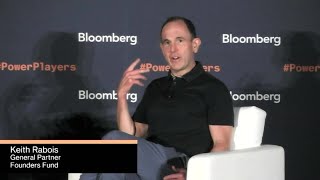
In a May 2022 interview, Founders Fund partner and Miami‑based CEO Keith Rabois explains why he views Miami as the next great tech hub, contrasting it with San Francisco and New York. He argues that the city’s optimistic outlook, supportive government, and happy residents create a fertile environment for entrepreneurs. Rabois outlines his investment philosophy, emphasizing early‑stage focus, long‑term horizons, and a strict payback‑cycle test (6‑9 months) for marketing spend as a proxy for product‑market fit. He discusses navigating economic downturns by conserving capital, disciplined hiring, and leveraging insights from a 120‑company portfolio. The conversation moves to free‑speech values, the Florida parental‑rights education bill, and how diverse political views coexist in Miami. Rabois shares his perspective on crypto, noting Founders Fund’s early Bitcoin exposure, a shift from Bitcoin‑maximalism, and the importance of regulatory‑friendly jurisdictions like Wyoming. He highlights Miami’s emerging crypto ecosystem. Education is another focus: he describes public and private investments in charter and innovative schools aimed at tech talent, and mentions a yet‑unannounced homeschooling venture. Finally, Rabois introduces his own company, Open Store, which aims to reinvent e‑commerce by providing liquidity to long‑tail Shopify merchants and aggregating unique SKUs unavailable on Amazon, positioning the venture as a potential challenger to dominant platforms. Throughout, he stresses the value of in‑person, “garage‑style” founder experiences, the rarity of “N‑of‑one” entrepreneurs, and the need for founders capable of world‑changing impact.
Chapters
You know, many of you may know Keith had moved here to Miami in the middle of the pandemic and ever since then has been one of the biggest advocates for the city. And I'm wondering when you look at Miami versus San Francisco versus New York, what's the opportunity here to invest, to draw talent? What is the opportunity set? It's really simple.
It's the future versus the past. San Francisco's Detroit and Miami's the future. It's the future of finance, it's the future of technology. It took a pandemic and other macro events. to catalyze that, but Miami is by far the best city with the most optimistic outlook, with the best government and the most happy people in the United States, certainly. And entrepreneurs, investors are no different than humans. Humans have been the same since Shakespeare. And finally, it finally clarified and linked in my brain that entrepreneurs, technologists, designers, engineers want to be happy too. And we're just going to take all the happy people and move them here.
Happy people. It's getting to be a tough investing environment. And if you think about who's moving here, so many entrepreneurs. So what is the next set of opportunities that you see that people are going to be able to build businesses, raise money, and still make it through this cycle?
So, you know, I primarily invest in early stage companies, which means that I really care about things five, 10 years in the future. We do run both a growth fund and a venture fund and parallel founders fund. And so the growth fund obviously has to think in different time horizons, think one, two, three, maybe five years out. And that's more affected by, you know, terminal oil in the current public markets. But if you're starting a company today, what's going on in the public markets really doesn't matter. If anything, it's actually easier to build an early stage company when there's turmoil in late stage companies and private and public companies. You know, my first professional opportunity in tech was really PayPal. We built PayPal realistically 2000, 2001 and 2002, about as difficult an economic environment, at least in technology, that we've ever seen. And, you know, we did our IPO actually in February of 2002. which I wouldn't recommend, but it's certainly possible. Netflix also IPO'd that year and has done pretty well since. So I think it's actually easier to marshal critical density of talent when you're recruiting. You're not recruiting against every company being funded on the planet and every company with metrics that seem allegedly to go.
Up into the right. So right now is a great time to build where the cracks in the market because you are starting to see some startups finally start to pursue layoffs. You are seeing more stories come to the force. So I How do you avoid some of those downturns that we might see?
Well, the downturns are real. And, you know, the disadvantage or advantage of being in a portfolio, we have a portfolio of probably 120 companies, is most of this stuff, you know, we sort of see months before it hits the public domain. We have companies that are trying to raise money and having difficulty. We have companies that get term sheets from people where other investors walk away. So we see all this stuff in our portfolio, and then therefore we can give advice and counsel to the entrepreneurs I work with so that they can avoid these kind of mistakes and unnecessary issues. Typically, entrepreneurs have a lot of leverage at their control around burn, hiring, pace of hiring, marketing spend, payback time. And so in these type of environments, you have to be more disciplined. You can't just spend money frivolously. Maybe you shouldn't ever be hiring or spending money frivolously, but lots of people do that. And when money is cheap, when the cost of capital feels like cost of oxygen and free. People lean in and maybe lean in too aggressively. We've been pretty conservative as a fund in the last six to nine months. We've been pretty conservative as a board member in terms of giving advice and counsel for probably the last one to two years. And so I think hopefully our companies and our portfolio will do better than on average.
You know, this is an environment that so many entrepreneurs have never seen in their lives, inflationary environments. and also the rate rise that we're about to see. It's going to be harder to raise money by definition. And so what are some of the things that they need to be aware of from years of experience in this business? They've never been here before.
So I'll give you a very tangible acid test that I always use, and sometimes my friends, colleagues make fun of me because I'm so addicted to this. I think every business should have a tight payback cycle. So whatever you spend in marketing, let's say, you need to have a tight timeframe when you pay that back. And that's the acid test of whether you have a good business, whether you really have product market fit. And I've applied that through hot markets, cold markets, cool markets, and it works. Sometimes you feel a little old or conservative in a very hot market where you're telling people they have to pay back their marketing expenses in nine months. And sometimes entrepreneurs look at you and say, well, this person over there said that's not that important. But I've used this for 20 years and it works really well. So, no, it doesn't require radical changes. If you can build a business that will grow and grow 2x3x4x5x year to year and have a payback time of six to nine months, there's always people who will fund that.
You know, there's a lot of news out there about the payback time for a Twitter buyout. The idea of if Elon Musk takes it private, when does it go back out into the market? And, you know, you have exposure to Elon Musk through SpaceX at the Founders Fund. What do you think of one of the biggest leveraged buyouts in history? Led by Elon.
Well, Elon's the quintessential N of one. We have this phrase, founders fund called N of one entrepreneurs. So we're in the business of finding those N of ones and convincing them to take our money as opposed to other people's money. We've done a pretty good job at it. We funded SpaceX back as early as founders fund started. So I think that's 2008. We probably are carrying multiple billions of dollars. We are carrying multiple billions of dollars of exposure in SpaceX and we even reinvested in the last round. so we like high conviction, doubling down. Elon is one of a kind. So I'm pretty confident that whatever he does will work. We are not going to probably be able to legally invest in this, but in some ways I wish we could.
So why do you wish you could? What do you think happens in the next couple of years under Elon's leadership? And what ramifications does that have for what he says he wants to create, free speech?
Well, you know, Founders Fund believes in free speech. You know, we have a brand that represents free speech and we're probably as unequivocal about it as any VC, certainly in the planet. And so, you know, we support his agenda. From a financial perspective, I think it would be a bad idea for many people to take over this company while they're running four other companies. However, as I said, there are special people in the world. You know, Steve Jobs was CEO technically of Apple and Pixar at the same time. They both had pretty good rides. So it's doable. It's just not doable for normal humans. But Elon's not normal. And so we tend to be in the business of backing non-normal people.
Would you put Jack Dorsey back in the seat?
I don't know. I don't know the details of how some of the decisions that were anti-free speech were made. Probably not if he was involved in suspending the account of Trump. suspending the account of the New York Post, which is completely indefensible, suppressing criticism of the CCP, which is absolutely indefensible.
So speaking of free speech and the idea of politicization here, that you have groups of the country that are sparring, that are on completely different sides of reality in so many ways. When we look at what's happening here in Florida, the parental rights in education bill, I mean, how are your own employees reacting to this? And how do you create a space where all of those opinions can exist?
Well, amazingly, in Miami and Florida, people do this all the time, every day. So Miami is a very divided city. Roughly half the people here voted for Trump, roughly half voted for Biden. On any issue in Florida, you're going to run into at any cocktail party, dinner party, work environment, you're going to run into people that have different views. And guess what? You learn to live. and you learn to debate and discuss things civilly and interestingly and you learn stuff. So it's a good model for the rest of America, but it doesn't come up as a confrontational issue in Miami and Florida because people here have brothers, sisters, family members and colleagues that have different views literally on every topic, including that bill.
Are you concerned that the bill would draw away talent and keep talent from coming here in any regard?
No, I mean my husband and I are gay, we have two kids and we're very happy with the bill, we completely endorse it.
So what about the way that the governor has addressed the bill with Disney also? I mean, this was supposed to be a pro-business state. So the way you're seeing politics and business play out, how do you think that continues?
Well, I think if companies are going to take sides on political issues, there's going to be reactions to that. Typically, most companies are savvy and avoid getting on the middle of a controversial issue explicitly. Disney has special rights or has historically special rights in Florida. You can argue nobody should have special rights as a company. As a libertarian conservative, I actually think all companies should probably be treated equally and not granted special rights anyway. However, if companies are going to engage in partisan tactics, they're going to pay the price for that.
So how as a board member do you also advise companies on how to navigate the political landscape out there, especially as now you see the potential rollback of Roe v. Wade also impacting employees?
I think I just send them a copy of Armstrong's memo at Coinbase. And fortunately, I like when other people do the work for me. I love sending blog posts that other people have written that are instructive.
So, speaking of Brian Armstrong, you, you know, as early to PayPal, you were early to the change that the financial system saw. What does crypto do?
I don't know. And if anybody knows, anybody tells you they absolutely know is either lying or naive. and those are not great. I do think there's potential of really interesting implications of crypto and we do invest in crypto. As a fund, we invested in Bitcoin directly in as early as probably 2014-13. We now have found other companies where we believe there's alpha. I sit on the board of a crypto-oriented company called Royal, which is reinventing the music industry. So we're embracing crypto where it is an ingredient that enables a new value proposition that will resonate with a large set of customers. Crypto is interestingly, Bitcoin particularly, has not historically served as a hedge against inflation or a hedge against NASDAQ performance. So that's kind of interesting because you would at least could make a top-down case that it should have and would have, but it hasn't. But we're exploring. So we're making a lot of investments in crypto. Miami also is a great place to invest in crypto. The entire Eastern Seaboard in the United States, New York and Miami are really the center of innovation in crypto.
There's almost nothing happening on the West Coast in crypto anymore. That's interesting because also if you look at the most recent sell off and you use the word crypto and not just Bitcoin, you've invested in Bitcoin but the sell off in Bitcoin has been worse than you've seen in Ethereum this time around.
So do you start to look elsewhere in crypto? We have been for about the last 18 months. We might have been a year slow. I think with the benefit of hindsight we probably should have at least a year before that. But we were more like Bitcoin maximalists for a long time at Founders Fund.
So that's changing now.
It has definitely changed.
So what does that push you into and push towards?
Well, we're not trying to find the latest coolest new thing. As I said, we're founders fund, which means we need to find the best new founder. And those founders will steer us to the right place. That's our thesis. That's our competitive differentiation. So I don't really care about what I'm investing in other than is this founder capable of changing the world or changing an industry, which is very rare and very unusual. almost like heroic.
You know, it's interesting because when people talk about cryptocurrency, they talk a lot about the place in the world, the place in the world that the US has, the place in the world that Miami has. And I'm curious as to how that plays out while regulations are getting sorted out.
Yeah, so it is interesting. There are, you know, more regulatory favorable environments for crypto in the US, Wyoming has set a precedent sort of like Delaware did back in the day and the incorporation. And that's the reason why everybody's Delaware Corp to this day. So there probably is some competitive nature to regulation. And I think one of the things that remote work and Covid has clarified is that all states, all city governments are going to have to compete for talent. And that we are basically customers now. And so I think you're going to see this in crypto as well. Crypto people are very mobile even maybe compared to regular entrepreneurs.
You know, let's talk about talent for a second here because Miami, on one hand, yes, a lot of young people are moving here. On the other hand, prices are rising a lot. And there's a lot of questions about the school system here. And are there enough schools for people in New York to put their kids in schools here? How are you seeing that debate play out and what the future looks like in terms of the investment in schools and in younger talent?
There's significant investment both in the private and public sector in schools, particularly Obviously, not everything has a very tight lead time. Some things you have to invest ahead of the curve to get the supply when you need it. Schools, and to some extent real estate, have lead to lagging signals, but the favorability of the legislation in Florida is about as flexible as it gets in terms of innovation around education. So dollars can flow with the parent's choice to different types of schools. There's been charter schools that have been started already just to focus on tech talent. The mayor, I believe, announced too, I'm sure there's more, where the graduates of these high schools will be qualified to work at Facebook, Google, Apple, any of my companies. So we're innovating constantly here in education. So I think there will you see there's another company I'm involved in that I don't think has announced this yet, but is innovating in Miami that will be releasing some cool new interesting home school like environments. So there is actually innovation going on that will allow the talent to migrate here with school So it depends where they're moving from. New York has a lot of elite schools. San Francisco really doesn't. So if you're moving people from San Francisco, which a lot of people, I run a company as a part-time job as CEO and I have like 80 employees, most of whom moved from the Bay Area. When I'm moving those parents, it's really easy to find them schools here compared to San Francisco. I admit that the high end of the private school infrastructure in New York is pretty interesting, although it's decaying. But we're going to create new options here.
I'm working on some things as a side project on my own.
To create new opportunities in education.
You can feel it. You are definitely in and around town, constantly meeting with innovators. You talked about this, you're working 9 to 9.
It depends what you include in work, but yeah, often this week certainly.
Yeah, so what does that mean in terms of the future of work? I mean, how does it all need to be done here or can you be living in Denver working for a company in Miami?
I think it depends. My view as an investor and CEO is to build a company from scratch. literally the proverbial two kids in the garage reorienting the entire industry needs to be done in person for a very long period of time. I think unstructured learning, osmosis-based learning is very critical early in your career and early in your company building trajectory, and no one's created a substitute for that online. I think there are times when either people's career trajectory changes and is more predictable, and the company's product roadmap and evolution is more predictable, where you might be able to mix in different work styles successfully?
We've talked about Twitter, we've talked about Space X, we've talked about PayPal. If you look at the investments you're making today and the investments you're about to make tomorrow, what are you most excited about? What is going to be the next big company of the next generation?
Well, I'm a little biased because I serve as CEO of a company and so I'm voting with my feet to spend multiple days a week as CEO. It's called Open Store, it's based in Miami, we have 80 employees all in person in Miami. and we're reinventing e-commerce. So no one really in the Western world has reinvented e-commerce since eBay, Amazon, and arguably Google. Shopify has had a nice run at being the next generation of e-commerce. But if you look in the Western world compared to the innovation in the East, it's been pretty barren. And so we're gonna reinvent e-commerce here, and that's what we've been working on. So what we do today is we provide liquidity to long-tail Shopify merchants. So let's say you start a Shopify merchant store and you no longer want to run it. You don't have to run it forever or shut it down. We'll buy it from you, give you instant liquidity, and then we'll stitch all these stores together. So you're taking on Amazon? A better version of Amazon retail. How do you do that? By buying up all the coolest inventory. Supply.
It's like Netflix. If you have the best supply, none of the stores we buy sell on Amazon. So, I mean, what does this mean for-- I mean, Amazon is the giant in the room, right? I mean, companies have gotten just so big. Do you compete with them viS-A-Vis the fact that they might be regulated more in the future? No. I think a lot of people, certainly.
In politics in D.C. and my husband and I spend a decent amount of time talking to politicians, people overrate how much power Amazon has. I'm perfectly happy competing with Amazon. I'm perfectly happy to give other entrepreneurs money. I don't really worry about what Amazon does. I don't worry about what we do, and that's very difficult. but we have 60,000 SKUs, none of which are available on Amazon today. As long as those SKUs are not available on Amazon, shoppers aren't going to go to Amazon.
But how much does it have to do? And I think about this a lot because the creator economy in the last couple of years, there's been a lot of room for creators when the economy was easy. But the economy is getting tougher. So what money are people going to have to spend on these new creations? It is a good question whether these.
Are discretionary purchases and how much substitution there is in a recession. I did see some e-commerce stats today about, you know, Shopify grew 16%, Amazon's down about 3%, Etsy's up about 3%, Wayfair down about 14%. So there is some evidence that consumers are being more conservative in their expenditures. That said, sometimes there's a substitution effect from higher end prestige goods to new creator goods. So we may see some substitution that might actually be a positive. It's hard to tell though. If we're in a macro recession, borderline depression, it's going to be hard to build any kind of e-commerce business.
One minute left, last question. You heading to F1?
Of course. Not today. I'm actually missing it for this, but I'll be there Saturday and Sunday.
Great. Keith, thank you so much for your time. That closes us up, guys. Thank you.
More from Keith

This Billionaire Trains His Body Like He's Building A Billion-Dollar Startup | Keith Rabois


Vinod Khosla and Keith Rabois on Building and Investing in Enduring Companies | Ep. 40



