Keith Rabois - How to Hire
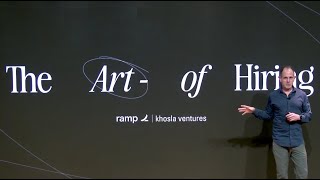
In this 2024 talk, Keith Rabois shares his unconventional playbook for hiring at early‑stage companies. He argues that startups must avoid “obvious” candidates—people with established reputations and high compensation expectations—and instead focus on undiscovered, high‑potential talent. Rabois outlines practical tactics such as “gene‑pool engineering” (systematically targeting the companies where desired skills reside), leveraging personal networks and friends, and creating a compelling “trailer” for the startup to attract candidates. He delves into how to assess people who lack conventional résumé signals, emphasizing motivation, confidence, and the ability to positively manipulate their environment. The talk also covers when to promote internally versus hire externally, the importance of speed in the interview process, the role of recruiters and references, and the need to build a cultural “cult” that aligns with the company’s contrarian worldview. Rabois stresses hiring for new capabilities rather than incremental headcount, using board advisors for expertise that can’t be hired, and embracing candidates with strong egos who are driven to win. Throughout, he weaves anecdotes from PayPal, Square, DoorDash, and his own VC experience to illustrate each point.
Chapters
Bunch of us misfits from college, right out of college trying to compete with us. So how did they do that? The coach, Herb Brooks, designed a system that was designed to take advantage of the unproven talent, the high school kids and mostly college players that he had to group together and take advantage. The system would take advantage of their traits against proven expertise. So the most important lesson I ever learned from Peter Thiel when I joined PayPal was we went for a jog around the Stanford campus and Peter said, you can't hire anybody over 30 years. He might not say that exactly the same way today, but basically what he was trying to say by that is by the time you're 30, everybody on the planet knows how to assess you pretty accurately because there's enough data points on your resume back then LinkedIn profile today that you can come to a convention, everybody can come to a consensus view about your abilities. But if you come to a consensus view about everybody's abilities, guess what? Google's going to spend a lot of money on this person. Or OpenAI is going to spend a lot of money on this person. Or Meta is going to spend a lot of money on this person. And when you're a startup, you can't outspend large companies that are very profitable that I'm sure most of you kind of already know. There's nothing you can read that will improve your ability to hire and recruit for a startup. There literally is no book. I'm a very voracious reader. I've tried them all. There's not a single book written that I would recommend to any of you to read about how to hire for your startup. So that's a problem for me because as a vc, entrepreneurs are always asking for advice and I have to custom derive it every time, which isn't good. There's a couple blog posts that have interesting ideas where there's like a paragraph here and a paragraph there that are kind of good. And we do actually cut and paste them and send them to people. But surprisingly, no one has really written anything that's useful to founders on the most important thing about building a company. So we said, okay, well, let's fix that. Let's put together some content and let's try to give people like a baseline. So what I'm going to do today is first walk through a couple classic problems that people confront when they want to build a startup. Give you some secrets. In some of my own contrarian views, they're a little bit different than the generic arc. And then we're going to have lots of great presentations for lots of people who've been building high growth companies. And what they learned works and what doesn't work, the secrets that they've used. More recently. When I started my career at PayPal, we actually kind of knew this. We had a critical density of talent. Journalists always ask, why did the paypal people do blah blah, blah, blah, blah blah. It's also Peter and Knox just hired. Well, they hired people who are ambitious, talented, they were undiscovered and we'll talk about that. And then they let them run. And then when Brian talks later. One thing that was kind of cool before Brian coined the phrase founder Mode was at PayPal, we had this philosophy too, where we didn't allow for general managers. We didn't hire a single person in the company whose skill was managing people. If you were going to lead the design team, you had to be the best designer. If you're going to lead the engineering team, you had to be the best engineer. If you're going to lead the finance team, you had to be the best finance person. We took that seriously and became contrarian in its own sense. And I think that also propelled the company and propelled some of my friends and colleagues to do other things. But I think a lot of people give bad advice in technology. And I think that's what Brian was speaking about a few weeks ago about. If you ask normal people how to build your company, they're going to send you all the wrong direction. So we're going to talk a lot about once you have the right people in the building, what do you do? How do you manage them? How do you make sure that you don't get mediocre results? Okay, so let's start how to Hire by me. So there's three key concepts I want to cover. Undiscovered talent versus proven individuals. How do you assess talent? And then when do you hire or promote people internally versus going to the world and hiring externally. These are like versions of almost every question I get asked by a founder fits into one of these three categories. So the most important concept is you cannot hire the obvious people. The obvious people have a lot of options in the world. And we're going to talk about why you don't want to hire them. But you've got to get that out of your brain. So by metaphor, looking around the age in this room, I don't think anybody actually watched the 1980 Olympics live in New York, but you can watch a great movie called Miracle on ice about the 1980 U.S. olympic hockey team that played in Lake Placid and was kind of confronting a bunch of amateurs, actually, because at the time, you couldn't use professionals in the Olympics were confronting the Soviet Union, which was a bunch of all stars that had been playing together for basically 20 years. They hadn't lost a single game in 12 years. They'd won four consecutive Olympic gold medals, and you had a double or have infinite money like OpenAI AI, you need to be much more disciplined, much more frugal, and you may not even want to hire these people. The people who are motivated by that much compensation may not even be the right builders. So I took that advice with me literally from November 2020, I mean, November 2000. And I've been trying to apply that for 24 years now. Now it's not quite that easy. It's easy to say don't hire anybody with expertise, don't hire anybody with proven talent. But you still need to get the right people. So that's what we're going to talk about. How do you do that? So let's start with. First, you need to attract talent. When you're a small startup and you're beginning and most people in this room are not running one of the top 20 companies in the planet at the moment, when you're a small startup, you need to get attention. You can do some outbound, and I would definitely encourage you to reach out to your network of friends, colleagues, mentors, former classmates. But that's pretty precarious. So at PayPal, we did only hire people who are friends. Literally, that was the whole philosophy. Peter and Max, every single person in the company was no more than 1 degree removed from someone who is a friend. That works. If you can be ruthless, merciless, and incredibly disciplined about evaluating your friends, that is not for everybody. It's a very special taste. I actually did learn how to do that. I do do it. I do invest in friends, I work with friends, I hire friends. But I also see this backfire a lot. So you have to kind of look yourself in the mirror if you're going to use the friends philosophy and say, can I look at all my closest friends and evaluate them and critique them and decide which of the one of the 10 I'm going to promote and be able to handle the relationships with the other nine. So that does work. But again, it's not for everybody if that doesn't work. The first thing you should do is actually try the people you do have. So you're going to have a core team. The first day anybody starts, have them write down on a piece of paper the five or ten most impressive people they know and definitely do it on the first day and then go reach out to those five or ten people. Meta or Facebook back in the day used to do this ruthlessly, like completely from like 2005 to 2007. This is how they built Facebook actually, before it was so cool and trendy that they could use all the other techniques. So I really recommend that. Second thing is what we call gene pool engineering, which is find the places where the people who have the skills you want the most currently work and then go to LinkedIn and go surf all of the profiles of the people that work at those three companies, let's say, and send them an email from you as CEO that does actually work, but you're also going to need to do more than that. I think my favorite metaphor, building a startup, some of you may have heard in my how to operate lecture is you're creating a movie. So like in the movie case you need a trailer. Why do people go see movies, they've seen a trailer that looks attractive. So for your startup, you need a trailer. Why is this the most important thing, most interesting thing, most fundamentally, economically lucrative thing, doesn't matter, but something why the most ambitious, interesting people on the planet should call you and figure out how to frame that. Peter does use this question. He used to use this question a lot, which is when he's interviewing founders, he used to say, pitch your 20th employee to me. How are you going to get your 20th employee? Because you can do the first five through handcrafting people you already know and stuff like that. The 20th one, you need a really good trailer. So it's a good test. Now, social media does work, but it starts really, really ugly. So this is my first attempt to use social media to recruit. As you can see, exactly one person on the planet liked it, so it wasn't very effective. Now I can post things on social media that could get some attention, but you're going to have to build the audience over time.
So.
So it's not going to work in the first year, but if you don't start in the beginning, you don't get the dividends later, but it does work. So let's talk about financing. I think the best reason to announce a financing is actually for recruiting. I don't believe that financing announcements typically generate customers. There are rare exceptions, but you shouldn't announce a financing because you think you're going to get customers. It does help bring talent to You. More importantly, it may help you close. People are more willing to join startups that their significant other or their family have heard of. So imagine you're in a relationship and you have this crazy. You're joining this crazy company that no one's heard of and it's doing this ridiculous thing. Someone around that person often barfs and says, what the hell are you doing? If you can, then send them a link that they can send to their spouse or their partner or their mom, it actually really helps you close. Now there are downsides to funding and stuff like that, but the right reason to do it is really to help with your recruiting. You can use your personal network as I talked about. I think you can do the gene pool engineering. We have a link on our website at KV that explains how to do gene pool engineering in incredible detail. It's one of these links that was written probably in the 1990s and it reads like the 1990s, but you get some core concepts, skim it fast. You can use investors for some select roles. I would not use investors to help recruit individual contributors. People who become investors and kind of really don't maintain relationships with a lot of up and coming talent. They're really good at helping you with senior talent, like people who want to be VPs or whatever. So once in a while you can get an introduction from an investor, but they're not a panacea. And don't take money from people who tell you that they're really going to help you recruit as an investor. That's basically never, never really true recruiters. So this comes up a lot. A lot of people say, should I get a recruiter? Internal, external, there's all kinds of hybrids. I think recruiters are mostly ineffective, but they do create a tempo and a discipline and a cadence that you can take advantage of. So when you're first starting and learning how to build a company and recruit, just allocating time ruthlessly, predictably does produce dividends. It's like inputs and outputs. If you believe. If you watch my how to operate lecture or read the score takes care of itself. And Mike is going to talk next about inputs. Fundamentally, recruiters drive inputs really well. They will basically ensure that you contact this many people per day, that you review these people at this tempo and getting that cadence working and getting that machine in motion may be worth it. But generally speaking, recruiters are not going to unlock gold once in a while. If you hire a recruiter who's phenomenal, you can unlock gold, but they're very, very rare. And it's not so easy from afar to determine that. So don't think of this as some magic, like, I got a recruiter, now we're all set to go. That really works. Okay. That's how you get people towards you. More important is probably assessing Ultimately, at the end of the day, if you pick the right people for your team and you can close them, you're going to do pretty damn well. And if you have the best inbound leads, but you actually pick the wrong people, that company is going to be a mess. And so it's not that obvious. And this is probably where I want to dive in a little bit. Cause it's pretty counterintuitive. How do you assess people that don't have the classic experience? They don't have the classic Data on their LinkedIn profile these days or GitHub account or something. How do you do that? And truthfully, at PayPal, when I first started this floss, I agreed with Peter's philosophy. It made sense to me. Can't hire or discover talent. Can't pay that much money. No way. Can't do that. I started to try to hire people for my team, and truthfully, I was pretty bad at it. I was 50. 50. Basically, half the people I hired were really good, and the other half were kind of a mess. And it became like a career challenge for me because I wanted to get promoted as, like, this ambitious kid, like, which we kind of collected at PayPal. And I wanted to get promoted and promoted, but my team was just half good. David Sachs, who some of you may know, you know, you may know from podcasts more than tech. But fundamentally, David was my boss, and he said, you're not getting promoted until you show me that you can create leverage on your team. And that means, like, for every one person you have, you get 2x the results. So I was like, shoot, Half these people on my team are definitely not going to produce that. So what do I do? So I had this hack, which is I went around the organization. I just kind of walked around the office and found the people that I thought were really talented but that weren't currently kicking ass. And I was like, hey, you want to come over on my team? And it actually worked. So I got, like three key people to kind of move over, and they were really good, and the team did really well, and I got promoted. But the most important lesson from that was it wasn't that I couldn't evaluate people, because I picked all three really well. It was that I couldn't evaluate Strangers, So people in the building. I was pretty accurate at finding these people and moving them onto my team. And that eventually causes too much friction. So you can't keep doing that. Your other colleagues are not going to like this at some point. But I was like, okay, so the difference is in the building, I can get them right out of the building. 50, 50, what's the delta? And then how do I close the delta? Which really was clarifying for me. So I think first of all, you can't really delegate this. If you're CEO, you're not going to have your team suddenly make a magical assessment algorithm or something at Square Jack or I interviewed all of the first 400 employees. Tony at DoorDash took this to another extreme. He interviewed at least the first 1500 employees. So you really need to own this. Like, if you really believe, at the end of the day, the team you build is the company you build. The most important thing you can do is be the arbiter of the team. Now, the more reps you get with something like anything else in life, you're going to get better at it. And sometimes you have to sort of overrule execs or leaders and they're going to complain because they're going to say, hey, I'm doing great as an engineer, engineering manager, design lead, why don't you trust me? And the answer is, being great at your craft is not the same skill as assessing some stranger that walks in the door. Now, over time you hope that you can do both, but often people don't do both very well. And you as CEO have to be the best at this. I have one friend and CEO, my co founder at Opendoor. I think Eric's greatest strength is his ability to test people internally and externally. He just doesn't miss and so doesn't misfire on hires and doesn't misfire in internally moving people around. So if you have that one trait that can be your superpower that leads you to be a world class founder, I think what you're likely to do is be accurate first in people who can reliably execute what I call ammunition. They're not that hard to find. You can get them mostly right. The art is can you find these barrels and can you assess them? And barrels are weird. People like, there's usually a screw loose. So this is why it's hard. If you delegate it too much, it's easy to identify why someone who's a barrel might have something wrong with them. But that doesn't mean that this person can't be the person who creates the most value in the history of the company. I can definitely tell you the people who created the most value in the history of PayPal are the weirdest people that worked at PayPal. Not to undermine my career, but Max Levchin earlier this year joked with me on stage that I was the most normal person that worked at PayPal. So think about that. I'm the most normal person of 300 people. So he meant it as an insult. I took it as a compliment. But in any event, the other way to cheat is hire interns. I don't think you can do it too early. So I think you do need a critical density of people, have some experience in a job somewhere. But interns have more upside than anybody you're going to hire because what happens to the best interns is they become founders and some fraction of those founders become really famous and then you're never going to hire them. But if you intercept them when they're 16 to 20 years old, they don't know that they're yet ready to found a company and be the next Mark Zuckerberg. So you want to hire them as early as possible. And then we're talking about like, how do you find out that they're like high potential? One of the other things that's really important that most people gloss over is clarifying what are you actually trying to hire for now, simplifying a bit. There's two reasons you hire. One is value creation. The other is value protection. So experience is not your friend typically when you're trying to create value. So if I'm trying to create value, if this is the way I'm going to compete with the rest of the planet, I probably don't want anybody who has experience, like 254 people at PayPal, there was exactly two people who knew anything about financial services. That's about the right ratio. It wasn't zero, but one was our general counsel. And so that's a value protecting role. In value protection, like typically general counsels, typically CFO's experience does let you see around corners and avoid unforced errors or unnecessary mistakes. But it typically handicaps you when you're trying to create value. So first things start here, clarify. My former colleague Delian has a blog post, Lessons Learned from Keith, that talks just specifically about this. So if you really want to get into more nuance here, I'd read the blog post. Other question that comes up is do you hire people who want to be founders or not? It's very controversial ask 10 CEOs, you're going to get five different answers. Should you hire someone who walks in the door and says, I want to found a company in two years? My answer is yes. So I like to hire these people. These are all people that I hired at Square that went on and found pretty good companies. But a lot of people are afraid as CEO, of hiring someone who says, I'm going to leave in two years. The way I look at it is, first of all, these people have more potential. And then secondly, my job is to make sure the company is so interesting, so valuable, and such a challenge for any of the employees. They don't want to leave. Like it is generational potential wealth for them. It's career defining. They're constantly tackling and learning new things. And if they leave, that's my fault. It's not theirs. So I'd encourage you to probably be willing to hire founders, people who are prototypical people who are basically prototypical founders, and then make the company so exciting that it's at least four, five, six, seven years in the future. Eric is going to talk about later at Ramp. You know, he has a nice way. There are people who've left Ramp to start their own companies. The way Eric framed it to me, I think is fabulous. Which is he said, I'm not worried about when people are leaving to start their own company. I'll be more worried when those caliber people don't come to Ramp. I think that's the right way. If you're a magnet for the best people on the planet, things will work out pretty well and then challenge them to do as much as possible. The other classic question is, okay, I've got this A minus person. Pretty good. I need a VP of marketing, I need a director of marketing, I need a design lead. Should I hire the person knowing that they're A minus? Obviously, if they're B whatever, you're not going to hire them. But the A or not is a classic dilemma. My general advice is there's a difference between a mediocre team and an incomplete team. I would much rather have an incomplete team than a mediocre team. Mediocrity spreads mediocrity compounds. Once you have a mediocre team, it's almost impossible to fix. So if you can live with not hiring, I would live without hiring. There are exceptions. There's corner cases here where like literally there's a role where the entire company will blow up if you don't hire someone. You may have to pull the trigger on the A minus. Hire. So, for example, in financial services, there's a lot of times I've been involved in financial service companies. You need a compliance person. And if you don't have a compliance person, like, all hell can break loose. And it can be very asymmetric. Would I hire an A minus compliance person? Would push come to shove? Maybe. Because if you wait just too long and you get caught and someone scrutinizes you and you were not doing what you needed to be doing, that could destroy the entire company. But those are rarer than people think. So, for example, a salesperson is almost never worth hiring early, almost never compromise on a first, second sales hire. Although people make this mistake almost every day. Interviewing. So let's talk about how do you interview? There are methods you can learn and there are some books on this that might translate into high tech stuff. I'm not the biggest fan of them. Some of these people in the room have actually interviewed with me. I don't follow a script at all. Because what I'm trying to do is figure out what someone's strengths and weaknesses are. And scripts for me don't work. So what I like to do is basically try to match what this person is motivated by and what they're talented at to the problem I have. So I have a business problem, which I understand the context of. Anytime you're running a company, you understand what the problem you're trying to solve is. It could be a marketing challenge, it could be a product challenge, it could be something. But you know what that problem is. And then what you're trying to basically say is, is this person I'm about to pull the trigger on or could pull the trigger on, can they? Do they have an unfair advantage in solving this specific problem? So what I'm trying to figure out is, does this person have a superpower or, or strength that might make it more probable than not that they can solve the problem I'm suffering through. And do they have the motivation? So I start with motivation. Usually typically I'll say, so if you're going to do anything else with your life, what's the criteria you're using, what's the filter? And people start talking, you get them talking. And you can tell a lot about a person by how they talk about what they care about. There are people who are motivated by money and it'll come up every single time. There'll be something about economics and something about that, blah, blah, blah. There are people who don't care about money actually for a variety of reasons. Maybe they should Maybe they shouldn't, but they don't and it almost never comes up. So you start learning about someone just by asking them what are they optimizing for. The second question I love, especially for mid level people, have some experience in the world, is if you were CEO of your last company, what would you have done differently? It's my favorite question. It doesn't work with someone right out of college typically, but post about two, four years, it's a pretty reasonable question. And you could see how much of the business they were working on did they absorb. You can see whether they can think independently, differently. Do they just take conventional wisdom, what their boss or their supervisor or CEO told them, or can they actually derive independent thoughts? Now, assessing the answers is easier if you know something about that company. It becomes a little bit more difficult if it's a company you're not familiar with at all. And so you can't always use this, but it does work relatively well. So what are you looking for in terms of indications of unfair talent? I got lucky. I was a Yankees fan growing up, which right now is pretty good. And I got introduced to one of my heroes in 2015 when he retired, Derek Jeter. And Derek was trying to understand what I did for a living, which was invest in early stage startups. And I was actually pretty struggling to explain it. It wasn't translating very well. Now admittedly we were at a bar talking over, so I had to cut through the clutter. I said, derek, when you meet a rookie for the first time in spring training, can you tell whether they're going to be an all star? And he said, absolutely, every single time. And I hesitated for a second and I did something I usually don't do, which is I asked a question I don't know the answer to and I said, how? And he shocked me because I assumed he would talk about like someone's swing, their technique, blah, blah, blah, blah, blah, something. He's like, nope, just their confidence. And then it was fascinating because as soon as he said that, it made so much sense and I re derived it, it's like, well, why do you have confidence? Well, your technique and your swing may be actually pretty damn good. You actually know when you're batting, you're actually pretty damn good at what you do. But then also there's a lot of mentality, toughness, resilience is all more critical to success at a high level in most fields than just the technique. And so he combined The 2 and 1 really picked the answer. So I think figuring out what predicts Success is really important. I like risk taking, and it doesn't mean that the person has taken risks before. This is another mistake. I think that's very common. So one of the best people I ever hired actually was working at McKinsey, of all places, about his low risk, boring, et cetera job. And I actually, because I liked him, he was actually someone I recruited off my soccer team. So I knew him pretty well. And I was like, jeff, you work at McKinsey. What the hell? I need people who can solve problems here and take risk and blah, blah. And he said. He told me this story. He first told me the story of this ridiculous futon startup he did at school. I was like, okay, that's not exactly the risk taking I was thinking of, but good start. But then he was my goalie on my soccer team, and it occurred to me that he was the most crazy goalie I'd ever played with in, like, 40 years of playing soccer. He, like, was a very, like, aggressive goalie, like, which people are coached to do. But he would also be aggressive about translating defense into offense as fast as possible, which is pretty rare. And it actually occurred to me that if he could do that on a soccer field, it's possible he could learn to do that in business. So you can get these signals from very random places. It's also where another lesson is always be recruiting. I've hired three people off my soccer team. Two of the three are outstanding. I've hired people I've met at Barry's. I've hired people I've only hired, actually. Interesting. One person I met at a Yelp elite party. I've only hired one person actually met at a social event. It's actually interesting, but anywhere you go, you might run into people who have talent. And in a hot market, you want to find talent wherever you can. You don't have the choice until the market's collapsed and it's easy. The other thing I'd look for is the trait. And this is a concept. It's not as practical and tangible as some of the other comments I made. Can this person positively manipulate the world around them? Just think about when you meet somebody. This is actually literally how I filter people at Barry's. Does this person have traits that looks like they can positively manipulate the world around them? And when you meet someone who can, you'll know it. You just can't miss it. There's something about their ability to just reframe the world, but it can be a very micro level, like the soccer field or it can be a macro level, but that's the most important, I actually think, ingredient. And then the last controversial comment. And Mike will probably correct me because he doesn't like this answer. The question comes up. Do you have to have passion about the company you're recruiting them for? Do they have to have interest in your industry? I actually don't think you should screen that way. I think it's a mistake. Like, when I started at PayPal, I knew nothing about financial services. I never thought I'd be a payments person. I was not interested at all at the time. Now I wanted to spend a lot of my next 24 years in payments and financial services. I once interviewed Patrick Halsen on stage at a CEO summit. And I asked Patrick this question, and he said, look, at the end of the day, it's kind of arrogant of me to assume that you wake up and have some interest in Stripe. It's my job to convey why Stripe is the most compelling thing that you could do with your life. And so I think that's right. But I know there's a lot of debate about this, but I personally don't filter and I don't even care if they're interested in my company. It's my job to get them interested. References. This is interesting, too. I think references are mostly about error avoidance, not about positive. So in other words, you can avoid mistakes with references. I don't think you usually get to super exciting hire through references. That said, Tony from DoorDash does 20 references for everybody he hires for his team. That's a lot. Think about actually doing 20 references on any key hire. If I'm going to do a reference, I really simplify it. I really want to know, is this person a killer? I'll actually phrase it that way. Sometimes just like, is this person a killer? And you can see from the person you're talking to who's the reference. If the person you're trying to hire is, they'll immediately light up, like, immediately, like face. The response will be instant. Any other answer? The person's not a killer. So if you need a killer for your team and you want a culture of killers, pass on that candidate. This is a subtle point. I'm going to talk more about this with Brian Chesky because he's the one who taught me the best answer here. When you're hiring for a skill you don't know, how do you decide? How do you develop taste? The best thing you can do that Brian taught me is go find five people in the world who are awesome. So you're hiring a CFO. Go find the five best CFOs and just ask to have coffee with them and just talk to them for 30 minutes. If you meet the five people who are amazing, you will suddenly develop taste. Now you're not gonna be perfect at calibrated, but you'll have a pretty good feel for when you're dealing with world class people. You can also borrow friends. So the hardest hire for me is usually a vpe. I'm not technical or at least haven't been technical since high school. And so making the call on a VPE sometimes for me is difficult. If it's really important, I'll call up someone like Max Levchin, who's excellent, and ask him to interview a candidate for me. Now I can't waste too much of Max's time, so I have to get it down to two finalists at most that I can ask him to interview. But you can borrow people that are in your network and ask them to do you a favor and just meet. Because it only takes a World Class Person 3 to 30 minutes to evaluate another world class person. Like I'd say it's more three, but will be politically correct to say 30. Closing. So Jack Dorsey taught me this question to ask candidates if you really want to extend an offer, ask the candidate point blank. Is there anything that would prevent you from accepting this offer? It's incredibly effective because the candidate will surface things and sometimes they'll surface things you weren't thinking about and then you can address them. If you don't know the candidate has hesitations in a dimension that you're not thinking through, you forget to address them and then all of a sudden the candidate turns you down and then you can try to fix it later, but that rarely works. Called like a 10% save rate on someone turns you down and you have to go save them versus clarifying upfront. The other thing you have as a startup that's your friend is speed. The faster your interview process and the faster you extend an offer. Candidates love people who give them an offer. It's like a vc. If you walk in, I give you a term sheet that day. My chance of closing that round is probably 10x greater than if I'm like, oh, go meet with my partners, come back next week. So speed is your friend as a startup on every dimension, but is especially important in recruiting. So I also wouldn't run in a lengthy interview process. I actually don't think you should almost ever have a candidate meet with more than five people. There's research on this. I won't bore you with all the research, but basically hit diminishing marginal returns on every incremental person. But you compromise your core trait, which is speed. And then you can use investors if you have quality investors on your cap. Table investors. One thing they are good at is helping close. So they're not good at sourcing, but closing investors see a lot of companies, they can compare and contrast. They're really good at dealing with people's objections. So if you have great investors, definitely they love to be asked. Another lesson about a startup is you're not trying to hire everybody. If you've read 0 to 1 or listened to some Peter's talks about Colt, you're building a cult. And what a cult means is you have views about the world that other people don't agree with. That's what a cult is. It's a shared understanding of the world that's basically contrarian. And so you only want people who are opting in to the cult. You don't want to try to convince people that don't believe in this religion. And you certainly don't want people who have views that are opposite or traits that are opposite of your cult. So, for example, at Square, we were a design driven company. And that's easy to say, but what that actually means is when we're hiring finance people, like literally accountants, we actually forced them to be design driven. And good luck interviewing accountants and trying to find a design driven accountant. Trust me, it's not easy. But Jack was adamant. He's like, nope, not approving this hire, not approving this hire. They're not design driven. We actually found one, this woman named Lauren. I hired her, talked her out of going to gsb. Turned out she was so design driven that she became our best pm. She now runs a company as CEO, but she started as an accountant. But because we took that criteria Seriously, we excluded 99% of the world. If we hadn't taken that criteria seriously, I don't know if she would have got that offer. We might have pulled the trigger on someone else before she even interviewed. So take your cult principles very, very seriously. Time there is no substitute to build in the team. At the end of the day, I like this exercise. Like, let's try this. 75% of you I know are founders. Raise your hand if recruiting is your number one priority. Okay, now when you go back to your Google Calendar, go look at your last week or last month and see if the most time you spent was allocated to recruiting based upon experience doing this with a lot of CEOs, if one of your hands is still raised, I'd be shocked. Almost no one maps the importance of recruiting to their time allocation. And it doesn't have to be perfect mapping, but you want it to be as close as possible. Then. Then final topic is when do you hire internally versus promote? This is, you know, once you have a team, the team's thriving, the company's doing well, there's always this question, you know, should I go get experienced person, design lead, engineering lead, product lead, blah blah, blah, blah, blah, finance lead, you know, cfo, et cetera. So let's talk about that concept. So every time you hire externally, there's real risk. I start with the default. And Brian will talk more about this in founder mode, that if you hire, you're basically doing open heart surgery. And those are very expensive mistakes for a company that is thriving. So I would default to saying no and then only hire when the answer, the burden's the other way. And here's how to think about when it is. Basically every company has its own growth rate, and the better you do, the faster the growth rate. But it's really hard for individual employees to keep up. So perversely, the best companies have this challenge on steroids. I actually had this slide, a version of the slide at a square board meeting. And I had planned at square to do roughly 50, 50% internal promotions, 50% external hires. Vinod looked back at me and he's like, not going to be possible. And I was like, why? Because I had this whole robust plan. I thought of theory, like, blah, blah, blah, 10 pages of board slides. And he's like, you guys are growing too fast. No way, no way. You're going to have to do 70, 30. It was interesting. He was more right than wrong, actually. Because when the company's trajectory is like this, the chance that any even talented person can keep up with that trajectory is really, really small. If your company's growing more normally, like for a healthy company, maybe you can do 50, 50. And then there's techniques for scaffolding that, but it's pretty tricky. Another Brian Chesky lesson is everybody basically will plateau at some point. So while people are on this slope of progression, you don't want to do anything to interfere with them. You want to promote them, promote them, expand their responsibilities constantly, constantly, constantly. And everybody will start plateauing. And right around here is when you think about external hires. Brian's technique is, can this person think six months ahead? So in any role, are they thinking six months ahead. And that's effectively the same thing as when it's a slope plateau. Some people think a little bit more naturally and easily, intuitively this way. Some people can think about three, four, five, is this person three, four, five, six months ahead. I'd rather just keep extending rope, all things being equal to talented people, increasing the degree of complexity and just seeing when that plot. This is how you tell the slope. You plot the slope. You can start with small things like my famous now example of the smoothie intern at Square who now is CEO of a very good company. A more recent example is when I was moving over from founders fund to KV, literally stopped working at founders fund at 5pm on Friday and was starting work at KV at 9am with real meetings on Monday. And I told my chief of staff, like, get an office ready. It has to be perfect, ready to go. 9:00am for those of you who've ever opened an office, Friday, 5 to Monday, 9am is pretty challenging. You need Wi Fi, you need to negotiate a commercial lease, you need furniture, you need a lot of things. We actually had signage. So once Jack was successful at that, you can constantly expand so you can find projects that aren't catastrophic to the organization. Like if the office wasn't literally working at 9am perfectly, it's not like KV would have imploded. But it was a good acid test of under pressure, under stress, under time constraints, can you do things that other people can't do or other people come up with excuses and then constantly give people more and more complicated opportunities? So I think it's a good way to challenge people is just constantly push the envelope. Final concept here is I'd much rather hire for new capabilities than more of the same. So if you're struggling as a business, don't just hire 1x x plus one of any role. It's unlikely that that person is going to be the breakthrough. However, if you don't have any capability at all, adding a new capability can drive a breakthrough. So I think about, are we adding more or are we adding something new and really try to push towards this is new, not more. Your board of directors. This is a technique also I learned at Square. If you're constructing a board, you're raising a fair amount of venture money. Put people on your board that you can't hire. That's what I like to do is basically get advice from people I can't hire. There are unfortunately people in the world who, for their own reasons, I can't hire. That doesn't mean they're not insightful. And if they help me clarify my thinking as CEO or they help me avoid a mistake that is worth its weight in gold. Sometimes you can use the board as a way to take advantage of people's brains that you can't literally close. Final concept. Contrarian, I also believe in hiring people who have egos. My general view in the world is almost anybody who's been world class at anything in any field has an ego. Now, that doesn't mean you can always tell from afar, but having known a lot of professional athletes, professional DJs, politicians, I've never met a successful person who doesn't have an ego. So this is a famous quote from Michael, but I generally agree to this. So I do not filter. Don't recommend filtering people. You want people who want to be winners because you want to build a winning company. And the only way you build a winning company is with winning people. Thank you very much. And now we'll hear some more practical Advice.
You've got 10 seconds. The countdown going on right now. Morrow up to slope. 5 seconds left in the game. You believe in miracles? Yes. Unbelievable.
More from Keith

This Billionaire Trains His Body Like He's Building A Billion-Dollar Startup | Keith Rabois


Vinod Khosla and Keith Rabois on Building and Investing in Enduring Companies | Ep. 40



