Keith Rabois: Negotiation Lessons From the Startup Trenches.
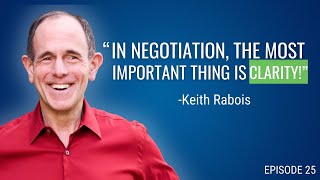
Keith Rabois breaks down negotiation in startups: align your goals with the other side's priorities, map large organizations through LinkedIn to reach decision-makers, and hire for motivation and unconventional signals like a soccer goalie's risk profile. He also explains how persuasion changes as you scale and why the CEO shapes culture.
Chapters
I don't think you can scale a company without the founder being able to persuade other entities or people. That's part of the job. You got to create and forge a cult and you got to bring people along into the cult. You got to teach the tenants of the cult. I don't know that you can succeed without some art and persuasion.
I'm Sam Christiansen, and this is all things negotiation. Today my guest is Keith Raboy. Keith is famous both for being an effective entrepreneur and an effective investor. As an entrepreneur, he was part of the PayPal mafia and worked there in the early days. He was a COO at Square, worked with Jack Dorsey there in the early days. He worked with Reid Huffman on LinkedIn there at the early days. So just had an amazing entrepreneurial journey. Since then, he's been an effective venture capitalist, one of, in fact, the most effective venture capitalists based on his results. He's worked as a partner at Founders Fund. He's currently at Khosla Ventures. And in our episode, he tells stories from the days as an entrepreneur. He advises entrepreneurs on how to raise capital. He even shares a secret about how to get a meeting with him or how to get a meeting at a company that you might want to work for. I think you're really going to enjoy the conversation. So, Keith Raboy, welcome to the podcast.
Pleasure to be with you.
I've been really excited for this interview. You are one of the people that has negotiated in a context of an operator at startups, as an investor, and really your whole career has been in negotiations. So we've only got an hour, but I'm going to try to pull out as many of those stories and lessons as we can. Let's start with the operations side. Do you, as you think about negotiation as part of teams or just an overall philosophy? What, you know, if someone were going to ask you, what's your philosophy of negotiation? What have you learned about working with teams? What comes to mind?
Well, on the negotiation, the most important thing is clarity. What do you want? Like, what's the goal? It's very, it's very. It's very straightforward. But people gloss over that. Then there's the tactical question of how do you get there? And then we talk about why and how. And typically, you know, when I'm working on negotiation, it's usually on behalf of the smaller entity with less leverage than a large entity. Startups typically are negotiating with big powers that be the government, large incumbents, you know, distribution deals. And so the most important thing is to figure out why, why should the large entity care? Like what's in it for them? And what you really need to do is align the goals you have as your for your organization with the top three priorities for that CEO. And if you can do that, then typically you can find, you know, something that works for both of you. But it can be very challenging. Let's just take like Walmart. So I walk in the day and I want to have a partnership with Walmart. Great. So you know, sometimes people have substantive KPIs that are trying to move, you know, Walmart on down. Sometimes they have like optics, framing, positioning in the market, positioning in the world, positioning in the political world, ether. And so again it comes down to just clarifying what are their bubbles. And that's why like even in enterprise sales, a long sales cycle is not an excuse. I've actually worked with a startup that closed a deal with Walmart in less than 45 days for $5 million plus first customer because. And then their second deal I think was with AT&T or equivalent competitor similarly closed USPAS because they could walk in and say hey, you have this business challenge and we have a product that can actually solve that with credibility. Yeah, so and it's non trivial like you know, obviously parsing an organization of that scale takes skill like figuring out like what is actually on the top part. It's not like they, as soon as you can read their S1s and public filings, you know, and actually with some clarity, you might actually be able to detect some things. But sometimes you may have to map the organization and talk to a lot of people to talk to executives, board members, former employees to try to even understand what does this organization care about. You can solve, let's say for AT and T or a comparable competitor. Biggest issue is churn subscriber churn that drives their business metrics more than any other variable. If you have a credible way of improving your churn, AT&T can move fast.
What would you say to an entrepreneur? Because I've been on boards of companies doing enterprise sales and they'd love to talk to a board member, they'd love to talk to someone in the C suite, but those are hard to penetrate. So what would your advice be to how you map that organization and how you peel that back?
Yeah, I mean tools like LinkedIn work finding a connection in common, you know, an authentic connection to common is probably the best way you may be able to find a connection to the C level officer of some large publicly traded company or board member and go to the board member first and then have a conversation and then he or she can introduce you to the exact same. There's a bunch. But like a tool like LinkedIn is incredibly effective Without a common connection, it can be really challenging.
Yeah, that's true. One of the things I imagine you might be tired of talking about is some of the early companies where you were a leader and you were a leader at PayPal, you're a leader at Square, you're a leader at LinkedIn. But let me try to frame the question to make it interesting for you rather than just war stories from those companies, what were some of the things you learned at each of those companies about negotiation from your colleagues, the people that you worked with? So anything stand out at PayPal from one of your colleagues and what they did at negotiation?
Yeah, I can talk about a couple lessons from PayPal in this dimension. One was when I joined PayPal, we inherited, I inherited a lot of bad deals, truthfully, that were not very effective. And the drag coefficient of bad deals is something I've learned is organizations, startups only have so much energy, so many people, so many barrels. And the downside of a bad deal is not the business terms, typically it's the drag coefficient. And so figuring out what to do with those and how to end them gracefully or reformulate them was a lot. I invest a lot of energy. We had a bad deal with Intuit, for example, and I wound up spending a day, a week over at Intuit's offices. Like actually I learned how to map their organization, which is just go over there, spend time with them and, and like become, you know, as much, as much as they could tolerate. They become an insider and then try to use that knowledge, information to see if we could fix things. Second thing is a specific lesson from Reid Hoffman was the value of time. There's a sumo dimension in any negotiation about time. So in any negotiation, speed can be your friend or foe. Like thisbee. Is inertia good or bad for you? There are times when inertia can be good for you. So for example, let's say you're negotiating with a regulator. Maybe you kind of like the state of affairs. They want to impose more friction, scrutiny, something on your users time. Unless they have real leverage, time can be your friend. More and more momentum. Like Uber played these cards pretty well actually back in the day. Or as a startup, you are usually default dead. So typically actually time is not your friend. And figuring out how to invert inertia fast because you need to grow, you need to like, you know, generate traction however you measure it. And so understanding the dimension of. Of time does affect your. It does affect and impact how you should approach a negotiation. For example, to be like, very practical for a deal that's like, call it 80% good. If I'm a startup, I might take it today. If just sign today. 80% is fine because I need the momentum now. And I could wait another month or two and try to get to better pricing, better X, Y, Z, but I'd rather have 80% of the benefits, like starting tomorrow.
Interesting. So in those startup days, you know, one of the quotes that I saw, and you have so many good quotes online, but one of them was people are irrational and at a startup, you're stuck in a building with them. I just love that quote so much. You talk a lot about being relentlessly resourceful. Any stories from your early days on how you or your colleagues were resourceful in negotiating things?
Well, resourcefulness. This is a blog post that Paul Graham posted about relentlessly resourceful. Probably being the single best trait for a founder. Why so much famous? They teach, do things that don't scale to get there. It's a good conceptual framework of don't worry about whether you're going to do this forever. Don't worry about whether you can replicate this perfectly. Just get there, figure out how to get there. And I think that's the right mentality. The good news is it's also really effective for recruiting. Typically, you could find you can discern whether someone's relentlessly resourceful really easily in an interview. Because if someone is relentlessly resourceful, there's data points that show up since the time they were like 6 years old or 7 years old or 8 years old. And if they can't give you anecdotes and explain things in a way like that, it probably isn't there, truthfully. So I think it's a very strong founder trait, but it's also a very good trade for the first hundred employees in a startup tire for. Because basically you're trying to solve problems that other people think are either impossible solve or not worth solving. And the impossible to solve, you really need people who just don't give up. So one of the ways PayPal instantiated this and is kind of the Peter Thiel philosophy was Peter would only allow you to work on one thing. And by simplifying and narrowing sort of the frame of reference, let's say for any person, you didn't have the excuse of, you know, I'm not going to solve this problem, I'm going to do this or that. And so basically all your energies, all your talents were concentrated on how do I solve a very specific, sometimes narrow, sometimes a little broader goal. And that created sort of a forcing function on being relentlessly resourceful. If the CEO will only talk to you about one thing, one way or the other, you're going to learn to dial into that damn one thing until you solve. So it's a, it's a strong management technique. Now it takes a lot of effort, energy to instill that kind of focus across the organization. But Peter was adamant about it and very effective.
Interesting. Well, let's. That brings us nicely into recruiting. Obviously, a big part of startup is finding great people. You talk about finding undiscovered talent. How do you find those people and how do you persuade them to join you? Any stories from either of those categories?
Yeah, the second, I mean, persuade and join is actually easy. It's just like you're going to learn a lot, you're going to get a lot of rope and a lot of challenge. And the best way to learn, you know, is to jump in the water and kind of see what you can do. You know, sometimes learn a little bit through osmosis as well. But fundamentally, startups are much more likely to give you the opportunity to grow than a large organization of any type. And so that's by far the best way to recruit candidates. How do you find the undiscovered talent is much more challenging? Because by definition, undiscovered talent doesn't easily evince itself on piece of paper. So if you're looking for all the standard Criteria on some LinkedIn profile. Profile, if the person has all the standard criteria, by definition they're talented, right? So if they went to the, you know, prestigious school with a prestigious degree and all that, or worked at this prestigious startup, they're not undiscovered. So if you can't use paper to filter LinkedIn profiles to filter, the question is then how? And that's really, really challenging. There are like hacks that can make you a little bit more effective. One is just simply paying attention. Like, I've hired people off my socket team. Like I've hired several people off my soccer team. I've funded people off my soccer team. So having that kind of mindset in whatever you're doing, that can be helpful. Second thing is you can. People of certain ilks tend to hang out on other groups. There's this concept that you're the average of the five people you spend the most time with which is mostly true. So do you find one person, if he's got certain traits, figure out who else and who shares those traits because shockingly, they probably have a few friends or colleagues or partners that are very similar.
Yeah, I think that really speaks to work at a company that's, you know, a growth company, live in a geography that's a growth geography, just who you're going to be around is going to raise your level. Look, you've probably interviewed a lot of people. Do you have a single story of an interview candidate that was just unbelievably persuasive in the interview? And you just said, wow, I've got to hire that, that, that guy or that, that woman.
When I hired this one guy off my soccer team, he was the goalie on our soccer team and he was really trying to escape McKinsey. And he'd been in the McKinsey a little too long for my taste and was a little too credentialist and I was a little nervous about it. But he really wanted to escape. And he's trying to convince me that he had some entrepreneurial traits notwithstanding. Two years at McKinsey and he talked about this futon business he built at Dartmouth and I was like, where from? Exactly. But good try, you know, like at least directionally correct. But then what actually convinced me was, is as a goalie on our soccer team, he has the highest risk, reward propensity of a goalie I've ever seen, which is basically very high beta goaltending, very aggressive, very aggressive. And also trying to in a rather rapid way and convert defense to offense. And so he's very, can be very effective. And what occurred to me is he's trying to sell me on this futon story that he'd be better off selling me on his goalie characteristics. And it actually worked. I was like, you know what, I don't buy this free time stuff, but I've actually watched you play golf for a while and you are pretty risk loving. So if you just apply that, forget everything you learned at McKinsey, you might be pretty good. Turned out Jeff was very good. He did very well. Thrived at Square for three, four years and then helped co found a company called Fair. Very promising company. Coo Fair. So I guess my goalie aptitude test worked reasonably well.
Interesting. Let's talk a little about management before we move on to your investment career. So as you think about persuading employees to do things, Steve Jobs is kind of the icon on this. People were willing to even though, And I've talked to people that were direct reports to Steve and found him abusive and were still willing to work really hard for him. What have you learned about persuading people and negotiating with employees to just step on the gas a little more, get a little more done, get more output. And you could even talk about inputs versus outputs.
Sure. I mean, the magic obviously is the why. And different, there's different versions of why. Like Steve's case is you want to be an outstanding craftsman. You know, we stand for taste and quality and you want to be a manifestation of the best in your craft. There are the competitive dynamics, like why is like we need to win. That can work for some companies in some industries too. But I think there's a secret, and the secret that people gloss over is just hire people who are already motivated. It's kind of the lesson that Patrick Carlson taught me. I interviewed him on stage at a CEO summit in 2017 and I asked him a question that I was curious about, which is people at Stripes seem pretty happy. I was like, how do you have so many happy colleagues? And he gave me the answer I didn't expect actually, but it's quite brilliant, which is he said, I just hire people who are already happy. And that's. Yeah, that's a much better position, honestly. So if you want certain traits, let's say work ethic or motivation, just hire people who are in the top 1% of motivation. They just can't help themselves.
Let's talk about scaling a little bit. It's really different be at a 50 person company from a 500 person company. So how do you change the way you persuade people internally based on a scaling company? Do you have to adjust what's been your experience? Because you've been at a lot of different stages of companies. And so how does that change as you scale the persuasion internally?
Well, some of it gets easier, some of it gets more difficult. The easier part is the more moment you have, the more people can see what's in it for them. Like chase life, like accurate, like, oh my God, like this could change my life, my family's life forever. And so that becomes self propelling for a while. The part that gets more challenging is after you pass about 250 to 500 employees, you tend to hire people with different goals. They start asking questions, well, what's in it for me? The first 100, 200, 300 you can hire on the challenge, the mission, the growth opportunities. And so you get a different kind of caliber of person and you got to Stitch those together very carefully. That's why a lot of companies go through a very painful transition between 3 and 600 employees culturally, otherwise. Yeah, like it's one of the more. And it's a good problem to have. Like if you get to 300, 600 employees, typically the company's doing pretty well. Yeah, but it's also one of the Messiest Painful, like 12 to 18 months in any company's trajectory.
I had Andy Ratcliffe on the podcast recently and I want to he said something provocative, which is unless you're a founder, you should never join a startup until it has product market fit.
Do you agree with that from a financial perspective? You know, certainly that's down the middle of his advice. I think that's probably right. But there's other things in life that aren't short term financial, like goals, like so you may care about the mission, like this is going to save the planet, this is going to change the world. Very reasonable, you know, set of rationales to justify like what you do with your time. Second is can you learn so you can learn a lot of things and then you can parlay that later into your financial success. It's not like you get one shot on goal in a two year timeframe. You have to maximize, you know, your ROI. It's like a 20, 30, 40 year journey in some ways. And so I would more isolate, like, am I going to learn from these people? How much am I going to learn? And then if you learn a lot of really cool, interesting things with cool, interesting people, that will turn into success with a different expanded time frame. So I think he's being a little too narrow.
Last question I want to ask on, on ops is essentially there's a feeling often that I hear in Silicon Valley, having lived there for a long time of hey, you know, if the person, if you have the inclination that they're not doing a good job, you know, you should fire them quickly as opposed to try to salvage it and train it. What's your experience on turning people around and persuading them to go in a different direction that they're going and be more effective than they are. You've articulated great to hire happy people, great to hire high level people, great to hire competent people. But there are those middle of the road people that you need to block and tackle so everyone can't be the best at everything. Experiences that you can turn people around. Or do you think you should fire quickly?
Well, I wouldn't be. I'm not like the biggest fan of fire, frankly. But I do think you can assess whether you made a mistake or not very, very quickly. I usually know two weeks to three weeks in Kal someone's gonna do. It's, like, really easy, actually, to read that. Then the question is, what do you do? And in different environments, different cultures, different levels of seniority, you may fire someone. In other cultures, environments, and CRVs, you may act differently. Actually, it's a more complicated matrix in my mind. It's not just simple fire, but I really believe that the first signals almost always right. My favorite technique is usually I don't think you can fix the problem in the role the person's in. So. But once in a while, you can figure out, well, actually, what this person's good at and what they're not good at is different than I thought when we hired him or her. And I have a different box that might be more suited to their abilities and their strengths and weaknesses. And if you can move them, that might work. Or a second technique that tends to be more. Also acceptable and successful sometimes is reduce the scope. Sometimes what happens is someone's really thrashing around and kind of like, almost drowning. And if you can narrow the purview and really clarify, like, what the top goal is, they can sometimes thrive. And then that puts points on the board, gives your colleagues confidence in this person, and then maybe you can re. Broaden the role.
Yeah, I think that's super helpful. So let's shift gears to you as an investor, and I'm just really in admiration of your career, that you've kind of gone back and forth and done both so effectively. How important is your thinking of people to invest in? How important is it that they're good negotiators are persuasive, whether that's in their pitch and their life. Do you think persuasiveness is a key skill?
Well, I think at some point, you need to develop the persuasiveness. You know, sort of either Harvard as a gene or develop it. Because, like, look, you have to persuade customers, employees to join. You have to remotivate employees. You have to persuade the current. You have to persuade investors. Like, you're constantly in persuasion mode. So you can fight that and deny it, but one way or the other. And there are different styles and techniques for persuasion. It's not just like, watch a movie. So I just go watch, like, bore the room or something and learn to sell. Like, you know, Ben Affleck in the movie. So there are different styles of persuasion, but I don't think you can scale a company without the founder, you know, to persuade other entities or people. Like that's part of the job. It's like you got to motivate, you got to kind of create and forge a cult and you got to break your ball along into the cult. You got to teach the tenants of the cult and then you got to get customers. And often it's founder driven for a while, which is very, very helpful. But I don't know that you can succeed without some art in persuasion. So for example, when I was younger, certainly when I was a lawyer, I was much more introverted. I'm still pretty introverted, but he was more conspicuously introverted. And I remember a friend of mine from college at Stanford and I used to have this distaste for stales or anything that sounded like classic Stanford kid. And then I remember my friend Chris from college saying to me once, he's like, I don't know, you know, he's like sort of rejecting my anti sales sort of philosophy and he's like, you know, he's like rob, boy, you're like the, the best subtle salesman ever. And it was like really arresting because until he said it that way, I hadn't even thought about that. That's what I was doing. I just, I wasn't doing sales boss sales. I was just influencing, you know, in a different, more introverted way. But he like, when he locked into it, it made sense to me of like no, the underlying driver is the same. I'm trying to motivate someone to do something, you know, for some reason. And I just was using different techniques than you know, you might be taught in like sales training or something.
Yeah, I think that sales gets a bad rap. I say to my, my Stanford students, look, consider sales. If you look at all senior people in organizations are salespeople.
Oh 100%. I mean like this is, I don't know why where when this started but all the smart people, you know, they went to these elite schools are told like, you know, you don't do sales and you know, you look at like compensation. Right. Certainly enterprise company number one or number two compensations and sales.
Yeah, I mean if you look at who ends up being CEOs of large companies, you know, it tends not to be people who start in coding, people who start in FP and a people who start in product management. Salespeople often end up running the show at the end of the day in my experience.
I mean I'm most DC technical founders who do start coding or design driven founders, but they develop the Ability to be effective at sales. Like for example, you know, a couple of people like Max Levchin. Max, you know, obviously started hardcore technology. CTO co founder, PayPal. He can be very effective now in like any version of a sales desire with public speaking, you know, one on one negotiations, all that stuff. Jeremy Stoppelman also worked at PayPal government. Promoted to be director and then VP of engineering. Used to be very insular and very anti sales. But then, you know, when Yelp was going public, he was very effective at communicating the public market investors. So you develop like the ability, like many things, you have a muscle, you have to develop it, practice it, you know, get feedback, et cetera. But you realize that you're constantly selling to somebody.
Yep. Let's, let's go back to the early stage. You hear a lot of pitches. I'm sure every week you hear multiple pitches. Can you give examples of a couple where they were so persuasive in the pitch that you not only did you know you wanted to invest, but let's learn from what they did to be persuasive other than just charismatic personalities.
So some pitches that were incredible. Airbnb was one of the most quintessential ones. Sat down at Brian's apartment with Brian, Nate and Joe, and Brian teed off on a three minute monologue. And he stopped finally for air. And I said, I need to invest. This is the coolest thing I've seen since YouTube.
Let's drill into the three minute monologue. So was it the content? Was it the organization? Was it the structure? What was it about those three minutes?
It was the content. He had very, some very specific data points. He basically like. And nobody liked Airbnb. Like really? Nobody at this point. So the data points were first. If you looked at Craigslist at the time, there were 54 people in the Bay Area who were using Craigslist trying to do what Airbnb did, like literally in text. They wrote like, hey, does anybody have a part where I can write for this these days, for this? And so that was actually pretty impressive. 54 people without a product going out of their way. It's actually a fair amount in a week. Pretty good market opportunity. Another data point, which was the early users were not the couch surfing Samish college kids. They were like lawyers in their 40s and 50s. I was like, that's pretty impressive. Maybe it's a bigger mainstream sort of product. Third point was we built a payment system already. Just, you literally have threefold, seven employees. This before, there were things like stripe to use. And so it was pretty rare. But his like, well, I asked him why and I was like, look, I can't show up in Austin with $250 cash and expect this to be a mainstream product. I was like, okay, Chuck definitely understands this. And then the fourth thing was Paul Graham had given him advice to concentrate in New York City. And not only listen to the advice, but more importantly, even though all three of them were living in the Bay Area, every single week, at least two of them flew to New York. I was like, that's nasty. Or resourcefulness, however you want to describe it. And then last question that I asked him was, well, you must get customer support calls all the time. You have to imagine all the things that go wrong, especially back then, because it was a lighter weight product than you might see today. And yeah, absolutely, the phone rings all the time and we just answer it. I was like, yeah, that's the retreat. And that was it. And I was like, I need to last, like now.
Love it. How important? Almost always you're going to be talking to a team of folks. As you were in his apartment that day. How important is it how the team work with each other? The kind of teamwork aspect rather than just the individual capabilities?
Vertically, I care like 99% about the CEO justly, because ultimately he or she is responsible for the rest of the team. And so if you get the CEO call right, he or she will make the team work. Like, either he or she will have the ability to manage these other people or know how to compliment or not or edit. So fundamentally, I'm not. I don't want to be in the business of running a company at all. And so if the CEO knows what he or she is doing on the team building, great. If they don't, it's going to be catastrophic. So I'm using a filter for the other people to see. Does the CEO have taste? Do they know how to evaluate talent? What are the traits that they seem to subtly be using? And are they capable of assessing the key risks of their business? And deploying people have an unfair advantage in solving those problems. So it's more. I'm using the team as an asset test with the CEO's ability to perform all these calculations.
Interesting. How about founders that are friends or family members? I'm thinking I interviewed Jonathan Stoppelman, who obviously worked with Jeremy on Yelp. You're thinking of the Collison brothers. In my class at Stanford, I counsel people generally. Don't go into business with your family for a bunch of reasons. But what's your view of that?
I think it depends. At PayPal, many of the core. Much of the core team were friends, friends of Max, were friends from Peter, and obviously the company performed really well and it's created a lot of value over the last generation. It's not for everybody, though. I think what a. Well, let me start with a simple observation and maybe double click. It either makes things much, much better or much, much worse. So it amplifies. So when you're working with Kevin and Julia Hart, you know, build eventbrite very well together. Patrick and John are really good examples. I think one of the reasons why str successful is they basically get two super senior executives with the same mind, same brilliance, always in sync, et cetera. And that's. That's a really a significant unfair advantage actually. How's, you know, how's family? So I think it can be very successful. The part that's hard and the reason why I think it breaks is to do this well, you need to be able to assess ruthlessly your friends, both for who you hire, but then later who you promote. And not everybody wants to do that. Well, first of all, a lot of people don't want to do it because you're playing with complicated dynamics. Secondly, not everybody's good at it. Like, assessing your friends is a challenge. Like, truthfully, there's reasons why your friends and like, you know, they're sure you don't blinders on like. So for example, I did work with one PayPal person who tried to replicate the friends model and was not very effective on it. So it's not for everybody. It's definitely not for everybody. But if you can, like Keter or Knox are pretty damn good. For example, I had like ruthlessly evaluating their friends and then generally, you know, making changes or editing or promoting. See, you have to know that that's what you're getting in for is I'm going to every day have to evaluate my friends and make, you know, disappoints them and promotes them and fires them and that. That a lot of people don't want the emotional toil. But it can work even better though, because typically, if you have a relationship that's really strong, you know what you're getting. Like, you know, if I'm evaluating one of my good friends, I know that I should know their strengths and weaknesses pretty damn well. And so interview process. Regardless of how many interviews you're done, there's always an error bar period for steering pursuers. And so therefore, you should be Able to calibrate potentially the people you're hiring with more accuracy. And so to me, great. Same thing for me investing in friends. I have an unfair advantage versus the rest of the world in evaluating these people. Now I need to be still successful after I invest in serving in a conciliary role in a constructive way. And sometimes that means providing feedback. That's tough. And again, that's not for every investor. But I've had a lot of success, you know, invested in Max Levitin in the firm. Two of my favorite current, like early, earlier stage companies are two of my closest friends. Fair. Both Max and Jeff. The founding the company. We're stalker friends before we even worked together at Square. So I actually like it.
Let's map that on to something we talked about earlier, which is that your quote around people are irrational and the startup is essentially a collection of irrational people. One of the things I teach in negotiation is you need to learn to effectively work out differences because you're going to have differences. Maybe PayPal would be a good one. There was a lot of leadership change. I know there were conflicts that have probably been much written about between Peter and Elon and who was running it. What did you learn from that? What was done effectively at working out differences and what wasn't done effectively at working out differences in those days?
Well, I think there's ultimately effective like the output. The endpoint is there are kind of like the version of a scoreboard sports. It obviously worked. Can it be painful along the way? Absolutely. Read a very vigorous debate culture and you had to learn thrive, and not just thrive, but thrive in that environment, people would attack ideas very violently. Not very violently, but just not confused people, but very vigorously. You know, Datastax was described as a very Israeli culture. And that's true. Like we happen to be friends with a bunch of Israeli people and put it together and they debate. It's kind of fun to watch, but we had that and sometimes be in person, sometimes be by email. But you needed to basically be able to frame arguments, withstand scrutiny and that led to, generally speaking, better outcomes because you need to pressure test every idea and every initiative. And that led to generally the initiatives and ideas being superior and certainly would identify blind spots or flaws, you know, quickly. So I think that's great. But that kind of culture doesn't work for everybody. Some people are less secure. Some people just don't like being scrutinized, you know. Sure. And so, you know, you have to choose wisely. But ultimately the short version of the answer to Your question is how do we work out? Difference is is we forged answers through pressure.
Yeah. And I think the important thing is you can do it through pressure. You can do it through a lot of different mechanisms. The important thing is that you do it, you know, anytime that you or.
You have to be willing to. Yeah, like, I mean, look, building a startup is very, very challenging. And one of the biggest drivers why it's challenging is you're navigating through conditions of uncertainty. Like you don't have 50 years data and so you can't just say oh we left the data speak trusting, blah blah. It doesn't work that way. Like nobody, you're also navigating into a future. So even if you have the data historically the world changes every five or ten years and you have to skate to the future. So you need a way of navigating that don't, that doesn't depend upon crutches and that makes it even more rare and difficult to thrive.
Interesting. One thing that you and I agree on and I teach this principle is that people need to learn how to take and evaluate risks. I love some of the things you've written about inputs and outputs and the importance of measuring inputs. Could you talk about that in relation to risk and persuasion?
Well, I think yeah, there's like incentive misalignment when you use outputs, which is the big step. Function changes and improvements that really matter look very scary and risky because they are. You haven't proven it. You don't necessarily even know, have line of sight to the right answer. But if you judge people only on outputs, then a lot of people are going to not raise their hand and be reluctant to volunteer for this crazy initiative or this crazy idea that we don't really know how to solve. But what you want is your best people to embrace and raise their hand and say yeah, I can't wait to tackle this. And so if you only judge people by outputs, it's very professionally damaging to the best people to raise their hand for high risk, high reward projects. So it's for no other reason. You need to switch to inputs to get your best people to volunteer for the biggest possible levers. Secondly, it happens to translate really well in investing. There's no way to do early stage investing by outputs. It's not possible even if you're right, it takes years to even know. And so you have to have a set of principles or philosophy or techniques for gauging inputs, like to evaluate investors in early stage outputs. You know, in growth world, as companies hit escape, true Escape velocity, you can judge outputs a bit, but then there arguably no alpha left because all, roughly all smart investors are going to regress to about the same conclusion.
Yeah, let's talk generally about your career for a minute and some lessons there. Can you think of, of a time when someone was very persuasive in your career that really changed your trajectory and helped you, you know, take a step, function up? And what did they, how did they persuade you?
Well, yes. So I mean, not everybody who listens to your podcast probably knows that I wasted, you know, a certain number of years of my life practicing a law. And fortunately, actually the person who introduced us, Jeff, talked me out of, you know, spending the rest of my life as a lawyer. Who knows where I'd be now? Might be more successful, might be less successful, might be more happy. Less happy. But probably not less. Probably, probably less happy, maybe more successful.
So for our listeners, he's talking about Jeff Donaker, common friend. He persuaded you, I think, to join his company. Just talk a little bit about that.
He did. So at the height of the Internet bubble, early 2000, I was a fifth year associate at Sullivan Compound, which is like this classic quintessential Wall street law firm. If you have like any stereotypes in your mind, they're correct. And so 50 years associates getting pretty deep into the career actually. And Jeff had built, helped build one company that sold really well and was doing his second startup and tried to hire me. We'd been friends through Stanford and had lots of friends in common and kept in touch after he graduated. And he went from zero probability to missing me in a month. It was pretty good. And so, yeah, obviously that transformed my life.
And so you did it in a context of a close relationship. But do you remember any things that he did? Was it relentlessness? What were the persuasive things he did to get you unhooked from Sullivan Carmel? That's not easy.
No, I think it was partially around opportunity, like things like merit based compensation. Law firms work probably still do mostly in lockstep progressions. So around comp around happiness of like law's pretty insular profession. Like you may work in a team, it's a very small team, typically two, three, four, five people knocks. It's like a litigation team maybe. And so he was very effective at communicating. Hey, like you seem to like to work with people and why and you know, so that was pretty effective. He sold me on. There was a feature in technology and this was a rare opportunity where because of the Internet bubble, which we were actually living through the month I joined, this was a great opportunity for people like me who had no business experience to jump and that if I missed this window, I might never find it. That was actually pretty good advice. It turned out to be true. And then implicitly, one of the reasons why I decided to say yes was because of Jeff's trajectory and career. I felt like I could learn everything I needed to know in a really compressed period of time. I felt like all the business stuff I didn't know I could learn from him quickly and then I could try to leverage whatever beliefs I had. And so that was critical. It is so ridiculous. When I started and Jeff can still tell really good anecdotes, as you call them. I couldn't use. I didn't know how to use Excel. Like, and he still hates my Excel spreadsheets. Like, he still absurdly cordially designed like hard coded sales and did everything you're not supposed to do. Eventually I just decided I would rather learn how to use Excel. I get successful enough that I don't have to use Excel.
That's so good. I love that story. Look, a lot of people would like to meet with you. Give them some advice of how they get in front of you with their pitch.
Usually there's like three ways. One is obviously a strong referral insofar as someone I trust, like Jeff, stands just like Jeff's like, oh, you should talk, Stan. He'll probably get a response in typically 30 seconds. So that's the best. But obviously not everybody has a strong reaction in the middle. Second is saying or writing something insightful. And that can be done by anybody. They can even be publicly posted. There are times I've seen people post stuff and reached out to them like that just clearly the person has an angle and insight into an area or vertical that's quite different than generic, bland stuff that works very effectively. And then third, this is what people tell you, but it's really hard to do. The third device is right, but it's really hard in practice, which is have some value you can provide. I think that is great advice. Like, you know, something that you can do that would be useful. But that's pretty rare, truthfully, so I wouldn't over rotate on it. But if you happen to have like, hey, there's something I can do that you seem to like be interested in and I can help you in some dimension. Sure. I mean, that obviously will prioritize.
Let's. We're running out of time, but I want to ask a couple quick questions. Let's apply that to a startup. You've identified a startup that you really want to work at, they don't have a position for you, you've been rejected. What's your best advice for stories of how people just wedge their way into that startup?
This one's really easy. Always email the CEO. The CEO at any reasonable startup will be paying attention. And again, you have to put some content in that email, like why do you care about this company? Or what are your unique skills? What are your insights into this space? You know, what can you do? But like, CEOs read these emails constantly. And I wouldn't say every CEO is going to respond to 100% and every 100% response is going to get you an interview or meeting. But you'd be surprised. Don't go through the bureaucracy.
Love that advice. One of the things I teach is that most negotiations happen over time in the context of long term relationships and that you should really be thinking as you negotiate of you're probably going to see this person again as opposed to one off, tactical, take advantage of the other side. Can you think of situations in your career where people have come back around that you were surprised, you thought, wow, this was a one off deal. I'm never going to see this person again. But you end up doing business with them, investing in them. Do you agree that it's more long term?
Oh, yeah. I mean, venture definitely is. By definition, people start companies, the first company they failed. First example is I remember when Brett Taylor started his first company called FriendFeed. I told him he was going to fail this disaster. Here's why. And then he started another company called Quip. And I didn't even know he was raising money. He called me up, he's like, hey, I'd like you to invest. I was like, why? And he's like, well, you're the only one who told me that we were going to fail. And I want someone who's like, really to tell me things that I might be missing. So, you know, it turned out to be a pretty good investment. And obviously Bryce got on, done lots of fantastic things. So, yeah, like sometimes, like it takes a while.
Well, I've got a fun one for the two of us. We met a long time ago, but it was asynchronously, what do the numbers 1650 College Ave say to you?
Oh, my God, that's where I live during PayPal days.
So you were there at PayPal and I replaced you in that house when you moved out. So I lived there for 15 years. In that house and I would get your mail and it would, you know, some character named Keith Raboy. And I was so mad at you because I was like, dude, change your address. And I thought, I got to reach out to this guy because he's getting all this junk mail and all this stuff, and it's bugging me. And so I had this perception of you in my mind, of the guy who wouldn't change his address. And here we are 25 years later in a podcast. So people come around.
Yeah, no, it's a great wall. It's a great house. And, yeah, like, I still don't really read my mouse.
Well, Keith, this has been great. Really appreciate it. You've given us lots of wisdom and congratulations in your career, and I look forward to staying in touch.
Well, thank you very much. Take care.
Thank you. Thanks for listening to all things Negotiation. Please subscribe to the show on Apple, Spotify, or YouTube. If you enjoyed the show, tell a friend and be sure to engage with us on social media. Your likes, comments and reposts make a big difference and help others find the show. The show was produced by Ezra Troupiano, original music by Peter Breinhold, and designed by Aubrey Benson. Thanks for listening.
More from Keith

This Billionaire Trains His Body Like He's Building A Billion-Dollar Startup | Keith Rabois


Vinod Khosla and Keith Rabois on Building and Investing in Enduring Companies | Ep. 40



