Keith Rabois on AI's Startup Shakeup, Ben Smith on the Paramount Merger & More | Aug 7, 2025
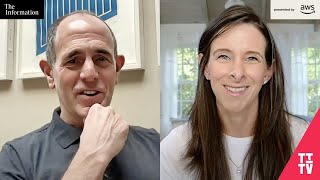
The episode of the Information’s TI TV, recorded on August 7, 2025, opens with host Akash Bhasricha delivering a rapid earnings roundup (DoorDash, Airbnb, Lyft, Duolingo) and a brief on President Trump’s proposed 100% tariff on legacy semiconductor imports. The show then moves into a deep conversation with Keith Rabois (Khosla Ventures) about how AI is reshaping startup economics: AI‑grade researcher compensation, the emergence of a de‑facto salary‑cap, unprecedented early‑stage revenue growth, and the need for speed and adaptability in company building. Rabois also discusses OpenAI’s upcoming GPT‑5 launch, arguing the product will cement a monopoly and that ChatGPT is the new “verb” for search. The episode shifts to Ben Smith (Semaphore) analyzing the Skydance‑Paramount merger, its regulatory backdrop, potential strategic moves in streaming, news, and the broader media consolidation trend, including creator licensing and Fox Corp’s unbundling strategy. Next, Joshua Meyer (Chai Discovery) and Greg Yap (Menlo Ventures) explain Chai’s AI foundation models for molecular design, the early‑stage commercial rollout, and the broader impact of generative AI on drug discovery. They also describe Menlo’s Anthology Fund partnership with Anthropic, which targets AI‑native teams across sectors, especially healthcare. Finally, Steve Levine (The Electric) covers Baiju’s $50 M satellite‑laser power‑beaming startup, its technical concept (solar‑powered low‑Earth‑orbit satellites beaming energy via lasers), timeline, and the strategic relevance of space‑based power. He also provides a snapshot of the US‑China EV battery race, noting China’s dominance and the politicization of EV policy. Throughout, the hosts intersperse commentary, humor, and forward‑looking speculation, delivering a multi‑segment tech‑media‑venture overview.
Chapters
Foreign welcome everyone to the information's TI TV. My name is Akash Bhasricha. It is Thursday, August 7th, and earnings season continues with Pinterest and Instacart reporting earnings tonight. We're going to debrief all of last night's earnings too, including DoorDash, Airbnb, Lyft, and we're also going to get to Duolingo. We've got some big guests coming on the show today. We've got Keith Raboy from coastla Ventures who is going to be with us in just a few minutes. Ben Smith from Semaphore is going to help us break down the Skydance and Paramount merger that closed this morning. I'm also excited about a chat that we're going to have with our Electric Vehicles correspondent Steve Levine, who's going to help tell us about a new startup that a Robinhood co founder has launched. And finally, we've got an AI drug discovery funding round out of Menlo Ventures that I'm excited to get to. Before we get going, the big story this morning is President Donald Trump's plan to impose 100% import tariffs on semiconductor imports. But I want to highlight to you some reporting that our Asia Bureau published this morning. The fact of the matter is that big AI chip makers like TSMC and Samsung aren't really going to be affected here because of the fact that they have some kind of a manufacturing presence in the United States. But we what will be affected are companies making older chips that you can find in things like home appliances and cars. This is obviously a developing story, but I will link our analysis in the show notes for you to read and we will keep you posted on how things evolve. Let's get through some of the earnings from last night. A reminder, I'm going to lay out one number from each print that you need to be paying attention to. For DoorDash, the most important number last night was 23%. That was the rate at which the company's marketplace gross order volume grew in the quarter and crucial, crucially, this is the fastest that that figure has grown in seven quarters, going all the way back to 2023. Shares of DoorDash were up this morning. For Airbnb, the Most important number was 9%, which is about how fast the company expects revenue to grow in the current quarter. Now, 9% would be a deceleration from what the company saw in Q2, and the company's reasoning was we did so good last year that it's going to be really hard to live up to that And Airbnb shares were down this morning. For Lyft, the most important number was 11%. That was the company's top line revenue growth. That was also a deceleration from last quarter. And that was probably why the stock was down this morning, even though the company did say that it is expecting gross bookings to grow faster this year. And finally, for Duolingo, this surging company that doesn't get enough attention, the most important number was 41%. That was the astonishing rate at which the company is growing its top line. That was even faster than last quarter. And that is also roughly the same growth rate that daily active users grew on the platform. Frankly, for a $15 billion company, is pretty impressive. Okay, we've got an awesome first guest for you today. Keith Raboy is the managing partner at Khosla Ventures and he is one of the most prolific investors in Silicon Valley. He. He is also a sharp critic of many aspects of tech culture. And today we want to talk to him about OpenAI's big news and also the latest on startups and venture capital. I want to bring on our editor in chief, Jessica Lesson, for that special conversation. Jessica, over to you.
Thank you. Akash and Keith, it's nice to see you. Thanks for joining TI tv.
Pleasure to be with you.
So there's a lot to unpack in AI, of course, But I want to start with something I read on X that you wrote last week because I think we cover AI startups so much but don't pay enough attention to how AI is changing, what a startup is, how startups get built. And you identified this as. I think you wrote a topic or the primary topic at 5 out of 6 of your board meetings last week. So A, that's a lot of board meetings and B, bring us inside this conversation. What are founders and their boards talking about as it relates to AI and startups?
Yeah, so I observed that the primary topic at most of the board meetings I've attended in the last week or so was about how AI is not just transforming the product and the user experience and the value proposition, but actually transforming the culture and the way of building companies. And there's a couple things that are obvious in the public domain and then there's a lot more important subtle things. Let's talk about the obvious ones. First, compensation. You know, everybody's paying attention from the president on down to these grants, you know, that Meta and other people are offering AI, AI grade researchers. The president quipped about it. Everybody centered pop culture. They paid more than, you know, professional Sports athletes. Now the downside to that or the flip side is meta pretty coherent strategy. Meta mints money startup space basically by definition do not. Virtually no startup actually is profitable, including some of the highest profile startups, OpenAI, Anthropic, et cetera. So if you're losing money and you want to compete for AI grade researchers, if you're going to spend that money and you can debate whether you should and how and when and how many of those people, but if you're going to spend any of that money, you need to substitute from somewhere else. So either you have to hire a hell of a lot less people top set that cost, or you've got to decrease the compensation to engineers, which is, you know, a topic that no one really has been talking about for 30, 40 years. So you basically have a salary cap. Like in sports, you have a salary cap. Every startup has a budget that they can afford to spend on people. And if AI researchers consume tens of millions of dollars, you have to figure out where that money's coming from. So that's in the public domain.
And which way are companies leaning? I mean, are they leaning toward where are they taking it from?
Well, honestly, I don't think many of them have been super thoughtful about this. Is when you have a strategy, it needs to match your resources and your competitive advantages. That's why you know, meta doing this, since it mints more money than most, paying more money than most makes a lot of sense, but it doesn't make sense. It would be incoherent for a startup to compete on the basis of cash compensation AI researchers. So that's one topic. The other obvious in the public domain topic is laws of physics of growth have been completely repealed. You look at the top 25%, just the top quartile of revenue growth in the first year from launch and six months in, it's $1 million of AR in a year from launch, it's $5.4 million. These are unprecedented in 40, 50 years. And then you see things like companies launching and getting a $50 million of revenue in two years or three years. Also basically unprecedented in the history of technology. So if these are setting the norms, every company that's raising venture capital has to compete with that level of growth because venture capitalists don't sit around and say, oh, we've got a 10% budget for AI companies and 80% for this and that. So if you can't grow a traditional startup at the same rate as an AI startup, all the money of venture capital, all the risk capital is going to swing into the highest potential companies, which is usually measured by revenue growth. Now, not all these companies have durable revenue. Not all these companies make profit or contribution margin on their revenue.
Some of them could be eaten alive by the next ChatGPT launch.
Like that's a third. That's a third point. So now you're getting into the more subtle ones, which is, do any of these companies or which of these companies have a future? Because the qualities and characteristics of the general purpose foundation models are increasing their performance. And you have to isolate, let's say you're a venture capitalist but an entrepreneur. Where's your differentiation? What's durable, what's sustainable? And with the rapidly emerging tech landscape, it's not so obvious. Usually when we see a technology breakthrough, there's a step function, sort of in evolution, there's a step function and then things are smooth for a while. With AI, that's not the case. If anything, the pace of change is accelerating, not stable. So this leads to another subtlety of startup building, company building, which is, I think you need, you've always had to build a company for speed. Speed compounds, the best executing companies tend to do the best, the fastest they execute. It definitely seems to predict success. But now you need speed in a different dimension, which is adaptability. If the, if the platform underneath you is rapidly emerging and things that were impossible are now possible, the companies that can adapt fastest are probably best situated to take advantage of that. And when you build for adaptability, you have to think about decision making, hierarchy, even things like PM and product management become obsolete. I saw this interview that Peter Fenton did where he talked about the notion of product management makes no sense. The age of AI and I tend to subscribe to that. So you have to. Well, because think about what a traditional PM does. You kind of talk to your customers and you develop like a set of features and then you sequence your features and create a roadmap over the next year. That's logical. Well, if the technology is changing every quarter, every month, and enabling new features and actually enabling things that were virtually impossible, A, your customers have no idea what's coming and what's possible. B, you need to take advantage and seize on the opportunity as soon as something is actually possible. And so you have to rip up your roadmap like every week or every month or maybe every other month. So the idea of this orchestration over a year makes no sense anymore. So these are just some of the topics. But I think what's more interesting is that it doesn't just apply to AI companies. So for example, I'm involved in a company Ramp, which is about probably the best you could build a company in the last 40 years from the ground up. On the traditional technology playbook, which you know, I've been practicing for 25 years, like ramp is literally perfect. However, if all these trends and forces are different, even a company as good and as excellent as Ramp needs to think about which of the things we've taken for granted for 25 years are no longer going to be true. So for example, if you're growing so fast, can you even hire people even if you wanted to at that rate? Can you hire customer success people? Can you hire customer support people?
No.
If you're going from 15 million to 50 million, as that's actually a pretty good startup, it's not even the best in one year. You can't hire people at that rate. So you have to build your company that doesn't require you to hire that people, which requires you to rethink everything. So all of these are in floss, top down in enterprise world go to market first to enterprises. Fortune 500 companies, Fortune,000 companies almost never has worked. But now because of the pressure of AI on boards and CEOs, many AI companies are getting inbound interest from Fortune 500 companies. So even the sales go to market motion of which segment you enter and why and what sequence is being inverted. So all of this is intellectually incredibly interesting. It makes me feel a little obsolete lead. But rethinking this all from the ground up is pretty cool. And the companies that figure this out first are likely to create competitive advantages. But you're right that the fundamental issue is ultimately AI. The general purpose AI is becoming so proficient that whether a standalone company in customer support or legal.
Yeah.
Or accounting or sales or crming makes any sense. Not clear. There are some that probably do and will. But the CEO has to navigate to the future and build sustainable accumulating advantages. And some are thinking that way, but many are not.
Yeah, well, it's fascinating. I love how you started with comp because I think that is the hidden engine behind so many reasons startups get built the way they do and how they're able to compete with the big companies. And that's shifting. I mean, isn't the answer just that startups are going to get smaller too? I mean, how do you think about sort of the employment within the startup sector?
Probably yes. I think like the key metrics that people are going to be looking for, investors are going to be looking for public Investors, private investors are basically revenue per employee contribution, profit per employee, which have traditionally been strong for tech companies, which earn tech companies significant multiples compared to traditional companies. But I think every company is going to get evaluated that way. And so you're going to have to be disciplined about the leverage on every single employee and every dollar you spend on compensation.
Yeah. Okay. I'm going to go through two topics quickly because I want to pick your brain on them. So today OpenAI is going, expected to be debuting sort of as we speak, the latest version of their model GPT5. We've reported a lot in the information about the sort of leapfrog encoding capabilities of this model. But you know, you've invested in OpenAI could count through multiple firms. Now you obviously know the company and its growth well. What are you excited about and looking for in their announcement today?
Well, I have no insider information on what's going to be in the product. However, given that they are batching releases to be really impressive and not just doing, you know, consistent releases every week or every month, I'd expect it has significant improvement and really does plant the flag in the ground that OpenAI is the leading company on the planet, which is true. But eventually people argue on eight of the 50 benchmarks we can compete. I don't think there's going to be anybody competing with OpenAI for a long time. I think this is a monopoly business.
Wow. And you think OpenAI can outcompete Google Meta, Microsoft? Why?
Oh, easily. I think that fundamentally, first of all, ChatGPT is the fastest growing consumer product of all time. That alone is a couple trillion dollar business if they just keep sustaining it. The brand normal people use ChatGPT now and that's not changing. Just like Google search wasn't that much better than other search engines but 70 to 80% market share was Google search. It was the verb. ChatGPT is the way you describe using.
I think it was, I think the difference between Google and Yahoo back in the day. But we, we've, we can debate that. But yes, but is the way consumers access. Yeah.
AI and I don't think that's going to change in the short term. There are some things that other companies could do that make life more complicated. But right now you can see 70, 80, 85% market share on consumer side. Enterprise is more competitive. We'll see if that continues. Obviously Anthropic's done well with its coding, cloud coding and that's why I think, you know, OpenAI planning a coding, you know, flag down, if it's impressive. Will really deprive Anthropic of a lot of oxygen because I think that's where all the oxygen is coming from. I don't, I think Gemini, you know, has classic innovators dilemma kind of issues. We'll see if they can get their act together.
What about the. And I, I, I think OpenAI, I mean it was what a story to watch and it's been incredible. But the question I have, I mean you started by talking about Meta having an endless cash machine. Google obviously has one for now, OpenAI doesn't. Losing a tremendous amount of money. So I guess my question for you, is OpenAI IPO 2026 or 2027?
No idea. Be happy either way. You know, my personal bias always is technology companies should IPO early. I've been on this crusade for 15 plus years. I'm glad that some of my critics have admitted I'm right. I think it's always better to be a public company. But we'll see. They do have an infinite thirst, you know, for capital, no doubt about it. But consumers are willing to pay like at the end of the day. One of the things we talked about actually at your launch party many years ago.
Many years ago.
Many, many years ago. 12.
But just counting.
Yeah, literally at that party, you, me and Dick, Dick Costello were chatting about this. The original sin of the first Internet was that consumers won't pay for things. And that is actually wrong. And the good, the best thing about the information, the best thing about OpenAI is they're proving that if you produce a quality product, consumers will pay for it just like they do everything else in life.
Love it.
So I think OpenAI can be profitable just on charging consumers for their usage. I actually, and then of course the cost of tokens and energy is decreasing and all that stuff, but consumers really value and crave what open AI and ChatGPT can do for you. So I think ultimately long term OpenAI will be a very profitable company. And I actually do wonder whether advertising has a future, Google based advertising, whether you should be short of that.
Yeah, well, Keith, we're going to end it there for now, but I'm going back on soon because there's so much to discuss and you gave us a lot to think about. So thanks for joining us today.
Thanks.
That was Keith Treboy with Jessica Lesson. Before we get to our next guest, I want to tell you about a story that we published this morning on the margins of one of the fastest growing AI coding companies. My colleagues at the Information reported that Replit has seen its annualized revenue surge from 2 million last August to $144 million in July 2025. But even as revenue has picked up, so too have the costs of paying for the models and the models that power all of its AI coding tools. In fact, according to our reporting, gross margins this year for REPL DOT have ranged from negative 14% to 36%, obviously much lower than some of the other software gross margins that we see with other companies. And it all raises the question around whether or not these AI coding companies can actually reach profitability. I mean, it's still quite early for many of these businesses, but it really highlights a of lot all the costs that come with serving customers. You've got fees to access all the other companies, LLMs, you've got Cloud computing costs. There is a lot to take into consideration and we will link that story in the show notes. Okay, we talk a lot about tech on this show, but we also want to make sure that you have the insider scoop on something else that has been making headlines this morning. The long awaited Skydance and Paramount merger closed. It is the latest in Hollywood's game of survival musical chairs and and it puts a brand new spotlight on Larry Ellison's son, David Ellison to tell you more about that and everything you need to know. Well, I want to bring Jessica back on for a special conversation with Expert Media Analyzer and Semaphore co founder Ben Smith. Jessica, over to you.
Thanks Akash. And hi Expert Media Analyzer Ben Smith. I think I actually wrote that so I have to take credit for it. But it's nice to see you. Thanks for being on.
Nice to see you. I do like to think of myself as an expert media analyzer.
You know, I think you are.
You can put that in the chiron.
You're the editor in chief of Semaphore. I'm personally an angel investor in Semaphore, so want to get that out of the way. And actually you're indeed angelic business is doing. But we can come back to that. So this deal is done. There has been much, much angst about it, much regulatory angst, much fighting between various bidders. Why does this matter? Why should, you know, close watchers of technology and media be paying attention to this deal and does it matter?
I mean, I think in a way that's the question, right? Like this is a company that, you know, has a, you know, both, you know, owns a bunch of huge sort of stupid movie franchises and a set of, you know, once a great, once incredibly Relevant television brands like MTV that they really just drove straight into the ground over the last, you know, 15 years, 20. I don't know, it's been a long time since. Since the kind of Sumner Redstone empire was doing anything other than just sort of milking the company for cash and driving it into the ground. And I mean, that's obviously true of the CBS brands, too. And so, I mean, I think the question is, can this, you know, can, you know, one of the world's richest families bail this thing out? You know, can they build either a streaming service or can they, you know, consolidate their way into a big competitive streaming service? You know, what are, what are they going to do in the news space? Is a very interesting question. Of course, looming over all of it is the fact that, like, in another context, we would basically be saying that, like. And how would you say it? Like, the regime forced the transfer of a media asset to a favored oligarch. Like, that's how you would describe the transaction.
That's some bold language there. And I think you're obviously referring.
That's kind of new neutral. Like, that's. I mean, I don't mean neutral.
Olimar is neutral these days, is it?
No, but I just mean if we were talking about Russia or Hungary, that's how you would sort of describe how the deal went down.
Yeah.
So there's. That's. And I think that.
And that's sort of the thinking there would be. And also got major concessions. I mean, the big controversy was, was the canceling of the Colbert show tied to the final approval of this deal? What do you think?
Right, right. Was, you know, I don't know. It hasn't been reported. And the company claims, you know, accurately, that that kind of late night TV was on the way out. Sure did cancel it right before the deal. And. But I think more broadly, Larry Ellison is a billionaire who's close to Trump, and there is a sense that you can only get regulatory approval for deals that the president favors these days. And so I just think that's sort of looming over this in a really big way, despite the details and the fact that the day after it closed, south park, which is one of their, you know, remaining really, really successful shows, just kind of savagely lit into that particular topic.
I mean, just because. Hilarious, great satire, great. Whatever your political opinions are.
I'm not sure everybody would see it that way, Jessica.
Yeah, no, that's true. Well, I, I enjoy south park, so. But let's unpack the business a little bit. Is. Has Ellison Given any signs of what he wants to do with the traditional TV business, I mean, is it going to be selling off some of these TV assets? Nickelodeon, Comedy Central? We don't know yet.
We don't know yet. But I think, yes. I mean, I think when you read that he has an open letter to shareholders today and when you read it, there's a lot of talk about like combining the tech stack, putting Pluto TV and Paramount plus into the same stack. I think there's a big question of are they going to try to buy Warner Brothers Discovery? Because I think there is. Even though Paramount has in particular Yellowstone has. I don't. It's hard for me to see a world where Paramount plus reaches the kind of, you know, exit velocity of Disney or Netflix and that Warner and that Max or whatever they call it now is really struggling to get with a much bigger portfolio. So I don't know. I mean, I think that's a real challenge. Although of course that whole landscape continues to change.
Yeah, and what about news? I mean, there's been reports that they were looking to potentially acquire Bari Weiss's Free Press, bring her in to help with the news business. There's been more chatter of reaching out to well known folks on that too. I mean, the CBS News certainly still has some prestige. What do you think about what their plans will be on the news front?
Yeah, I mean, I think CBS is the last broadcast news show that has 60 Minutes in particular has this kind of, or had until recently this kind of brand of being this powerful independent voice. Although frankly, I mean, broadcast news has been in decline for our whole careers. Like I can't remember a time when, you know, even people of our generation like me and like, I never watch this stuff. Right. Except when it, you know, somebody tweets it. So it's not like I don't think it's been particularly relevant for a long time. But there still is something about 60 minutes that gets you the big sit down with the President with, you know, it's, you know, and they produce some great stuff. CBS Sunday Morning remains probably like the only, I don't know, a quite successful broadcast show, I should say. Like I am told, I don't think a lot of people of our generation actually watch it. But you know, and, and I think there with these news, these broadcast news brands, it is really existential. Like, what is this for? Do we need this? Is there going to continue to be a CBS News? And if so, where does it live and why? Like, I don't think those are just commercially or editorially, like there's not an obvious answer to that question. The same is true for ABC News, in particular for cnn. I think there's this just like, what are these things for that, that, that I think are challenging.
They're for reporting.
Oh, I mean, I, I'm into that. Like, that's.
But it's pretty exciting to make sure people know that. So.
But yeah, no, and they have a history of doing amazing journalism. I think there is this question of is there a tacit understanding that this is going to become a right wing channel and a pro Trump channel? Yeah, I don't know. And I think that Barry Wise, isn't that right? But it would certainly be a sort of a move to kind of move the channel to the right and away from what I think, you know, President Trump feels is unfair criticism of President Trump.
Okay, one more question before you go. We'll just give us another try. You've got a weekly media newsletter with Max Tanney at Semaphore. You're, you're always watching the tea leaves. What, what's something else that's sort of intriguing you to you at the moment about these big media companies? Hollywood news?
I mean, I think the most interesting thing that's happening in this space right now is that like there, you know, we've just been through this moment of massive fragmentation. The election was played out on these fragmented creator voices and platforms. And I think, you know, there's an old line that, that, you know, that media only does two things. It bundles and it unbundles. And I think we have sort of reached peak unbundling like last year or maybe early this year. And you're seeing that pendulum swing back really hard. And you're seeing, I think actually Fox Corp. For whatever reason, I think partly because they're not entangled in a bill, you know, they're not in the middle of some transaction trying to sell half their company or buy somebody else's company is way ahead on this. And if you look at what Fox News has done, what Fox Sports has done, what Tubi has done, they've just rolled up a bunch of, of, of conservative or center right ish creators. They've developed like complicated licensing relationships with everybody from Piers Morgan to Clay Travis to Dave Portnoy, and you saw the New York Times is starting to do this, which is because in the New York Times now, I think worth treating as like a, a media company and just, you know, just did it where.
You were the media critic that reported very strong earnings yesterday.
Yeah. Just did it, but really interestingly, just did a licensing deal with Pablo Torre, this kind of, you know, great independent sports podcaster. And I think you're going to see most of these big independent voices get kind of pulled into media companies. They're going to need to have a new kind of relationship where these folks are still on YouTube, still in the open Internet, but, but I do think we're about to see this huge wave of consolidation in that kind of creator world.
Yeah, I completely agree and it's a great thing to flag and thank you for joining us. And also listen to Mixed Signals, Ben's podcast if you want more of his take.
That was Ben Smith with Jessica Lesson. AI has upended quite a few industries, but the one that arguably has the most meaningful promise is its potential to accelerate drug discovery. This week, Chai Discovery, which is a company focused on that exact challenge, raised $70 million at a valuation of $550 million. The round was led by Menlo Ventures, but the company is backed by a bunch of other big names including OpenAI and Thrive Capital. I want to bring on the co founder of the company, Joshua Meyer and Menlo Ventures, Greg Yap. Menlo Ventures, Greg Yap, who's coming on the show. We're gonna bring them both on to talk about this exciting deal. Greg and Josh, welcome to the show.
Thanks for having us. It's great to be here.
So, Josh, there are a lot of AI drug discovery companies out there. How is Chai different?
Well, at Chai Discovery, our mission is to transform biology from science into engineering. So we've been building AI foundation models from the ground up that give us the ability to both really understand how a molecule looks at an atomic level and then give us the tools to go and design those molecules from scratch. We've been laser focused on building that technology and are really excited to have come out with two leading foundation models for those two tasks. Predicting what the molecules look like and then reprogramming them.
And so these are models that you are selling to like pharmaceutical companies.
So these are models, first of all, that we use to, to design these molecules. They can actually be used in a bunch of different ways. So obviously, pharmaceuticals and drug discovery, massive industry, lots of impact there. But actually, molecules are used across many other industries as well. You know, things like creating new materials and new kinds of reagents, even laundry detergents. So I think the, the impact of this technology is even going to expand beyond drug discovery. But of course, drug discovery is an area that, that we're incredibly excited by at Cheyenne, one of our main focuses.
And have you guys started selling the tool? I mean, do you have revenue yet?
So the model just finished training a couple of weeks ago, and we just announced the news and have just started talking about that now publicly. So we're still quite early in the journey of how AI is going to impact drug discovery. So we put out Chai too. There's more coming soon, but we're really excited about where the space is headed from here.
Greg, you know, I want to ask you, AI drug discovery. And you know, I should say, Josh, you know, I know you just mentioned that this, this technology can be used across many different applications. You know, the one that I'm most interested in personally is drug discovery. And so I want to stick there for a second. You know, Greg, AI and drug discovery has been going on for quite a few years now, long before ChatGPT actually became popular. How has this latest wave of generative AI technology changed drug discovery?
Well, I think, you know, first of all, I think it's still the early innings. You know, generative AI is in the midst of changing drug discovery, and it's really special in a couple of different place. Like you pointed out, you know, AI has been used in drug discovery for many years. You can't, in fact, analyze a genome, you know, without using AI. And so AI has been a core technology that drug discovery has used for a while. But I think one of the unique things about generative AI is it offers you the potential to create new molecules that have never been thought of by humans before. You know, the old ways of discovering drugs, the current ways to discovering drugs, you really involve a huge amount of screening, right? You make millions or billions of things and you test them. You're kind of like sticking keys in locks and trying to turn them, you know, and that's kind of how you've discovered almost all of the drugs that have been made in history. You know, now you have an opportunity to, to really, to really change that, that, that methodology by actually being able to make a drug by seeing inside the lock, understanding the structure of that lock, and trying to make a key that actually fits that space. And that's, I think, the different. It really turns drug discovery in a way in, in reverse, right? By starting with the thing that you want to build and trying to make it, as opposed to making, you know, many, many random things and then trying to see how well they work.
I want to talk about, you know, Menlo's partnership with Anthropic. This investment came out of the Anthology Fund Fund. It's a hundred million dollar fund. What is it?
Yeah, so the, so the Anthology Fund is an initiative that we have done in partnership with Anthropic. The Anthropic is obviously a company that we've invested in for some time, you know, and, and the relationship there is very close. And so we actually, the Anthropic team and the Menlo team collaborate to help think about, help diligence and, and analyze some of these companies. And then the Anthropic team continues to help and support and work with the companies after we, we jointly invest so that it really is a partnership. You know, the goal of the Anthology Fund is really to invest in the, the most AI native teams at the earliest stages. You know, and health care is a very important sector for the Anthology Fund.
But it's actually not, it's not only, it's not only health care, it's, it's across sectors.
Yeah, absolutely. Our partnership in the Anthology Fund crosses all industries that are touching AI, but healthcare is a very significant component of the Anthology initiatives.
And how much of the 100 million has been invested so far?
So we haven't talked about that yet. The last update we gave a few months ago, we talked about 20 companies in that portfolio. There will be another update coming soon. There have been a number of investments since then, but we're not talking about the exact numbers. The investment in Chai comes both from the Anthology part of our funds and from our main funds as well.
Right.
Josh, I want to close with you this question around AI drug discovery. There's a lot of big companies working on this, not the least of which is Isomorphic, which is founded by Demis hassabis. He's the CEO of DeepMind. Why should investors back you over someone like him?
Well, like we talked about earlier, the impact that AI is going to make in drug discovery is profound. Right. If you look at something like Chai 2 we've built, it's like this prompt to image tool. We can, we now have the ability to take some kind of prompt about what we want a molecule to do and realize that on the computer there's a lot more that that's coming. But I think the results speak for themselves. You know, with Chai 2 we were able to take a process that can sometimes cost a million dollars and take months or, or sometimes even a year. And now we can do it in a couple of hours on the computer and then have fully built and validated those molecules in the lab in a two week process. So just having a technology like that I think is so valuable that it just speaks for itself. And I think we're seeing that now with the interest that we're just getting across the biopharma industry. And it's been, it's been really exciting to think about how this is not only going to make drug discovery faster and cheaper, but also be the gateway to hard and seemingly out of reach targets in drug design. So areas that it might have been difficult to find a molecule that a traditional method, now we can put that into the, the computer and actually go straight to a potential candidate solution. I think that's what's really attracting all the interest around the company right now is just those incredibly exciting results and how tangible it now is for drug discovery.
Great.
Well look, it's a fascinating space and you know, I'm excited to have both of you on it more as we sort of see some of this technology play out. That was Greg Yak from Greg Gap from Menlo Ventures and Joshua Meyer from Chai Discovery. For our final guest, one of my favorite newsletters to read at the information is our column the Electric which goes out on Monday and Thursday mornings. It covers everything you need to know, not just about electric vehicles, but also about next generation batteries that power them. And also we get into autonomous vehicles. This morning Steve Levine who authors that newsletter wrote a great piece about the co founder of Robinhood's new business which focuses on on space. He sat down for a conversation with Baiju Bot, the co founder. And I want to bring Steve Levine on the show to tell us all about it. Steve, welcome to the show.
Hey.
Hey.
How's it going?
It's going great. So Baiju Bot, I mean he co founded Robinhood, he's now a billionaire, he has this new startup. What is he up to?
Okay, so the, the, the big thing that, that we've discovered the last few months about a lot of the, you know, the hottest areas that, that we look at, you know, humanoid robots, electric air taxis, drones, AI, AI data centers and, and, and so on is that a crucial but much overlooked enabler of them are, are the batteries that go in them. And this morning we have Baiju raising $50 million to put satellites into space and beam lasers to the earth and power stuff. And you know, there's a logic to this. For example, the military in Iraq and Afghanistan spent hundreds of millions of dollars and lost a lot of American soldiers moving fuel onto the battleground to, to, to power the bases where.
So this isn't a, it's not a new idea. It's been happening.
Well, it's not a new idea. You mean the idea of sort of needing this? The idea was actually posited in 1941 in a short story by Isaac Asimov. And on and off, scientists have been trying to make it work to beam power from space to remote places. And now we're getting a bunch of military branches, universities and companies attempting really to do it.
And so just so I'm clear, so the technology here that he's working on is they send the satellite in space and then they get the lasers down to where does the energy come from? Just help me understand that piece.
Sure, sure.
So the idea is, think of Starlink. So there are 8,000 Starlink satellites in low Earth orbit right? Now. If all of those had a, sold had had a solar panel on them, then they could gather power from the, the sun and then that would be stored in a, in a, in a battery and then converted into laser light and then shot down in a beam to, to a receiver on the Earth gathered again into a, into, into a battery on the Earth and used by the military in the, in the field. But also think of all of the places, remote places on the Earth where people don't have power.
Right.
Suddenly, instantaneously, you're able to bring power again, just like Starlink has brought phone service.
Right.
Right around the world and they raised 50 million. What's their timeline for getting these satellites into space?
Well, they're going to put two, two satellites, they say they're going to put two satellites into space next year and you know, and then, and then go from there. Know, however, that it's really at the beginning stages of this. So far all that has been done is proved that power can be beamed over a long distance. There was an experiment earlier this year where power was beamed about 5 miles. Now that's low Earth orbit is 300 miles. That still needs to be proven. And then, you know, so, but, you know, a lot of money going into this. And so we may see this, you know, over the next few years.
I want to zoom out a bit. I mean, you know, your beat is such a fascinating beat. You know, you cover all the ways in which power, energy, electric vehicle, autonomous vehicles, how all these topics intersect. You know, one of the most interesting topics that I've been following in your Reporting is the EV race between China and the U.S. and so, you know, just help us understand where are we at in that story right now?
Yeah, China is, is way in the lead. China dominates batteries. They make most of the batteries in the world. They have most of the battery making know how and their EV companies are the best ev. EV companies. There is controversy, political controversy in the United States. EVs and batteries have been politicized and, and, and, and so, you know, it's slow going here, but this is a thing that is happening. The, the world is going to driverless cars and it is going to EVs. And so I, I have been forecasting and some at other people, people have been forecasting that there would be a grand bargain between President Trump and Chinese President Xi. And we would see Chinese EVs in the United States, particularly BYD, which is the, you know, by, by far the leader, the, the Chinese leader. It's becoming, you know, less, you know, some of us have becoming less confident in that. For example, the most recent news is that the Chinese stopped investment by Chinese companies in the United States completely. There had been some Chinese kind of some scrappy companies that, that have been putting down roots here. All of that, all of that is stopped. I do think because Trump fashions himself as a deal maker, he would love to do a Nixon in China. So I think look for a grand bargain, but keep your powder dry.
Great. Well, Steve, look, like I said, it's such a widespread beat and I really didn't think that you'd be writing about space when I first started reading your newsletter. So thank you for coming on the show and you know, next time we have another one of these space energy companies raising a ton of money, we will look to have you back on. That is Steve Levine. He is the author of the Electric, which is our newsletter that goes out on Mondays and Thursdays. Okay, well, that does it for today's show. A reminder that we are live on this stream Monday through Friday at 10am Pacific, 1pm Eastern. I want to thank Amazon Web Services, who was our presenting sponsor for this product, and I want to thank you for tuning in. We really do appreciate your viewership. I am already excited for our next show and so we will see you tomorrow. Silicon Valley SA.
More from Keith

This Billionaire Trains His Body Like He's Building A Billion-Dollar Startup | Keith Rabois


Vinod Khosla and Keith Rabois on Building and Investing in Enduring Companies | Ep. 40



