Keith Rabois on Miami vs. Bay Area, cognitive variety, America's self-examination & more | E1182
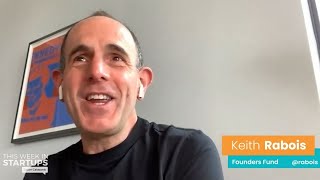
In this episode of Week in Startups, host Jason Calacanis conducts a quarterly check‑in with venture capitalist Keith Rabois, who has recently relocated to Miami. Rabois describes Miami’s rapid emergence as a tech hub, driven by an eclectic mix of entrepreneurs, investors, and immigrants, and praises the city’s libertarian‑leaning culture, low taxes, and flexible regulatory environment. He contrasts this with the perceived toxicity of the Bay Area and critiques California’s pandemic response, arguing that Florida’s open‑door policies and A/B‑testing of COVID measures have yielded better health and economic outcomes. Rabois advocates for challenge‑trial vaccine development and discusses the balance between civil liberties and vaccine‑passport requirements. The conversation shifts to broader geopolitical issues, including US‑China tensions over TikTok, the moral contradictions of Western corporations doing business with authoritarian regimes, and the internal debates within the Republican Party about populism, economic policy, minimum wage, and healthcare reform. Rabois emphasizes data‑driven, outcome‑focused policymaking, critiques feelings‑based legislation, and argues for personal responsibility in health, citing sugar consumption and lifestyle choices as major cost drivers. He also reflects on the social dynamics of success, the importance of surrounding oneself with high‑performing peers, and the lasting impact of the pandemic on remote work, talent competition, and housing preferences, noting a shift toward suburban living and increased flexibility for employees. Throughout, the tone is conversational yet analytical, with a mix of optimism about market‑based solutions and skepticism toward government intervention. He also discusses how crisis‑driven discipline improves productivity but harms morale, the importance of informal knowledge transfer, Miami’s aggressive real‑estate development, and highlights two emerging startups—Team Roddery and Run the World—aimed at improving remote team bonding and virtual networking.
Chapters
This week in Startups is brought to you by Digital Oceans App Platform, a new platform-aS-A-Service solution to build modern, cloud-native apps. With App Platform, you can build, deploy, and scale apps and static websites quickly and easily. Use App Platform for free and receive a $100 credit for any upgrade at do.co/twist. that's do.co/twist Vanta compliance and security shouldn't be a deal breaker for startups to win new business. Vanta makes it easy for companies to get a SOC 2 report fast. Twist listeners can get $1,000 off for a limited time at vanta.com/twist and Masterworks the first company allowing investors exposure into the blue chip artwork asset class. Twist listeners can skip the 17,000 person waitlist by going to masterworks.io and using promo code TWIST.
Hey everybody, welcome back to this Week in Startups. It's time for everybody's favorite moment. It's our quarterly check-in. We're doing our quarterly audit with Keith Rabois from Founders Fund. Tuning in live via the internet from Miami. How are you doing? Look at that lifestyle. Look how happy you are. How healthy you are? How is Miami, Keith?
Miami's amazing. I'm tan, rested, ready. We're ready to go. We got like an ocean here. We got palm trees here. I'll show you the best conference room in America.
Wow, beautiful. Oh, my Lord. It seems to, we should start there with Miami. Everybody was talking about Florida. Could this become a tech hub? And then? Let's face it, you're a super router. You have a lot of connections in the investment community, a lot of connections in the startup community, and you decided to move your super router to Miami. And now a lot of people seem to have followed you down there. And there's a culture there now all of a sudden, huh?
Yeah, we have so many people here that I'm so busy. I haven't worked this hard as a VC in eight and a half years or eight plus years because there's so many people, so many interesting people in Miami. we all want to meet in Florida. We do real world meetings. We're not locked down. So I've just been scheduling from 9 to 9, six days a week for three months now. So it's been insane that a wide array of interesting people, a lot of people moving from the Bay Area and escaping jail, many people moving from New York and improving their lives. And some people from LA. Those are the typical, you know, sort of points margin. You have the usual Latin American immigrants mixing in. and some European escapees as well. So it's created a nice cocktail brew of unique cultures, unique backgrounds, angel investors, VCs, partners, GPs, entrepreneurs, engineers, designers. I feel like Noah's Ark, we have two of each, two of those, two of those, we need two more of those.
And on a lifestyle basis, obviously it's a great lifestyle. It's obviously in some ways superior to New York in terms of weather, et cetera. But there seems to be this, I don't wanna say libertarian, but freedom has become part of the equation here. There's obviously different tax treatments, but regulation and freedom seem, and enthusiasm for business seem to be part of the package. Maybe you could speak to the juxtaposition of how toxic San Francisco and how hostile they became towards capital allocators and entrepreneurs versus your mayor, Mario Suarez, I believe is his name.
It's Francis Suarez, but Francis is sorry. But I think he represents an entire movement in Florida at all levels of the political, yes, for spectrum, from the governor to the senators, to the congressmen, to the mayor here, who's been, you know, embracing technology. They really all care about the future of their families, their children, and the future of the world is technology. Whether people like it or not, the future of the world is going to be and by technology, industry by industry, vertical by vertical, there's no escape. And the best jobs in the world, the best paying jobs in the world are all in technology. The most innovative, creative jobs in the world are mostly in technology. And to be anti-technology is basically to be anti-progress, anti-the future, and basically sentencing families and kids to a draconian sort of desperate existence. And it's refreshing to see politicians who totally understand where the world's going and want to skate ahead of other places there. So they welcome and embrace technology thought leaders, technology investors, technology entrepreneurs, technology companies. We have the flexibility here to accommodate everybody. We actually build housing and we build commercial real estate. So if more people move here, we just build more houses. It's very responsive. It's amazing how markets work. Florida is very capitalist, where if If there's a market imbalance, we allow people to spend money to fix the imbalance. It's the greatest poverty relief program of all time is capitalism. And California seems to have forgot that or intentionally sort of masked that. And so all the problems in California are all dysfunction of government. We don't have property crime issues here. We don't have violent crime issues here. We have a great educational system that's been open in the real world for instruction since August. all kids are getting full instruction, have been since August, they're doing team sports, and yet Florida is 35th among states ranked in terms of spread of COVID among people below 18. So this all fiction that you can't have education, you can't have a performing education system, they can have an open education system, that kids need to be depressed, isolated, socially destroyed, which is really what COVID lockdowns have done to kids, created permanent damage. We also meet new engineers here. We have lots of engineering schools. As Mayor Suarez has pointed out, Florida mints more, Miami mints more Hispanic and black engineers than any city in America. And there's lots of engineering talent there for the hire. We have successful companies at the 40, $50 billion level from Chewy. We have database companies from Citrix to modern new database companies. We have Latin American immigrants that are escaping bad governments. and coming here for a better future for their families. And so there's a lot of cultural antibodies against the worst sort of offenses of the left and the closed-minded nature of the left. Here's what's really most refreshing is people are happy. So you can go to any bar, any restaurant, any coffee shop, and all you do is see smiles on people's faces. It's not forced, it's scalable. It's the first thing my friends from California when they visit notice. The second thing people notice is that people have a diverse set of views. You can go to any table or any restaurant, and you will find people who voted for Trump, and you'll also find people who voted for Biden. You'll find people who are pro-death penalty and people who are anti-death penalty. You'll find people who are pro-immigration reform and some people who want to shut down immigration. And you have to have a dialogue.
Therefore everywhere you go, because everybody has different views. Wait, wait, they don't check when you come in the door. They don't say, this is the red section, this is the blue section. You don't have like the smoking, non-smoking section. You're saying adults in America have differences of opinion, but they're able to coexist in the same location.
Not only coexist, they have a dialogue. You can actually talk about issues here and discuss them. And it's incredibly refreshing and differentiated in the last 10 years in San Francisco and maybe 20 years in the Bay Area. And so, Partially it's because everybody knows everybody who has different views in them. And so once you realize that you're always in an environment where people debate and disagree, you get A, energized by that, but B, you get actually more proficient. You actually have to understand other people's perspectives. In that area, almost nobody understands a conservative perspective. I don't want to say topic because they never encounter a conservative.
And in that way, people can move on and focus on other things in life. If you have this diversity of ideas, well, you're forced to think about, you're forced to accept it, and then everybody can just move on and live their lives as opposed to trying to destroy anybody who happens to come in to the discussion who has a different point of view, which I think, you know, the first person I heard say this about the Bay Area was our friend Tim Ferriss, who was just like, I can't believe how closed-minded this place has gotten. Nobody can even have a difference of opinion. The reason I came to the Bay Area was because they accepted people and everybody could have a difference of opinion and still move on and be friends. Weird.
Yeah, no, here people have a different perspective, different opinion, and have to engage. It's like basically anytime you're in an environment where 50% of the people vote one way and 50% vote the other roughly, you're gonna have to engage and not just insulate yourself and create a monoculture. People also are more tolerant because of that. They realize that they have friends and family and coworkers that have different views and they know these people quite well and they realize they're not immoral or stupid. And so the caricatures just don't work because they actually know these people for decades, have known these people, family members, colleagues, spouses for decades. And so the simple dismissals are just ineffective. And so therefore, no one even bothers with the simple name calling here because it's, everybody knows that it's ineffective, which is also quite, quite refreshing. We allow people in Florida to basically choose their own adventure. So if you don't want to dine indoors, nobody forces you to. You can request tables that are outdoor only. That's what I do. Actually, I don't mean, I don't go to restaurants.
Yeah.
Restaurants, bars, I don't even go to house parties if they're indoors. If they're outdoors, I actually believe that it's perfectly fine for someone in my situation, risk adjusted to engage in outdoor activities. And I do that, but I can choose. And nobody, nobody dismisses me for making that choice given my circumstances and my risk profile. And then there's other people who may have a different risk profile and they can choose to have indoor seating if they'd like to. And so that's, that's a template for how basically Miami Qualimami and the state of Florida operates, whereas people choose their own risk profile.
This week in startups is brought to you by our friends at digital ocean and their app platform. This is a new platform as a service solution to build modern cloud native apps with app platform. You can build, deploy and scale apps and static websites quickly and easily. Simply point your GitHub repository and let the app platform do all the heavy lifting. Since DigitalOcean runs app platform on their own infrastructure, your costs will be significantly lower than with any other product and no big price jumps as you scale, right? You're not gonna get that surprise bill. It's built on top of DigitalOcean Kubernetes. Kubernetes, if you're a developer or you're in tech, you know what that means. If you don't, look it up. It's K-U-B-E-R-N-E-T-E-S. ER N E T E S and that provides a smoother migration path so you can take more control of your infrastructure setup. There are three basic tiers, starter, basic and professional. Starter is great for basic sites. Basic is better for prototyping apps and professional works best for production apps. Use that platform for free and receive a hundred dollar credit for any upgrade at do.co slash twist do as in digital ocean. .co/twist. That seems like now that we know the nature of this virus and the pandemic, you can't get it outside. I mean, that seems to be all the science has proven. Outside, you cannot get it. And then in California, we had this very weird moment where they're like, we have to put police at the beach in Los Angeles and stop people from going surfing. And it's like, the beach and surfing are banned activities. Do you realize all that does is send people into their houses, which is the number one vector of where people were getting it. So literally we held onto these really weird beliefs. There is something very nice about, I was thinking about when we got on this call, because at the taping of this, Texas just decided, YOLO, we're open, everybody make their own decision, no mask mandate, pretty controversial. And it actually, to me, seems like something we should have been doing earlier, which is if a location wants to take a different approach, one of the strengths of this United States of America, not one state, not one country, but 50 different countries that get to deploy their own strategies is we could have been A/B testing this whole time. So with schools in Florida, nobody's, there seems to be no issue in opening them. And then, I don't know if Tex, I think Texas will have a spike. I think more people will die in Texas because they're going to go fully YOLO. But what if it's only a small amount of people die and the people, the citizens want to take that risk, just like some people want a speed limit that's 85 and some people might want it to be 55. Adults can make these decisions.
I think A/B testing is really smart, especially with a novel phenomenon that no one really knows the right answer with With hindsight, we're all gonna say, you know, X policy was stupid, Y policy was dumb, I wish we had done C. So the benefits of having multiple data points is you can learn, foster, what are the right answers? We, for example, Florida has basically been an open state for months, possibly since June, depends on how strict you wanna be in, you know, in defining open. But fundamentally, the state's open. Like, people are working, people are going to work, people go to offices, people go out, They see their friends and you cannot find COVID stats here that are worse than LA's. And especially demographic adjusted, obviously, Florida has an older population, a lot of people retired in Florida historically. People are not suffering through COVID here at rates greater than LA and they're certainly not dying at rates greater than LA if you adjust for age at all, probably much better. And yet there's no loss of jobs here. People are working, retail hasn't shut down, businesses failing, education, kids are not falling behind, they'll never catch up on, they're not going to be permanently depressed. And the only way we know this though is because the governor here was very smart and said, actually, I don't buy this stupid media hype. I'm going to actually read, you know, research and come up with a smart set of policies. And the only way we can prove that to people is by having a differentiated approach. Now, there's even starting to be some research that suggests, like, for example, humidity may interfere with the transmission of airborne viruses. And we obviously have some humidity here. indoor air conditioning, for your point about forcing people indoors, which is very bad, indoor air conditioning actually suppresses humidity. And so you make a very volatile cocktail mix when you put people in poorly ventilated but air-conditioned environments.
Yeah, it is very clear that just opening the doors solves a lot of these problems. When you look back on, also in Florida, Is it that people who are high risk know they're high risk and are sheltering in place, i.e., if you're in a nursing home, if you're in a retirement community, you're kind of self-aware and those folks aren't going out or doing indoor activities, maybe going out and not doing it during the pandemic?
Well, I do think, looking back way before I moved here, it does seem that the policy of this state was to find people in nursing homes and equivalent demographics and try to insulate them as much as possible from COVID and try to protect them unlike other states. And really they prioritize as well as the vaccines, prioritize that, you know, people about 65, et cetera. And be very disciplined about that because the research is quite compelling that the people at significantly greater risk of severe or fatal impact of COVID are very age stratified. It doesn't mean that people below a certain age can have severe consequences. There is some risk to anybody, but the risk profile is completely different. We're talking order of magnitude difference. And the state here has always been conscious of that, and every policy is driven by how risky is the activity. I think the whole point of human life is not to avoid dying. We make decisions every day that are not just about how do I not die today? If you believed and you didn't want to die, you would maximize, you would never drive a car, for example.
Certainly wouldn't get on an airplane or go to another country.
Well, airplanes, commercial airplanes are actually pretty safe. You certainly wouldn't take a private plane. You absolutely would not drive your own car for miles for distance. It's like below the age of 40, your chance of dying is almost surely driven more likely to be in a car accident than almost anything else you can do. So people make decisions. I mean, lots of people like to run marathons or climb Mount Everest. All of those have risks and people, calculate those risks, maybe correctly, incorrectly calibrate them. But people don't just sit at home all day saying, how do I not die today? That's like not an existence really worth living.
And this this past year, I think, and including the Trump presidency for four years, has kind of led to this self-examination of our operating system, capitalism, you know, federalism versus states rights, et cetera. I wonder when we look back on this, you know, the Trump presidency and what he got right and what he got wrong. Now that we're out of it, we're past the, you know, January 6th, we're past the impeachment. Now it's Biden is in office and we seem to be coming out of this pandemic. I gotta think, you know, based upon what I'm seeing, people are gonna be able to walk up and get vaccines in March and April, no problem. And it's gonna be over by May. Clearly Biden sandbagged it saying he was gonna do a million shots a day. We've been blowing past 2 million. Now we're flooding the zone with, you know, twice as many vaccines. We need to do maybe four or five $45 million just to get rid of the stockpile. So you believe this is over? And when do you think, you know, full capacity Miami Heat game? And because I saw the Knicks had 2,000 fans at the game last week.
I think we'll be in a, you know, intermediate zone for a while where people with vaccination cards, you know, may not be capacity constraints at all, at least in some states, there may be some risk profile, like Israel's had some stratification of risks over the year. But I think there's going to be gradual unlocking. I don't think it's like a binary switch. But for example, the Miami Heat in theory could fill the arena here with roughly 20,000 people with people who've been vaccinated. There's really no reason not to do that.
How do you feel about civil liberties and having to show your vaccine card? Is that totalitarian? Is it reasonable? Somewhere in between?
I think somewhere in between. I think there's, you know, let's start from a legal perspective first. Purely legal perspective, there are differences between rights and privileges in the United States. And things that are privileges have historically had the ability to restrict based upon, you know, engaging in X, Y, or Z behavior or certain criteria. So I think insofar as you're talking about a privilege, and you can debate some things at the margin, whether the right to privilege is certainly attending an NBA game is privileged constitutionally. I think it's possible to easily require people to be vaccinated or show proof of prior antibody, you know, infection antibodies. I think that's a reasonable set of criteria. At some point though, you can certainly make the argument, you know, if this was some 1980s HIV and we started asking people to prove that they were, you know, HIV negative or conversely, I'm not so sure that the same people would react the same way.
Yeah, you have HIV, we'd like you to wear this badge on your jacket. Like, it's got some really dark undertones.
So, I think one wants to be cautious about this. However, I think in large groups, It's reasonable, like my, my personal opinion, let's say now, is in large groups, it is reasonable to require people that want to attend large groups indoors without masks to prove either prior antibodies or vaccination.
Yeah. And airplanes is one where it starts to get a little dicey because now you're restricting people's movements. It does seem like it's a privilege, but also I may need to see my family across the country. I don't want to drive 10 days. So there really aren't many other options. Hey, everybody, I thought I would bring Christina Cassiopo. I pronounced it correct, I'm hoping.
You got it, yep.
All right, you're the founder of Vanta. People have been hearing your ads on the pod for the last year. And I thought it'd be fun to have you on and you to explain why you created Vanta and what SOC 2 is and why it's important people get it right. So let's start with what is SOC 2? for people who are just realizing they have to become SOC 2 compliant. For sure.
So SOC 2 is at a tie level. It's sort of a customer asking you to prove your security. So if you've heard about one, it probably comes, you're probably a B2B company and you're doing sales and somebody asks you, Hey, can I have your SOC 2 report? Or, you know, Hey, can you go through security review? Or they usually don't phrase it like this, but, Hey, I'm gonna put a bunch of data in your product. and I want to know if you're actually going to be secure or leak it over the internet.
So they ask you to get a SOC 2 report. And these SOC 2 reports are basically a third party saying, hey, you can trust this company with your data.
It's like a standard, correct? Exactly.
Yeah.
So a third party auditor comes in.
Make sure you're in good shape and writes that report. All right. Thanks again, Christina, for explaining to us why this is so important for SaaS companies, especially when you start getting into that sales process. And you've been very generous. You're making a nice offer. People go to vanta.com/twist.
What are they going to get, Christina? They're going to get $1,000 off their Vanta subscription.
And we're a big fan of twist listeners. Oh, thanks. I know you had a great response from our, our listenership, and they always tell you they found you here. So, yeah, thanks to our twist Army, and we'll see you all next time. Bye-bye. How do you think about travel, international travel and borders? Because I was just thinking, you know, if if we had run this like a startup, we would have said, okay, Texas wants to have this level of opening. Florida wants to have this level of me. Let's just split the country into regions. We'll let people, you know, Representatives figure out what their constituents want. But maybe the travel between those two places is a little, there's a little more friction to it. Like New Zealand, Australia, Canada, they just closed the borders. Japan, what do you think about closing borders and and those kind of, you know, restrictions seems to be- I think.
Countries are clearly going to enforce their borders. This is not going to be a Trump, you know, racist thing. It's going to be common. And I think that's quite reasonable. Like travel as a matter of right to just go and on vacation is not, you know, going to be nearly the norm that's been for the last 40 years of my life. You're not just going, I mean, there were some places you needed a visa that was non-ministerial, but very few. I think now we're gonna see a lot of countries enforcing their borders on many dimensions, health being one of them. I don't believe though that, and I think that will be more permanent than just a COVID issue. I think people are now aware that globalization has its downsides too, which is things can spread fairly fast and countries are gonna wanna control their destiny more. which is a very rational decision.
This seems like a very good thing to come out of this. If we had had this experience then in January and February and March of 2020, we would have seen what was happening. We were seeing these Wuhan, you know, giant blowers of antibacterials. You know, I don't know if you remember those where people were just firing these cannons of antibacterial stuff. That really was scary science fiction dystopian. We would have said, you know what? Yeah, I think no flights out of China to America, no flights, just everybody shut their regional borders and we would have definitely not seen the level of spread.
I think it would have been helpful, but let me backtrack to where we started, which is we'd run this like a startup, what would happen? Well, the truth is we actually had a vaccine two days after the virus first hit the US. And if we'd run this like a startup, we actually would have deployed that first Moderna vaccine. in a challenge trial.
Yep.
And we would, we would have, with the benefit of hindsight, absolutely learned one, two months later that we had a magical panacea. And none of these people in America who've suffered would have suffered almost none. Because at that point we were to.
Save hundreds of thousands of lives.
Yeah, less than a thousand people in the United States had contracted COVID. And in a challenge trial, you almost surely could have got to compelling, given that, given the level of efficacy and given the moderate profile of side effects, almost surely in a challenge trial in a month, two months max, would have had compelling, clear and compelling evidence that this is the solution. And everybody from Silicon Valley, it's gone down that direction of every type of company. But we still have a regulatory regime that is basically built in the 20th century, which is all around error correction and asymmetric outside protection versus risk reward or Portfolio theory.
It's interesting.
In any event, everybody's trying to- this is a completely unnecessary. And in some ways, even Trump, who is aggressive in pushing regulators in many fronts on COVID, he actually could have ordered this too, and he didn't. And I don't know what the internal debates, the FDA were about this, but that's his fault as well, because he could have overruled the FDA. and absolutely said we're going to approve a challenger trial based upon, you know, whatever evidence the FDA had at the time.
Yeah, I mean, they, and they are happening literally this month in the UK. Challenge trials have started for people who don't know what a challenge trial is. That's when you give somebody the actual, you know, you give somebody the, the virus, you give somebody the sickness, and then you give them the vaccine or you give them vaccine, then you introduce the virus in this case, right?
Or you can do, there's different ways you could do it. Yeah. But one way or the other, you didn't intentionally go faster with volunteers who are willing to take on some risk. And I think as long as you can describe the risk reasonably well, I think it's fair to ask people in society, if they want to volunteer, you can compensate them or not. There's different ways, you know, you can approach this in many different ways. but can you find 100 or 1,000 people that willingly are going to take on certain risk for in a hope for breakthrough? And actually, personally, in the hope that they actually are immunized faster and there's some downside. And then the question is, can you communicate that risk to a reasonable set of people? I think there's no doubt that there's enough people that can understand the risk that they're taking on. So for example, he could have gone to the medical community. And said, hey, doctors, nurses, et cetera, you guys kind of understand this. Here's the disclosure, here's what we want to do. We need a thousand people of different demographics, different ages, blah, blah, blah, easily capable of understanding the risk reward profile. And we could have had challenger profiles off the ground, you know, in February last year. Trump would be president right now, actually.
You know, almost surely had he done- 100%, he would have won. I mean, this is the great stupidity of Trump is, he didn't listen to anybody. And God, he was the results of the vaccines came out two weeks after the election. If they had just come out a month earlier, or if he had just, you know, gotten people to wear masks, he was so close to winning. But my God, that was his strength when we look back on it is he didn't listen to anybody. And his weakness is he doesn't listen to anybody.
Well, he did, you know, even about COVID he did something insightfully. Like, so for example, he pushed to close the travel to China faster than the bureaucrats enabled and really wanted him to. And he was right. But that two-week delay where he's fighting the internal bureaucracy in his own administration really cost us in the world. But he was on the right side of history. And, you know, people like Biden were calling him racist, but it was absolutely the right substantive policy. Second, obviously, this warp speed stuff was very helpful. You can argue whether it was indispensable, whether it was 50% helpful, but we now have multiple vaccines that were developed in one year when the history of vaccine development, I believe the best ever before was five years. So the warp speed product, you know, development, you can debate at the margin, but fundamentally it was a good idea, great idea.
He wrote the check and he got out of the way, right? He wrote a huge check and got out of the way. It was the perfect thing to do. Same thing like the stimulus checks he did the first time. It was like, let's just dump some money in there and save the market from crashing and save the economy from crashing.
It was a brilliant move. The first stimulus check, you know, was also turned out to be with the benefits of hindsight, a quite good political and substantive maneuver. That said, not embracing masks right away, which would have been a classic libertarian reaction to lockdown saying, don't listen to your stupid governors and mayors that want to lock you down and lock you in your home, just wear a mask. That would have been very effective for him politically. It almost surely would have been substantively better than the policies many states adopted. So he made a lot of mistakes, not surprisingly. He's kind of a roll the dice kind of guy. And when you roll the dice a lot, you're going to get some winners or you're going to get some losers. So even on COVID, even though the media covered all his mistakes times 1,000, He actually made some smart decisions to be COVID, but he also made some massive miscalculations. He definitely, you know, should have understood the regulatory trap that the FDA was and really dug into could you do challenger trials? Because he had the evidence of the progress on the vaccines. Even if he didn't have the statistical evidence, he kind of knew under the.
Hood what was kind of happening. And if you think about a challenge trial, the amount of risk somebody's taking by, you know, exposing themselves to the virus, if they were a young person is incredibly low. We've just gone over that. Yes, it could be residual, but they could have literally done, you know, when you think of cohort data, hey, these hundred people are gonna get exposed to this much COVID. These folks are gonna get 20% more, these folks another 20% more, another 20% more. We would have had this incredible, what do they call those, you know, cohort charts, you know, the, we have all the little boxes in it and percentages. We could have just sat there and looked at like age, gender, race, you know, BMI. We would have had the perfect data set to know exactly what was going on here. And it's all because we want to protect people. It reminds me of protecting people with accreditation laws. It reminds me of protecting people with speed limits. Like there is some, or, and we also send people to war. Like we literally send people into war zones to drive over, you know, improvised explosive devices in the road in another country for, you know, whatever reason it might be, valid, invalid, you know, mistakes, lots of them have been made in, you know, our approach. But this would be a lot less dangerous than the millions of soldiers we've sent into war zones. Oh, absolutely.
You know, it depends whether you think about it. But people use the vocabulary interchangeably. Like it's a war on ax, war on drugs, war on blah, blah, blah. And then they have a very different risk profile, much safer than imposing a draft on, you know, the entire US population. putting people into the military and deploying them across the globe surely. And we do that when you impose a draft, you're conscripting people very large. They have no choice in the matter. So we, through many parts of American history, have imposed drafts on people.
All right. We all know monetary measures by governments all over the globe are inflating asset prices. We see that everywhere. So, Some sophisticated investors are piling into asset-backed investments like art to hedge against future inflation. And that's where Masterworks.io comes in. Masterworks.io lets you invest in multimillion dollar paintings by artists like Banksy and Basquiat. And not only does art hedge against the markets, it can also outperform them according to Citigroup. Contemporary art returned 13.6% per year over the last 25 years compared to 9% for the S&P 500. The problem was that most investment grade paintings cost upwards of $1 million. It makes this asset class reserved for the top 1% of society. But no longer. Masterworks.io is making art investing accessible to everyone, regardless of accreditation. And they now have over 130,000 investors on the platform. The best part? You don't need to know anything about art. Nope. Their experts will create a custom portfolio to meet your investment needs. Twist listeners can skip the 17,000 person waitlist by going to masterworks.io and using the promo code TWIST. TWIST. Again, masterworks.io promo code twist. Also see important information at masterworks.io/disclaimer so that you're fully informed about this opportunity. We never got resolution to what is going to happen with TikTok. Trump put his foot down and said, hey, we need to figure out this reciprocity. If you're going to have your apps here, if you're going to be Collecting data on the location of tens of millions of Americans. Maybe we need to be able to have Twitter over there, et cetera. What do you think Biden's approach is going to be to China? And what do you think our stance should be at this point? Because we did have, I think it was India that banned TikTok like immediately after having this, they're not idiots. They're just like, wow, if China is going to be an adversary here and they're not respecting human rights, There's no need for us to have this app in our country. What do you think the approach is going to be here?
TikTok is clear easy national security risks in the United States. The CCP is editing content, manipulating content, as well as collecting data. That has nothing to do with reciprocity. There's a separate argument about whether, as a policy, the United States should enable countries that ban are competitive companies from competing should react, retaliate in the markets. But these are somewhat different and maybe completely different concerns. They get ambiguated and conflated a lot. I think it's important to disambiguate them and ask because, for example, let's say China allowed Facebook, Twitter, et cetera to operate freely. In China, that doesn't solve the national security concerns. It solves the reciprocal nature, you know, markets, business interactions.
Fairness, yeah.
But it doesn't- All that can be solved overnight. It doesn't necessarily answer the question whether TikTok is an acceptable product given where the data is used, who has access to the data, what data it collects. There's an expert say recently on protocol that written by a TikTok employee about some of the nefarious things that the CCP was ordering. So I think it's a very dangerous entity and a very dangerous app. Biden's administration has a mix of people have different perspectives on China. So I think on any China issue, you're going to see a fair amount of debate internally. You have the Secretary of State's been pretty explicit that China's committing And there are certainly people in the administration that really don't like the fact that he's been explicit about China is committing genocide. And so you're going to see a lot of tension. Sometimes people use hawks and doves and I'm not sure how explanatory that those labels are, but there's a vigorous debate in the Biden administration about threat posed by China and what to do about it. So how severe is the threat? And then what are the right ways to react? What is clear is the last 40 years of US policy have been a catastrophic mistake. Now the question is, what do you do?
And yeah, I guess the question is what's happening with the Uyghurs genocide or not? And it's pretty clear that if it's not genocide, it's torture and a really, you know, a giant scale. I mean, they're literally reeducating people, forcing them to eat pork, forcing them with absolutely no, or perhaps they're trolling, but to, to have them literally picking cotton in a, as a, as literal slaves in the Chinese economy. I mean, this is some really dark stuff. And people seem unwilling to discuss it, even in our industry. In our industry, supposedly with a bunch of woke, you know, smart people. the woke people in our own industry will not call out MBS on the murder of Khashoggi or what's happening here. We literally have a group of people who are woke and want to fight for social justice except in China.
They want to make money.
Yeah.
Basically it comes down to that. You saw it with the NBA and the NBA players, LeBron James. They're very woke as applies to the US, but anything that threatens them making more money, they either are silent or actually act as intimidators on behalf of the Chinese regime. I think it's incredible. Disney wants to make money. They're willing to censor their films. They're willing to do anything that China asks. Automakers in Germany, one of the reasons why Merkel's been so bad and really have a very weak policy on China is Volkswagen wants to sell a lot of cars in China. And every time she realizes that the economy in Germany depends upon all the manufacturers in some extent, and they sell a lot of cars in China, and so she's willing to compromise the national security of the United States, Europe for her economic interests. It's insane because you see how hypocritical she is. She talks all a great game about the Holocaust, and we've learned all these lessons, and it's never going to happen again, and this is so important in our heritage. And then as soon as it's happening again, she's the blindest person on the planet about it.
Yeah, it really is disappointing to watch. I don't know if you saw that. When Mohammed bin Salman came to the United States, everybody, he did this tour of tech, and everybody met with him. And it was like, are we sure this is a good idea? Because there's a bunch of bloggers who are being caned, and a bunch of women who are driving cars who are the spouses of these leaders who are in jail. Like, what are we, who are we cozying up to here? And sure enough, he blows it and dismembers. Did you see the documentary on it that just came out?
I did not watch the documentary.
It's pretty hard to watch. Yeah.
Yeah, trust me, I don't need to watch it. But fundamentally, I remember when he did that tour and several people we know well Yeah, including people that I know very well. I met with them and I remember at the time sending them texts, like pretty direct texts, like what the hell are you doing? Yeah, pretty direct. Well, not only that, you're like meeting with someone who basically by government policy wants to execute gays, Jewish people, and by government policy explicitly discriminates against all women. And you're meeting with him. Why? Like what the hell? Net loan companies that are taking their money, you know, same thing. There's a financial interest. I say, any people are incredibly hypocritical when they, you know, point out what are almost always modest violations in the United States compared to state sponsored atrocities that are occurring across the globe. Yeah.
The what about ism of, oh, well, we murder people and, you know, it's like, well, the death penalty. For slightly different than if you're gay, you're going to be thrown off a building. And if you're Jewish, we're going to wipe your entire country off the planet. And that is the stated goal here. Like, it really was to me gross to see that picture. And a lot of our friends are in it. And I too said that. And, you know, it's just like, and, and I was actually kind of not invited to all of it, but I had been contacted, Hey, maybe you want to come to this or that. and I was just like, yeah, no, I'm good. And, you know, if you, if you're a capital allocator, it's quite alluring to the Sovereign Wealth Funds of some of these company countries are extraordinarily large. Would make our jobs really easy to take that money. But there's other money in the world. When we look at what happened on the sixth, I'm curious as somebody who maybe I don't know if you voted for Trump, but I won't force you to say if you did or not. That as somebody who I know is a Republican, had to be incredibly disappointed to see what happened on January 6th with what happened at the Capitol.
Yes. Well, I think it is a complete NOS from everybody's perspective. I don't actually even understand, you know, what anybody hoped to achieve on any side, actually. So, for example, let's, let's I don't know what the protesters were hoping to achieve. Certainly wasn't gonna be successful. I don't know what Trump was thinking, but that's like neither here nor there, 'cause half the time, I don't know what Trump's thinking or, I don't know what insofar as any Republicans were supporting, you know, the protest, I don't know what they were seeking to achieve. And I don't know what the Capitol Police were thinking, because it was very obvious, and by the way, you know, at least my days on the Hill, the Democrats on the House side actually have more oversight over the Capitol Police than the Republicans in the Senate. By default, the House sort of has typically had more oversight than the Senate. So I don't know what they were thinking either. It's a complete unequitable mess for everybody. I think the net effect of it is still unclear. clear. I think right now, for example, as a net effect to show the sort of somehow unpredictable nature of politics, I actually believe that for the most part, there seems to be more bipartisan cooperation going on in DC now than before. And so sometimes, you know, you have this perverse sort of reactions, and I think that's probably a healthy thing. But having spoken to a fair number of Republican senators in the last month or so and having spoken indirectly through my husband, who's a Democrat, to a lot of Democrat politicians, there's more cooperation going on in DC right now than certainly the last five years, maybe 15, because there wasn't a lot of cooperation during the Obama years. So as a byproduct of something that was, you know, basically unprecedented or barely unprecedented. There seems to be a more healthy dialogue going on. So that's actually probably a good thing.
Does this DQ Trump from ever running again in your mind? What are your predictions?
Well, I think yeah, yes. Not just, I don't think it's just this. I think he is like one of these TV shows that gets where's a little old. And there's still gonna be some nostalgia, but probably not like this metaphor. But there's still some, just like with an old TV show, that's kind of a little bit past its prime. There's gonna be some nostalgia in the Republican primary or primary electorate voters, you know, for Trump or Trump-esque stuff, but he's not gonna be able to put the puzzle pieces back together again, I believe. Partially also it's an age, which also was very obviously clear watching the Trump presidency is, you know, he's like anybody else aging in declining in ability. if you watch his interviews from the 1980s, he was clearly much savvier, sharper on many dimensions and probably wouldn't have committed as many unforced errors. So I think there's just a, you know, time has passed. He's passed, burned a lot of bridges. It'll be hard to put those puzzle pieces back together. So I'm not particularly stressed about it as someone who was the original never Trumper.
Yeah.
On the Republican side, I am not. super worried about that. I think we'll have an open primary where a lot of different voices get to compete and we'll see where we land.
What do the Republicans have to, you know, embrace to evolve the party? Because it's obviously on a demographic basis, you know, Trump really did thread the needle when he did win. And the Electoral College, the demographics show pretty clearly the Republican Party's base is changing. So what do you think is their winning message? Because they didn't see, you know, I'm trying to figure out if immigration and minimum wage and some of these issues and health care that they've been maybe on the wrong side of or maybe against what people want in the country in consensus. People want to see the minimum rate, the minimum wage rise. They want to see some reasonable amount of immigration. what are your thoughts? Like if you were running it, how could they embrace more people being part of their party?
I think the Republicans to be successful nationally, because it's somewhat different by state and by geographic districts, whether in the Senate or Congress, nationally to run for president successfully. And look, Trump barely lost by roughly 14, 000 votes. If you move 14, 000 votes around, even with all those issues, with all the people dying for covid, with all the media bias against them, you shift 14,000 votes and he gets reelected. So I don't think you want to make radical changes to the Republican Party to get 14,000 more votes. And that would be more likely to do asymmetric harm on the voting than upside. So for example, his turnout among African American voters is actually pretty good for a Republican. Among Jewish voters is exceptional. Among American Hispanics, widely reported, is extremely strong, particularly in Florida and Texas. so you don't want to play with that fire. That said, he underperformed massively for a Republican in Arizona, North Carolina, and arguably Georgia. So the question is why and what are the root causes and what do you want to do about it? I think some of the root causes are, I think you cannot run away from populism. Populism is the future of the Republican Party. Now, what planks of populism do you really want to double down on and focus on? I think economic populism, absolutely. So this is where establishment Republicans always get themselves in trouble. They're popular in the media. They're not popular with voters. Think about it.
What does economic populism mean in this context?
I think, well, it can mean supporting minimum wage stuff. It doesn't mean that that's the only or the right answer, but there is a divide there between establishment Republicans who understand the economic logic of why minimum wage is actually increasing, especially a national one, is a bad idea. and the popularity among rank and file potential Republican voters, which may be a pretty popular policy. So there's a disconnect between the Mitt Romney's and the rank and file Republican voters on that dimension. Another kind of issue you have to think through is things like China, extremely popular across the board among Republican voters, being very nervous, fretful, and starting to take aggressive policy reactions to China's threat, which is very popular among Republicans. There's also a lot of cynicism in the Republican Party and potential Republican Party voters and populist particular towards elites. And they mean meeting the media elites may be overcovered, but elites in the media down only. And one of the reasons why a lot of voters embrace Trump is they can see that that the tests that the media elite had for him and vice versa. And they were actually saying, yes, that's what I want. I want people who don't care about the media elite. But also these days, medical elites, like if you look at the people who were most wrong about COVID a lot of them were medical elites. So educational elites go down the road. So I think the candidate needs to be very anti-establishment with discipline. So unlike Trump, not like a random number generator that sometimes rolls the dice and comes up with something good and something comes up with something stupid ass. It needs to be something more predictable, but with a bias towards an anti-establishment platform. That can also mean, so for example, here's another populist economics question is one of the first things the Republican Congress did after Trump was elected was lower the corporate tax rate. It's a smart policy from a substantive perspective, the corporate taxes in the US were too high viS-A-Vis global competitors. On the other hand, totally politically bankrupt move. Lowering individual taxes, that's a populist policy. People want to keep more money for their family. And yes, lowering corporate taxes does indirectly create that result, but it's so obscured and so non-intuitive that it was such a dumb move, especially to do for the first 100 days. cut your individual taxes first. You want to get around to cutting corporate taxes a year later, that's fine, but don't do that first. And so I think understanding like the voters, so let's talk about healthcare now. I think one of the biggest mistakes of the Republicans for the last decade is to not have a market-based perspective on how to fix healthcare in the United States. Healthcare in the United States is broken. Almost everybody says that. All the solutions and quotes Let's call it 99% of the solutions you hear about are throwing more government at fixing healthcare. Totally stupid direction. But if you don't want people who feel something's broken and are frustrated to gravitate to the only solutions they hear, you have to give them an alternative and you have to have a pretty thoughtful alternative because it's actually not that trivial. It's not just a stop your fingers and fix healthcare. We've had a decade to come up with conservative, free market based solutions to healthcare, and you can barely find any. And I think that is an internally sort of internal error, unforced error by Republicans, conservatives, at the think tank level, at the political level, at the presidential level. And there's no excuse for that. So all we're going to get is more government healthcare because everybody proposing things is thinking more government, more government, more government. Well, unless you have an alternative and a really thoughtful one, you're not gonna shift the debate.
Yeah, we don't have a customer in the United States for healthcare, therefore we don't have price discovery, therefore we don't have competition. And so you and I could go for knee surgery or something and pay 2,000 or 200,000 or 50,000. We don't even have these prices published anywhere. And the Republican Party, yeah, I can never make sense of their view. I know the Democrats want universal health care. I would almost be fine with either solution at a high functioning level. So if we had a base level of universal health care, people could go to the hospital for this basic set of, you know, basic function, just like we have a basic public education system. I would be okay with that. I would also be okay with a free market system where we watched a visit to the doctor go from $250 to $150 to $75 to virtual, and I could get a prescription over telemedicine, and it was a competition to see who could charge the least amount for it. That to me makes sense.
There's a lot of good ingredients there, but I think you need to put together a comprehensive plan. If you're a conservative and don't want more government intervention, otherwise you're just going to get more government intervention. This is always the truth is like just saying no to a broken problem is eventually going to end it badly. If the problem is not totally clearly broken, then saying no can be smart because then people realize there's always flaws with the new proposals. But when everybody sort of has a perspective that the system is broken in a particular area, the no, no, no doesn't work. And so the perception that healthcare is broken is very wide, very deep, fairly universal. And so just saying no is not going to be constructive. And so I think that's our obligation as Republicans or conservatives to come up with and devise better solutions. I know the answer of sending the DMD to run my healthcare is not a better solution, but at some point people are going to be so frustrated that they're just going to say, okay, DMD, whatever, I just can't take this anymore.
Yeah, I mean, listen, it's, it works in Canada and a lot of other countries to have universal health care and it works to have a free market. But both of these solutions can work. We just have to pick one and commit to it, I think. How do you think about minimum wage? Because it does, I can't figure out exactly what the right answer is here. You have this national minimum wage, which seems very low, $7 an hour. And, but obviously the cost of living, as we've had this massive discussion online for the past year, is radically different. And if people can move to and work from home, work remote at a lower cost, they're going to do it. But 15 seems pretty high. There's going to definitely be a million or 2 million jobs that will go away. Seven seems too low and certainly in New York and San Francisco. So do you think it should just be a state-ish state by state? And the, the idea of a federal minimum wage is unnecessary. It should just be something States do.
I think the idea of a federal minimum wage is not wise and prudent, per your point about experimentation, and the local cost of living are just so radically different, et cetera. So I don't know what problem the federal cost, uniform, you know, sort of federal minimum wage really solves. The cost of living is incredibly different. And in the economic environment for businesses may be very different, like real estate costs, cost of goods, there may be cost of shipping. So I think prescribing all businesses adhere to some artificial cost structure. It's just a bad idea, period. Whether you call it a minimum wage, you can have minimum rent obligation to, I mean, there's all kinds of things you could impose by fiat. All of those are bad. They're bad for business. They're bad for really everybody. So I think it's just an ideological debate in some ways that the people who are in left wing states want to impose their preferences on states that are not so left wing. And I mean, there's nothing stopping New York or California. They can have a $20 minimum wage.
I mean, in fact, that's what's happened. I mean, we have $15 minimum wages in certain states. And yeah, it feels like some of these issues are just concessions to making things feel more fair, because things do feel unfair. So do you think there is a case to just split the difference between the $7 and $15 and say, you know what? Let's just graduate to $11 or whatever it is. And this would just at least make people feel like the people who are at the bottom of the socioeconomic status at least have some floor. Is there an argument for that? Just, I think in healthcare is another one where if people felt like they had some base level of healthcare, maybe it would take away some of that fear or the unfairness of our society because we do have ginormous wealth being created on one side. What do you think of that?
Yeah, but is that, is the antidote to that? So I don't think feelings are a good way to generate policies. And in fact, they almost always have unintended perverse effects that are actually worse. So I think all policies should be measured by actual outcome, substantive outcomes, not by intended feelings. You can read Thomas Sowell's Division of the Anointed if you want to see a general critique on left-wing based feelings policy and how devastating they've been to the United States over the last 50, 60, 70 years. It'll turn almost anybody who reads the book into a conservative overnight because the anecdotes and data are so compelling. So fundamentally, so for example, on minimum wage, raising the minimum wage is really going to hurt many people that's designed to help. It's certainly not going to fix perceptions of inequality. Raising $11 or $12 or $13 versus some billionaire, if that's the debate. That's not going to change that debate. I think you have to debate that on a completely different basis. I think healthcare is a little different because I think when people are not healthy and don't have access to healthcare, there are collateral consequences to lots of people. And so you can justify a more comprehensive healthcare policy than you can sort of like a minimum wage policy. That said, I still think it would be better to experiment on healthcare. as well versus a one size fits all mandate. But because to some extent, you have cross subsidization going on all across healthcare. Different people with different risk profiles, different people, family profiles, people with rare, unexpected conditions. My personal view is I think most people should have a minimum viable healthcare plan and then have a high deductible policy basically. So that ensures against catastrophic healthcare expenses. and then they have a very minimal base level service. But part of the problem with healthcare is 70% of the costs. There's some real fundamental problems in healthcare. 70% of the costs are fundamentally the last six months of people's lives. And unless you're willing to kind of address that issue, you're not really fixing any of the root causes. You're just moving puzzle pieces around.
That's a really emotional discussion of...
It is, but that that is like where we spend the money. The other thing that people don't want to address is approximately 70% of like the chronic kinds of things people confront in their lives are a functional lifestyle decisions. Yeah. And we're getting better at tying the data to prove and validate that. And by time, you know, I have kids and by time they grow up, we'll have perfect data that shows your risks of cancer, your risks of heart, coronary diseases, your risks of Alzheimer's, et cetera, are a lot of function of decisions you made about sleep, nutrition, you know, et cetera, exercise, block of exercise, smoke, all that stuff. So I think when you layer those two things together, you, you really are moving rearranging a lot of deck chairs on the Titanic, unless you're willing to address those two things. 70 or so is a function of personal decisions. And what are you going to do to make people accountable for their own decisions? and how to encourage them, like tighten the feedback loop, educate people, show them the connection between A and B, but also you have to impose costs to making poor decisions. You're going to get you're going to subsidize failure. And then secondly, a huge fraction of healthcare costs are people at the end of their lives, whether it's the last one month to six months. And unless you fix those two things, you're fundamentally not really changing the areas that are causing the biggest problems in the United States.
Yeah, see this is the thing when founders, capital allocators, you know, startups, entrepreneurs look at the problem, you get to the heart of it. Where are we spending all our money? Oh, it's people who are suffering from diabetes, obesity, self-inflicted, you know, healthcare issues around smoking, alcohol or obesity and then at the end of the life. So basically means can we build incentives into the system for people to be healthier? which would basically mean to not be as fat. That's really the...
It's certainly one big driver. I mean, if you look at the last 40 years, we basically made America obese by poor advice, some of it from the government directly, which is one of the reasons why I don't like experts. The nutritional diet recommended by the government is catastrophic.
Oh my god. The food pyramid was designed based upon like we're good at producing bread. Eat more bread.
Yeah, pretty soon we're also going to understand how lethal sugar is.
Yeah.
Would not shock me if we wake up one day and say, oh my God, I can't believe we banned cigarettes but we tolerated sugar. You're going to see almost sure more evidence that sugar spikes, you know, insulin spikes cause more damage. And we're starting to get to the bottom of that now. You know, you see people walking around with these non- I got it right. Yeah, you probably have a level.
I am understanding so much more about myself. I'm not using levels. I'm an investor in NutraSense and I've been using them. And like, I really have been, it has changed my blood sugar forever because I used to love, you know, sugar combined with flour. So like, oh my God, that's, yeah.
That'S gonna take 10 years off your life. Just those two things.
I just, I love a pano shark a lot. And now it's like, you know, I love donuts. You know what? That's a one time every week for me thing, not a twice a day thing now.
That's it.
Yeah.
So we're starting to understand this connection in an empirically quantitative way that will affect behavior because you'll be able to connect the dots for people and that will may not shift everybody's behavior, but you also have to incentivize it to some extent. So if you're gonna eat sugar and donuts, why should I pay for your healthcare costs? I love that. There's a serious argument that I should not be subsidizing your sugar addiction.
I would love the fact if my healthcare was based upon my BMI, I would be thinner in my life. And I would have learned that earlier. I would actually embrace that. When my friend said, Jay, you're getting fat, I lost 15 pounds because I just, at the poker table, Chamath and Sachs were like, my gosh, you're so fucking fat, Jay, you have to lose some weight. And I was like, thank you. Please ride me for this because I don't have self-control. The one part of, most people don't.
In different parts of their lives. One of the reasons why there's just great social research of basically on almost any dimension, you're the average of your five closest friends. Like the five people you spend the most time with, you're the average of. So their behaviors, you're gonna replicate. So if you want to be healthier, just find five people to spend your time with that are healthy and your habits will change. If you want to be smarter, You know, are more successful, whatever find five people are very successful and spend time with them.
I've got a podcast for me. That would be great.
I'd like to put you on the phone right now.
Yeah.
I do this podcast. I hang out with successful people. I've actually always been consciously aware of how do I invest my time with who and you pick up the behavior habits of the five people you spend the most time with and you cannot fight it. It's like you're the average of the five. So be very judicious about what habits you want to have in your life and calibrate who you spend your time.
With and that'll change almost anything. There's a reason why the company you keep is, our parents kept telling us that the company you keep is super important. Somebody actually dunked on me on Twitter and was like, you know, you're the least successful and smart of all of your besties on the All-In podcast. And I was like, thank you. That is a compliment that all the people I hang out with are much more successful and smart than me. They're pulling me up. Thank you. I know.
I mean, when I play basketball, I want to play with people who are better than me, who are younger than me and taller. When I play tennis, I prefer to play with people who are better than me. When I optimize my resting heart rate and my two-minute recovery and do all these high intensity training, I'm almost always competing with people who are roughly half my age. That's very intentional. Yeah.
I mean, if you run with people who run faster than you, you will run faster. You don't want to be the fastest person in your running group. All right, let's talk about real estate here. Congratulations on Opendoor. Obviously, this has been a huge success. The company's worth I think today, 16, $17 billion, you founded it. What are you seeing in the data about housing? I've been trying to figure out, do I leave the Bay Area? Do I go to Austin? Do I go to Miami? What is my future? And then I'm watching these migration patterns. What was the migration pattern during the pandemic? And then what do you think it will look like as we come out of this in the second half of 2021?
So I think people realize that space matters. Open space, outdoor space, space for a home office, and the dense, densely packed urban environments became a lot less attractive because of that. Secondly, the people they spend their time with at home matter more because we're locked at home with people that they probably, in many cases, may not have known that well. Their roommates, maybe even random roommates, you know, kind of assembled together. So I think that shifted some desire to live in more of a suburban environment using, you know, jargon or, you know, it's kind of buzzword, but more, more, less urban, less dense to more suburbia with, because of the premium on space, even a premium on home gyms, like things like that, on weights, you need space for that. It's difficult to do that in a tight New York City apartment or, you know, San Francisco one. So I think that shift is moderately permanent that people are dispersing, plus the ability to work in a hybrid or remote model where you can choose where you want to work from as a top level filter, not always just where is the job. There's more flexibility. Whether we have complete remote flexibility, which I don't really believe will be true, but there's definitely more flexibility. Let's say the companies I worked with before COVID maybe 10% were fairly flexible. Post COVID, I suspect at least 30% are going to be fairly flexible on.
How people will work. Only 30%? I would think it would be like 100% are going to be forced to or 90%. How do you compete for talent if Jack says, Hey, Square and Twitter, you can work from home. And then Zuck says, you, know what? You got to come to the office now. And Reed Hastings says, you, got to come to Netflix's office as he's been pretty public about. What happens then?
Who gets the talent? Well, I think there's different talent. I think some people want to be with their colleagues. And I think of it as, see you like sports. There's people who play individual sports and there's people who play team sports. I prefer team sports. I need to be in an office with people or I have no teammates. And because the bundle of work is not just how productive you are. For a lot of people, let's say leaving college, let's use a classic example, leave college and move to a new city for a job. They don't know many people. Well, they go to Facebook and they meet people. that have similar ambitions, similar experiences, similar goals in life, similar backgrounds, similar habits. And that's how they become friends. They meet their friends there. Sometimes they meet their spouses there. If you take that away in a remote environment, you just focus on productivity. People may be productive, but they're not going to be happy or at least a large segment of people. I see this in some of our best companies. A lot of our best companies have performed extremely well during COVID Really, really, really, really, really well.
What do you attribute that to?
Well, they were more decisive in reacting and that became a positive feedback loop where they realized that controversial, difficult decisions were something they can embrace versus be afraid of. Because they were confronting this abyss and they said, oh shoot, we gotta change this, we gotta stop our marketing, we gotta move that, we gotta fire these people, we gotta lower our costs over.
Here, we gotta plan for scenarios.
So never waste a crisis kind of situation. Yeah, so they learned to be much more disciplined, thoughtful and decisive. And those are habits that yield better companies. Now, the interesting part of that though is they are shipping and some of them are shipping more rapidly and arguably even better products than they did before March. However, in their employment satisfaction surveys, employees are not as energized and morale has decayed, even though the company has done phenomenally well. The productivity is up. but they don't have the water cooler gossip, osmosis-based learning. So another thing that's extremely difficult in remote environment is osmosis learning. So structured learning, you can definitely recreate, maybe even more easily remotely. But a lot of the best learning is osmosis, which is a very unstructured dialogue. Let's say, so I would go to a board meeting with one of my colleagues, let's say a junior colleague, and after the board meeting, jump into an Uber classically.
Yep.
And, you know, this person would ask me, Uber black. What about this? Yeah, why this, why that, you know, et cetera. And that's where, you know, he would, like someone like my chief of staff or someone like a principal would learn the most is, well, why was that important or why did this person do that? The debrief. Those kind of, well, no, debriefs work remotely. What doesn't work is a structured, unstructured. So debrief can be structured. But it's these random questions like, well, why did that person say this? Or why did you think that was a good idea? Or why did this board member say that? So, those are not, you can't put them on an agenda.
That's the, the constructed, what do they call that? The connecting tissue between the structure, those moments, the walk to the coffee store, the running into somebody in the elevator, those kind of ad hoc collisions.
Those things matter and they're really important, especially for learning. And so, you know, I worry about this in the venture world because a lot of the best way to learn venture is to shadow people who know what they're doing and, you know, develop some habits and then devise your own strategies. And that's really hard to do. Like I can have my colleagues join on a Zoom call, but unless they're sitting next to me and they can debate the call after the formal dialogue of whether it should invest or not is interesting. But a lot of the best learning doesn't come from that. It's like watching my face even in interviewing somebody. The people who know me well at Founders Fund can tell what I think about some interview because they know me well enough to read my face, but they can't really do that on Zoom. Right.
Yeah, Zoom is just, I am exhausted from this at this point. So is the Bay Area ever going to be able to solve housing or is it too the NIMBYism and the ability to be anti-development just too strong here. And that becomes the real reason this is going to all come apart. Putting aside the cancel culture here and the anti-business, anti-venture capitalists, anti-wealth, anti-founder sentiment that started, that seems to me that that would not be as acute if We were building so much housing that people didn't feel like, you know, they have to live two hours away from their teaching job or working at a, you know, a grocery store or a fire department or whatever. Can it ever be solved here or no? It would definitely feel less zero sum, right?
It wouldn't feel like these people are taking away something I want, this would be inventory. That's what we're doing in Miami. We just build stuff. There's 21 skyscrapers being built in Miami just in 2021, half residential, half commercial. The mayor has said to me, this city is about 20 to 25% built up, and we're just built. It's like when people want to move here, we're just going to build new supply. We can build offices, we can build houses. It's not like a rocket.
Nobody tries to stop it.
Nope. Because people understand in a non-zero sum environment, everybody can be a winner. So I think the mayor is going to have to suffer through more catastrophic crisis before the politics that allow for blocking building. changed.
Now, I want to end with a new special feature for our quarterly update with Keith. This is our quarterly check-in and this is a new feature we call Keith dunks. Just the best dunks from Keith since we last spoke to him. One of my favorites here. Teddy Schleifer, is that his, how you pronounce it? He's, I think, a trust fund kid. He's my understanding, and he writes about wealth, and he is super woke, and he's a journalist. And he always asks me, can I say something off the record bad about my friends? That's all the DMs he sends me. And then I tell him, Teddy, here are three companies that are doing great things in the world. Can we talk about these three, not Robin Hood's mistake or, you know, Uber's mistake? But no, he always wants me to sell out my friends. and my investments, which I don't know why you keep asking me to do that, Teddy. And Teddy says, imagine being a resident of Miami during an economic crisis and a global pandemic and your mayor is taking a moment to brag about his Twitter engagement because Mayor Francis Suarez, sorry for getting his name wrong earlier, shared just how much engagement he's had. He added 50,000 followers. I think this is a great sign that the mayor actually wants to connect with their constituents. and Keith comes in from the baseline like John Starks and he sees Elaine and here it comes the dunk. Imagine being a snarky journalist who has no clue what his constituents want. Boom. Next tweet. I love this one. I mean, this is late stage journalism at its best. It's just they are so anti capitalism, so anti progress, so anti entrepreneurship and progress, they look for every chance to dunk on people and my God, you destroyed them. Here's my next favorite.
We have so many good ones.
This is a great one. Eric von runs a, I think he runs the Hustle Fund and he does PSA, no one cares where you live or moving to in the midst of Keith and other folks talking about how great Miami and Austin are. And he says, It is only the topic at double asterisks, every single board meeting, let alone most dinners from Keith. And Eric says, I'm sorry to hear that. He throws some snark, he throws a little elbow in the paint, and Keith decides, well, I'm going to have to muscle this kid. Well, each of these companies is more successful than anything you've ever worked on. Eric falls down. blood in his mouth. You're probably right. Thank you for speaking your truth. Tries to put a little jab in there. Eric with a fraction of the success of Keith and Keith decides there is only one truth. It is the best CEOs on the planet who are debating this, not the mediocre ones. Game over. Savage. So savage. Next one. These are just so good, Keith. Parker PT decides he wants to get in on the smoke and Keith continues the discussion. I serve on 16 boards and at least half the companies are seriously evaluating or planning to move. This is true. Every single board I'm on, I'm getting CEOs saying, are you staying in the Bay Area? Should I move here? What's the talent like in Salt Lake? I mean, and you have no choice but to talk about this because your employees have left. Parker says, I have a portfolio company with real-time data on real estate sales. They live in realtors inboxes. It may be demand increases in the future. People make reasonable arguments there, but it's bonkers today. Keith says wrong. I know more about residential real estate than probably any one person in the US, which if you built the $17 billion company in under, what was that?
Open door was five years, six years.
Six from launch. Six from launch to 17 billion. I'm going to go ahead and say.
Keith knows what he's talking about when it comes to also force the only other company in this space to completely redo their entire business model, fire their.
CEO to try to compete. oh, which company is that?
You might have heard of Zillow. Someone's heard of it.
All right, next. These are just so great. My man Zach Coleus. This Miami meme is becoming moronic. Miami has literally no tech of any sort. You guys really must understand Network effects that badly. Rich VC's moving there to avoid taxes does not do it. For someone who has neither funded nor created any Network effect businesses, you are quite confident. So that, that required you to look up on the crunch base if Zach had been an investor in Facebook or something. I love that one. But no, my, I mean, how much of the, this migration patterns do you think is taxes? Because 15 savings tax is material, but not so. It's, it's really right on the border of being material. I don't think this is primarily a tax thing for people.
Well, it's, it, if you talk to people who are actually, who have actually moved to Miami, CEOs, Angel investors. venture capitalist. It's almost never taxes. Taxes are certainly an ingredient that clarify how intellectually bankrupt as well as financially bankrupt California is. However, taxes in California actually haven't gone up meaningfully recently at all, and everybody's escaping now. So that's one. But secondly, if you just interview people here, you'll see it's all about the happiness, like the happiness and joy on people's faces, the ability of their kids to get a good education by going to school with real world instruction, the ability to avoid avoid sort of the closed-minded monoculture of the Bay Area. That's by far more important than any tax savings. That said, there's no reason to artificially subsidize the government's bankrupt policies.
Yeah, I mean, when I talk to people about how they feel about the taxes, it's not so much paying the taxes, it's what I got for them, right? Did it feel equitable? And then if San Francisco wants to give a 1% tax, if you sell a home that's over 10 million bucks, then they want to charge 1% for this and a 1% wealth tax for that while they hate you, while they say to Zuckerberg, thanks for donating money to this hospital. We want to take your name off of it. And it's like, oh my God, can you imagine if your mayor got Zuckerberg to put it to give tens of millions of dollars to a hospital in Miami? I mean, every mayor in the United States is Would love that situation. Only in San Francisco with people dunk on Zuckerberg's name being on it. That to me was the one where I was like, oh, God, if you're punishing people back to Teddy, if you're punishing people for giving their money away, what do you think that's going to do? They were literally criticizing Bezos when he made the $10 billion climate pledge that he didn't give away the $10 billion. It's like, well, Do you realize that's an extraordinary unprecedented amount of money to give away? You might want to think about, what do you think of Bezos retiring? Or moving on from CEOs?
Yeah, I mean, I don't think- Is.
That shocking to you?
No, I mean, if you look at how long, you know, basically roughly 25 years, you know, I think everybody has new challenges they want to embrace at some point in their life and 25 years of massive success. Leads one to think, is there anything else I want to accomplish? And now's a pretty good time where he still is young enough, energetic enough, sharp enough to look at other things he might want to do before he retires. Very common, if you look at when Bill Gates stepped down, et cetera. Zuckerberg was quoted a long time ago, maybe a decade ago saying he hasn't actually envisioned running Facebook for his whole life. So I think it's a very normal thing for people who are successful to challenge themselves again, go back into another area, another field, and try to Try to change the world from a different direction.
Oh, we have one more here. In high school, I had nightmares of forgetting to do my homework in college. I had nightmares of oversleeping. I found out I was a founder. I have nightmares of replying wrong to one of my tweets and ruining my Twitter career. It is like a great white shark. You're kind of like a great white shark on Twitter. It's like, we know you're under the water, but we don't. We just want to pretend you're not there. And then if you do happen to, Take somebody out. It's like, well, we still want to enjoy being on Twitter.
I've been on this crazy fool's errand. I'm trying to correct everything that's wrong on the internet, which is, you know, talking about fool's errands. So that was the, that's been the problem is for the last like seven years or eight years, I've been this crusade of there's something stupid on the internet.
I'm going to fix it. Yes, but let's be honest, it's not, it's your pastime. It's a hobby.
I'm trying to get out of that. Like, I don't have enough time anymore to fix everything wrong on the internet. It's getting worse.
You have to reframe this as recreation. This for you is like some people like to go out and go hunting. Some people might like to go scuba diving or spear fishing, whatever it is. This is for you. It's like you're, this is like a, A little fun hobby. For me, I have a similar one. When I find people who are taking advantage of founders, like these fake coaches who are selling $20,000 systems, it makes me mental. And I feel the need to be the police officer of the internet and stop them and call them out. Tell me about these two- no, I think that's right.
It's very similar because I'm afraid that someone's gonna read some stupid ass advice and follow it and ruin their career, ruin their company unnecessarily. So at least by correcting it, they can at least see it's like a change log or whatever. You can kind of see that, oh, maybe I shouldn't really pay attention to this weird advice. So I'm trying to save people from, you know, unnecessary mistakes, but it is time consuming. And I have too many other things I need to invest in this year. I'm starting a company for scratch again.
I'm going to teach.
Oh, my. Wait, wait, wait, wait, wait, wait. I'm going to teach some very classes, too.
You're gonna teach. You can sign up. oh, I can't wait. Hold on a second.
I've taught two, but I'm gonna teach one regularly now. So if you come to Miami, you come to Miami, we'll definitely crack away and get you. I can't wait. I'm better shaped.
You'll be in better shape than Chamath when I'm done with you. So you saw that Chamath third strap. Did you think about taking off your shirt and taking a snap?
No, no, no, no. Really? Wow.
Okay. Well, I think I think it's good for deal flow. I just want to, you know, I do. Starting a new company.
I am starting a new company in Miami. You have to move to Miami if you want to join.
I have to get my beak wet. Can you just take 500k for me now? I've been having you on the pod regularly. I'm good for promoting. Can I just ship 500k right now?
No, we're trying to be disciplined, truthfully. The real answer is I don't like the idea of overfunding a company. Obviously, there's a lot of people that want to invest in this company. I think there's cultural issues when you overfund a company. And I really prefer that the first financing be actually quite small. Okay, by at least today's Norm, we can. We can work out. We can work out.
Let's ship a hyundi. Come on. This is great for our connective tissue. I just ship a quick hyundi, and then we talk about the product. and the journey. Tell me about Run the World, two companies I think you invested in that I thought were very interesting. I don't know if Team Roddery is an investment or just something you're a fan of.
No, Team Roddery is an investment. We're really excited about it.
Give me a plug for this, because.
This looks so good. So Team Roddery had this great idea, which is like, we need to have programming that replaces the traditional offsite, traditional learning development budget, and the traditional bonding that isn't occurring because people are working more remotely. So what can we do tied to traditional academic research that shows efficacy? So they create programs for managers and team leaders to work with their team to encourage creativity, to do goal setting, to bond, but with academic research backing it up to show the efficacy. It's not just a random offset this, this is drink wine, the classic default. But in the modern world where people are working more remotely, either by government fiat or because of new employee preferences, as you're alluding to, this is even in more demand than ever before. So the company really just launched in September and has done phenomenally well. I showed you the logos of the companies adopting this company. I've never seen anything like this in the enterprise world in my life.
Wow.
The quality of the brands, that have embraced this product are like Fortune 500 on down tech, non-tech vertical doesn't matter. Everybody needs this. And we're building more and more programming, building more and more academic research that supports the real results of the programming on the team, on the company, on the performance of the team. So this is a great company to pay attention to. If anybody wants to try it for their own team, you can sign up now. and use it for your own team, test it out before you sort of get the whole company on.
T-E-A-M-R-A-D-E-R-I-E. And it reminds me of the five dysfunctions of a team and all that, Lansoni research where people sharing and doing creative things together can help them bond and, you know, help them when they go take on other challenges. And it is definitely a thing I'm seeing. My teams are 25% more effective, but I think people are maybe 50% more lonely, depressed, anxious, et cetera. We need something to do together. And I love this idea of doing a coffee tasting or poetry reading to help engage people and to connect people. Because I have people who I've hired, who I haven't met. I've invested in 50, 60 companies this year. I've never met any of the founders. It's so weird. Okay, now, Run the World, tell us about this one. This seems like a brilliant idea too.
Yeah, so Run the World is founded by ex-Facebook engineer manager, Instagram engineer manager. Both you both actually had been initially funded by Andreessen Horowitz and then we called that Series A. And the basic value proposition is how do you connect through online activities in a way that you traditionally would go to and are forced to attend a conference for. So people would travel around the world spend massive amount of money, leave their families behind, go to some foreign city for two or three days of programming. But what they really were getting out of conferences was not the programming usually. It was the connections, the forging unique new connections of interesting people with interesting insights into your industry. And so what Run the World aspires to do is to recreate that bonding among people who have a similar connection in a similar field, but without having to travel around the world. And so For example, one of the founders' parents is a physician, I believe, in maybe Hong Kong or Taiwan. And he would have to travel to the US to some medical conference, which is two to three days of travel, let alone missing business meetings, missing patients, et cetera, back home and being away from the family. For maybe three or four interesting connections, could that be done in a different way? And so that's what we do, is we connect people to similarly like-minded people that have professional interests or potentially even non-professional interests that are common. Like people do go to conferences around hobbies, baseball card collecting, music, et cetera. So we do that as well. So that's the vision of the company. Feel free to try the product with your own.
And also both, I just followed both founders, both female founders. We're seeing a lot more diversity in founders, a lot more female founders. founders of color. Been fantastic to see that change over the last decade, no?
Well, at Founders Fund, we don't track the demographics. So I think that's an interesting observation, but I don't know. I actually learned a lot about our founders because we usually work together for five to 15 years. So by the time the end of the journey in a company, we know each other really, really well. But, I'm less knowledgeable about the backgrounds of a lot of our founders when we start the journey together. There's certain things obviously I care about and I'm using to gauge the team and their DNA and all those other dimensions. But it's only with the hindsight of 10, 20 years of working together that I really understand their whole history and perspective. So we across Founders Fund's portfolio work with a wide variety of backgrounds, but we don't actually try to empirically survey it, track it, that's not what we're in the business of. We're in the business of finding their heroes that want to transform an industry or transform the world. They're what we call N01 companies, like N01, there's one Elon to drive Tesla forward. There's not a lot of people that would have been possible to fund that, to drive that company forward, period. SpaceX, maybe N01 at the time, now there's more other companies that are competing and doing really well in space, but at the time, it might have taken There might have been one to five people on the planet that could pull that off. So the only question we ask a founder is, does this person, these people have an irrationally high odds, irrationally high odds probability of succeeding in changing the planet?
All right, so this wraps up our Q1. We've learned a lot about the world, politics, tech, startups, cities, journalists, and dunking. Thank you again for coming on, Keith, for the quarterly. We'll see you in Q2 for our updates. and remember, most importantly, you and I have been building this relationship now for a couple of years. It's time to consummate the relationship with me getting my beak wet and just getting that yum yum, a little 50k and a Keith Robb Boyd seed round. My LPs are gonna love me for getting that little 100k in early. Oh, let's make it happen, Keith. Come on now. Let me wet my beak, get that logo, get those, you know, oh, it's gonna be so great, Keith. When I'm on a, you and I are collaborating on a project together, it's gonna be great. Come visit you in Miami. We do a walk and talk, maybe hit up a little noobu outside.
I know, but the criteria here is, if you have an office in Miami, we're taking investors. We're not taking investors that don't work. Yep, you have to work here.
I'm getting an office in Miami. That's it. I gotta get on this calendar.
Okay, then we have a deal. All right, great.
Keith Robois. Thanks for 2021. We'll see you in Q2.
Bye-bye. Awesome.
More from Keith

This Billionaire Trains His Body Like He's Building A Billion-Dollar Startup | Keith Rabois


Vinod Khosla and Keith Rabois on Building and Investing in Enduring Companies | Ep. 40



