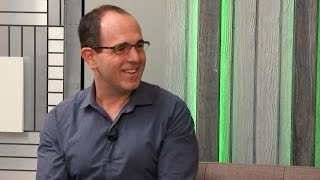
In this interview, Keith Rabois, operating executive and partner at Coastal Ventures, discusses the firm’s investment focus, partner decision‑making, and the intense involvement of partner Vinod. He argues that going public offers strategic advantages—access to capital, acquisition currency, transparency—and that successful public companies tend to have strong fundamentals, network effects, and visionary leadership. Rabois critiques recent public‑market disappointments as communication failures rather than inherent flaws of public status. He evaluates Y Combinator’s $700 million growth fund, noting its potential to disrupt late‑stage investors, and comments on AngelList’s $400 million seed‑stage fund, emphasizing that capital scarcity is less of an issue than the rarity of high‑caliber entrepreneurs. Regarding Theranos, he admits limited expertise but acknowledges deep skepticism among experts and the difficulty of separating signal from hype. Finally, he addresses the notion of a CEO leading two public companies simultaneously, suggesting that only a small elite class could manage such dual roles effectively, citing Twitter and Square as examples of thriving under such leadership.
Chapters
Hi, we are here today with the wonderful Keith Raboy, who is a long time operating executive who worked at PayPal and Square and has been a partner at Coastal Ventures for the last few years. Welcome Keith, thank you for being with us. Thank you.
Pleasure to be here.
So to start, I think a lot of people who are going to be looking at this are probably your peers or want to be your peers or just sort of venture geeks. So I thought we could maybe talk a little bit quickly about Coastal Ventures.
Sure.
How many partners are there now and how does the decision making process work?
So that's a good question. I don't remember how many partners we have. Somewhere between four and eight. We're always recruiting more. So if any of the geeks are watching and want a job, let me know. Just email me, KR@CoastalVentures. We invest in technical breakthroughs. from the very, very early stage to about a series B. We look for massive market opportunity with major impact in the world, and that's predicated on a technical breakthrough. We've been innovating and helping entrepreneurs innovate in healthcare, particularly reinvention of food and agriculture, as well as traditional enterprise software and consumer products.
When it comes down to actually making a decision, is it five votes wins if there's eight partners, or if it's.
But no, actually usually it comes down to is there one champion in the firm who's very passionate about something. So the level of conviction of one partner can lead to an investment. Obviously as the investment size increases, there's a little bit more of a process. But it really does come down to is there someone who really believes fundamentally this is a great entrepreneur chasing a great opportunity.
Okay, and I think people are also disinterested in how involved Vinod is.
Vinod's super involved. He still works probably harder than the rest of us. Many people, many entrepreneurs we work with get phone calls from him at 10pm.
Is that right?
Yeah, he works at least six days a week. So he's extremely involved in many, many, many, many companies and probably has led the most investments over the last three years, or at least one of the two most investments among our partners.
Okay. He was at Disrupt and was speaking very passionately about your portfolio, so I'm not surprised to hear that. So I thought what we could do today is talk about what's in the news. You always have a very strong view on things, which I love.
Only on some things.
Well, one thing that you've been talking about for a long time is IPOs. You've been really beating the drum saying companies go public. There's many more advantages to being a public company than a private company. But at this point, it seems like companies have less of a choice given what's happening to them once they do go public. What do you think?
I think they have a choice. They have a complete choice as long as their business fundamentals are sound and they have a real product roadmap and they're in an interesting market. People forget Netflix went public at a $450 million valuation. Amazon went public at roughly a $350 million valuation. Apple went public at a $1.4 $5 billion valuation. Google went public at $25 billion valuation. It doesn't matter what price you go public at. It matters what you're actually executing. Have you created a network effect? Do you have true fundamental innovation and serious leadership?
And so do you think the companies that have gone public, I mean, almost all of which have done poorly, just haven't had those things?
I don't think most of them have done poorly. Tesla's up 10x since they went public.
No, no, not the ones that you mentioned. Yeah, the ones more recently, those companies.
All went, you know, well, they went in one direction. They've done very well. I think that it does come down to public markets are very relatively astute evaluators of the company's prospects in the future. And usually where there's a gap, it's because the founder, CEO and CFO are not communicating why something's interesting extremely well. But not everything is worth $100 billion. There's companies that are worth a billion, which is an amazing accomplishment to build something from scratch in, let's say, seven or eight years. that's worth a billion dollars is an incredibly rare event. That doesn't mean that that company is a $10 billion company or that $10 billion company is a $100 billion company. So there's nothing wrong with being a $20 billion company, but the most innovative companies on the planet are all public companies. Ask anybody what the most innovative companies on the planet are, and the list usually is Apple, Google, Amazon, Tesla. None of those are private companies, Facebook. So with the right leadership, you can be more innovative as a public company than as a private company. So I completely don't buy that. Secondly, There's a lot of advantages of being a public company. You can acquire things with a currency that people value. The increase in transparency is excellent. If you need access to debt, the opportunities to raise capital from a debt side are much better and much broader. So most of the advantages, most of these are just advantages. I think most companies should prepare mentally, physically, emotionally to go public sooner rather than later. It's kind of a binary outcome because if you don't, then when you do need capital or you do need some of these advantages, it may be more difficult to get that. But once you pass, it's like sort of like passing an exam. Once you pass the exam, then you have the license to leverage the opportunity, however strategically most interesting for your business.
Okay. Why Combinator? Last week they announced a $700 million growth fund. VCs seem not that excited about it, especially I would imagine growth stage investors. Should they be nervous?
Well, Y Combinator has become the most important change in Silicon Valley in the last decade. I think they've created a network effect around what they do, which is incredibly rare in investing, so I'm a little bit jealous. Fortunately, we're not a growth stage investor, so we don't really have any concerns about the growth fund. But if I was a primarily late stage investor, a lot of the best late stage investments over the last decade are Y Combinator graduates. So you could see that that would be very threatening to these sources, new sources of capital, let's say hedge funds and all these private wealth individuals coming into the startup ecosystem. I think they're going to have trouble competing with highly qualified sources of capital.
I agree. Also AngelList, another sort of disrupter just not quite raised, but is going to be managing $400 million from this giant private equity firm based in China. It's exciting, but it's hard to see how you put $400 million in seed seed stage companies.
Yeah, I don't think that there is a shortage of capital for seed stage companies, particularly in the United States. More of my time and more of my expertise is around companies based in the United States and targeting the US consumer base. In that market, I just don't see difficulty raising capital for entrepreneurs with quality teams, quality ideas, quality markets. So I don't know where that money is going to go. Is it going to substitute for other money? But the shortage is really among entrepreneurial talent. the high caliber entrepreneurs are very, very, very rare. And when you find one, you definitely want to invest. And I don't know if this extra capital is going to be allocated to the right people. That's hard to tell. I mean, I was an early fan of AngelList. I was an advisor to AngelList. Actually, I highly recommended Uber place their offering, their initial seed, on AngelList, which worked out really well for everybody involved.
So I'm a big fan, but I don't know how this is going to play out. I also wanted to ask you about Theranos. You've talked about how CoSlAa is very interested in life sciences. Bill Maris had some very interesting things to say. I'm actually going to quote him because I thought it was such a spicy comment. He said, the reason that Google Answers did not invest in Theranos is we looked at it a couple of times, but there was so much hand waving, like, look over there that we couldn't figure it out. Did you have that response? I mean, did you-- I'm assuming you had a chance to look at the company?
Well, I'm not an expert in this space. My partners, Samir Kaul and Vinod actually are fairly knowledgeable. I think it's fascinating. You know, often when there's a lot of smoke, there's some fire underneath. I do, I don't have the expertise to predict, you know, how much of what they claim is true and how much is false. I definitely know that there's a lot of true experts in the field that are pretty dubious and cynical and skeptical. So it's not just the media. It's actually, if you talk to researchers, people who have been pioneering in that world, they're incredibly skeptical that it doesn't mean that's the right answer. Most experts in most fields wouldn't have predicted most innovation in most innovative companies, but it's pretty deep. There's skepticism, and they can walk you through a lot of analytics about why it's almost impossible, but almost impossible, not impossible.
Right, right. Before I let you go, Khosla owns 17% of Square. I realize you can't really talk about it very much, but theoretically, how do you feel about a CEO on a road show who is also the CEO of another publicly traded company?
Well, I think like, People forget, there's only a few, there's a small class of people that would be excellent CEOs of a publicly traded company. And in that class of people, the ability to do things that most normal people shouldn't do is probably higher, right? So it's not the random pool of individuals. We're not just picking people off the street here and saying, BCEO of this company, BCEO of that company. But of the pool of people who are amazing CEOs, could some of them navigate two companies? Probably, yes. I think there's a lot of evidence that both companies are doing really well. Twitter is clearly improving, clearly improving its product execution, its culture, and I'm sure the economic performance will continue. And Square is doing very, very well.