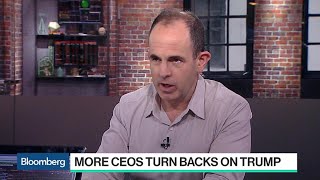
In this interview, Keith Khosla and Keith Rabois explore the intersection of corporate leadership, politics, and online speech. Khosla asks why CEOs are choosing to step back from political counsel, prompting Rabois to differentiate between partisan behavior and policy advocacy, citing the 2017 Charlottesville protests as a non‑partisan issue that split Trump’s base from mainstream Republicans. The conversation then shifts to how technology platforms should handle controversial speech, referencing specific incidents such as the Twitter @YesYourRacist account, Google’s removal of a YouTube channel, and Facebook’s deletion of related blog posts. Rabois warns that selective takedowns expose companies to liability under the DMCA, making them legally responsible for all content on their sites. When pressed about extremist material, he acknowledges constraints around incitement to violence but maintains that, absent such threats, tech firms should not act as censors. The dialogue concludes with a discussion of the James Damore case—Google’s firing of an engineer who circulated a memo suggesting biological factors behind gender gaps in tech—highlighting the tension between internal free expression and corporate policy.
What do you make of the calculation that these CEOs are making when they say, all right, I'm out. No more business counsel for me?
Well, I think, as we've talked about previously on your show, I think there's a difference between partisan and policy behavior. I don't think CEOs can engage in partisan behavior. But over the weekend, this wasn't a partisan issue. If you look at any prominent Republican, including most of the more conservative members of the Republican Party, were very explicit in denouncing the protests in Charlottesville. So this is not a partisan debate. It's basically President Trump in a very small sliver of his party versus most mainstream Republicans and conservatives.
What's your take on how tech companies should handle speech like this, like the Twitter @YesYourRacist account, Google shutting down that YouTube channel, Facebook deleting blog posts related to this topic?
I think most of the content companies, Facebook and YouTube, have to be very careful as they start deleting specific viewpoints. They run the risk of liability. under the DCMA. So once you start pulling down certain pieces of content, you're technically liable for all of the content on your site.
What if it's Nazi content?
Well, I think there's some constraints about the content, particularly inciting violence. But absent that, I think it's a very difficult place to be. I don't think most technology companies can really censor content both legally or prudently.
So you're just going to think they should? You don't think they should?
No, I don't.
Even if it's Nazi content? I don't think content should be censored. Okay. What's your take on James Damore, this Google engineer who was fired after he sent a memo that was circulated widely within the company suggesting that there are biological reasons for the underrepresentation of women in tech and women in leadership?
I think he made several points. One I agree with and one I know I'm not an expert in. I definitely agree that Google is an intellectual monoculture. Like if you surveyed Google and said what fraction of Google employees voted for Trump, what fraction of Silicon Valley Google employees voted for Trump, it would probably be 2% or 3%. So it's clearly not representative of the American people. And that's a different point than what are the roots of the sort of employee-based and engineering-based differences at Google. I am not an expert on what causes that. I'm not an expert on Google. I'm not an expert on biology. I do think that Google is taking some risk in being very draconian about some views. I think Personally, if I was running the company, I think it's ridiculous that anybody spends 10,000 words and distracts an entire company. But Google has a culture where there's been these mailing lists with off-topic topics for a very long period of time. But I think there's a general rule that people should not be able to take business time and distract 70,000 employees regardless of their views.