Making The Man: Keith Rabois Investing in PayPal, LinkedIn, Square & Maximus | Maximus Podcast
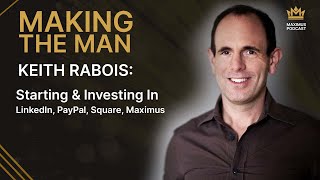
In this inaugural Maximus Podcast episode, clinical psychologist Dr. Cam Sappah interviews Silicon Valley veteran Keith Rabois. The conversation begins with Rabois’s childhood in Edison, New Jersey—where a traditional Jewish household, a voracious appetite for books, and a love of sports shaped his work ethic—and moves through his academic path (political science at Stanford, law school, clerkship, and a brief stint at Sullivan & Cromwell). He recounts the pivotal decision in early 2000 to abandon a promising legal career for the nascent internet boom, driven by peer persuasion and a belief in path‑dependency. Rabois then outlines his operator and investor résumé (PayPal, LinkedIn, Square, Opendoor, Founders Fund) and explains his investment thesis: founder‑market fit, contrarian opportunities that others overlook, and a commitment to building “cities” like Miami as the next talent magnet. Throughout, he emphasizes a relentless challenge‑oriented mindset, the positive role of stress, and a competitive yet collaborative spirit. The dialogue also explores his political conservatism, the value of reading over shallow digital content, and his strategic use of social media: he critiques Twitter’s brevity and distortion, prefers long‑form books for deep mental training, and uses short‑form platforms (Twitter, Uber‑time snippets) for shallow work and occasional insight sharing. He discusses mentorship philosophy, noting that role models often arrive serendipitously and that historical figures (e.g., Margaret Thatcher, Winston Churchill) serve as intellectual mentors, while personal mentors emerge organically. Rabois stresses truth‑telling, actively correcting misinformation online, and leveraging Substack for nuanced trade‑off discussions. He also highlights the importance of surrounding oneself with high‑performing, value‑aligned peers (the five‑person rule) and reflects on modern masculinity, linking his competitive drive, sports background, and candid communication style to broader cultural debates. The interview weaves together personal history, professional insights, and philosophical stances, offering a comprehensive portrait of Rabois’s mindset and approach to business, technology, and life.
Chapters
So I think that's where the hindsight, you know, sort of kicks in. So when people ask my advice about studying law, I'm actually fairly supportive of people who don't want to be a lawyer going to law school and maybe even quitting after their first year. Because I think you learn a lot in your first year about how to think like a lawyer, how to understand law, maybe quitting after your second year and then dropping into something that's more appealing and, you know, long-term attractive.
Welcome to the Maximus Podcast. I'm your host, Dr. Cam Sappah. As a clinical psychologist and medical school professor as CEO, I specialize in helping men be better in mind, body, and masculinity. On this podcast, I interview extraordinary men as a clinician would, hearing their come up stories of how they became the men that they are today, and having them share their secrets of actionable advice on how to look, feel, and perform your best. All right, welcome everyone to the Maximus podcast, and I'm really, really excited here in this inaugural episode to have legendary operator and investor Keith Rabois on our podcast. Thank you so much for joining us, Keith.
It's a pleasure to be with you.
Awesome. So for those of you who don't know, well, certainly if you're involved in the tech community, I think everyone knows Keith, but I'll do a quick biography anyway. Keith is a legendary operator, was involved in founding LinkedIn, PayPal, Slide, Square as an executive and Opendoor, and also has been an angel investor in VC at Coastal Ventures and now at Founders Fund. So definitely a man whose reputation precedes him and also is the lead investor in Maximus. So I figured we start off with a total warm up question, which is, I obviously enjoyed pitching you and was impressed by how quickly you were able to come to conviction. Now, you obviously have the opportunity to invest in, you probably see thousands of pitches a year. I just love to hear actually maybe a little bit of a retrospective in terms of why you decided to invest in Maximus.
Sure. So yeah, we're thrilled that founders fund to be investors in Maximus. I think there's a couple of key elements that we found extremely attractive. First, founder market fit. So obviously you have a lot of expertise in the area. You're not just the CEO, you're a customer to use the Meds Warehouse. tagline. And that was quite important. We think there's the right founder for every opportunity and you clearly fit that perfect bill here. Secondly, there's a contrary nature to the investment. We like to find investments that other people don't appreciate or won't immediately grok. I sometimes joke about, I want half my friends to laugh at the investment. And I think most people don't understand how there's been a significant decline over 40, 50, 60 years. in testosterone and all the implications in society and then the negative implications in society. And so I felt like the current monoculture in Silicon Valley, most investors would not understand, appreciate, and really dial into this. So we found, why do we have a comparative advantage? And then third of all, obviously we've met before and you had, you'd pitched us back in my co-founder days. And so I think pre-existing history with founders, particularly in a Zoom-based remote model is also a benefit.
Yeah.
Yeah, I have very few regrets in life, but actually not joining Khosla to work with you is probably one of them. But I'm glad I was able to make it up and now work with you at Founders Fund. So it all goes full circle and it's very much a privilege to be able to do so. And so thank you for both joining us here and obviously being an ally in what we're building. So, you know, I wanted to do something different actually for this podcast. There's so many startup and tech podcasts, which I enjoy very much, and you've been on many. But, you know, given sort of the focus on, you know, masculinity at Maximus, we're basically doing two segments. And the first segment is a little bit more about making the man. Because I think, you know, so much of Silicon Valley our success stories, right? Where you see someone at the end of their success, but we don't really understand how they got there. So I know you've kind of gone through your kind of professional biography, your resume, whenever you do these sort of podcasts, but I actually like to go way, way back and learn a little bit about sort of like what made Keith kind of growing up. So I'd love to just start there and hear a little bit just about whatever you're comfortable talking about. What was your experience growing up and kind of what captured your curiosity as a kid?
So I was born and raised in Edison, New Jersey. Really escaped to California to attend Stanford. So basically was confused about Northern California or Southern California and sort of expected beaches and sun and swimsuits and it got into Northern California, but wound up being seduced, stayed in Stanford, Stayed at Stanford for a while, met a lot of really interesting, fascinating people, studied political science, which is probably counterintuitive to many people who know me mostly as a technology entrepreneur investor. Then went to law school and again, maybe a little bit too credentialist growing up, a little bit too traditional, conservative with a lowercase c, and then sort of did the classic pre-law trajectory, law school, clerking, white collar, typical Wall Street law firm. And then in 2000, at the height of the internet bubble, kind of hit escape and really Eject Button got totally off the legal crusade, jumped into technology startups in a hurry. But what it really taught me growing up was as a voracious reader, fiction and nonfiction. I played a lot of sports and spent a lot of my time baseball, soccer, basketball, pretty much some football, pretty much everything I could do, tennis. That was, you know, a lot of my free time was allocated to sports, watching sports, as a fanatical Yankees fan, growing up, Rangers fan, Knicks fan. So pretty much pursued all the athletic activities I could, all the reading activities I could, in a fair amount of extracurricular activities. I was a pretty busy kid. My schedule wasn't very flexible. I would be running clubs, intermural activities, playing sports, and occasionally studying.
Right.
Was that kind of intrinsically driven? Was it kind of parents or kind of peer influence that kind of pushed that?
I mean, it's primarily intrinsically driven, but I would say I was raised in a kind of traditional Jewish household where parents weren't very forgiving of not being a successful student.
Right.
So there's a lot of attention to my report cards and like metrics like that. I remember coming home one time with like an A- on a midterm and my mom was curious why I only received an A- and my first retort was like many children, well everybody got an A- and my mom responded, well everybody is not my son. And so that probably highlights a little bit of the culture, but it's very traditional for a Jewish family. So yeah, we were always encouraged to succeed academically, to chase interests. I had a little quirk was my parents gave me sort of an unlimited budget for books. I had a very strict budget on every other discretionary purchase, but I sort of had unlimited budget to buy books.
That's amazing. You're actually the second person I've heard that kind of growing up. And I feel like this is now going to become the Silicon Valley Parenting tip du jour, because if they achieve your level of success, they're probably doing something right.
There's a lot of worse things kids can spend money on. And buying books is probably a fairly healthy activity.
Totally, absolutely. Speaking of which, I heard that you had an incredible hobby of reaping your world view you know, growing up prior to becoming an adult.
Great question. So there are some books I've read that inspired me to become a lawyer, and that was, you know, sort of professional aspiration. There's a book I read by one of my sports sort of idols, Pat Riley, called the Winner Within, which he wrote sort of a autobiography of like the first generation of his career that I read in high school, which is very inspirational for me. And there's one specific passage in there that has really clarified my professional goals and identity. And then I believe, trying to think of other specific books that really resonated with me, there's some political books. You know, I'm a conservative and so I would read about as much as I could voraciously about Margaret Thatcher particularly a little bit, grew up in the kind of Reagan era, lived through it, but really was inspired to read about the history of British politics her place in it and how unique and how important she was in British history. So I think the combination there was probably the melting, sort of the blend that led to many of my views. I read some Thomas Soul, Vision of the Anointed is still one of my favorite books. I highly recommend it. People were trying to understand the conservative perspective on life, even 30, 40, 50 years later. It's still incredibly influential and important.
Do you think liberals should actually read some of these conservative works and how do you think it would help them?
Well, I think it would help them first understand conservatives. Obviously, there's plus or minus, you know, 40% of the country is conservative and plus or minus 40% of the country is liberal. I think it's very difficult to be conservative and not have to encounter liberals. They dominate the media, they dominate Twitter. They dominate almost every city in the United States, urban city. So I think, you know, this is the first time living in Miami. I believe it's the first time in my life at 50 something years old, where I've actually lived with a Republican mayor. So that's just an incredibly unique experience. So it feels strange actually. But so I think it would be good for liberals to experience conservative thought to really understand it. And, you know, in some cases, they may actually read some ideas and arguments and data that they've never heard before, and they may change their minds, you know, develop different perspectives. some issues and topics.
Totally. And I think if there's any time in society where that's needed, it's definitely now. I'm kind of curious in some of the books that you mentioned, whether it's Pat Reilly or Margaret Thatcher or Thomas Sowell, are there particular traits or characteristics about those people that made you look up to them from kind of an early age?
Yeah, the number one trait in common actually is work ethic. so if you think about Pat Riley, who's famous as a blue collar kind of player, he wasn't the most talented player in the NBA. He actually did fairly well as a player and then was a somewhat surprising choice, actually, as to become coach of the Lakers, which is really his first, you know, head coaching job. He moved in transitions to being actually a TV commentator. So he was broadcasting games and had the opportunity to join the Lakers. And I think it was his preparation and work ethic that really made him successful as well as later over time, his ability to manage and blend with stars, which is really important in coaching. But fundamentally, his workout that same thing, Margaret Thatcher, she really was, you know, the famous for a real, she was a daughter of a grocer, blah, blah, blah. Studied chemistry and law, graduated like something like first in her class, led the Oxford debating society all through brute force. She came from a very middle class background and reached the upper echelons of British society, which was still very class and hierarchical when she assumed power as the first female prime minister. There's a lot of resentment because mostly not more of her resentment was out of a class bias than maybe out of being a female bias, but she had to overcome all that just through brute force of her own effort and initiative. And that's something that's always resonated with me, people who create their own success by pure effort.
Right.
Do you think, from your own personal experience, it seems like a lot of these folks, even from a very early age, they had that work ethic, right? In terms of at least wanting to become something, overcome something, et cetera. Do you think it's just innate or it can be taught or instilled?
I think it develops at a fairly early age. I'm not sure whether it's innate or instilled. or some combination, most likely. But I think it is pretty durable to people who tend to have a strong work ethic growing up, tend to persist that way professionally, and that tends to yield success and creates a positive feedback loop. I think it's very hard to shift it later in life, although you can shift it a bit. So, for example, academics in my world were very easy when I was in like elementary school, high school, I didn't have to work very hard to achieve Even in college, I was pleasantly surprised to find out I didn't have to work that hard to achieve pretty good grades. I enjoyed the sun at Stanford and being outdoors. But when I got to law school, I actually had to work significantly harder. And then when I became actually an attorney, I really had to work hard to keep up with my peers, with my competitors. And so that's really when I learned that there's no such thing as being smart enough. You actually have to work people too at the same time. That was fairly late in life. That was, you know, let's call it early 20s.
Yeah, I think a lot of people, particularly I think if they're smart or high IQ, so to speak, you know, they can coast a little bit, especially, you know, growing up. And then you kind of find yourself in the right social circle of your peers where quite frankly, you're average because everyone's in the top 1% and then you're like, oh, okay, now I got to work hard. I'm actually interested also in the opposite, where, you know, fortunately, a lot of folks in Silicon Valley, including yourself, have achieved quite a bit of level of success. One would imagine that after achieving a certain level of success, that the work ethic may die off because, quite frankly, like you set out to achieve everything that you could achieve theoretically. Obviously, that's not the case for you because, you know, you've done well, but you work from my perspective, just as hard as basically anyone I know in Silicon Valley in terms of the number of investments you make, the number of boards that you sit on, even how involved you are with us, we meet monthly, even though we don't have to. So yeah, tell me what continues to drive you even though you could be sitting on the beach in Miami every day if you wanted to.
I think challenges are what propel me, like basically stressing yourself. challenge yourself to do something new, different, more difficult. It's like developing muscles actually at the end of the day. And if you don't develop muscles, you regress. And so I'm always looking, I actually, you know, for many years, probably since high school, I think if you pull up my high school yearbook, it probably says something like challenges propel me. So I've sort of always believed that, that you want to constantly challenge yourself. So for example, when I play sports, I tend to like to play with people better than me, like basketball, tennis, people taller, you know, sort of by definition challenges yourself. Um, when I work out or play soccer, it's typically with people about half my age. Um, and I try to, you know, out compete them, and, you know, force myself, so you can do that athletically, but professionally it's the same thing. I want to be sharper, better than I was a decade ago. You know, I've recently been crazy enough to take on the challenge of, building a company became too easy, uh, to success. So we're building a city now. One of my most successful, ambitious friends said, well, after the city, you got to build a country. I'm like, well, give me a jacket and a one-step-at-a-time. Yeah, yeah. I was like, okay, okay, I get it, but I'm not really ready for the country thing. But I think that, you know, I'm looking forward to the challenge of building a city. You know, when I first announced we were moving to Miami, I think a lot of people thought I was A, crazy, B, like, you know, think of this as a pseudo retirement. And I was like, no, we're doubling down on this. We're going to make this more successful than anything I've done before, more successful in terms of generating returns for my fund, more successful in terms of impact in society. So I think we've just raised a whole new level of how do we really recreate the magnet for talent that for the last 30, 40 years, Silicon Valley has really been a magnet for talent. How do we recreate that elsewhere and make itself self-sustaining.
Absolutely.
Yeah.
You know, it's interesting when you're speaking earlier, you mentioned all the sports that you did. And I think it's actually something that's less mentioned in sort of, you know, biographies or anecdotes about you. One of the things that I've noticed, especially working with incredibly successful people, is a sense of competitiveness. And it's very topical right now, too, because with all the stuff about toxic masculinity going on, If I recall correctly, I think the APA, American Psychological Association, was kind of a positing competitiveness as a negative trait of sort of masculinity. But I'm curious, do you see yourself as a competitive person and when you work with, you know, founders or make investment decisions, is that something that you're looking for in the people that you work with?
Well, I am very competitive. One of the most successful professional people I've ever worked with recently described me to my significant other husband as the most perfectionist and competitive person he's ever met. So I won't name him because I don't know if he intended that to be public, but in any event, I'm fairly competitive. But I think competition leads you to stress yourself. The benefits of competition are not necessarily winning and losing. It's forcing yourself to be as good as possible. So I compete, for example, with my friends on the best two-minute heart rate recovery, which is a sign of health. But it's challenging myself to be in as fit as humanly possible and to do the activities like sleep well eight hours a day, you know, eat right that allow you, enable you to outperform basically people who are roughly half your age. So I think I look at it as like, how do, how do I use the challenge to compel myself to be a better person in, in any dimension? So on the professional side, the same thing. I don't really compete in the sense of I want to invest just because I can win the opportunity to lead an investment. I actually prefer to invest in things that other people don't want to invest in, actually. I actually think I want to compete by investing in things that other people will laugh at and ridicule, and then later realize are interesting and maybe even successful. But I think the competitive dynamic of being the founder's first choice, the kind of dynamic of being their preferred board member, the first person they call when they have something that's going right or wrong, like being the first person they text message, iMessage, that kind of competition I think is incredibly healthy actually.
Totally, yeah. You know, it's interesting, I don't know if you got a chance to watch the Last Dance documentary about Michael Jordan. It was probably one of the most Competitive people on earth and obviously, in my opinion, the greatest basketball player of all time. I think a lot of people would share that opinion. You'd see some of the downsides of competitiveness, right? Like he was hyper competitive about everything, whether it's pool or golf or any basically a game that you could play. Do you feel like there is a potential downside to being too competitive or if there is, how do you mitigate or manage that?
I think, first of all, being able to laugh at yourself is important. You're not going to be the best at everything in the world. So I'm clearly not going to be the best soccer player in the world, but challenging myself to be competitive forces me to be better. I do, though, see a downside to my own activities, which is really amusing. There are activities that some of my friends engage in that I won't start because I know if I started them, I'd want to beat them, and that would be like a 10,000 hour journey. So, for example, I refuse to play chess. Many of my best friends are very proficient chess players. I never play a game of chess ever because if I start, then I'm going to need to beat them, which means I'm going to spend 10,000 hours trying to become good at chess. I really don't have the time to allocate 10,000 hours to chess at this point in my life. So there is a little bit of that downside. I don't love to play board games. Like sometimes, you know, you're hanging out at a house with friends, they play board games. I tend to, not 100% of the time, but tend to eschew those because if I started playing the board games, I'd want to like develop expertise at them and I really don't have the time and energy to allocate to that. So I kind of basically say I won't play. Um, so there are like, you know.
These quirks that develop when you're that competitive. Totally. Well, I think that's actually like a useful point. It's like not just, don't be just competitive about everything, but if you, you should be selective about the things that you do. Uh, because if you want to be good at the things that you do, then, yeah, be, be picky. so I think that's an insightful point. It's interesting, I think so much of people's personal development is not only sort of like where they grew up, especially I think between the ages of 18 and 22. There's such a debate on Twitter about the utility of college these days, which I think there are merits to both sides, but I think the thing that's underappreciated is it's such an interesting developmental period because it's just the crux at which you're kind of being fully formed as an adult. you're literally finishing your physiological growth and I would say your psychological development as well. And so I want to kind of go back a little bit to the formative years at Stanford before you went to law school. And I think even at that time, you had a little bit of notoriety or fame about exercising your right to free speech, exposing issues associated with political correctness, which were almost prescient. because now they're at the forefront, I think, of public discourse. So I'm kind of curious, like, what got you interested in those sort of issues and how did that influence the way that you see things today?
The most important thing that I learned at Stanford was which was in a battle of political correctness in the early 90s, basically the first generation of weird academic views sort of taking over the university and stamping out traditional knowledge, education, curriculum. It was really basically going on in a fierce battle when I arrived at Stanford. And so I kind of watched and saw the traditional curriculum, the best works of all time being eviscerated politically. It was kind of frustrated by that, but fundamentally what it taught me is I had to learn to think for myself because I knew all the stuff that was being propagated really in local media, Stanford Daily, by the professors and these protests, etc. was wrong. But I didn't really know all the right answers. So I had to study myself. I had to go learn, read my own materials. Even political science, which was my major, all the professors I ever subscribed to, to classes from at Stanford but one in four years were Democrats and liberals. And yet, when I would take my exams and there'd be topics on the exams, I would refuse to just write a politically correct answer. So I had to develop these arguments myself from scratch and really frame them in a compelling way to earn the respect of the professors and the TAs and your achieved grades that I had the ambition to achieve. And I think that made me sharper, smarter, faster. and which I think applies to everything. I learned how to basically think from first principles for myself, how to marshal evidence, how to go research and find the evidence that I needed to create these compelling arguments. So, for example, I remember my first, one of my earlier political science classes, the final exam, one of the two final exam questions was assess Ronald Reagan's strategy of containment against communism. And this is before, actually, this is before the Berlin Wall fell. And all the class was about how how threatening and evil the Reagan administration was and how it's putting the US in the precipice of war, blah, blah, blah, bellicose, blah, blah, blah. And I remember the first sentence of my essay was Ronald Reagan's strategy of containment is one of unparalleled vigor and brilliance, period. And then developed the rest of the essay. I wound up getting an A plus in the class, so I must have.
Done a decent job. But none of the reading really supported that. Interesting.
Yeah.
Yeah, it's kind of fascinating. You know, and you were a political science major, so obviously you had a, you know, an avid interest in politics. I'm kind of curious what your perspective is on sort of political engagement, because I almost feel like in these very extremist times, people are either incredibly politically active or they're the opposite, where they're like, you know, I'm just in Silicon Valley. I'm trying to grow my company. I want to stay away from politics altogether. Do you actually think people should have a level of political engagement, civic engagement, even for their own personal development?
Oh, absolutely. I think everybody has some interest in politics. They just don't reflect that. They don't respond to the word politics. So almost everybody has some topic or two that they care a lot about. For some people, it's immigration. For some people, it's taxes. For some people, it's abortion. For some people, it's the Middle East or policy vis-à-vis Israel or China. And so I think the key to attracting people's interest is not to use a generic label, but decompose it into specific topics. And then people will, or it could be the local school curriculum, or these days it could be should schools be open or closed due to COVID? So there's topics that resonate with specific people. And I think the key is to find the magnet that attracts this specific person's interest, but everybody has an interest or two. And then they develop like the skills, the interests, the reading habits, the voting habits that allow them to, you know, apply that to other areas of interest. So, for example, when I was growing up young, as a youth in high school, the first area that intrigued me about politics was foreign policy, actually, not domestic policy. And I got really intrigued in, in involved in learning more about foreign policies and the debates, and then later learned to graduate on to domestic policy. And if someone had told me that I had to start with domestic policy when I was in high school, I kind of found that worrying, not interesting, and I might have totally tuned it out. It's a little bit like teaching math. You have to really find a way to attract people's interest. Then once you develop that skill, then it maybe broadens into self-fulfilling prophecy where you really are engaging in all kinds of interesting topics.
Yeah.
And I think that's very salient advice in terms of finding the topics or the areas that people are interested in rather than politics. as a whole in terms of just reading the Washington Post every day. I actually feel that very much applies to me in terms of my political interests. I think because I always grew up being interested in studying science and being relatively apolitical, actually. I was like, oh, it's not a great use of my time. It was only, I think, really until the American Psychological Association, which is the entity, in fact, that approves our internship and residency see programs as psychologists, you know, came out against sort of their view of masculinity, which I thought was like both incredibly unscientific and harmful, quite frankly, to society. That I was just like, oh man, like I'm not political, quote unquote, to, you know, in terms of the phrase. But I was like, this is a, it's very antithetical to my views in terms of you should separate science from politics. And it was very clear to me that a scientific, supposedly scientific organization was becoming political and issuing sort of guidelines and recommendations for, you know, how we do these. And, you know, in a lot of ways, it almost paralleled a similar thing that I saw in sort of the academic, you know, nutrition industry. You know, I spent years working at Omada Health, you know, developing their nutrition curriculum and seeing how much, you know, a lot of these organizations were issuing nutrition guidelines that had no basis in science or reality, right? it's like eat a quarter of your plane of grains or, you know, cereal should be the bulk of your diet. Things that were, quite frankly, you know, influenced by lobbying and a lot of other issues. And it became interesting to me of how much sort of politics influences science for better and for worse, quite frankly. And I feel like even if you want to be, you know, an objective scientist, you can't help but be political in order to keep fields objective?
Yeah, I mean, if anything, the nutritional guidance issued by the government of the United States has led to an obesity crisis and a whole bunch of derivative consequences. So the government couldn't be more on the wrong side of history and all these organizations that were allegedly reflecting science were actually destroying people's lives.
Totally. So I guess that's a great, great admonition to our viewers is find something, some issue that you're passionate about and focus on that. you don't have to be marching in protest all the time if that doesn't appeal to you. So kind of, as you were kind of graduating or becoming sort of a senior at Stanford, I'm sure you had many opportunities as most folks graduating from Stanford or other good schools do. Tell me a little bit about your decision to go to law school and become a lawyer. And I'm also particularly curious because you obviously didn't pursue that long term. If you have any regrets about going down that path.
Well, I mean, I wanted to be a lawyer since I was in sixth grade.
Oh, wow.
So, you know, it was kind of a career ambition that was pretty set in stone for a lot of reasons. I remember as an illustration of this is I forgot what I did to get in trouble with my parents, but I did something stupid and got in trouble with my parents. And so they suspended me for watching TV for the, you know, evening.
Right.
And so at midnight, literally at midnight, Professional wrestling, which was one of my hobbies watching it growing up. Amazing. Turned out, was on in the local, like WWOR station at midnight. So at 12:01, I turned it on and my dad walks into my bedroom. He's like, what the hell is going on here? I'm like, well, it's past midnight. So I think they agreed that I should be a lawyer at that point as well. I love it. So I was definitely committed to being a lawyer from then on. When I went to Stanford, you know, I optimized my curriculum. Political science is a pretty quintessential pre-law sort of topic subject matter. And I optimized my GPA, you know, engaged in certain activities designed to make, you know, law school application more compelling. To the ALSA, went to law school. I actually enjoyed, for the most part, law school clerked for a well-known federal public court judge at this circuit, which is in Texas. and then practiced law for three and a half years at the quintessential Wall Street law firm of Sullivan & Cromwell. And so I spent basically all my 20s either preparing for law school, in law school, or practicing law, which is a significant part of your life and component of your life. If I had known with complete hindsight that I'd be doing what I did in my 30s, 40s, et cetera, I probably would have edited that. Although there are some benefits of having attended law school that I've actually been able to leverage my professional career as an executive, entrepreneur, and investor, but allocating a decade or so to that was probably a mistake.
It's interesting. I read a quote the other day. It was saying, when you get to the top of the mountain, don't knock the path that got you there. Basically, I think hindsight is always 2020, but it is useful. I think we were meeting the other day and I was asking you questions about how to think about liability. So at least I would argue legal thinking is still sort of a useful framework. Absolutely.
Legal thinking is incredibly compelling across many fields. I mean, American Society for the last 40 years has become more infused with law and regulation. So the skill and understanding law and regulation, what's science, what's art, what's manipulable, what's not asking the right questions, is incredibly valuable. That said, there's diminishing marginal returns. So I think I could have been as effective or close to as effective with two to four years committed to law versus closer to 10. So I think that's where the hindsight, you know, sort of kicks in. So when people ask my advice about studying law, I'm actually fairly supportive of people who don't want to be a lawyer going to law school and maybe even quitting after their first year. Because I think you learn a lot in your first year about how to think like a lawyer, how to understand law, maybe quitting after your second year and then dropping into something that's more appealing long-term attractive.
Totally. Yeah. Well, coming from the Stanford of the East, Harvard, our two most successful alumni, Bill Gates and Zuckerberg, are both dropouts. So it seems to be the path of choice for people who become ultra successful. So you mentioned kind of working as a lawyer for three and a half years. And then tell me about that transition point, because I think this is the really interesting thing and it's something I experienced too as also a career transitioner. What was it that, you know, you had a cush job at a, well, I shouldn't say cush, you certainly had a lot of bill.
It was definitely not a cush job. I built through, I literally built, I literally built. Yeah, very prestigious. Compensation is pretty good, but I literally built 360 hours in January of 2000. So that's built, not worked. Worked is higher. So now this is really the cushiest job ever. But in any event, and maybe there was some connection between building 360 hours and quitting in February to jump into a high-growth startup. But basically what happened was for years, many of my friends from Stanford had tried to persuade me to leave law and come back to Silicon Valley because the internet bubble was real. The internet was exploding from 1996 to 2000 when I was practicing law. And many people correctly realized that this was a once-iN-A-Lifetime opportunity. They really did describe it as this cold rush like Venice and that I was missing out and that more importantly, I'd probably enjoy it better than practicing law. Actually, I did like practicing law. I love my clients. I like much of the work, not all of the work, but a lot of the work, which is why I kept hesitating. And but everyone, every once or twice a year on average, I would come visit Silicon Valley, stay with my friends, including some who have been very successful technology and are still partners and colleagues in many of my projects. Kevin Hart's Jeff Donahue were the ones who really were most influential, two of the three most influential in convincing me eventually to quit law. So eventually one of my friends who had been very successful in the first generation of the internet convinced me to join a startup and that was February 2000. So the advice and counsel I got from Kevin and Jeff Donahue and another friend of mine, a very close friend of mine from college who had been the 22nd employee at Yahoo, she also was really enthusiastic about me leaving a line, joining the internet revolution. The three of them really convinced me and persuaded me. So the advice I got was very compelling. The timing couldn't have been worse. So for those of you who don't know, the NASDAQ collapsed on March 28. So I basically quit my prestigious, well-paying, lockstep, meritocratic progression in law to jump into this crazy world that I knew nothing about. Your mom was six weeks before the entire NASDAQ collapsed. And so, you know, that was a little that was a little unique, but it turns out the advice was right that I would enjoy it, that I'd be probably proficient at it, that maybe it'd be a better long-term fit for my aspirations. But it wasn't so obvious right away.
Oh, for sure. And I've heard you talk about decision making several times before. So I'm curious with that decision, obviously you had a lot of logical data. There's a famous clip of Jeff Bezos talking about how when he was working in New York hedge funds that he saw the rate of internet growth was like 23,000% and that inspired him to go obviously start Amazon. Was it more of an analytical decision to you or where does intuition play a role in terms of your decision making?
It's a very good question. completely convinced and empirical decision making. I think a lot of life is committing to a path and then path dependency kicking in. What I mean by path dependency, and you can Google it or Wikipedia to get a feel for what it actually means technically, but just by deciding to do X, you increase the probabilities of getting to X. So I'm a strong believer in I want to do X. Okay, there's no stuck in choice, there's no hedge, there's no option value, I am going to make this work. And then the question is, well, how do I make this work? What are the blockers? What are the things I need to solve? What are the limiting steps? And then decomposing those with tactics and initiatives designed to succeed. So I think to some extent there's an emotional decision that you're making of like this net-net feels like the right thing to do. I'm going to do it. And now how do I make this work? And then that's sort of what we did with the move to Miami. We sort of said, we're committing. We didn't hedge. We said, we're moving, literally bought a house, closed on the house and moved in the same day and said, okay, now how do we make, we knew we would enjoy Miami from a lifestyle perspective. That was like a no brainer. But to make it professionally successful for me, there was some, you know, key ingredients like we as investors are derivative. So we only can propel ideas forward that founders approach us with, and therefore we need to find founders and entrepreneurs and we ensure the founders assemble and marshal the right team. And so there's a lot of moving pieces to this. So then it was like, okay, now that I'm committed to moving to Miami, what are the ingredients to success over the next three to 10 years? And then how do we create momentum around those? And then that's what I've been doing since. So I think everything is like that in life. You decide where you want to go and then figure out what's in the way of success and then solve that.
Yeah.
And then rinse and repeat sort of.
Yeah.
It reminds me of the old adage about Cortez sort of burning his ships at the shore, which is the stuff of Silicon Valley legend, which I think makes a lot of sense, right? Invention is sort of the necessity is the mother of invention, as they say. So if you have to make it, work, then you probably will. How do you sort of manage your stress though, when it's like that and you feel like there is no going back, there is no hedge, there is no plan B?
I think it's actually pretty easy. So I think the stress is upfront, meaning should I do axe? Once you decide, I think it's actually really easy to sleep at night and then just fire away forward, propel yourself forward, make progress every day. hopefully their progress starts compounding. I also believe stress is a good thing generally. Like one of my favorite books of all time is called the Upside of Stress written by a Stanford professor, Kelly McGonigal. Highly recommend it. The basic arc of the book is that the more stress you have in your life, the healthier you'll be, the wealthier you'll be, the longer you'll live. And she has marshaled incredible evidence on all of these dimensions and it will change your life if you haven't read it yet. so I'm a fan of Strauss. That said, I think I do have, like anybody else, sleepless moments, and I'm trying to choose between Abe and me. And so I think the key is deciding, and then I can sleep at night. There's kind of an old Harry Truman quote that I remember reading in college, which is somewhere a journalist asked Harry Truman if he ever regretted dropping the nuclear bomb on Hiroshima. And he said, no, what good would it do?
Right.
And I think there's some truth to that of like once you've made a decision, overthinking it, that if it can't be reversed, there are some decisions you can reverse and those are different. But the decisions that can't be reversed, there's no reason to lose sleep over.
I love that. There's almost like a peace in permanency sometimes. And I've definitely seen that as well, you know, in a lot of whatever Harvard, Stanford, friends, I think the downside is as Barry Schwartz calls it the paradox of choice. You can literally do anything. And that's problematic because you have a bunch of friends who did do many other things and there's always the second guessing of yourself. So sometimes commitment to a certain path or person, quite frankly, I think can help quell that to some degree. And I definitely agree with your point about you stress or sort of positive stress. You know, we talk about this a lot in psychology. There's so much of a focus on focus on distress or the negative sides of stress. But I think as long as it's recovered and it's not chronic, it can certainly be helpful in terms of- well.
I think it's converting the key lesson and insight is to convert stress into a challenge and embrace the challenge. This is an opportunity to challenge myself.
Right. Yeah.
And I think that's finding the positive interpretation or meaning from it, right? Where if you see it as a threat, Absolutely. It sort of activates the fight or flight versus a challenge. It's like, great, it's an opportunity. It'll make me better. So, I think that attitude is...
I mean, you see this in performance athletes or actors or musicians. Many of the best performance athletes of all time, musicians, etc. get extremely nervous before going on stage. Sometimes even throwing up in the locker room famously, like Will Chamberlain used to notoriously or no, not will. I'm actually even better. Bill Russell used to do it seriously throughout playoff games, which he won basically all of his playoff games in his entire career. But the point was he was challenging himself so much, his body was reacting, but it was a positive challenge.
Right.
It was like the body's basically getting ready and prepared for the challenge to see how good he could be. Right.
Yeah.
I used to run track competitively, and I would Unfortunately, they're up after the track meets, but I think my body would knew that it's like I couldn't run a race and not give it at my 100%. And so the whole day I would like not have an appetite because my body is like, all right, this is the challenge that, that, we have to face. So that was, yeah, interesting lesson learned.
Um, for me, it's like giving a speech. For me, it's like giving a speech, an important audience, an important topic, a complicated topic. I still get nervous for if I'm just giving, you know, presentation that I've given before.
Yeah.
I don't feel that challenge. And then therefore, my body doesn't get nervous. But when I'm really in front of people that are impressive and I want to make a unique argument, my body absolutely gets nervous. And that shows that I'm challenging myself in terms of my thinking, my ability.
To communicate succinctly, powerfully, Etc. Yeah, absolutely. One of the things that I wanted to ask you about, you're obviously well known for being a And a true contrarian, I would argue, not a faux contrarian, like everyone I think many people are trying to be, but maybe it's a compliment. I think they're trying to follow in your footsteps. Tell me, like, where do you think that that kind of comes from? Was it was there was there part of your sort of trajectory growing up that kind of, you know, made you almost like lean into that way of thinking or that persona or is that just like your personality, I would say?
Well, so first of all, I think I've had the term contrarian on my Twitter bio since 2008 or so. So I think this before became kind of cool or trendy. I've thought about removing it only because it's kind of become like a buzzword. But it really hasn't been edited, I believe, since I first opened my Twitter account. So in any event, I think where I initially developed it was really a reaction to my parents. So my parents may surprise people. quite liberal, very anti-Nixon, very good government types, like kind of high, like executive types that common cause and helped like the 1960s kind of generation emerge into the 70s. And I kind of grew up as a conservative is kind of like, if you ever seen this TV show, Family Ties, I was like the Alex Keaton. So I think growing up as Alex Keaton in a liberal household sort of made me like a contrarian. And then at Stanford being surrounded by like 95% classrooms who were liberal and leftist, and most students who were sort of amplified that it sort of stayed with me.
Makes sense. I'm kind of curious, why aren't you afraid of speaking your mind, even if it means losing business or losing a deal?
Well, I think the best people really want candid feedback in life. So, you know, if I think there's a positive selection bias to the people who want beyond variance truth, and that's what they're sort of paying me for one way or the other as a board member, et cetera, is they want someone who's going to help them succeed. And in sports, you want a coach who's going to help tune your game, improve, point out weaknesses, and same thing is true in business. So the people who really want the best possible consigliari are going to choose to work with the best possible people.
Yeah, absolutely. And it's one of the things I've noticed, it's sort of truth tellers are sort of rare in modern society. Maybe it's because everything has a much more permanent stamp. You live forever on the internet in terms of what you say. So I think it's made a lot of people conservative, not in the political term, but just hesitant, I should say.
Hesitant, but I think the same thing's true of friends. I think you want friends who are gonna give you honest and candid feedback. That's what makes you better. And so you can have superficial friends who just smile, but they know you're doing something that's not ideal. And I'd rather have friends who correct or challenge me.
I was actually going to ask you that exact question. It's like, would you prefer, and is this a reflection of your friend group to surround yourself with people who also have strong inclinations, even if they contradict your own? Do you have a bunch of liberal friends or people who have opposing points of view?
I'd say more of my friends are liberal than conservative by a reasonable fraction. Some of them are very strong-willed and very strongly opinionated. You can follow Delian on Twitter if you want to see some. He's on the wrong side of history on this Miami thing, but you can see us debate it. Yes, absolutely. My husband grew up as a Hillary Clinton supporter, which was a very amusing first date. He was convinced that Hillary was the greatest thing ever, and I was sitting internally trying not starting hard to not to laugh too hard. She's one of my least favorite people in political life. Yes, absolutely. I have many, many friends, close partners, et cetera, who have different views in life.
Yeah.
What's your advice for people in terms of how to manage that? Because there is some sensibility in terms of like, okay, especially close intimate relationships, you may want to find people who are aligned with your values. But on the other hand, that may exclude, you know, half the country, right? So how do you manage that when you, whether it's a close intimate relationship, business relationship, et cetera, when you have someone that, I don't know, maybe antithetical to your values, but has obviously other redeeming qualities?
Well, I think the values alignment is pretty important. So I think with my friends, my friends actually, and husband have very similar values actually. I think it was very striking one of my recent birthdays of how consistent the values were across this sort of the table. But the application of the values can differ, right? So people may think the best way to apply certain values is by voting for a Democrat or a Republican or whatever the case is or a certain policy. And that actually makes conversation interesting because what you're actually debating is what are you trying to achieve? Why? What's the best way to achieve it? What's the evidence for that? And you can have very interesting, arresting conversations. So for example, my husband and I happen to agree very strongly on China. So he votes Democrat, I'm typically voted Republican. We both think that China is a significant threat to the free world, to the United States, and that most of American politicians haven't treated it seriously enough over the last 30 years and made a lot of mistakes. that are sort of coming home to roost right now. And it's a very dangerous situation. So we both come at it from somewhat different perspectives, but reach the exact same conclusion.
Yeah, I think that's such actually an insightful point in terms of maybe that's the way that people can increase their sort of empathy and understanding is before you talk about the particular issue and your stance on it, what's your value behind what you're trying to achieve, right? I feel that way about healthcare. I'm obviously biased because I'm a healthcare professional. And so, like, you know, one of my political stances is increasing access to quality healthcare is good for society. But I totally understand the other side, right, in terms of like being for or against universal healthcare, right? I've worked at three government-run VA hospitals, and I see the pros and the cons, quite frankly, of government-administered healthcare. So I understand if, you know, people have opposing views because they think that's maybe not the best way. of making healthcare accessible. But if you generally think, okay, having a healthy society is a good thing as a first principle, we can debate about what the best means is to achieving that.
Yeah, so for example, most of the people I spend time with reflect things and priorities that are important to me. There is a study that validates what people probably do for common sense for centuries, which is you basically are the average of the five people you spend the most time with.
Yeah.
So I therefore tend to choose people to spend time with to invest in that reflect the things that are important to me, which is like health, like habits that drive, that produce healthy characteristics like sleeping well, eating well, exercising. There's almost no one in my life that doesn't reflect those principles. Same thing, I'm a voracious reader. There's almost nobody in my life who's not a voracious reader, etc.
I was actually going to ask you a question about that, the adage of the five people you spend the most time with. Who would you say are your most influential role models in your life?
That's a good question. I think my role models are more distant. So as I mentioned, I think Margaret Thatcher was one. The judge I clerked for when I was 24 and 25 years old was always my hero, yes, actually growing up and even more so working with her. so I think I found more role models in the world than personal connections. Obviously, I've learned an incredible amount from Peter over the years, many of my philosophies about how to run a business, how to create a business, how to build a business, how to recruit, how to hire. I really derived from conversations with Peter going back 20 plus years. But I think generally, I've looked to historical figures as inspiration.
Yeah. That's a great thing, by the way. I hear so many young people talking about, oh, I need to find a mentor. How can I find a mentor? Which I think is a great ideal to aspire towards. Although I always tell them it's not often something that you look for. They almost sometimes fall into your life. I think about the mentors in my life. And I wasn't going out and searching for them. You just happen to meet people and they're Fortunately generous enough to play that role. But I absolutely think to your point, and I think this is the great benefit of reading is you absolutely can use historical role models, biographies, you know, even athletes that you look up to as, you know, professional role models, at least in terms of certain domains.
Yeah, no, absolutely. I think you can learn a lot of benefits from successful people. And one way is reading you have access to this way everybody's ever lived. So I read, you know, about Churchill, I read about Thatcher, et cetera, I read about athletes, I read about other, you know, medicine, whatever. But also then there's people around you you can learn from. And I think you're right that mentor, mentee mentor relationships sort of naturally occur, someone accidentally sometimes serendipitously and it's being aware of the opportunity and paying attention.
To it and then embracing it. Totally. I remember one of the things that you said, which I actually agree with, is, you know, you only have so time, there's only so much you can read. You should probably read books because they're very thoughtful. It's been edited. There's a lot of heart, soul, energy, and thought that's been put into a book versus a random medium essay that might have someone threw up for SEO purposes or social media, quite frankly. But you're also very active on social media. So how do you think about digital content consumption and where can you get good bang for your buck? in terms of learning from other people online, that's quite frankly not a waste of time.
Yeah, I'm not the biggest fan of online learning. I really do believe that grappling with books is a really good engagement. It's kind of like training your brain. And then long form content is better than short form content for building muscle. So I really strongly prefer reading long form content, usually in the form of a book. But you can filter the books by quality, right? So I think choosing wisely because there are many, many published books, most of them are not worth reading. But if you needed to isolate to 100 books or 1000 books to read in the history of the world, there's probably some pretty good raw material there for training your brain. Online, the reason why I've sort of prolific user of, let's say Twitter or something, is fundamentally there's these chunks of your day that actually not that useful. So if I'm in an Uber going to a board meeting, this is like, say pre-COVID, there is like a 15-minute commute. I'm really not going to accomplish much. I can't study something and really seriously understand it. I might be able to quickly text, you know, I message someone, but I don't really want to take a phone call in an Uber that's confidential. So I found like I can consume or create social media. easily, you know, during those kind of wasted times, I'm waiting in line at a cafeteria or at Starbucks, there's these like drag, you know, coefficient times that you really can't do anything serious. So I use that a lot. And sometimes there's a lot of those times in the day, at least pre-COVID. And then occasionally, once in a while, typically when I'm actually on a vacation or something, I'll have this epiphany of clarity of like, distilling a complicated topic into something that I can tweet or using a screenshot. And, you know, that'd be like something as simple as like, here's the key ingredients to a successful company. Here's the key ingredients to hiring an executive. I just have this moment of clarity and I'll just broadcast it out. But that's fairly rare. It's once or twice a year sort of, you know, kind of frequency.
You know, it kind of reminds me of Cal Newport's book on deep work. So I think what you're advocating is maybe there is a place for shallow work as well in between all the meetings. So when you're reading your book, maybe you should be highly focused, have an hour so you can really engage and dig deep with it. But yeah, maybe when you're sitting in the back of an Uber, it's okay to do shallow work and use social media for other things.
Yeah, I'll either use social media or I'll put it on Spotify. I do both actually.
Speaking of social media, a question that our followers really wanted to ask you was, do you think your Twitter account is an accurate representation of your personality?
It's a good question. I think it's, I mean, first of all, Twitter's always going to be somewhat distorted because you're 140 or 280 characters versus a conversation. And typically, you're not having a conversation that's you know, 140 character, 180 characters.
Boom, boom, boom, boom.
So it is, I mean, you're obviously going to have some distortion to that. I think secondly, you know, I think I had this crazy idea a couple of years ago that I'll probably back off of, of trying to correct every wrong thing on the internet, which is definitely a fool's errand. And so I guess that makes me a fool. So, you know, I'd read something on the internet anywhere and be like, that's incorrect. I should fix it. And so I think you wind up there for hopefully the normal people in my life aren't as foolish as the internet as a whole. Well, in fact, I'm sure that's true. So probably again, there's more error correction and negative reaction, you know, because there's so many bad things on the internet. But I do feel like if no one corrects it, people might read it. You know, one of the reasons why I decided to do this initially that the genesis of the idea was Look, if someone argues something on the internet and it's incorrect and you know it's factually wrong or just bad advice, someone might follow it and they could ruin their lives following bad advice. So at least if you start correcting the record, there's a chance they see the correction and don't subscribe to these incorrect views. So I think, yeah, the people around me probably are not as foolish as the internet writ large, hopefully not. So I think that creates another level of distortion Third is, yeah, there's the natural tendency is there are a lot of nuances in life. And what I typically do, let's say with founders, is have a trade-off discussion of the grass isn't really that green over there. Here's the trade-off you're making and make sure you're making that consciously. Twitter and other social media is not ideal for that. Quora is a little better. Medium's a little better, Substack's a little better for the complex. So we've started to adopt Substack. We're going to be publishing Matt and I, my chief of staff and I are publishing some interesting topics on Substack because we can really narrow dial in like, here's the actual trade-offs. Also, if you look at my former chief of staff, Delian, who's now principal of Founders Fund, he has a set of blog posts on some fairly complicated topics that startup entrepreneurs You know, in confronts all the time where we try to capture the nuance. So I think it depends on the exact online forum that, you know, what's possible. But more of my life is spent walking through very extraordinarily talented CEOs and executives through the nuances of these trade-offs. Absolutely.
Some of my favorite tweets from you, quite frankly, are the ones where you just type wrong as a response.
Yeah, this is a funny history to that. Back when I was at Square, there was this annoying commentator on Square that would profess to have expertise on payments and various things. And maybe 30% of the time be interesting and accurate, but 70% of the time be clueless. And given that we were running a company, it wasn't always possible to reveal the details behind the error. There's lots of reasons for that, like legal and otherwise. So sometimes it's easier just to put the statement out there so people would not assume what he was writing was true. Obviously, now with me and Venture Capital, you have a lot more liberties on commenting on things and probably put some more substance behind it. But it certainly became a trend. At one point, Jack noticed this tweet and turned it into a presentation for the company. It became kind of a meme within the company, which is what accelerated it a bit and why you occasionally see to see some references to that.
Yeah. Well, I think it's refreshing because, well, one, I think we need more truth in society. But the other thing that I think is really valuable is, you know, with the advent of social media and how everyone has access to it, I think there's so much conspiracy theories, falsehoods, et cetera, that are being spread around and it probably does need some correction. I see this health information all the time, which is like, uh, certainly boils my blood. That's when you see weird, weird health advice become like very, very mainstream. Like, there's this strange trend going around about like, getting sunlight on your testicles increases your testosterone levels and, and other things that people have really bought into, which it's like, it's fine if it's a, you know, a hypothesis, but I actually, by the way, had a client who, tested his, actually tested this as an experiment and took his levels pre and post. It actually made no difference at all, unsurprisingly. But, you know, as a scientist at that point, it's like when someone's done a study, or at least a case study, and has sort of disproved a hypothesis, you usually stop at that point. But, you know, I think some of these myths continue to live on in social media. So I actually think that the folks in a especially crowded social media sphere, as we have right now, who are not afraid to be authentic, are actually going to have much stronger followings because It's a rare quality these days to be able to tell people that they're wrong, but also admit when we ourselves are wrong as well.
More from Keith

This Billionaire Trains His Body Like He's Building A Billion-Dollar Startup | Keith Rabois


Vinod Khosla and Keith Rabois on Building and Investing in Enduring Companies | Ep. 40



