POD OF JAKE | #13 - KEITH RABOIS
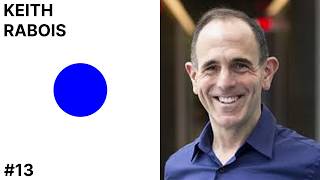
In this extensive interview, Keith Rabois, a general partner at Founders Fund and former executive at PayPal, LinkedIn, Square, and co‑founder of Opendoor, walks through his unconventional career path, the central role of talent in his investing philosophy, and the operational principles that guide his work. He explains how early lessons at PayPal taught him to hunt for undiscovered talent (the "barrel" concept), how he stretches such talent by progressively increasing responsibility, and why he values inputs (processes, details like slide fonts) over pure outputs. Rabois discusses the importance of transparency within organizations, the idea of a "business equation" that balances revenue, margin, and cost levers, and how he applies these frameworks at both early‑stage startups and later‑stage growth companies. He shares specific insights on his recent investments in Eight Sleep (sleep‑tech) and Primer (homeschooling platform), and revisits the Opendoor story—from a 2003 prototype to a public SPAC‑valued at $4.8 bn—highlighting market dynamics and competitive advantages over Zillow. The conversation also covers personal productivity principles such as valuing time, saying no, leveraging money to buy time, and curating a circle of high‑performing friends. Finally, Rabois names several influential people (Peter Thiel, Elon Musk, Reid Hoffman, Jack Dorsey, Max Levchin) and distills what makes each exceptional. The interview blends anecdotes, concrete metrics, and actionable advice for founders and investors.
Chapters
Keith, thank you so much for coming on the show today. Obviously, you're known as an extraordinary entrepreneur, prolific investor, self-described contrarian. I'll give a little bit of your background for people who don't know. Currently, you're a general partner at Founders Fund. before that, Khosla Ventures, and before that, you helped lead PayPal, LinkedIn, and Square. Co-founded Opendoor, which actually just got acquired to go public via SPAC a couple weeks ago. Board member from Inception IPO companies like Yelp and Zoom invested in other companies like Palantir, which went public this week, YouTube, Airbnb, Lyft, and the list goes on. Would you mind just kind of weaving some of that together and telling your story for those who don't know you?
It's a pleasure to be with you. You hit a lot of the highlights. I don't know if there really is a consistent arc there. It was certainly wasn't intentional from the beginning. I started as a practicing lawyer and litigator of all things, which certainly would not be the natural path to transition into being an entrepreneur, executive, angel investor, VC. Probably the common trend or trend line through all those things is people. I had met my original colleagues at PayPal when I was in college and they were either crazy enough, dumb enough or insightful enough to hire me when they had a business to run. And then after PayPal went public in 2002 and then later was acquired by eBay, most of us, certainly those of us in senior roles, left to go on and do new things and interesting things in 2003. And I continued to work with and innovate with and invest in my former colleagues. So you mentioned YouTube. founded by a bunch of my former colleagues at PayPal, Yelp, co-founded by two of my former colleagues at PayPal, went to work with Peter again, actually now twice, both initially right after PayPal in 2003, and again starting last year in March of 2019. I went to work at LinkedIn with another former PayPal colleague, Reid Hoffman, went to work at Slide, which is the one failure on the resume. But in any event, it was with my friend and former CTO of PayPal, Max Levchin. So all along the way, I've basically been re reuniting and working with the same set of people and just reinventing those networks again. So for example, I co-founded Open Door originally with a friend who had met laws at Square and tried to recruit him unsuccessfully. Co-founded the company with my first data science hire at Square who helped build risk models, as well as recruited as our CEO, Eric Wu for Open Door. Someone I had been an angel investor in seven years or now 10 years earlier, but at the time three years earlier. So basically constantly looking for interesting, talented people that I've worked with and figuring out how to work with them again. One of the best VC investments I've made. was in Max Levchin, as I talked about, CTO, co-founder of PayPal, failing CEO of Slide, but a firm has done phenomenally well and will continue to do phenomenally well. Funded another great company called Fair, which is all four co-founders were Square colleagues. Two of them worked for me directly that I recruited into the company. So constantly trying to find ways to work with the people that I find most interesting, most talented, most ambitious. And that's probably what explains this sort of eclectic trajectory. Even Palmetto, which is not my normal type of business, high-end enterprise, is founded by ex-PayPal colleagues, Peter, Joe, and Nathan Guggenheimer.
Right. So I want to spend a good amount of time today talking about some of your key principles. And we might as well start with talent, given that you've spoken about people being the only real common thread through a really impressive track record as far as your career is concerned. So I've heard you quote your old boss Vinod Khosla, the team you build is the company you build. I just finished reading a book that you recommend highly, the Score Takes Care of Itself by Bill Walsh. He talks about how people matter most more than equipment, investors, inventions, momentum, and X's and O's. People are at the heart of every organizational success. You're a founder focused investor working at Founders Fund. As you've said, you focus on people rather than product and that's how you end up in a company like Palantir that's a little bit outside of your sweet spot being an enterprise model. What drove you to become a people focused person and a people focused investor?
It's a great question because it's not obvious. The key lesson I learned about the importance of people was actually my first week at working at PayPal. So I went around, I went on this job around campus Stanford campus with Peter, CEO at the time. And he basically taught me that the key principle to building a startup from scratch to success was to recruit, identify, recruit, and retain undiscovered talent. He basically argued pretty strenuously, pretty vigorously that there was no way to scale a company with people who had significant expertise and experience. They were too expensive for a startup to afford. And all the large companies in Silicon Valley would overpay and overcompensate people with proven talents. So the only way to compete was to go back to the drawing board and find people that were too odd, too weird, too immature for the large companies to digest. And so we basically went about following that strategy for several years, Hip-Hop, it worked quite magically. And then I took that with me as I went on to do other things in my life as an angel investor, as an executive, as an executive recruiting. And that naturally transitioned into angel investing, which was I that I put a premium on trying to find people that other investors that had more experience and more success would misread or neglect or not be willing to meet. And so that became sort of the formula I always applied was what will other people miss and can I find people that are actually quite talented but that other people are going to neglect? The sports metaphor that you talked about would be like the canonical example would be drafting Tom Brady in the sixth round, basically every quarterback under their son was drafted before him. But, you know, clearly everybody else was missing many, many things and many, many variables. And, you know, neglected the best quarterback probably of all time.
Right. And going back to the book, Bill Walsh's, he says something like conventional wisdom breeds conventional results and conventional wisdom didn't breed Jerry Rice, who most people overlooked and he ended up picking as I think the third receiver in the draft.
Yeah, Rice wasn't quite as overlooked. He was picked in the first round, 17th pick overall, but the third receiver. So, you know, not quite as severely neglected as Tom Brady, but fundamentally, I think that's right. If you want standard results, you apply standard criteria. And if you want extraordinary results, which certainly the business of venture capital is designed for, you need to find extraordinary people, and they're going to basically be one or two standard deviations outside the bell curve. But normally, normal human processes, normal human hiring even, is designed to be in the middle of the bell curve. So you have to kind of define all the logic rules and principles that people advise you about because most people are confronting all the time normal distributions.
So why is this still important at a place like Founders Fund or at one of your successful investments when it's a later stage company? and you kind of have your pick of the litter of discovered talent. It seems like at Founders Fund, the partners have relatively untraditional backgrounds. Some of these startups, obviously, like I mentioned, can pretty much pick from anyone. Do you still target undiscovered talent?
It's a great question. At the seed in Series A level, I found absolutely yes. And I think it's an interesting debate slash dialogue in growth financings. At any given time in history, there's only a handful of companies that are appropriate for significant growth rounds. And almost all good investors of the planet kind of know who those companies are. So the question we have to ask ourselves then is if we want to produce superior returns to the growth funds we compete with, how are we going to do that? So one way to do that is of course winning a disproportionate share. If you think that there's five winners in the next decade, if you can win and become the lead investor in three of the five, that's a great way to produce superior returns, sort of by definition. Another way is to find companies that are undervalued and underappreciated even at the growth stage. I think that can be a there can be some things that are obvious in the business metrics. By definition, if you're raising hundreds of millions of dollars and billions of dollars valuation, there's clearly things that are working that any smart, savvy investor can achieve. But perhaps they missed the upside. Maybe there's another 10x upside beyond what you can model. Or perhaps the founder has a complicated track record and not everybody's willing to invest in him or her. So you can still look for sort of secrets behind the scenes, but to some extent, you are more in the business of winning rounds that other people also value and crave. And so then it's a question of why do people choose you? What's the value you create? What's the relationship you have with founders? What's the references that people will perform on you? so that you're the, yes, or the investor of choice.
Right, so last question on talent. You talk a lot about, you know, when you're looking for this undiscovered talent, you talk about the value of finding barrels as opposed to ammo, and you've sort of defined those things on other podcasts, and you talked about it in your YC lecture as well. I wanna talk specifically about once you find a barrel, which, correct me if I'm wrong, but to sum it up, it's basically someone who like figures it out and gets it done, and you just can kind of give a lot of autonomy to get the job done, whatever the job might be. Once you have that person on board, you talk about the importance of stretching them and pushing them to kind of reach the maximum potential that they have. How does that process unfold?
Yeah, I mean, the key is identifying a barrel, potential barrel is not that easy. And any given company only has a handful of these barrels. They're very scarce resources. I've talked about previously at K-Pal, which is known for the density of talent. We probably had somewhere between 8 and 15 of these people in the entire organization. So that's kind of the ratio of 10 to 15 people in one of the best pools of talent in the history of Silicon Valley. So when you have one, you want to leverage the person as much as possible. And you want to give them increasing responsibilities until you see that you've increased the complexity and scope of the responsibilities to a point where they can no longer perform amazingly. but a lot of people will surprise you and it can do a hell of a lot more than you ever would have guessed. So the way you basically perceive it is you constantly expand the scope of responsibilities and then you measure the quality of performance. So maybe this quarter you give someone an eight plus, sorry, a challenge somewhere scale one to 10, maybe a five. And then next quarter it's given something that's as complex as a seven. And then if that goes well, then you go out to like a nine. and you just keep doing this until you see signs of breaking. Because you really want to maximize the potential of the person, you want to maximize the reports within the organization. And by the way, by constantly challenging them, they develop their own skills in a way, in their own career trajectory, in a way that they may not have even forecasted or had confidence in that they could succeed with. So that's basically you want to just repeat, repeat, repeat until you see signs of weakness. And then you leave that person in a position that leverages the strengths of the people they've approved.
That's great. That all makes good sense. I want to pivot now to speaking more generally about businesses. You're known as a pretty, not pretty, extremely successful operator and business mind serving on a lot of boards of really successful companies, as well as leadership within them yourself. One of the things you focus on, I believe, is inputs as opposed to outputs. Coming back to the book again, it's fresh in my mind. The score takes care of itself if you kind of perfect the internal processes. And you see that in everything from in the book, the receptionist answering the phone the right way to back with Apple, Steve Jobs insisting that the inside of the computer be sort of as beautiful as the outside, just kind of uncompromising perfection through every step of the process. What are details that you found in businesses that have had surprising impacts on the success of the business that wouldn't seem like they really should matter at all?
Yeah, that's a great question. I mean, the genesis of the book and the operating philosophy behind Bill Walsh's management philosophy is that by focusing on doing every step perfectly and precisely, eventually the output will catch up with quality and performance by every individual. And so that's the general philosophy behind Apple, certainly we apply this square consciously. It's not for everybody. Amazon applies a very similar process. Jeff Bezos talks about grading people by their inputs, not by their outputs. Although truthfully, he does both, as do many executives. I think there's a kind of heuristic of doing both. Actually, that's most successful is gauging the inputs, but then also measuring outputs with some benefits of hindsight. At the end of the day though, I think the inputs and the quality of decision making can be reduced to the design and font choices on a slide. It can show up in responsiveness to an email. It can be reflected in internal communications, the company all hands meeting, the thoughtfulness of the slides in a team review. So you can look for the evidence everywhere and anywhere. And the key is any one of these decisions can look somewhat artificially distorted. Like for example, gauging the quality of the font in a team review will sometimes alienate people. But that attention to detail in the font construction and the graph construction allows you to give the leader confidence in rope on more important decisions. Because if they're not neglecting the small principles and small details, you can trust them that they probably thought through a lot of considerations and they haven't just glossed over things. But when you see sloppiness anywhere, it means as an executive, you have to probe everywhere. And that can be a very painful and time-consuming process. So the more bulletproof the details are, the more you can trust people typically on the very large decisions. So it's a very scalable management style.
Do you ever get concerned about getting lost in the details and spending too much time on some of these seemingly less influential elements like the font and the presentation?
Well, definitely people will push back within organizations about that. They will say, this makes no sense. That's the point of the Steve Jobs example from the Mac 2, or the Mac actually, where the circuit boards were not actually accessible by the user. You couldn't actually open the computer. So there was no chance that anybody would ever see these. So it's like the immaculate polish and consideration that went into that. reflected an entire product that had been thought through methodically and perfectly in every possible dimension. And so I think that people will always object to this specific detail, doesn't matter. The example you led with where when Bill Walsh took over running the 49ers as general manager and coach, they had had a miserable 89-year trajectory. They were the laughing stock of the NFL. It won three out of roughly 16 football games the year before. And so the first thing he did, though, was write down, literally type up an instruction manual for the receptionists at the headquarters for answering the phone. And many people could laugh at that, including probably people within the 49ers organization of, oh my God, you have the worst football team on the planet. You're in a hyper-competitive NFL. You've got your first head coaching opportunity. and you're literally typing up an instruction manual for perceptionist answering a phone as your first order of business. So all of the whole point of this philosophy is that is exactly the right way to start. That scrutinizing the most mundane and tactical decisions leads to a culture of perfection and quality and caliber and clarity of thinking that eventually turns into winning football games. So for example, in the book, he talks about, well, yes, I started with receptionists, but at some point that translates to receivers running a seven yard route, not a six and a half yard route, or not a seven and a half yard route. And when a receiver doesn't run the seven yard, but they run the six and a half, or they run the seven and a half, it either leads to an incompletion or an interception. So by everybody having a consistent expectations of performance, it eventually turns into results that you can clearly see and magnifies them, but you can't teach just in isolation. So if you say only these details matter, it's very hard to inculcate that across an entire organization. So when you try to cherry pick, oh, well, it's okay to run your routes sometimes precisely and sometimes not, then guess what? People make mistakes and they confuse the two and they're not consistent. And that leads to unforced errors and ultimately losses. And so the same thing is true of a company. If everybody's always thinking clearly precisely, then the product will be clear and precise. Another way to reframe that is you can usually see the seams of an organization in a company's product. Where the organization has dysfunction, it usually shows up at the consumer level.
That's great perspective on that. You're a big believer in transparency in.
Business.
In terms of metrics to be distributed throughout the company. board presentations, sending meeting notes from any meeting that has more than just a couple of people in it, and even Glass Walls, I believe at Founders Fund, and I think back at Square as well. Why is transparency so important for the success of a business?
Ultimately, this is kind of a Netflix principle. Basically, if you want people to make smart decisions, they need the same information you have. So what usually frustrates an executive is when someone makes what they think to be an improper decision. but typically the root cause of that improper decision is the person making the decision does not have the horizontal perspective of the CEO. So the way you compensate for that is you give all of your employees the same exact information the CEO has. Not surprisingly, when people have the same information, same context, they tend to make the same decisions. When they have different information in different contexts and it's more limited or controlled, then even with the best brains they're still going to make decisions that are distorted. So you want to share information as broadly and as succinctly and powerfully as possible. Back in my day at PayPal, Peter used to start every monthly company meeting by handing out a physical printed copy of a spreadsheet that had all of our metrics. And we would actually go line by line and review every damn column, which truthfully became a little boring. But the point was Peter wanted to teach everybody, this is what matters. This is why. This is how we measure it. so that everybody in the organization could make the same decisions that ideally he would make.
You learned a lot from Peter Thiel. You talk about it a lot on podcasts and I think there's a lot of great lessons just from what you've shared, let alone probably from what you've learned. One of the key things you think about, I'm not sure if this came during your time with Peter or later, but you talk about understanding your business's equation and keeping it in your head at all times. I'm actually not so sure based on what I've heard from you what that means exactly or like what that equation looks like necessarily. Could you talk about a company that you've had that's been successful and what the equation has been for them and how you got to it?
Sure. Actually this isn't from Peter. This is actually original Keith's creation. Once in a while I come up with original ideas. Sometimes it's better to borrow other people's ideas and just apply them. But in this case, I think I created this. So the basic idea is that every business, when it works, is a set of moves that add up to be spitting out money at the end of the day. And it's toggling the various variables so they're all in alignment so that the money just produces output, which is basically profits. But figuring it out and upfront is actually usually quite challenging. You have a conceptual idea of what the variables might be. You don't know the weights on the variables and you sometimes don't even know the interaction between the variables. The reason why it's so important is that is you try to tune one variable, let's say your margin, for example, is, let's call it 15%, and let's say that's not producing enough money. It's just not spending enough money to get profitable, let alone produce material returns. A lot of people who are insular and isolated or domain specific may try to take the margin from 15 to 20%. And they need to bang their head against the wall and get frustrated over the next X months because it just doesn't work. Consumers, customers, won't with their feet, won't pay a higher margin, tax rates too low, provision rates too low, whatever. But your blended take rate just never gets above 15%. It certainly doesn't get to 25% work. Let's say it needs to get to 20 to be interesting. So the people who have the horizontal skill of understanding a business equation might realize that rather than push a rock sort of uphill, the proverbial snowball uphill, and try to get 15 to 20%. What if we instead lowered our costs by 50%? That's a different variable in the equation. And maybe there's a path of least resistance to lower the cost by 50% so the 15% take rate suddenly looks quite compelling. And then alternatively, you know, so you start like basically realizing that All you care about is the synchronization and what this equation produces at the end. And rather than optimize any one specific variable, you're optimizing a system. And the system sometimes is easier to tweak with other variables than the one you're initially focused on. And that's why organizational structure matters so much is that if you subdivide tasks too much, the person who's responsible for that take rate or the revenue rate, it only is going to try to optimize that. And that may be destructive let alone not constructive to the overall system. So by having a horizontal perspective, you can say, okay, we've already tried our three best ideas of raising our revenue rate, they didn't seem to work. Let's not continue this. Let's figure out how to get the same output we want to need by changing other variables in the equation.
So it's pretty standard business variables is what you're talking about here. It's like revenue, costs, and for a different business, it might be a different way of viewing these variables, but it's not like something totally out of the box?
It's somewhat custom for business because it really is the levers in the business. So you want to get a little bit more granular, like maybe each of those variables at the conceptual level can be decomposed into another set of variables that drive each of those. We have written at least Delian, former Chief Staff of Mine and Principal at Founders Fund, has written some blogs on the topic I think he's going to publish an entire blog post on this topic because your question is very common. So we're going to try to teach by example. That's worth covering.
Great. I'll look forward to checking that out. And I understand you have a substack coming out pretty soon yourself. Is that right?
I do. If we get our work done today, we might even publish it later today. We'll see. The topic of the first substack is basically how do executives learn or CEOs or founders learn to manage functions that they don't have experience with. So imagine being a CEO and suddenly you have to hire hire a CFO and you've never had financial background before. How do you hire a CFO? How do you manage one? Or let's say you're producing hardware and you've only been a software engineering manager before. How do you learn how to produce hardware? How do you hire the right person to manage hardware? How do you inspect their work? How do you drive quality? So we're going to write, we've surveyed a bunch of our executives that we work with who are very good at this and very proficient. We sort of ask them what's the.
Secret behind their success and try to distill it. So hopefully it's helpful to everybody. That sounds great. Looking forward to giving it a read. One last thing on the business side of your principles. You talk about the importance throughout your past of following the users. So at Square, you realize there is this viral effect of the actual Square that was going into the cashier's machine. At LinkedIn, you realize that people were consistently looking at their own profiles and it was sort of like looking in the mirror and loving themselves, I guess. Whereas, and so there's a difference between following the users, I think, and asking the users and listening to what the users think they want. Because that, from my perspective, that's something that Steve Jobs would never do. That's something that I don't think Jack at Square would do. What's the difference between following the users and listening to them and why does the former seem to bring a lot of valuable insights, whereas the latter can often be useless?
Yeah, so I would never ask users what they want. First of all, users are, I would never ask consumers what they want to be very specific. Consumers have no idea what they want. They can't find them. They're going to mislead you either consciously or subconsciously about what they want. So it's just a fool's err. The good news about consumers is there's a lot of them. So you can use statistics to infer what they actually really want. And the way you do that is you look for anomalies in your data, meaning unexpected performance. It can be unexpectedly positive or unexpectedly negative, but things that are unexpected means by definition there's an insight there. They're incompatible with your current sort of conceptual framework or paradigm, and that's what leads to epiphanies of what I can do better, what I should do better. On enterprise software companies, it's a little bit easier to actually ask target customers what they want because there is a decision maker who sort of typically gets paid for making a certain set of decisions. And utilitarian decision making is a little bit easier to decompose in a professional context than a consumer behavior. So to some extent, your ends are typically a lot smaller, meaning if you're targeting a large enterprise, let's call it Fortune 50, Fortune 500, you can't really use statistics to optimize your sales funnel per se. There's just not enough like, you know, pattern there. to get statistical significance. So you kind of have to use some judgment and some feedback anyway. If you're targeting micro merchants or small businesses, like more like Square or PayPal, you can use statistics because it is a marketing challenge. Square has hundreds of thousands to millions of merchants. So that is like analyzable with metrics. But selling Walmart on a new database is not something you can figure out by using some statistical analysis.
Right, that makes sense. Let's talk about some more personal principles that I've heard from you. The first and foremost, I think, is that you believe people systematically undervalue their time. And this is one that I think you did pick up from Peter. You talk about confronting this issue. One of the best ways to go about it is to just start saying no a lot, right? So not spending your time on things that have relatively low leverage, low value. activities. This is something that I treat pretty seriously. Like I was in banking for my first couple years out of school, quit a little over a year ago, basically because it took up all of my time. And yes, it, like, pays very well, but per hour, it's actually not that impressive. And I didn't have any time to learn about things I wanted to learn about or do things that I basically wasn't being told to do. How do you think about kind of first for people working nine to fives and otherwise gaining some greater semblance of control over your time and then second using it with the best leverage and to produce as much value as you kind of can for yourself.
Yeah, this is definitely a principle derived from Peter. In fact, the quote about systematically undervaluing time is a direct quote from Peter that again he started taught me in 2000 or early 2001, which again, like many Peterisms, I didn't totally graph initially, it took a little reflection before it made complete sense to me. And then I started applying it and positizing about it. So the basic principle is like the only scarce resource you have in your life is time. You can always, in theory, get more money or any other resource, but you can never replace the time. So by definition, it's the scarcest and people don't necessarily appreciate that, that every day that goes by is not replaceable again. So once you start recognizing that, you start scribing much more meaningful value to every increment of your day, from every hour to every day, to every week, to every month, and you start measuring your progress or satisfaction in shorter doses as well. And then you also look for leverage of what can I say no to and just not do, or what can I deputize other people or delegate or pay and compensate other people to do for me so that I can do the things that are most important, most viable, most productive for me. And so it's sort of a way of running your life once you sort of understand the principle, which is we all have a finite amount of time, so we need to maximize the utility per increment of time.
Do you have anything from your own life that you view as like the most valuable, like really valuable uses of your time that people would be silly to ignore?
Not necessarily. It's somewhat specific of like what do you care most about? What do you care most about achieving? What makes you happiest? But the lesson is constantly asking Do I need to do, should I do this? Like what's the ROI on doing this? And it doesn't have to be a business ROI, it can be a happiness ROI. If I have to do it, do I have to do it myself or can I find another way to get it done? And, you know, et cetera. So you start like, basically, I'll give you a simple example that again, I sort of revolted against initially 15 years ago or so, one of my friends hired a personal assistant. and I thought he was crazy, truthfully. And they sort of explained this in a Peter Thielian way of leveraging his time, but I didn't quite believe it. And then sort of a personal assistant sort of dropped into my lap. There's someone who's looking for an opportunity and try to persuade me I should hire one. So I tried it and I immediately realized that what I could do was that instead of spending, call it 70% of my week on things I wanted to, 'cause I had to do things like grocery shop, dry clean, et cetera. I was spending closer to 85% of my week on things I wanted to do or needed to do. And that was very liberating, actually. So then I started figuring out, okay, across all of my professional personal endeavors, how do I basically get 99% of my week to be in high value activities? It can be high value personally, like playing a sport, having a drink with a friend, going for a run, sleeping or professionally, but I don't want, I want to minimize the drag coefficient of things that I don't want to do. And no one's going to get, you're never going to get to zero. Like at the end of the day, I need to sign my damn tax returns, you know, there's like stuff like that. You can't delegate everything, but fundamentally starting asking a question of like, how do I get the ratio? of high value use of my time to be as close to 100% as humanly possible. And then when you become successful, the good news is you have the ability to trade money for time. It's not, this is truthfully not available to everybody, but the virtue of having disposable income is you start looking for opportunities to trade money for time.
Yeah, it's interesting. One of, you know, I hardly have a following at all on Twitter, but of those that do follow me, one of my most popular, actually, I think the most popular tweet I've had the slide was basically saying, don't trade your time for money to achieve the maximum money. Trade your time for money to the point where you have kind of enough because you can always trade your money for time, but you can't get more time. It's, you know, like you said, it's the most scarce resource that there is.
Very, very similar. So I'm constantly looking for ways to trade money for more time.
Yeah. So that's hopefully going to be a focus for, for the rest of my life and I actually do want to get to later talking about longevity a bit. I know you're focused on that, not focused maybe, but you're at least in the loop and interested in that. And it's one of my big interests as well. Before we get there though, another thing you talk about a lot is how, you know, the common saying like people you are the five people you surround yourself, surround yourself, excuse me with, who are some people that you've kept around throughout your career or life in general? and what specifically, you know, what do they offer you in keeping them around that makes them people that you want to keep around?
Great question. I do strongly believe that people basically become the average of the five people they spend the most time with. I think there's a lot of evidence behind that empirically, academically, and, you know, maybe anecdotally. so I think if you want certain traits in your life, whether you want new traits or you want to reinforce your old ones, things that are important to you, you definitely need to make sure that people around you have similar characteristics. And so for me, intellectual curiosity is important, fitness and health is important, professional ambition is important. So all of those characteristics, and then you can you can divide this into even smaller doses. Like to me, sleep's very important. So all of my close friends, literally all of them, are addicted to sleep. They almost every single one of them measures their sleep, uses products that improve and enhance their sleep. Every single one of my friends is committed to some versions of athletic sports, fitness, working out. They probably all have BMIs that are sub 22. Some of them are probably sub 20. But in any event, you basically virtually all but one of my friends is a voracious reader. They're constantly looking for new and interesting things to read. Some actually read more than I do, which is a pretty sharp challenge. But you basically find people that are gonna reinforce your best traits. and insofar as you want to develop new traits, they will help inculcate those. And so I'm very careful about who I allocate my time with and very rarely will deviate from the things that are important to me in terms of allocating time and attention to friends.
You talked about the importance of sleep. One of the companies you're invested in and one of the founders you're invested in, Matteo Franceschetti of Eight Sleep, I was on the podcast previously, had a pretty cool conversation with him. Also had Ryan Dalke on the show. I think this would be a good time to hear, you know, I'd be interested in what gets you excited about their company's eight sleep and primer, respectively.
Yeah, so I think sleep is the biggest opportunity in the world. The amount of research that goes into sleep is actually ridiculously low. The amount of entrepreneurial efforts that go into sleep is absurdly low. The amount of VC dollars that fall into sleep is incredibly low. Sleep is the most important thing you can do to improve your life. If you want to improve your performance, you want to improve your health, you want to improve your lifespan, sleeping eight hours a day consistently will do all of those things. And it's a universal problem, meaning like everybody needs to sleep, everybody needs to focus, obsess on their sleep, and the more they sleep, the better they sleep, the higher, the more happiness, wealth, health, they're going to have. It's the easiest way to reorient your life, but it doesn't get nearly enough attention. If anybody's interested, I would start with a great book by Matthew Walker called Why We Sleep. It'll make the case better than I can about the importance of sleep and all of these dimensions. I know several people who've read the book and it completely changed and transformed their lives. So I highly, highly recommend that. A Sleep is the pioneer company in sleep fitness. So we have a product that improves your sleep, that measures your sleep, and will constantly innovate around sleep research and products that allow people to sleep better, more easily and more deeply. Primer, some a different company. I've been searching for a product that would make homeschooling less subject to friction. And for two years actually, publicly, I had spoke about podcasts, tweeted about it, because homeschooling has been this sort of secret success over the last 30-40 years. It went from basically nobody in the United States being homeschooled in the 70s to about 4% of everybody in America being homeschooled before COVID January of this year, despite all the friction, uncertainty, negative stereotypes caricatures about. So I felt like if someone would build a professional product that would allow parents to make the choice more easily, more confidently, more empirically even, that we go from 4% to 20% of the US market. Homeschooling is just a very superior alternative to the public school system and probably to most private schools. And COVID of course has accelerated the demand, the interest and the importance of this. But we were interested in the company, we invested in the company and I've been searching for the company for years before COVID affected everybody. Now most people can appreciate why homeschooling is a critical part of the American system and many, many parents and families are much more interested in likely to adopt it in the short term. So fortunately we have a product that's ready to help people. but will continue to get better and better in terms of allowing parents to make the choice successfully over the next one to five years.
That's great. I think sleep is, like you said, extremely important and education is certainly right for disruption. So both really interesting companies from my perspective and it's great to hear your perspective on them as well. I want to talk about Open Door quickly. Peter Thiel told you to basically find something interesting to do in primary real estate. 10 or 15, maybe even years ago, you said why? He said, it's like the biggest undisrupted asset class in the world. You said, okay, when you thought of basically the concept for Opendoor, waited about a decade, similar to like you talked about, you were looking for a solution for homeschooling. I think there's a pattern of you kind of finding a problem that you want a solution for, and then when it comes up, you're ready. You found someone to start it in kind of the right situation, however many 10 years later, I guess, it's now been acquired to go public at a $4.8 billion valuation. Can you talk about how you expect that to spread over the states and increase market share in all of these areas and ultimately why it has an advantage over a larger company like Zillow?
Sure, absolutely. So yeah, we started the company really in 2003. because of Peter's top-down instruction about the need for innovation in the real estate space. Primary residential real estate, you know, it's like $110 trillion of assets. There's millions and billions of dollars of fees floating around. The process is incredibly inefficient and expensive for everybody involved. And we wanted something that would improve that and felt like by definition, if we could do that, and it could cut through the clutter, we'd be a massively successful company. So we built a prototype of Open Door in 2003, built a valuation model, tested it live and got pretty close to Cabana for real under the brand, Holon. But for a variety of reasons, capital was very scarce in 2003. The internet bubble had just collapsed. So the value of separate through nuclear winter. So I was a little nervous of whether we would be able to have enough access to debt and to some extent equity to prove empirically, statistically that our valuation analysis was working and robust enough. And so we sort of put it on the back burner after actually building a website, everything. And I constantly was trying to find people to quarterback this from 2003 to 2013. Like many great ideas, it was extremely controversial and almost everybody thought it was insane or crazy or impossible. And so I constantly was pitching people that I thought had the right characteristics to be CEO. and one of them basically turned me down, including Eric actually in 2010 when he graduated from YC, I tried to convince him to convert his current startup into this. Fortunately, after he sold that startup to Trulia, he came back to me and asked me, do I still think this is the right idea? I said absolutely, and I'm glad you finally are willing to do this. So let's make this work. But yeah, I can be pretty patient with Finding a good idea that needs to exist, but it has to be in the hands of the right quarterback per the point we started this podcast about the right people, team you build, the company you build. So if I have an idea and I'm pretty sure that the world needs something, I'm not willing to proceed at least with my time or money realistically. unless I feel that the right person is driving it. And so I have a third startup, you know, another startup I'm really interested in, I've been talking about publicly for almost three years now, and I haven't quite found the right CEO yet, but I'm fine with that. If it takes another year and I eventually get the right person, that will lead to a lot more success than the wrong person doing it earlier in almost all cases. An open door specifically, I can't say that much publicly other than what's in the public domain, Fortunately, to my off and others, the company have shared a pretty comprehensive document that talks about the vision of the company, the current performance of the company, the economic performance of the company in some considerable detail. So I refer you to those documents. I mean, I can certainly talk about things that are in there, but I wouldn't go beyond that. Let's say we're live in 22 markets. All the markets are doing well. You can see a distribution curve of our contribution margin per market. and it's strikingly consistent actually. I think that's like slide 17 of the presentation. I think we're dominating, as we talked about in the slide presentation, we're somewhere between three and a half and four and a half times the largest competitor in terms of homes acquired per month, homes sold per month. So we're clearly the market leader, innovating. I think we're better in any dimension than our competitors, but the slides talk about why that is and how that is, what competitive advantages are. So I'd refer you to those for now. I mean, at some point, hopefully, I'll be able to talk about it. The market has responded quite well. I looked up this morning, the market's basically valuing Open Door at about $10 billion, which is a pretty good five, six years from launch performance. I hope there's significant upside beyond that. I think we'll launch in more markets over time. I think we'll continue to increase our market share in the current markets and hopefully increase the marginal economics. But real estate is such a large category that it's actually shocking that the largest company in the planet or the largest company in the Western world in real estate is worth $20 billion. If you think about the asset class as a whole, the most successful companies should surely be worth multiples of $20 billion at some point. It was great.
And yeah, the deck was really informative. I read that and Chamath did an awesome job of summarizing it on CNBC in just a few minutes when I saw him do that.
Yeah, Chamath nailed the description. I explained the upside and why he's so excited. And then there's even some really good sub-stocks that you can read about Open Door that I think are quite interesting, mostly accurate. Sometimes incredibly insightful.
Yeah, I read one. It was really good. I think the guy's name is Packy McCormick. It's called Not Boring, I think, the substack. So people can go check that out as well. Last question, I want to talk about people, which is, you know, the focus of everything for you, really. You've worked with some amazing people from Peter Thiel to Jack Dorsey. Reed Hoffman, David Sachs, et cetera. Can you name a few of the most impressive people you've ever associated with and in just, you know, a sentence or two explain what makes them so special?
Sure. Where do you want to start?
Peter, deal.
Peter has a macro perspective on the world that is usually one to 10 years ahead of what everybody else eventually learns. And so the key is to listen to Peter and figure out how these macro observations can be translated to micro topics, investments in people. So Peter will see the world as where it's going in the conceptual and have conceptual frameworks of understanding it. And then it's my responsibility to apply them to specific questions, people, companies.
So I don't know how closely you worked with him, but if this one applies, Elon Musk.
So Elon had. Elon was still on the board of PayPal when I joined the company. So Peter had come back as interim CEO on September 25th, 2000, replacing Elon. But he always involved the board. He asked, you know, obviously quite provocative, insightful questions. I discussed with him. maybe moving to SpaceX when he was starting the company. So, I know not as well as like Peter Reeds, Rawlffs, Maxes, people I worked with every day. But I think the public record speaks for itself in terms of his ability to see the future, build the future, and will the future to be?
Great. I'll go three more if that's okay. Reed Hoffman.
So Reid taught me, the most important thing Reid taught me was the value of time as dimension in negotiations. So time can be your friend or your foe. Is inertia helping you achieve your objectives or is it retarding you? And then how to use, depending upon that diagnosis, how do you use time as a dimension to change the inertia? So if things are working in your favor, you want to allow time to elapse. so for example, I would argue open door, every day, every week, every month, every quarter, every year, we should be getting better. And the world is just moving our way. We're on the right side of history. So time is our friend now. But there's other times when time is cutting against you and you need to change things because every hour that goes by, things are deteriorating. So understanding first is time your friend or foe and then figuring out tactics that will shift the time equation.
Jack Dorsey.
So Jack's most interesting skill is he actually understands business strategy, technology and design all really well. And there's almost nobody out on the planet that actually really is a first rate thinker on all three. So by being able to fuse all three together, he's able to create you know, value companies, products that nobody else can.
Last one, Max Levchin.
Max is a great combination of a technologist at a very deep level and a business thinker. So that's number one. Number two, his tenacity and ability to succeed regardless of what obstacles thrown in his way is off the charts. So combining both of those together, you know, is an incredible asset and explains both the success of PayPal, certainly the success of a firm, and even indirectly the success of things like Yelp, where he helped, you know, kind of pioneer and get the company off the ground.
That's great. I know we're coming up on time and I think that's a great place to wrap up. Keith, I know obviously we talked about earlier you place a high value on your time, so I appreciate you sharing some of it with me today. and with everyone, I wanted to ask a lot of questions and I was fortunate to get a lot of them in, especially with the rapid fire at the end. So I do want to give you the last word to share anything we haven't talked about so far or tell people where to find your Substack and obviously people know where to get you on Twitter and things like that, but really appreciate the time today and it was great talking with you.
Pleasure, feel free to follow me on Twitter Substack. We'll try to develop some of these themes in more detail.
More from Keith

This Billionaire Trains His Body Like He's Building A Billion-Dollar Startup | Keith Rabois


Vinod Khosla and Keith Rabois on Building and Investing in Enduring Companies | Ep. 40



