Post Seed Conference 2014 - Keith Rabois (Khosla Ventures) & Paul Martino (Bullpen Capital)
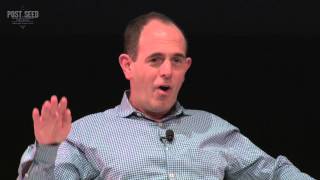
In this extensive interview at the Post‑Seed Conference, Keith Rabois reflects on his unconventional path to venture capital, the structure and strategy of Khosla Ventures’ two‑fund model (a high‑risk seed fund and a traditional main fund), and his contrarian investment approach that led him to back early‑stage companies like YouTube, Airbnb and Palantir before they were fashionable. He discusses the evolving landscape of micro‑seed funds versus large institutional VCs, the importance of building dense, high‑quality founding teams, and the challenges of talent dilution in today’s low‑cost startup environment. Rabois also shares details about his entrepreneurial ventures – OpenDoor, a rapid‑sale real‑estate platform, and his involvement with the Stellar cryptocurrency project – and draws parallels between the early days of PayPal and Bitcoin. Throughout, he emphasizes hands‑on investing, the need to let aspiring investors make real deals, and the value of mission‑driven, founder‑friendly cultures for attracting top talent.
Chapters
Sam. So in 2007, actually as well as 2010, I sort of planned to become an investor. And I got intercepted both times. So the first time, Max Levchin intercepted me and convinced me to kind of do this Slide thing, which was building on this Facebook platform that was just about to be announced. And Max was correct that the Facebook platform would sort of transform the technology world. And this is a great opportunity. So I sort of pivoted myself into a real job instead of being an investor. And then same thing happened in 2010. I was going down this path. We had sold slide to Google and was going down this path of becoming a VC at a different firm. And I sort of got intercepted by Jack and convinced that the world of financial services and payments could be changed and that'd be really cool, and I was perfectly suited to do it. So basically, it was somewhat opportunistic. The right person, the right time sort of change my preexisting plans. And this time, I almost did it again. There was something that kind of came across my radar last minute, and I was like. But then I realized I was like, getting old. I'm like over 40, and if I don't do it now, I'm never going to be a vc, so I better do it.
I remember seeing you at the KB office. Our bulletin office literally is next door.
Neighbor to you guys.
I remember stopping over your first 90 days there and you said you had done a couple deals. How many deals did you.
You do the first 90 days? I don't. I don't remember. But here's a better, maybe a better metric. I've been there 20 months or so and pretty much led about 20 rounds. So one of my.
Now that's impressive. And the reason. The reason I'm impressed by that is how many times have you seen a partner join a firm that has your kind of. And they put them in the. In. In. In the kids in the kitty room for the first 12 months. I mean, keep the boy that you're in.
Well, I think the only way to learn whether you're going to be an investor or not, and this is relevant angel investing as well as venture investing, is you actually have to invest. Like, it's like playing the guitar. You can't read a book and say, I learned to play the guitar. You actually have to try to play some songs to be original. And so the only way to figure out that anybody can do the job is to let them make investments. And if you handcuff them, you're never going to find out for Better or for worse, whether people are good investors.
20 deals, 20 months. I mean, if. If I had the luxury of one day hiring you, I would hope that you would do the same thing. That's what I'm saying. I mean, you bring him in, go do the deals.
Yeah, I mean, it's like. I mean, it's the same thing. You know, the famous. I know you're a sports fan as well. Right. So it's like the famous, you know, Jordan quote about all the shots you missed. And, you know, Gretzky, there's a whole bunch of things like that that are similar. You can't make any money if you don't invest any money. You can't invest any money if you're afraid of losing the money.
Got it. Well, tell me a little bit about what stage Coastal is investing at, because I must admit, I'm even slightly confused about. About this. I know that you've got a big fund, but it seems like you invest a little earlier than some of the bigger funds. So tell me a little bit about that.
So, yeah, so we have two funds, actually. We have what we call a seed fund, which is like roughly $300 billion, and a main fund, which is roughly a billion dollars. And we invest out of both of them in parallel. The seed fund is basically designed for things where there's a lot of risk. It's very early, maybe pre product. There's a technical breakthrough, but no clear market yet. There's an incomplete team. So we're willing to invest quite, quite early with no metrics, no product, et cetera. Sometimes there are metrics, sometimes there are products. But that fund has a higher risk profile than our main fund, which is more of a traditional venture capital fund. So we invest everywhere from seed to Series B in the traditional vocabulary. Very rarely will we invest in a Series C. That's pretty anomalous for us. I have made a couple investments that are later stage, but that's very, very rare. We want to be doing. Used to be called venture capital, not growth capital.
Right. It is kind of funny how I love how we have companies in our portfolio. It's the sixth or seventh institutional close, and then one of the big firms comes in, like Andreessen Horowitz, and they call it the Series A. I love that. That's. And you know what? We're going to talk a lot about this, actually. Duncan's going to be up next giving a talk about this. The smart CEOs are game in the system. They raise a little bit of money, raise a little Bit of money, do a rolling close. And if everyone gets the ego from calling it the Series A even though it's the seventh close, what the hell, let's take advantage.
Well, there's a lot of misleading things that go on in venture. A lot of people will invest in late stage companies just to get a logo on their website, which we don't do. I think the theory there is that entrepreneurs five years later won't remember who invested in the Series A of Twitter versus the Series D. And so it's intentionally trying to obfuscate and mislead. I think LPs are a little smarter and savvier, plus they have access to all that data. But entrepreneurs five years later don't remember. I just learned the other day actually I didn't know this stat that the node in his career has led at least 11 series as that were a billion dollar or more outcomes. And I was like, wow, that's a hell of a lot. Series A is pretty hard to do that and hopefully there's some more in the way. But fundamentally that's really hard. But when you look at someone's website, you don't see the differentiation. So a lot of it's investor driven, not entrepreneur driven. Although some entrepreneurs are very savvy as well about how to structure their financing for the best possible terms, the perceived momentum. But I think it's actually investors that are obfuscating more than entrepreneurs.
Look, I just think that the structural imbalance between the small funds and the big funds has led to an overlay that the smart entrepreneurs are taking advantage of.
That is true. I mean it's anything else in life. When you have multiple options and you figure out how to play them against each other, it works out to your favor. Now that said, I don't think optimizing for the economic terms is the right thing for any entrepreneur to do. I used to believe this as an entrepreneur who raised a lot of money, as an angel investor, as a independent board member. So this isn't just a newfound newfangled view of mine. Raising on economic terms is always the wrong thing to do. Maybe a Series D late stage, the company isn't super successful and you really just want capital and the source of capital doesn't really matter that much. Early stage. Almost every successful entrepreneur I know doesn't care as much about the economic terms as much as who they're going to work with. So to some extent that overlap is probably focused a little bit on the wrong thing. The entrepreneurs that are trying to play that game perfectly probably wind up with a sub optimal set of investors on the cap table.
But what I'll say is this. I would say that the smart entrepreneurs are also gaming the ability to get those investors in.
Oh yeah, yeah, absolutely.
Not only are they gaming the valuations, they're actually going down the stream and they're like, well, you know, I would really love to get this guy into this deal. Well, I'll leave this open another 90 days and I'll twist his arm. And so the kind of rolling close multiple stack notes is helping them get the right people at the table.
That is true especially for individual investors and smaller funds. I think for the larger fund it's still a difficult proposition because generally speaking, larger funds have kind of a minimum investment size and you may be able to talk them into investing below that. But then you're not going to get the support you really want and the virtues and the features of a large fund which do exist. It's really hard for us to provide those values for a very small investment.
Sure. Let's switch gears a minute. So you're a general partner in a fund and you happen to start a company and you happen to run a not for profit as well. So tell me where you find the time and please tell me about the company as well as the not for profit. I'd love to hear a little more.
So just for context, I co founded a company called Open Door which is going to allow people to sell their home in 30 seconds, roughly speaking, online. So basically introducing liquidity to the largest illiquid asset class for any normal person. So just like you take your car, when you're done with your car and you want to buy a new car, you trade it in to the car dealer. In fact, 60% of people trade in their car to a car dealer. We're going to allow you to trade in your house and it's going to be easy and it's going to be convenient and there's going to be no hassle. It's going to launch very soon. So we're extremely excited about that. So look forward for some. There'll be some news available. It won't work so well in the Bay Area. The median home in the United states is worth $250,000. The Bay Area is a little bit off. Median home in the United States sits on the market for 90 some odd days in the Bay Area. You know, if you put your, if you list your home, you probably have offers the next day. So this market is just very anomalous. So I don't think we're going to serve the Bay Area for a long time, but globally speaking and certainly in the rest of the United States, it's a value proposition that's pretty important. I've been thinking about this idea for a decade, so I'm glad to see it actually live. It's like actually shocking that it's actually going to be like five. And then, you know, what I really did is came up with the idea and then helped pitch a couple of people I knew and had worked with before, kind of triangulated to a core team of four that founded the company. We're now 18 people. 18 full time people, plus me. Then this nonprofit. I assume you're talking about Stellar, which is an interesting innovation in the cryptocurrency space. Got involved in that mostly because Stripe helped fund it to get it off the ground. I had some interest and I'm involved in a little bit of Stripe, so got like roped into that. It's going really well. I think. We released some stats recently, but it's probably being used for roughly 20% as much as Bitcoin, which is pretty shocking considering this launch, like in October. I mean, I'd start not October, like over the summer, so probably about three or four months ago. And it really has about 20% of the transactions on a daily basis as bitcoin. So there's a lot of innovation there. We'll see how it plays out over time. It's challenging to create a new sort of alternative cryptocurrency platform from scratch, but it's doing really well. And then I spend most of my time investing. So Opendoor takes about a day, a week. Hopefully it'll stay there. I'm kind of the executive chairman and there's examples of that in our portfolio. There's also we have read at LinkedIn, right? Yeah, we have read at LinkedIn, Peter Thiel was basically the co founder of Palantir. Workday is run by a general partner, Greylock. So there's a lot of good examples. Oscar is a very successful company, hopefully successful company, doing really well. And Josh is both effectively the CEO and running Thrive Capital. So there's a lot of good examples for this working. So we'll see.
So talking about Bitcoin, you had a great quote in the summer in an article I was reading where you said that the early days of bitcoin really remind you of the early days of PayPal. Some similarities. So what were you getting at when you said that?
Well, so we had these T shirts. In fact, I Still have one that is pristine. I've never worn PayPal. So PayPal in the front and the back was like the new world currency. And that was the original vision of PayPal. The problem was reality sort of set in. The vision was pretty good. But then there's all these people that didn't like the idea of a new world currency, from regulators to lawyers to government bureaucrats. And so they made our life miserable and we sort of dumbed down the vision to be successful as opposed to taking on the entire world. And there's probably enough changes now that it might be possible to build a new world currency. Also, people probably have learned from the mistakes of PayPal or the issues we ran into and created something that's more decentralized and has a lot of other features that make it more difficult to attack if you didn't like it. So it is sort of the second generation of the original PayPal vision.
You know the thing, when I think about the PayPal days and some of the mid-90s to early 2000 companies that started in the tech bust, for example, look at the founding team and early 10 employees you have at PayPal. Look at the 10 people at name your favorite company started back then. One of the downsides of how cheap it is to start a company is how difficult it is to have these stellar founding teams and first hires. So now that you sit where you do at Coastal, how do you think about this and the kind of dilution that happens in the talent pool as a result of how cheap it is to start a company?
So I'd make three points. First of all, Vinod taught me this expression when he joined the square board, which is the team you build is the company you build. And I think it's worth always thinking that about.that in the back of mind. Patrick Halston at Stripe has a great way of thinking about this. He said, take your first 10 employees and assume each one's going to replicate themselves 10 times. So basically, your first 10 employees become your first hundred employees. And so if you really want someone to replicate themselves 10 times, hire them. And if not, you don't hire them in your first 10 employees. I think that's also really a really good way of thinking about it. But the more macro point is it is not necessarily just a good thing that lots of companies get funded and lots of people can start companies and found companies. Because to build a real company, you need a critical density of talent that's sustained, that. That works together for a sustained period of time. And we did have that at PayPal, we had the luxury of the fact the rest of the economy here in sort of in the United States collapsed. So roughly 90% of everybody we gave an offer to at PayPal accepted it. So we were able to, you know, align an array, a fairly. A fairly good set of folks and keep them together until after we sold the company. That'd be extremely difficult to do in today's world because there's so many options for people to found companies. I made this point to an interview with OMALLICK in, like 2008, that one of the reasons why you have this bubble and burst cycle in Silicon Valley is this, which is in negative time. It's easy to assemble talent, which means you get great companies, but then that creates hype. And then lots of people start companies and found companies. Everybody invests in companies, and then you dilute the talent so that there's a suboptimal number of great companies. And that's a little perverse.
No question about it. One final PayPal question. I saw your interview you did when you were on Bloomberg When PayPal spin out got announced, and you said one of the. I mean, people are usually so dry in those interviews. And you said something about, you know, they should just name the whole damn company paypal. Did anyone take you seriously?
No. I still think it's the most elegant solution ever. So you have this monstrosity called ebay, and you've got this growth engine called PayPal. And rather than go through all these corporate mechanics, including our companies, in fact, taking them a year or something to actually separate the companies, it's a lot of work. It's very expensive. You have all these bankers that are earning all this money if you just rebranded the overarching entity PayPal. Most of public market investors are pretty dumb, and they would just give you credit for the growth of that engine. And then two years later, you just spin off this ebay thing and no one pays attention and you just dump it on the side. And all you have to do is change the logos and T shirts and everybody's happy. And you save all this time and money and you get back to executing. So nobody's doing any work at PayPal. I can guarantee you there's nobody doing any work at PayPal. All they're worried about is like, how to split off this company, how are they going to get compensated, what their role is going to be, what their title is going to be. Meanwhile, stripe's just dominating, right?
No, that's right. So back to the VC side. One of the things I like about investing with you, I've had the luxury of doing it as an angel before, and I don't think we've done one yet. Bullpen and Khoslo. But you're not afraid to be contrarian. And I find it very funny that so many of our brethren in the venture world are completely herd animals. And. And Rich Melman, my partner in Bullpen, he puts it this way. He said, well, they have a disk drive company. I need to have a disk drive company. They have a payments company. And it goes way back. Rich started Electronic Arts in 82, and the story's the same over and over, but you've not been afraid to go do the complete outlier crazy thing. So less about the company, but more about the category. So what are some contrarian things that got you excited?
Wow. So I think that's right. I don't think in terms of categories, and I think that's useful. Like, I saw a quote Chris Dixon blogged last night, a quote from Mike Moritz about that. Like, it's a lot like bird spotting. You're not looking for a flock, you're looking for the particular bird. And I think that's true. So at the time, you know, YouTube seemed pretty ridiculous. Like, there was. I wasn't the only person who knew about YouTube. I was the only person who liked it. Lots of other people, including some people on stage later today, definitely knew about the company, knew about the launch of the company, and they just didn't want to invest in it. Same thing was true of Airbnb. I was the first person who liked it. Actual concept, which now makes tons of sense to lots of people. Even Palantir, like Joe Lonsdale, tells a good story of, like, I was the first non founder that actually thought it was going to work. Everybody else is like, oh, that's terrible. Like, what an awful idea, military selling. You don't want to do that, so you want to find these things. And the good thing is it's more psychologically satisfying. Like, truthfully, like the hot companies that you've. Some of the ones you've invested in, some of the ones I've invested in, they were going to the moon, and whether we contributed our money or not didn't really matter. The ones that are actually rewarding are the ones where nobody else wanted to invest at the time. And you give them the first check and then all of a sudden other people might be interested or you give them the only check. Those are the ones when they work are really rewarding. Both to the entrepreneur because they know it was a very fine line between success and failure and also to you. You feel like actually you doing this actually made a difference. Joining a super hyped round as a 50 or $100,000 angel investor doesn't really make much of a difference in the grand scheme of things. It's good, but it doesn't change the outcome. Changing the outcome is the cool thing. So you have to find some pretty anomalous, ugly looking things to be in that case.
Yeah. And my personal favorite part of that is when you then get the phone calls once the company's hot and they go, why didn't you show me that deal? And that phone call never stops being fun to get actually because you're like I did six times if you remember.
Here's the email.
Would you like to see them? Here it is in 01 and 02 and 03. One or two more questions, then we'll head out to the audience. So obviously we're at the post seed conference. I know. You know how we kind of saw this world unfolding where the micro guys are buying options cheaply and the big funds are piling money in. Here's the count we have. It went from 20 institutional seed funds to 185 over the past five years. That's our best count. And it went from 900 traditional funds to 90 over the last decade. Just amazing. I mean the whole flip of that world is crazy. Just love to get your thoughts on that and if that affects your life where you sit.
That's a good question. I don't know if we think about it that way. I mean we certainly see the proliferation of micro funds and we definitely think that there's a smaller number of macro funds that actually matter. Like I counted once, like how many VCs do we really on a regular basis encounter either as a co investor in some round or a competitor alternative option for us. And it felt more like there was 20 than like 90. Maybe that's slightly small, but that's about the size of the traditional venture industry is there's 10 to 30 funds, let's say that actually very actively matter and start small. And on the other hand you see this explosion of sort of like everybody can become a founder now, everybody can be a VC and you raise your first fund. And there are disadvantages of that to entrepreneurs and there's advantages. The easy advantage is if this profile of micro investors is willing to fund things that large VCs are not. That's great. It's not Clear to me that that's true. Like certainly not clear compared to, let's say us, because we do take a lot of risk and invest in some things that look, you know, as I always say, from the sublime to the ridiculous. And it's not obvious which ones are which when we invest.
But it really.
Does create new investment opportunities and people who run those funds are applying different criteria. That's awesome. But if it's just another version of what a large VC would invest in, I'm not sure it's healthy at all. And I can't easily discriminate what actually is going on because you do see micro funds that want the same damn metrics, the same cohort curves that a traditional VC would ask for. Sometimes actually they want more because it's a bigger fraction of their fund or it's more risky for them to invest than it is for me to invest a million dollars. So they apply more diligence and hence more scrutiny and hence fund less radical things than we might do.
Right. Actually, I'm going to make one comment on that, but if someone wants to get up to the microphone to ask Keith a question or two, we'll do that. One comment on that is the following. Some of the really good super angel institutional funds have been very happy with the proliferation of the non institutional seed funds as well as the friends and family rounds, because they essentially underwrite a risk that they're no longer capable of doing. An institutional seed now doesn't mean seed anymore. It really kind of means first institutional money. But the good news about that as an entrepreneur is you have cheap sources of capital to get past that bar now, Whereas it was like, come back when you have traction. Well, how do I get traction?
Yeah, no, I think that that's true. It depends on what you're trying to build. There's some companies like Open Door, my real estate company, without like $10 million plus, it just doesn't make any sense to even try it because you have to actually buy homes and sell homes and to prove that you can do it accurately and model it accurately, you need some capital. Same thing like Elon's kind of companies. If you tried to do it on $400,000, you wouldn't get anywhere. So depending upon what you're trying to build, but on a classic consumer company, Maybe even Enterprise SaaS kind of company, you might be able to get enough done with friends and family angels, non institutional money to have the traction that traditional investors want.
Over here.
Not sure it's on. There we go. You were Talking about Bitcoin and PayPal, and I just was sort of curious. Obviously, one started as a company and one started as kind of a movement. Do you see that as material to the traction, the ability to get past the sort of regulatory barriers that you guys faced? Do you see other analogs in other industries where the same sort of, you know, can you speak to that?
Yeah, sure. So, I mean, the feature, it's probably a bug turned into a feature, which is. The feature is nobody can shoot at you very easily. So when you're a company, it's very easy to shoot. Like, if you don't like PayPal, you know where their address is. We try to hide it on our website, but eventually people figured it out. We didn't have a phone number listed. It used to drive my parents crazy. Like, there's no phone number. You sure you have a job like in a real company? And like, because everybody used their cell ph, which was radical back in 2000. But having a distributed sort of movement makes it very difficult to just find an easy way to attack it. It doesn't mean you can't do it. I can think of very various clever ways. If I were nefarious and wanted to sort of destroy Bitcoin, if I was a regulator, I can think of several effective ways to do it, but it's much more challenging. The other thing that you definitely see now, macro trends, I mean, this last 10 years is there are tons of open source movements across all kinds of verticals. In fact, it's almost like the default way to do many pieces of technology. And then the question is, who builds the layer on top of the open source foundation? And there's lots of great companies built on that. So that's like extremely common these days. Whereas, like when I was growing up 10 years ago or plus it felt kind of weird to try to build like a true company on top of an open source platform. Now that like 90% of the time that's probably what we see is people building on open source one way or the other and capturing different value at different layers. So it's pretty normal.
All right, last question.
Hey, Josh Constant from TechCrunch, I really liked your part about when it's in bad times, it's easy to hire and then companies grow, hype builds, talent dilutes, and then the bubble bursts in that cycle. Specifically in the point when companies are, when there's a lot of hype going on. Are there particular strategies you've seen that are successful for startups to recruit people that might have otherwise started their own company or picked a first role somewhere else instead of picking maybe a fifth role at your company. How do you get those people to abandon those other options and go with you?
Yeah, the people who thrive. I mean, there's no obvious secrets, but like, first of all, having a mission and being able to sell that mission is pretty important. You know the famous Peter Thiel quote about like, how do you hire a 20th engineer or 20th employee is a pretty, pretty real question. Like it's easy to get your first, you know, first four people. They're probably people you already know. But then how do you sell the vision, you know, to the 20th people? 20th person. So people who thrive can do that really well, like both in terms of macro vision and impact, but microvision about the company. Second thing is I think you can hire people that are a little off central casting. It's like recruiting athletes. Like I always talk about drafting players in baseball. Drafting players out of high school is really difficult to do well. And if you can find the talent and ability to do that. And I think Peter and Max both did that at PayPal extremely well. They both hired people who had no backgrounds in technology. Max hired his friends from the University of Illinois, Peter hired his friends from Stanford, combined the two. But they hired pretty well. And you can do that. You can assess people that are not like central casting. You can get a critical density talent. Third thing is you can make it a founder friendly environment. So there are reasons why people become founders. Mostly it's because they're disruptive, like they can't be managed and so they don't want to be managed. Like Peter started PayPal, partially ran it partially because he didn't want to work for anybody again. And so if you make an environment that's very, if you have an environment that's very process driven, you're going to alienate founder types. And whether you get them in the door or out, they're going to be out the door very soon. On the other hand, if you have an innovation driven, permissionless innovation culture and you have managers and executives who know how to sort of thrive in that environment, it can be very attractive. I think Stripe has something like 20, 30 founders in their company. They have some stat that they actually publicize of what percentage of the company has actually founded a company before. And so they've created an environment that's attractive to ex founders and then you can do things like mentoring. So one of the things we did when I joined Square Jack and I realized pretty early that when we were getting declines in offers. It was people going to found their own company. And so Jack asked me, what do we do about this? Because those are the people we really wanted. And I said, well, let's figure out how to mentor them. And so we put together a mentoring program where we said, if you spend two years with us, we will teach you a whole bunch of stuff that actually will be useful when you start your own company. It's perfectly fine after two years to go do it. It's our challenge to keep this place interesting enough and growing fast enough that you don't want to leave. And if you want to leave and go start your own company, you'll be better prepared to be successful at it. So you can create an environment like that as well. And I think those are some techniques.
Well, great. Keith, thank you so much for kicking this off. I really appreciate your time.
Great to see you.
And I got a bottle of wine for you. Thank you for bread and butter. I know you need one.
Thanks. Awesome.
More from Keith

This Billionaire Trains His Body Like He's Building A Billion-Dollar Startup | Keith Rabois


Vinod Khosla and Keith Rabois on Building and Investing in Enduring Companies | Ep. 40



