ReadWriteMix with Owen Thomas and Keith Rabois on the Next Trillion Dollars, August 21, 2013
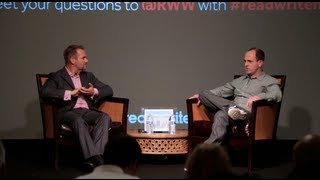
Keith Rabois, who worked at PayPal and LinkedIn, explains why a handful of tech companies generate most market-cap growth. He describes his shift to investing in data-intensive startups and argues the next trillion dollars will come from data science and hardware-software integration.
Chapters
I'd like to welcome you all to the first read-write mix of summer 2013. Thank you, thank you. I am pleased as punch to have you all here. I'm pleased as punch to have our guest tonight, Keith Raboy of Coastal Ventures. It's not a very formal program. Keith and I have known each other a long time. We're going to talk about a lot of stuff. And then we'll be taking questions from the audience and the internet towards the end. All right. Please welcome Keith Rabois.
Thank you. Thanks for having me.
Keith, I was thinking how long we've known each other. Actually longer than ReadWrite has been around.
2007? June 2007?
No, I'm pretty sure we talked back in person.
In person?
In person, yes.
We had a-- Coffee? Yes. Outside our office, around the slide corner.
Yes, that's right.
You made such a memorable impression. I can't normally do this. But.
We'Ve gotten to know each other at least virtually.
Through the PayPal days.
Definitely. Which I think is how many people, you know, it's something that kind of is the center of your reputation, a member of the PayPal Mafia.
Well, I hope it's not the center of my reputation. I mean, that's like a decade ago. And, you know, it'd be really embarrassing if you haven't done anything since.
I have things that kind of hang around me, too.
That's, what's that? Red Herring or Business 2.0 or whatever?
Yeah, let's hope it's the. But we've had lots of conversations over the years. There's one that really stuck with me. So when I, and it's probably not even the one you thought, but it's the one I made the topic of tonight's conversation, which is value creation in Silicon Valley. you have kind of gone into, you've been creating value at companies for a lot of your career, but now you've really gone pro. The whole point of being a venture capitalist is to invest in companies and generate value that wasn't there before. And you made a really interesting point, which was that Tech companies over the past decade have created, I mean, out of thin air, like, just like that. Boom.
Exactly.
Trillion dollars lighting up the stock market. But that wealth creation is so incredibly concentrated in, what, 10 or 15 companies?
Yeah, I mean, you know, Mike Maples and Marc Andreessen, I think, have a stat. It's about 15 companies, maybe 10 and maybe 20 per year that actually drive that wealth creation. So it's a heavily concentrated, you know, if you look at Peter Thiel's lecture notes at Stanford, he talks about the power law distribution of technology companies and certainly from an impact, financial impact, market cap impact, that's absolutely true. It's a power law business. The outliers trump all the other things. Like there's some stat, like if you pick the single best company in a year, it'll trump the next 10, which will trump the next 1,000, which will trump the next 10,000. That's just the business of building technology companies and certainly the business of investing in them. So yeah, it's not a normal distribution, which is Peter's point. Most things in life have a normal distribution to them. Like all statistics you learned in high school, college, or unless you went to that, got a master's degree, you probably didn't learn advanced stats. It actually presupposes that things are not a normal distribution.
The math is really difficult.
So most human brains just don't process results. Right.
If you look at, say, Detroit, the American car industry, you know, for GM Chrysler, it's not, you know, there's not this huge disparity in the relevant values. Airplane, you know, airline companies.
It's a rare thing and may be true in sports, actually, as you know, I'm a big sports fan and maybe there's some metaphors there, but like normal people don't generally process power laws very well. It's worth reading Peter's entire lecture note on this. I'm just borrowing it and doing a clip notes version.
Yeah, I mean, so when you look at the value creation in tech, it's also-- it's not so much in what we think of as startups. I mean, I guess Google is the kind of exception there of classic venture-backed startup. But really, the bulk of that trillion dollars came from Apple, which was a fairly mature company.
Well, yeah, there's an amazing stat which I've heard, and I don't know if it's updated, but a couple of years ago, my friend Roloff told me this stat about Sequoia, that something like Sequoia portfolio companies, so just Sequoia portfolio companies, account for like 20% of the NASDAQ.
Right. Well, because Sequoia is backed Apple, back.
Well, that helps.
So let's talk about Apple, because I understand just today you got to meet Mike Markkula.
I did. That was pretty cool.
He, if you don't know, he was really not just the original angel investor in Apple and kind of floated in and out of management, was always an advisor to the company until he left the board. But I mean, he really was a prototypical angel investor. He was an Intel executive who made a lot of money. and kind of needed something to do. That's a good part of your career, right?
I don't know. I think I've definitely invested in a fair number of companies, some of them very actively where I joined the board in contrast to distinction to most angels where you write a kind of passive check and everybody's really excited and then you kind of go away into the background and maybe you'll get a phone call when there's some crisis, Oh my God, we don't have money. Oh my God, I need to fire this person. Those kind of things. But generally, most angel investors are pretty passive and they don't really do that much other than kind of cheerlead for you. And they may help you get some customers and introductions. They may help you hire here and there. But I've been much more active in most of the investments I made. But primarily what I've done is actually work for a living. I've had real jobs.
That's true.
For the last 14 years.
While you were a very active angel investor, you were Working at LinkedIn, slide. Let's see.
Square, the only time I really wasn't working that I was investing was 2003. I'm working in quotes. So after we sold, you know, PayPal to eBay and all of us quit, which you know all about, I went to work for Peter at Clarium again. It's kind of like a quasi EIR as he was setting up Clarium, which is a combination of a hedge fund and VC fund and incubation shop. And that year I was basically sort of incubating things, starting things, investing things, but I didn't have a full day-to-day job where I was trying to like ship stuff. But every other investment was done while I was pretty much working.
And so, and you're now on the board of two public companies, is that right?
Yup, and Zoom.
Yeah. And so, for, you know, most of you have probably heard of Yelp, the local reviews company. Zoom, for those of you who don't know, fair to describe it as an international money transfer.
Yeah, it competes in some ways, it's a modern version of Western Union. It basically obviates the need to go to a seedy neighborhood, to go to a storefront, and allows you to actually send money from your phone or from your laptop from the convenience 24 hours a day, 24/7. And because of that lack of infrastructure, real estate people, it actually is cheaper in almost every market. It's really a cost effective solution to send money back to your family in India, the Philippines, Latin America. So it's done really well.
Right on. And that kind of, you know, that goes against the grain of kind of what feels like contemporary Silicon Valley, where we hear about like, you know, these complex kind of cash out recapitalization deals, high valuation, late stage investments. It's like, it seems like people are doing everything except going public these days.
I don't know. I think that there's two schools of thought on that. There are a lot of entrepreneurs who, for whatever set of reasons we can talk about them, are deferring or afraid of going public. And there's a lot of entrepreneurs who welcome it. If you're going to build an enduring company, i.e. a company that's going to last for, let's say, 50 years, just put a number out there, it is almost certain that the way you're going to do that is by becoming a publicly traded company. Historically, that's been the case. There's very, very, very few exceptions to that. And so if your ambition in life is to transform the world through your product technology and continue to do that every generation year after year, year after year, through different management, through different CEOs. The public companies have a very good format to do that. In addition, there's some strategic advantages, which is like, if you're gonna acquire other companies, other technologies, you need a currency that people value, and a public company sort of puts a fair market price on your currency so you can acquire things. It's very difficult to do those transactions as a private enterprise. It also means something. to the public, which is especially in financial services as an example, where all of your metrics and all of your financials have been audited and vetted, it's actually a safer place to do business for the most part. And I think like consumers react that way. So we saw that to some extent, well, let me talk about it actually in LinkedIn's concept. I think LinkedIn going public was incredibly successful as a marketing campaign for the company. And you've seen like sort of the growth in their revenue. following the public offering, which is sort of it went mainstream, more HR groups sort of bought the recruiting software, more people became aware of it, filled out profiles. So it can be a very effective marketing campaign for the company as well as a sort of inditiation of reliability. So actually I'm generally pretty positive. I mean as you said, I serve on two public company boards, PayPal was public for a while before we sold it to eBay. So I'm pretty familiar with the differences and I actually think net net, they're positive.
But that does feel like it goes against the grain of all these deals you're hearing about. And we just see relatively few-- I.
Think you'll see a lot of IPOs coming up. I think the launch has changed in a way that is actually good for companies, which allows you, generally speaking, to file privately, go through the SEC editorial process, which is a long, complicated process. Then once you're done with the editorial process, you've negotiated the final words you can use in your prospectus, then you have 21 days from when you go public to when you can trade. And so now the media only finds out about these companies once during that 21-day window. I know, I'm sure. You used to love the three to six month windup where you could critique companies, watch them sort of change their prospectus as the SEC gave them comments. And so it gave lots of opportunities for you and your friends. to sort of poke at the companies and the companies were prohibited by law from responding, which was sort of unfair. So a lot of them would get framed, you know, sort of negatively, but like the corporate communications people and the lawyers would be frustrated because you weren't allowed to say anything, which was really frustrating. So I think now there's a more balanced, nuanced approach, but it also means that you're gonna see IPOs in September, October, I suspect pretty consistently. And then early next year, assuming like the macro market stays roughly the same, but you just have less warning, so you're gonna have to do your research a little bit faster, you're gonna have to work harder.
Yeah, it is interesting. So, you know, not to pick on or praise Yelp especially, but it's a company you know very, very well. And I couldn't help noticing the nice run-up in its stock recently. I think there was a lot of, a lot of, doubt a lot of reservations that Wall Street had about Yelp for some time. Do you have any insight on what changed? Well, I'll disagree with that.
And I'm obviously restricted to what I can say to information that's public because it's publicly traded. But I don't think that's true. I think if you just look at the performance of the stock when it went public, when it traded the initial.
Day, it was a great success.
I guess I can see that. It was trading at multiples that were quite successful. So people really appreciated Yelp. That said, Yelp is still the best and only way to make local commerce decisions. So that obviously has real value. I don't know, I can't remember the exact, you know, sort of economic figure of how many people, how many, how many dollars people spend locally. But there is no way using all the technology in the world today to make really efficient at scale economic decisions except through Yelp. So that's obviously going to be a transformative company. And when that changes, you know, then things will change. But right now, like it's a, it's a great company and it is just getting started in some ways.
So, I mean, do you have any insight into what changed the sentiment?
Well, there were, I mean, I can do sort of correlation, not causation. Obviously, the company has shipped some things and released some products and features. I think Yelp platform's pretty exciting. For example, you can start ordering food through Yelp and Yelp will arrange. There'll be more things like that. The company's talked about other verticals and expanding geographically. I think internationally the company is doing really well and we have, I forget the number of markets, but Vintil reminding me of the exact number, but there's a lot of markets where Yelp is growing on the same pace or better than it has in the US. And so I think people are seeing that and people are seeing the scale. I mean there's over 104 million people every month use Yelp to make these decisions and every one of them is a commerce decision. I think we released a study or referred to a study that shows that 90% of the people who use Yelp make a commerce decision within a week. So that's incredible. There's nothing like that on the earth.
Yeah, I definitely used the ordering in feature just the other week. It's a time saver, you know?
Perfect.
It's just logical. You're looking up a restaurant.
It's a natural fit. It's great for the business. It's great for the user. It's a perfect fit.
Now, you got a lot of heat for going after Dennis Crowley and Foursquare.
For tweeting a joke in response to Hunter's tweet.
So this is actually Hunter Walk's fault. If you didn't catch that, Hunter says it was like a fight broke out on his lawn. He was trying to move everyone along. So, you know, obviously you have a dog in that fight, as it were.
Right. It's kind of amusing in some ways because it's very obvious I have a bias. I am a very big fan of Yelp. I am not a fan of people who compete with Yelp. Google included. I mean, like, you know, Jeremy and others have made lots of points about how Google biases search results to try to compete with Yelp. And we're not shy about making that point to Congress and to other legislative bodies and talking about it publicly. So, you know, I have a strong bias about Yelp's product and traction and its merits. And people can read my tweets with that discount. I don't think it's not some nefarious thing. It wasn't as if anybody read my tweet and didn't know that I serve on the board of Yelp.
So a big reason why I was so glad you could come here tonight and talk to everyone, and I think the reason why that whole episode was interesting is you actually say what's on your mind more often than not.
Good caveat.
That seems uncommon in Silicon Valley. First of all, Why are you such a free speaker? And why do you think Silicon Valley has this culture of kind of fake politeness, for lack of a better term?
I don't know if it has, so I learned a lot of this at PayPal. I mean, people were very direct, very transparent, and it led to clear thinking, clarity of thinking, and probably the company wouldn't have succeeded without a certain culture around we're gonna be very precise and disciplined about what we're for, what we're against, and why. and we're going to debate things. You could, you know, it required you to stand your ground. I remember being somewhat terrified at my first meeting with Max when I had to explain this technology product that I really wanted to do and why it was feasible. And I survived the meeting, meaning I got out of the meeting without any fatal flaws. So, you know, it has some effects like that. But on the other hand, we got to better decisions. And so I think trying to take that with me is clear thinking is better than, like, hypocritical politeness. I think Vinod talked about that in his TechCrunch blog when we announced, I was joining Coastal Ventures, about our styles as investors are to be honest and direct and not just go along to be polite because that doesn't do anybody any good. That said, I think the social media products, I think if you're going to be a consumer-based investor, you need to use these products. So I use Twitter, I try to use Twitter like a normal user. I try to use all these products, Facebook, whatever. to get a feel for what works, what doesn't, why, what psychological drivers, Snapchat, whatever. I try to use all of them and so therefore my views will be out there because I'm trying to adopt the product. So I'll have images out there on some products, I'll have views on other products like Quora and it accumulates to a perspective. Hopefully also as Peter teaches really well and I think Bill Gurley also has some blog posts about this. You cannot be successful as a company and as an investor by being a consensus oriented thinker. You have to be both contrarian and right. So both, not just contrarian, contrarian and right. If you're contrarian and wrong, obviously you lose money, your company fails, et cetera. If you're consensus and right, you actually don't make any money and you can't build a startup in a space that other people are paying attention to if you're doing what everybody else does. So I think there's a premium in our jobs as entrepreneurs, as investors, to try to take a different perspective and that yields hopefully a coherent way of thinking about the world that's slightly different.
And not to go T.V. on this, you were actually trained as a lawyer. I was. I think of lawyers as being particularly cautious about what they say. How did you get over that?
There's some lawyers on T.V. that I don't think that they described pretty accurately. I think what lawyers do, you do get trained to be cautious as a lawyer. And I was a litigator, you know, for, well, I was a clerk and then three and a half years, so about four and a half, five years as a litigator. You do learn to be conservative in the sense of your job and the way you're trained in law schools to what's known as issue spot. And so you walk around life and you walk around the world and you actually look for all the things that can go wrong. You kind of collect this checklist of all the things that can go wrong. And your brain is always processing things like that. Well, this could be this kind of problem, that could be over there. And you're storing this in your brain and that's literally how you get graded in law school. So that switching to the entrepreneurial mindset is pretty radically different. At a minimum you've got to stop doing that and or if you do it, just ignore a certain piece of it. You would never get anything done if you were just cataloging all the things that could go wrong in a startup. I mean a startup is by definition very chaotic, usually al mass in some ways and if your brain is trained the wrong way, you'd freak out all the time. So that was a pretty big epiphany. It was like, you have to stop doing that. Then, but the one thing that's useful is there are some things that actually matter. Like, it depends on what kind of business you're in, but in a heavily regulated one, like in healthcare or financial services, or one that has, you know, major IP concerns, like let's say YouTube, you can actually catalog the key risks and separate and calibrate them different than the ones that other people are terrified by. So actually, I look for startups, whether as an executive or as an investor, that actually are taking on risk intentionally. And I hope that this legal skill comes in handy in sort of calibrating, well is this a real risk or is it things that people just believe is kind of a risk? And so, in fact, in the YouTube case, actually I did the due diligence on behalf of the company to representing the IP risk to Sequoia's lawyers when they were considering investing. Happened to be I was a sort of an IP litigator back in the day, and so I knew enough to be dangerous. So thank God they invested.
Yeah. That's an interesting question. If I put you on the spot and said, what percentage of Google's value today is in YouTube? Do you have a guess?
Wow, no. I don't profess to really understand. Like, public company, you know, told public company market apps and all that stuff.
Some of the parts, like how would you break it out?
I think the way I would describe it is, I think Google would be more vulnerable without owning YouTube. There would be different ways to attack Google's core business if someone else owned YouTube. And there's just a lot of searches that occur and a lot of audience there. And I could think of product strategies to stitch that together in a way that would be dangerous. So I think it was more of a defense, very smart defensive acquisition. Facebook acquiring Instagram is the classic example. Worth one of those billion dollars. Absolutely. Because Instagram could have destroyed Facebook. It doesn't mean it would have, but.
It had a shot. Or someone else.
Or someone else owning Instagram, less likely because then you have the corporate acquisition problem and depends who owned them. But yeah, in the right hands, Instagram.
Could have easily threatened Facebook.
And at the very least, Facebook took kind of that option value. Oh, absolutely.
Off the table. One of the smart, I mean, absolutely brilliant decision.
Are there any other properties out there that are kind of like key chess pieces? Well, Twitter would be if you could acquire it. You could do a lot with Twitter.
The last number I heard, and this is just someone, just talk, was $15 billion at an IPO.
I have no idea what, there may not be a price that you can buy it or acquire it. That's often the case with really good companies. Most companies that sell, they sell out of fear. Possibly every company that sells sells out of fear. It's like fear out of competition, fear out of internal chaos, fear out of I don't know how to grow this anymore, fear out of something. PayPal, we had some of those fears, which is why we sold. It might have been a mistake, but at the time, those fears were really scary.
Again, PayPal is a substantial portion of eBay's value today.
Oh yeah, and probably you can argue it's almost 100%. eBay has no growth. eBay has no growth. PayPal has a lot of growth. PayPal is definitely the future. And there were some people at eBay at the time to their credit that recognized that. There was one person who is kind of annoying in the sense of he was our competitor, but once we were negotiating the transaction, he actually looked across the table for me and said, you know, I really hope that PayPal will be more than 50% of our revenues by X years. And so they had the insight that it could be that, and it will be, but if you stripped out PayPal from eBay, like no one would want eBay.
No, I think you've been fairly openly critical of PayPal's management over in recent years.
It used to be really good in 2000 to 2002.
Fair enough.
I can recommend some people. David Sachs might be available. He'd be a great executive. I don't know. I've been-- David was a pretty good executive. Peter, I don't think, wants to go back to being an executive, but he'd be pretty good.
I've been putting up David Sachs for for bigger jobs at Microsoft though, so he might not.
He can certainly do a better job, but not that he'd want to, but he can definitely do a better job. Jeremy at Yelp, obviously. A lot of talented people. Even fired executives are doing very well.
Okay, so David Marcus, do you think he's doing a better job than predecessors?
I don't know. The work he's engaging in hasn't yet paid off. and it's unclear. So I think it's unfair to kind of gauge a year, I guess he's been in a job for about a year. The prior regime was so bad though that almost by definition he's doing a better job. I mean there were seven years, maybe seven years that at least in the United States, PayPal did nothing productive, arguably did actually things to retarget its like value. So, you know, it's like compare, it's pretty easy to beat that.
Yeah. You still hear these stories about, and it's typically charitable fundraising campaigns or crowdfunding campaigns getting shut down. And they're probably breaking the rules as written, but it just seems like PayPal can't get out of-- why wouldn't you have a team of-- I wouldn't even focus on that.
I mean, the PR obviously writes about those cases, and they're all extreme examples. I would actually talk about the day-to-day user experience for every single user. not the outliers, like that are 10 basis points of their transactions, but like the product itself is broken. It's cluttered, you know, it's added a lot of bloat over a decade and is much worse. I mean, I'm actually embarrassed. I remember when I joined Square, Jack sort of introduced me to the company and was talking about PayPal and blah, blah, blah, their product. And there's a lot of people who are wondering, like, that's a pretty heinous product. Like, I hope you're not really proud of it. I was like, well, if I have some screenshots from 2002, 2002 and 2001, you know, when David was tyrannical about editing things out, actually you'd be pretty impressed. We were one of the first companies that actually hired a design team. We had a separate design team. In fact, the leader of our design team for a while actually ran product. That was pretty revolutionary thinking in 1999, 2000, 2001. So the product itself was pretty damn elegant. You could have, you know, sort of any color, as David would say, you could have any color you liked as long as it was black. So we steered you in a very Apple-esque way to transact. And it was a pretty simple interface. It's now just got all of this mess. And you need someone who can say no and has a vision of where it should go, sort of in the product and CEO role to be really successful. And the company didn't have that for a decade, and it was obvious.
So let's talk about Square. I think everyone knows that you're leaving was maybe not how anyone wanted that to go down. You left, and suddenly they roll out all these new products. So did you just set them up for massive success or were you holding them back?
I have no comment on that. Products in financial services have different gestation periods. Obviously hardware takes more time, software can be done faster. So there's some things that have been in the works for a while, there's some things that are new and novel. But I shouldn't, and I don't think it does anybody any good talk about which products are which.
Fair enough. I was kind of marveling at the Square stand in particular. I think it's pretty obviously that's the brainchild of Jesse Dorogusker.
That's actually quite good pronunciation. That name is not easy.
Who's a former Apple executive that Square hired as head of hardware, I believe.
And.
There are lots of things you could say about the stand product. What I really find interesting is it basically does away with the initial innovation that launched Square, the idea that you would plug a little credit card reader into the audio jack. It no longer uses that technology.
It's actually-- so I wouldn't say it does away with it. I'd say it complements it. I mean, in fact, so I have a Square stand on my desk at work. Is it that beautiful and it's that amazing a product? so I really like looking at it every day and I'm just gonna start charging entrepreneurs when they show up. There you go. But I would say it's complimentary. I mean, there's things about, so the product itself, the original Square, is great if you're mobile and it's very flexible. However, imagine you're running a coffee shop as a canonical example. There are some security issues of like, What if you're not looking? Could someone steal the iPad right there?
Yeah.
And so being able to bolt that securely is a big feature.
Right.
Second thing is there are features around being able to swivel that are actually pretty compelling.
Right.
Because both the cashier, there are briefs there, cashier needs to use the product as well as collect a signature. And so there's things that are just better in certain environments using the Square Stand. So I think it's as more and more merchants want Square, having products that blend the hardware and software together that make a more compelling experience for that merchant makes tons of sense. So I don't think you're going to see people who are like personal trainers, like your personal trainer, isn't going to be walking around with a Square Stand and collecting your payment. Nor is the taxi driver probably. But there will be specific environments where a Square Stand is like a lifesaver.
Absolutely. I guess my point is it's an evolution of the product that almost displaces the previous product completely and yet has some essence from the previous product.
It does have the same essence. I mean, you can tell from the brand identity that it's clearly the same sort of company and provenance. As well as I'd say that you will see strategically square blends hardware and software together. That's a very rare skill. I mean, that's what Apple literally pioneered in the early 2000s. And the funny thing was, there's an old Steve Jobs quote that almost nobody read, which was in 2001, Steve said, We're the-- well, basically, I'll paraphrase it, I'll give you the direct quote. The basic point was that the world is going to require the intersection of hardware and software. And what Steve said is, we're the only company in the world that can do world-class hardware and world-class software. We're just going to ship products that require the intersection of the two. And that's what we did for a decade, and nobody can compete. So think of Square as blending world-class hardware, world-class software, and world-class, let's say, data science, and nobody can compete with that.
I think also, what Apple is lacking in that equation, what I think they've realized is services.
That's more a close 2010, 11, 12, that now services or data, however you want to think about it, whatever jargon you'd like to use, will become increasingly important. And I suspect you'll see Apple evolve that way too, but that's not their heritage. Their heritage is hardware meets software in an amazing blend. And so this is new for them. And I think that that's, you see a little bit of that showing up in sort of their competitive landscape.
Yeah. Is that where the next trillion dollars.
Gets created in data? We think so. So we like to invest. We didn't talk that much about what we do, but we generally invest in hardcore technical or I'd say we invest in math breakthroughs or science breakthroughs. So we believe the math side is data science and that's the future. So in everything we do, we're looking for how do we use data to provide compelling experiences that have never been possible before. So that may be capturing new data and everything from things like this to literally an EKG machine that you can plug into your phone and it takes your heart rate all day long or a replacement for, you know, an off the scope and takes ear scans all day from the convenience of your home. It's capturing new data, analyzing data in a really rigorous machine learning oriented way, and then placing a UI layer on top of that more like a palate here that allows a normal person to kind of interact or like one of my favorite companies, Tableau, allows you to sort of interact with that. So we are completely committed to data science and we're going to be making investments across all kinds of verticals. We have a whole bunch, IAST is another good example. cutting-edge data science. It is really the quintessential Silicon Valley data company. In addition, we like hardcore technical risk. So we like to fund things that other people don't want to invest in that are predicated on fundamental changes in science. And so that's what we do. So yeah, we absolutely believe like in healthcare, for example, the practice of healthcare today doesn't use data at all. It's like basically a practice of medicine. It's not a science of medicine.
And we're going to help change that. Leslie, I know we're running into time for questions, but I just want to ask, I understand you met with Senator Marco Rubio today.
I did.
I hosted him over at Coastal Ventures.
I did.
What brings him out to Silicon Valley?
Well, I think as many people know publicly, he is at the forefront of and has really been helpful to some of the immigration debate, which is going on in Washington, which a lot of Silicon Valley leaders and companies care a great deal about. And so I think he wanted to, you know, get more exposure to technology leaders and companies and get more feedback about what he can do to be more helpful, you know, in that debate. And we were very happy to give him some data points and examples about, you know, how sort of the current system is and how can we improve.
I mean, your personal experience with with immigration and Silicon Valley's Max Levchin for.
One, among others, but yes, like you've.
Seen a lot of value created directly Absolutely.
We believe in the meritocratic world and that what we do is very difficult and you want the very best people and you want to get them for wherever you can and attract them here. And the founders of something like one-third of the publicly traded companies, I saw that stat the other day, of the last decade are immigrants. Sequoia has, I think, still on their website, that they prefer investing in immigrants. So there's an obvious, there's a lot of data that supports that this is the best way to drive technology innovation is to have a meritocratic open for all sort of approach. And then we need to be in the United States the magnet for people and not restricting people. And so I think that that is changing in the world. I mean, meaning in like DC. I think like it's just a question in my mind of when, not it may not be this month that, you know, in September that something happens. It may take another one or two years, but There is an inevitable trend and most people realize that. So hopefully you'll see Republican leaders, because I'm a Republican, I hope to produce more Republican leaders sponsoring and supporting immigration reform.
Is it hard to come out as a conservative in Northern California?
No, I mean, technology, Silicon Valley is a bubble in lots of ways. It's certainly not representative of mainstream America in lots of different ways. I don't think it's difficult at all.
Well, I know that we've got lots of questions. Some are coming in on the Twitters. And we also have microphones in the room. Let me pull some questions down while we also-- anyone-- Alyssa has a microphone. Anyone with a question? We've got one up here.
Hi. So I know that you have a.
Lot of experience with publicly traded companies.
Companies. Marc Andreessen pretty recently said that the value of $100 million has changed very dramatically from what it was in 1999 to what it is today. In fact, the value of $100 million for a publicly traded company on revenue has gone down significantly.
To what do you attribute that?
We believe that an overzealous estimate is about 17 to 1 in 2001 and today it's about 6 to 8 to 1. So I haven't actually seen that, so I'd like to actually read it because it's somewhat complicated. So I don't really know why. I can speculate on a couple of different potential causes assuming that that's factually true. But the mix of companies may drive that, if nothing else. A company that does action, this actually happens a lot. I have this sort of discussion with entrepreneurs a lot. $100 million in a company that does X is very different than a company that does Y and Z. And they're not valued the same at all. like multiples can range from 1X to 14X, let's say. And so possibly the mix of those companies has shifted to companies that are more like this, and that would explain it. But I actually would really need to see the analysis, and then I might have a perspective on it, so unfortunately I can't, but just email me and I'll give you feedback on it.
I mean, it seems pretty random too, whether it's based on current sales, projections, trailing 12 months. projected 12 months or like totally far out.
So what I have learned about that is-- Cash flows. That's a macro market thing. So in hotter markets, people will give you much more credit for prospective sales, and you'll basically trade against 12 months at least out, and also top line less than bottom line. In a tighter market, you'll trade more against your current metrics. and possibly more against your earnings. But that's a macro point and there are enough exceptions that that's not totally true. But that is a way to think about it, is you're mostly valued right now on your growth, which is top line, and less valued on your bottom line, like Amazon being a superb example of that.
I mean, but Yahoo! right now is not growing.
I think they're getting-- They're getting credit. They're getting a strategic credit, which I think there was a stat yesterday, again, I saw a note, a tweet from Marissa about how Yahoo's audience is back to being the number one largest. So if that works, being the largest.
Audience has real value. Oh, when you add Tumblr in, they-- I don't know.
Cross the line.
I mean, that framing is pretty important. I mean, that's why they bought GeoCities. And that did wonders for them. for about six months. Let's see, we'll take the next question from the audience.
Am I on here? Yeah.
So in the 1990s, the United States government took pretty aggressive action against Microsoft for antitrust violations. And, you know, thinking about what you're saying with regards to Google and Yelp and so on, what do you think of government intervention for fair competition in general? And do you think Google is too powerful.
Wow. So I have a complicated history with this, as one of the things I primarily did as a lawyer was an antitrust litigator. And I defended antitrust, mostly British Airways, who's accused of various antitrust violations, had some light involvement in the Microsoft litigation because our firm was representing Microsoft. They actually, fortunately for me, didn't follow my strategy. I had sort of a different approach to the case. and had we followed that strategy, I might never have left because I would have been writing briefs all day and never had enough time to talk to anyone on the phone. But in any event, I started my career basically with a reputation as Keith has literally never seen an antitrust violation. So I was the guy you'd go to when you needed some way to defend what you were doing. And I was pretty good at it. I'd read every case ever written about antitrust law and I could pull different precedent from different places and stitch together really well. So I got a whole bunch of motions dismissed granted is awesome. So then I joined PayPal and we had some pretty annoying large companies that were trying to kill us. MasterCard, Visa, eBay, you may have heard of them. And to some extent we used some threats of antitrust action to at least deter them and make it clear to them that if they took the wrong steps that it might have some consequences. So I've been all over the map. It was pretty ideologically inconsistent in some ways. And then when eBay purchased PayPal, and this is probably past the statute of limitations, so I can probably say this pretty directly, I had a lot of framing, reframing to do about why the acquisition would be acceptable to antitrust parties. And we actually did a good enough job that we didn't even get a second request, which is a miracle. That was literally a miracle.
So basically you had to turn around overnight, literally overnight.
Friday before July 4th, we were still lobbying the government to basically take action against Meg and eBay.
Hopefully these were not the same set of regulations.
No, it was pretty much.
Okay. Wow.
And then July 4th happened and we agreed to a transaction. Then July 5th had to call up people and say, I didn't really mean that.
You literally had the same conversation.
Well, I said something smarter than we didn't mean that. One could have interpreted that. But we came up with a pretty good frame and it was actually more intellectually coherent than I'm actually giving it credit now. I'm being somewhat sarcastic about it. But there was some logic to how we shifted positions. But it definitely was a complicated exercise. So on the Google point, I think I'll just defer to things Yelp said publicly. the things Jeremy's testified about, and hope that people have the right appropriate power will take action.
Great.
Hello. Oh, hi.
Hey.
I'm Angela. So I know that you've helped build a lot of teams over the past years, and clearly you're building teams out as you invest in different companies. What are some of the biggest challenges that you've seen yourself as teams build out coming from very small to scaling largely. So the biggest problem is everybody else wants to hire the same people to some extent, right? In a hyper competitive market, trying to get a monopoly on talent is really difficult. And at PayPal, we were fortunate in a sense of after, let's say, March 28th, 2000, there were no other companies hiring.
Which was pretty much when you had raised what?
$100 million, like three or four days before the market collapsed.
And merged. And merged with X.com.
So basically, PayPal only existed as a result of being three to five days on time. Three or five days later and closing that $100 million round, PayPal would not have existed. And nobody basically in this audience would have heard of it other than Vince probably, who would be crying. But Peter actually did have the foresight. This wasn't accidental. It wasn't luck. People talk about luck a lot. This was not luck. Peter was adamant that that round had to close as fast as humanly and went through a lot of machinations, strategic and otherwise, to ensure that the chance that that round closed quickly would occur. So we did some unconventional things to speed that up. But it was really down to three or four days, three or four days more, and no PayPal. And there's a lot of examples of that in all the companies I've worked at where you're very close. The line between success and failure, I guess the takeaway point, is really, really thin. And there are things that succeeded that were on the precipice of disaster. many times. And there was things that probably failed that with a little bit, you know, different execution or slightly different prioritization might have succeeded. So that's my number one takeaway through like 14 years of doing this stuff is a lot of very, very, very pregnant moments. On that point though, once we did close the $100 million and merge, then the company was set up, you know, for weathering some of the downfall, it's sort of the internet. But anyway, I forgot where I was going with the machine.
No, I mean, but I think the answer is-- so, no, no, so on.
Teams, so here's the real point. So we have this advantage during 2000 to 2002 of anybody we extended an offer to would basically accept it. I think the stat probably was 90 some odd percent. Because literally eBay was the only other company in the valley that was hiring. Google was kind of hiring, but there was like five engineers. that kind of pace of adding like an engineer here and there. So that allowed us to assemble an incredible team. Now, Max and Peter still had to sort of pick the right people. And then it was a very network driven business of where it was really difficult to get a job if you didn't already know somebody in the company. So you used like personal networks. Max used his personal network to hire most engineers. Peter used his personal network to hire most non-engineers. And that's how the team was which if you're really good at gauging your friends, it can be an incredibly successful strategy. A lot of people though are not very good at gauging their friends, like their skills, but Peter and Max actually happened to be really rigorous and almost ruthless about it. So it worked out really, really well. If you're in a competitive market, which is today, let's say post 2008, I think you have to do one of five things. Either you have to hire people that other people won't, which works as long as you hire, you know, as long as they can actually perform what you need them to. But you've got to basically find talent in other places or with a different profile. Or you've got to hit escape velocity and become one of about five companies that people will sort of gravitate to because it's good for them. Not because it's good for you as the company, but it's good for their career. But there's only like two to five companies at a time that kind of have that profile. So that's sort of, you better, that's a difficult position to be in. But if you can get there, you can accumulate just versatile talent. Third thing you can do is you can sell mission. And if you have a vision that's incredibly differentiated and it will transform the world, you can get people that would otherwise not consider your startup. So Palantir did this back in the day. Palantir has an incredible track record in sort of recruiting people. Even before it became famous and basically when it was still stealthy, it had a close rate with counter offers to Google and close rate counter offers to Facebook that was higher. So they were winning vis a vis Google and winning vis a vis Facebook every year. And the reason why was the mission of what Palantir represented at the time was compelling to a certain set of people so they were willing to make different decisions. So that's great if you have that kind of startup and I generally encourage people to start those kind of companies. It's certainly the kind of companies we like to invest in. If not that, you can go deep to your, you can build your own network. That takes a lot of time and effort and it's really hard to do for a first time entrepreneur. the other problem with that is your network gets older. So my youngest colleagues from PayPal are now mid-30s, married with kids. You know, I'm thinking of like the single youngest person who worked at the company. My network of the two colleagues I brought with me to LinkedIn in 2005 are now like mid-30s, et cetera. So you have to constantly revitalize your network if you're gonna start and do new things because people will, you know, sort of opt out into going back to a really raw startup again. But that is a good path of using whatever free time you have to build a network because that's what you're going to tap into, especially in the very beginning. Peter, for this reason alone, Peter said on stage once that the number one question he asks entrepreneurs when they walk in pitching him at Founders Fund is how are you going to recruit your 20th engineer or 20th employee? Because the first five or 10 you can get on a variety of different tactics. But at some point, you've got to compete with every single other person in this room and a thousand other companies out there. And I made this point in 2005 that I actually don't think it's necessarily a healthy thing for Silicon Valley if too many companies get funded because all the talent diffuses and you have a suboptimal number of talented people per company. So you have less critical density of talent, which means less super successful companies. So all of this angel investing and the proliferation of capital may arguably create less important companies.
I know we've got a question here.
My question is, in the tech companies you've worked at and others you've seen as an investor, what percent of the top executives would you say come from non-technical backgrounds, like law or something else? And what are the specific strengths that have enabled those people to succeed in technology companies? Probably about half and half. I mean, you can go through all of the famous companies in history and sort of look at them. But like, you know, Jeff Bezos came from a basically non-technical background. He was more trading, but he could code. You know, at PayPal we had a mix. You know, Peter was not technical. David wasn't technical. In fact, there's a funny example when he was walking-- when he took over a product, he was walking around the.
Office with-- I think it was HTML.
For Dummies or something.
That would be-- where's that picture?-- very inspirational. You know, and these days like that would be, you know, tweeted by an employee and like- It probably would actually.
You know, at Yelp, like Jeremy is technical. He was director and then VP of engineering at PayPal, then went to business school, dropped out. Jeff is not really technical. He had a mechanical engineering undergrad degree, but went to management consulting first.
Jeff Donahue.
Yeah, COO. So I think you have a compliment, you know, obviously like Apple, you know, has a mix of technical and non-technical. So I think it's about half and half. It also depends on what you're trying to build. It's very different for, let's say, a consumer photo company than it might be for rockets. I literally mean rockets. Or databases. If you're doing a next generation database, I don't know that you need too many people that are not technical around for a while. Eventually you're gonna need sales and marketing or product marketing. That's a foundational part of an enterprise. company, but for the first x years, you probably don't need any of those people.
I keep hearing these startups saying that they've hired literal rocket scientists. And I wonder what the actual rocket science companies do when all these startups--.
They actually hire non-rocket scientists.
Yeah, that's probably the smart approach. And I think we've got time for maybe one more question. Yes, hi.
You mentioned earlier about antitrust litigation. stuff, eBay, Google, and so on. For people who are third party companies building on other people's platforms like eBay, Facebook, Twitter, Google, just to name a few names, what advice do you have, say, to be able to get a union together, to lobby, to interact with the regulators and law makers? I wouldn't do that. I don't think that's likely to work. I actually think that what you have to do is you've got to build a product that real users love. not just use but love. And you've got to figure out a way to get it in enough of their hands so that they truly can't live without it. Because then when the platform wants to change things, you have real people that are animated. And if those people are animated, they can go to the media, they can go to their congressmen. That's what you have to have to protect yourself. Anything you do tactically isn't going to help you. It's got to be scaled and true love. Like Uber's followed the strategy really really well. YouTube got blocked by MySpace for two or three days, but there was enough users that were just like, absolutely, I have to have access to YouTube. PayPal, we had a kind of funny run-in with Louisiana banking group on the precipice of our IPO. And what actually probably saved us was we had 54,000 merchants, sort of users, in Louisiana, which is a lot of voters. And effectively, you could say to the state of Louisiana, do you want us to send them to your cell phone or your email? when these people get turned off. But it had been 54,000 in the state of New York, it wouldn't have mattered. It's just the irrelevant number of voters. So it's like how much scale do you have and how much do those users really depend upon you really love you? And so that's what I would focus 100% of my energy on.
And to make a point about these antitrust and consumer protection laws, they don't protect businesses.
Yes, most people don't understand antitrust laws like, widely misunderstood, partially because European antitrust law is different than the United States antitrust law, so you can easily get misinformation without malintent. But fundamentally, the US antitrust laws are designed to protect the consumer, not other companies. And in fact, there's a whole bunch of pithy statements through precedent over the last 200 years about that. So you have to show harm, you have to show underlying harm. not harm to like this business went out of business, like structural harm in the market. And that's actually quite difficult. But your real protection is you've got a product that people can't live without. And if you can figure out how to get enough of those people before the platform figures out this, which is something we did badly at Slide, truthfully, when we got in a little bit of a debate with like many other developers with Facebook about some of their rules changes on the platform, it was not obvious to Facebook that our users of our products were so addicted that they would sort of get frustrated with Facebook and communicate that. Had we built different products that were more addictive, we might have been able to leverage that to deter Facebook from changing the rules on the developers. So, you know, certainly I made that mistake myself.
Well, I think that's a good note to probably end on. If you build really valuable products, you're in a good position with competitors, regulators, anyone you might go up against.
Yep, focus on that.
Cool. Thank you, Keith.
Thank you, Keith.
More from Keith

This Billionaire Trains His Body Like He's Building A Billion-Dollar Startup | Keith Rabois


Vinod Khosla and Keith Rabois on Building and Investing in Enduring Companies | Ep. 40



