Keith Rabois explains how rising interest rates reset tech valuations through DCF models, then introduces OpenStore, his new venture that gives Shopify merchants same-day liquidity by underwriting their businesses with data. Unlike Amazon roll-ups like Thrasio, OpenStore lets founders exit immediately instead of waiting for generational transfer.
Chapters
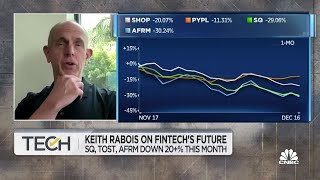
It's interesting. We're talking about an overall pullback, but Shopify is still up around 15% for the year. Affirm is about even from where it first started trading. But, as I mentioned, PayPal and Square down a bit. Is this a valuation reset or something more concerning?
Well, look, I think this is very straightforward. When you raise interest rates or when there's an expectation of raising interest rates, you're just kind of cash flows are going to change. You're just dividing by a higher number. So tech companies tend to produce a lot of cash flow in the outer years, 5, 10, 15, 20 years in the future. And if you divide by a non-trivial number, the valuations are just going to change. It has nothing to do with the performance of these companies as far as I can tell. It's just a simple discounted cash flow analysis. And basically nobody was discounting the price as a value by any meaningful number until inflation started kicking in. It was obvious to everybody, which means.
Interest rates must go up. But it certainly seems to be impacting some stocks more than others. I mentioned Shopify is still up about 15% for the year. I think that's also true of Adobe even after the pullback after its earnings. Both of those have some play in e-commerce, you know, Shopify especially. But there's also a broader idea that they're changing the game. I guess you could say that a lot about a lot of these companies. What do you think accounts for the difference in the degree of these pullbacks?
Well, some of it's just cash flow expectations, like how far out are the cash flows that are material? Whether they're three years, let's say, it would be, for example, probably sooner rather than later, somewhere further out in the future, more high growth, very high tech companies where a lot of the profits are, you know, 5, 10, 15, 20 years is the future. So that may account for some-- obviously, there's micro performance. There clearly are some stocks, some companies, some equities that are going to outperform others that better management teams, better potential in the market. But if you look at the effects, some of the best run companies that I'm familiar with, Jordan Ash, you know, has been significantly affected. Square has been significantly affected. So I don't know, you know, exactly what's driving the, you know, the alpha versus the beta. But I think if you just did the discounted cash flow analysis per company, you could get to 80% of the right answer.
You know, Keith, you mentioned Shopify. I want to get you to tell us a little bit about your new roll up of Shopify merchants open store. just hit a $750 million valuation. What's the opportunity that you see there over the long term and how is this different from what we're seeing in the roll ups of Amazon merchants with companies such as Thrasio?
Sure, so absolutely, if you take a step back over the last decade, the most impressive tech story other than maybe Space X is Shopify. You know, out of nowhere, Shopify has constructed a 150 to $180 billion company Right down the middle of the street spot of Amazon. So basically portraying this myth that Amazon has all this pseudo monopoly power that all these politicians talk about. Shopify has created a direct competitor over the last decade that's doing better than Amazon. So the biggest trend is building a new vibrant entrepreneurial endeavor through creating a Shopify store. So when I looked at that, I said, wow, okay, great. There's this macro trend of everybody starting a business on Shopify, well guess what? Only a small fraction of those businesses are gonna be explosive enough for venture capital, like my day job. One out of every 100, one out of every 1,000 may be, in fact there's two or three public companies that were built off of Shopify, but the average entrepreneur that starts a business on Shopify sells less than $10 million in sales, it isn't exploding, and they don't really have access to debt. So those entrepreneurs have two choices, they can run the business forever, decades or they have no option for liquidity. And I said, well, guess what? We're going to create options for liquidity. So we're instantly underwrite these businesses using just data, same day, give people an offer. And whenever they decide, the entrepreneur, the provider, the founder, decides that here's he no longer wants to run the business, we'll give them liquidity and buy them out. And so that encourages more people to start businesses on Shopify because they now know there's might be a tunnel. They don't have to wait for some generational transfer, like their son or daughter taking over the business, or they don't have to commit the rest of their lives to something. So that's the most important thing. Compared to Amazon startups, Amazon roll-up startups, and there's 13, 14, or 15 of them all trying to do financial engineering. It's basically new age private equity. Basically, we're going to buy low, low EBITDA, and sell high, with the market being at its height six months ago. There is an arbitrage opportunity between EBITDA that they can acquire businesses out on Amazon and what they hope to trade out. I think that arbitrage opportunity has been materially compressed.