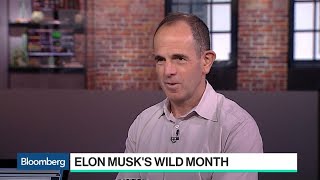
In this interview, venture capitalist Keith Rabois discusses several interrelated themes. He explains the challenges of maintaining transparency in public companies, recounting a PayPal episode where founder Peter Thiel insisted on sharing detailed metrics despite legal pushback. Rabois then evaluates Tesla’s market valuation, arguing that at a $51‑$60 billion market cap the company is fairly valued and that Elon Musk’s aggressive tweeting carries asymmetric risks and benefits. He critiques Musk’s “funding secured” statements as typical founder shorthand rather than outright falsehoods, and emphasizes the legal constraints on CEO communications. Rabois also stresses the importance of sleep for personal health and productivity. The conversation shifts to political and platform issues: Rabois comments on former President Trump’s criticism of Google, the ideological monocultures within major tech firms, alleged bias in search results, and the historical use of media for state propaganda. He argues that tech platforms are not uniquely responsible for misinformation, noting that governments have long employed similar tactics, and that the primary duty to protect citizens lies with the government rather than private platforms.
Chapters
What do you make of this whole saga? The U-turn, the tweets, the probably being a little too transparent, if not untruthful?
Well, I think, you know, transparency is complicated. Obviously, it's a virtue we all talk about and advise our portfolio companies to be more transparent. Obviously, as a public company, there are some limits on transparency that you have to factor in that you don't as a private company. And we fought this battle actually at PayPal. Peter was Peter Thiel was very adamant that we were going to continue to provide economic and metrics transparency to all of our employees, even after an IPO. And the lawyers who were advising the company freaked out. And the investment bankers actually freaked out. And they all tried to convince Peter that we just couldn't do this. Nobody ever did this. And Peter was adamant as Peter can be. And he's like, we can't run the company if people don't have access to the metrics. So what we finally compromised on is we actually stripped out the last line, which is revenue, and maybe one more line in a spreadsheet. But anybody who could do math could calculate it. and I eventually appease the lawyers. So it's hard to preserve transparency as you become a public company, but if you want your employees to be effective in terms of making accurate decisions all the time, you want to be as transparent as possible. Obviously, social media encourages more transparency, and I think a lot of CEOs thrive in a transparent world, and they tweet about their company, they tweet about their customer successes, but there are legal constraints. And when something goes wrong, everybody remembers with hindsight, the disadvantages of transparency.
You're a former lawyer.
Yes.
Do you think Elon Musk went too far? Well, I can tell. I think there was a you think he went to.
No, I would say is there's asymmetric probably downside to the tweet versus upside. Like so for me, like I look at Tesla and I think it's a very fairly valued company. It's a $51 billion market cap company today. And I wish all my portfolio companies were worth that much. So I think it's not as if this company is being treated unfairly in the public markets. Actually, it's quite well regarded in the.
Public and yet he seems to not like how it's being treated in the public markets.
Yeah, so that to me, that confuses me a bit because I could see the case of Tesla was trading at three or four billion and thinking like the world's crazy, why are all these people irrationally attacking my company? But at $50, $60 billion, it feels like a fairly actually impressive valuation for the company. And so I'd be pretty happy as CEO of a public company that was at $60 billion with their exact current metrics. so I don't totally understand the calculation of, like, the upside versus downside of tweeting in this case.
Well, he's also told several untruths, not the least of which was saying that funding was secured when it is clearly not. He's also, you know, misled in that New York Times interview about how quickly he flew in and out of his brother's wedding, which nobody cares. You know, he should be going to take his kids to see the game of Thrones set, but why lie about it? Is that a problem?
I didn't read the New York Times profile.
How could you have not have read the New York Times profile?
The New York Times is so biased on technology, I just avoid it. But fundamentally, I do think that obviously funding secured, there are limits to 280 characters and how much nuance you can convey. But once you're a public company CEO, the nuance is going to cut against you and it's going to be used against you and you have to calculate that is part of how you compose your tweets.
Funding secured is pretty clear. There's no nuance there.
Well, I mean, we have founders all the time who tell us they have funding secured. What they really mean is someone might give them a term sheet or someone has given them a term sheet, but that doesn't mean it's a binding term sheet. I mean, there's a lot of the business world operates this way.
Okay. So do you think he's still the.
Right person to lead this company? Oh, absolutely. I mean, as I've already said, like disruptive changes are generated by and driven by disruptive people. And basically every founder that's created a change the world company has things that are a little bit of screw loose here and there. Like I've never met a founder who's been incredibly successful that isn't different than a normal person in some way. So I think like you get the upside of seeing things that other people don't see, being willing to do things that other people won't do that leads to these companies that everybody finds iconic, iconoclastic, and, you know, actually literally transformed the world from Apple on down. And so I don't think you can have a perfectly homogenized CEO and still accomplish things in America.
So does he need to do things differently, though? Does he need to hire number two? Does he need to stop tweeting so much? I think maybe get some sleep.
Sleep is good, so as you know, I think maybe actually my only critique would be, I'm an addict for sleep. I believe everybody should get eight hours of sleep and focus on that. There's great books like why We Sleep, and I think at some point, is going to wake up and realize most health issues in the United States are driven by lack of sleep. And it's just a longitudinal data question of you need to study people over so much time with so many variables. But one day we're going to wake up and realize lack of sleep is worse than smoking a cigarette by far, and it just destroys people's lives.
So I would totally focus on the sleep thing, and that will take care of itself. OK, changing gears. I want to talk about Trump, who's been railing on social media, railing on Google.
I know you have some controversial thoughts on this.
Do you think Trump has a point?
Yeah, I mean, without a doubt, if the government ever sued agency, Attorney General, government agency ever sued one of these tech companies and was entitled to discovery, they would find very embarrassing emails, threads, internal discussions that would look terrible in the public domain. There are monocultures in these companies. New York Times did write expose about Facebook and how, you know, some of the best engineers at Facebook are revolting. So you read that one. I read the headline. So they were just showed some diversity in their publication of it. but fundamentally, these companies have very strong ideological views about the world, and they are enforcing those views on their employees, as is played out in some public domain, but a lot of it's in the private. That has clearly had some consequences. So for example, a talking point. A lot of people think that InfoWars should be banned from various social platforms. You can debate that forever. The intellectually interesting question is, do the same people who are arguing to get rid of InfoWars Are they willing to suppress all the videos and all the arguments from Palestinians that say 9/11 was a hoax? Usually they're hypocritical about that. They're not willing to pull down the content from Palestinian groups that are saying 9/11 the hoax, which is at least.
As false as anything Alex Jones has ever said. Would you go so far as to.
Say Google search results, their news search results are biased?
I don't know.
I'd like to see the evidence. I think there may be- I know there is not. I know there- well, I definitely know.
For a fact that their search results.
Against Yelp are biased.
Fair point. Fair point.
The EU has concluded that.
Okay, so that said, these platforms are being misused by state actors to spread misinformation. This is concerning. Are you concerned about this? I know in the past you said the United States does the same thing in other countries. And yet we've got an election, a midterm election, that is now weeks away.
I think spreading propaganda is something state actors have done for centuries. It's like the definition of what a state and what clandestine agencies do. Social platform is like, in my view, it's like publishing a book. So once the printing press was unlocked in the world, people could publish pamphlets. The United States Revolution was driven by pamphlets, mostly anonymous pamphlets, actually. Federalist paper and then the Federalist Papers, you know, in terms of changing the constitutional structure. So this has all been a historical, you know, common thing and actually quite, quite important. The United States used to drop leaflets in World War II into occupied Nazi territory. We had radio free Europe broadcasting intentionally into the Soviet Union and attempting to subvert the communist regime. So this is something that State Actors do. So I just find it shocking and hypocritical to say that social media is some new thing.
That said, I'm sure you don't want them to be doing this as an American citizen. Well, what these companies do.
I think the companies, I think it's a lot to ask these companies to do more than the government does. Meaning like, so for example, The United States government, under the Obama administration, officially designated Russia as a friend, not a foe. So asking Google or Facebook or Twitter to conclude that Putin and Russia were a foe, when the president of the United States is calling him his friend, makes no sense whatsoever to hold Google, Facebook and Twitter to a higher standard than the U.S. government. Now, at some point, the U.S. government's position on Russia has changed and did change based upon facts. And I think asking tech companies to apply the government's perspective is a reasonable thing to do. So it's very obvious that Russia has interests that are different than the United States. Mitt Romney ran for president saying this, and Obama made fun of him. So I think that now that everybody knows, because the facts are in the public domain, the companies should do their best to implement policies and tactics that are designed to limit the influence of foreigners in American elections. That said, the United States government bears the primary responsibility of protecting the American people, not Google, not Facebook, not Twitter.