The IO Podcast Episode 2: Keith Rabois, Founders Fund
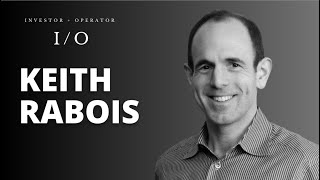
Keith Rabois, a Founders Fund partner, wants to create more public companies than anyone in Silicon Valley history. He evaluates founders on rare traits and storytelling, dismisses common advice like focusing on runway, and is skeptical of AI as a venture play despite its utility.
Chapters
Welcome to episode two of the IO podcast. Tyler and I wrestled with who could possibly follow up? Andy Ratcliffe. We went to kind of our dream list of folks that we could have on the podcast, and we ended up getting Keith Raboy. And Keith, without any hyperbole, we think is on the Mount Rushmore of the investor and operator mountain.
So perfect fit for us because he's done both at an extremely high level. Like Sterling said, Mount Rushmore. On the operator side, think of PayPal early on LinkedIn, Slide Square, and then also the co founder of Open Door and now Open Store. So he's been a founder and executive on the investing side, both as an angel and then at Coachland Founders Fund. Think of names like YouTube, DoorDash, Stripe. Who am I missing, Sterling? I mean, just name after name of great investments. So very rare air that Keith flies in. We're excited to have the convo. We hope you all enjoy it, and thanks for tuning in. It's great to meet you in person.
Pleasure. Thanks for coming. Thanks for coming out to Miami.
We're looking for an excuse to make it down to the new tech mecca.
Had to see what all the fuss is about.
Cool. Well, we'll take you shopping for houses and condos if you like.
So quick introduction for everyone. You know, Sterling and I thought long and hard about who our first couple guests should be. We had Andy Ratcliffe as our first guest.
Not bad.
Yeah, the IO podcast stands for investor Operator. And the. I don't think it's hyperbolic to say Keith Rabois is, you know, one of the most, if not the most impressive investor operators over the last 20 years. On the operator side, we're talking PayPal and Square and Slide and LinkedIn.
You can delete the slide.
Okay, delete the slide. All right. And on the investor side, I mean, obviously at Koshland now, Founders Fund, but in great investments like Airbnb and Stripe and YouTube and what other ones should we put on the highlight reel there?
There's a few like doordash and Palantir. There's a pretty good list.
So. Cool. So the combination of the two makes you pretty rare. Pretty rare candidate for the podcast. So thanks for taking the time.
I'll be on the podcast whenever you want me.
All right, so what are we going to cover, Keith? We sent you some questions. We're trying to do some things, hopefully a little different because you've done a lot of these. The first thing we want to do is run you through the interview questions that you have for other folks when you're interviewing executives or product leaders. You remember this tweet from a couple years ago?
Yeah, yeah, so I did that. I actually posted this. I was on vacation in Nicaragua at the time and sitting on the beach, and it just occurred to me, I said, just distill this all. So I wrote it all up on my notes app and posted it.
You screenshotted your notes app? Yes, I saved it like I do many tweets that stick with me. We've got some of those questions. You ready for them?
Sure, let's go.
All right, first one is, what do you want to do with your life?
So what I want to do in my life is create more public companies and technology than anybody in the history of Silicon Valley. Number two is propel as many undiscovered talents into achieving their potential. Those are the two goals.
Why? Why did you pick those of all. Of all the things you could do.
If you're going to do something with your life, you want to be the best at it. So I was speaking to the NBA Players association this morning, and the guy who introduced me was very nice and compared me to Michael Jordan. But to be Michael Jordan, you got to win more rings than anybody else.
So rings to you is number of public companies.
You said that's how scoreboarded. Yeah.
As executive board member, founder, lead investor.
Founder, sort of senior executive, maybe.
Got it. So what are you at right now?
12 to 15. Somewhere in that zone. And the all time high, I think my calculation is about 15 or 16. So fortunately I've got some in the works. Fair's gonna be a public company. Ramp's gonna be a public company. Got a few more, but definitely have to propel probably two to three, four more years to at least get there.
Who's number one right now?
Actually, my calculation is Scott Sandals probably invested in the most. He's probably at about 15 public companies.
Okay. All as a board member, though he's never been a founder, he's never been a foreign executive.
Yeah. So I've, I've led a fair number of investments that have become public companies. I've helped quarterback a few companies there, but. And I founded one that's got there and hopefully we'll get a second one there.
Ultimate number you think you end up with. When they hang your hang your neck.
Better be at least 20.
20. That's the, that's the goal.
20. Go for the, you know, instead of the Jordan, we'll go something like, you know, Wilter, you know Bill Russell. Yeah, Bill Russell. Wilt Chamberlain's got a few rings too.
Okay, cool. All right, next one. And by the way, this is right off your interview questions. Next one is what do you believe accounts for your success?
That's a great question. Because what you wanted, I mean one of the reasons it's a great question is when you figure out a formula or what works, you want to double and triple down on it. And so isolating what works for you versus the rest of the world, it's a competitive landscape, especially investing. Truly investing is more zero sum than founding. I think you can found companies successfully without really caring about what the rest of the world's doing. Yes, you have to marshal critical density of talent. That's the first step. But investing, if I lead a seed round, that means every other VC is not. If I lead a series A, that means every other VC is not. So that is more competitive and more dynamic. So you have to figure out where your alpha and edge is. An investor is critical and then as a founder you want to figure out what your strengths are so you can complement yourself. So it's a little bit different mental model. On the investor side, my strength is I'm a founder driven investor. I've been a founder driven investor forever. So the only thing I care about is the quality of the founders that pitch me. And I try to make an assessment purely on that. It's one of the reasons why I like to invest in seed because there's nothing else to distract me. Once there's metrics, you might accidentally get distracted or perhaps someone else can read the metrics correctly. And even if they don't assess the founder as well as you do, they can use the metrics as a guide to the potential of the company. So I'd like to go even pre launch seed deck only, team only. That's my favorite time to invest. Also, you have more psychological, you know, sort of impacting the company's trajectory. It feels more like yours than like joining a rocket ship that's already in space and is already, you know, sort of escape the atmosphere. On the founder side, it's really, you need to build a team. It's like being a general manager of a sports team. Let's say continuing the basketball metaphor, you may have a great point guard, you may have a great center, but you got to go find a shooting guard. And so knowing what your strengths are as an executive gives you the roadmap to who you're recruiting. So I mentioned on the investor side, I think it's founder driven, sort of I put myself in the mike Moritz sort of camp. I think he's the best ever at founder driven investing, and so I'd like, try to equal him. And then as an executive, it's changed over the years. I think in the beginning, I started with what people jargonistically call as a strategic sort of mindset. And I can decompose what that means. But over time, I became a pretty good blend of design and empirical thinking. So both top down, bottom up inputs and outputs, which created this weird intersection. And I think the superset is probably better than being just good at inputs or just good at outputs, or just good at design or just good at empirical analysis. And so that blend has become fairly differentiated.
Cool.
One question for you there. Cause you talked about not getting distracted. You like to go early. In some ways, that's like the hardest time to assess anything. Who's the most impressive person that you sat down with at that stage and were like, this is it. This is what I'm looking for.
Oh, several that are all pretty comparable reactions. Like, I knew instantly. Brian Chesky. I told him less than three minutes into his pitch, like, this is the coolest thing since YouTube. He finished his monologue, and I was like, I need to invest right now. That happens fairly often, actually. So I mean, meaning among the people that I knew I wanted to invest in. More often than not, though, the people who trigger that reaction are people. I had a preexisting relationship. Brian. I didn't. It was a cold read. First meeting, boom. Like, we need to do this more often than not. When I had the reaction, someone like Max Rhodes, let's say at Fair, who worked for me at Square, played soccer with me for years before that, Tony Doordash, who also is an intern at Square. So people like that. I had a lot of data points before I had to make a call on the investment. The Brian's of the world. It's like, first meeting, let's go. Ramp was like that. Eric and Kareem were kind of like instant, literally. They flew out across the country, sat down in our conference room at Founders Fund, the Presidio, and they pulled up like a kind of like a pseudo notion notes document. And like three minutes in the conversation, I was like, oh, my God. We're definitely. We're definitely. We're definitely investing.
Why?
What clicked there in the Ramp case? Actually, there's a podcast where I talked about it at length with Corey Levy, who you may know. Corey somehow found the guy who's transcribing the notes from that meeting and then pulled it up in the middle of the podcast and asked me about the notes. So I have a very strong, like, reaction recollection of the meeting because I've recently looked at my notes from the meeting. But fundamentally it was two things. First of all, they got concepts that the Brex founders clearly missed. And it was just so obvious without me having to educate them, what the founders of Brex didn't understand. And that's why ramp's going to be much more successful. But they knew it before they even started the company. And unless you spent a lot of time in financial services, these are fairly non intuitive things. And so they had two or three of these dimensions just nailed right away. And that was pretty insightful. Then secondarily, some of the these guys had worked together and founded a company called Paribus that was acquired moderate price. Some of the points and lessons they had learned, experiences they had at Paribis were relevant to what we were going to try to do. So the proverbial founder market fit was pretty strong.
So that's another question. When you don't have a preexisting relationship, how much are you underwriting their track record to date?
Usually never. I mean, most of the people I've funded that have been very successful haven't really accomplished that much. Yeah, that's even better because they're the classic undiscovered talent. You know, when you're competing for someone, like when I led like the Series A for a firm like Max Levchin, obviously everybody knew Max. I still had some alpha, you know, having worked with max, you know, 20 years, or at the time, 13 years earlier. But still, at the end of the day, everybody is chasing after Max based upon his preexisting accomplishments, both in terms of PayPal, being the executive chairman of Yelp, et cetera. So that was sort of easier for everybody else to figure out, is probably a pretty good thing to invest in, but that's pretty rare.
This is fascinating because the undiscovered talent thing is crucial. And how do you, when you're not like saying they haven't done things that are that impressive, but there's breadcrumbs, right? Like there's things you're picking up on. What are they? How do they show up?
I'll give you kind of a. It's a very real example and it's going to sound a little silly, but it should be insightful. So one of my favorite founders is perhaps the most tenacious person I know is probably the best way to describe him. And we're like quite Close friends, but so I was friends with him before he started the company. And so I kind of knew this story, but he relayed this story to me about having thought he wanted to get an mba. So he actually literally took the GMAT eight times. And I didn't actually think it was like legal. I thought there was like a bar like three or four times. So. But how he approaches like everything about his company is he's going to take the GMAT eight times. So if he doesn't like the metric, he's not going to stop until that metric is perfect. He's not going to let anybody else stop. And it just shows in how he runs his company. And so all I needed to know when he was starting his company is, oh, wow, you take the GMAT eight times, you're gonna walk through a lot of walls to make this work. And like, you're not gonna like, allow anybody to stop you. And that's a pretty good trait for a founder.
It's like the max is a lot of like that's discovered and undiscovered. The maxes, everybody had been able to see those. But taking the GMAT eight times, you gotta be digging to find that breadcrumb.
Yes, definitely. So you want to. I mean, one of the common characteristics, let's say, is if you don't walk away from a founder meeting at a seed stage with this reaction that, oh my God, I've never seen anybody like this before. It's probably an easy pass. Actually the reason why reverse engineering this is it's actually ridiculous, borderline irrational to say I'm going to reinvent the world in any industry. Like, I'm going to wake up tomorrow in the proverbial garage and find my college buddy and we're going to reinvent financial services from scratch, that's like almost borderline silly. The only people who ever accomplish this stuff are people who have a trait that is in the top 10 basis points on some dimension. And the dimensions vary. Like you can be the most tenacious person, you can be the smartest person, you can have the best sales ability, you can have the best ability to recruit and assess talent. But if you don't have top 10 basis points ability, the chance that you're going to change the world rounds to zero. Which means don't invest.
So extreme outlier traits. But actually the traits are very different. Correct. Not a common pattern.
There's no common pattern. It's just like on one dimension. Actually, I think this applies to other fields too. I think of politics. If you Want to be president United States, you probably have some extreme skill. The skill may be different. Like what make someone like Donald Trump get elected. President versus Obama is very, very different. Or Bill Clinton versus both of them or you know, either one of the Bushes or Reagan. They're all very different, but they were exceptional at some point trait compared to a lot of people who aspire to be president of the United States.
And if you can't articulate what that is in someone who's recruiting you or someone who's asking for an investment, I think that's an easy no, that's an interesting one.
I think on the investment and C level, obviously later stage businesses create their momentum and sometimes you can see the evidence of the momentum later, but then other people can too. So I don't feel I have any alpha. And the venture returns profile is pretty bad generally speaking. So unless you have alpha, I don't believe you should invest.
So you said top 10 basis points. So by definition we're talking about extremely rare people. There's not many of those people in the world. How do you find alpha in attracting those people?
And because that is the hard part is you age as a venture capitalist. So age is not your friend necessarily and experience is not your friend necessarily as a venture capitalist. Because the people who start companies are typically undiscovered and earlier in their journey. And so as you age socially, you know, and just biologically, you tend to get distanced from up and coming people. And so you have to find ways. I mentioned, you know, the founders of FAIR I played soccer with. Yeah, that's how actually I met them and then I hired both of them to square. Then I got to work with them. And so when they founded a company, I was very much, you know, willing to invest almost regardless of what they did. They did have one or two pretty bad ideas, which hopefully I talk them out of. 1. Like they're so, so bad. Like you, you won't believe this. We were also joking about Reid Hoffman before. You should see what some of the ideas he considered instead of LinkedIn. Sometimes the right founder has to navigate their own bad ideas too. But they got there and Max and Jeff definitely got to the right place. They were even considering stuff like reinventing drilling at the dentist, which probably might, maybe they could have made it work. But I'm pretty glad they did FAIR instead of dental drilling.
Yeah, it worked out.
I also don't definitely don't want to be a customer of the dental drilling product.
So if we go back to the actual interview question, of what accounts for your success? I'm hearing you. On the. On the investor side, it is attracting 0.1% founders and making a decision before they even have any history. On the operator side, it was the synthesis of top down and bottom up, rigorous thinking.
Yeah, I agree with that.
Okay, got it. Next interview is, if you were CEO of a company, and presumably it's the company that candidate was at, what would you do differently? So I think we could. I'll give you options, whatever you want to answer. If you were CEO of Open Door, if you were CEO of Amazon, whom you're trying to compete with a little now, and maybe CEO of Twitter, and you can answer however one you'd want.
Opendoor is the easiest. Obviously, I don't have access to all the information that like Twitter, you know, like in terms of data, metrics and things like that. I am a power user of Twitter, so I have some feel at the customer level and Amazon, I don't want to give them the answer. I don't want to explain.
I'll mention what I. Jeff's a listener of the pods. That's Price.
Well, yeah, I definitely want to give him any clues. Although actually, interestingly enough, one of the insights I had in starting Open Store was based upon a speech that I saw Jeff give. I was fortunate enough to sit in the audience and as he was speaking, and it was incredibly provocative and incredibly valuable speech, like maybe the best speech I've ever seen a tech executive give in my career. I did realize that there's some cultural antibodies and weaknesses in Amazon based upon how he was describing the world that could be exploited. So actually I was listening very carefully, and it turned into a germ of a really. A kernel of a really good idea based upon how he was describing how Amazon works. But on Open Door, truthfully, I think there's partially. It's just storytelling. The company miserably fell two years ago, explaining the product, the value proposition, and the differentiation. Obviously, the sharpest rise in interest rates that America's ever seen did cause a cohort, let's say a quarter cohort, to be mispriced. I think the company actually managed that pretty well. And you'll see that I think the company is going to release Q2 earnings soon for 2023. I think the company is in great shape right now, and I think people will start appreciating it. But I think two years ago, the company should have been appreciated better because the metrics were exceptional. My understanding there's some people on Twitter who have access to public data. And they describe it pretty accurately in 47 of 51 markets. Opendoor is doing extremely well right now with double digit margins likely. So one way or the other, the company's financials should be pretty solid. And I think as the company made it through this kind of crisis of rising interest rates, I think people will realize that the company can handle any kind of economic disruption with maybe a blip for a quarter. But that's not a fundamental existential business issue.
So sorry, you talked about storytelling there. As is the thing you would do better. Like how would you tell a better story?
Well, I think there were easy ways to do this. Square had this trouble too when Square went public, you may remember, went public at about a 3 1/2 billion dollar valuation in the first year or two. It didn't trade that well. And in fact, part of the reason was that the CFO at the time was not telling the story correctly. Actually, she and I sat down and we chatted through like what investors were missing and actually were able to construct a narrative that I think resonated better. So sometimes like talking to public market investors, trying to understand what they don't like or what they're not hearing, and then reframing it. But I think Opendoor wasn't having that dialogue successfully at all.
What was the market missing though? What specific piece of the story was undersold or not in Opendoor? Yeah, Opendoor.
I think basically the fundamental value is that in any market, Opendoor will thrive. And that's why it almost took an economic crisis to actually prove that rather than explaining theoretically one way. Sometimes the proof's in the pudding. The bad news is you go through an economic crisis. The good news is if you get through it and you show people that you're better off than you were, then people are like, oh, I get it. So sometimes there's only so much you can do with concepts and sometimes theory. So I was watching Oppenheimer the movie last night and there's a point when Oppenheimer basically says, look, you need to drop the bomb on Japan. He's like, nobody in the world will actually understand how important this, this is and how, how, you know, destructive it is unless you actually drop it. Like, theory is not going to convince the Japanese to surrender. It's not going to convince the Russians that we have this new, you know, weapon that they can't compete with. You're actually gonna have to use it. And I think that's true in Opendoor's case is basically have to get through the nuclear war first. And then people realize, holy cow. Like, we don't want to do that again.
All right, what if you're. What if you're Elon? What do you do differently at Twitter?
Oh, Twitter. I think he's doing some things really well, which is, first thing, ignoring the media. That's generally a good arc for, like, success in business. Number two, I do think some of the product innovation and velocity is great. Third, cutting costs. Like every company in technology overbuilt their infrastructure of people. Like, there was this vanity for the last five to 10 years in tech, where everybody's competing on hiring and getting rid of that and setting a better precedent for everybody is absolutely indispensable. People are following you, seeing cost cutting, you know, across the board. And very profitable companies like Microsoft is cutting engineering salaries. Stripe is cutting engineering salaries. So this is a good thing. Second, he is making some unforced errors and mistakes. I don't know if the rebranding will work or not, but I do know that a superset app is not going to work in the United States. That's a bad idea. So everybody's like, oh, it works in China. It works in China.
WeChat.
Yeah, yeah, blah, blah, blah, blah. Well, first of all, many things do not translate from China to United States, period. But the reasons why it works in China are very specific. For example, Internet download times in most of China are not good. So you don't want to download 10 apps when it's really painful. You want one. You want to go through the pain once. Secondly, a lot of people did not have. Most people, in fact, did not have credit cards in China. Their first access to credit was digitally. These are all very fundamentally different dynamics. I would bet that the super app has, like, virtually no chance of working. The branding may be good or bad independent of that. But this goal of a super app is a complete fool's errand.
And he's been on the super app thing since back in paper.
He's just wrong. Super apps are not going to be a thing in the United States. The whole point and best metaphor for the mobile device, the iPhone, was actually coined by Matt Kohler at Benchmark right when the. Pretty close to when the phone was released. He basically said, look, the way to think about apps on your iPhone are their remote controls for the real world. Well, the remote controls for the real world, you want a button for food, you want a button for your Uber, you don't want one button. And then you have to keep subdividing. That makes it Worse, it's a terrible user experience versus a remote control with a dedicated button.
Keith, if you were a product, what is your value proposition?
That's great. So, as I mentioned, as a executive, it's strategic thinking with creativity. So if you talk to the CEOs, I've worked with what they'll probably say repeating it. I won't name the people per se, without their permission. But generally, even though I'm a kind of ruthless execution type of person, I have a little bit of a creative spidey sense. So once in a while, I'll riff on some ideas or remix some ideas and they actually work. And that's a rare combination as a product. Like being able to be creative while being very disciplined. Like, so I'm very disciplined in my life. I wake up at the same time every day, go to bed the same time every day. I do my two workouts the same time every day. But I have this little creative spark that occasionally just snaps and I'm like, oh, my God, you can combine X, Y and Z in a weird way. And once in a while it works. So that's the product value proposition is discipline with creativity. That's a very, very rare mix. As we talked about investing side, it's finding undiscovered talent. Knowing that I found somebody when they're like the proverbial 19 years old out of left field and someone needs to give them some money and a shot on goal.
Yeah. Cool. All right, so we're almost done with the interview questions you have.
That's good.
Compared to other people with a similar LinkedIn profile, how are you most different?
Yeah, so similar. I usually use one or the other version of that question depending upon, like, how the vibe of an interview is going. They're kind of very comparable ways to get to roughly the same answer.
Okay, I think the last one is if we hired you, Keith, who would instantly want to join you?
I have a good list. Fortunately, like, they can't. You know, as you know, when I joined Founders Fund, Delian joined here is great at companies. You know, I work with a lot of people at Open Store. One of the benefits of running a company versus being an investor is you can I work with like 120, 120, 30 people at open Store. In working with investor, you're working with a handful of people at the same time. Many of the people who work at Open Store are people that I've known for a long time, you know, prior lives that have joined me, which is exciting.
Cool.
So one thing that's Very interesting to me is how does Founders Fund, what is the practice like of being an investor and also being a founder? And how does that actually function within these walls?
Well, at ff, this is a pretty common thing to do. So as you know, Delian found, founded, co founded Varda Space Manufacturing. I actually went for a tour of the facility relatively like last week actually. They're doing really, really well. Trey Stevens, you know, general partner here, co founded Anduril, which is a phenomenally important and successful company. Peter, you know, obviously founded, well, founded PayPal, co founded PayPal, co founded Palantir. So obviously it's something, you know, that's deep in our DNA. I think we would like to do more of it, actually. So right at Founders Fund, it's very compat with being an investor. We think it makes us sharper, better, faster.
Do you view it as being able to manufacture your own success in some ways?
Well, yeah. So one great way to compete with the world is proprietary deal flow. As per my point, I'm always running an equation through my brain of where's the alpha? What's my comparative advantage here? Because venture returns are mediocre at best. So if I do what other people do without Alpha, I'm going to wind up in the middle of the bell curve, which is not acceptable. So creating your own company is definitely a way of creating alpha.
How does it work? Technically speaking, do you like have to give your founder equity to Founders fund because the LPs need you to serve them first and foremost? Like what? How does that work out with the LPs?
You know, honestly, I don't know how we do it. In all the cases I actually don't pay attention. I know in my case that's what I do. Okay, so my preference both at Open Door and Open Store is I assign all my equity back to the fund.
And do the LPs like this because they do view it as proprietary.
Like LPs love it. Other than they do, you know, obviously think about time allocation. Like, obviously, you know, you're going to invest more than a proportion of an amount in Company X, so it has to do well. But we own, you know, the net ownership of Founders Fund, let's say at Open Store is high enough to justify the time.
Keith, how do you break down your time with the companies that you're founding at Founders Fund versus investing? And how do, how do partners handle that?
It's different. I think what Delian does is a little bit more spiky. Like he did quarterbacking a space manufacturing Company through financing is an art in and of itself. You have to raise enough money to achieve the milestones. And then B, he's been very focused on specific executive recruiting. So he's really powered through like two specific value adds. And those tend to be specific spiky times versus obviously being CEO. Like what I'm doing is consistent every week. Like I need to be in the office X number of days a week I need to do one on ones. And there's a different tempo and cadence to that. We measure my time very carefully every quarter. Right now it's been running hot in the last six months, meaning a little bit higher allocation open store than I would like. They call it 50 to 60%. I'd like it to be 45 to 50, 50. But we measure it really, really carefully and then we decompose. Well, what am I doing when I'm there? Am I interviewing people one on ones, Am I doing a board meeting? Am I doing a company, all hands, et cetera. So we can calibrate. Like does this time allocation make sense?
So I'll make an argument along these same lines of being a founder is like the hardest job in the world. To be an exceptional founder, you've got to put in more hours than it seems like realistic. You're doing that and you're going to be a good investor. Like how you're going to get out competed by Doug Lee or whoever you view as a competitor.
Well, yeah, so there is truth to this. Like certainly being an entrepreneur, the more hours you put in, the better the output's going to be. I'm a strong believer in work ethic and that drives results in investing. It's been quirky. The correlation seems to be a little bit less direct. I am not sure you make more money by putting faster, by putting more hours in. The reasons why, I suspect come down to, first of all, you're doing a lot of context, switching meeting to meeting meeting. And I think you do get tired. And so I tend to max then cap the number of pitch meetings I'll take in a week, in a day, even if I have excess time. Because I think my brain just gets fried. And I don't think that's I'm doing a good service to myself, my partners, or actually the founders if my brain isn't sharp enough to really appreciate what's going on. So I do think there's some oddness to venture that doesn't work the same way as company building. Company building. The more sweat equity you put in, you're going to improve the probabilities of success. I'm not sure in venture how strong the correlation is, so that's one caveat. But yes, I am very busy. I do run a company, I serve on 18 boards and I co run a venture fund that keeps me pretty busy. I have two kids too. I move people to Miami as the pseudo ambassador to Miami and I do two workouts a day. Other than that, I've got like lots of free time.
You have plenty of time for podcasts with us.
Thank you. But podcasts are good. It does create interesting opportunities sometimes. Direct founder, founders listen, like, oh, that was really interesting. I like to talk to you sometimes indirectly, you know, so and so hear something and they're like, oh, Keith's interested in that particular angle or something, you should go talk to him. So there's lots of benefits. But like as I mentioned, in venture it's hard to correlate the exact benefits of an incremental podcast. Whereas if I was running a company, when I go on a podcast for Open Store, we actually track the number of leads we get. Like how many transactions do we close, how many brands that run a Shopify store applied to get acquired. And we measure that and you know, we have a team that actually puts me on podcasts designed to get us more business traction.
Makes sense. Let's talk about recruiting people at Founders Fund. You guys added Sam recently, then Ryan after that. What are you looking for as you add new investors at Founders Fund? And then I've got some follow ups on maybe some patterns I've noticed.
Well, the truth is what we want at Founders Fund is someone who can drive power law returns, period. Right. Then the question is, well, who? Who can do that in the future? And with a lag of six to 10 years after you hire them to find out. So it's a very difficult challenge to hire anybody for any venture fund, period. And we debate that all the time. When we have like a GP discussion. It's like, well, who should we be hiring? Well, it's like, what is even the criteria for success looking forward as opposed to rearview mirror? Both actually. Ryan Peterson, who co founded or founder CEO of Flexport, and Sam Blond, who joined us, were opportunistic, meaning there was some reason to believe they might be looking to do something new. Ryan had stepped down as CEO and became executive chairman, hired a CEO out of Amazon. Sam was looking to get into venture. And so we kind of thought about, well, would they fit in, would they add value, et cetera. So for example, Sam is a quintessential CRO for an enterprise software company. We didn't have a lot of enterprise software sort of expertise, so it felt like that would be a good compliment. Ryan has been an incredibly successful founder in our portfolio. I think we've led virtually every round of sports history, but maybe one. Obviously we've been working with him for years. He has a differentiated perspective in the world that tends to match the Founder's Fund principles. If you've read his recent tweets, you'll get a feel like, I feel like my tweets. Delian's tweets are really boring now and I have to like, reinvent myself. Ryan is definitely crushing it. So obviously, you know, from an ideological and contrarian perspective fits in. So we're really excited about that. A founder that we'd worked with for a very long time with differentiated views and that had, you know, background of having built a company from scratch from YC to billions of dollars of enterprise value. So, you know, the match was pretty obvious there.
You brought up ideological perspectives that seem to mesh together. It does seem like there is a pretty consistent ideological, I don't know thread at Founders Fund. Pro. Pro America. Pro founder, Patriotic, bold. So are you hiring all the same types of people? Do you need diversity? Like, how do you think about diversity of hiring?
And we think about diversity from an intellectual standard standpoint, not a demographic standpoint. And you'd be surprised. People here don't really agree on almost anything. Yeah, there are some common threads. Yes, we are Pro America. That's why we funded Anduril. And almost no vc, probably no VC in the planet would have initially. Now it's kind of cool and trendy, but like, nobody wanted to touch it.
Yeah, you were there before America. Dynam became cool.
Oh, yeah, where they borrowed our label, but they don't really know how to invest. But yeah, it's like, oh, Anduril and these other companies, Varda are all going to be successful. We should fast follow or something. But venture doesn't work that way. So we do have some common characteristics. But on any particular, let's say, issue, you would find a wide divergence of views internally. I literally don't know if there's something we would all agree on. The one thing we did reach a consensus on is we don't believe in remote work. We won't fund companies that work remotely. That's not necessarily an ideological view. It's a practical view. All of us, having been founders, sort of believe in how do you create a company? And all of Us who've suffered through company building are like, this is a no brainer. We should not be funding remote work companies. There's too many excuses, blah, blah, blah. So that was a consistent perspective that we've taken. But generally speaking, if you watched our partner debates, they're really vigorous on literally any topic.
Got it. So ideological diversity is first and foremost and there's a lot more of that than I might have guessed here because you're.
Yeah, absolutely. We have incredible debates about what's good or bad. You know, is crypto good or bad? Like even within crypto we have a crypto partner. Now Napoleon's been very successful at quarterbacking a lot of crypto investments and we have several people here who are very cynical about crypto.
What's your standpoint?
I'm kind of cautiously optimistic, I guess is fair. In 2013 I said what is basically proven to be mostly accurate, which is there'd be an inverse correlation between the rule of law in a particular region, country, city and the adoption of Bitcoin. And that's basically been true. But I still think it's mostly a technology in search of a value proposal, whereas in other technologies usually you see the path to value prop faster.
Do you feel that way about AI?
No. There's a value prop. I don't think it's a good investor. As a vc, I think it's a horrible investment. But I think the technology has real use cases, is being used for real value creation. It's just not a good venture return profile.
Why is that?
I think there's a sustaining and then disruptive technology sort of argument. Meaning like Chris Dixon kind of popularized this, so they didn't invent it. But fundamentally any technology can be, can be adopted by incumbents or can disrupt incumbents as a venture or as a founder or an early stage venture investor. You need to invest only in disruptive technologies, not not sustaining technology. Large incumbents like Microsoft, Google, Apple, et cetera will adopt sustaining technologies very fast and there's not a lot of oxygen for startups. So I don't believe that there's really like a VC class of investments there that's going to produce returns. Now we did invest in OpenAI while I was at KV. Fortunately the node had the prescience to see the future there. We were the only venture fund. You know, I helped with that investment a fair amount and you know, the risk reward on that one looked, looks pretty good with the benefits of hindsight, but I don't think there's a lot of oxygen right now makes sense.
All right, one other section we want to do if we got a couple minutes still. I want to read you some of your tweets.
Great. So, unfortunately, there's not this great product. I've actually wanted to go back and read all my tweets because there's some really old school prescient ones or like, provocative ones, but I can't go back and read them all. I would love to just spend a week of reading them all, but I can't find a product that does.
This thing's a hidden box, but Elon.
We need this from.
From Raboy Min faves 1000. But turns out some of your bangers don't have a lot of likes.
There does. There's some really good one. That's why I want to go. I would love to go back through my32,000 tweets and read them all.
I know, I know.
Well, you know a lot about sports, though. That'd be pretty boring.
There was a lot of baseball stuff, which we should talk about, but I didn't have to go far back to get some mean tweets.
Okay, good.
Yeah. So let's say actually I'll read you one here. You said this was. This was actually a year or so ago. For 40 years, I believe success required unique insights. Now I'm persuaded that it just requires ignoring stupid advice that people dispense. So I think, what's the stupid advice that people.
I think. I think life is pretty straightforward and simple. If you just do the right things every day, life tends to work out.
Consistency.
Consistency. But like, it's. It's not that difficult to be healthy. It's not that difficult to be successful in any field. You just have to work your ass off.
Yeah.
With no excuses. Like, no excuses. Blame yourself. Take. Take accountability and responsibility and just do that every day. And like, if you get distracted with all these fancy shortcuts, hacks like, blah, blah, blah. So if you just ignore, like, most advice and just do the most obvious basic stuff consistently and intensely with no excuses, you're so much more likely to be better off.
It's like everyone knows to eat healthy and exercise. How many people do it well?
Exactly. This is a good example. Like, if you want to be healthy, you actually, for 95% of the population, it's not that hard. Yes, there are outliers, but don't get confused. Most people are not by definition outliers. So if you want to be successful, you want to be healthy, just do the fundamentals all of the time. And you're going to be in great. You're going to be so much better off than almost everybody.
So in kind of in line with your tweet, people tend to follow bad advice. What are things that founders get like tricked into believing most commonly?
Oh, there's, there's like technical and non technical versions of this. But let's say some of my BET noirs are I hate when founders talk about the Runway. Like they, they're like, I'm going to raise this much money because it gives me two years Runway. I'm like, Runway is an irrelevant consideration. It's like how much fuel is in your tank. It's a constraint. You need to know when you drive your car, do you have enough fuel to get from point A to point B? But you don't look at your fuel tank and say, where should I drive to to today? So I hate that like, but it's common advice. I also like a more like controversial view of mine is I don't think founders should generally hang out with VCs and chat with them before they're fundraising. I think it's more often than not a bad idea. The reason why is fundamentally putting my investor hat on. I'm always grading founders when I meet them. So unless they're prepared for a fundraising conversation, they're not going to get their optimal grade. Most likely. Like I'm probably not going to give them an A plus.
But you just said the fair founder. What's his name again? Max.
Max.
You hung out with him a bunch. You played soccer.
I did, but it wasn't because he was going to start a company.
Okay, so just friendship that turned.
Yes.
Which you can learning a person, raising money.
But like you don't. I fund people. Like I mentioned, I'd never met Brian Chesky before and less than three minutes in the conversation was like, I want to invest. This is the coolest thing since YouTube. So that happens. But he had his story nailed. He had a 2 1/2 minute monologue of like, this is what we're building. This is why it's going to work. Here's the evidence. Boom. Boom. He wouldn't even let me interrupt him. He was maybe even slightly over prepared. But like fundamentally you want to. It's like the adage of, you know, first impressions matter. So if you're going to ask an investor for money, make sure your impressions are as calibrated as possible. Now some founders can store the current store story sort of narrative in their brain in a high fidelity way. I've found that most founders can't do that. And so until that's stored, like, based upon the latest evidence, where you are, where your trajectory is, what your milestones are, I would not be speaking to investors about my company. I try to avoid doing it for open store. It comes up a lot. I literally try to force myself not to talk to other VC friends of mine unless I've really reloaded the story in my brain and updated the recent progress.
Okay, so don't think in terms of Runway. Don't just mingle with VCs unless you're fundraising. What other bad advice?
I mean, there's a lot, like the remote work. Remote? Remote work was a crusade. Unfortunately, that's like dying. But like one or two years ago is incredibly controversial. Work ethic matters. We talked about that. I think most founders get that, but there's still some who are like, you know, blah, blah, blah, I need balance, or whatever that means. So those are just examples off the cuff. There's a lot of them, though.
All right, so this guy replies to this tweet, by the way, many says, in another 40 years, Keith, you'll discover it's mostly luck. And you said, none is luck.
None is luck. Yeah. If you can do this every year, I think I funded or started a company that has been worth more than a billion dollars once a year for 23 years in a row. You can, in theory, roll your coin. You can, you know, it's possible to flip the your coin 23 years in a row and come up heads.
All right, but what about. You were lucky to be born in America. You were lucky to.
Yeah, sure, comparative. That's true. But, like, what's the excuse for the other 300 million Americans? Yeah, okay, there's 300 million Americans. Like, why don't they have 23 public companies?
Yeah, okay, I'm with you, Keith. All right, let's go to a couple other mean tweets. You ready? That wasn't even that mean.
Not mean. My tweets are never mean.
Sure.
It's like Mean Girls.
Yeah. Short. All right. A VC who I won't name on July 10 says, adding value feels like a full time job for me. And you replied, that's what happens when you subscribe to work life balance.
Yeah, well, if you're going to work 12 hours a week or 20 hours a week, it would be a full time job for him. And if you don't have. You don't have any unique insights, if you haven't built anything, presumably. It's hard.
Yeah. Okay, that's another one. You always say, like, you haven't built anything, so why should I listen to you?
Well, I think there are times. Times when you can get advice from people. But, you know, Vino Khosla has this great expression, which is, you need to figure out whose advice to take and why. And most people's advice who haven't accomplished X isn't going to be that meaningful. So if you want to be Michael Jordan playing basketball, there probably are some people who can improve his game, but 99.9% of the world is not that. And so all he can do is get worse by listening to people. There might be some person on the planet who can improve him, but that's the only person you should be listening to.
Yeah, makes sense. All right, so you launched Open Store pretty recently. That was a day where you were very active on Twitter.
Yeah.
And at one point, you see, actually.
I wasn't that active. Lots of other people active. That one tweet just. We put it. I put a URL. Yeah, you just literally put a URL. Very mean. Yeah, I literally put a URL. It's like live. It got 1.6 million impressions.
That's pretty damn good.
Yeah. By the way, I was actually shocked.
I say mean tweets, not because I think they're mean, Keith. I'm just, like, joking from the late night show or whatever that is.
Yeah. I don't watch too much tv. That's how I save time and do work.
Yeah, that's smart. All right, so someone replied to your open store thing. This looks atrocious. You said good.
Yeah.
Why?
Well, so my, you know, my investment criteria typically is I want half of my VC friends to laugh when I make an investment. They literally laugh. And I actually use that rubric all the time, maybe surprisingly. But venture is a pretty insular industry, and most of the people I compete most with are friends of mine, so I know their brains pretty well. And I'm like, would Roloff laugh at this? Would Alfred laugh at this? I'm like, yeah, they probably would. Great. Let's invest. If half wouldn't laugh, it means I'm not taking enough risk. Because if everybody else is seeing it, it's obviously the risk reward's probably not there, so I use that. So if I launch something, really, first of all, I want people to not see. Like, when I invested in Airbnb, everybody thought it was silly. When I invested in YouTube, literally everybody, except, like, two people thought it was insane. And so I want that reaction, first of all. Second we launched it as, think of it as more like an alpha product. So it's good that people, I didn't mind that people noticed it was an alpha product. I wanted to put it out there for certain reasons, but it's intentionally very unpolished. So you'll see it getting polished over the next couple weeks and months and like, it'll be pretty obvious.
Cool.
So there's a couple questions that like, I desperately want to know. I think other people are going to want to know too. You've got, you know, a notion, Doc, that has some of the most hard earned wisdom when it comes to building and investing companies that I've ever seen. So here's a question for you. Can people actually learn that stuff or do you have to discover it on your own? You've mentioned a couple times, like the people in this building, they built stuff, they have unique insights. Is that the only way to get them is to go through.
You can learn through osmosis. So like for example, Delian shadowed me for about two years before he basically became an investor. And I think shadowing me and shadowing mostly my partners at KB was very helpful in framing his brain. Now he's like on his own, he's got his own frameworks, et cetera. He may borrow some of my ideas here and there, but fundamentally he's set. So I think osmosis learning works, especially in investing. Second, I think the best founders don't ever really ask me for the answer. What they're asking for is a framework for making trade offs. So the way someone like Max Rhodes actually asks it all the time is like, what's the conceptual framework for thinking through acts? And so all I'm doing is applying like some framework and then they're filling in, well, how does this apply? And you can see in their eyes actually light up when you can give them a conceptual framework to make complicated trade off decisions.
But the reason why you know those frameworks and can teach them is because you had experiences that basically forced you to come up with them.
That's you. Or you get burned by is like the benchmark guys. Peter Fenton says as well on a couple podcasts, like, experience is like the byproduct of a lot of mistakes and.
You only get it through a bad experience.
Yeah, yeah, something like that. So it's basically having watched, you know, the grass is almost never greener. And knowing the grass is not greener does help, help be able to communicate why the grass isn't as green as it might look is helpful to founders Got it. Very cool.
All right, we're almost out of time, so let's. I want to do one fun thing, if you don't mind. Keith, I want to set up a bet with you.
Okay.
A bet. And the bet is Miami versus Utah.
Okay, cool.
Keith just heard free money.
Yeah, yeah. No, no, no.
And let's see if we can come up with the criteria to bet on, like, maybe equity value creation before 2030 between Miami and Utah.
Yeah. The challenge on the bet is obviously Utah's been in the business of technology a little bit longer.
Miami. So we got a lot.
So we have to cohort it based upon companies founded at, like, the same time frame.
Okay.
So you'd have to pick a year and then companies found or month or year or whatever companies founded post that date. Because obviously Utah has been a great place to build companies. It's worked really, really well.
Yeah. I'm betting that it continues to beat my.
Well, okay, So I have the advantage. So what month and year do you want to start?
How does July 26 sound?
July 26, 2023. Or is that too late?
Should we go back to 2020, then? You have to pick. We can go backwards if you like. But then we also have to pick a measuring date. Right. Like at the end of the day. When are we going to measure this by?
2020 to 2030.
Okay. So, well, I moved here December 2020, so we shouldn't be before then. So maybe like January 2021. To what period do you want to measure this?
What do you think?
Well, you know, in venture, that's this. This part of the trick is. So let's say that's 21 and we're in 23. So at least we're two years in. It's really hard. Less than five years in.
I agree. So seven or eight.
Sure.
Okay. 2021 to 2028.
Sure.
And then what are we going to count? Exits. Any exits? Just IPOs.
If we're getting through all the methodological issues, I feel like, you know, try to create. Recreate like a Forbes Midas List or something. You have to deal with all these issues. It's actually pretty complicated. So you could do exits, but then you're going to miss, like, the IPO stuff probably in that window.
Like, maybe soon it's not long enough.
There are some privates. You know, the problem is the private exit. Private valuations are sometimes pretty real and sometimes pretty distorted.
I want to capture the iPodOS, though. So do we need to extend it to 2030?
Yeah. But then, like, who's going to remember this?
Yeah. No one will. I know.
Yeah.
Oh, I'll remember.
Tyler will remember still alive or x.com or whatever it's rebranded by then.
All right, so let's do all exits. Although your point is there probably won't be a lot of IPOs between 2021 all exits.
We could use private valuations divided by some discount factor, something like that.
What's the amount? 10.
Yeah. What do you want to bet?
10K?
Sure.
All right, let's do it.
Cool. All right. Keith Berries classes.
Last rapid fire questions that we ask everybody. Some of them we've already asked. Who's the investor you admire most?
As I mentioned, I think Mike Moritz is like central casting for, like, what I aspire to do.
Okay, what about who's the operator you admire most?
Well, the old school answer. I'd learned a lot, you know, reading the writings of Andy Grove. So I, you know, high output management's kind of was my bible, kind of growing up, more modern era. That's a really good question. Let's just stay with Andy.
Andy. Okay. You already said, like, how you're measuring your career, the IPOs and all that, but what's driving you? I know that that scoreboard's driving you. That's the score takes care of itself. But why are you the way you are?
That is a really good question, if you can answer that. I have two kids. I'm trying to inculcate, you know, some ambition and values in them. And so if you give me the answer, I don't. You never really know, like, why people are the way they are. But I've always been motivated by challenges. And so the more challenging something is, the more I'm motivated by it. So putting a big challenge in front of me tends to clarify my brain drive, focus, and forces me to achieve things that sometimes I didn't even know. So I do this even in my social and personal life. Like, you may know, obviously, I go to a lot of Barry's bootcamp classes, but I also teach Barry's classes every two months or so. And the reason I did that is the challenge of it. That's actually really hard. I'm introverted. You have to be extremely extroverted. You have to learn a whole new skill. And when I do it, I aspire to do it as well as, like, the really good trainers. So I like to do things like that. You know, one day I'll bite off some DJ set, you know, in EDM music, which is another hobby of mine. And one day, I'll, like, do it for real.
When did you start noticing that about yourself, that you were attracted by challenges? The harder, the better that the overcoming.
Fourth or fifth grade. Pretty, pretty, pretty early. Like, I always wanted, like, the best grades.
Did your parents do anything or is it just in your DNA?
Well, my parents didn't accept excuses, which was really good. So, for example, I remember coming home from school probably around fourth grade. Could have been third, fifth. And I had like an A minus, you know, on some. Some class. And I showed it to my mom, and she was very disappointed in me. And I said, well, everybody in the class got an A minus. And she's like, well, everybody else is not my kid. And that's basically been my mentality from then on.
So this is my last question. You mentioned you have two kids.
What is the.
What is the career advice you are giving or will give?
Well, they're two years old, so you haven't started. Well, I've started. I want them to work. I'm like, I'm like, do you want to work today? Work, work, work, work, work. And then Eli, my son, like, likes to take over my iPad. So if you get some weird tweets, he's pretty proficient, actually.
The iPad, it comes naturally for babies, man.
And then I'll probably have him be an intern at my friend's company who takes the GMAT eight times. I'll probably like, you want to learn work ethic. Great. I got a great place for you.
That's awesome. Well, thanks, Keith. This has been an absolute blast.
This is awesome. Appreciate the time, Keith. We love the convo. Hope it's been all right.
Cool. Happy to come back.
Cool. Sounds good.
Thanks.
Super fun conversation. Knee jerk reactions for me were kind of two big things. Number one, there is zero wasted words. Every answer Keith gave, there is substance, and it was impressive to me, the clarity of thought. And that translated into, I think, some of the insightful answers he gave. Second thing that I just came away thinking about is he's relentlessly purposeful, he's.
Deliberate, he's diligent from his diet all the way to his investing. Everything's.
I mean, his two berries, classes a day, his resting heart rate, like, every single thing is done with a purpose. And we got to talk to him about the purpose of mostly his professional career.
Yeah, I had a couple other takeaways. So he thinks incredibly big. I think one of the most fun parts of the conversations when he's saying his goal is to be number one, the Michael Jordan of executive venture investor. Operator status. That was very cool. Keith's very. Actually very nice in person, too, and pleasant, which is a little bit different than what you're used to on his Twitter Persona. He is. He's very authentic. Like, he's the same way he was on on Twitter in terms of ideas and lessons that he's teaching that he was in person. What other themes do we have here?
I got fascinated by his founder focused investing, the way that he almost didn't want business metrics to cover up for his evaluation of a founder.
Yeah. He thinks in terms of alpha, and his alpha is the ability to detect talent before they've even had a track record.
That's right.
Pretty cool. Hope you enjoyed the conversation. Until next time.
More from Keith

This Billionaire Trains His Body Like He's Building A Billion-Dollar Startup | Keith Rabois


Vinod Khosla and Keith Rabois on Building and Investing in Enduring Companies | Ep. 40



