Visions for the Future of Work: Founders Fund & The Org I TechBBQ 2021
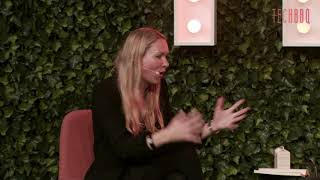
In this TechBBQ 2021 panel, moderator Christine Roep introduces Keith Rabois (General Partner at Founders Fund and CEO of Open Store) and Christian Willoch‑Nielsen (CEO and co‑founder of The Org). The conversation explores how the COVID‑19 pandemic reshaped work and investing. Christian explains how the pandemic exposed misconceptions about office‑centric work and describes the tension between companies reverting to pre‑pandemic norms and those embracing hybrid or fully remote models. Keith shares his preference for co‑located teams, noting the benefits of in‑person learning by osmosis, while also observing a rapid geographic diversification of startup talent away from the Bay Area. Both discuss challenges of remote work, especially the loss of serendipitous interactions, mentorship, and community building. The panel then shifts to investment dynamics: Zoom‑based investing became the norm in 2020, accelerating deal flow and contributing to higher valuations; board meetings have struggled virtually, prompting a return to in‑person gatherings. Christian announces The Org’s $20 million Series B round led by Tiger Global, with continued backing from Founders Fund, Sequoia, and Balderton, aimed at building a platform powered by public organizational charts. The discussion concludes with a call for organizations to experiment with hybrid models, acknowledging a two‑year social experiment that will reveal which approaches thrive.
Chapters
So welcome everyone. Today, as mentioned, we will be discussing the future of work. And I am, and Christine Roep, the founder of Ethan Partners, an executive search firm that focuses on the digital space. and co-founder of Intech Founders, an accelerator to increase diversity in tech. And I have the pleasure of being joined today by these great guys who flew in from the US. So first, Keith Raboy, who is a general partner with Founders Fund. And over his incredibly impressive investment career, he's led investments in companies such as DoorDash, affirm Trade Republic and Stripe. And Keith is based in Miami and also co-founder and CEO of Open Store. So welcome to Denmark.
Pleasure to be here.
And then we have Christian Willoch-Nielsen, who is CEO and co-founder of the Org. And the Org is a network of public org charts for organizations that want to attract, align and retain talent. And Christian was former co-founder of Fitbay and COO of Vivino. And Christian is Danish, but is based in New York. And also a good thing to mention is that the org is actually a portfolio company of Founders Fund. So that's also very interesting. And before we dive into the future of work, I think a lot of people in the audience would actually love to know Christian, how did you initially get in contact with Founders Fund?
Yeah, but we were first introduced by a guy called Kevin Hartz, who is the co-founder and chairman of Eventbrite, which is a big ticketing platform in the US. And he randomly stumbled upon an org chart of ours through Google, sent us a cold email. And I'll never forget that first call that I had with Kevin because he spent the first 15 minutes explaining to me why the org was a good idea. And then he graciously wanted to introduce me to Keith, who he thought would be interested in this given Keith's background from LinkedIn.
Yeah, and Keith, what caught your attention about the org and why did Founders Fund choose to invest?
Yeah, so I worked at LinkedIn in 2005 to seven and a half and sort of had been an angel investor on LinkedIn and had always been kind of frustrated with the product experience and the innovation around LinkedIn. several of the dimensions that the org had already built when I first met Christian were kind of in the vein of stuff that I used to write memos to the product team in 2005. So I started filling in the blanks a bit of where the org could go and what the potential was to basically kind of circumnavigate the value proposition of LinkedIn in somewhat more interesting ways and that there were certain tensions inherent in LinkedIn that they really wouldn't be able to as an organization really confront this problem. And then basically remembered running companies, how difficult it was to have a transparent org chart and how much demand there was for the effective profiles that an org chart could create. So it just immediately resonated with me, which, so Kevin's obviously a good filter.
Yeah, yeah, but working with Executive Search, it definitely makes sense, and I can definitely see the need of org charts and the challenges and time that they take to create. So when it comes to the future of work, the both of you are based in the US, and I think for a lot of us, myself included, we've been a bit cut off to the US and not been able to travel there. So it'd be great to hear what are the trends that you're seeing in the US when it comes to the future of work?
Well, I mean, I can start, I guess. I mean, obviously, like COVID has been really hard for a lot of us in different ways. But one of the good things I think that's come out of it is that it's forced us to reevaluate some kind of common misconceptions about how work happens. I think one of those misconceptions is this idea that work only happens at the office and has to happen 9:00 to 5:00 Monday through Friday. And the technology around communication to enable remote work has really been around for a long time. I mean, the phone was invented in 1876. More recently, we have email, Slack, Zoom, Skype before that. So I think a lot of people have realized that we kind of got a glimpse into the future of work over the last year and a half or so. And I think the trends that I'm seeing at least is there's a big tension right now in the US. You have like a bunch of companies who are trying to ignore the last 18 months and basically return to normal, right? And say, well, you know, let's just go back to how things were before. And then you have other companies that are embracing the future of work. And then in between that, you have employees who are also sitting around and thinking, why are we just returning to normal when we actually have learned a lot of things out of the last 18 months? So I think there's a lot of tension right now.
I think there's basically no one size fits all answer to this. It depends on what the company's vision is, market, the talent pool the company needs. I personally prefer to have everybody that I work with in one office all in one place. I'm running a company right now. Everybody's in Miami. Everybody goes to the office, hopefully every day. And there's a lot of advantages to that. It affects who we can hire, how we can teach people, how to learn by osmosis through an unstructured environment. That said, we now invest everywhere. So the talent pools have distributed. One thing that COVID did is it highlighted to many people that the best places to live might not have been where they were living the last 20 years. So people have migrated from certain cities in the US to other places. And now you're finding companies being formed, started, founded or headquartered in a variety of different places. In the last year, I just signed my 13th term sheet in 2021. Only one of those companies is based in the Bay Area. For the first seven years of my career as a VC, I probably run at about 85% of companies were based in the Bay Area. So to go from 85% to 85% overnight the other way in a year is a pretty stark statement.
Yeah, I mean, I actually agree with that. I mean, at the org, for example, we have a, what we call like a hybrid remote setup because we continue to believe in the importance of in-person. You know, I think technology is solving more and more of these problems to enable the future of work, but the reality is right now, at least, it continues to be really important. And that's why we're continuing to hire around our hubs in New York and Copenhagen exactly because of this. In-person, I think, is really important for certain things, like creative processes, like feedback, things like that. Social events are extremely important in-person.
I'm definitely a big fan of in-person, but I think that we probably can't get around the fact that there is more focus on remote work. And going forward, I think a lot of us will have to find that balance between in-person and remote. But what are the challenges when it comes to remote work? What are some of the challenges around, I mean, you've touched briefly upon some of them, but why, you know, you like to work in person office, but what are some of the challenges you're seeing around remote work?
Well, I think the biggest challenge is how do you teach people through osmosis their craft? So typically a startup hires people with less proven resumes than a large company, whether that's younger in their career or differentiated people. You basically can't scale by competing to try to hire the same people that Facebook, Google, Amazon, Apple hire. And so when you get people earlier in their career, they need to learn things. And it's very difficult to learn things in a structured environment. So if you have a scheduled meeting, which you can do through Zoom and other techniques, that's very good for some things in terms of agenda, productivity, et cetera, shipping things. It's not very good for learning your craft. So it either means that you have to hire people with more experience, which I think is unfortunate because it doesn't over the last 20 years, technology has been this great meritocratic experiment where you could basically jump into technology with any background or no background at all and build a career very quickly. And that's very difficult to do that. So you'd have to hire different people, which I think is somewhat unfortunate if you had to hire people with only five years experience in a remote environment. I think more people are going to do what Christian does, which is you have centers of excellence sort of, and you can choose. One of the higher profile companies I'm involved in has an engineering office in New York and now in Miami. And there's no remote option. You can be in New York or you can be in Miami, but that's like double the options that they used to have. And this is like the highest profile private company in New York City. So I think this is going to become a trend where companies have multiple offices early in their trajectory.
No, I agree. I mean, like I just said earlier, I think that communication per se is kind of solved, right? But working is more than just communication, right? We call what you were talking about, Keith, around this like serendipity, right? How do you get those coffee chats that otherwise would have happened because you are in an elevator with somebody for 30 seconds? But I think it's really broader in that. How do you create alignment at scale and remote? How do you create a sense of connection between your employees and the other employees and the organization itself? How do you create this connection with the larger community? These are all problems that have not at least been completely solved by technology yet.
Also, a lot of people choose to have a job as a bundle of things, including social things, teamwork, meeting people, meeting friends. A lot of people graduate from university and don't know people in the city they're living in. And the job is a way to meet people with similar ambitions, similar sort of trajectories. And if you divorce that, then people need to find a different way to meet new people. And that people have forgotten that. Now, there's other people who just want a job that's solely focused on their productive ability. And so I think you may see a binary fork of people who just want to focus on getting things done and then go back to their family and friends that they've already built, choosing remote, and then people who want to meet new people, typically earlier in their career or younger ages, wanting an environment where there's social activities with their colleagues.
Yeah.
And when it comes to the investing scene, what are some of the changes that you're seeing? I mean, so Keith, you already mentioned, It looks like you're going broad in terms of location. There's more flexibility there. What are some of the other changes that you're seeing?
Well, obviously, the most radical change is Zoom-based investing. So before, call it April of 2020, I had never invested in my life, either as an angel or a VC, and a founder I had never met. And then there was really no choice. Well, there was one choice, either stop investing or stop investing in people other than people you already know. or learn to invest by Zoom in 2020. And so that world has completely changed. Right now, even if investors like me prefer to meet founders in person, a lot of founders actually prefer to do Zoom-based investing because they can orchestrate a competitive process so they can parallel track five, six, seven, 10 different VCs all in the same day or same week. And that was never really realistically logistically possible before, even with the best intent, you could never get all the best VCs in the same week. I don't think that we're going to be able to take a step back even if I wanted to, because I think founders are going to drive a lot of the investing decision. Zoom-based investing has led to or contributed to the increase in valuations because the dynamics are just faster and more competitive, and that may not be easy to change until the macro market corrects.
Yeah, I mean, and from the founder perspective, I mean, you know, fundraising when we raised our C round and an A round like was a really intense process because you had to like fly around the world. You know, we're really lucky to have Founders Fund and Sequoia and Balderton, you know, as investors, you know, already. But I think this is an amazing opportunity for startups in the Nordics, you know, to get investments from these funds. And I think you know, for the local VC is I think they're going to face a lot more competition because before it was a differentiator just to be a Scandinavian VC and it's not anymore. And I think that's a great thing for founders. Yeah.
And what are you seeing? So so once one thing is fundraising seems like it will probably save some time for the founders and travel. But then when it comes to when you have investors on board, are you seeing changes to the to the interaction between portfolio companies and investors? and communication as well?
Yeah, I think board meetings are very challenging in a COVID world. They work fairly well if you've already know people, if you already have pre-existing contacts. So for example, Christian and I had met before COVID One of his other Sequoia investors has been a friend of mine for 21 years. So I think you can do some constructive discussions by a Zoom call, but where you're joining a new company or board members don't know each other, I think Zoom is pretty catastrophic. Zoom is good for information sharing and broadcasting. It's very efficient, but it's not great for dialogue and debate. So I think you're going to see the resurrection of regular board meetings. I mean, one of the reasons why I flew out here is we're going to do a real world board meeting for the first time in a while. Fortunately, in Miami, we do real world board meetings because we don't really believe in COVID. But fundamentally, the Bay Area is still locked out. I serve on like 10 boards in.
The Bay Area, and none of those companies have done a real world board meeting since March of 2020. Yeah, wow. Yeah, I have, oh, sorry, I have heard that Miami just ignored the whole COVID situation. So, I know many people, it's not.
Quite true, just in case. I know what you're talking about. Don't tweet that out of context. But we basically have been doing real world meetings since I moved there in December of 2020. Okay.
Yeah. And so, maybe to, yeah, last question, what does the future hold?
Well, we actually have a little bit of an announcement to make here today, and that is that we've closed our B round, a $20 million round.
Congratulations.
Thank you. The round is led by Tiger Global, who, as a lot of you probably know, has been very active. But we really appreciate the continued support from Keith and Founders Fund and Sequoia and Balderton. And really, these funds are just going to be used to continue building towards our vision of the future, which is this platform for work powered by an interactive graph of public work charts. And we're building the best product engineering and design team here in Copenhagen. So if you're interested in joining that journey, then please reach out.
Great to know.
Yeah, I mean, we're excited as well. Tiger, I think, is an illustration of taking advantage of a COVID environment where maybe the strategy of very fast, very broad investing could work in a real-world environment, but certainly it's a hell of a lot easier to start that strategy in a Zoom-based investing environment.
Yeah, yeah. So any last comments about Future of Work, anything we haven't touched upon?
Well, I just think I would encourage everybody, your organizations, to embrace it. and not ignore it. And go on a limb, try new technologies to help the future of work to enable it. Because it's not going to go away by ignoring it. I think we have to work with it, and I think it's going to be really exciting to see what the future of work looks like.
Yeah, there's going to be absolutely increased fragmentation. We're going to be running a two-year social experiment, which organizations thrive and which ones are retarded. People are going to emulate the companies that are perceived to be working. So everybody's kind of running their own experiment now. And then we'll look back in two or three years and say, oh, this is the thing. This is the technologies. This is the way we should have interacted.
But so I think right now is kind of a fascinating time to watch. Yeah, definitely. And the thing that actually surprised me a bit, which is great to hear from you guys, I think when you're reading a lot, as I said, you know, a lot of us haven't physically been to the US in a while. And I think a lot of you know, the articles that you read, it's all about remote work and as if they're positioning it as if, oh, everyone's just working remote now in the US. So it's actually great to hear that that's not the case. They're still a hybrid and companies are still figuring out how to work going forward and finding that balance between remote and in-person. So that's nice to hear. But yeah, that was what we had planned for today. So I'd just like to say thank you to you guys for flying to Denmark and Joining us here in the panel and sharing your great insights. So thank you.
Thank you. Thank you.
More from Keith

This Billionaire Trains His Body Like He's Building A Billion-Dollar Startup | Keith Rabois


Vinod Khosla and Keith Rabois on Building and Investing in Enduring Companies | Ep. 40



