Web 2.0 Summit 2010: "Point of Control: Commerce"
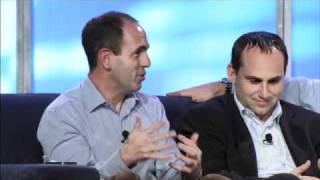
Tim O'Reilly moderates PayPal, Square, and ShopRunner executives on mobile commerce in 2010. Square uses Twitter and Yelp to replace credit checks. Amazon Prime's dominance pushed retailers to form ShopRunner as a coalition alternative.
Chapters
So what do you guys think of the NFC chip in this unnamed Google device?
Ah, NFC. Well, I tell you what. We've been investing in mobile for the last five years. Part of the reason to continue to invest in mobile is because at some point, the standards and the technology will be available for us. And at that point, we hope to accelerate our activities. I think NFC is a good bet. We're doing some things with NFC today, as you know. It isn't clear to me, however, that that's the winning solution when it's all said and done. But it's a nice interim bet to try to accelerate what might be interesting use cases that we have.
Does it even matter in terms of payment what actual mechanism is used to trigger the transaction? Nick, on that.
I actually look at NFC as There's two dimensions to this answer. One is it's just simply another form of identity. So if you look at a credit card or a debit card that about 180 million Americans use to pay for things, it's just a simple magnetic strip. All it is is really a unique identifier for you, as is an email address, which is something that PayPal pioneered over a decade ago. So NFC is turning your phone into.
Another form of identity. But there's plenty of forms of identity. But you face the question with a credit card, you actually, you know, you have that identity tied to an entity that is doing the payment processing, the fraud detection, whatever. Now all of a sudden you have this in your phone. Who owns that point of identity? Is it the handset manufacturer? Is it the software provider? You know, is it some other party? It really introduces a whole new vector into this discussion.
And that's a pretty critical distinction.
I don't know if you guys have.
Any insight into that from where you sit in payment. Well, in fact, I think how it's implemented will dictate whether it's successful with users. Because as different entities play in that ecosystem, there's usually different pieces of friction. Like there's different user agreements, there's different rights, there's different things and hoops and hurdles that users have to go through. And that may ultimately be the reason why Scott's right is that it may not succeed because there's so many complexities to who owns the data and who owns the user experience. where other products may be a unified experience and usually performs better.
Yeah, it occurs to me, obviously with Square, it started out with a little hardware hack, and now we're seeing other hardware hacks. Does the actual hardware of the transaction matter?
I think it does. We do look at this as a social hack because 180 million Americans are used to paying with plastic, and it's hard to change behavior all across the all across the world, all across the US on each side of the equation. But what this does allow us to do is to process what are known as card present transactions, and that makes a big difference. Card present means just like it sounds, that the card is physically present in proximity to the merchant when you're buying something. That changes the economics fairly radically. Many of you may be aware of card not present transactions, which is when you buy something on the internet. The merchant pays a lot of money for those transactions compared to what they do in the real world, and the merchant bears the cost. complete liability for fraud losses, where in the real world, if you steal a credit card and you go to a store down the street, basically the merchant's not going to lose any money.
And that's because there's a magnetic swipe.
And a signature, which is what this device allows for. Right, but obviously NFC will do that too.
But listen, it's actually not clear that NFC will allow that for all kinds of transactions above a certain size. All right, okay. Well, we'll certainly learn more about that in months to come. But I just, going a little more broadly, what do you see as the impact, any of you, about this sort of shift to mobile on commerce. We saw clearly the web era was huge markets opening up. But now we have this device which can be used to purchase online or potentially offline as well. What do you think about that? For us, how are your merchants thinking.
About online and offline blend? When we started GSI in Late '98, early 1999, retailers were absolutely petrified about e-commerce. I mean, they didn't understand it. They were very worried about it. It's been an interesting period of time to see just today I'd say that mobile is going to be more disruptive to e-commerce than e-commerce was to retail. Now it's both a great opportunity and also a great threat. An opportunity side of business that we own, Ou La La, leading private cell company, barely had any revenue from mobile a year ago. Today, on the weekends, we do 15% of our revenue comes from mobile on an average weekend. So what didn't even exist a year ago and today is fairly significant. Flip side is if you're a retailer, mobile has created the complete pricing transparency that if you're selling commodity products that many retailers do, it can be very disruptive. So we really think it's both a great opportunity and also a great risk. We process many billions of dollars of transactions. And today if you just walk into a retail store, you'll see consumers using their mobile device to be a much smarter consumer. It was one thing to have complete pricing transparency with the Internet, but it's a far greater risk and opportunity. I think in a lot of ways, quite frankly, a lot of stores are just becoming great showrooms. I mean, I always joke that Amazon has the single best multi-channel strategy of anybody. they pay for no real estate. At the same time, they've got lots of consumers walking in and using their.
Amazon app to price shop. Well, I have to say, I've often worried about that in an industry that I'm also part of in publishing. I've seen that where Barnes & Noble and Borders on the ropes in some ways from the impact of Amazon. Amazon is losing that showroom. And that actually changes the dynamics of their business as well. Is there a tipping point at which Amazon will start hurting? as they start to hurt offline retailers?
You know, I'd like to say that Amazon's got a big risk from a multi-channel perspective. I think there are a lot of things that big retailers benefit from, but at the end of the day, certainly Amazon's been a benefit from all of the retailers with great showrooms of inventory. So that's been a big benefit. Certainly, if you're a multi-channel retailer today, the way to succeed is to leverage your physical assets that you have, whether it's your sales associates, whether it's your stores, whether it's your marketing, if you don't leverage that presence then it's going to be very difficult to compete against someone who's got a lower cost infrastructure.
But clearly a bunch of the merchants you work with have banded together to, was it ShopRunner?
Yes.
To do something like Amazon Prime as a collaborative effort that clearly indicates that they're waking up in a whole new way to a threat.
Well, probably a real telling story would be, I don't think I'm the smartest person on the planet, but maybe after maybe the 300 or 400th investor asked me, what are you doing about Amazon Prime? We said, you know, maybe we should have a response to this. And I actually went out a few years ago and started asking major retailers, what are you doing? I mean, CEOs of major retailers, I mean, I would never admit who any of these people were, but major retailers said, what are you doing about Amazon Prime? And 75% of the people said to me, What's Amazon Prime? This is only, by the way, a year or two ago. So here's Amazon Prime, which is without question one of the major driving forces of Amazon's business. We've got four or five million of their best customers that spend most of their wallet share with Amazon. So it's been incredibly successful. Again, driving a huge percentage of their business. For us, what we realized is that major retailers would love to go out and start their own Amazon Prime-like program, but there's not enough, no one buys enough from any individual retailer for that to make sense. So what we did was really created a coalition of what will be hundreds of the web's best online merchants, companies like Toys R Us, PetSmart, Dick's Sporting Goods, Barnes & Noble, Borders, already more than 50 companies that are working together in a very similar program to Amazon Prime, unlimited two-day shipping from what will eventually be hundreds of the web's best merchants. What that really signifies is when you've got big competitors working together, companies like Barnes & Noble or Borders or Dick's Sporting Goods or Sports Authority working together, it really shows what a threat people are really perceiving Amazon to be today. Yeah.
Let's talk a little bit about social. I mean, social buying, we're hearing in e-commerce that Facebook is now, in many cases, driving as much traffic as search used to drive. you guys seeing that from the data that you guys have? And also, I guess in the case of Square, you guys are thinking about social as a very different dimension. You know, you guys have a bottom-up disruptive take on social.
Sure.
So we think of payments as social by definition. One party's exchanging something with another party at a minimum. And so what we're doing is embracing that in two different dimensions. The first one is what I call social credit checks. So historically when you wanted to accept Visa MasterCard and it'd be interesting to see if NFC changes this at all, you had to apply for what's known as a merchant account and that's a laborious process. It usually requires an application fee. You have to submit to a credit check. It usually takes multiple days, even on PayPal's site, I think the disclosure says it takes one to two days. I'm using you as a leading indicator of how efficient it has historically been. But in any event, it's a laborious process and most people get turned down. So what Square is saying is that there's data other than what people have historically used, namely things like Twitter and Facebook data and Yelp data and Google satellite images even, that we can use to underwrite and vet merchants or micro merchants or individuals who want to sell things and that we can allow you to successfully process Visa, MasterCard, Amex and discover transactions for the first time. So we're using social data to empower people to become entrepreneurs. The second version of social is of course transactions things you buy have meaning. I mean, there's companies like Swipely and Blippy that have basically built their businesses and are trying to predicate on just that notion. But we think because we have transactional data, buyers and sellers, that we actually have a natural channel to expose that data in a way that users will appreciate and merchants will understand.
And I think, Tim, you're on to two of the biggest waves that we see. I mean, you asked about mobile a couple of seconds ago. ago. In our opinion, there's no question that mobile's going to be bigger than the internet as we know it through the browser. Because this whole, I can be free and I can use any device and I can be anywhere, unencumbered by where's your desktop and where's the browser that you use, that's big. Because there's no chance that consumers won't embrace that. They will and you already see it in mass. The same thing is true with social, we believe, and I personally I believe. eBay is founded on the idea of a community, of course, right? A community of small sellers with buyers. You know, what you're seeing in social is the 2.0 or the 3.0 version of that community. And I don't have any doubts at all that that's going to be big.
To Keith's point that payment is inherently a social transaction, a big part of PayPal's business is actually person-to-person money transfers. is not actually buying stuff. And clearly Square, you really are bottom-up disruptive if you succeed in making it, in democratizing the ability to actually take a credit card. How do you guys think about the future of that kind of person-to-person financial transfer? And particularly in the context of fraud detection. how do you keep that from getting out of control?
Yeah, exactly. You said it correctly. Person-to-person payments, that exchange of value between the two people, has been part of PayPal from the beginning. That's what the original founders, that's what they based it on, and we still have that today. We don't break out the payment volume, but it is still a big part of our business. I think the right way, though, to look at this is over the years I've been in banking and in payment It's very hard to predict what the consumer is going to do. It's almost impossible. I mean, if you think about it just for a second in your life, why would a consumer use anything other than a credit card in a grocery store? I mean, the logic behind that, if you pull it just a little bit, it doesn't make any sense. But yet, the biggest portion of payments in supermarkets happens to be debit cards. So the money's being withdrawn directly from you. So what that tells us and what that tells me is, Consumers are going to exert choice over everything they do. Where do I want to buy things? How do I want to pay for things? What's the underlying financial instrument that's going to be used for this? And so the PayPal strategy around that is to enable you and all the other 90 million customers to put anything you want in that wallet and to use any one of those payment instruments on any occasion that you might want it because that's choice, that's full choice. And if we make it ubiquitous, because the cloud gives us access to every device and every payment occasion, and then from the cloud you can get access to the wallet with choice, I believe that's a winning strategy for our business.
What do you make of the fact though that Apple makes no bones about trumpeting how many credit cards they have on file, Amazon also makes no bones about how many credit cards they have on file? They clearly see some kind of competitive advantage in having this huge database of people who have authorized them to take their money. And you guys are kind of a neutral party in the middle of this. You work with a lot of different merchants. You also have one of those other people who can say, oh yeah, we have hundreds of millions of people's authorization to do money. you know, how is that going to play out?
I mean... Right, right. So we have tons of credit cards inside the wallet, as you'd expect. I don't even know the number, because it's a vast number, of course. But the most important thing, and this is exactly the way we look at it, is those customers of ours who are the most engaged with PayPal, who do the most transaction using that wallet, actually they have everything inside their wallet. They have one, maybe two, maybe three credit cards. They have a debit card. They've registered the checking account. They might use a green dot card. Go outside the US and they've got all kinds of things that they put inside the wallet. And so, you know, the essence of being a full service payment system is enabling that choice. And then, as you just asked a moment ago, being able to manage the risk. Because there's an enormous amount of risk as money moves from person to person. person to merchant, any place that you're transacting and money is moving, there's underlying risk to that. And when it's all said and done after 11 years of hard work, truthfully, that's what I think the secret sauce of PayPal is. It's that ability to manage risk.
Let me ask this question. What kind of data do you guys have? What kind of use do you put it to? And what kind of limits are there on what you can and should do with it?
That's a very broad question.
So we collect a wide variety of data.
One of the issues in underwriting person-to-person payments is figuring out who a person is. Because if you're a retail store, it's pretty easy to vet that. You can send somebody-- and actually this is what credit card issuing banks and merchant account acquirers have historically done. They actually send somebody on the ground to your store and ask for your articles of incorporation. They actually look at your inventory. and they go in the back of the room and sort of look up what's on the shelf and stuff like that. And none of those systems are perfect, but they're very intrusive and fairly laborious, which is why it takes one to three days to get approved. So we're saying we're going to reinvent that. And what other pieces of data have been sort of created in the last 40 years that allow us to do this on the fly and give 95% of our users a decision in less than a minute. So that's very difficult to do for an individual. Like Scott applies, what do we know about Scott? How can we find out information about Scott? Should we trust Scott and in less than a minute give him a decision and allow him to start accepting payments. What we do with the data is solely to prohibit or prevent fraudulent misuse of the, you know, sort of transactional system. As you know, there's a lot of, you know, people who have evil intent in the world and they tend to migrate to places where there's money moving. You know, the old adage about going to the bank because there's money in the bank. So, you know, lots of people try to break into PayPal because in fact there's lots of money moving around that system. When we had our first fraud, sort of a first fraud attempt at Square, I was actually pretty excited because it meant we were succeeding as a company that people knew who we were. It was kind of a feature, not a bug, sort of reaction. But that's actually the magic of PayPal. I believe that eBay disclosed when they acquired PayPal in 2002 that about a third of the purchase price was allocated to the fraud modeling engines that PayPal had pioneered. So we have to do the same thing. in a different use case in the real world as opposed to online, which has different challenges and some things are easier, some things are harder.
But still, the fact is, every time somebody uses a payment device, whether it's a credit card or a mobile phone, they're effectively doing a check-in. People who would say, oh, I would never use Foursquare, they don't think about the fact that passively they are giving a number of players information about where they are what they're doing. What kind of limits are there on, you know, I mean, are there legal limits, regulatory limits on what you could do with that data? Are there people who potentially could be unscrupulous and could use it in different ways? Or even, you know, ways that are ethical but still would challenge people's expectations, you know, for example, where you use aggregate data to to drive better purchasing decisions or recommend products or, you know, particularly as there's more information associated with the, you know, the data packet. You know, it's one thing when you go up to a register and you get a printed out list of everything you bought, but to the extent this becomes done with your phone and, you know, it actually is transmitting along with the data what you bought and so on.
So there are different laws and regulations all around the world. And some, of course, are wide open and some are much more onerous. But we don't operate at that level. We operate well, well, well, well above that because we have to. And you're the same exact way. Any merchant, big or small, that transacts with PayPal, they can know that their data is secure inside of our payment system. It will never be shared with any other merchant. That's been from the beginning of time. That exists today. We don't share that data even with eBay and we won't. On the consumer side, it's exactly the same thing. We don't sell any data. We don't share it with any other party. We don't give it to any other company to interrogate it and try to give us information.
And yet, you do share with a merchant, for example, when somebody uses PayPal, one of the things that that I love about it is I don't have to fill in the form that says, this is where I live, this is where I want you to send the product. And you can start to see at least the future possibility of innovative merchants saying, well, what I'd really like to do is be able to use recommendations. And would that be an okay social contract? And the users, I love the fact that I don't have to fill in my address. What I also love is the fact that you were able to remember that I bought some product before or, you know. So do you see any movement there in any of your businesses on where that line of what's acceptable?
So we ask users to opt in. Basically we give them an opportunity to get an email receipt which has information about the merchant, has information about the products you may have bought like tasting notes on coffee, tasting notes on wine, and allows you to electronically store it for tax purposes and all kinds of you know, value like that and then eventually will allow merchants to send offers through the receipt. But that's solely opt-in. So every user after they process their payment has the opportunity to provide an email address or SMS soon and that we will provide that information to them, but it's totally optional.
Yeah. You know, I think the way we think about it is very similar to Sky. I mean, first we process billions and billions of dollars of orders a year and it's interesting fraud is something that people always talk about as a major problem in the the Internet, I think as you get bigger and have more scale, it's actually less of a problem. So I think it's something PayPal does really well. It's something that GSI does really well, which is you have tremendous amounts of history which lets you make far better decisions. I think certainly the way we always think about is how can we improve consumers' experiences online? So whether you talk about simplifying the checkout, the information that we remember, we'd only do that with the permission of the consumer, but it's all in the.
Interest of how do we improve their experience online? That's a big driver of e-commerce growth. Credit card processing fees are, at least for two of you guys.
Ridiculous. Completely ridiculous.
All three.
They are part of the revenue stream. But I heard recently that Australia cut the interchange fees to 0.5%. And what happens to your business if there's downward pressure, do you have to start looking for other sources of revenue?
In fact, look, currently-- I could buy eBay stock.
I mean, it would be great.
So, you know, our value proposition has been the same thing for a long time, and that is, if you get a merchant account with PayPal, it's right there on the website. It's very transparent. There's no subtleties in any of the words. there's no additional fees. It's just right on the website. We haven't changed it in six years that I've been there. Truthfully, what we're working hard to do is lower that price. So if, for some reason, credit card fees or debit card fees came down, our intention would be to pass that along to our merchant customers because that would be the right thing to do with our business. And as we get better, as we get larger, you can expect from us, our customers can expect from us that we'll get more competitive by lowering their price. Now, don't put that in the bank quite yet, but that is the way we look at this and the way that we intend to pay.
I'm sort of curious, though. I was having a conversation with Alex Rampell over at TrialPay. I don't know if you know about those guys. They do-- oh, yeah. They work with Facebook on Facebook credits and Facebook gaming companies, and you actually pay by doing a transaction with someone else. You say, okay, these guys want to do customer acquisition, you know, Sephora or Gap.com, they might only pay a buck in a transaction fee, but, you know, they'd love to pay 25 bucks to get a new customer. And that's Alex's business. And you kind of go, well, that's kind of a pretty lucrative, you know, kind of angle on, you know, how you could effectively monetize the transaction graph data that you have. I mean, do you guys-- think about those kind of things at all? Or is that going to be some other entrepreneur who's going to come in and disrupt payment and commerce from a completely different direction?
Well, the one thing I'll say is, I think there's certainly, you know, we are excited about disruption in payments. I mean, if you look at the money that we spend annually, I don't know the exact number, but it's probably $100 million a year on actual interchange rates. And certainly, if you look at the P&L of a retail, and you look at the interchange rates that they spend, whether it's through GSI or directly on their own, it's a gigantic number. So certainly, I believe there's great opportunities to disrupt payments in a lot of ways. We prefer in order to go through either one of these guys because it's lower cost for us than what the traditional credit card companies charge. And it is both a big problem and a big opportunity.
By the way, we want to take questions from the audience. So if any of you have questions for these guys, please come up to the microphone. Mics. Okay, that was quick, so we just go right to you. Sorry, the mic's not live yet. Can we get that mic live?
Try that again. There we go. Jason Helfstein from Oppenheimer. Michael, just a question for you. I think there's been a lot of just question about how ShopRunner competes with Prime. I've been a Prime customer for probably two years now. really well spend $80. I have a hard time imagining spending another $80. So are you guys experimenting with or thinking about how to market that, whether it's you pay $80 and you can earn that $80 back over the course of a year through discounts or something, just because at the end of the day you want to get all those Prime customers and to convince people to spend for both, it seems like an uphill proposition.
Sure. Well, first we're excited for you to cancel your Prime membership and become a ShopRunner member. I think there is room for both, but I think there will be people that also pick. The reality is if you compare what we believe ShopRunner will be, and again, this is a business that's 30 days old, we believe we're gonna have a much broader assortment. We're gonna have merchants that consumers spend most of their money at day in and day out of their lives, and we believe we can ultimately make a much better experience. So if you think about spending 80 bucks for Amazon and the maybe five or six million products that they have available through Prime, or if you're going to spend 80 bucks with ShopRunner, you can have so many of the great retailers that you buy from. We think it's ultimately a much better consumer proposition. And ultimately, we think if you think about it through the eyes of the consumer and you do what's in their best interest, that's ultimately what's going to make the business win. So we've only been live for 30 days. We've already got 23 merchants live. I think we've got another 30 or 40 on the coming soon section. Every week we're signing new merchants. And the amazing thing about ShopRunner is it's so topical to solving a giant problem, which is Amazon Prime.
I mean, there's, you know, Amazon Prime-- It's a problem for the merchants.
It's not a problem for the consumer. It's a benefit for the consumer. Yeah, it's a giant problem for the merchants. And, you know, if you think about GSI as a company, we're out there solving problems for merchants every day. So the ability to solve a problem that no one can solve in that we can solve together, we think is an incredible opportunity. And one that you would never, if you would have had this idea a couple of years ago and said, hey, we're going to band together competing merchants in basically a Prime-like program, people would have said they're never going to participate. You can never get Barnes & Noble and Borders or Sports Authority or Dick's or Rivalry competitors to work together. But the reality is Prime is such a weapon for Amazon that it represents such a risk to large retailers.
Why do you see it as such a weapon? You really think these are the most valuable customers?
I mean, what you've got is five, you know, if you read analyst reports, you've got, and these aren't my numbers, these are numbers that I'm regurgitating that I've read, you've got roughly 5 million members that represent roughly 30 or 40% of Amazon's domestic business. So what you've got is once a consumer signs up for Prime, they go from spending some of their money with Amazon to spending the great majority of their wallet. You said it's a great deal for you. which now I'm sure that you spend most of your money with Amazon versus not doing that before. So everybody that signs up for Prime is someone that's going to spend a lot less with all of the traditional merchants that we serve. So solving this problem is something that's incredibly top of mind to the entire retail population.
When we talked on the phone in the prep call, and we talked a little bit about the potential competition between Amazon and Google, It's a bit of a surprise in some ways. People don't think of them as competitors. And yet, shopping search changes quite a lot if you start with Amazon rather.
Than you start with Google. Well, if he's successful, then it's a super threat to Google because then every consumer who signed up for Amazon Prime or for one of his merchants through this program is not going to start.
Their e-commerce search at Google. They're going to go to one of those two programs. Look, the reality is everybody's fighting for where consumer starts. and where our consumer stops. And the reality is consumers have historically started shopping at Google and then they finished at the retailers. What Amazon has people doing is starting at Amazon and stopping at Amazon. What ShopRunner's goal is to get people to start with our merchants and end with our merchants. But that's really where the fight is happening today.
Does that mean the ShopRunner is going to turn into a search engine or.
Does it mean-- no, I think, look, the question you're fundamentally asking is, I think, and again, you had the right person to ask from Google, previous to us sitting up here. But the reality is, I don't know the numbers. I'm guessing 15 or 20. This is a complete guess, but I think 15 or 20% of Google's business probably comes from traditional retailers, merchants that sell physical merchandise. And I think consumers used to start at Google for shopping. And today, less consumers start at Google for shopping. That's a risk to Google, and that's why I believe Google is very aggressively approaching shopping. That's the same reason that other people other than Amazon are very aggressively figuring out how do you get the consumer to start with you and how do you get the consumer to stop with you. Take, you know, probably just use ShopRunner for an example one more time. The integration that you've got these gigantic merchants putting behind ShopRunner, businesses that are 30 days old, putting it all over their product page in their cart, is again, because they want their consumers to.
Stay- what's the uptake? What's the uptake with consumers?
We've been, I mean, I'm not going to get into any numbers specifically, but we've been certainly definitely pleased with the results in our 30 days of history.
Okay, I want to ask a last, very broad question. Five years from now, what's different? I mean, how are we thinking about commerce five years from now? How are we thinking about money five years from now?
So I'll jump in and see if I can help paint that. I think most things.
Are we carrying credit cards?
There'll be credit cards five years from today. There'll be lots of things that you're familiar with five years from today. But I think there'll be a lot which is different. And most of it, most of the major profound change will happen because of technology. software, new experiences that companies in this room, all around the valley, all around this area bring to life. This, you touched on a little bit before, Tim, this whole device thing, this proliferation of billions of devices that's happening right in front of our eyes, is changing everything. It's changing what you do in your house, it's changing what you do on your weekends, it's ultimately going to change what happens and your automobile is going to change all of those things. And if I use my three kids as a good barometer for how that's going to affect their life, there are lots of things that we take for granted that my wife and I take for granted that they'll never experience. They just will have no reason to experience it. A good example is my two oldest boys. I'm not sure they know what an ATM is. They have no real reason to ever go to an ATM and take out money. I can't imagine that that's going to change. Wow, that's the type of profound change that we'll look at five years from today and say, I wish I rode that wave because whatever, whatever, whatever comes next.
I should have started with this question. Listen, we're out of time, but that's a good one to think about. What are we going to end up discovering that seemed unthinkable but just-- yeah, exactly right.
Thank you.
Thank you very much. Thank you.
More from Keith

This Billionaire Trains His Body Like He's Building A Billion-Dollar Startup | Keith Rabois


Vinod Khosla and Keith Rabois on Building and Investing in Enduring Companies | Ep. 40



