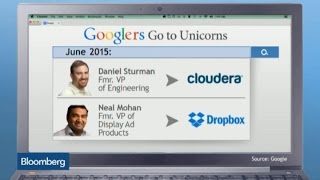
Keith Rabois and Elaine discuss why Google engineers and executives are leaving for unicorn startups. The draw is mission-driven work on hard technical problems where they can have real impact, plus faster decision-making than Google's moonshot culture. Ex-Googlers excel on the enterprise side, where infrastructure challenges match their expertise.
Chapters
How'd you get this guy? How'd you get him to come to.
Work for you from Google? Well, it is a rare event. We're very excited that Dan joined us. There's over 55,000 employees at Google and they still attract the best talent in the industry. And on those rare occasions when I think the stars line up, it is possible to attract them out. I worked very, very hard to get Dan. First of all, it does take a unicorn.
Unicorns are rare. Was it equity, was it money, was.
It role, was it power? What was it? No, I think folks out of Google are very passionate about changing the world because that's what Google has done. and so when they see a rare opportunity to change the world, it's a hard technical problem that attracts technical talent, it's the right culture fit, and more importantly, it's the right mission. If you can actually impact the world and help transform the world, then there's an opportunity to, I think, attract a strong Google talent to one of these companies.
Is this a real trend, Keith?
Yeah, absolutely. I think the missionary zeal is really important. The companies that have a purpose and that are changing the world and on the precipice of changing the world can attract people on that. It has nothing to do with compensation. Secondly, I think Google made an intentional strategy decision four or five years ago to pay at the extreme end of the market. And that has both pros and cons. And it started to backfire a bit where once you make things about the money, they become about the money. And so because Google is using an investment banking style compensation structure, it has investment banking style issues. And that that does allow for startups to say, hey, we have a different culture, we have a different set of priorities, and you can come make your stamp, put your stamp in and in premature on the world. And that's very appealing.
Do you think it has anything to do with Google's some of their core products languishing?
I think everybody gets to work on.
The self-driving cars and the moonshots.
I think over time the world will figure that out. I don't think with hindsight that'll be an easy call. Right now it's Google's kind of in this awkward precipice as the world shifts to mobile and shifts to wearables. What is their role in that? I mean, right now it's pretty stable, but it's not clearly stable.
How do you transition someone from Google to a company like Cloudera?
Boy, it's happening fast. He's been on board four days and he's already bringing cultural change, but not cultural change in, you know, he wants to change how Cloudera is kind of at the pace of decision making and the pace of innovation. And that's something that is inside Google, which makes it such an exciting place. And then have that come out. And one of the things important for our industry, there's a technology called Hadoop that we're building that its origins we can trace back to Google. So Google invented this technology. And now to have a Googler joining our company and helping to bring this to the rest of the industry is pretty powerful.
It's interesting, we've seen a lot of Googlers go on to start companies. Pinterest, Ben Silverman, Cloudera, Twitter, Instagram, Kevin Systrom, Asana, is this You know, what do you make of that part of it? Google's sort of spiking innovation, sparking innovation.
Well, actually, I've been pretty critical about the ability of ex-Google-ers to start consumer products very well. I mean, if you look at both Kevin and Ben, neither were engineers and neither were product managers. I don't know of a successful example of a Google ex-employee starting a consumer product who is an engineer or product manager, which is interesting. So I think, though, on the enterprise side, there's several examples. I funded a company that was almost entirely ex-Google engineers, the business intelligence space called ThoughtSpot.
So where there's deep technical problems on the enterprise side, I think it's a very good for me on the consumer side. I'm a little bit more dubious. Yeah, in our world, sorry, Elaine, but in the data center, Google's data center that's operated by many of these engineers is the data center of the future. And that's the talent that can come out and help build enterprise software companies. And a lot of these companies, the successful ones, are those engineers who see.
The data center of the future and go, wow, we can go build a business around this. Last quick question. I think I've said the word unicorn.
About 10 times so far this show. What do you think of that term?
You like it?
Well, so I think unicorns are supposed to be rare. Right now there's a lot of unicorns, so I think we need something more rare.