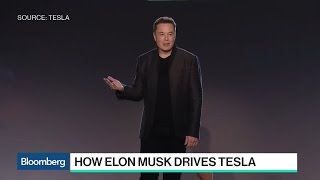
In this interview, Keith Rabois discusses Elon Musk’s early tenure at PayPal, highlighting Musk’s brief stint as CEO and his continued influence as a board member and major shareholder. Rabois attributes Musk’s success to his systems‑engineering mindset and ability to grasp complex business equations, likening him to Steve Jobs and Jack Dorsey. The conversation then shifts to Tesla, where Rabois argues that the future of automotive lies in software and battery technology, and that Tesla is uniquely positioned in both areas. He explains that while batteries are becoming commoditized, ongoing innovation—driven by advances in theoretical physics and chemistry—will keep them a strategic moat, and Tesla is well‑placed to capture this. Rabois acknowledges Tesla’s strained financials, noting its limited cash runway and high capital expenditures, but maintains that the company’s competitive advantages justify a premium valuation, even if it appears richly valued. Throughout, he balances optimism about Tesla’s long‑term prospects with caution about its current valuation.
Chapters
Tell me about Elon.
What do you want to know? How long did you work with him? Well, he had already been displaced as CEO when I joined the company, but he's on the board of directors.
So PayPal purchased X, which was his online banking company. He briefly becomes the CEO of PayPal and then departs, but not ingloriously, I.
Guess, if he stays on the board. Yeah, no, he stayed on the board and obviously was the I believe is the largest shareholder at IPO. So obviously it's a very successful investment. Yeah, we merged with X in March of 2000. The market collapsed a couple of days later. We collapsed in June 2000, as you remember. And he took over as CEO in June, stayed through the end of August. And then Peter Thiel came in as CEO, interim CEO, actually, originally, September 25th in 2000, and really fixed the company.
What was Elon really good at there?
Well, obviously, systems engineering is the key skill I think that Elon shares with someone like Steve Jobs from afar and Jack Dorsey is being able to understand the business equation that lines up success in a complicated area. And very few people can actually do that. There's basically a variable, like x times y times z, that yields success in a business. And understanding all the moving pieces in your head and being able to tweak the right variables in the right order is a key to building a complicated company.
Because there are so few critics of Tesla, I've taken the role of being one. And I enjoy it because it's a fascinating company with a really cool product and horrible financials. And so that's right up my my bailer. But I wonder how you look at that business.
Well, I think at the business in the future of auto is probably based upon software and batteries. And Tesla's is well positioned in software, at least compared to all the other people in the world that make automobiles and probably as well positioned and better positioned in batteries. So the two fundamental drivers of the future plus design Tesla is better than anybody else on the planet at.
So I think you can. All right. All right. The batteries are Panasonic's invention as much as their Tesla's. Right.
And it's a commoditized product. I don't think that's a great business. I don't think it'll be a commoditized product over the long term. I think there's a lot of innovation going on in batteries under the hood, both at Tesla and other places that will propel the industry forward. And I think Tesla is well situated to capture the innovation in batteries. Basically, batteries are pushing the envelope in theoretical physics and theoretical chemistry. So innovation there is extremely difficult. We invest close to ventures in battery companies and have a set in our portfolio because we believe they're so important to the future of transportation as well as the future of mobile phones. And I think Tesla understands that and will capture most of the innovation. It is a place where there are.
A lot of investor bodies buried. I remember when I was working at a fund where we were shorting stocks, and I wanted to decide, I'm just going to short any company with the word battery in the description. We were already short all of them. There were no more out there.
There were no more. And they all collapsed. Well, I think that was before innovation in the mobile devices. So the reason why these devices are so large and it's difficult to sort of make them thinner, if you say heat dispersion with battery, And so as batteries become more capable, the smaller with longer lifespan, they allow better consumer electronics as well as better automotive innovation. And so going forward here, so you.
Sounds like you're optimistic about the company, even though I mean, they've got about 3 billion in cash left. They've burned through a billion this quarter. And they now are going to accelerate CapEx to the point of two and a quarter billion before the before July.
Look, this is not that's not enough. This is not a business for most CEOs. We'll start there. It's very complicated. sort of making this whole thing work. That said, I think on the vectors of competition over the next decade, they're well positioned. Now, I'm not taking a position on the valuation of Tesla. It is richly valued on any multiple basis. So you can make an argument that you believe that Tesla is going to be the future, but the valuation is still off. I think that's a very reasonable place.
Yeah, and that's the same kind of logic people look at the Snapchat IPO, too. Snapchat might be a great, important business.
But- Or Twitter is one that comes up. Twitter has more influence in the world, I believe, than Facebook. But it may still be overvalued as a business club business.