In a November 2016 panel, Brad Feld, Keith Rabois, and other tech leaders discuss the fallout from Donald Trump's election for Silicon Valley. They note the visceral backlash from venture capitalists and entrepreneurs, citing statements from Reid Hoffman, Shervin Pishevar, and Sam Altman that framed Trump’s victory as a disaster. Rabois predicts that Trump’s vindictive, Nixon‑esque style will lead to retaliation against tech firms that took partisan stances, warning that the industry’s eight‑year effort to build a bridge with the White House—through the U.S. Digital Service and other initiatives—could be undone. The conversation turns to Peter Thiel, Rabois’s longtime associate, speculating that Thiel may become the central conduit between Silicon Valley and the new administration, possibly securing high‑level appointments such as Fed chair or Treasury secretary. Finally, the panel addresses economic concerns: whether tech jobs will be protected, the role of tax repatriation and relief in spurring domestic investment, and how the industry might navigate a Trump‑era policy environment.
Chapters
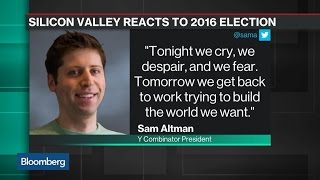
Thiel's comments about taking Trump seriously but not literally have been repeated over and over again over the last several hours as people have been digesting the results. At the same time, you had so many people in Silicon Valley coming out viscerally attacking Donald Trump. Reid Hoffman told me it would be a terrifying disaster. Shervin Pishevar, the venture capitalist, saying Hitler was basically elected. He's funding a since secession campaign. Sam Altman of Y Combinator saying tonight we cry, we despair. we fear. Keith, you know, what does this mean for the actual relationship between Silicon Valley and the White House? Do you think there could be retaliation?
Well, absolutely. Donald Trump is vindictive. There's no doubt about it. I mean, you look at he was running a general election campaign and still talking about like lying Ted and low energy Jeb. He's Nixon-esque. I mean, I grew up, you know, when I was really young and sort of picked up on some of the fears people had about Nixon's retaliation. And there's almost no doubt that the Trump administration will retaliate against the partisan involvement of a lot of tech companies. A lot of tech companies went way out on a limb, well beyond what a normal Fortune 500 company would ever do.
-Bezos, Eric Schmidt, Sheryl Sandberg.
-This is actually pretty crazy. Like, I think they're gonna learn the lessons. There's a reason why Wall Street is not actively hostile to Democrats. They give a lot of money to Democrats, even though the interests of Wall Street are very different than the Democratic Party. I think basically technology companies are going to learn to grow up, that they can't take partisan opinions without consequences. And Trump is going to be the.
One who delivers the hammer. Brad, eight years have been spent building a relationship, a bridge between the White House and Silicon Valley, the U.S. Digital Service, all of these tech leaders going to Washington talking about important issues.
Will all that work be undone? Oh, that bridge is the smoke is rising. I mean, the Silicon Valley embraced President Obama. It was, you know, maybe Keith is the exception, but your credibility as a venture capitalist almost depended on the photograph of you and President Obama that you had in your office lobby. And, you know, Donald Trump doesn't even have email, right? I mean, he hasn't embraced tech. So the future of all those initiatives, I think, is in doubt. And I think the community has to get serious now. And maybe a Trump administration does, too, about rebuilding the relationship.
Keith, you're close friends with Peter. You obviously worked with him for many years. In fact, you were his right-hand man at PayPal. Does Peter Thiel become the center of a Silicon Valley White House connection? How does Peter Thiel, even though he has won here, rebuild the bridges between, you know, with all the people who despise the decision that he made?
Well, I think now he's gonna look like a genius. I mean, as everybody said, I've known Peter for 29 years. He's half brilliant, half crazy, and the art is discriminating between the two. You know, he took an asymmetric bet, and it's gonna pay significant dividends for him. I mean, I suspect he actually winds up going to Washington and winds up.
With a substantial appointment in a lot of power. He didn't see himself doing that, but.
Yeah, I mean, you don't want to.
Say that until you get nominated.
You think he could work for someone else?
Yes, I mean, I think as chairman of the Fed, Treasury secretary, those kind of positions would be very appealing. And I think he would accept them. And there's a lot of people who owe him a lot in Washington. Politics works that way.
You know, you take a bet, you take a controversial bet and you get paid. Interesting. Abe, last question to you. You know, what does this mean for jobs? Obviously, the tech industry has been blamed for eliminating jobs, you know, building this future built on AI and robots where jobs are eliminated. Now, Donald Trump is saying, you know, coal miners, don't worry.
What does it mean for jobs? Yeah, essentially, if you look at the tech companies, that when you have jobs at the cutting edge of technology, they're still in the U.S. and they're going to remain here and they're going to invest more in that. So that's where it all depends. I think tax repatriation, sorry, tax relief on cash repatriation would be really good for the industry over here. Now, when you said, I meant Compaq was good for the tech industry or the market, I didn't mean it in that way. I just meant it can make me sit next to Keith and have me say that I said it was good. But what I would say is that some of these decisions that are related to giving some tax relief, tax benefits to the country can create jobs and that would be good for the industry in general.