Cash Based Practices | What Physical Therapist's Wish They Knew Before Running a CrossFit Workshop
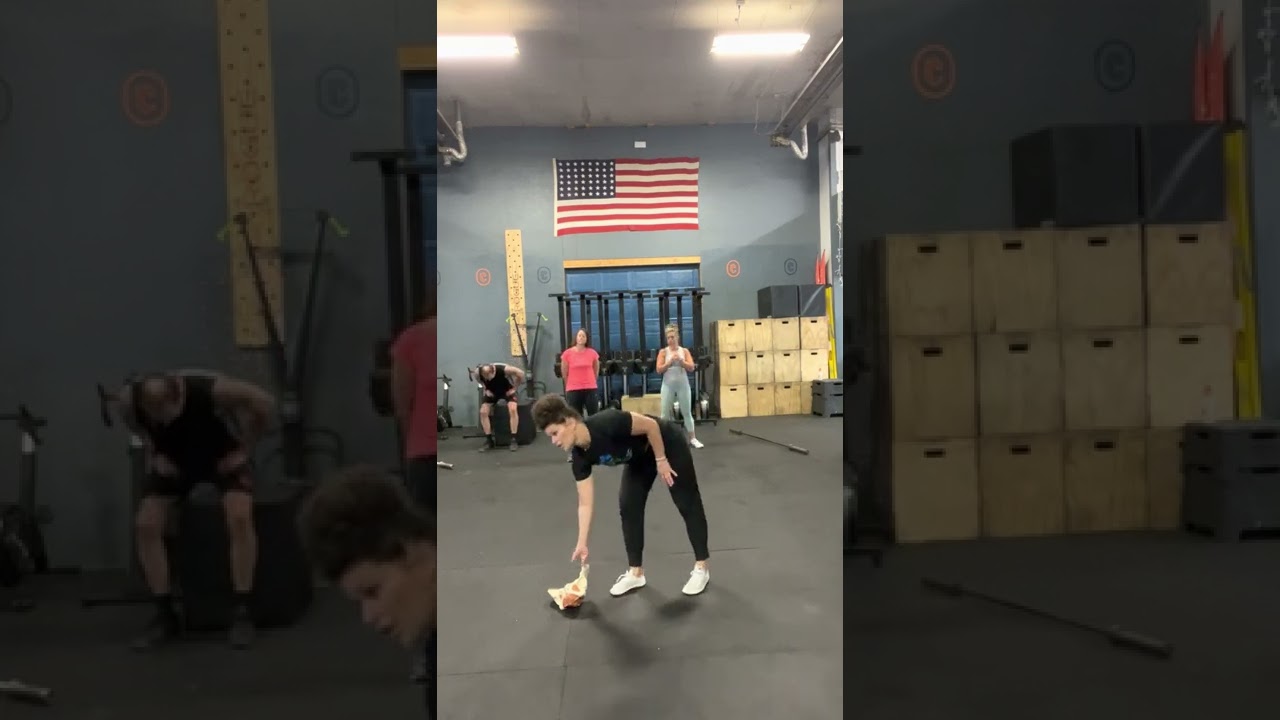
In this live workshop, Dr. Kelly Alhooie (Ortho Pelvic Physical Therapy) educates CrossFit participants on pelvic floor anatomy, its role in lifting, and common misconceptions. She demonstrates how to locate the pelvic floor, explains how improper breath holding can cause prolapse and urinary/fecal leakage, and argues that generic Kegels often worsen dysfunction. The session emphasizes lengthening and re‑educating the pelvic floor, using diaphragmatic breathing (chest vs. belly breathing) and coordinated exhalation during squats, overhead lifts, and jumps. Dr. Alhooie guides participants through hands‑on cues (hand on pubic bone, sphincter squeeze, glute and adductor activation, transverse abdominis engagement) and discusses equipment considerations such as belts and foam rollers. She addresses gender‑specific pelvic anatomy, post‑partum C‑section scar considerations, mattress firmness, and pre‑bed‑out mobility. Throughout, she provides practical drills (squat breathing patterns, scissor jumps with a roller, pelvic floor “marble” squeeze, TA activation) and encourages participants to monitor pressure, leakage, and posture while training.
Chapters
I brought my compass today. Yes. Okay, so where does it fall? All right, guys, so let me just start with, with all this So you guys are oriented on what the heck is the pelvic floor, because no one knows about it, including many medical doctors. Okay, so let me introduce myself first. Everyone, hi, my name is Dr. Kelly Alhooie. I am from Ortho Pelvic Physical Therapy. Liz and I have worked together, um, for some time now, and I'm super thankful to be here to help teach you guys about the pelvis and lifting and breathwork and engaging all things. So thank you so much for having me. Um, so when it comes to the pelvis and the pelvic floor, I want everyone So everyone, I want you to take your hand, put your fingers right here on the pubic bone. Okay, it's a hard bone, you should be able to press on it. You guys feel it? Okay, now go dry it off a bit and press in. It should be squishy. Guess what that is?
Fat.
That is actually your bladder. Okay, so if If you press hard enough, it may feel like you have to go to the bathroom. Okay, so if you don't know where your butt is at, that's where it's at, and it can actually move. Now let's go back to the pubic bone right here. From here all the way around to here— you don't want to touch yourself like this— and then all the way to here. Okay, so from here all the way around to the back part here, that is your pelvic floor. You guys can see there's over 20-something muscles on Of the pelvic floor. So there's a lot, okay, that no one talks about. And this, especially when we're lifting, is the base and the foundation of all of our breathwork. So everything comes down here. So males, males are not, um, exempt from pelvic floor. You have the exact same pelvic floor as females, just FYI, okay? Males can also be susceptible to having prolapses. So I've worked with Fairmont CrossFitters that are holding their breath and they have, um, a rectal prolapse where their rectum So the rectum is coming out through their anus because they're not breathing properly. Females are more susceptible to having a bladder or uterus prolapse. I see some faces like, okay, but this is the thing, this is why breathwork is so important, okay? The bladder and the uterus can come down and drop into the vaginal canal, and that can cause like heaviness and pressure. That can also cause leakage as well, okay? So there's many different tools that we're going to work on today that's going to help kind of So people don't realize this. When I talk like this, do you think my pelvic floor is lifting or do you think it's relaxing? When I talk like this?
Lifting.
It's lifting, okay? When I talk like this, do you think my pelvic floor is relaxing or lifting?
Relaxing.
Relaxing, okay? The reason why this is very important is because if I'm holding my breath like this, what do you think is happening to my pelvic floor down here? And where do you think it's going? Where do you think the pressure is going?
Down.
Down. So especially, we'll get into it, when I do overhead and positioning of my pelvis, there's a lot of times the pressure is going right down my pelvic floor. And if the pelvic floor is already tight, which in most people it actually is, then there's going to be more dysfunction, and that's why you actually have leakage. Okay, so people think, this is a big misconception, do Kegels. Oh, because that's going to help your pelvic floor and stop your leakage. A lot of times these muscles right here are already overactive, they're already tight. I use my bicep as an example, okay? And you actually have to lengthen the pelvic floor first, then you have to re-educate the muscle on how to fire, and then you can actually do the task that you want to do with like lifting overhead, okay? So let's all be, uh, I want to be clear that Kegels don't work, guys, for everyone, okay? There's a big misconception out there. So a lot of times what we have to do, our job is to get in there and lengthen the pelvic floor. Okay, we do internal exams. Yes, and we literally—it's all musculoskeletal system—and we literally stretch these muscles out. So first thing, I want everyone to put one hand on the chest, one hand on the belly for me. I just want you to breathe. So see how it feels to breathe, and notice what hand is moving. And is it okay if I pause and keep watching? Is that okay? Okay. Okay. So I'm just gonna watch you guys, and I just want you to breathe. No pressure. Just Keep breathing. Yeah. Okay, so I'm gonna chest breather over here. That's great. Okay, let's see. Double belly breathing. That's it. Okay, so I want you to notice: is your top hand moving more than your bottom hand when you breathe? Whose top hand is moving more than the bottom? I saw it. Okay, whose bottom hand is moving more than their top? Okay, that's what you want.
You want the top hand to be still.
And you want the bottom hand to actually be moving. So here's my breath pattern, okay? I'm gonna pull my shirt so you guys can see. So I'm here, I'm gonna inhale, belly actually comes out. Sorry guys, belly actually comes out. Exhale, belly pulls back in. So it's an inhale, exhale. Now if you're still finding this is happening, see that's a suck in. You see how I suck in? Okay, what do you think is happening to my pelvic floor. It's like this, and then I go and try to lift a bar or lift a movement, and everything is like this, and there's no dynamic force absorption happening whatsoever. Okay, so instead of that, can you allow everything to relax and then exhale, pull everything back in? So same thing with the squat we're going to do. So we're going to take the same example. You can put your hands off your chest.
Okay.
When we're squatting, if it's a light weight, we're all going to inhale on the way down, Inhale, let everything hang out. Exhale, pull your belly in, breathe out. But remember, it's not a suck, it's a— like someone's gonna punch you in the lower belly. Okay, so here we go again. Inhale, let everything hang out, let your belly hang out. Exhale, pull it all back in. Good. Again, inhale, let everything hang out.
Exhale, pull it all back in. Just keep going.
Everyone feel their abs moving? Yeah?
Cool. Should you be like squeezing your glutes to come up, or should you try to not squeeze your glutes to come up?
You can stay screwed with the glutes, it just depends on how you squat. Some people are more quad dominant where their knees are going to come more forward, that's going to be a lot of quads. Some people are more of a hinge-y, like I like to hinge because now my weight's backwards, so now when I'm here, this is going to be easier for me to engage my glutes. If I squat more like this, when I'm knee dominant, my knees It's just know that you're gonna have to— it's gonna be harder to activate your glutes. So it depends.
But doesn't it affect my pelvic floor when I raise my butt?
Yes and no. The glutes will— actually, it's a great question. The glutes, what he's talking about, guys, is here. These are the glutes, your butt muscle, okay? Underneath here, do you see all these rotators? You guys see all this? This is your hip joint. So he's saying, does it affect my pelvic floor when I squeeze my glutes on the way up? Well, Well, what happens is the glutes end up being the more dominant one because they're bigger than all these little guys, and the pelvic floor becomes dysfunctional. And a lot of our patients will be like, Kelly, I promise I'm squeezing, and instead— and we'll get into that in a second— instead of them actually working their pelvic floor, they're working the surrounding tissues, the glutes, the abs, and then the adductors, these inner thighs. Those are the accessory muscles to the pelvic floor, and they'll compensate by that. Okay, so that's what you gotta watch out for. That I don't like to squeeze it too too much. I don't want to like be a big butt puncher. You know, we have a lot of those stage four butt punchers. You gotta watch out for them. Yeah, for real. Okay, so okay, everyone got that with breath pattern, right? Okay, now this is when we're actually just going to activate the pelvic floor and not the glutes. This can be challenging. So do you guys see the sphincter around the anus? Yes, I said it. You see the sphincter around the anus? Yes, we all have one. Okay, that— I want you to think about this. So can you picture dropping and letting go of your abs and your pelvic floor, and then can you just suck up a marble just squeezing the sphincter? Not your butt cheeks, okay? Not your butt cheeks. Can you just squeeze this guy? It's more gentle than you think. So can you suck up a marble? Let it go. Suck up the marble. So it's not this. You see that? How my butt clenches, okay? And then my— I go into a posterior pelvic tilt. Nothing moves. You can't even see me doing it. I'm going to lift up the marble. Now I'm relaxing the marble. Lift up the marble, relax the marble. Who feels it? Okay, so pretty much everyone. Okay, do you feel your butt cheeks trying to help you out? Yes, a little bit, right? Okay, this is what happens because they're big accessory muscles, and this is why the pelvic floor becomes dysfunctional. It's like, hey, I don't have to work, the butt cheeks will help me, the adductors will help me. Okay, so you have to train this in. Can you lift and then can you let it all go? Can you lift and let it all go? Okay, because this is going to be important when we're squatting in a minute with these guys. You're going to activate the system from here all the way up to control the pressure. Okay, so this is what I mean by that. So let's just say it's a light load. It's a light load. I'm going to inhale. I'm going to let everything go, including my hand on Sphincter. Okay, from here, as I stand back up, I'm actually going to squeeze my sphincter. Okay, from here, lift my pelvic floor, pull my belly in, and forcefully exhale. Okay, and on the inhale, everything lets go. From here, start here, try to lift, belly in, and stand back up. This helps with your back pain, this helps with leakage, um, it helps a lot of things. Pressure control so that you don't feel that heaviness like if you had a prolapse. Okay, so try that, guys. I want everyone to try it before we get the bars. Okay, so from here, inhale, let everything go. Now exhale, squeeze that sphincter in that position. It's gonna be harder. Use your abs and drive back up. Okay, inhale, let everything go. Keep going. Let's try 2 more. Exhale, squeeze the sphincter, stand on up. Good. Again, inhale, let everything go. Exhale, stand back up. Good. Okay, now let's grab the bars. Okay, you may have to spread out just a little bit. Good. From here, let's just do— let's just do a back squat. That's fine. Okay, just to add some weight. I know you guys are ready for a crazy workout, so— okay, so from here, notice the position that you're already in. Are you guys starting like this? Okay, you guys see my back? Okay, are you— are you starting like this? Okay, or are you? Watch my rib cage. Here's my ribs. Can I keep this here? See the difference? Besides it looking better, am I here? All my pressure. Guess where it goes? You guys see? Where does it go? Down my pelvic floor. Okay, down here versus if I'm like this. Okay, I'm not tucking. I'm just ribs stacked over hips, very important. Okay, from here, now here's the breath pattern. Inhale down, because this should be pretty light for you. Exhale, here, lift, belly in, drive back up. Okay, inhale, let everything go. Perfect, I saw that let go. Exhale, from here, squeeze that sphincter, abs in, come back up. Again, keep going. Inhale, let everything go. Exhale, squeeze and lift, lift, lift. Good. 2 more. Inhale. Exhale. Good, guys. 1 more. Inhale. Now exhale. Fantastic. Now, you guys want a break or you want to go overhead? You need a break? Okay, take a break. Take a break for a second.
Come back down.
So now, this is when it becomes more challenging. Okay, so from here, when I'm overhead, the tendency for people is try to drive their arms back as far as I can. What happens to my ribs when I do that? They flare, right? They come out like this. Okay, now look at my back as well. What's happening in my back? Arch. So if someone has back pain, where do you think all the pain— where do you think all the pressure's going? My back. Now when it comes to pressure management, all the pressure now— I have no, um, think of it like a, like your core, right? Everything's kind of packed in there. My core is not turned on whatsoever, and everything is going Straight down, especially as I get heavier, it's going right down to my pelvic floor. And if my pelvic floor is already like this, it's not helping you. It's got to be relaxed, and then it's got to be able to contract. And most people's pelvic floors are like this, and this is why, again, they get trapped. So when I'm here overhead, I just want you to try to get ribs over hips. Watch. See that? Here to here. See that little adjustment? Here? No. Here. Now I'm engaging everything, and this is like a canister, so all my pressure is going here, here, here. It's going— this is like a packed, um, it can handle a lot now. And that brings up a point too. Do you guys use belts here? Okay, can you press into the belt? So that's my problem, like if it's too tight it just creates more pressure. Correct, exactly. So let's just act like my pants right here is the belt, okay? If I were to press, and I get this in Olympic lifting and there's tech, there are theories on this, but for a pressure control issue it's a problem. When you press into the belt, what's happening? Yeah, it goes out. It goes out, but what's happening to my pelvic floor?
Pushing it.
Yes, all the pressure goes down. So that 230 or 2 whatever, guess where it's going? Right here. So instead, you can put the belt on, but can you actually pull in? Can you actually create this canister here that's going to make the pressure be distributed so you can actually lift heavier Also, the breath is very important with this. So again, let's just say it's light. I'm here, I'm not here, okay? I'm going to inhale, exhale. The more forceful I can exhale and really engage here, the heavier I can actually lift. So a lot of times when I go into many CrossFit gyms, a lot of times you guys are doing this. Okay, all the pressure is going down. Press my word, we're going down on the pelvic floor. So we're gonna try it where we get our ribs. So 3 things to think about: ribs, okay, just, okay, inhale down, exhale, drive, drive from here. Think about it's an elevator from here all the way up. Okay, let's try.
So very quickly, yeah, just quick definition. When you say leakage, what's leakage?
Okay, leakage means that you are leaking urine, like from— Oh right, I got it. Right, okay. Yeah, yeah, got it. So this is urine leakage we're talking about. All right, cool. But you can have fecal as well, and this will also help with fecal leakage.
I have a question about— you're talking about breathing in Inhaling on the descent of the squat?
Yes, when it's light.
What level— okay, so that's like, what level of tension am I giving myself before I assume the position? Or am I purposely— because it's light, we're training— am I trying to inhale and just open everything up and then get contracted in the bottom?
That's correct, for the moment. And in a minute, I'm gonna switch this up because when you go lighter, you're actually gonna brace your core on the way down and back up.
Yeah, but we want to get really loose.
But we want to get— we just, we're just gonna feel this motion for the moment, and I want you to feel how everything can relax and then how everything can actually contract. Okay? All right, so here we go. Everyone, arms overhead.
Squatting?
Yeah, we squat. Okay, now just notice the position you guys are in. I'm gonna come around. Just hang out here. It's gonna be hard. Okay, just hang out here for a second. Can you notice, do Do this, see how that feels? Okay, and then do this. That may be hard for some people. Now don't do this, okay?
Just— okay, good.
And if you need to take a break once I tighten everything, you're good. Yeah, good.
Hold it, Brandy.
Yeah, that's solid. Okay, good. Yeah.
This is a good drill. We just didn't do this. Yeah, just a warm-up.
10 minutes. I'm getting hot. Okay, now take a break. All right, so you're gonna still in that same position. Hold it there. Keep it, and I want you to go super. Super slow because you're gonna see when you get to a certain point, you're not gonna do this. Okay, you'll see. Okay, so when you guys are ready, let's do it.
Do you want to start tucked and then slowly go up?
Well, start just engaged. Yeah, yeah, yeah. Okay, and then notice when you start to lose that engagement. You want us to inhale on the way down? You're gonna inhale still on the way down for the moment. So go switch it up. Go Super slow. So I think we lost it. Sorry, I got super fast. Okay, now I'm gonna engage here. You gotta keep that handle slow. See? All right, all right, go to my top. Yeah. Okay, you see how immediately you want to do this? Okay, now, now you've lost all your pressure. It's gonna go right down to the bottom here. Okay. Okay, keep going. I'll come around and help. And it's hard because you're going to want to notice that your arms want to come forward, and so that's when you got to balance that a little bit. Even at the very bottom, you're supposed to—
even at the very bottom, you're supposed to keep it And now exhale.
Yeah. And reengage. Okay, go ahead, guys.
Yeah, same. I do the same thing. I overextend the back to help give me depth. Yeah, that's what I was saying. At the end of the body, you're supposed to keep it, cuz I find myself like trying to get that last little bit, like, right? Tightening the hands up. Put your grip a bit closer. Grip tighter. Like, go to where you jerk. Open up just a little bit. See if you have back flexibility there.
Because that extrudes.
Inhaling down is messing me up.
Right?
Sphincter up. My new cue. My new cue. Sphincter up. Sphincter first. My butt, my butt, even in the bottoms, my glutes just work. My butt works first. I can't fight this.
You know, like my brain telling my body to do all this stuff that I'm You gotta like write it down. Yeah, really hard to.
I definitely understand the pelvic control element, but the deep core tightness is much harder for me. I've done pelvic floor work in the past, I've never had that. Really good, like, but it was during like form of Pilates, like pelvic floor practice with my kinesiotherapist. They have an ultrasound, so they get you like a bed and they get you to practice, and they have an ultrasound that can show you how thin your pelvic floor is at a time, which is super cool. But like the training, I had to do, I had to do like a couple of months of like really boring exercise. It was rehab. But yeah, I've been doing a little bit. Yeah, yeah, yeah, yeah.
Be down this week.
Yeah, yeah. Morning, 3 to 5 AM for me. Yeah, I think I took this last week off, but, um, just to let the body rest. But I think starting this week, I'm gonna do one day CrossFit and then one day just in a normal gym, just doing like core and body every single day.
Come in here and do it.
Well, yeah, if you can fight. I would rather come in here and do it. I just, you know, the other gym I was at, I was very like, I mean, I could choose that for the day and come in there and do it. Oh, you can do something different. Sure, you can. Fun part. Okay.
Right, so close to you, higher than 10, close, and then where do you open again? 3. 3. Oh, okay, cool. I've been trying to do it before, actually. Yeah, I don't know what bothers me if I'm not an A+ student yet.
I feel like I need a, like, a crop top on. Everybody's like— It's finding it here that I like. That's happening.
Okay, I'm gonna use you for hip bones. Yeah, we're gonna mobilize your hip there. Okay? Okay, so now guys, now we're going to— here, I'll move this so you guys can see. Um, now what I want to do is I'm going to exhale and exhale like this is heavy. Okay? So same thing except we're changing the breath pattern. Okay, so let's just say this is like 100 pounds plus. Okay, so from here, same movement overhead. I'm going to exhale on the way down. Now we're going to exhale. So when I exhale, quick inhale. And then it's a lot faster than I have it here. Okay, so exhale down, I'm bracing, inhale, exhale. So I'll do it without talking. Exhale, jump through the fence. It's a real quick inhale and then exhale. As I'm here, I have to re-engage the glute. I let go just for a second, a split second, a second, a little So I want you guys to try this pattern. This is what I tell you, if you wanted to add weights, go for it. If you feel a difference, um, anyone's doing the bar, I'm cool with that too, or the easy type.
Is the objective we need to have the body so horizontal? We're trying to give it a little bit.
So you're going to lift it a little bit. It's not going to be completely. So the objection is you have to be able to release the muscles So then I can get a more engaged contraction to then be able to have the force to drive everything back up again. Okay, and if I were to hold it a long time like this, oh, I kind of hit me on the bottom, but okay, everybody will pass out. And me, all my pressure, I'm so even able to actually lift heavier because now my muscles fatigue, fatigue, fatigue, and it's going to be breaking trying to contract Contract, contract, contract, and it's not going to actually be able to fully then be able to retract. Okay, so that's what I want you guys to practice now. Different breath pattern like this. This is for heavy, heavier lifting. Heavy is relative. It's all based on what you think heavy is for you. Okay, so bridge. Okay. From here, exhale. Inhale, exhale. Good. And then relax everything at the top. So here we go again. Exhale. Inhale, exhale. Okay, again. A little bit. Yes, now you brace them because it's heavy. Inhale, exhale. That's it. Yep. Okay, makes sense. I don't know if it makes sense. Yeah, that's good. Okay, now the other thing is squatting. I took all of this because we're now on squat. With this, everyone's knees— just FYI, everyone's hip joints are oriented differently. I didn't bring my hip today. I mean, I have it here, but I didn't bring my actual, you know, bone here. Um, so the heads on everyone's hip— your hip, your hip, your hip, your hip— they're all different. So that being said, like, you don't need to squat perfectly with your toes facing forward and that hip is However you freaking want to squat, squat that way, okay? Whatever feels good for you, because your hip, your actual head might be like this, it might be like this, it might be angled like this. There's a lot of torsion that can happen in all these joints and compensate as well. So whatever squatting position feels great for you, but I'm going to add this into it. If you feel that you have tension here in your Like groin area. This is classic hip pain, just FYI. If that is the case when you are squatting, I want you guys to put the weight in the outside parts of your feet. So everyone, you stay here behind the big barbell, okay? From here, can you just press out into the outside parts of your feet, keeping your big toe on the ground? What do you guys feel happening?
I don't know.
Yep. Do you feel the difference with the glute medius?
Yes.
This is a big stabilizer muscle, okay? So if you're talking about you want to increase your load in the squat, activate this guy. It's going to help stabilize the pelvis. It's going to again create the canis lordosis for you better, and you're going to be able to protect it. So when I squat, in addition to me pressing out into the outside horse, let's just say I was having like Nagging or in pain. I'm also going to coach you guys to press your knees outwards. Drive your knees out, and I'm keeping my big toe down. Then I can really get low in my squat. Okay? Yep. So for those— I think I've done it both times— and then don't do that and just try to squat. Okay, feel the back of You feel a difference, right? Now press the outside parts of your feet, press your knees out, and then try to squat. You're going to be able to get lower. This opens up the hip joints, not magic. It opens up the hip joint, okay? And it will help decompress them. So if you're having hip pain, this is something that I recommend doing while you're actually squatting. Okay, okay, that looks better. No pressure on their knees. No. Okay, um, questions about that? No? Okay. If you guys— we're gonna use this green, um, well, let me ask you this. Any more questions about leakage? Trying to think. Do you guys have leakage with dumbbells? Yes. Yeah, you go for that. Okay, so we have um we have ab mats. We can technically use that. Okay, actually foam rollers. We're gonna use foam rollers. They're gonna feel a little awkward, but it's fine. So whoever has maybe the foam rollers or you don't and you want to try this, come grab your foam roller. Okay, so does anyone have any good, um, jumping jacks? Yeah, so I want you to try this. It's always fun. All right, so put the foam roller to the side. All right, so this is we're gonna we're gonna raise your hand if you feel pressure or if you feel like your back's on me. Okay, so I'm gonna go through here in stages. Okay. It's like number thirty. Anyways, um, from here, can you guys just all start this now? Don't worry about the word. Just tell me if there's pressure or you feel like you're gonna leak, okay? From here, I just want you to bounce your knees like this. So you're gonna raise your hand if at all you feel anything, okay? Like pressure. We're all good? We're all good. Okay, don't be afraid. It's all okay. Okay, now from here, we're gonna progress to the next level. Can you now lift your heels up off the ground? 10, 9, 8, 7, 6, 5, 4, 3, 2, 1. Now raise your hands. Good. Okay, yes, I'm gonna put you to this stage. Okay, now what we're going to do is we're going to jump. So we're going to try 10 more jumps. Watch how I go from here, okay? I'm gonna jump a little bit and absorb. Jump and absorb. This is the jump I want. I jump a little bit, jump quickly, okay? So from here, bend your knees, jump a little bit, absorb. Jump, absorb. That's 2. We're gonna do 10. 3, 4, 5. Anyone yet? 6. Seven, eight, nine, ten. Okay, now we're going to do jumping jacks, but we're going to do it like a scissor. Okay? Also notice this: I'm doing this. Okay, not. Okay, so here we go. Scissor jumps. 4, 4, and 4. So for 10, 9, 8. Raise your hands, Abby. Okay, keep going. 4 more. 3, 2, 1 more. All good. Okay, now here's the fun part. We're gonna bring our legs out this way. There's 2 footprints in the pit now. Here we go. So like a normal jogging tap, do 10. So out, in. 1, 2, 3, 4, 5. There's 6. 5, 5. Remember your number. Yeah, 5. Okay, okay, what number is your cell phone? 15? Yeah, what number is your cell phone? I'm good. Yeah, that's so good. You're good, you couldn't do it? Yeah. No, I'm fine. You're okay? I would really like to. Okay, I want you to remember that number, okay? Now, for those people, we're all going to now grab a roller, okay? You're going— it's a little funny, but it's okay. Place the roller in between your legs. Everyone. Okay, now I'm actually going to jump too, but that's okay. So now from here, without bringing your legs apart, I now want you guys all to squeeze this roller and I want you to jump for 10. And if you feel pressure or if you feel like you're peeing, tell me whatever you stop on. Okay, we're gonna do 10. Here we go. 1, 2, 3, squeeze the roller. 4, 5, 6, 7, 8, 9, 10. Actually, no, it's like I don't even feel like I have to do it anyway. You see that? That is unusual. I didn't feel like I needed to, right? Okay, so why is this the case? I don't know the magic. It's kind of like your brace game. The reason why is because these adductors, like I was talking about before, you said what? We are using the adductors as extensor muscles to help your pelvic floor because it's telling you there's some dysfunction happening in the pelvic floor, but these guys are kicking in, and when these guys kick in, you still have the itch. This is why Typically, people on scissor, they don't have leakage because why? They're using their adductors more. When I do jumping jacks, it's harder for me to actually use my adductors. Okay, and this is why it's more harder to not leakage. Also, when I do double unders, okay, when I land like that, 91 pounds of force goes right into my pelvis every single time I land. That's what happens, okay? So when that happens, think about it. My bladder sits here, okay? Right here. My bladder sits right there. My bladder's gonna go boop boop boop every time, boop boop, because every time it— so I've got to counteract these, all these muscles that I'm about to be able to contract in your legs to counteract that force, that 91 pounds, every single time I land on my toe points. So for my people that had trouble with the jumping jacks, my suggestion: do the jumping jacks, keep this thing in between. Okay, a little bit. I'm kidding. Okay, I know a little stuff. Okay, that's what I recommend doing. Okay, or if you have like a ball, like you have— I just need something round, um, you guys just have to do this like But something, it could just be a jacket. Um, I would start there for the moment and start with breath work. So every single time I jump, I'll show you. Because if I'm breathing, what's happening to my pelvic floor? It should be doing this instead of— instead of essentially holding on and kind of Okay. If you're holding your breath, your pelvic floor is still going to be dysfunctional and it's not then going to relax. Okay, on top of that, understanding how to truly lengthen the pelvic floor, like what we do is like really get into this lifting work and just pull and lengthen the pelvic floor and see how dynamically the pelvic floor is contracting and relaxing, that's also Also something just to come in and assess is also very good and help people understand truly what is the pelvic floor doing. Okay, but these are tips that you don't have to stop your workout. You can keep working out. Okay, but these are just little tricks that go a long way. You're not running to the bathroom constantly, and you don't have to like sacrifice the fitness to just repeat or just to have the pressure. Okay, but if you have that pressure, I would not continue to go and jump. It will just get worse. Okay, so what is the lower level activity? And that's why we started out doing the lower level activity. Does that make sense, everyone?
Okay. Does any adductor work? Should any adductor work help? Will help. Rather it's squeezing or just band work or even isometric stuff.
Yep, like planking, side plank, all stuff on the box or benches. Yes, bring adductors in. Also any ab stuff, because what happens? What do we have to do? When I pull my abs in, things are going to lift. My abs have the ability to lift and help support my pelvic floor. Legs up. So any doing abdominal work is actually really, really important for you as well. So like toes to the bar, but you have to do it in a way that you're not doing where you're pushing out. Or like I can show you some abs on the floor if you guys want. So, um, I can do abs or I can do hips. Do you guys— okay, I can do abs right now. If you're doing this and you want to do double unders, double unders, yeah, I can take one thing. Yeah, so for double unders, the other tip that I like to use is you can use like— let's just use this stuff since I'm not steady, so don't need too much help. But let's say I have anything And as I pull, right, I'm going to do that one motion. Hold on to the side and literally lean your chest forward, and I want you to jump. Do you hear me? It's the same finish that I'm doing here, except I'm stepping on my right foot. Okay, you guys are left Okay, the reason why again is another little trick I have. Okay, see the bladder? The bladder now when I lean my chest over, guess who the bladder rests on? Pubic bone. What do they? Pubic bone. Pubic bone. So then do my muscles really have to work that much now? Okay, it's another hack. You reposition the body and you have no leakage. So you can use a bar I like to use or a bench potentially. You can also use foam rollers to get it right. But if I still wanted to jump and get cardio in, but I didn't want to have leakage, I would just be doing this for the moment and practice the breath. I want you to practice the breath. Hold and breathe. I mean, for real, come back. See? So bring it down enough that I'm not sacrificing my fitness. I'm here and I'm still doing the same thing, still getting my heart rate up, but I'm not gonna apply all that pressure onto the top foot. But if you try to concentrate on really loudly, you can do that too. So let's just say Let's just say today, so like, oh, I don't have much leakage, or I don't have any leakage. Let me try it. So as I'm trying, I can do double under, right? Or just a normal, like a one side over the rope, right? Right. So okay, you see that? My breath is— yes. And now this is a good point. When people do jump rope, They do this. Okay, they do this. Okay, instead, like, well, people will sometimes do this too. Yes, but then you gotta breathe. Then you gotta really breathe. Yeah, let's see. Let's, let's let everyone try that. Why not? Okay, so everyone go ahead and bend your knees. Okay, I want you to take one hand and I want you to place it behind your back like this, like right in that lower Part of your back. Okay, all right. So now just breathe. Like let your back come off the floor. Like just breathe. Let everything relax. I want you to feel just your breath without you doing anything with the hand that's behind your back. Okay, okay. From here, now what I want you to do— remember when I talked about With the ribs and the hips and doing this and connecting. You guys remember that? Okay, remember this? Okay, I want you now— perfect. I want you now to press your low back into your hands and connect the ribs to the hips, just like we're doing in standing. Do you guys feel pressure now on the back part of your hands? Yes. Yes. Okay, cool. So that's the tension. This is— you guys want to shrink your waist? Watch this. Okay, here's my belly. Okay, watch. Did my waist just shrink? You're gonna see. Watch. Inhale. Exhale. Okay, did you see what happened to my back? I'll turn this way. What happened to my back? Got flatter. Okay, so those people that have low back pain and you're sitting like this all day long, okay, well, there's a reason. All the stress is going right to my low back. So this muscle, besides it making you look cuter, okay, it will also give you support literally from here to here. It attaches to your pubic bone and it will bring naturally in my back. That's why they call it a TA contraction. Okay, so that being said, this guy has to be turned on, especially with lifting, especially right now. So from here, you're going to relax your belly, so let everything go. Then exhale, pull everything in. Okay, keep your hand behind the back when you can. Now, can you lift one leg up in tabletop without, without the pressure coming off your hand? And the focus is this: don't let your back arch. So can you keep the tension in that hand? Okay, now here's the hard part. Keep that leg, one leg up tabletop. Keep pressing that low back into your hand. Now go very slowly. Can you lift the other leg up without the low back? Even more. Press it. Wow, that's hard. Yeah. Okay. Now it's very very hard. Now let's just say you have a hard time with this, and you'll see some people's heads. Their neck is like like kind of extended. When my head is like this, it's also a slanting. I can't engage my abs more. When my head watch my head watch my abs. What happens? You see how the whole system Okay, so what I always do is grab an ab mat, put it underneath my head when I do ab stuff because it's already going to position me to where I can engage this better. Okay, so that's just a little trick. It's not cheating, it's actually good for you. Okay, so can you press into your hand with one leg and then slowly try to lift the other leg out? And then hold that there for a moment. Okay, if you can't, try to think about that someone's going to punch you in the belly button, that you got to drive your abs into your midline. Okay, now from here, just keep holding, keep holding. Don't come down. You should feel shaking. If you're not feeling shaking, let me know. That means you got to fire it up more. Okay, keep breathing. Now from here, don't move. I want you to do a reverse curl. So what that means is pull your knees in towards your chest without moving your legs. This is cheating when you do this, okay? You have to use and scoop your abs. Try to get your butt up off the mat, but don't actively try to pull your knees closer in. Use your abs to pull your legs in. Exhale. Exhale. Exhale. Exhale.
Don't forget to breathe. Okay, so you breathe in.
Exhale. Exhale. Yeah. So let me use your tape to help hold for you. I'm going to limit it. You're maybe too much. Okay, you want to get rid of the pooch? You want that? Diet too. Um, but this honestly helps shrink your waist. Like, it pulls you in and it gives you that support. So what about C-section scar tissue? Yeah, it's very important. So with guys who have C-sections, okay, The TA tends to want to go by eye, does not want to fire. And so what we have to do is kind of wake it back up again. Okay, the what? Oh yeah, transverse abdominis. Sorry, the lower abdominal muscle that goes from here to here. It'll let you feel it here in the lower abs. Okay, but that happens because they'll cut— they cut through 5 to 6 layers here. It's massive surgery. They don't take so long But no, everyone should see a pelvic floor therapist. I'm not saying that because I do pelvic floor therapy, but every single person should see a pelvic floor therapist at 3 to 6 weeks postpartum, guys. Because you have to provide me what the abs are doing, lissos. You have to provide what the abs are doing, what the pelvic floor is doing. The whole system is being empowered one another. Imagine that.
With the, uh, TMF, is the objective to have it turned on?
Not at home. Just when you're doing certain movements. So like, I'm squatting, is my TA turned on as I go down? No. But when I actually have to support myself, that's when you want to turn it on. So that works in a way, right? I don't want you guys walking around like this all day long trying to look cute in your yoga pants, okay? Do not turn it on because what you're What do you think is happening to my pelvic floor? Is it doing this or this?
This.
It's doing this, so it's actually going to cause more leakage. So none of us want to stick our bellies out. Just let your belly out. Just let it relax, okay? Just let your belly out. Just breathe. Let it hang out. It's A-okay. And then pull it in when you need it. Okay?
So is this exercise, is this the on-ramp to greater exercises, or is this one of the best exercises you can possibly do?
This is a great exercise because a lot of people cannot even just get this, and I'm not saying that in a bad way. It just really focuses on working the transverse abdominis. That's why it looks so shaky. On top of it, like, there's even more. Like, you can progress to like a Bosu ball with like your feet up in the Face air. the wall, like you want to shake. That, that's like the ultimate. It's like with feet against the wall, you're mostly back here. I'm trying to come up and do like a freeze it up and stuff like that. That is really hard, of course.
You can't try to do it right now. Something closer would be a little more like, you know, like swings and stuff. Is that, is that—
Yeah, so Liz is asking about my collar on. So this is positioning of it, okay? Can I see you guys bending that? Yeah, or just a hold.
I'm sorry.
Oh, sorry, sorry, sorry. Yeah, so let's just do a hold because people will have leakage. It's the common one people have leakage with.
Okay.
But see, your six-pack is turning on. Can you actually give me more TA? There! Do you see the difference? You're great. Can I show everyone this? This is how nice I am, man. Tell them about it, Just Ben. So the first one. Yeah, first way. Okay. Yeah. Like okay.
You see how this is moving up, guys?
He's losing all this pressure here. Okay. Now after I'm punching belly, come on. That's it. See difference? Oh my God. Okay. This is the this is the difference from pressure. Now he's like, yeah. So when he's doing it the other way, he's working his cute six-pack. But you guys will see, this is what happens with pregnancy as well. It's not just towards pregnancy, it's also now. His linea alba, which is here, okay? You'll—it's susceptible to having pressure loss because the six-pack comes here, and so the pressure will come out like this. Okay? And people with DRA, like if we're pregnant, okay? At 35 gestational weeks, you will have splitting of the abdominals. It will happen to everyone. Okay? That being said, it doesn't matter if your abs are here or here. All that matters is exactly what happened here. Can he? Actually pull and use his sequoia transverse to control the pressure. And now the pressure is not going this way, so then he's not susceptible to now hernia or lower abdominal pain or whatever else. Okay, it's very important. But that would be a great thank you. So knowing that, you guys, if you see a little hooch, can you actually drive in more and connect here? So let's try Last time, right?
But rehab, I started with a huge amount, like every day, 45 minutes, doing really high box jumps.
And like, that wrecks the body.
Like, it really— so I'm thinking, what?
Higher jumps?
Higher than that? Yeah. And so like, I did them recently. From before, like, all the way here was so sore.
I was like, oh, that was probably what set me up.
I nearly strained that whole part of my ass.
Pull your knees in now.
That's why I shorten that lever. It gets gradually—
or even, even a touch. That's why we start Coming back to this drill.
Here, up, straight, and then once it's flat. Yeah, do the whole same work, you know.
Guys, number 3. But the transverse muscles would be shut off, especially if you had a C-section. It really doesn't want to fire. Still, it was 20 years ago. Yeah, really. What if your C-section is like 20 years ago or not? Is it still possible? Yeah, so we work with like 20-year-old C-section scars because people don't— they don't tell you guys this. There's so much scar tissue that with the C-section, and so what we'll do is a lot of like lifting and decompressing of that area because 20 years from now you can have pain. A lot of times people come in with like pain or like I'll have random like I was just helping some motherfucker and I said Kelly, I'm going to do dumbbells and I can't. You're having a sharp pain right here. It's right where the C-section scar is. We've got to mobilize the scar tissue, and once you mobilize it, you won't have pain anymore. Ready for more checks?
Yeah. Okay.
This is what I need to do. Okay, do not try to extend your legs, it's too much. And then all pressure's gonna go to your back. Yeah, exactly. We also had some mobility stuff, right? Some abs stuff? Lengthening, yeah, mobility stuff. Yeah, I can come back and do like another HIIT workshop or something. I don't know, you tell me.
Um, what's the relationship between everything we've gone through and then like rolling out like lengthening muscles and stuff? Does that have any relationship?
Like on the foam roller?
Yeah.
You can. Personally, I am not— I'm kind of different. I don't, um, personally like too much foam rolling because the research shows you have to apply 700 pounds of force to actually make a change in the muscle. Okay, so yes, it feels good because it's a— it can be a neuro— like nervous system response with like a trigger point. Like a pressure, okay, but it's not necessarily releasing a muscle or tingling, okay. It can be like, okay, I can now breathe and allow the nervous system to relax. It's not going to be a trigger point, which then overall potentially could, um, relax this overall system, but it's not like specifically targeting and you're going to like— your muscles are going to be melting. So, but that's just my belief, right? So That's my theory on the problem. How I change it to open up the chest.
So is the main cause of people who've got like a locked pelvic tilt sort of thing, is the main cause the malfunctioning pelvic floor?
Uh, there's not so much like that sort of approach.
You mean like this? Yes, I get up and like after a workout, back feels great. In the day, back feels great. Wake up in the morning, I get out of bed, I feel like my back's like, I feel like my pelvic Close to the floor. My pelvis is to the floor, and my lower back is that low.
Yes. So for males, and when they sit on these guys, they're going to have typically a flatter spine. Yeah. Okay, right here, a low spine. That's what it's telling me. And for males, these guys are going to have pelvises that are like this. They come in, and they're very— their pelvises are small. Us females, we don't have small pelvises. We have bird-shaped pelvises. Okay? And the reason why is So it's got to open, like back here your SI joint where those 2 divots have to open and the pubic bone has to open. So we have this so that baby's head can come through. These guys don't have that, so a lot of times there's a lot of stiffness, especially in males, because the way y'all's pelvises are angled. You're more at like a triangle and then the spine is a lot straighter back here, which creates More stiffness in the lower spine for you guys. So before you get out of bed, what I recommend is doing some kind of mobility, dropping your knees from side to side that actually manipulates the low back. Okay, so gentle.
Why before you get out of bed as opposed to like getting out of bed and moving?
Because the joints are really stiff to get up in the bed because you're already. Position that night and they get kind of blocked up, okay? And before you get out of bed, people like to do this stuff before they move because the second they move, they're like, ugh, okay, now I gotta go over here, and they try to get on the floor and they're not, they're not warmed up. So, um, just sitting there, lying there, just doing some side to side, knees to the chest, just doing some mobility to get the spine to actually move can be super helpful.
Is there a universal rule about who— for men who have that, for men who Is there a universal rule about whether it's better with the hard or the mattress or a soft mattress?
Hard is always better, typically. Yeah, because when it's soft— you guys, this is just for mattresses in general, you'll ask me about this all the time too— mattresses, the firmer the better, typically, because it's not going to put your spine in this like awkward position depending on how you're lying at night, and then you wake up and you're like, I can't move. So typically the firmer I personally like the old school ones that aren't fancy ones with like the spring stuff in them because they last compared to like the newer ones and I have like the feather topping or whatever. Um, so yeah, typically the harder ones. Okay, all right guys.
Thank you. Okay, yeah, thanks.
More from Kelly



The providers stuck the longest aren't broke, they're just waiting #coaching #mindset



The death of traditional pelvic PT clinics #physicaltherapy #businessgrowth #trends



Cash Based Practices | Hospital Job vs Private Practice and the Math Nobody Shows You


Stop letting fear run your physical therapy practice #cashbasedpt #mindset #shorts