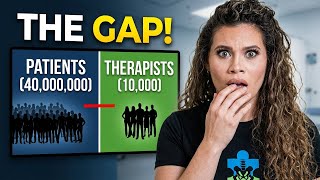
In this webinar, Kelly Alhooie shares her 15‑year physical therapy background and how she pivoted to teletherapy during the COVID‑19 pandemic. She explains that teletherapy can deliver outcomes comparable to in‑person care and that she has coached over 200 pelvic health clinicians to launch and grow successful remote practices. Kelly highlights the stark mismatch between the roughly 40 million Americans with pelvic health issues and the approximately 10 000 pelvic health therapists in the United States, arguing that telehealth is essential to close this access gap. She challenges traditional training that over‑emphasizes hands‑on special tests, emphasizing instead a brain‑based, systematic approach that can be delivered via video. The session covers practical strategies to reduce cancellations, generate more leads, increase revenue, and conduct remote pelvic floor assessments without physical palpation, urging clinicians to adopt a more holistic, pathway‑focused treatment model.
Chapters
So a little bit about me, guys, for those that don't know me. I know some of you guys are on here that do know me, but basically I started orthopedic physical therapy back in 2020 when COVID hit. There's only two options, by the way, which I guess was probably pretty good. I was standing on trailheads outside because that's where I knew crazy runners would be, and then I did sessions through the computer screen because again, no one wanted to come outside their house. And so I began teletherapy 5 years ago. And so I realized that I could get people the same result that I was getting in person as, as I was on the computer screen. And yes, I've been practicing for 15 years, but I knew that I had a method and I had a methodology. And if I was able to simplify that methodology and be able to coach people through the computer screen than I knew I could get and solve their problem. And once I realized that I could do it, I started teaching other people how to do it. And I have now coached over 200 pelvic health providers to be able to do teletherapy, start their practices, and be able to grow very successful businesses. And so that's why I wanted to come on tonight is show you guys. I know you guys right now are probably struggling with cancellations. I know you're probably struggling with leads, and I want to show you that there's a different way. There's a way that they did not teach us in school, and I really want to be able to broaden your horizons and say, guess what, guys, this is here to stay, and it's going to be super beneficial. And I'm going to break this down for you in a second. I also wanted to do this teletherapy webinar because I saw my team personally struggling I would hire new grads and they were like, Kelly, I don't even know how to like talk to someone through a computer screen. I don't know how to do that. Can you please coach me and let me know like how I'm going to guide this person? I already gave them all the stretches and exercise. Now what do I do? And so I saw that there was a need that we have so much potential with teletherapy and so many people to help, but we're barely even hitting the surface. I researched stats the other day, guys, and over 40 million people in the USA have some kind of pelvic issue that we can solve. 40 million. And guess how many pelvic health therapists there are in the US? Guess how many? Anyone want to take a guess? There's about 10K of us. To only 10K of us. There's 40 million people, guys, that we could help. So why are we not offering this when we can provide so much more access to people? So that's what I really want to hone in tonight on, is like how to get more people, less cancellations, and more money in your pocket. So here are the things that some of you guys believe that are on this call right now. Some of you guys believe Kelly, these things right here are the most valuable part of my treatment. And that just isn't true, guys. I know we've been trained to do every frickin' con ed class, every Herman and Wallace— no offense against Herman and Wallace, but, you know, they've just taught us that this is the most valuable thing. They taught us how to do every special test in school. This is not the most valuable thing. It's our brain that is so valuable. And that people want organization from our brain that makes us super valuable, not our hands. And so when you're able to systematize something for someone and bring convenience to them and bring access of care to them, it makes it super, super valuable. Not this. And I want you guys tonight to realize your hands are not as valuable as you think they are. The only way that you can help someone and provide that value, you guys are thinking, is that you have to be physically in front of them. And I'm here to tell you, after coaching hundreds of pelvic floor therapists and even my own team and doing this myself, it's just not true. Last thing, again, you may not feel confident that you can effectively check someone's pelvic floor without using your hands. Tonight I'm going to show you how to do that. And also, most people are like, like my team, they were like, Kelly, okay, show them stretches, show them exercises, 2 visits, peace, they're gone. I'm like, but wait a second, have we truly solved their problem? And they're like, no, but I didn't know what else to do with them, so I just, just discharged them quickly. I was just like, no, because now what's going to happen if you quickly discharge them They're going to go to the urologist, they may go to, um, the urogynecologist, they may go to a pain specialist, they may go to the primary care doctor, and they've gone now to all these different people. They spent more time, they spent more money, and they still don't have the problem solved. And it's on us because we let them go, because we didn't show them the pathway and get them to the result because we only looked at the physical part. We got to combine all the pieces of the puzzle. And so that's again what I want to go over tonight. So I want you guys to really reflect right now. If you guys are thinking, okay, how am I going to diagnose someone's pelvic floor if it's hypertonic or not without using my hands? How am I going to do that? I really want you to think about that. So you're probably thinking, what the heck is telehealth?