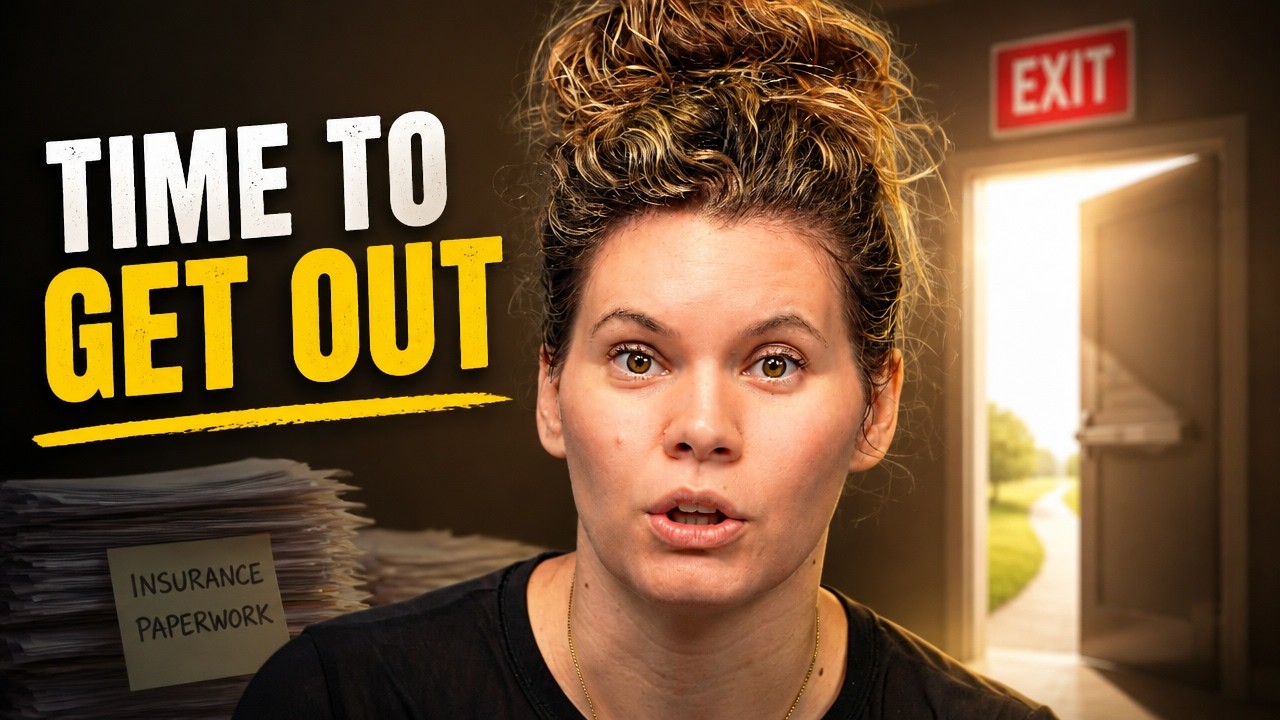
In this solo episode of the Pelvic Biz Podcast, host Kelly Alhooie examines why pelvic floor therapists experience burnout and offers concrete strategies to prevent it. She first critiques the insurance‑based practice model, highlighting the relentless cycle of seeing 12‑18 patients per day followed by 2‑3 hours of nightly documentation, which leaves no time for breaks and creates a system designed to exhaust clinicians. She then turns to cash‑based practices, noting that while they escape insurance constraints, they often suffer from clinicians shouldering all non‑clinical duties—marketing, social media, phone calls, emails, and team meetings—plus overly long treatment sessions (1‑hour or 90‑minute evaluations) and excessive weekly caseloads (>35 patients). Alhooie proposes a suite of mitigation tactics: cap weekly patient volume at 35, shorten sessions to about 50 minutes, clearly delineate roles among owners, therapists, marketers, and managers, institute paid wellness breaks (e.g., 30‑minute lunch plus 30‑minute wellness time), enforce mandatory self‑care, use daily mood‑check screens to monitor staff well‑being, and hold regular one‑on‑one meetings. She also challenges the “patients first” mantra, arguing that clinician self‑care is essential for sustainable, high‑quality care. The episode ends with a call to adopt these practices to reduce burnout for both staff and owners.
Chapters
Welcome to Pelvic Biz Podcast. I'm your host, Kelly Alhooie. Today I want to talk about the real reason why pelvic floor therapists burn out. Let's talk about it. It's a real thing in our field. People and therapists burn out because they are tired of the way the system is actually working. So I'm going to get into this today. I'm going to go over the insurance base of why they're burned out, and then also in the cash base as well. So let's Break it down. Let's start with the insurance first. And the first thing of why people are tired and burnt out in the insurance-based model is the obvious. It is they are seeing 12 to 18 patients a day, and then they're going home doing notes on top of that. And then every single night, every single night, they have to spend 2 to 3 hours doing notes, and then they gotta wake up and do the same thing. It's not like, oh, you got your You know, stuff done so you get a reward. No, the second you're done with those notes, you go night-night, and then the next day you get back up, right back into patient care. What do you do? Take home those notes. The system is made for us to be burnt out and fail, period. The system is. So if you are in an insurance-based model, I don't know how you continue to work there. I really don't, because it's made for you to get burnt out. It's made for you not to make money. It's made for you to just do what you're told to do and just have patients come in the door and treat them the way the old system has taught you to treat them. When is enough enough that we're going to be like, you know what, we don't stand for this anymore and we're going to do this differently? And that's why a lot of us are doing cash, because we've basically fought back against the insurance company. Um, and, and why subject your family to that anymore? Why subject yourself to that? You're gonna work 8 hours and then go home and work another 2 to 3 unpaid. Not it. Not freaking it. And then you're not gonna be able to eat, snack, take a bathroom break. Like, I just— how is that sustainable? No one can do that. Even people that have like other jobs, they are able to get up when they want and go to the bathroom. We can't do that as therapists and providers. We cannot do that. You have to be on the page because you're gonna be like, hello, I want my exercises, or hello, come work on me, right? So this is why we're all freaking burnt out, is the system is made for it. And until we really realize that, um, and start making changes to it and fight back and say we're done, we're not gonna, you know, we're done tolerating this, then, you know, People are going to still work there and they're still going to be burnt out. It's just the end of it. The other thing I see, um, is that in a cash-based model, there still is burnout. And I think burnout comes from a couple things. Number one, it comes from the clinician doing all the things. And most clinicians, I can't say this enough, they stop right there. They stop at doing all the things. They do all the marketing. They do all the social media, they do all the team meetings, they do all the patient care, they do all the telephone calls and emails. Like, they do it all. And that is a massive problem. That's a massive problem because they're going to burn themselves out. And then the next thing I see in a cash-based model And this is advertised everywhere like it's a badge of honor. Oh, we have 1-hour sessions. Well, guess what? After hiring lots of therapists, I can tell you 1-hour sessions burn the therapist out. Highly do not recommend 1-hour sessions. How are they supposed to pee, poop, eat, talk to their colleagues, have any kind of fun if they're always stuck in a treatment room Um, or at a gym or whatever, working with a patient, they can't. So long-term, I highly recommend you guys doing 50-minute sessions. And also from the patient's perspective, they don't want to be there for an hour either. If you can give them the same result in a short period of time, your value goes up. I cannot stress this enough. So many therapists pride themselves on 90-minute evals, But I get to charge more, Kelli, while there's so much more to talk about. No, you're just overwhelming the patient, and now the patient is like, ugh, is this really for me? Shorter sessions win, period. Over and over again, for therapist perspective and also for patient perspective. You don't overwhelm the, the patient, and you don't overwhelm the therapist, and then they actually like their job. The other thing I've seen, and I've experienced this myself just from running a practice and my own experimentation of what I didn't do right, was, you know, I used to have my therapist do social media. My therapist absolutely hated doing social media, but I would pay them for it, and I would allot, you know, an hour time period to do it. And they didn't even have to edit it or post it, but just filming it was like A massive task that they didn't want to do. And so I used to recommend in free time have the providers do social media, but I, I guess it just depends on the client, your therapist, right? But it can burn the therapist out because that's truly not what they went to school for. And if they aren't willing to do things that they weren't going to school for, well, A, maybe they weren't the best fit for your company anyways. But B, um, the more that you can kind of keep them focused in specifically treating the patients, getting the best outcome, and that is it, the happier I have found therapists to be because that is what they believe their job is. And anything outside the realm of that, like I've also seen therapists try to get their clinicians to answer phones and reply back to emails and send HEPs. When they, you know, are not in office. That will burn a therapist out in 2 seconds. It will burn someone out in 2 seconds. So, and I'm saying all this from experience, not that I'm on my high horse here. I'm just saying all this because I've made these mistakes. And I don't want anyone moving forward making these mistakes. And so this is why you must gather a team and really dedicate What is the owner, you as the owner, doing? What is the therapist or the provider doing? What is their main role? What is a marketing or a salesperson's main role? What is a manager's main role? And by you delineating those different roles, it's going to be massively important to have A, the whole team be able to work together, and B, there be way less resentment because you have systems in place that work for everyone, that have been agreed upon by everyone, and it's not like, oh, by the way, can you just do this like extra thing? And then they feel that you owe them something because they're doing you a favor. And I think that's really important. So just be very mindful of that because that will burn a therapist out. Um, the other thing I've seen in a cash-based model is basically seeing over 35 patients a week. I do believe that does burn a therapist out. Maybe the new grads that are really hungry, maybe they have energy to do it, but still, um, I wouldn't go past 35 patients a week, especially in a cash-based model, especially if 1-hour-long treatment sessions. Again, reduce that to 50. Uh, to help not burn a therapist out, we did wellness breaks. Where I paid for, so it's an 8-hour day, but I paid for an hour for 30-minute lunch and then 30-minute wellness. So like they could go walk outside. We had a lake around the clinic. Um, they could, you know, go just rest in a treatment room if they want, like whatever it was, then they could take that. So that's something to not have the therapist burn out. Um, and do kind of mandatory self-care. Because here's what I do know, the more that I see providers and therapists actively participate in their self-care and care about themselves, because we've been ingrained, um, to put the patients first. And by the way, that's what has burned us out. I truly believe that when we've been ingrained patients first, patients first, patients first, and I'm so guilty of this myself. That is the messaging that burns the healthcare workers out. So whoever came up with that, thank you not, because that's the messaging that kills us. Because how dare we even give anything to ourselves because that was bad in school? And it's like, come on guys, you have to give to yourself to be able to give to other people. And so I've learned That the more you can pour into them and they are willing and able to pull— pour, sorry, into themselves, then that is a win-win situation because they're going to have more energy, more alertness. They're going to be ready to go. Comparatively, if I have providers walking in 1 minute before their patient with their toothbrush and toothpaste in hand, I'm like, already this is a hot mess. You are not prepared, and basically you don't care. Like, that's already indirectly telling me that, and that you're tired. Um, and that's a red flag, 100% a red flag for me, that burnout is here. The other thing I like to do, um, for tip-wise, is at the beginning of the day, we had all of my providers had different computers, and so You could have something on the screen that's like, how do you feel today? And it's like sad face, medium face, and then like happy face. And they could just rank like how they're feeling today. And then you get a report at the end of the month and it's like, okay, or at the end of the week and it's like, okay, how's the team doing? So that at least you have a pulse on how they're feeling and who needs support and who doesn't need support and you can move on from there. So I think that's Another thing just to make sure you're constantly checking to make sure people are good and they're not being burnt out. I also think last thing here is having one-on-ones. I used to not do this, but I realized it was probably more of a hindrance because people are more shyer than at least I am. And it's like, let's just say it in the group, but people are more shy. So you could have one-on-ones. I would say once a month or every quarter and discuss, you know, what they believe could make things better or make them, you know, feel that they have more time on their hands or make them feel more supported. These are key things to make people not feel burnt out. So hopefully you got some value from today's episode, guys, on Basically the real reason why we feel burnt out, and then some tips and tricks on how not to burn your staff or yourself out. So hopefully you enjoyed that today. We'll talk soon.