Why Social Media Should Be Your Top Priority in Healthcare
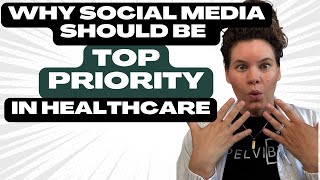
Kelly Alhooie (speaker) argues that social media should be a top priority for healthcare providers because it vastly amplifies reach compared with in-person efforts. She outlines a simple funnel (awareness → lead capture → phone/workshop → conversion), emphasizes consistency and niche-focused content (e.g., 90 days on one topic), recommends organic marketing over paid ads for sustainable profit, and promotes storytelling (patient before/after) and clinician-tailored messaging. She also mentions her Pelvibiz solution and provides a contact number.
Questions this video answers
October 7, 2025
703-78-3238
Chapters
The importance of social media in healthcare is what I'm going to talk about today and why this is really relevant to you. So if you're a healthcare provider, you really need to listen up because most of us, just like me, had these thoughts. We thought that's fake. That's exactly what I thought. Who has the time for that? Why would I want to put my face on camera? Why do you want me to talk on camera? Why do I have to post every single day? That just seems like such a waste of time. I need to be helping patients out. These are the thoughts that most of us have as a healthcare provider trying to do social media. And we really think that it's very low on our totem pole. And the reality is it's not. Every single person in the US is pretty much on their phone all day long. Whether or not it's Facebook, Instagram, TikTok, LinkedIn, YouTube, whatever it may be, they are on their phone. And so if you are truly trying to target so many people and impact so many people, which all of us health care people are like, we just want to help people, we want to help more people. That's what we all say, right? If we are all saying that, then why are we not doing everything possible to be out there on the social media platforms to say, hi, it's me, I can help you out right here. Why are we not doing that? Because we think it's stupid. Because think it's not worth our time. The reality is we probably just don't know how to do it efficiently or do it well to where we think it's worth our time. But social media, why you should be doing it, it's the biggest, freest tool that allows you to be in front of people. Like I don't even think people comprehend this. So let's say you're trying to do an in person workshop or even online. Okay? But let's just say in person for the moment. You have five people that showed up to that in person workshop. That's five people that you have impacted. That's amazing by the way. Okay, you do something online or you just even put out a post online, even if you got a hundred views, that's 100 people. That's 95 more people that have seen your workshop than in person. Do you get how big the difference is? 5 people in person, 95 people online. Now here's the problem. Online you're competing with everyone in, in the frickin world in person. It's just typically, a lot of times locally and so you can really get that market. But this is why no matter if you're online or in person, you want to utilize social media, you have to utilize social media. I think of social media like this. So social media is kind of like a top of the funnel. Think of like a little hurricane that starts out big and then like comes down and narrows down. Right. Social media is at the top of that funnel of the hurricane. And so all social media is, is awareness. Hello, remember me? I'm over here. That's all social does. It gets you to stop and pay attention to that company or that person. Okay, great. Now that you've paid attention to them, now how long are you going to listen to them? So now that's the next phase is are you going to now actually consume whatever the person is saying or maybe the, the quiz that they have or maybe the form that they have, whatever else? So that's the next phase. You want to move someone into a form, a quiz, an audit, whatever it may be. Okay, great. They take that. Now you want to try to get that person on the phone and try to book them for maybe a free phone consultation, maybe a free workshop that you have coming up, something. Okay, great. Now they've gotten on the phone or they've come to that workshop and now they have physically, like met you, whether or not through the online or in person. Now you created this bond and this connection that you're like, oh, I know what she's about. I know what she's about. Okay, great. And then we move into. Now they're actually going to buy. So many of us healthcare providers do not understand that funnel that I just led you down. Okay. And we just stop at just. It's just a post. I'm just going to post today because I got a post again. But there's no strategy behind it. So if you're every single day just posting just to post, you actually have lost the game. And this is why I'll give up. Because you're like, I don't see a return. Of course you don't see a return because you're not strategizing on what to post. And there needs to be a strategy because the way these algorithms work right now, it's all based on AI and picking up if you're continuously talking about the same stuff. So if you guys are not continuously talking about the same stuff, it's not going to pick you up. So if you're talking about panties one day and then you're talking about sports bras and then you're talking about barefoot shoes and then you're talking about headbands. It's so confused on what you do. It won't show you to anyone because it doesn't get you and neither does your clients. And they're also confused. If the algorithm is confused, the clients are definitely confused. So what I recommend is sticking with one topic. So if I'm a, let's just say pelvic floor therapist and I'm specifically just talking about leakage, well then for 90 days straight, you need to talk about leakage. Just leakage alone for 90 days straight. So the algorithm just starts to get to pick you up and that it gets to understand, like what you do and how you can help people. That's it. Okay, so. So social media is how people get into our world and know about us. Now you can go and pay ads. All day long. Ads will continuously go up. We've already seen this a lot. There's been a massive jump in ads. So a lot of people are like, screw that. I'm not paying for ads. Because the profit that you're getting in the door, that you're hopefully getting in the door, then you're putting back into ads. So if you guys want bigger profits, you must learn organic marketing. You must learn that. And guys, if you want me to do a webinar on this, let me know. Just comment below, comment below on this video and say, and say yes, please give me a webinar or give me a resource or something because I have tons of resources on this. Okay, but if, if you guys are like, look, I want to impact more people and by the way, I don't want to pay Google all my money, then you have to learn organic marketing. It's the way to get your messaging out to the masses. Most of us don't have big email lists either. So you can't just like send out an email and hope that someone's going to respond. That doesn't work that way. But doing something on social media grabs their attention and says, hey, it's me. But don't expect this is a disconnect. We expect immediately they come to our world that they're going to buy something from us. It's a process and it takes. It takes about 700 hours of them consuming our stuff for them to actually purchase anything from us. So that's months, guys. That's months. And this is why you also want to vary your content from long form to short form, because people will want to consume you and long form to see truly what you're about and can you help solve their problem? I mean, heck, my husband and I and I were just walking in the park yesterday and someone comes up, was like, hi, Dr. Nader, Dr. Nader. And my husband's a PT. And it was funny because it was one of his patients. And I was like, wow. Like, everyone's like, recognizing you. Like, this is, it's just kind of, you know, funny when a patient comes up to you, not in the, in your office, and they see you. And what was my point? My point, My point to this was it's awareness, it's bringing awareness. So you're getting awareness to you and people you know recognize you and understanding that you can actually help them. And you can do that in person, but you can also do that online. Okay, you can 100% do that online and it can be so much more impactful. It's harder online is harder in the fact of actually converting the client because most of us don't know how to do that. But if you're like, hello, and you're doing that consistently, consistency is also key, then more people are going to start to know about you. Comparatively, if you work at a clinic, you're only impacting those patients, maybe seven, eight, maybe 15 patients a day. And that's the impact that you can have. So that's huge. That's key. And so, I don't know, I think social media and the healthcare space specifically is so underutilized and not talked about enough of the importance of it. Or we have this, like, misconception that, like, our competitor down the road is doing social media. So I don't need to be on it because they're doing it and they're better at it. So I'm just going to be, I don't want to do it. And I think it's honestly just learning a new skill that we all don't want to learn because we became providers in the first place to, to be able to treat patients. And that's really where our passion lies. And so if you're struggling with social media, guys, you have to have a game plan. You, you, you can't just like, wing it and just post whatever for the day. You have to have a game plan for it to actually hit and work so that you don't end up giving all your profit away and that you can actually grow a business without paying someone. And basically the best content wins. That's it. That's the game that you play. So I think there is, I think there does need to be more focus on social media. And what we're seeing right now in social media land is that it's more focused on storytelling. So the more that you can share your patient's story, and I know from the pelvic health world that is very hard to do when we have these intimate issues. However, maybe you can film the back of them doing an exercise and then put words across the screen of their before and after. Or maybe you take a picture as simple as them squatting and they go halfway down and then you take another picture of them going fully down. Those are the things that people actually want to see on social media. They don't want to see AI. They don't want to see another. I'm better than you. Let me tell you these 10 facts because so many people now have all this information, okay? They want to see before and after, and they want to be inspired and they want to be led. So if you can inspire people through storytelling, which is really what we should be telling these patients stories. And yes, you can have them sign a, you know, form that you're going to post this on social media to cover your butt. Sure. We used to do this all the time in Orthopubelvic. We would show patients like, you know, with their consent of like, yes, you can show me doing this. And now I can do this. Like, this is amazing. Like, they couldn't run. Now they can run. And that was a hit. Everyone loved that because they saw themselves in that. And I. And I want to say, in healthcare, it's probably the most underutilized marketing tool because paying Google to put out ads is a lot easier than trying to create a social media content plan that's going to hit with their audience because they don't even know how to audit it or study it to then make it hit more. You know what I'm saying? So they just hire it out to an agency. While the problem is anyone that's an agency has no freaking clue how to speak healthcare language. They don't. That's the problem. That's why we help our clients with this, because they don't know how to speak that language. So unless you have someone that specifically knows these diagnoses and truly how to speak the language and understand, like, what their deeper why is in their deeper problem, the messaging isn't going to hit. And then what's. What I see a lot is, oh, it doesn't work. I'm not going to do it. I got rid of the agency because they didn't help me. And you're Right. They didn't help you because even though they know how to market, they don't know how to market for your niche. And I find that that is very hard to find in healthcare. Is marketing for social media in our specific niche, to truly understand how to talk to clients, it just like, doesn't exist. And so that is why we have come in and and help you guys with this, because we believe we know how to talk to the clients very specifically for their needs. Whether or not it's hormone issues, gut issues, pelvic issues, leakage issues, pain with sex, all different things. There's ways specifically that you have to specifically speak to these people, and it's sensitive. So you can't just be like, let me put out this general marketing campaign. Does not work that way. And that's why we created our system, which we have the Pelvibiz solution, which is our software, and all of that speaks specifically to our clients in a way that they want to be spoken to and it not feel salesy. So if you guys need help with that and you want more information, text me 703-78-3238 and I'd be happy to help. All right, guys, Bye. Bye.
More from Kelly



The providers stuck the longest aren't broke, they're just waiting #coaching #mindset



The death of traditional pelvic PT clinics #physicaltherapy #businessgrowth #trends



Cash Based Practices | Hospital Job vs Private Practice and the Math Nobody Shows You


Stop letting fear run your physical therapy practice #cashbasedpt #mindset #shorts