An old school way of training that I developed when I had difficulty walking and kicking.
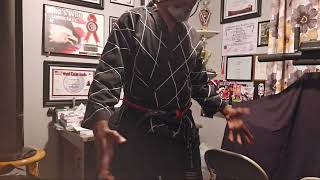
In this video, the speaker (SPEAKER A) shares a self‑developed “six‑chair” training system that he created in the 1980s to combat leg weakness caused by Charcot‑Marie‑Tooth disease (CMT) and earlier ankle problems. He explains how six chairs arranged in a cross‑shape, combined with ankle‑wrap resistance bands of varying tension, allow him to practice standing, kicking, and balance drills safely while progressively overloading his muscles. The tutorial covers basic front snap and back kicks, the importance of controlled breathing, maintaining the chamber position, and using the chairs to catch a loss of balance. Throughout, he interweaves personal anecdotes about past injuries (truck‑driver elbow fracture, finger crush injury), his martial‑arts lineage (Taekwondo, Hapkido, mentors such as Sensei Jared, Master Ron, Grandmaster Dave Burdecki), and his philosophy of persistence—never giving up, learning to fall safely, and treating each setback as a chance to get back up. He also discusses his mental‑health struggles, including six suicide attempts, and how he combats negative thoughts. The speaker emphasizes a teaching style that meets students where they are, adapts techniques for disabled practitioners, and values humility, respect, and the “nothing box” concept of taking rest days. The video serves both as a practical instructional guide and a motivational narrative about overcoming physical and psychological challenges.
Chapters
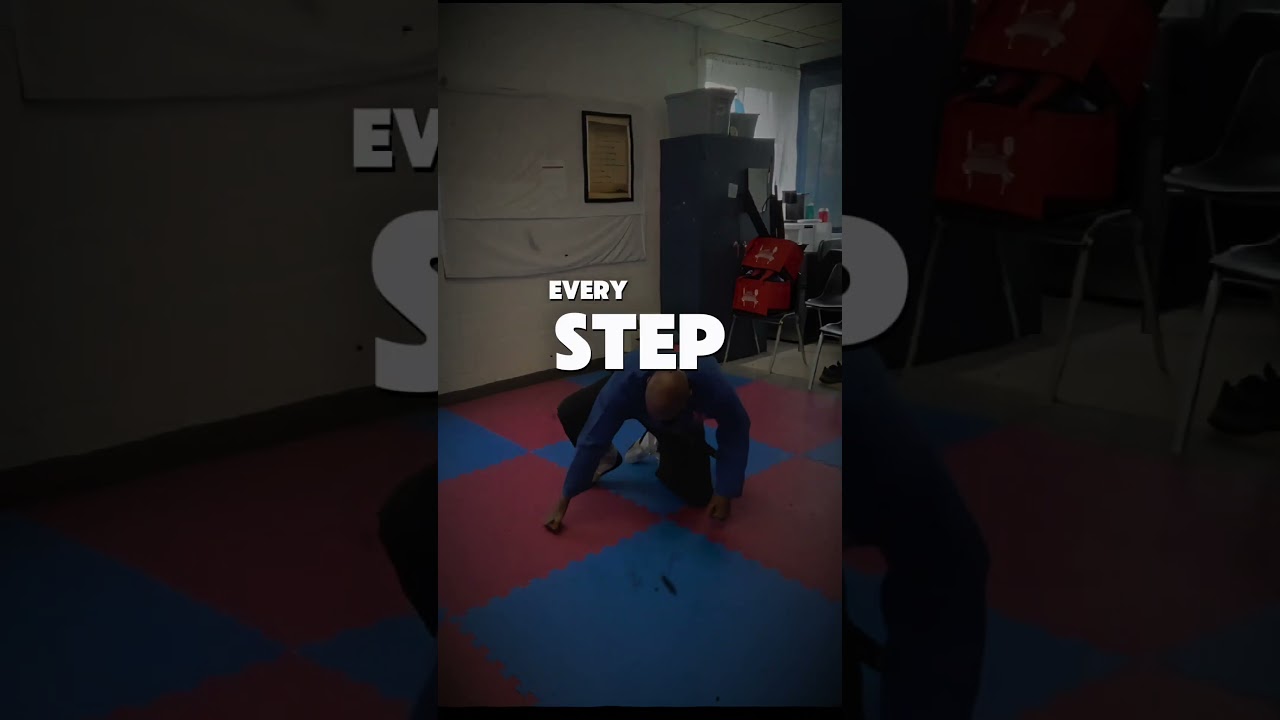
It's difficult to see, but I have 6 chairs set up. I'm sitting in one, there's another one directly in front of me, and I have 2 more on each side. Before I even knew that CMT was the issue with my ankles, you know, I only thought I had bad ankles from martial arts, I was having trouble walking. And kicking. You know, just my legs just always felt heavy, felt like, you know, I was wearing Herman Munster boots, you know, they were just— anything I had on my feet just felt thick, heavy, just kind of laboring every time I walked. So kicking was difficult for me. I developed this, this sixth chair exercise a long time ago, back in the '80s, when things were starting to get difficult for me and I didn't know why. I need to go back to that old school training, and I'm incorporating some other old school things in there even though they're a modern design now, because these things have helped me to regain the strength in my legs. And also the flexibility and power in them that I had before. A lot of people get caught up in theories that, okay, once you lose it, it's gone. And that's not true, because I'm an example of that. That's not true. It may take longer for you to get back to that level, but a lot of times I've learned that the reason why people don't achieve the levels that they want is because they stop. They decide that it's taking too long. Or it's too difficult of a process, but instead of working at it, they'll just stop and grab the remote control and say, "Oh well, I guess this doesn't work." Now one of the things that I use, like I said, this is not a new thing, but these straps go around my ankles and this band offers resistance, so it's gonna make it even more difficult for me to get my legs up and to maintain balance, to move, to shift, to rotate, all that. And that's what these additional chairs are for. There are two more straps that come with it to add more resistance to it. So I can have one on there, and they have different, uh, tensions to them, different resistance. Or I can have two or three, you know, and the more bands I have, of course, the more resistance it'll be with getting my leg up. But I use these and it makes something that's already difficult even tougher. Now I have little microphones, but they don't seem to want to cooperate all the time, so I'm hoping that my voice carries enough for you to hear me throughout the video. As I noticed in my last one, There were times that my voice kind of dipped down, but I'm also not used to recording myself. And the reason why I say that is it's not second nature for me to grab a camera and set up a phone and all that good stuff. When I'm doing things, I just go and do it. So this is a new arena for me with setting things up. I've had my share of pictures and videos that other people have taken over the years when I was doing things, which was, you know, cool and all that. I've had copies of them, but they were lost. But this is what it looks like when they're on. So I'm all harnessed up and I'll— hopefully it'll capture as much as I can because this is more about my legs than it is my upper body anyway. But one of the hardest things to do for a lot of people is to stand. So using the chairs to help stand is something that anyone can do that has trouble standing, especially until you get used to the actual, you know, routine of this, because before long you'll be springing up without using these side chairs at all. But in case I lose my balance, I can just ease down into the chair. Hopefully it's a soft landing, because you want to let— be as in control as you possibly can. And that is difficult sometimes, especially if you have problems with your legs. You know, that control that what becomes normal to some people may not be a normal thing for you. With this exercise, I start off with two basic kicks, a front snap kick and a back kick. That way I'm just traveling the same parallel, and the same thing when I switch to the other leg, it's the same parallel front kick, back kick, and I may change the order that I do them and add other dynamics, but I'll explain them as we go. One of the things we emphasize is breathing. So with these things, you don't want to hold your breath because your body naturally tenses up, kind of locks up on you, and you don't flow as smoothly as you can. So you work on your breathing, and breathing can be different for everyone. There is no one-way concept that works for everyone. Some people breathe out when they stand up, some people breathe in when they stand up. That way, their next movement, they're breathing out. And the count can vary depending on who you are. So I always encourage people not to get caught up in the smaller dynamics of it. Get used to the concept and find out what works best for you to get you moving. Now, for me, I actually breathe in, and then as I stand, I'm breathing out as I stand. And before I go to my next movement, I'll do the same thing, which is— so I'm breathing in, and then as I come up, I'm breathing out as I stand. Now with this, my first movement will naturally want to be, since I'm coming forward, to bring this leg, which is my right leg, up. And this is what we call chamber position. And chamber is when your foot is off the floor, not necessarily how high it is, but it's still in chamber position. Whether it's here, whether it's here, the foot is off the floor, you're in chamber position. That means you're ready to kick. Now, if you're unable to get your leg up very high, then you kick out. But like I said, these bands, they offer huge resistance where you're going to work some slower twitch muscles, different fibers that you're not used to working. And tomorrow it may be even more difficult to walk tomorrow just because of this exercise. So you will come up, kick out, and then you bring your leg back to chamber. Try not to bring it down on the floor. And that's another reason why these chairs come in handy, because if you have balance issues, you're able to stabilize yourself. And from here you look back. Now there's two concepts. The two concepts to remember that I always emphasize is make sure you know where your foot is. I've seen people throw blind kicks where it's just coming around, or it's going out, or it's going back, or it's going to the side, but they're not there. As far as the direction of the foot movement. Whether it's a back kick, you're looking over your shoulder, looking forward when you're doing a snap kick, to the side when you're doing a side kick. You need to know where your foot is because your target may move. And if your target moves, once you develop the ability to do several types of techniques you can adjust even in mid-flight, as I call it. But you're unable to adjust to someone that moves if you don't know where they are. You're just throwing it blindly and hoping that it lands, hoping that it hits the target. That's not what you want to do. Most people want to work on speed first. And technique ends up suffering. And the reason why technique suffers, because they want to do it as fast and as powerful as they possibly can, even though that's great concepts. If your target is no longer there, or if you have bad form and you end up suffering an injury when you execute it, It kind of takes away the power and speed that you have because it only is effective that one time and then you're done. With Taekwondo, which is what I started, we worked on repetition, repetition, repetition, repetition, and we worked on combinations. One and done is a great concept where you want to throw that one haymaker, that one spinning kick. And you connect and you, you know, you hope that it's over. I mean, that's great to have that happen, but it doesn't happen often. And if you throw one and stop and another one and stop, then you're constantly caught up in this rhythm that people pick up on, and it makes it easier to counter against you. Now, because of the way my legs are feeling, I am actually going to take these straps off. Because I realized today it's too much for my legs. Still, I am actually having trouble picking them up and extending my leg the way I prefer. So I go back to the same concept. I breathe in, and as I breathe out, I'm coming up. Still, the chairs are here if I need them. If I'm— if I do not, then my hands will come up. Because usually my hands are in an up position. Open, closed, it's all preference to the particular fighter or practitioner. And some people get offended if you say fighter. That's another thing I want to say. I never mean to disrespect anyone if I say certain things a certain way. I mean, there are certain people that get offended if you say yes, sir. Because they identify differently, or yes ma'am because they identify differently. It's no disrespect coming from me towards you. I'm just old school. That's what I'm used to saying, and I have to correct myself often because things have changed. And I'm kind of like the Fred Flintstone of a lot of things— technology, of the changes that go on. That's who I am. So I don't always keep up with what's going on. I don't always get a memo about it, so there are a lot of things I just don't know about. So I apologize early for anyone who may be offended by the way I say something, because I realize that, you know, it's easy to hurt someone's feelings, but it's not intentional. I'm intentional about the care of people, the well-being of them, the safety of them. That's what I care about. I wear a full uniform when I train because that's how I was taught. It has nothing to do with trying to look bigger or better or badder. This is how I train by myself without cameras. I put my uniform on, whether it's this black belt or a plain black belt or any of the other belts. Sometimes I come in here with a white belt on. But I train in full uniform because that's what I'm used to. I could count on both my hands how many times I have not been in full uniform for any training, any class, any seminar, because that's who I am. And it's no disrespect toward anyone who doesn't. I, I respect everyone for being themselves. You don't have to do this when you're just training This is what I do when you— when I kick, it's difficult for me anyway, so I have to work harder at it even when my legs are feeling good. So when my knees come up, sometimes I'll even pick up the opposite hand just because I'm used to, and then I come out and then I go back, and then I go back to starting position. Now, a lot of times when we train, this is our starting position anyway. So sitting down in the chair, I am already in that— in a sitting position where my foot is on the side of the chair. It's not in front, it is on the side of it. Because in a normal stance without the chairs, this is the position I would be in when I do this drill. I always do everything that I can to end the same place that I started. So I'm up, and this is what I call 1, you know, because a snap kick to me is a 4-count. This is 1, and that's when you're in chamber position. 2 is when you actually kick. 3, you bring it back to chamber, and then 4, you're back to your starting position. The reason why I emphasize bringing your foot back to chamber position if your intent is not to go forward is because you may need to throw another technique. It could be another kick. It could be a kick in a different direction. It is much quicker to have that foot in chamber position and come out in whatever direction you need to throw it than it is to pick it up off the floor again. When you come up, and like I said, oftentimes I will bring up the hand even if it's the opposite hand. And you're back up in keeper position. And there's an example of me losing my balance. So without the chairs, this would be a whole different video because I'd be picking myself up off the floor. One of the things I learned a long time ago, people love to count. They love to keep count of everything they do. And I understand that. But oftentimes people will count how many times they fall down. They'll say they fell 4 times today, those— I fell 7 times today, I fell 10 times, and I'm sick of it. It's like I don't even want to get up and walk because I'm tired of falling down. And then some people will come in and say, well, you know, hey, I fell down 10 times, but I got up 10 times. Great concepts. I adopted a way of looking things a long time ago, which is every time I fell down, I got back up. Instead of keeping count of how many times I went down, how many times I stumbled, how many times something went wrong, I look at it as I just got up. Or I caught myself. Started to fall, caught myself. Down the line, I will show you how to fall. And the reason why I say that is because that's one of the things I loved about Hapkido, is that you learn how to fall. Most people are afraid to do things because they say this to me all the time, I'm afraid to fall because if I fall, I know I'm going to get hurt. And I tell them, you don't know how to fall. They kind of scratch their head and they look at me like, "What do you mean?" I've been fortunate enough that other than the one— well, actually twice. The first time I was— when I was a professional truck driver, I was in Connecticut making a delivery. Snow and ice everywhere. It's the middle of winter and the Northeast, they get some harsh winters in the Northeast. I'm going into the building and it was a PetSmart I was delivering at and there was snow all over the steps. They were the metal steps, go to concrete platform, go inside. Well, going in I didn't realize I must have kicked it, kicked the snow off of a plastic toy that had fallen out of one of the trash bags when they put it in the dumpster. Because when I came back out, my feet went out from under me, and I fell back and hit the metal steps with this elbow. The pain just intensified. So they called a cab for me because they said a hospital is 4 miles away on the same road that I was delivering. I go to the hospital, I get x-rays done. The doctor says, we're gonna have to put you in a brace and a sling because you have a hairline fracture in your forearm and your elbow. And this is a Saturday. So I was like, okay, I said, I understand now why I'm having the pain that I have. What do you suggest? He said, just rest. He said, they're hairline, so before you know it, they should heal, but you'll probably be out of work for a few weeks. Okay, great. I go back to get a cab back to the PetSmart, and I still had another delivery made in another part of the Northeast. And I said, yeah, let them know I'm coming. So they're like, whoa, how can you drive? It's like your arm's in a sling and a brace. I took the sling off. I said, well, it's at 90 degrees, perfect position to shift, so I'll be fine. It's like, aren't you in pain? It's like, yeah, but it's a pain I can tolerate. So they called ahead, let them know I'm there. I get to the place and there are tons of people just standing in the doorway because they were shocked that I, that I got there. I made my delivery. Of course they asked questions, you know, what happened, and I explained to them what happened. So then we get everything done and I leave. At about halfway home, the pain was intensifying, so I stopped. I take the medication that the hospital gave me and I laid down probably 8-9 hours. I mean, that, that medication knocked me out. I get up Sunday and I take my time, I drive back home because I live in— lived in New Jersey. I get to Jersey, park the truck. I had already been talking to my boss because he didn't know if he needed to send someone up to bring me and the equipment back home, but I told him no, I'm fine. I call him on Sunday, let him know I'm back home, truck's in its normal spot. He said, okay, great, just keep us updated. Tuesday I go to the doctor and they take another set of x-rays, and the doctor's scratching his head and he goes, I got to take another set of x-rays. Takes another set of x-rays and he goes, okay. He goes, that's strange. Said, what? He said, there's no trace of the fracture in your forearm. He said, come back on Friday. Okay, I come back Friday. He takes another set of x-rays. Then he says, we got to take another set. They take a second set of x-rays. He said, what are you? And I said, it's funny. I said, I've heard that at different times in my life. I was like, what do you mean? He said, there's no trace of the fracture in your elbow. I says, So what does that mean? He said, I can clear you to go back to work. Cool. I called my boss on Friday and I told him. He said, there's no way. I said, well, I just got cleared. I said, I'll fax over the clearance from the doctor. And I didn't go to my doctor, I went to their company doctor. So I fax it over to him, I'm back on the schedule Sunday night. The one other time I had a truck rotor fall on his finger and crushed the fingertip and split it open. So they said I had what was called an open fracture. So I had 2 stitches, they put 2 pins in it that went there temporarily. They end up coming out in my sleep, and within weeks he said, "No, you can go back to work." So they're the only fractures that I've ever had, but I've had none with martial arts. No fractures, no breaks, nothing with martial arts. I'm grateful for that, that my bones are strong. But I'm even more grateful since I started training in hapkido in 2000 that they taught me how to fall. So now even the impact is less severe or not at all. And making adjustments on your way down have been the key for me to not injure myself and be able to get myself back up. I had a student once who said, "Why are you doing this to me?" Because they had trouble walking and they used the device, and I took the device from them and put them in the middle of the floor I said, "I want you to get up." And they were offended because they said, "Well, how am I supposed to get up without my device?" I said, "What if you fall and the device goes away from you as you fall?" He goes, "I never thought of that." I said, "What if you fall and your device breaks during the fall where you can't even use it anymore?" He said, "No, I never thought of that either." I said, "What if it's Friday and you're the only one here until Monday? Are you just going to lay here until Monday?" He's like, "I never thought of that either." I said, "I'm going to teach you how to get up even if your device is unavailable." And that's what I did. And one of the drills that we did, he actually learn how to move his body across the floor to get to something, whether it's a wall, a chair, a piece of equipment to help himself get back up and then navigate across the floor to get somewhere where he can actually sit or feel safe. And I had to learn that on my own when I went down, as I come down and No one's gonna help me. So I apologize all the time to my team. If they see me go down, they instantly want to help up, and I appreciate that, but I tell them no. I say, because I need to know that I can get up if you're not here. And they respect that, and they just back off, and they're like, oh. And then some of them even said, you know, thank you, because I have older parents and sometimes they've fallen, and I've taught them what I've seen you do, and they were grateful. So that's what I've always done throughout my life, you know. If I can help you, I will. If I can't, I just tell you I can't. I may not have the knowledge or the skill or even the patience, and I have a lot of patience, but there are some people that I've been unsuccessful with. But with this drill— I'm sorry if I get off track, that's just the way my mind works. It's not that I'm off track. I do what I can to make things as clear as possible, as though my experience has led me to do the things that I do, and my exposure to things have led me to do the things that I do the way that I do them. My way is just different. It's not better, it's not worse, it's not, you know, in this, this great level or this, you know, mediocre level. It's just the way I do it, and I hope that it can help you in some way, even if it's from a philosophical part. Here go my words, I'm getting messed up, starting to stutter. It's time for me to stop talking. So as I come back up and I bring this foot up in the chamber, I kick out Back the chamber. I look behind me, back kick. I'm back in the chamber position, and then I return to where I start. Now, when I do this drill and I get comfortable with this, and I can kick to the— a lot of people think that you have to kick high. You do not, and here's why. You can destroy someone's knee 3, they go down and you can go home. It doesn't always have to— oh, I gotta go for the knockout in order for it to stop. Sometimes you just have to take the tools that you have and use them effectively to go home, because that's always been my philosophy. At the end of the day, I just want to go home. So I'm up, I kick out. Position, I kick back, and now I come back to chamber, and I step down. I'm actually crossing my feet over so that I can shift, and I come around facing in the other direction, which now frees up my left foot. Now from here, I can sit. If I lose my balance I can just go down and I can sit. Or if I'm in this position, I can just continue. So once I rotate, instead of going forward first, I can go back first and then come back to chamber, snap kick, and then I'm down. And it's the same concept, and it's like If I go forward first, the front snap kick, I come back to chamber, back kick, and I come back to chamber, and I want to step across. I'm actually crossing my feet over, then I rotate my hips even though my feet haven't moved, and I come back to this position, and I can come down or I can continue with the routine. And this is what I've done. And like I said, I add the bands for resistance if I need them, or if I want to challenge myself even further once I get comfortable with the drill. Doing this, I also loosen up my hip flexors. Now, for most people, that is a positive. For me, it's a negative. When I train I do not stretch first. I warm up, then I hit it. At the end, when I've done my training, is when I stretch. Because when my hip flexors are loose, I have less control over my legs, whether it's positioning, whether it's landing. Those kind of things are really, you know, I'm very affected by how loose my hips are. When I used to spar, I would just do a little warm-up just to get my hands moving, kicks, punches, and then I would stand there and wait. To other people, they think I'm not ready, or they think that, you know, I haven't warmed up enough, not realizing that's what is most effective for me. A phrase that I've had for a long time, and I've used this, and it's usually in a negative encounter, and that's when someone wanted to hurt me. I always smile when I see a certain behavior from them, which is, you're my favorite kind of opponent. And it's not just with people, it's also with this CMT. You're my favorite kind of opponent because you raise your hand in victory before the fight even started. You know, they're walking around like Rocky with their hands up and the bell hasn't rang yet for the fight to even start. They're my favorite kind of opponent. They've always been. You should be confident in your ability. You should be confident in whatever skills you have. I want that because I'm gonna bring everything to you. Another philosophy you have is when I fight, I fight as if I'm fighting against myself. I'm gonna bring everything I have to that fight respectfully, because even when we're sparring with the pads on and we're in class, I respectfully bring everything to you. I'm not trying to drive through you. But I'm gonna make contact with you to let you know that I was there because I don't want you to ever forget that day that we trained together, and I want you to take something away from it. One of my favorite people to train with is Sensei Jared, and the reason why, because when we first started training, he was 285. He's a big dude and incredibly strong. You know, if I ever got kicked by him, they'd have to peel me out of the wall. It's just amazing the strength that he has. But he taught me how to fight differently because if I go up against someone like that, I don't want them to hit me. I don't want them to grab me. I don't want them to toss me around. I had to work on finesse and speed at a whole different level going against them. Another one is Master Ron. He doesn't like the title master, and I respect that, but Ron just teaches me little concepts to constantly get better. But I've learned from all of them, you know, every student, every instructor, everyone I've trained with. I've learned from everyone. I train with Master Ron and Jared more often than I do anyone else currently, but I love, you know, Sensei Rick and Shodan Boo Ryan and Instructor Joe. Since she's a sensei as well, even though she's not a black belt yet, she is a sensei because she's taught me so much. I'm surrounded by incredible people. People at Cherry Hill Martial Arts, Medford Martial Arts, West Hampton Martial Arts, Dragon Martial Arts over in Pennsylvania. Just, I'm surrounded by some of the most incredible people ever. And my Grandmaster, Dave Burdecki, who's you know, doesn't live in New Jersey anymore, but we stay in contact with one another. I— he's the first one that taught me how to teach the way that I do, meaning the same concept that I have of meeting you where you are and helping you to get to where you, you want to go is from him. It's not a disrespect to any instructor I had before before. The instructors I had before just had different methods. They were more rigid in their teaching, and this is the only way, and I had to learn how to do that. And I'm grateful that I had to learn that way because all that did was give me more tools. With Grandmaster Verdecky, a year after I was diagnosed, so '99 is when I was diagnosed with CMT. In 2000 is when he and I began training together. And it was because of a conversation I was having with someone else at the trucking company I was working with, and he was the safety director and overheard the conversation. And he invited me in his office and asked me if I wanted to learn something, something else. And at that point, I was just a taekwondo practitioner. Which I still love today. And I said, "Sure, what is it?" And he said, "Hapkido." And I said, "What is that?" 'Cause I did not know what that was. And he said, "How about if you come to my school and decide if this is something you'd be interested in?" I went to his school, and that's another thing. It's like a lot of people get caught up in location. His school was in a single-car garage, and it was without a doubt the best school I've ever been in because it was very practical. There was this concept of padding on the floor, but it was concrete and it hurt. The thing I loved about it is That's where I learned how to fall, to where the concrete didn't matter. Yeah, sure, it was covered, but that was to give you an illusion that it was padded, but it was not padded. It was just concrete floor with a covering over it, and it was brutal to learn on that, but I'm grateful that I did. Hapkido, when I saw it for the first time, his son and another instructor's son started standing up and they're going at it. Next thing I know, they are on the ground and they're locking each other up and they're manipulating their, their body in ways that a body is not supposed to go. And they would tap and then, you know, they're back at it again. They're reversing and then they're back on their feet. It was the most fluid thing that I've ever seen. I was like, "Yes, I wanna learn this." But I explained to him about my diagnosis and it didn't matter. He said, "Just come in, let's see what you can do." Another instructor who passed away a few years ago was one of my greatest mentors. He had had a stroke before I knew him. So he used the cane. And when they said, yeah, they modified some of the techniques to accommodate for him because he has to do things differently now. And he was one of the most deadly individuals I've, I've ever seen. He just had little concepts that he did that were, you know, unorthodox but very effective. And he taught me those concepts, so I was constantly learning from him. So when he passed away, you know, that was a huge hole that was missing. Same with the other grandmasters who have passed away, you know, that I've met through Aikido. They, they were just some of the greatest influences I've ever had. I mean, you know, one of my Taekwondo instructors is still alive today, you know. Sabin and Toby Warren is another one. Just, they're, they're just incredible people. Who care about people, and that's what I love. They didn't, they didn't care about the hype. They cared about you and your growth and your success, and I do everything I can to be that same kind of instructor. I didn't show very much physically today. I'm gonna ramp that up over time, but I just wanted to show you the basic principles of the 6 chairs, why I use them. It originated from me not being able to kick at all and not being able to get my leg up and not be able to maneuver or shift or rotate. I, I was having that kind of problem, and it was always in the back of my head what the doctor said. You know, what my life would end up being, and I'm happy that they were wrong. You know, they're very wrong. I didn't know that sharing my life just over the last 5 years had the impact that it has until people were coming to me saying thank you. I'm like, for what? And they're like, oh yeah, 15 years ago you told me this and I've been doing it ever since. And ever since I've been doing that, I've been able to do this and I've achieved that and I've gone here and I've— that to me is priceless, you know. I'm, you know, and I've had people say, you know, I feel like I owe you a bunch of money for that. No, I don't want your money. I'm happy that I was able to help. Like I said, growing up, I know what it was like to feel like you were by yourself and you had to figure it out on your own because there are things that I did and it wasn't anyone's fault. One, I didn't communicate with people, and two, I didn't always know what to say when I said it. So I would just say, "Yeah, I'm just falling down, I got bad ankles," and I left it at that. So people just said, "Just take it easy," but I didn't. Instead, I worked harder. And I forced myself to do things that my body said no to, and I'm glad that I did because now my body's able to do those things. Probably one of the most emotional moments I ever had was with my oldest daughter, you know, who is autistic. When I was at her school and I met her teacher finally, and he said, "Hey, I've been wanting to meet you for a long time." And I figured, you know, hey, you know, it's because of, you know, whatever my daughter has said about me. And he said, "Yeah, but that's not it." He said, you know, "Not only what you've done with, you know, the sons of one of the teachers here," where he was ready to give up on his life and he met you and now he's been unstoppable. That means the world to me that he didn't give up on himself. And I've been down that road. People always say, well, it's stupid for people to feel that way. But people that feel that way aren't always able to express why they feel that way. They don't always know. Or sometimes they do know and they don't see any answers. I was one of those people. Yeah, I talked about how if I made the left, I was going to go home and put my weapon in my mouth, but I did attempt to take my life 6 times. And when people hear that, they put you in the unstable category, like, why would anyone wouldn't feel like that. And look at you now, it's like, why would you ever feel like that in your life? Not realizing my life wasn't always like this. The first half of, half of my life was very difficult, and I saw no light at the end of the tunnel because all I saw was the tunnel. Because when you first go into a tunnel, it's natural that the only thing you see is darkness. And most people won't continue to walk through the tunnel to see any light, or if there is any light at the end of it, they just see all the darkness and stop, and then they go back. And I was one of those people. So yeah, 6 times I attempted to take my life. The worst thing about it is when thoughts come up They never come up during the bad times. They only come up when things are going good, when I got money in the bank, money in my pocket, all the bills are paid, car's running good, everybody in the family is doing well, I like my job, you know, it's like— and then I get those thoughts, well, you know, all this is gonna go away, something's gonna happen where it's all gonna fall apart, and it always reminds me of when I watched Les Brown, and he said something that just made me laugh, but it stuck with me. He said, sometimes you got to tell those voices to shut up. And that's what I've done, because they creep up every now and then, and I just tell them to shut up. And sometimes I'll do it around people when they think I'm talking to them. It's like, no, no, not you, it's just stuff in my head. And of course then they might shift over a chair or two or, you know, clutch a purse or, you know, anything like that because they're like, they're thinking that I'm schizophrenic and I'm not. I'm just, people call it their conscience, you know, the conscience speaks to them. And then, you know, tells them things and that's why they feel the way. Well, it's no different than someone who says that they hear voices or someone that sees something that reminds them of something from their past that was negative. You know, it's no different. But when I hear those voices inside my head saying that I can't or I'm not good enough or, you know, this is gonna be a mess or a disaster or just gonna fuck, I just tell them, shut up. Sometimes I'm like, shut up. And then I go and do what it is I was going to do anyway, even if it's nothing. People don't know the power of nothing. Guys know it, put it that way. And when I heard that one guy, I forget his name, do that segment about guys have a nothing box, everyone should have a nothing box. Guys are great at it because we can do nothing and be happy. I'm one of those people. I take at least one day out of the week week where I do nothing. Everybody else thinks that I'm busy, but I'm busy doing nothing. Might need a favor that day, you call me, hey, you busy? Yeah. What are you doing? Nothing. Oh well, since you're doing nothing, you know, can you come out here? No. Now my friends and family all know this about me, so when they call and they ask and they say, what are you doing? Like, nothing. They're like, okay, never fine because they get it. I take a day of rest, sometimes I'll take two. It just depends on how my week goes because that downtime— I've actually made more gains than I did working 7 days a week because when I work 7 days a week, I was just working to pay my bills. But that downtime that I have now, I'm enjoying the journey. I'm not just working, I'm not just Hey, can I go do this tomorrow? I got— I have my list. And you know, there are some days that that list is still there, but I fold that list up and I put it down. I hit the remote. I'm a gamer, but I don't go online. So, you know, I'm not one of those people that— because, and my— and I gotta say this, my friends are the reason why I don't go online. They become someone else. I've seen it just playing Madden Football. It is one of the most disruptive display of behavior I have ever seen. Some of the nicest people in the world, when they put that headset on and get in front of that game, they become someone else. I'm like, no, Nah, man, I'm good. If we're sitting next to each other and we're playing, we're cool. Most of the time I play by myself or with my older daughter, but I didn't want to be that guy, so I don't play online. Never have. It's just people's behavior changes that is mind-blowing to me. It's like I don't even know them anymore. Enjoy every day. I encourage people, I probably say it every time you see me, enjoy every day. Stop having bad days, have good days because you got up. It's a good day. I got up today, it's a good day. Anything you do after that to make it better, that's what it becomes. It becomes a better day. Things are going to happen whether they they're in your control or out of your control. Things are going to happen. Work through them. Acknowledge, okay, this was bad, but don't embrace it. You know, just realize, okay, things are going to happen. All the cars I've had that I've loved and I might have destroyed in an accident, I had a philosophy: they make more than one. I'll go get another one. You know, that's just me. And I try to encourage people to develop that same thing. Just things are going to happen. I hope you understand the demonstration I had, and there is more to come. Enjoy the rest of your day, and like I always say, just breathe.