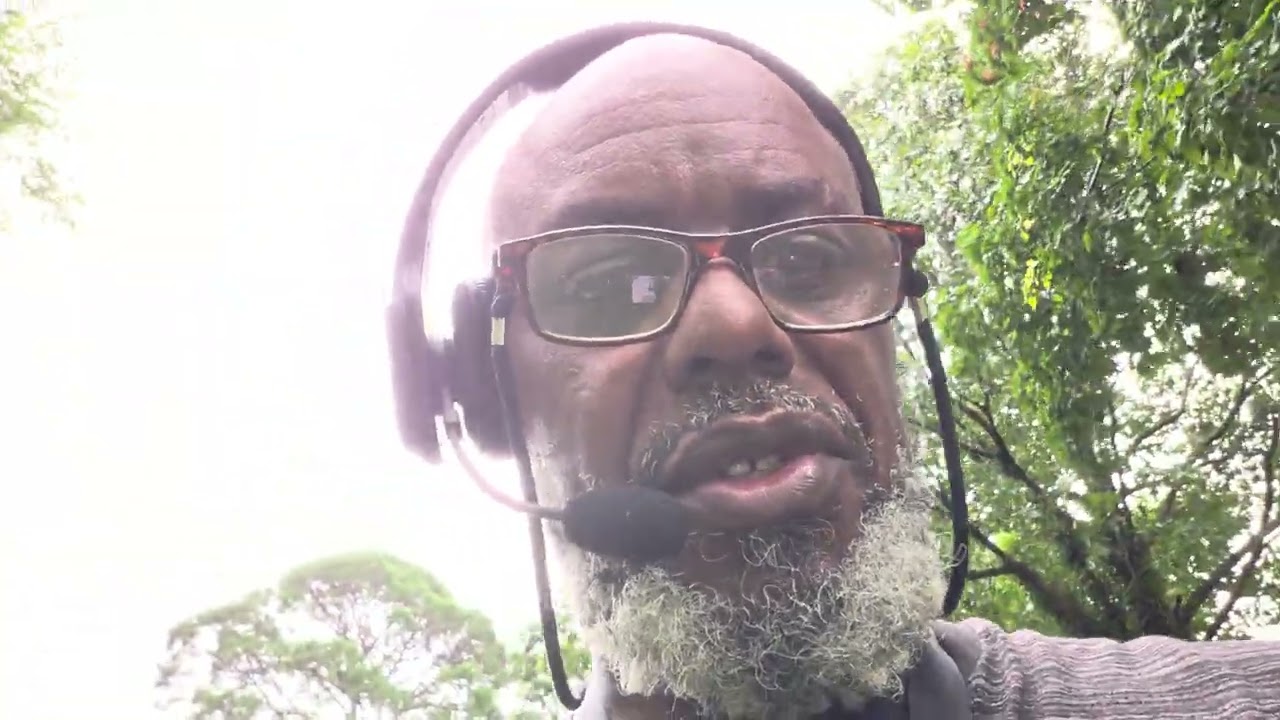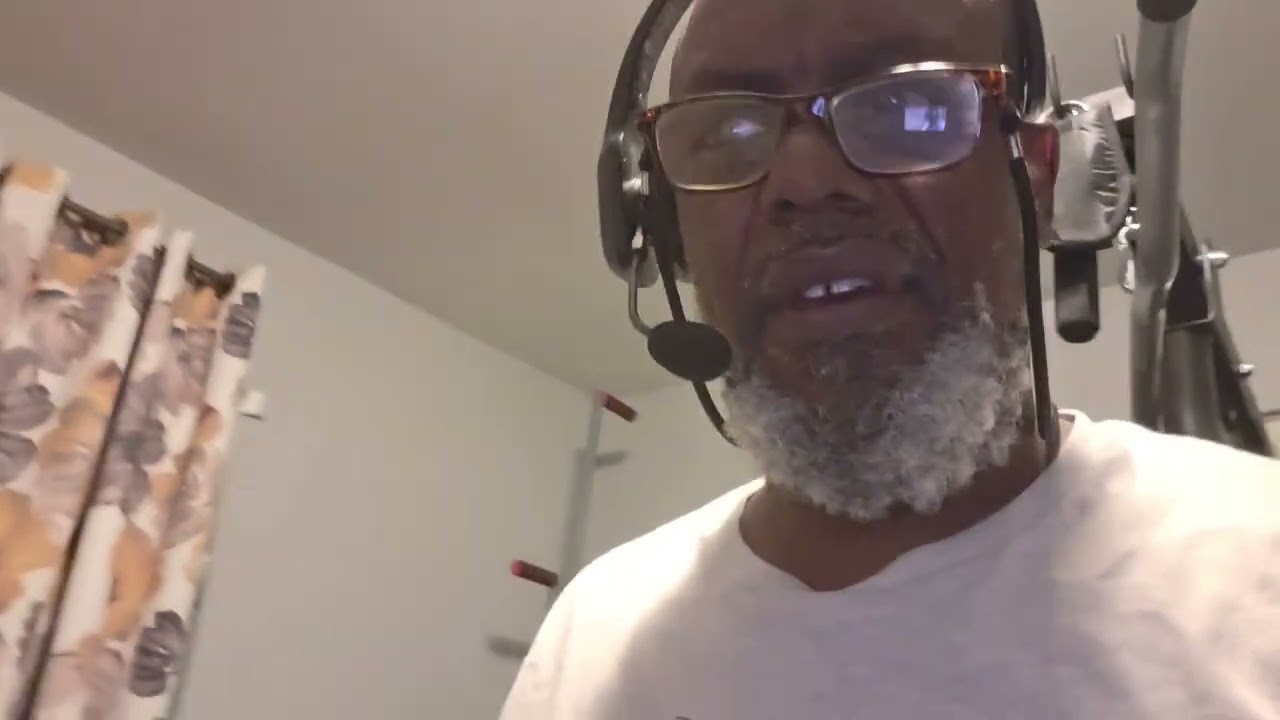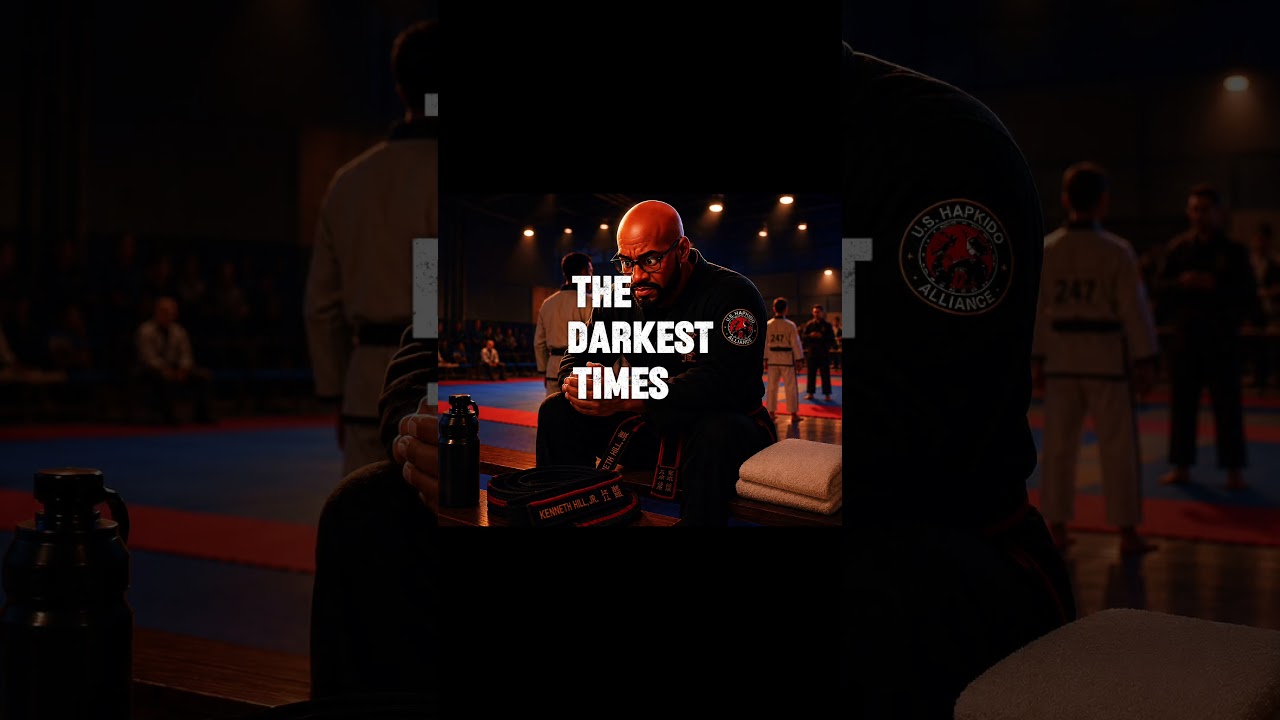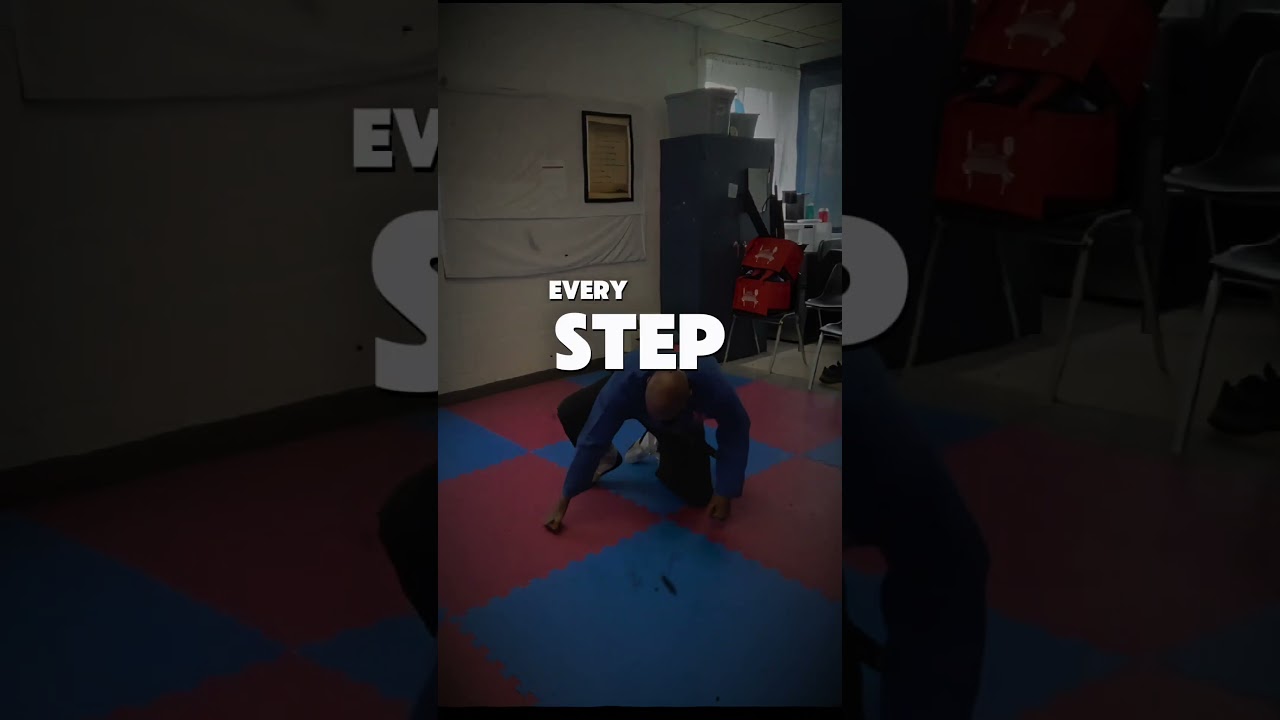
A man with Charcot-Marie-Tooth disease shares how the hereditary neuropathy shaped his life through martial arts, earning five black belts and a Presidential Volunteer Service Award for 17 years as a firefighter. He talks about defying doctors' orders to stop training, surviving a truck accident, and teaching students with disabilities.
Chapters
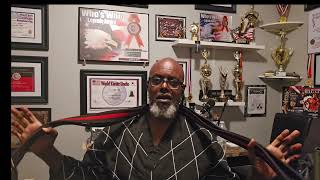
I'm gonna put my braces on before I get started. Yeah, I have something what's called CMT. Well, most people would think it's, you know, you know, when you say CMT, country music television. I've even heard combat medical technician, you know, but it's hereditary nerve disease called Charcot-Marie-Tooth disease. And I wear these braces on both— I have one for each leg because they help me walk. I can walk without them, but it's definitely not pretty. And even with them, it's hard for me to walk a straight line, but You know, that's why I have the cane. But most people, you know, because they see me in martial arts, they think my cane is a weapon, but it's really a tool. This tool has helped me in many, many ways. Before, You know, I was always getting field sobriety tests because as far as the law enforcement was concerned, I was under the influence. But then I do the field sobriety test, which I failed, and then blow into their little device and it's blowing zeros, and they start scratching their head like, hey, what's going on? I let them know, you know, I have this hereditary nerve disease. So that's why my balance is the way it is. That's why my problems with my hands are the way that they are. This is a lot that goes on with this thing. Put on my workout shoes. I love these, Myotomics. These things, they're comfortable, they're light. When it's time to train, it's like there's nothing better. It's funny, you know, because once people hear, you know, I'm disabled, they're like, what do you mean disabled? Well, I'm disabled. I didn't find out until my early 30s because growing up I just thought I had bad ankles. It's kind of tough though, because before I even knew what was going on, it was pretty embarrassing. Take a few steps and next thing you know, you're on the ground falling down. And even as a kid, I was always being bullied. I mean, that started when I was 6 years old, and you know, a lot of that had to do— I was shy. Stuttered a lot too. Don't stutter as much, but I do every now and then. But with that combination of things, I was an easy target. So 1973, when I saw Enter the Dragon starring Bruce Lee, changed my life. Soon as I saw that film, you know, I asked Mom and Dad, I said, "Hey, I'd like to do that." And they said, "Okay, well, as long as you do two things. One, you can't become a bully, and two, you can only use it in self-defense." I figure, okay, because all I'm thinking is I'm going to become the next Black Bruce Lee. But little did I know, someone already had that title. And then the kung fu classics, man. Black Belt Theater. It's something that I look forward to every Saturday, just watching those guys. I realized I couldn't fly across the screen and all that other thing that they were doing, but It was so cool to watch. I still watch them today. I mean, Black Belt Theater, I mean, that was the thing back in the day, and it still is now. Martial arts has really been one of the key factors of me having just a wonderful life. Martial arts has been life-changing for me. Without it, I don't know if I would be here. It's funny because when I was 22, I was told by my doctor, "Hey, it's time to stop." He said, "You've had too many injuries to your ankles." I didn't break them, but I was just tearing them up, twisting them, straining them, rolling them over. I was just constantly in the doctor's office for one reason or another with my ankles. He said, hey, it's time to stop and have surgery on both ankles, cuz he said at this pace you're going to be confined to a wheelchair before you know it. And he said, as a matter of fact, even with the surgery, the chances are you're going to be in a wheelchair by the age of 35. 5. Now I grew up in a, in an era where, you know, they always say get a second opinion. Well, I got 3 more opinions. All 3 of them were unanimous along with my doctor. So now I have 4 doctors telling me to stop the one thing that I enjoy doing and the thing that helped me just get through life, and I just didn't stop. Never had the surgery either. Never had the surgery. Didn't stop martial arts. What the fuck? It's funny when I think of it because by the age of 35, I'm supposed to be confined to a wheelchair, but I am not. Like I said, I have trouble walking. I use the cane. Still have both my legs. They still function really well overall. And then what I have on the wall behind me, you know, there are people who said, oh, you know, it's pretty egotistical of a guy to display his awards and display his trophies. You know, he's feeding his ego. What they didn't realize is this is my vision board, at least one of them. Every time I come in this room, and I'm in a confined space, I have things all around in this room. It was pretty much an extra room to put whatever in it, but I started putting my equipment in here, and I started— I put my little table in here to use as a desk, and I have my meetings. But I love to come in here and sometimes just because it takes me back to when I was 22 and I was told that I'd be confined to a wheelchair by the age of 35. And that's with surgery and stopping martial arts. And then they followed— all those doctors followed it up with, well, you know what, it'll probably be sooner if you don't stop and you don't have the surgery. Well, I haven't had the surgery and I don't plan on ever getting it. And I learned a decade later that was the best decision I could ever make. And that's because of this CMT. What the fuck? The name of it is Charcot-Marie-Tooth disease. It's got a real funny name. As soon as someone hears tooth and disease, they think it's something with your hygiene. But it's not. It's a neuropathy, hereditary, because it's on my mom's side of the family, and it makes life tremendously difficult. I'm fortunate enough that my sister doesn't have it, and it turns out she won't get it because This particular strain that we have in the family is X-linked, so it can only be passed on the X chromosome, so my sister doesn't have it. The women in my family show no characteristics of it. They just have the gene that passes it on to the males, and the males suffer from it physically as well as genetically. So it's a little tougher for us. Now behind me is Not About Ego, and like I said earlier, it's my vision board. I come in this room and I can remember building things on websites, you know, as far as a vision board is concerned, and saying, hey, you know what, I'll put this on here, this on here, this on here. And then I realized that vision board was unrealistic because the only two things I wanted was to be able to walk and to do martial arts. And this room is an example of how I've been able to do so, so much more. I'm truly blessed by it because I never saw this for myself, even in a vision board. I don't care about big houses, so they weren't on my vision board. It would be nice to travel and go to other countries, but if I never did, I won't feel like I'm missing out. The only thing you don't see on my wall is a picture of my '71 Chevelle. I, I— that to me, that would be my car to have again. These luxury cars are great, but that's not me. It's been difficult going through life with this hereditary neuropathy, but it's not impossible. Instead of deciding that what was on paper is how my life's going to be, I decided to find my own definition of what my life is. Earning this black belt along with 4 other black belts is never anything I thought for myself. I was happy to earn the one and was grateful to have the ability to earn the one, but I have 5 now. Becoming a 16-time Martial Arts Hall of Fame inductee is just amazing to even be considered. Less than a few weeks ago, I turned 60 years old and celebrated 51 years of martial arts, and it came from believing in myself even when no one else And it started before martial arts with opposition for things that I wanted to do, things that I was trying to say. Any goals or achievements that I wanted to have to make in my life was met with opposition. I mean, that includes when I was a professional truck driver. I mean, it's funny, as a professional truck driver, you know, I, I looked at things totally different, and I understand why everyone said, have you lost your mind? I mean, are you crazy? You can't even drive a car. You know, that there was 100% Everyone was against me, and it's understandable because I had multiple accidents before I drove tractor-trailers. I guess the funny thing about it is Christmas Eve of the year before, I was in a head-on collision. Spent 4 days in the hospital, 2 days in intensive care. Spent 7 months rehabbing my heart. I was hit at 45 mph by a car coming in the opposite direction, and it was my fault because I assumed that that car was going to turn because the one in front of it did, and I started to make a left-hand turn in front of that car and that car changed lanes and just destroyed my car. The impact was so severe that my seat belt did not engage, and I hit that steering wheel with the full force of my chest. The impact was so severe that the EMTs had to pick the steering wheel and the steering column out of my lap to get me out of my car. I was in pain like I've never been in pain before. We get to the first hospital and they were so crowded with being Christmas Eve. They said, "We have to take you to a different hospital." I love that hospital that they took me to because they treated me so well. These two doctors came in and I found out, you know, eventually what was a heart specialist and a heart surgeon. They said, we're going to put you in ICU because we're still running tests and we're really not sure what's going on, but we know you're in a lot of pain. I said, okay. So they ran all these tests, took three sets of x-rays, I'm in ICU and they come in and he says, "What are you?" And I try not to laugh because it was so painful, but I couldn't help it. I was like, "What?" He said, "What are you?" He said, "You don't have any broken bones." And all I said is, "You sound disappointed." And both of them laughed and they said, "No, you don't understand." You don't have any broken bones. I said, well, what's the reason for all this pain? They said, you have a bruised heart muscle from the impact. It was so severe that you actually bruised your heart muscle. I was like, whoa. And they said, under no circumstance can you stress yourself out because you will have a heart attack. I understood, and that's why for 7 months it was a slow process of getting me back into a routine where I could function normally. July is when they released me to go back to work, and of course my old job wasn't there anymore. I was delivering auto parts for a car dealership, and I love that job. Went back, job's been filled. See an ad in the paper. Yes, I'm that old that we used to look in the paper for a job. And I saw that they were having a seminar to learn how to drive tractor-trailers. And I figured, why not? Let me give it a shot. And as soon as I made the announcement, every family member, every friend, they were all unanimous with that. They were like, you have lost your mind. You can't even drive a car. Said, "What makes you think you can drive one of them?" And I understood, but it's what I faced all my life with everything that I wanted to do. There was always people telling me, "Why bother?" I mean, there were times I would go places and people would say, "Why'd they let this guy in the room?" Because I didn't have the credentials that someone else had, or I didn't have the money someone else had, prestige, you name it. It's like I wasn't at that level in their eyes. Fine. It reminds me of one of the Hall of Fame inductees that was at the second event I've ever been to. And he asked me my name, and I told him. I asked him his, he told me his, and I was familiar with his name, but he said, "You know, I never heard of you." I said, "Okay." And he said, "Well, I guess you're not that good." I said, "Well, I guess I'm not." And he said, "Well, you know, the reason why I say that is because, you know, All the guys that are really good and all the big names, I know them, but I don't know you. Seeing how you've been in martial arts for so long, for more than 4 decades, it was almost like, how did I get in the room all over again? Now I have a sense of humor that not everyone appreciates. Instead of getting upset at him and throwing my credentials out and reassuring him that I'm supposed to be in this room, my response was, "I guess your circle's too small." And I say that to people— it's not a way of being cocky, just as a way of saying it's okay if you don't know know I am. But it doesn't mean that because you don't know me or my name's not in the paper or in the movies or in the highlights that I don't exist or I'm not important or I'm not up to the level that you feel I should be at, because it's not about you. I appreciate and I am grateful for every award every belt that I've earned, all the accolades I received. But I was recognized about a month ago for something that I looked to never be recognized for. I received the Presidential Volunteer Service Award, and it was a lifetime achievement award for the volunteer work I've done throughout my life. I spent 17 years as a volunteer firefighter. And I spent more than 8 years at another martial arts school that specialized in teaching special needs students, among other things. That award probably is the most special to me because I'm probably the most proud of my volunteer work. And that's because I wasn't looking for anything from anyone other than to help them. I understand what it's like to feel like you're the only one on an island and that no one helps, no one's there to help, no one understands, no one cares. I've been there. So anytime I can give back to anyone in need, I do the best that I can to do that. Doesn't mean I say yes to everyone because I'm human. You know, I'm not— I don't have that ability to do everything for everyone, but I do the best that I can. And even as an instructor, one of the funniest things that I've been asked is, is, well, you've been in martial arts for so long, what the fuck, doesn't that mean you're an expert? And I laugh at that because no, I'm not. For me, being an expert means I can teach everyone and I know everything, and I do not. I do not teach everyone. I do not know everything. And then I always hear, well, you, you know, you teach people with disabilities, you teach people that are classified as special needs. And the special needs, it's funny about that. When I was at the other school and it closed down during the pandemic and I was asked, what is probably one of the biggest things you've learned? Being at that school? I said, that's easy. I said, my students taught me that we're all special needs. And everybody, you know, kind of looks at me. Most people will chuckle and say, oh yeah, I kind of get it. But the ones that didn't said, what do you mean? I said, these kids are labeled because they have ADHD, they're autism, Potter-Willi syndrome,— you know, downs. People say that they're special needs, but when you look at them for who they are, they're no different than you and I. They have things that they struggle with, things that they want to do. They may have a difficult time communicating things. They have things that trigger certain emotions, whether they're positive or negative. They may not be sure of what method they need to do to get through a difficult time. I said, we all go through that throughout our lives, and we all have different ways of dealing. But with me, it was martial arts. But there was also a time when it was drugs and alcohol. What the fuck? And there are some people who soothe with alcohol. And, you know, another thing I love is music. And sometimes music, or taking a trip, or going fishing, Sometimes it's fighting, whether it's in the street, in a ring, whatever, you know. We have— everyone has their ways of dealing with life. So when I look at everyone, I realize we're all special needs. There's always something going on with someone, even if they don't say it, even if you don't see it in their face, because a smile can hide so much. But I've learned that people really are no different than the community that's labeled as special needs. They just are different. And I know what I said sounds contradictory, saying that they're no different, but they're different, meaning Just because you're not labeled special needs doesn't mean you're not, because we all are. We all have our cars that we like, job that we like, job that we hate, neighborhood we want to move out of, want to get this new— there's something that we all deal with and we all kind of are finding our way to what makes us happy. I'm grateful that the Most High has given me the gift to be able to teach students who were taught the same thing that I was taught, that you're not good enough, you're not fast enough, you're not strong enough, you're not intelligent enough, you don't have the capabilities, you'll never develop that. You know, I, I remember, you know, hearing how I wouldn't be able to talk because I stuttered so much. So when I hear those things, it triggers something in me, especially when the students come on the floor and they have their, what I call, scroll of excuses. And we've all had them, and some of us still do. And that is the list of all the things that you say you can't do. And I've learned that when I ask them one simple question, it unlocks a lot of answers. When I go down the list with them, I ask them, "How many of those things have you tried?" And most of the time the answer is none of them. You've just decided that you couldn't do it because of what someone else said. And what someone else projected and what things have happened over time that made you believe that. A lot of times that's the only reason why they have that list, and it's things that they haven't tried. What I do is a drill that I do when students come on the floor for the first time. I have them hold up the hand they write with. And then I say, "Hold out the other hand like a piece of paper. 60 seconds, write down everything you're afraid of." And they're like, "Why?" It's like, "I'll explain." It's like, "Go." And they, you know, they'll go along with the exercise. And it's really cool to watch them because you can see their little minds going. And then I say, "Follow me to the door." They come over to the door and I say, "Take that piece of paper." and bow it up and drop it outside. Come in, let's see what you can do. It just takes the anxiety out of the room because there's no expectations. There's no one that says, okay, I got to do what he's doing the way he's doing it. I got to be as good as him. I, you know, got to be strong. There's no expectations. And what we do is we bring them on the floor, my team and I, and we meet you where you are and then help you to get to where you want to go. We don't decide, okay, you're not strong enough, you're not tall enough, you're not fast enough, you're unable to get your leg up, you use a walker, you're in a wheelchair. We don't look at anyone that way. We look at it as let's see what you can do. And once we see what you can do, then we start building your toolbox from there. So your toolbox may be different from this student's toolbox, but what you have is just as effective. Everything you want to do, you're going to be able to do in your way. You're going to master what you do. See, when I became a master belt, one of the funniest things about it is it was one of the most brutal tests that I've ever taken. And I took the master belt test for US Hapkido and US Taekwondo at the same time. It was just absolutely brutal. But the hardest part of the test was I did a tea ceremony to start. Now, tea ceremony I've only seen before, and there's a certain order where you pour, serve, and retrieve, and there are things that you do in between as well. And I remember preparing for it, I was like, I can't spill a drop, can't spill a drop, can't spill— what do I do? What do I do? I went and got Styrofoam cups, and with these Styrofoam cups, I set them up and I pour. And the thing about Styrofoam cups that it's, it's kind of fascinating about them, if you don't pour the liquid in the center of the cup, it's easily tilted over, and that's why I chose them. So I get that, goes, and I get cups set up all throughout the tray, and I'm going through everything, and I go to take my test, and I couldn't stop sweating, couldn't stop shaking. You would think we were having tremors because, you know, the cups are just rattling around on the little saucers as I'm serving them, and they're, you know, the whole panel's trying not to, try not to laugh. Some turn it away because they're like, they can't believe that I'm about to have a meltdown at the beginning of my test, just doing the ceremony. But I wanted to do it as best as I could. I was able to get through it, and I'm going through the physical part of the test, and I'm answering questions along the way, and then they hit me with something else halfway through the test. Something that is so simple that I may complicate it. I have a panel of black belts, many of them were grandmasters, so they're 8th, 9th, 10th degrees, and they asked me to teach them how to do a front snap kung fu, and I almost had a meltdown because in my head I'm like You all know how to do it. What do you mean teach you how to do a snap kick? That's what I'm doing in my head. I'm like, are they serious? Okay, somebody's going to say, okay, never mind, we were just kidding. But they were serious. And it took me some time and the sweat was pouring off me again, just like with the tea ceremony. And then I finally said what to do and how to do a front snap kick. And they all nodded. And then my test continued. The reason why that was so difficult is because taking the test, I didn't feel like I was in the spotlight. I was just taking a test. Once I was asked a question or once I had to do something specific, it's no different than when I give a speech, it's phew. It's like all the lights are on and all I see is faces and eyes and I'm like, "Oh no." And then I go through what I call the butterfly to bat syndrome. See, whenever I've given a speech, I get butterflies. It's just natural nervousness and I'm fine. And then they call my name and those butterflies turn into bats, the ones that screech and they're Flying around the cave and all. I mean, it's just going crazy inside of me. And then once I begin speaking, then they settle down to butterflies again, and then eventually they go away. Sometimes it's not till the end of the speech, but they eventually, they'll go away. It's Funny, because when I was a senior in high school, I had English Comp class. Mrs. Katman is who I had. Hated that class. I don't know why I was in there. I had no desire to go into college. I wanted to go into the military. And I told her, "I don't know why I'm in this class. It's college for fuck." What do I need it for? Every assignment, I got an F. Every homework assignment, every class assignment, every report, every summary, you name it, I got straight Fs. Pop quiz, you know, announced test, straight Fs. One of the things I had to do was stand up in front of the class and give a speech, and I froze every single time. And she said, "If you sit down, you're gonna get another F." And I just sat down. She finally said to me, she goes, "What's wrong?" I said, "I don't know why I'm in this class." And she said, "Why not?" I said, "I'm never gonna stand up and talk about my life in front of a group of people ever, so I don't know why I'm in here." Well, obviously she knew something that I didn't, because the last 5 years I've said a lot, probably more than I've had the first 55 years of my life. You know, I just— it's amazing what my life has become. And for the first half, I didn't believe in it because, like I said, drugs and alcohol were my friend from my early 20s until 20— till I was 24. 2 weeks before my 25th birthday is when I went into drug rehab. I was so angry, like, that was the one emotion that I had and I had no problem expressing. Was my anger, and I realized that I was fueled by fear. But martial arts helped keep me grounded for the most part, but my backup was always drugs and alcohol. I can remember walking into the hospital. It was 11:30 at night. I just dropped off my two cousins to they're like— see, I don't have any brothers of my own. I have a sister who's a year older. But my cousins and I, because my mom, she's one of 10. She's the only girl out of 10. She's got 9 brothers. But all the kids, we were like brothers and sisters growing up, all our lives. It's like there was no, okay, we know we're cousins kind of thing, but we treated each other like brothers and sisters. Well, 2 of my cousins and I used to hang out all the time. And I can remember dropping them off that night and saying, hey, you know, I don't know when I'm gonna see you, but I'm gonna have— I did— there's some things I gotta take care of. Of course they're a little confused. They're like, what's going on? I was like, nah, I don't know what's going on. I'll let you know when I get back. And they're like, okay. So I get to the highway. If I made a left, I was gonna go home. And take my weapon and put it in my mouth. I guess that's the easiest way you can say it. If I turn right, I was going to go to the hospital. Well, since I'm sitting here, I turned right. I remember it was 11:30 at night. I just walk in, in nurse station, wearing all black. The shirt I had on caught the nurse's attention. So I walk over to her desk, she looks up at me, she looks down, and then she looks up at me very slowly, and she says, "Can I help you?" I said, "Yes, someone has to, or a lot of people are gonna die." I was just so angry that I was holding grudges from high school and the way I was treated, you know, by different people throughout my life. I was keeping this list in my head, all these people who had done me wrong, and I was gonna get them. She said, don't even sit down. She said, I need you to go to your left, and when you get to that door, I'll buzz you in. I get to the door, and there's 9 people on the other side of that door. I instantly, I'm, I'm in my stance. I'm like, okay. I don't know what's going on here, but we're going to fight. They like, no, no, just calm down, we're here to help you. Now the reason why the nurse gave me that slow look, because the shirt I had on said Kill 'Em All, Let God Sort 'Em Out. But these 9 people just encircled me and walked me back through this maze of hallways to this office. It was just a desk had 2 chairs in it. And then comes this lady named Mrs. Johnson. She's changed my life. And she said, "How can I help you?" And I said, "I don't even know why I'm here." And she said, "What do you mean?" I said, "Just in life, I don't know why I'm here." And she said, "Just talk about anything." And I did. And I didn't realize it, but I talked to her for 4 straight hours. Mrs. Johnson asked me, "Could she take a break and come back?" And she did. And she said, "I want you to know you're probably the scariest person I've ever met." And I said, why? I said, you know, I don't have anything against you. Why would you be afraid of me? She said, because you have no emotion. She said, you talk about the good things the same way you talk about the bad things, like it's just a normal day. If good things happen, okay, great. If bad things happen, okay, well, that's normal. And then she goes, It's scary to be sitting across the desk from someone with no emotion. She said, "You have this emptiness in you," and she said, "I understand why. 10 years of bullying, abuse, you know, from different people throughout your life." an attempted molestation when you were 11. Just feeling like everything you have, you had to fight, fight, fight, fight, fight. You know, just all your life you just feel like you had to fight. And at that time, I didn't know about the nerve disease, but all the embarrassing moments of just falling, taking a couple steps and falling down. And it was so funny. It's funny now because when I look back on it, you know, I would have laughed too. But I was like a bad car wreck when I— whenever I would run. It's like if I'm running in one direction, I'm fine. But if I had to change lanes, it was like a bad car accident. It was hard to look at, but you couldn't turn away. Because as soon as I attempted to change directions, I went down. Ankles would roll, I would trip, and down I went. I had friends that, you know, we'd be walking across the grass and all of a sudden they're looking and I'm not there anymore, and they see me picking myself up from off the grass, and they're, of course, they're laughing hysterically. They're like, what happened to you? I just tell them, you know, this is when I started to develop a sense of humor. I said, "Ah, those ninja dandelions." They're like, "What?" I said, "Come on, you know the ninja dandelions, the ones that reach up, grab your ankles, and pull you down, and then when you turn around, look at them, they're standing up straight again?" And then they're laughing more, and I'm laughing along with them, but my laughter really came because when we start walking again, now they're looking down. I learned to have a sense of humor about life, not just to laugh at the good things, not just to enjoy the rewards, not just to enjoy the moments, but I'm enjoying my journey. And it was going through rehab that I learned that, to enjoy my journey. So When my diagnosis came for this nerve disease, I was in my early 30s, and first thing I'm thinking is I'm flashbacking. By 35, you're gonna be in a wheelchair. I'm thinking, I guess they were right. Now, what I could have done, 'cause I was 4 years into being a professional truck driver, I could have just handed in my paperwork and grabbed the remote control. And just rode it out. Picked out the coolest wheelchair along the way, and I did see one that is a tractor-trailer wheelchair that is really cool, and I think if I ever got one, it would be that one. But for now, I don't, I don't need it. But to see my life for what it was, it made me think, I fought through everything else, why wouldn't I fight through this? And that's what I've done. I don't take medication, you know, I take vitamins, I work out as much as I can. Been a little lazy lately, and I've been feeling the effects of it in my legs. My next workout is going to be some old school incorporated with some new school training because there's some old— there's an old school routine that I have when I'm having trouble with balance to help get that back, especially when it comes to doing my martial arts or my kicks that I do. That I'll just do it right here in this room. That has helped me to go beyond what anyone even thought I could. Whether it's kicking, whether it's movement, whether, you know, just— I had to learn methods in order to not only just progress, but just to be able to function. So when I teach people who have difficulties, and it may be something that happened you know, over time where, you know, something happened, they had a condition and things progressed. It could be something that happened suddenly. I do what I can to help equip them with all the tools they need to not just function, but to be successful going forward. They're just going to do it in a different way. It's really strange because I didn't see any of this in any vision board I've ever had, in any dream I've ever had. Yeah, as a kid, you know, I wanted to be, you know, like I said, you know, I wanted to be like Bruce Lee. When I saw Enter the Dragon, I was blown away. By— because I was a little guy then. I was only 5'7", 132 pounds when I graduated high school. Then when I was 19, I had a growth spurt, so now I'm 6'1", 195. But as a younger guy, you know, I'm thinking, okay, yeah, I'm smaller, but that doesn't mean I can't be just as effective or devastating as Bruce is, or Bruce was. I don't know what my life would be like if the Most High didn't lead me to make that right-hand turn, because I didn't know why I made that right-hand turn at the time that I did it, but I realized it's because he wanted me to. I didn't realize why I said no to not one but four doctors, you know. It was— I'm not dismissing their education or their belief, I just didn't feel it was right for me. But that, that was all him giving me the wisdom and the courage to say no, and to give me the wisdom and courage to say things are not right and you need to get help. Everything you've tried hasn't worked. And I tell people that all the time. It's like, a lot of times when people say they get frustrated because things aren't working, I ask them what they do, and oftentimes they just repeated the same method. And just because faces change in the room doesn't mean you're doing doing things differently. It's like, if your methods are still the same and they're ineffective, you have to swallow the pride that you have and say, you know, I need to try something else. And it may be something that someone else thought of. You may not come up with the answer. And I had to learn that. I had to learn to not just hear people, I had to learn to listen to them. So I in turn do the same. I listen to people. I've been considered cold-hearted and non-caring because I'm straightforward when I answer. I'll pass you the whole box of tissues if you need it. If you're someone who wants someone to tell you what you want to hear, I'm not that person. Doesn't mean that I'm harsh. It doesn't mean that I'm mean. It doesn't mean that I'm against you, anything you do, how you do it. If I don't feel it's for me, I'll just tell you it's not for me. If you ask me an opinion about something— one of the funniest things, there was a girl I was with for a long time. And she had a bunch of girlfriends, and they always came to me. And she used to laugh because she said, yeah, she goes, they always say that sometimes they've had to wipe the tears, but they come to you because they know you'll be honest with them about how you feel. And they would go out and buy outfits and say, well, how does this look? And yeah, I've Yeah, it's brutal. I said, you know, look better on the hanger. But I said that because it did not look good on them. And I said, whoever sold that to you just wanted to make the sale because they know you like it, but that does not look good on you. Their boyfriends and husbands have shook my hand. They're like, man, thanks. Like, I couldn't say that because, you know, I'm with her and You know, I'd be in trouble. Thank you for saying it because I felt the same way. So I respect people who just won't come out and say it. And I don't say everything that I feel, but when someone asks me and they understand that there's no harsh intent, then I just say how I feel, good or bad. And sometimes I've had to slide the box of tissues over because the reaction wasn't good. But we've always loved each other in the end, whoever it was, you know, male or female. That's why my family, they're always like, yeah, all right, how do you feel about this? Tell me about that. And, you know, that's my personality. I want nothing more than for people to be more successful than I am. I'm grateful for my success. And if my family's happy and healthy and provided for, to me, that's success. I've met so many rich people that are just unhealth— they're unhealthy and unhappy. And it's just mind-blowing because growing up I always heard, you know, that was the key to success and the key to life and the key to happiness. And it's like, wow, no thank you. I'd rather have my Chevelle. And my Chevelle didn't have any paint on it the 9 years I had it. It was all primer. But I had the shiny wheels on it, my Cragar SST wheels. It was unbeatable in the street with every— yeah, I did some street racing. Yeah, I took down the track once, but I did some street racing and it never lost. I have to take another one of them over every— any luxury car that's out there. It's like, I love that. I— that was my favorite car out of any car I've ever had. To me, that would be success. I have another one of them in my driveway. To jump in it and just go ride whenever I want, burn all the gas up because it's terrible on gas mileage because of that motor that's in under the hood and it's hot, no air conditioning, and crank windows, you know. It's just nothing, nothing power about it other than the motor and the transmission, you know. It's like I love that car. I've always been different, and I didn't realize how special that was. Growing up being different was tough because everyone wanted you to be like someone else, whether it's behaving like your mom or dad or pursuing something, you know, sports-wise, or, you know, having the best grades to become this, this doctor, lawyer, you know, there was always something that someone else told me I should do, I should model myself after. And I understand following trails, but I'm learning to blaze my own. And my trail is wide. When I blazed my trail, I didn't have people behind me. I had people around me. They were everywhere. We're plowing up this road together and in this journey together. And they're family. It has nothing to do with bloodlines. And I respect how people feel about bloodlines and separating it. But for me, family is, is the people around me. And I have a lot of families. I have a lot of branches on my trees, and I want all of us to go together. Just that, that's the kind of person I am, not just as an instructor, but as a person, as a father. Because I have two daughters. One of the funniest things about them is they got me a shirt that I love years ago because they said— especially my youngest, she said, you know, her friends used to say, you know, why does your dad look like that? He looks mean, looks like something wrong, etc., etc. So there was a shirt that they found and it says, "I'm not angry, that's just my face." I still have it, still wear it. Love that shirt, love the t-shirt. I'm a pretty straightforward person. I have the best sense of humor because I appreciate learning from my bad moments and my fall downs and my mishaps. And a lot of people walk through life with bitterness, and I could be one of those people with all I've been through and even the issues I've had with law enforcement over the years that were unjustified. Fine. I could easily— I could stack the deck. You pick a topic or a category, I can tell you why I dislike this or dislike that about a race, about an occupation, about a job. I can do that all day. You give me— we can have a tennis match. You serve it over, I'll smash it back. It's like, we can do that all day. But for what? I don't like having that kind of energy inside of me, so I don't project it out to other people. Oftentimes people don't learn the difference between acknowledgement and embracing. One of the things that I tell my students, especially the ones that say, you know, they've tried martial arts before before, and they weren't successful. They couldn't do this, couldn't do this, couldn't do that. And I said, well, how did you go about it? And it goes back to the methods. Their methods were the same. And it's not that they're unintelligent, or as people like to say, not smart enough to figure it out. It's just that they were great direction followers. So they followed the directions they were given, they were unsuccessful, they got frustrated, and no one gave them any kind of solution, any kind of direction, any kind of hope. So what I tell them all the time, and I tell this to a lot of people, when something bad happens or disappointment happens, acknowledge it. Don't get caught up in the, the rosy palm theory of everything is great, because everything is not. There are some things that are bad. I want you to acknowledge it but not embrace it. Realize, okay, this was bad. Let's look at how we got here. Let's look and see what we can do going forward to not revisit this. And then I do what I can to teach them how to not revisit it. Sure, it may come up again, you know, because someone else brings it up, or it just may come to you for whatever reason. Because of whatever circumstance happened. That's gonna happen. That's a part of life. But when it comes up, you know, the next time, you know, that was a moment. I'm here now. And you go back to where you are and continue to go forward. Just keep it in the rearview mirror because that's where it should be. Just keep going forward. When I had that approach for myself, I've overcome so many things that I was holding on to that were constantly holding me back and restricting me from growth. And instead of doing that, you know, the old school way of, oh well, you know, I guess it's always going to be like this because it's been like this every time I tried. It's been like this for 5 years. Every time I go— every day I go to work this, you know, instead of capturing that and embracing it and feeling that that's just the way life is, acknowledge it and say, you know what, I'm gonna do whatever I need to do going forward to break this cycle. And a lot of people won't do that because They're comfortable in what's familiar. If it's bad, they'll just, "It's bad, but I know what I'm getting out of this," and they stay there. Well, it doesn't have to be bad. I came in here to work out, but sometimes I'll do this. I'll just sit and talk. I'll sit and reflect. And then there are days that I won't say much and I just come in here and I train. Sometimes I train and I stop long enough to get refreshed and I train some more and I stop. And then I'm going through things and sometimes I'm doing the same training over over and over because it's effective. I benefit from it, so I continue to do it. So sometimes repetition is about good habits. It's not always about bad habits. And there's certain repetition that I've done for decades, and that's why I can walk. And when I feel myself kind of falling back a little bit to where I don't want to be, then I go back to my old school training, which is what I'm going to go to next, because that old school training has always worked. And if I have nothing else except what I'm going to use when I train, that is more than enough. For me to get back to where I used to be and then continue forward. My neurologist that I've had for 24 years just semi-retired. He's not going to be seeing patients anymore, but he's still going to be doing research. Soon going to be going to a charity walk event for CMT in which he's going to be there. I'm going to miss seeing him. I'm going to miss my yearly visit going in to see him because he's someone that could have easily dismissed everything that I've ever said. He's a PhD in neurology. I mean, he's very sharp. To say the least. He's incredibly sharp, but he's one of the most respectful medical personnel I've ever encountered, along with my, my general practitioner. He's the same way. Just two of the, two of the most respectful people in the medical field that I've ever encountered. But the thing that makes my now former neurologist specialist, the first time I met him was at a support meeting. And in that support meeting, I remember him saying to everyone, "Who are you?" And he actually asked everyone, "Who are you?" After that support meeting, we talked. And next thing you know, 2 hours went by because he was intrigued by all that I was doing and all that I had done. And I didn't think it was special. It was just normal for me to do what I did and do what I'd been doing. So I never looked at it any other way. He asked me, he said, "Will you be one of my patients?" Sure. It was the best decision I made because I learned so much from him. And I also appreciated how much he respected me because he's done what very few doctors I've ever encountered is done. If I say, "No, I'm not doing that," he respects that. Other doctors, I've had to excuse myself from being their patient because they would suggest things that I should do and I would tell them no. I don't know what's next in life, but I will say this: I enjoy every day. I have good days and better days. The reason why every day is good is because the Most High has given me the ability to get up. To get out of bed and to stand and to walk, even if I have to navigate using the furniture to get to my braces. It's a good day. Anything that happens after that only makes the day better. Even if I fall down 4 times, if I don't fall down at all, even if every time I pick something up I drop it. Oh yeah, because that's the other thing, I don't have any fine motor skills, never had them. Don't have reflexes either from— because it's hereditary neuropathy. So the lack of fine motor skills, buttoning a shirt will take me forever. Zippers, buttons, snaps. It's a pain. Most time wearing sweats, easy on, easy off. T-shirts, got tons of them. I had to learn to just breathe.