In this motivational talk, the speaker recounts a decade of severe bullying that began in childhood, leading to multiple suicide attempts and a prolonged sense of worthlessness. The narrative details how a combination of therapy, family support, and especially martial arts became a turning point, providing confidence, physical skill, and a sense of belonging. The speaker later discovers a hereditary neuropathy—Charcot‑Marie‑Tooth disease—explaining chronic ankle issues, yet refuses medical advice to quit training, continuing to earn five black belts and numerous honors. Leveraging martial arts, the speaker teaches special‑needs students, including an autistic daughter, and shares a specific “fear‑paper” exercise that helps students confront anxieties and fosters individualized instruction. The talk emphasizes lessons about self‑acceptance, avoiding comparison, embracing one’s differences, and the importance of giving back through volunteer work and mentorship. The speaker reflects on resilience, the redefinition of “champion” as personal growth and impact on others, and offers practical mindset strategies for overcoming criticism and hardship.
Chapters
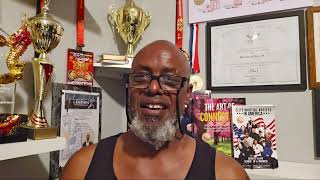
There's something that's been coming up in conversation a lot lately, and it's something that I experienced when I was a kid growing up. It's not age exclusive. It doesn't only happen to kids. It can happen to adults, you know, from anywhere at any time, just because of what goes on in today's world. Bullying is something that I experienced for 10 years. It's an epidemic of it, you know. You could be on social media and people you don't know just don't hesitate in tearing you down, or at least trying to. For me, there was no social media back then. It was direct, in-your-face all the time. What I went through was brutal. When I look at the degree of bullying that goes on in today's climate, it well surpasses what I experienced. During that time, one of the things that I felt is that I wasn't worth much or anything at times. What the fuck? And there are a lot of people that I've encountered lately that feel— have felt the same way, and some of them still do. But then they asked me, you know, well, how is it that you smile after going through that? You know, what did you do to get over it and get through it? And I told them, there's no one-word answer. I can't say it was therapy. I can't say it was family. I can't say it was friends. You know, it was a combination of things. One of the biggest things for me was martial arts. I got bullied just because I was little and I was quiet and I was shy. I also wasn't very coordinated. You know, I was that kid that either got picked last or not at all. And after a while, I just got used to being left out or feeling like I didn't measure up. And eventually it started to overtake me to where even the simple things, if I struggled with them, I was constantly adding up all the things that I couldn't do. And I was listening to all the outside voices that were saying, hey, well, you know, why are you even here? In doing that, I attempted to take my life 6 times. 5 times, you know, before I was an adult and 1 time as an adult, because even though the bullying stopped when I turned 16, unfortunately, the feelings were still there in some kind of way. It wasn't until many years later of going through therapy and starting to unlock different emotions that I had that I didn't know I had, or different feelings that I had about things. And knowing why I felt that way, that I started to realize how much I was worth. Some of the people that I have on my walls in pictures are martial artists that I've always admired and still do. I have been blessed to have the honor and the privilege to train with some of the most elite martial artists on the planet. I grew up flipping through the pages of the martial arts magazines, to seeing them on television, to going to the big screen to watch them, and to be standing side by side with them, to train with them, to just shake hands with them, it's been phenomenal to me. You know, from Billy Blanks To Bill "Superfoot" Wallace, who is one of the most entertaining people I've ever met. He's just, you know, a bundle of joy. Cynthia Rothrock, who I've trained with for more than a decade, and it's been Just one of the most dynamic experiences I've ever had. I'm just blown away every time I train with her or just when I attend the session with her that, that, you know, she's running. And I've gotten to know, you know, people like her and people like Billy Blanks and Bill Superfoot Wallace, and they're just incredible people that I'm fortunate enough to, you know, share the floor with. That's something that I said would never happen, and it's happened over and over and over again. It's just amazing to watch them in magazines and on the screen, whether it's big screen or little screen. And as a kid, I wanted to become a champion, but, you know, I didn't have the skills. Now, it wasn't for a lack of effort. I didn't realize that I was born with a hereditary neuropathy. It's got a real funny name, Charcot-Marie-Tooth disease, or CMT, as you know, people We'll say it. And it's a hereditary neuropathy. But I didn't know until my early 30s that I had it. Doctors always said, yeah, you have bad ankles because of martial arts. What the fuck? So that's what I thought. Bad ankles because of martial arts. My dream of becoming a champion were forgotten about. It's funny because I realized that being a champion isn't always about hoisting a trophy. It, it was not always about a competition against others. I realized that being a champion was being the best that I could be every day. And because of that, I I really enjoy life. I have fun every day. I love who I am. I love what I do. And I've become a champion in a bigger way than I ever thought I could because I'm able to help others. I didn't think people cared, so I didn't say anything growing up when I was going through many of the difficult days and times that I went through. And even as an adult, the same thing. I didn't say very much to anyone. It wasn't until later that I learned that sharing my journey has helped so many people. You know, it was just overwhelming to know that when I go to meet my daughter's teacher, because my daughter is autistic, and her teacher says, "I've been wanting to meet you for a long time." And I said, "Oh, well, you know, it's a pleasure to meet you." The profession that I had as a professional truck driver made it difficult for me to keep up on meetings at the schools. But he said, "No, it's not just because of what your daughter said. It's because of what someone else said." And I said, "Well, what do you mean?" He let me know that another teacher that worked at the same school had two sons that I know. So once he said the name, I was like, yeah, I know exactly who they are because I used to teach at a martial arts school for almost 8 years that specialized in teaching special needs students. The owner was a child behavior specialist and many of the students were his patients. And I got to know this young man there and I didn't know the impact that I made on his life. Because my daughter's teacher asked me, he was like, you know, do you know what you did for that young man? And I said, no. He's like, oh, his mom never told you? I said, no. He said, the reason why that young man was at that school, because he was ready to take his life. It made me pause for a little bit because then it just brought back memories of when I felt that way. And he said, you changed his life because of something that you did. And I said, well, I don't understand. And he said, what is it that you do when you have a new student come in your class? And I smiled. I said, oh, it's simple. I said, I have this little exercise I do when a new student comes in my class. I have them hold up the hand they write with and hold out the other hand like a piece of paper. I say, "60 seconds, write down everything you're afraid of." And of course they're like, "Hey, well, what's this all about? What's going on?" I say, "No, I'll explain it to you when you're done." So you can see the little hands going as if they're writing, which is so cool because it lets me know that their minds are going. And then once they're done, I say, "Follow me to the door." And we walk over to the door and I say, "Take that hand that had the piece of paper and blow it up. And I want you to drop it outside this door." Now you can pick that up when you leave, but right now, come in. Let's see what you can do. My daughter's teacher said that moment changed his life because for the first time there were no expectations. He didn't have to come up with what I call the scroll of excuses, because when you ask someone why they can't do something, many people feel like they have a list. But I've learned they actually have a scroll because if they that if they continue to write down everything they wanted to, the paper would go all the way across the floor. It took the anxiety out of the room, not only out of him, but out of the room, because he was no longer comparing himself to anyone else. He no longer looked as if he wasn't good enough, strong enough, fast enough, big enough. He looked at it as— I wanted to see him for who he was. And in doing that, then my team and I, we customized how we teach him. And at the time, it was just one other instructor on the floor. But all the other instructors, anytime they came in my class, they saw what I did and they piggybacked off of that, off of that, because they realized that you can have 10 students on the floor, but they may have 10 different understandings of the same instructions. So what my team and I do is we customize how we teach each student, no matter how many are on the floor. His mom said her son is nonstop. It's like he's always doing new things. He tries things that they don't even think he would be interested in. He just has that drive to always want to do more. I feel like a champion because I changed his life. It was never about hoisting a trophy, and I have quite a few of them, and I am grateful for every one of them. But it was definitely about having that kind of impact where I've changed people's lives is why I am who I am and why I do what I do. And my greatest teacher has been my daughter because I didn't know autism and I didn't know how to always process things the way she processed or help her to understand in a way that was clear. But I had to develop another level of patience, and I had to learn the difference between listening and hearing, you know, because there's many people I've heard over the years, but not many I listen to. And I had to learn to listen to her. And she actually made me the kind of instructor that I am. Where I can help others because I take the time to listen. I'm an example of someone who felt no worth at home, at school, in the neighborhood, had very few friends. I never felt connected to very many people. It was my understanding that they didn't understand me, and if they didn't understand me, I decided that they didn't like me. And many of the reasons why they didn't understand me, because I didn't talk. I didn't say what was going on with me. I didn't say what my struggles were. But I learned that it's okay that I'm the way I am. I'm not better or worse, I'm just different. And that's what I teach each student. You're just different. There are things you're going to excel at. There are things you're going to fail at. There are things you're going to be kind of in the middle about. But all of it is just whoever you are. And once I learned how to stop comparing myself to others, I teach others the same lesson. You don't have to compare yourself to anyone that you know. You just have to be the best you, you that you can be. And I do what I can to be an example of that. I have 5 black belts now. And the reason why I have 5 black belts, because I wanted to continue learning. It wasn't to be better than anyone else. I just enjoyed learning and I struggle with learning. Especially if I read. Reading comprehension and reading retention, I struggle with. I read very well. It sounds like I know what I'm, you know, talking about when I read, but it doesn't stay with me. I close the book and the information is gone just as fast as I closed it. And that's something that I've always struggled with, but never talked about it until probably the last 6 or 7 years. But for more than 50 years, I just never said it. I just did the best that I could to get through it. And I was constantly labeled as not being as smart. And I've always felt that I wasn't until I learned that's just not how I learn. And I'm okay with that. And I don't beat myself up about it because that's one of my struggles. But martial arts was a visual art, you know, it was a visual way of learning. So that was something that I did very well at. It's like the kids that I've taught that some of them are ADHD and their parents try to reel them in and say, "Hey, you know, we got to see if we can get him to calm down." And instead, in class, I have them use that energy. Because I teach them how to use that energy productively. And I tell them some of the best engineers in the world and some of the best accountants in the world and the best scientists in the world— ADHD, OCD. They're meticulous in how they do things. They have an energy and a drive to find answers to certain things. They're the best in the world because of those things that you're trying to shut down. Teach them how to learn how to control it and use it positively. They don't have to eliminate it because now you want them to be like you. Have them be like them. I'm grateful for the 5 black belts that I have because with this nerve disease, actually a decade before my diagnosis, with this nerve disease, I had not one but four doctors say, hey, by the age of 35, you're going to be confined to a wheelchair. And I said, well, what do you mean? They said, you've had so many injuries— didn't break anything, but I said so many injuries to my ankles, sprains, twists, turns, rollovers, you name it. They said you need to stop martial arts, have surgery on both ankles, and by the age of 35, you will be confined to a wheelchair. And I said, "Well, what kind of diagnosis is that?" They said, "The alternative is if you don't stop and you don't have the surgery, you'll be confined to a wheelchair sooner." So that's what I looked at. I learned that something that my mom said, and I'm grateful my parents are still alive and well, she said, "Being hard-headed has its benefits." I declined their advice. I'm not confined to a wheelchair. I learned a decade later when my diagnosis came from the team of neurologists, they said, "If you had listened to that advice and stopped doing what you're doing, you would be confined to a wheelchair because you would have given up on yourself and you would have been inactive." and he'd been sitting around with a remote control in one hand and a beverage in another. And they said, we can't tell you how grateful we are that you continued even when it was difficult, even when it was painful, even when everyone else told you not to. Because more than once in my life, I've had no one in my corner. I had to decide that I believe in me and what I am and what I can do. And I wasn't always successful, but I have no regrets because I never look back and say, "Oh, I wish I would have." I learned I didn't have to be like everyone else. And because of that, I developed my own fighting style. Even though many of the traditions I still do and I still teach, I have my own style and I teach that style to others. So they can develop their own style. They just use elements of what I teach them. These trophies here are not from winning any championships. I am humbled to be a 17-time Hall of Fame, Hall of Honors recipient for martial arts. Just grateful for it. This award is Presidential Volunteer Service Award for the years and years of my volunteer work because I believe in giving back. And one of the things that I've done that I'm grateful that it was in my heart to do is to give back and not look for anything in return. So when I hear things like that from my daughter's teacher, it's priceless to me. There's no amount of money that I could ever receive that would be equal to knowing that I changed someone's life. And everyone out there can do the same. You can change someone's life, not just your own, but other people around you. Criticism is gonna come. There's always going to be someone in the room that doesn't like you or doesn't like something that you're wearing or your hand position at the time that you said it or your pitch in your voice. There's always going to be something that someone doesn't like. You have to learn to say, okay, that's how they feel, and go past that. And that's what I've done, and that's what I continue to do. There are days that I'm being taken out by ninja dandelions when I'm walking across the grass. I don't know if you know what they are, but they're the ones that wrap around your legs when you're walking across the grass and take you down. And when you turn around and look, they're standing up straight again. And then there are days I'm kicking out the lights in the ceiling. It's just— that just goes on with me, with my legs. But each day I'm grateful for and I'm happy for, and I want you to do the same. I want you to be that person that you're happy for every single day. And whatever struggle you're going through is for a moment. Some, some moments are long. Don't get me wrong. Some moments are long and they're bad. And I'll give you something else that, that I learned. I had to get new friends. And there are some family members that I had to keep at a distance. One of the things I learned, the reason why my life continued to be bad for quite some time was because I was surrounded by people that said it could have been worse. And I was like, you know what, you're right. And all that did was have me repeat the same behavior because I was Hanging on. Well, could have been worse. Got through that. Could have been worse. That was a close one. Could have been worse. I used to do that to myself. I had to realize what was bad and say it. This is bad. I don't need to do this anymore. This is bad. I don't want to do this anymore. This is bad. I don't need this in my life anymore. I had to start acknowledging bad for being bad and calling it out to say, I don't want that anymore, in order for a change to come. I'm not dismissing the fact that it could have been worse, but I was not acknowledging that it was bad. See, that's the difference between— one of the things I say is embracing it and acknowledging it. I was embracing the bad because I was like, ah, it could have been worse. So I just acknowledged that it could have been worse. I was embracing the bad. I had to learn how to acknowledge the bad so I can embrace things that were good. And a lot of people's lives get stuck on pause because they remember what happened when they were 10 or when they were 12, and that's how they lived their life from that place. I have many incidents that in an instant I can bring to you that are some of the worst things that anyone could ever experience throughout my life. But I realized that was a moment and then I moved on. It's not that I've forgotten anything. It's not that I'm dismissing the pain. I acknowledge that that was bad and now I move forward. And that's what I encourage people to do. I'm grateful for my journey. I'm grateful to be alive and well, and I'm grateful to give back. I hope that you do the same because you have it in you. It's all about choices, and all your choices are not going to be popular with everyone. But that's okay. They don't have to like it. Once I learned that, I had peace. See, when I drove tractor-trailers, there was no one in my corner. But I had a successful 17-year career going across the country and Canada, and it was one of the best moments in my life. I want you to keep having those moments. As many as you can. You matter. So stay here and be here and be who you're meant to be, not what you're told you cannot be.