A truck driver with Charcot-Marie-Tooth disease teaches three break-fall techniques from Hapkido: forward, backward, and side falls. He emphasizes exhaling on impact, landing flat to protect your spine, and practicing with an instructor to tailor the moves to your own limitations.
Chapters
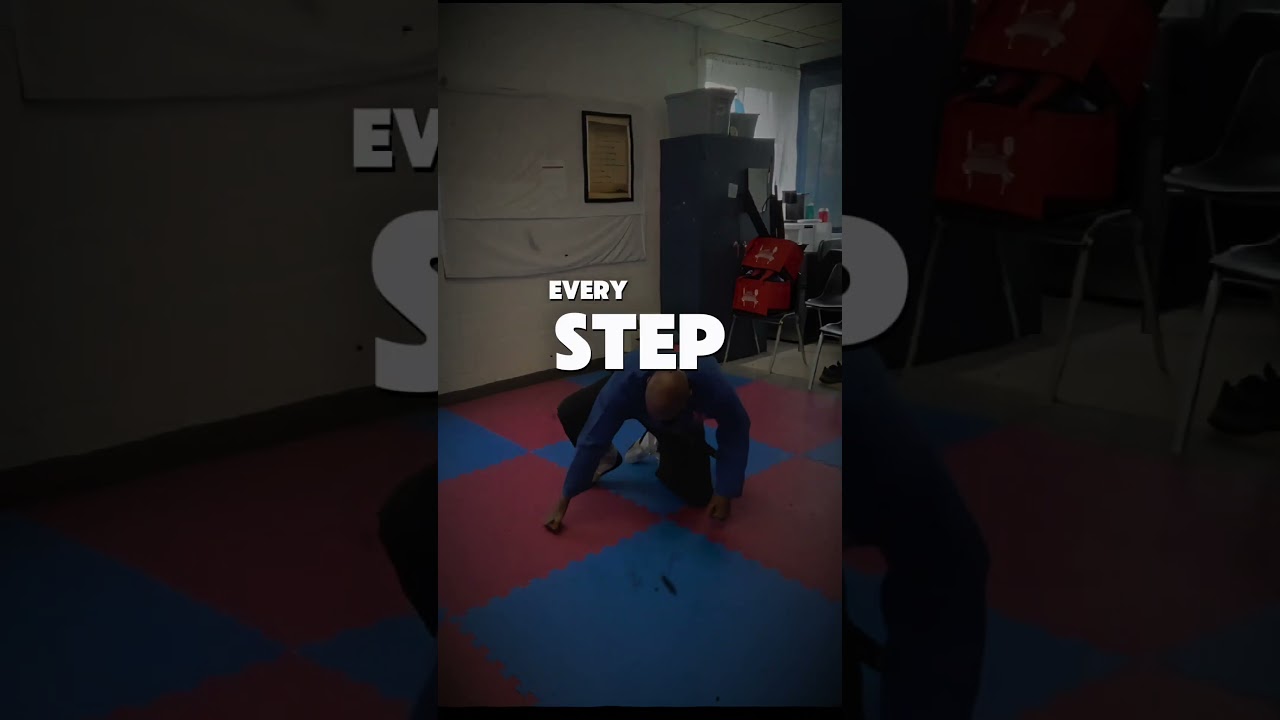
It's that time of the year. The weather's changing. The conditions will change. People always say, you know, hey, be careful, you know, watch your step, make sure you use a handrail when you're going up and down the steps. You know, they have all kinds of advice, you know, on how you can be safe. And granted, it's all great advice. Being a CMTer, a lot of times we don't need conditions to change to have a mishap. We could take a fall just because of slippery conditions or dry conditions. We can take a fall going up the steps or down the steps. We can just stand up from a chair and then all of a sudden it's boom, you take 2 steps and down you go. It can happen at any time for any reason. Now, I was diagnosed with 1X, so from my understanding is we're the second highest when it comes to people that fall with CMT, as far as the particular strain that we have. For a long time, that's what I did. I just was, you know, following the advice that people told me about being careful, you know, doing everything I could not to fall. But guess what? I fell. Anyway, most of the time just scrapes, you know, a couple of dings here and there. But there was one particular time, and this is when I was a professional truck driver. It's in the middle of winter. I went into the warehouse. It would happen to be a PetSmart. Well, whoever had taken out the trash, there must have been a hole in the bag because on the way out I didn't realize that there was a piece of a plastic toy that was on the step that I uncovered when I went in the warehouse. As soon as my foot made contact with that, bam, I came straight back on those metal steps and ended up with a hairline fracture in my forearm and my elbow. So without a doubt, that was the worst fall I've ever taken. It was also the second year I was studying Hapkido. And I realized I didn't do the principles that I learned in Hapkido. So today I'm going to teach you what I learned in Hapkido. Instead of telling you all the things you should do to be safe and reduce the chances of falling, I'm going to teach you how to fall. Now I know that sounds counterproductive, you know, because people fall, like you said, for any reason. Sometimes they get bad news, other times it could be they are lightheaded and they fell, it could be because of a slippery surface. And there are times, and it happens many, many times, that you're walking across the grass and those ninja dandelions attack. But for whatever the reason is, one of the things that's true is we fall. So instead of going down a list of safety things to do when it comes to preventing a fall, I'm going to teach you how to fall. I want to teach you the basics of 3 different falls. One of them is falling forward. The dynamics are pretty simple. Your main goal is to not smash your face on the surface that you land on. So one of the things that we emphasize when we fall forward is positioning. It's getting your hands out in front of you. And if you can, you get them in that triangle formation with your palms flat, where you're absorbing through your palms and your forearms the impact of the fall. Many of us, it would be hard for us to springboard our way into almost a letter A to show the dynamics of what a forward or front brake fall should be, but that's okay. This is about lessening the fall to reduce or eliminate injury. But as I said, one of the key factors of this, when you do go down, you look left or you look right. You don't look face down in case, hey, for any reason your hands slide out and you don't want to go face first into that surface that you're landing on. And when you blow, you blow all the air out as soon as you land. Stop! Another one is the back breakfall, and that could come from someone pushing you, from you losing your balance on the steps. It could be any of those dynamics, but the key to that is you land as flat as you can. You don't want to round the back because a lot of times If you round the back, you'll put pressure on the spine that's unnecessary, and that can lead, like I said, to a more severe injury. And instead of lessening the impact, you're actually increasing the impact. But you want to land as flat as you can. And instead of your arms out in an airplane position, you want them angled like a jet plane. Same concept, palms down. You're absorbing through your palms and your forearms, and you take the impact and you're blowing the air out as soon as you land. Now we have a tendency to bring our legs up because that also brings us up to a guarding position, and it also gives us the chance to have momentum to get back up on our feet, whether we're rolling backwards or whether we come back up forward. A third way of doing it. Is definitely to the side. The side ones happen all the time, especially in ice, wet conditions, wet leaves, uneven pavement. Falling to the side happens quite often, and with that, you're actually slapping the concrete or grass, whatever surface you're landing on, the floor. Again, with that same concept, the palm down, absorbing through the forearm, and you're actually kicking yourself into the fall. Now, in Hapkido, we would naturally bring the other leg up. The hand that isn't landing on the surface comes up in a guarding position. Because, you know, it could be a fall, could be someone's pushed you down and they're attempting to continue the attack. It could be any of those dynamics that play into it. Stop. Since 2002, when I had that one severe injury, I've had zero injuries anytime I've fallen, and that's because I'm grateful for the instructors that I have who taught me how to fall. And it wasn't because I have CMT, it's because that's what my art teaches. It teaches you how to fall. 'Cause we actually teach you how to fall before we teach you how to throw anyone. Ah, so you understand the impact of what you're attempting to do to someone else. This is just a brief dynamic of what we do, but one of the things I always encourage people to do is get in front of someone, whether it be myself, my team, or other people that understand breakthrough falls, because all of us fall differently. As you can see with all of us demonstrating, we all fall differently, but none of us were hurt. So we would need to know your dynamics, how you move, what your limitations are or are not, what you're comfortable with, because everyone falls different. And the impact can be great if it's done incorrectly, or it could be eliminated if you're doing it the way that you're meant to fall. And it's not an embarrassing time. It may be embarrassing at first, you know, if you're not used to doing it, especially if it's around other people. But the cool thing about falling is getting back up. So no matter how many times you fall, get back up. Even if it's with assistance, get back up and move on. Hopefully it'll never happen again, but if it does, you'll be prepared for it. I hope you enjoyed this little dynamic and little summary of it. Just a brief explanation of falls and how learning how to fall can help you to eliminate or at least reduce injury. But definitely be careful all the time, not just now because the season's changing and because things are getting a little tricky out there when it comes to surfaces. Just be careful, do the best you can, but if you fall, I want you to understand there's a way to not get hurt. Thank you.