#113 HELICOPTER HEMS PILOT | required hours | INSTRUMENT FLIGHT TIME
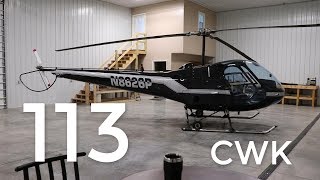
Kenny Keller explains why helicopter EMS programs require an instrument rating but rarely use it. Most EMS operations are VFR-only, so you'll need to build instrument time separately by instructing or flying for other operators. Get your rating first, then find ways to log the hours.
Chapters
Hey, day 113 coffee with Kenny. Thanks for tuning in. Gotta go take a look at this, Joel. Oh my gosh, he did such a great job yesterday. This is amazing. As soon as he started on it, he goes, hey, go Kenny, go. Run your finger down that. And I came right back here and went, oh man, talk about slick. Oh my gosh. Dr. Nick's gonna be so excited. I'm going to get to a question here about EMS flying and instrument required hours. Going to get to that in just a minute. This is day 113 Coffee with Kenny from the Hogs Hangar Identifier ASW. We are at the Warsaw Municipal Municipal Airport and we are thrilled to pieces to be here. I cannot tell you how flipping I am, how excited I am. Gloria and I went shopping last night. We got some cool, I don't know, small decorative things and a buddy of mine reached out to me with some audio walls that he's got in his warehouse. His dad has gonna take a look at those this week to help calm down that echo in the audio. Thank Chip Dean for coming over yesterday on a Saturday and putting the extreme shine on this thing. Oh my God. Absolutely amazing. Alright, it's Sunday, I gotta get back to my daughter. So the question from Daniel is, and this is a great question, I've never covered this topic in this forum before. It's about the required hours to get a helicopter EMS pilot job. Right. And I want to talk about this, but try to make it quick, which is hard for me to do right, because I like talking. Hello Kenny. I'm a longtime subscriber YouTube channel and truly appreciate the work you put into your videos as well as the knowledge and expertise you share with your viewers. Thank you very much. I appreciate that. I hold a private pilot helicopter license and I'm currently working on my instrument rating. My long term goal, at least for now, is to fly ems. Awesome. Good for you. I'm running today with questions regarding IFR hours required to be a pilot for an IFR operation. Requirements that I have found range from 75 to 200 instrument hours depending on the company. My question is, how does one build that many instrument flight hours? Okay, I think your best bet's going to be double I, but let's continue on. It seems that HEMS and the offshore oil platform flying are the only places where helicopter IFR operations are conducted on any real scale. And neither of those are what anyone would consider beginner pilot jobs. I figure I'll have a little over 50 instrument hours after I finish my instrument rating and CFI and certified flight instrument instructor. This, of course, leaves a significant gap between the instrument hours I'll have and the hours required to get the jobs I'm most interested in. During your time flying ems, did you work at an IFR base? If so, how did you build the instrument hours to get the job? Any advice you have is greatly appreciated. Thank you, Daniel. Thank you, Daniel, for the question. It's a great question. I flew EMS five years, but I flew for VFR programs. Now I was required to have an instrument rating. I don't remember them having a minimum requirement. I think it was just instrument rating because it was a VFR program. I want to touch base for a minute on the whole instrument rating thing. You know, instrument rating is great. Yes, you should get it. And yes, it can help keep you alive. And we totally get that across the board. There's no argument there. But you talk to experienced pilots, and I'm going to give you an example of a pilot here at Warsaw ASW who I've known for many years, best friends with David Latimer, my airport manager from back at the other airport that's now operated by the. And so I was talking to him about instrument training and we kind of came up with the same or the instrument rating. Here's the problem. Getting that instrument time. Yes. If for this young man, if he's gonna really wants to fly for an IFR program, you're gonna have to do whatever it takes. I would suggest you're gonna have your certified instrument rating, get out there and teach, because there's not that many instrument instructors out there in the helicopter world. So to get your time, you're going to need. I say do it, do the double life. You're going to spend the money to get the double. I work at a school where you can fly IFR and teach because you're going to be wanted, you're going to be valuable in the industry to get that time you need for a VFR program. Yes, they're going to require the instrument rating, but probably not 200 hours. Right. And what I was talking about with this pilot of 50 years, highly, highly experienced helicopter pilot and airplane pilot. He's done everything in the world with helicopters. He's flown in Canada, flown in the us has every rating there is. Nice guy, super knowledgeable. And we agreed the instrument thing's kind of a pain because like in my example, and he agreed with me, you have to have an instrument rating to go fly for a VFR program. Okay. Now you don't Ever get to fly ifr? Once a year a check airman comes around and expects you to be proficient during a 135 checkride in IFR operations. But for a whole year you don't get to do IFR stuff because you're a VFR program. And in the event you went out and you flew ifr, then you just declared an emergency because you're not supposed to be flying ifr, then you're explaining to your company why did you go ifr? So as a helicopter pilot, they don't pay us enough. And especially an EMS pilot, if you have a family, you're making enough money to pay the bills, you don't have the money to go out and fly instruments all year and keep that instrument, that instrument time current. Now maybe if you're, if you're multi rated airplane and fixed wings, maybe you can go fly an airplane, you know, a lot cheaper than a helicopter. They're more accessible, they're cheaper to fly and you could do that to go out and get some instrument time and help keep yourself current. But you know, the problem in the industry is yeah, they want you to have the instrument rating, they want you to be proficient, but they're not going to train you. Those EMS companies are so filthy rich, but they're not going to spend any time training you. They're just going to expect you once a year to be proficient in ifr. And if you want to go out and fly ifr, you're going to pay out of your own pocket. So, and he agreed with me. So this isn't just me 20 year pilot complaining about it. Here's 50 year pilot saying the same thing going, yeah, it's kind of a crock. So the instrument rating is not a crock. Yes, it can save your life, it's a great rating, I highly recommend it. But the way the industry works just is kind of jacked up and a lot, a lot of things in an industry, but what the heck, any industry has a problem, right? We just know we have problems with, it's a epidemic, EMS helicopters crashing around the country. And it's because of pilots flying into IFR conditions and being afraid to get in trouble with their company and call for help and go ifr. They just try to fly out of it and then they crash and kill themselves or their crew and their patient or they crash into somebody's house, kill them too. It's a problem in the industry. So to answer this gentleman's question, I would say you're going to spend the money to get that double eye, work at a school. And if you think you're going to need 200 hours of instrument time so you can be an IFR instrument pilot in the helicopter EMS world, later, man, I'd just do it with a double I. That's what I would do. You're spending all that time and money, you got that training. You are going to be very valuable as a double eye because people are. And especially I can tell you in northern Indiana, there's one double I I can think of in the whole part of the northern state, right? So that instrument rating is going to be very valuable. That instrument structure rating is going to be very valuable for you. I am Kenny Keller, creator Helicopter Line Ground School. I teach in the instrument helicopter. That is my specialty. I love the instrument. I'll talk more about those in the video. I'm gonna do a video soon about why I love the instrument specifically gonna do that soon. But I am the creator of Helicopter Online Ground School. We have private commercial instrument certified flight instructor courses. We have monthly, yearly, and then we have a big professional pilot package where you can get all of those. Keep them forever. Beauty of the monthly and the yearly. It's a subscription. You can keep it as long as you like. You can cancel anytime. It's a beautiful thing. I'm also the author of the Amazon number one bestseller, Helicopter Checkride, also author of the Amazon number one bestseller Top 10 Checkride Tips. I co authored that with Taz Christman, 2018 Flight Instructor of the Year. We put our heads together and came up with the top 10 best tips. And Taz even went out and talked with examiners in his area in the Las Vegas area. Went out and talked to several examiners and said, hey, what are you seeing now in our world today? What are the problems with people showing up with checkrides? That's a bonus inside the training. So this is our new helicopter Online Ground School hangar. We love it, love it, love it, love it, love it, love it, love it. So if you'd like to stay tuned, subscribe to this channel. When you subscribe, click the bell. That way you'll be notified of the daily video when we premiere a new video every single day. Go below to a link for Helicopter ground School. It's helicopterground.com that link will be down below. And those books I just mentioned, there's a link down below for those too. We have a whole pile of those books and have Heather that works for me. Her new office is right up there. She's in charge of shipping those books every day. When she comes in, her number one priority is ship books and talk to customers. And once you pay shipping and handling. We already bought the book. We bought the book for you. Once you pay the shipping and handling, Heather will send you a nice email. Thank you for picking up a copy of our paperback. And she will send you that in the mail throughout the week. She doesn't work weekends. She works during the week, so. But she ships those out. She knows, man. Ship books. Ship books, Ship books. That's. That's one of the things that she does for me. Heather's a great help. Awesome helper. I hope to keep her and hope she stays around for years to come. But in this business, you know, people come and people go. That's the way it works. Just like helicopters come and go and instructors come and go. It's the way it works. All right, thanks for tuning in for day 113. See you in day 114. Like, subscribe. Can't thank you all enough. So excited. Can't even stand it. All right, peace sells, but who's buying?










