#130 MY OPINION OF THE ENSTROM HELICOPTER...
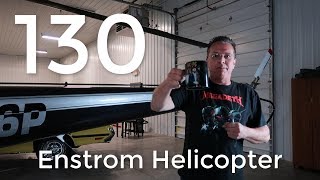
Kenny Keller presents an informal, first-person appraisal of the Enstrom helicopter (video #130). He praises the Enstrom’s durability, heavy-inertia rotor system, and stable handling—especially its strong autorotation characteristics—and recounts multiple hard-landing anecdotes (his students and his own experiences) as evidence of the airframe and rotor system resilience. He notes technical details including a Lycoming engine, turbocharger on this model, the F28F being called a three-seater, good tail-rotor authority, oleo struts/strong landing gear, and a common "Enstrom bounce" pickup behavior; he also references the original designer Rudy Enstrom (late 1950s/1960s) and an owner, Dr. Nick Nakis (~20 years ownership). The tone is enthusiastic and confident; the video ends with a casual sign-off inviting viewer interaction.
Questions this video answers
May 15, 2019
F28F (described as a three-seater)
Lycoming engine
Dr. Nick Nakis (owned it ~20 years, per speaker)
Rudy Enstrom; designed in the late 1950s or 1960s
Chapters
Awesome. Day 130, coffee with Kenny. And you know what? Today I'm going to do a video, a video that I want to do just because for 129 days I've been answering questions, member questions, YouTube viewer questions, training, all kinds of stuff. And this morning I got up and coffee number one, which this is coffee number three, by the way. And I thought, you know what? I'm going to do a video today in my Megadeth T shirt and talk about the instrument, because I can. So I'm just going to talk about today. I'm going to set the coffee down for a minute. The Nstrom and how much I like it. We have a tendency as pilots to always kind of have a love for either the first aircraft you've ever flown or that you got your private in and. Or many times your favorite helicopter is the one you have the most time in. This isn't the first helicopter I ever flown, but I did fly Nstrom some before my private, not a lot. I didn't actually start flying them until I was a CFI where I started building some time in them. My original ratings were Robinson Bell 47, Schweitzer. And I always say in my videos, I like all helicopters. Every helicopter has a pro and con. We got a nice big hogs hanger here. If money was no object, I'd probably have an R22 and R44 and a Schweitzer sitting over there and. And who knows what else. I'd love to have a Jet Ranger sitting over there. But with that being said, I'm going to talk today just about the instrument, what I like about it, why I've grown to like them over the years and continue to fly them. Just I always start videos over there behind the desk. Today I thought, let's start back at a tail rotor. The Instrum has a really good tail rotor on all their models. You really don't have a big. Any kind of a real problem with tail rotor authority on an nstrom. You know, when you take a look at the rotor blade size, it looks pretty proportionate for the size of helicopters or helicopter that it is. Sometimes the smaller helicopters, you see these little dinky tail rotors and you're like, oh my God, is that thing a tail rotor? Or is that. Or what is that? So lots of tail rotor authority in the instrument. There is one thing that a term called the instrument shuffle. A lot of people don't know. Once in a while you get this. On a certain day you'll get a little kind of weird shuffle thing. Not even sure why it happens, but not a big deal. You know, the, the whole look of the whole machine really does give it a look of a bigger, heavier aircraft, Even though it kind of compares. Still a light helicopter, I guess you'd call it, it is a heavy inertia rotor system, which we're going to get into that in a minute. But you know, just overall, look at it. When you start out flying Schweitzers and Robinsons and even a bell 47, you know, they, they are what they are, right? And the first time I saw an instrument, a hangar, I was down in Indianapolis actually training in the Schweitzer and we stopped at a place at Enstrom's. When I walked in, it was like, wow. You know, it was cool to see something that. How do I want to say it? We know there's still just a bear or a skeleton underneath here, but because the whole thing is wrapped, it just gives it that bigger helicopter feel. And when you think of like streamlining of the fuselage, you know, when you have problems in forward flight, if you lost a tow or something, there is a good big thick fuselage and you got all this space on the tail boom and a good sized horizontal stabilizer that I think helps keep this as a really stable helicopter for its size, like the looks of them. The drive shaft for the tail rotors right here, it's easily to check on a pre flight. Some models do have that covered up and it looks cool that way. But on this older model, it's nice to be able to just look right at the drive shaft itself. And the bearings, carrier bearings. Of course, everything around the tail rotor is easy to look at. Particular. This particular helicopter, helicopter we love belongs to a good friend of mine named Dr. Nick Nakis. He's owned it now, probably going on 20 years, and it's just a cream puff. It's one of the best flying, best starting, best running helicopters I've ever flown. And strong running maintained by the same guy for many years. And Dr. Nick spares no expense. So anyway, moving on down. It has a Lycoming engine. You know, lycomings have been around forever. It's the same lycoming that almost all light helicopters use. So there's no problem there. Landing gear. Talk about a tough built flipping helicopter. You know, my 20 years of my career, I don't have a problem talking about my past mistakes and dumb things I've done. And when I was a new CFI, probably somewhere around 500 hours or something, I was training With a student. And we did a bad auto one day and we hit the ground really hard. And I mean, we hit the ground so hard. I mean, my back hurt. And it was on a Runway doing a practice auto that went bad, which I don't know how we ever screwed it up because it's very hard to screw up an auto rotation in an instrument. And again, we're going to talk more on that in a minute. But we even sat down and I had the student, I'm like, hang on to the controls. I had to get out and look and make sure that the landing gear was still okay and that everything looked fine. And so I know from that abuse how hard we landed. And then probably six or eight years ago, well, more probably eight years ago, I had a student that was an add on guy, and he was a good guy and fun to fly with, but he made a mistake and he went to land downwind one day and he was trying to avoid some parachuters. He should have never landed downwind. And he got into sailing with power. And I watched it happen out my office window. And as I was watching him descending and go faster and faster toward the ground, I actually had to turn my head away. It scared me that bad, you know, And I'm screaming, oh, my God. Because I'm thinking, you know, so seconds later, I hear the engine still running and I look out and he's out there getting it under control after he hit the ground. So I visually watched this mistake happen. And I. And I know how hard he hit the ground. And he hit the ground so hard that I ran outside, I walked over, and by the time I got outside, he was sitting in there with his head in his lap or his hands in his, you know, like this just was just, you know, he was physically shaken. Headsets are on the floor. That's how ground, how hard he hit the ground. They came off of him. They came up from, you know, hanging behind you. The extra headsets, they're all on the floor. So I climbed in it, worried about, oh my God, I know how hard a hit this thing had just taken. Not this helicopter, but different instruments. And I was hesitant to even lift it up and put it on the dolly. But I thought, well, if there's some kind of damage done to this thing and we can't fly it again, I want to at least get it up off the ground and onto a dolly. And so I very cautiously picked it up, you know, waiting to feel a vibration, anything going wrong, and it seemed fine. I put it up on the dolly and we moved it in a hangar and I didn't even look at it for a week because I was so scared that I was going to find cracked frame. Something hit the tail, boom, you know, ding in the blade. I was confident that, you know, I was a struggling business owner and I'm thinking, I can't afford this hit. You know, if we've got a frame damage or anything's wrong, I'm not going to be able to say. I was at my wit's end at that point and I actually had one of my students go out and take a look at it, who'd been flying a while. I think he was private working on commercial. And I'm like, go out there and just take a look at the instrument, look that thing over, see what you can find. And this guy was like mechanically inclined, right? So he was ready to look for any kind of a problem. And he came back in, he goes, need to go out and look, Kenny, because I can't find anything wrong with it. And we went over that thing with a fine tooth comb. No damage. We never found a crack, never found any kind of an issue, nothing bent. So I know how tough these things are. And another thing I like about the instrument designed back in the late 50s or 60s by a guy named Rudy Enstrom. He was a fabricator, welder, designed his own helicopter. So the fact that it's American made and made by a guy who was not an aircraft designer, some people would laugh at that. But I find it very cool that a guy who was a fabricator and a welder decided to build his own helicopter. And all these years later, you know, the company is still there. Built off of his original design somewhat anyway. So these are tough machines. I mean, they are flipping tough. And that's what I like about them. Moving on a little bit. Does have a turbocharger, which helps give you some more available power, which is nice being the same size Lycoming as a lot of trainers. But it needs that extra power, being a little heavier, being a heavier helicopter. But this model, the F28F is called a three seater. Now I say works good for two adults and a child. You take the collective out of the center, you put a seat cushion in there and you can set sit three across again, three guys my size. Alright, you're a little cramped, right? It's not that fun to fly. But two adults and a child in the middle, that works really well. Very easy to fly. The correlator on this thing is wonderful. People are always saying oh, but you don't have a, you know, you don't have a governor with the instrument. If you fly this thing correctly, you don't need a governor if you set the friction properly on the throttle, which is a problem I have with most students. Mark. No, I'm just teasing. You got to fly it with the friction on. And if you friction it up right, you barely move the throttle during flight at all. You use it a little bit on picking up and setting down, and during flight, you might manipulate it just a tiny little bit. But it's so simple when you learn the minute little inputs that you need in order to fly this thing. So it's very simple. It's very straightforward. Has the instrumentation you need no more on this model, and I just love it. And the emergency procedures are very straightforward. There's nothing complicated about learning the emergency procedures. So there is something to say about. Time tested, proven. Heather's over there laughing at me. Time tested, proven aircraft. It's just a wonderful thing. So now I'll talk about the rotor system. What's so funny? Jump in here and tell me what you're laughing about. She has a tendency of doing that, just randomly laughing just because of my passion, because I show how much I love these helicopters. So now I'm going to have her back up. Hope she doesn't run into the wall. And I want to show you the mass on these rotor blades. So it's a high inertia rotor system, and I want to show you the tip of the blade. And then I wanted to kind of get a shot. So if you look at that, you said this beside an R22 or the other small training helicopters, when you compare the mass of the blades, okay, this is why it's called a high inertia rotor system and everything. I've flown R22, R44, Schweitzer's, BK117, EC135, anything I could think of. All helicopters have great characteristics, right? But you cannot beat the autorotation in an N strum. My longtime examiner said you really got to screw up to screw up an auto and an auto or an auto in an N strum. And that's true. If you set the speed correctly and you enter that auto. Nice. It's going to be the nice. It's just going to be a nice smooth auto rotation with that heavy inertia rotor system. It's a piece of cake. It's so easy. And people that. I've said this a lot in videos in the past, when you Transition from like an R22. People get in the instrument and at first they're hesitant and like, well, I don't know. And is it going to be hard? And my. I even had a guy recently say, well, my instructor said it's going to be a difficult transition. And I'm like, your instructor's trying to just keep you from flying an instrument because it's an easy transition. Every single R22 pilots I've ever transitioned to, the NSTROM gets in and goes, wow, is this thing stable? And they're completely amazed by the auto rotation when they see that there used to be condition. Oh, collective down in two seconds, right? This thing, you can just kind of go, okay, collective down. Do do do do, do, do do do do. You know, you set the thing, cruise it down, flare it, and if you ever really have an engine failure, you can set the thing on the ground, get out and walk away. I mean, if you do it right, you don't hit anything and you keep your airspeeds right, and you do the flare properly, it's gonna be awesome. They have trim hat on the cyclic, which once you trim this thing out. I've done this in video before where I go around almost entire pattern without touching the controls. Other than little trim here, a little change in collective, this damn thing will almost fly itself. I tell people all the time when they laugh, but the helicopter almost knows what to do. It just wants that little minute little tiny nuance changes. Once you learn how to fly one of these and you learn how to talk to it and give her just the right inputs, it is so stinking easy to fly, it's not even funny. I've talked openly in the past about my ground residence accident back in 2005 that wasn't an instrument. In all fairness, it almost never happens. Okay? In general, nstroms don't get in ground resonance. I'm not going to go into that right now because it doesn't matter. It happened one time. I happened to be the guy flying one that did come apart. But once I was able to fly again and healthy enough, I could get back in an aircraft to start teaching. Guess what? The helicopter. First helicopter I was, that I climbed into and flew again. This helicopter sitting right here. First helicopter in 2005 after my accident that I flew again was this helicopter right here. That's how much I trust him. And that was a freak thing in that ground resonance accident. I'm positive. It hasn't happened since. Again, another story for another day. But proof that the one that I was in that day. Landing gear splattered, tail boom gone. Violent, violent, violent. But the story, the ending of story is good. Okay? The rotor system was completely intact. With the whole aircraft almost destroyed. What's still intact and almost not hardly a scratch, the rotor system. We walked around in amazement going, how in that violent deal, how in the heck did that thing stay together? So that's a testament to the strength of this heavy duty rotor system. So I know Instrum doesn't like me to really mention this, but I mention it because I want people to understand how tough these things are, how tough that rotor system is, how that was a freak, freak deal that I was involved in. So again, what was the first aircraft I flew after that accident? This one sitting right here. And I ended up purchasing one after that point. So even being through an accident, that's how I feel about it. I can't think of what else to really tell you. I know I've been going here, Heather's arm's probably getting tired. I said, oh, I'm gonna keep this to like 10 minutes. I've probably been going 20. So with the combined strength of the whole aircraft, the heavy duty rotor system, you know, you have oleo struts that help absorb some of that energy. So I'm sure that's why that hard landing or the couple hard landings that I was either involved in or witnessed, that helps absorb some of that energy. And that landing gear is strong. I mean, it is freaking strong. And I have to, I have to mention the NSTROM bounce. NSTROM doesn't really like me talk or not that they don't like me to mention it, but I tell people all the time, it's just something you have to deal with. And if your helicopter, everything is set right, there is almost no bounce. But it's very common that operators don't always spend the time and money to have everything set just right. So that instrument bounce right now is something that's part of it. And once you get used to it and you know, just to work your way through it, it's just fine. It's not a problem. It's not an issue. People rush the pickups because they don't want to deal with the bounce. Well, that's why people get into trouble, because they rush a pickup. That's any aircraft across the board, you don't rush a pickup or don't rush a pickup or a set down. You have to do it smoothly and controlled. So with that instrument bounce, you just have to work through it. It's Nothing bad's going to happen. You just do the maneuver the way it's intended to be done. Two step process, pick it up, get it light, ignore the bounce, get everything stable, pick it up, bounce goes away. So there goes a phone going off in the background. That's okay. Good place for a quick edit. It's alright now we got a train going by too. So here. We'll take a break, we'll come right back. Alright, well, we'll just, we'll just wrap it up here. So we had a phone go off. Hey, this happened to me so many times in 10 years of making videos. Sometimes you just forget to shut your phone off or put it on airplane mode. Part of it. I'm going to wrap it up. Heather's arm's got to be getting tired. That's what I like about the instrument. Told you a couple little things that that's always the people say, oh, what about that bounce? Well, it's not a big deal, don't worry about it. And that ground resonance thing was a freak, freak deal. I stand behind what I've said and obviously I think it's a good machine. I wouldn't be standing here talking about it and relaying to you what I think. So day 130. A video that I wanted to do just because I felt like doing it. Got up this morning, I'm like, I'm doing this. I'm going to grab my coffee and I'm going to wear my Megadeth T shirt because I'm in a mega death kind of mood and I wanted to make a video I wanted to make. So enough said. Like subscribe to the channel. Put your questions down below about instruments I want to add. People say heli expo every year people say that I've never even met before. Boy, I've sure heard good things about an instrument. I've just never been in one. I encourage you to get an hour in one. I encourage you to go experience the instrument one time. Another question we get often, where's the controls going up to the rotor head? They're inside that tube, right? That's where they are. Yes. And I know that kind of freaks people out. They're like, oh, what do they do with the controls? They're going up inside the tube. So that's where they're at. Alright, I'm gonna wrap it up. Like subscribe. I'm gonna head over to this camera. Just end it because I don't know why, it just feels natural. Like subscribe. Comment down below if you don't like the video. Dislike twice, because we love that. That helps so much. And we'll see you in day 131. Peace out. Wow. Was I in a roll on that one? It was almost 18.










