#146 HELICOPTER ABNORMAL VIBRATIONS | During Solo Flight | HOGS Member Concerns
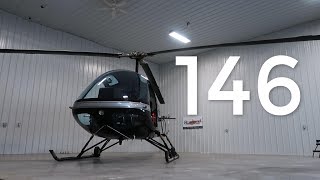
YouTube episode (#146) by Kenny Keller (Helicopter Line Ground School) addressing abnormal helicopter vibrations experienced during solo flight. Kenny explains that vibrations can stem from many mechanical sources (tail rotor, bearings, drive shaft, gearbox, rotor system) and from changing flight conditions (weight, temperature, wind). He advises pilots to study the Helicopter Flying Handbook and the POH, consult mechanics/flight school, use the totality of circumstances when deciding to fly, and trust their gut—especially during solo flights where sensations differ. The video closes with a personal ground-resonance anecdote and promotion of his books and online courses.
Chapters
Foreign. Welcome to day 146. I'm Kenny Keller, creator, Helicopter Line Ground School. This is Coffee with Kenny. And I want to have kind of a nonchalant conversation with you today about vibrations or abnormal vibrations in a helicopter. And this is inspired by a member who sent in an email to me, and actually we talked on the phone a little bit, and he was really concerned over an abnormal vibration during his solo time. Okay. So I want to kind of COVID that there is no absolute blanket answer for vibrations. Okay. There are so many things to consider. What I first want to do is walk over here and just kind of give you an idea. If you think about it, I mean, it could be something going on with the tail rotor itself. Then you have bearings here, bearings and couplings. Okay? And then you have a drive shaft, vertical stabilizer back here. Drive shaft runs all the way to the gearbox. And you have controls going up into a rotor system, and you've got all kinds of moving parts. So if you think about the speed that the main rotor is turning, the speed of that drive shaft, the speed of the tail rotor as. And then you think about all these gears, bearings. There are so many different reasons why you could get an abnormal vibration. And make fun of me with my white legs, too, if you want. By the way, I just put the pontoon in the water and it's summer as far as I'm concerned, even though it's still May. So anyway, first, be familiar with what the helicopter flying handbook says about the different types of vibrations. Be familiar with your pilot's operating handbook and anything in that pilot's operating handbook that it may tell you about vibrations in the helicopter. Okay? So number one is being as knowledgeable as you can, known as much from the publications that we use and train as pilots to understand everything that you possibly can so that when you do run into some kind of abnormal vibration, you have a reference. You know, you have a reference to go back and talk to your mechanic, talk to your flight school, whatever the case may be. So if you're knowledgeable, first, you're going to be able to describe to them a little bit better on what you're experiencing. Now, when could you say, I'm not going to fly it or I am going to fly it? You know, I was thinking about this this morning. I thought, you know, it's a lot like a go, no go weather decision. Okay? You have to take all the information that you have. You have to take the totality of the circumstance, which is a term I learned back in the Law enforcement Academy. And I think it's really a good, a good thing to use totality of circumstance. You know, you got to look at everything. Are you comfortable with your flight school? Are you comfortable with the maintenance? What is their reputation? Is their reputation a little bit on the shady side or is their reputation really good as far as maintenance and equipment and their mechanics? I don't really think there again, there is not an end all do all for this question you have to look at everything. But I think to cover this topic today and as far as this member's question, because it really technically regards to solo is one thing. When you go to start soloing helicopters, you got to remember it is going to feel different when you're in there by yourself. I'm going to give you an example. Just the other day I went out to fly in the helicopter by myself. Hadn't been in it by myself in quite some time because when I fly I do duel or I'm taking my daughter up for a ride. I always have somebody with me. And I went to do a flight by myself the other evening because I put a new battery in, was going to check and make sure it starts and make sure the battery is charged up good. After it started, when I went to pick up, you know, it felt a little strange to me. And then I had to think for a second, hey, this is the first time you've actually been alone in an aircraft in quite some time. They're always going to feel a little bit different when you go to pick these things up, especially during your solo flight. So some vibrations you're going to get used to. But when you get in the helicopter for the very first time and you go solo or anytime during that 10 hours of solo, you are going to feel things that you've never experienced before. They may be vibrations that were already there and you just never noticed it might be a vibration that's occurring because you are alone in there for the first time. So don't get me wrong, I'm not saying you're just being a chicken. I'm saying you have to give the benefit of the doubt of it is going to act differently when you get in there. And it's going to. The way you pick it up is going to be different. The way you pick it up, set it down the way it's going to take off and land and the vibrations that you feel are going to be different. Now with time, you will get more and more comfortable and you'll realize more and more what is normal and what Is not. And you'll get the feel for when. Oh, okay, I felt that before. I know what that is. I've discussed this with the mechanics. I'm comfortable with this. So we know with all these moving parts, so many of them, different circumstances every day the helicopter changes in the way it acts with different winds, different temperatures, weight of the aircraft for the day. There are so many things that play into all this. Again, I can't give you a one blanket statement on whether you should go fly it or not or whether there really has a problem. I'll go back to my own experiences for a minute. Many of you know from watching the videos I was in a ground resonance accident. And, you know, I knew there was something different going on and I was talking to mechanics, but I made the choice to keep flying. Right. And eventually the aircraft destroyed itself. That was gonna happen eventually, whether it was me or someone else. Do I regret it now? I don't have. I'd say I don't regret it because I guess it's a part of my life, it's a part of my story. I know it changed the way I fly. It changed the way I look at aircraft on pre flight. It changed the way I think now. But can I go back and blame anyone? No, I'm not blaming anyone. I knew there was something goofy going on and I had that choice to say, you know what, I'm not flying it. And I almost made that choice and I just thought, well, you know, I'm going to listen to what they're telling me and it'll be okay and it'll be fine and dandy. I didn't think the aircraft was going to destroy itself or I would have quit flying it. So in the end, I'm okay. I continued to fly and I'm still flying today. So what I want to leave you with is be as knowledgeable as you can. Again, understand the helicopter flying handbook. Know the POH for the aircraft, get to know your maintenance guys, get to know your flight school. And if you're uncomfortable, talk to them about it. In most flight schools, and most instructors are going to say, okay, you're feeling something, well, let's go check it out. Or explain to us what's going on. And then you can either go for a flight with them, just show them, and maybe they can put your mind at ease. Maybe there's really a problem that just developed. So I, in the end, I'm going to say go with your gut. You know, I think in life, the things that we learn over and over and over. Your gut instinct is normally right, on any given day you could be nervous than another day. Some days you may be able to handle a vibration and think that it's all good. And if it's really to the point that it's just going to just scare you so bad that you can't focus on flying the aircraft, then maybe you wait and go on another day. Maybe that vibration on another day won't be there because of the different temperatures, pressures, weight, whatever the case is. So I hope that helps at least a little bit with your thought process. And before we go, of course I'm going to mention top 10 checkride tips and helicopter checkride are two number one Amazon best selling books. Both of those books are down below at a link. We bought the books for you, we ship them to you for just shipping and handling. We have shipped hundreds of these. We're still doing it, we like doing it. We love getting the books out there, people are enjoying them. And again, we've bought them. We got two great big piles, we have several boxes of each and we get low, we'll order more. Great deal, just pay shipping and handling. We ship you the books. And I still got to mention one more time, I'm Kenny Keller, creator, Helicopter Line ground school. We have private commercial, cfi, instrument, all online courses. You can take any one of our courses for a 24 hour test flight, go in, check out the training. If it's not right for you, remove your credit card before the end that 24 hours and we part as friends. And then on top of that, 30 day money back, no hassle, guarantee, been in place for seven years. That'll never change. It's just plain good business. You have 30 days to go in and check out the training. Contact us before the day. Number 30, not day 52, not day 127, 30 days. So in the event it's not working out for you, just request a simple refund. We don't ask, we don't argue with you, we don't ask you to give us all the critiques and the things that you didn't like. We just simply issue a refund because you know, we are always taking our customer feedback. You know where online ground school went from, where it was seven years ago, where it is now is absolutely amazing. So we're really proud of it. It's a never ending production. It never ends. We're not ever going to just go, okay, we're done building or we're done updating videos. That will never happen. Times change. Regs change, thought processes change in, in certain areas of training. Not a lot, but it does happen. So we do our best to keep the site updated. That's helicopterground.com that's down in the link below as well. So I guess I got to finish up my coffee with day 146. Tomorrow be day 147. I'm going to hit some more questions that have been coming in. It's funny how the questions has time when they come in they're always like kind of grouped, right? And so we're hearing a lot of different things, either complaints or concerns from members about flight schools or training. So we're going to do our best to kind of hit those and kind of hit from both sides from a student protect perspective and also from a flight schools perspective to try to, you know, at least answer some questions, open up some thought processes and at least get the conversations going about the things that you're concerned about. So do us a favor, subscribe to the YouTube channel. When you subscribe, click that little bell. That way you'll be notified of our daily video and give us a thumbs up. Leave us comments down below. Anything ground flight training related, put them down below. And if you dislike the video, make sure you dislike twice. That's right, that little dislike thing, click it and then click it again. Hell yeah. See you in day 147.










