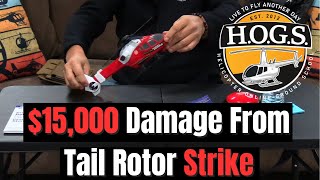
Kenny Keller describes a tail rotor strike that cost $15,000 during an autorotation practice on grass. An overly aggressive flare and a small tail-rotor guard caused the damage. He warns that most autorotation accidents happen early in pilots' careers and recommends instructor-led training over solo practice.
Questions this video answers
About $15,000.
574-767-1797.
December 6, 2023.
Approximately 17–18 years ago (speaker's estimate).
Chapters
Full down auto rotation with the private owner. We come in, got a little too aggressive on the floor, bam, hit the tow rotor, landed and did $15,000 worth of damage. This is why I choose a more conservative flare during the auto rotation is because I have actually struck a tail rotor. We'll say, I don't know, 17, 18 years ago. Of course, a lot of the dumb stuff that's happened or bad things have happened all happened fairly early in my career. And we know it's a fact helicopters get wrecked during auto rotations. Instructor and student, we know this is one of the biggest reasons helicopters crash. And in this particular instance was a private owner. And at that time he was insured by the instrument insurance program. And they really didn't like us doing full down autos. They really only want us to do them if we were training someone for cfi. This is a private owner and I don't mind saying he was pretty well to do. He had plenty of expensive fancy toys, which really has no relevance on the story other than at the end why he wasn't upset over this. One day he said he wanted to do some pull down autos. And I'm like, well, you know, we don't really do those except for CFI training. And he kind of had a good argument. He's like, yeah, well, you know, I'm a private owner and I own the aircraft and I'd like to do them. So he convinced me to go out and do a couple of them. Good news is we were over the grass and and we came in out of this auto rotation, planned to do a full down. He got a little bit aggressive in the flare, I didn't catch it. And we bumped the tail rotor and he put it on the ground. And I said, hey, leave the collective down. I think we just hit the tail rotor. And he's like, really? And I go, yeah, I felt a little bump. I think we hit it. And this was an older instrument, so it didn't have the big heavy duty guard on it had this little kind of wimpy little guard. I exited the aircraft, I go back and look in the grass and sure enough we, there's a little gouge out of the grass, you know, about so wide, the width of a tail rotor about 2 or 3ft long, something along that range. And so I just went back in and said, hey, we did hit the tail rotor. You know, we were across the Runway from the hangar, helicopter felt fine. So I said, let's hover across over the ramp and let's go Tell the mechanic what we did. Of course. Mechanic pulled the tail rotor gearbox off, I think. I think he called Instrom first, and they said, you know, pull the gearbox, pull the blade, send them up here and let us inspect them. Turns out they wanted to end up, you know, replacing all of them, I believe. I remember the bill was around $15,000. And I remember telling the owner, man, I feel bad, you know, I'll refinance my house so I can pay for the damage. You know, it's my fault. I shouldn't have let that happen. And he kind of laughed and joked and said, you know, Kenny, if you want to, you want to play, you got to pay, right? And I'm like, well, I'm not even going to charge you for the flight. Then he goes, yes, you are. You're going to pay me just like you for any other flight. I wanted to do those. You were hesitant. You said, okay. And we did it again. We were. We were laughing today, talking about all the bad things that go on, right? And say what you want. Think I'm a loose cannon and I'm crazy. It's not the case. I've always been super, super conservative and I've been super careful, but things happen, right? People make mistakes. These are the kinds of things that go on. Ultimately, bad things happen in auto rotations, during practice, operating auto rotations. That's why a lot of care needs to be taken. This is why we don't want you doing auto rotations as a student or as a private pilot. We'd rather have you go get instruction from an instructor when you want to practice an auto rotation again. Full downs are kind of frowned upon by a lot of insurance companies. And I get why some people say, yeah, but I want to know how to do it. I want to experience it. And the reality of it is, if you do it right, it's actually easier than doing a power recovery. Once you've seen it, then you kind of understand that. So keep those thoughts in mind. We do have some free PDFs down below. Been talking about these every day. So there's links down below for a couple of books and a maneuver guide. But we wanted to mention this past Thanksgiving ran a special where we have a whole slew of books and can send you everything you need if you're starting from scratch. Many times people say, hey, can I just get all the stuff from you? And for years, we didn't offer that. We now have some packages that you can get through. Contacting Hogs customer service 574-767-1797 and we can hook you up with some either a yearly option or a professional pilot option and send you all the gear you're going to need going through your ratings included in the Hogs backpack. Subscribe and click the bell and we'll see you in the video tomorrow. Peace out.
When you feel the pressure to fly, but know the right decision is to stay on the ground, hit the hogs no go and live to fly another day. Helicopterground.com.