#15 When I almost crashed landing in snow...
Kenny Keller describes a near-crash landing his helicopter in deep snow with zero visibility, then explains the techniques and training needed to land safely in whiteout conditions. He walks through what went wrong on a football field and how switching to a plowed parking lot saved the flight.
Chapters
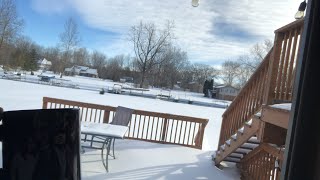
Alright. The most raw video I've ever done in 10 years of making videos, drinking coffee from my favorite cup. So as I'm sitting here drinking coffee, I usually get my best ideas and I'm thinking, alright, here's what I'm gonna do in the moment. No prep, grab the camera and do it. Sitting here drinking coffee, looking outside, thinking about when I truly almost lost my life. One of the top three things in 20 years that almost where I bit the bullet. So looking outside this morning, drinking coffee, thinking about the snow. And of course we do cover this in private pilot ground school. I am Kenny Keller, creator helicopter online ground school@helopterground.com by the way, in case you're new to our videos, I want to show you this fluffy snow out here. It's 19 degrees, so I'm guessing it's probably pretty fluffy. I'm going to give you an idea. Oh yeah, that's pretty darn fluffy. All right. So one of the biggest times that I almost lost my life, we were bringing a helicopter back from New Hampshire to Indiana and we got in a bad spot, we made it halfway, we stayed all night somewhere. But the next day the weather's looking pretty good. But we're, you know, along the lake, right? So we run into some lake effect stuff. We go to a small airport where we think we can get some help, you know, get some fuel, go in, get warm, wait out the weather. And it's a Saturday. This little tiny airport's closed, so we can't get in. There's no car. There's, you know, a lot of airports you can get in after hours, right? There's a way to get in. So we sit there and run the helicopter for a while. We're in a jet Ranger and we're sitting there staying warm, but we're like, okay, you know, we're going to need fuel sometime in the near future. Where's the next airport? What's the weather going to do here to there? We wanted to just stay at that airport, but we couldn't sit there and burn fuel forever. We're out in the middle of nowhere. We're going, okay. This is a matter of getting somewhere, getting safe, getting fuel, getting warm. So we're hoping somebody will come pulling in. We wait like a half an hour. We're sitting there burning fuel, staying warm. Again, there's nobody around. There's nowhere to walk to. There's snow everywhere, can't get in. There's no emergency number outside, had an afd. There's no number in the afd to call anybody out. So we decided to continue on to go to try the next airport. As we continue on, weather gets worse. Weather gets worse. So we just start saying, okay, let's find a Walmart. Let's find a big open area somewhere where we can land, get on the ground and, and get safe. So we go a little further. Weather keeps deteriorating, so we're flying along lower and slower than what I want to be. I'm not comfortable at all. So we see a school in a football field. There's snow on the ground, of course, because it's snowing. That's the reason we want to get on the ground. And I choose to land on this football field. Now, snow is something everybody needs to think about. And there's a couple of methods that I've learned. This is something that you need to think about. And depending on the aircraft you're flying and what, you know, company you're flying with or school you're flying with, they may have a certain technique on how they want you to land in snow. I normally use the start up high and just come down slowly, blow some of the snow away, but staying high enough that, you know, you can, you can watch it until you clear the spot and keep coming down, keep coming down. And I'd done this many times in the past. I'd done it in ems. This particular day I chose, I guess the snow was fluffier than I expected. It was deeper than I expected. I was coming down slow into this football field and I got overwhelmed by the snow. I got disoriented, I couldn't see, and I literally thought I was going to lose control of the aircraft. So I kept my eyes on the attitude indicator, pulled up out of it. But it was one of the most. I got goosebumps telling the story in 20 years. This was one of the times where I literally thought I was going to lose control of the aircraft. And this is the same place that I mentioned in a previous video where the guy come out and yelled at us. We get back up into where we can see with visibility and we notice that there's. The school has a parking lot that's been plowed. So I chose to go to the parking lot. Why didn't see that to start with, I don't know. That's the one where the guy came out, screamed and yelled at us, called the cops, called the faa and it all came out okay. Once we explained and said, look, we needed a place to land, we needed to get warm, we needed to wait for the weather to clear so we could continue on to an airport where we can get fuel. So point of the story, when you go to land in the snow, there's many things to think about. How dry is it, how deep is it? I mean if it's wet you're not going to have near of a problem. If it's frozen over the top, you may just be fine. But how deep is it? What is your technique? Have you practiced this? Do you have a method for landing in snow? So those of us in the northern states, most of us have trained in it, Maybe you from the south and you get flying up north for some reason you've never experienced, experienced this. So this is something that you really want to think about, get some training from whether you're new to this and you're just getting into it and you're at a training school or you're flying for a company somewhere. What is their method? What are they going to use for landing in snow? Because you know it's a white out, just like it could be brown out landing and dust. I had another scare with dust one time. This one didn't get scary though. Luckily it was an EMS flight. It was in the summertime and we were going to do a flight and they want us to land off airport in this parking lot. But it was stone and I pre warned the crew and just said look, I don't know if I like this or not. And I'm not sure how much dust we're gonna get because we haven't had much rain. So we were coming in super slow. There's firemen everywhere protecting the area. When we got, I don't even know, we'll say 100 or 2ft, 200ft above the ground. This, this dust just comes rolling up like crazy. So we flew away. We never got into it. Went to the local airport, ambulance came to the airport and the firemen. After the fact, we all stood around, talked and they, you know, they were like apologizing and I said hey, you guys picked what you thought was the best spot. I wasn't mad at them. I said, you know, I had my reservations about it but I pre warned the crew and said we're going to try this but be prepared for this to get dusty and if it gets too dusty we're going to fly away. So we did that. So brown out, white out, both of these are things that you got to think about. Regardless of who you are, where you're flying, make sure you get with your instructor, your company, wherever you're flying and Find out and practice what you're going to do considering brown out or white out. So let me know down below. Give us comment something you've experienced with brown out or whiteout, a technique you use, a scare you've had, something you did that was wise that other people could benefit from. So we're really enjoying these. This started two weeks ago, drinking coffee. My best ideas come up in the morning when I'm just drinking coffee and thinking about, you know, the day and what I'm gonna do and what's gonna happen. So we appreciate all the feedback. I get day emails daily from people enjoying the videos and also coming up with ideas, things they want to talk about. And I'm trying to hit things just like this that, you know, we hit it in our helicopter land ground school. But this is something I haven't seen really out in the Internet anywhere and thought, you know what, this is a good one. As I'm sitting here looking outside going, yeah, this is one people got to think about. If you haven't trained for this or you don't have a method, it's something that you need to think about. So make sure you subscribe to the channel. Leave your comments down below. Please give us the thumbs up what the link down there. For helicopter online ground school, we have private commercial instrument certified flight instructor. And then we have a big package, the professional pilot package, which is unlimited, includes private commercial, CFI instrument, all of them together. And that's unlimited. Doesn't expire then on the, on those courses, private commercial instrument cfi, we have monthly and we have yearly options. Monthly. Keep it as long as you like, cancel anytime. Yearly is per year. They are membership. So you can, you got a cancel so you don't get billed again. But you get 24 hours on the monthly and the yearly. Take note of this, you can log in and see the entire site. So people say, well, hey, what's what all is in your training. What's in there? Go ahead and sign up. Take a Look. You got 24 hours to remove your credit card and you won't be billed anything. So if you want to try out one of our online courses, go to the monthly or yearly sign up, enter your credit card. You have 24 hours to view the entire site, not just a sample. You can see everything that we have. If you're a normal credit card customer, you just remove your credit card before the end of the 24 hours, you'll be billed nothing. If you're a PayPal customer, you just go into PayPal and discontinue the subscription. So again, subscribe the channel, click the bell. Please give us a thumbs up on the video. Put your comments down below about brown out or snow out? Snow out, white out. There you go. Thanks for tuning in and we'll see you next Video.










