#179 "goal of being a law enforcement pilot" Day 179 Coffee With Kenny
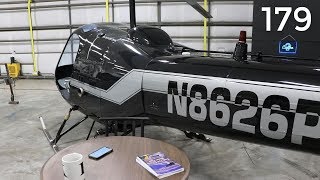
Kenny Keller (Coffee With Kenny #179, July 3, 2019) answers a viewer (Corey) asking how to become a law enforcement helicopter pilot. He explains two common hiring paths — agencies that convert existing officers into pilots and agencies that hire experienced civilian pilots — and stresses that requirements vary by agency/insurer/owner. He discusses turbine-time expectations (calls arbitrary 1,000-hour demands excessive, recommends "as much as you can"), cautions against individual helicopter ownership (Robinson R22) for building time unless financially comfortable, and gives training practice advice (fly ~3× per week, shorter ~50-minute lessons). He estimates 1,500 hours could take multiple years (typical max years ~500–600 hrs if working intensively). The video closes with channel/course promotion and sale information.
Chapters
All right, day 179 this is awesome stuff. Goal of becoming a law enforcement pilot. I like this topic because that was my dream. Didn't get to do it. Still might and we'll talk about that. Day 179 Coffee with Kenny. I'm just finishing up coffee number. This is only coffee number two, believe it or not. Normally I'm rolling on coffee number three. But anyway I was ready to get it going and I like this topic and this is for Corey, I believe. And Corey said usual stuff, you know, he's been watching the YouTube videos and appreciates all that and thank you Corey. He said I'm currently in college. I'm looking back, looking at getting back into law enforcement with the goal being a law enforcement pilot. Great. That was my original dream and hasn't come true. But that's okay because a lot of other dreams have come true. Right. I've accomplished almost everything I want to do in my life I've been able to do. So I'm going to go on to his question here and I want to mention that our operations manager, Brian Rutledge that you don't hear about very often is a 30 year aviator and he is chief guy pilot, chief pilot, chief training guy for a law enforcement agency. So Brian is not only our operations manager, but Brian is also a close personal friend of mine and we talk all the time and have for going on seven years now. And he started out as a member, I helped him get his CFI online and we worked together a lot on Skype and that's way back when I was doing a lot of that one on one stuff. And Brian again is flying at one of the top units in California. And so I get a lot of insight what goes on in the law enforcement area through Brian. And I've also we have quite a few of our members are law enforcement pilots which is awesome. We love that. And so I'll give you the best of my knowledge as not being a law enforcement pilot myself. A lot of these questions though that he asked, some of them are relevant, some of them aren't so relevant to just being a law enforcement pilot. So he says getting back into law enforcement with the goal being law enforcement pilot, I need a total of 1500 hours of flight time to compete for this job where they are experiencing experience, experiencing a huge shortage in. I have some questions I need your advice on. Okay, so I know the comments might get crazy down there. People are going to say all kinds of things. What I do know is I have a video from back day, around day 100 when we just moved into the Hogs hanger, which wow, God, that means we've been here like 80 days anyway. And I got invited out to see the guys at CHP and was trying to try to do that in May. It didn't happen. Now we're going to try to get done here in July. And I did talk to one of the training guys from CHP and he said California Highway Patrol in the next few years is going to have a shortage. And he went in to in that video, you have to go back and find it. I'll put the link down below. I'll find it after I upload this. And he explained what they're going to be looking for with pilots and the amount of hours and their qualifications. So when it comes to becoming a law enforcement pilot, there's two big things that I do know for a fact. A lot of agencies hire from within the department and take a police officer and turn them into a helicopter pilot. Okay, that's one way. Then on the flip side of that, there are law enforcement agencies that hire civilian pilots that have a lot of flight time. And then there's some other variations in there depending on the agency. So sounds like Cory has already got an idea of where he may want to go. He didn't mention where it was, but that's okay. For those of you looking to get want to be a law enforcement helicopter pilot, great freaking dream. I love that dream and it's still alive for me because you never know. I could go in somewhere as a civilian pilot possibly and fly for a law enforcement agency at some point. But having so much damn fun doing what I'm doing right now, it's not really on the top of my priority list. Number one, for those of you wondering, it just depends. So you got to look at the agency you're wanting to go to because you could, could be either way. But they take police officers, make them pilots. Sometimes they want to just hire a pilot who's already got the experience. And sometimes you still have to be a law enforcement officer first. And a lot of agencies will want, say, let's say their minimum is they want you to have 500 hours and a commercial rating. Most of those guys have got that out on their own in the real world somewhere and then got the law enforcement job. And of course, a lot of agencies will require you to work the road for a couple years before you can try to apply for the aviation unit. So there's several of the different avenues on how that Happens. So he said, I have some questions I need your advice on. I need to get my commercial instrument and turbo transition course done. How many hours of turbine time do you think I should have? Again, that's going to go back to the company or the agency you're trying to go to work for. Across the board, it depends on who the agency is, who insures them, do they own their aircraft. There are so many variables. And this whole turbine issue, you know, it's a. It's almost. I don't want to call it a sore subject. And I'll state my opinion on this one. A lot of times you have these big, huge requirement for, oh, we want a thousand hours of turbine time. And I just heard about this recently, and it's with one of our guest instructors who's dealing with this right now. A thousand hours of turbine time is freaking hard to get. When I got hired as an EMS pilot, I had around 350. And when I was talking to the recruiter on the phone, he's like, well, you know, we usually hire, like to hire guys with a thousand hours, determine time. And I'm like, well, man, you know, I got 350. And that was hard to get, right. I had to work my butt off to get that 350. So I don't know what else to tell you. 1000 hours sure isn't going to happen anytime in the near future. And he was like, yeah, that's okay. Well, he goes, a thousand is what we like. I still got hired. When they say a thousand hours of turbine time, maybe that's a. Maybe that's a hard requirement. Maybe it's not many times in the industry you hear a job posting, whether it's law enforcement or otherwise, where they say, 500 turbine, 1000 turbine, whatever the case is. And then a person will go ahead and apply and they'll still get hired. So it depends on where you're applying. It depends on how hard they are on those numbers. Personally, I think a thousand hours is a bunch of baloney. My opinion, a turbine aircraft is easier to start, it's easier to shut down, it's easier to fly. Problem is, you do a lot more damage if you have a wreck or you have a hot start or you damage something. With a turbine aircraft, it's going to be more money and more costly. So that's why they throw these big, huge thousand hour requirements up there. And I hate to think, you know, at my career of 20 years and all the time and hours I have and all the experiences I have even fly EMS for five years. I only averaged, you know, 100 or 200 hours a year. So I haven't even added my turbine time up in a long time. And what if at my point in my career, I wanted to apply for a turbine job And I have 900 and they said, oh, sorry, you need 1,000. Well, that, to me, that another hundred of hours would just be baloney, right? So goes back to insurance and qualifications. And, man. So when somebody asks, well, how many hours of turbine time should I get? All you can scrounge up. You know, get as much as you can. They're hard to come by because they're expensive. So you got to look for your avenues of finding turbine time, looking for ferry flights, finding some guy that owns a turbine aircraft. You can go right along finding some money. Here's one avenue. One of the guys that I trained used to go out to California and ride along in a news reporting ship. And you could fly as a rated pilot and the pilot in command or that had the job of flying the news could sign you off, right? If you're flying and he's just overseeing the flight and you're doing news and you could get those at a discounted rate. So there's some of those things that you can research out to. But hands down, the sad story is turbine time is hard to get. It's just hard to get. So get as much as you can. Question number two. Somewhere along this journey, I was thinking about owning A used Robinson R22 to gain most of the 1500 hours I need. Do you think it's a financial saver if I do this? Here's a big question, like some people, to join in on this conversation and put your thoughts in there, because I've made my thoughts very clear on aircraft ownership. I don't think it's a good idea for an individual to buy a helicopter unless you have money to burn. That's the easiest, simplest way I can put it. I'm not going to say, Cory, that you can't do it. If you bought the right model, you got lucky. But with the Robinson, you got to think about the. The. The year limit on them and the hour limit where they got to go back to the factory. There are so many things to consider with aircraft ownership. Oh, my God. And I've talked about this a lot. And you can go search other videos on YouTube. I have several. I personally don't think it's a good idea. So my gut feeling, Corey, would be, rent helicopters. Build your time. That way I would not Recommend Buying an R22. That's my opinion. To make money with an aircraft, you got to have several of them. And I. I've heard a lot of times over the years people you know buy an aircraft to help build their time. I know one of our ground school members who has been to our offices several times and visited with us, Caleb. He owns his own R22. And, you know, I never really discussed with him financially how that was really working out for him. I know he was using it to build his time and he wants to be an EMS pilot as well. I guess I'll leave that as I highly caution buying a helicopter if you can make it work. There might be circumstances where you could be hooked up with a flight school and lease it to him and make some money with it, or I don't know your financial situation, nor is it any of my business. Just caution you. I caution any private individual I will stick to my guns on if you're going to buy an aircraft, you better have disposable income because the financial hurt it can put on you later is not worth the gamble. I don't think again unless you got money to burn. All right. What is the average amount of hours per day should I be flying to get my ratings and required hours done? I love this topic. I love it, I love it, I love it. Here's my experience. Three times a week is awesome. I think three times a week makes the best progress. And I think a couple times a day. Now you want to jump in and argue the point, go right ahead. That's what I think is the best. Can you fly more? Absolutely. You could fly five days a week. I think seven days a week is too much. I think you need a break in there. You know, you could fly three or four times a day. I don't think it's beneficial. I think when you're flying, you need little gaps in there to soak up what you're learning and let these things kind of soak in. Because a lot of times you go on a flight and you're struggling and you don't really. You can't grasp that piece of aeronautical or piece of aerodynamic knowledge that you're trying to apply when you're in an aircraft. It doesn't make sense to you, and then maybe you sleep on it. The next day you're drinking a cup of coffee and you go, oh, wow. I get what my instructor's been trying to tell me. Wow. So hands down, I think three times a week is best. And I think if you're going to fly twice in a day. I think a couple of 45 minute flights is best. Can you go longer? Absolutely. Can you do less? Absolutely. I'm just telling you what I think. If you were really trying to push to the ratings, you know, four or five days a week, probably good. Again, what else you got going in your life? Are you, do you have another job? Are you full time flying? For most people, they have jobs, they have family, you're going to college, whatever it else is you're doing. So it makes it very hard to fly, you know, every day or five days a week on average. That's the, that's the absolute best. What may work for you could be more, could be less. But it's a great question. I love talking about that. And I'm going to go back to the one hour flight lesson. Corey, when you get flying with these instructors, hopefully they're going to fly you around 50 minutes, 50 minutes, up to about an hour. I'm a firm believer if your instructor is flying you anything over 1.0, he's stealing your money. Now, I'm not saying if you're out working on cross countries and doing other things of that nature, but when you're beating the pattern and you're learning and you're absorbing new material and you're trying to, you know, master this whole thing, hands down, I'm a firm believer. I like being back on the ground or on the dolly at 50 minutes, cooling the thing down so the flight ends up at a point nine or 1.0. You just make the best progress. Not saying you can't go 1.1, 1.2, you can, but that person. I've talked about this so many times. At that hour point, you're, you're, your performance starts to go down. It just does. And I've seen it so many times. I'll argue that point to my grave. All right, what is a realistic time frame? You've seen people get 1500 hours to include those who own their own helicopter. Yesterday's video is a good one. Corey, if you didn't see yesterday's, you should go back and check out yesterday's video. Because I talked, you know, this is kind of along the same subject, but you asked different questions. And it's good because, and I like this video. And I think we've added some more content today that is important, how fast people have done it in a very short amount of time. But 1500 hours, that's going to take you three years. If you're flying 500 hours a year, right? If you do the math, 500 hours is a lot of flying per year. You're going to be needing to work somewhere full time to be flying 500 hours a year. And if you were doing it with your own aircraft, the expense of that 500 hours, just look at what the price of fuel is. What is your aircraft burning per hour and what are you going to spend just in fuel flying 500 hours a year? Not saying it can't. You can't do it. But again, I don't know your financial situation. So that depends on you. Cory. Anyone else would have to look at their own finances. But realistic time frame that you've seen people get, 1500 hours, you know, if you get one, there are certain jobs like, you know, you hear about some jobs in Alaska or some really super busy tour flying jobs, you know, and I've heard of people getting, you know, flying 800 or 900 hours in a year. But man, that is humping it. So I'm not telling you you can't do it. I mentioned yesterday my biggest year was 600 hours. And that was working a job where I worked six days a week. And I was the main instructor to flight school. Everybody else was part time instructors. And I worked Monday through Friday all day at a really busy flight school. And I'd start early and I'd fly late. And I flew so much, even one time the owners were gone for a week. And one day I flew from, I don't know, late into the evening and they came back and like, don't ever do that again. We don't want you over flying yourself. So my, my experience getting 5 to 600 hours in a year, that's humping it, man, that you're going to really be working at it. So thank you. Thanks. Thinking about. Thank you in advance for your advice. Best Corey. Thank you, Corey. And I hope that helps. And I know a lot of you have questions and that covers some more of them, right? You know, some of these things we're repeating from day to day, but that's okay because we're cranking out these videos. 179, I don't expect it. Some people watch them every day. But if you're just new to our YouTube videos, if you're just new to Coffee with Kenny, there's today, as of today, 179 of them. And they range from five minutes to 20 minutes because I talk too much, as my daughter says. So there's so many videos and so many things we've covered a lot of topics in 179 days. But I've been on YouTube 10 years. If you just found me, I've been on YouTube for 10 years. Okay, so we have over 600 videos on this channel alone. And I've got another channel I'm going to start working with because some people are finding an old channel of mine that has my name on it, but it's not really a current channel. And anyway, more than more information, you need to know. So Corey, hope that helps. Please, like and subscribe. For those of you that haven't, when you subscribe, click that little bell. That way you're notified each day of the daily video. That way you'll know what's going on. You'll get a notification from YouTube, hey, you know, ground school's going live in 30 minutes with such and such. And then you get another notification when the video premieres each day. I love doing this. It's been awesome. I am Kenny Keller, the creator Helicopter online ground school. We have private commercial, CFI and instrument courses online over seven years. They are available for FAA wings credit. We do have written test practice. We do have Robinson R22, Robinson R44 and instrument specific training inside those. The private commercial. The private, yeah. Included with the private or commercial or CFI memberships. Very simply, private is private. If you get the commercial, that includes the private. So you can go through the private material first because every commercial pilot needs all that basic knowledge. Then go through the commercial stuff, CFI that includes private and commercial. So you can go through the private, you can go through the commercial, then you can go through the cfi. That's how that tier works. Instrument is a standalone. That one's separate because some people get their instrument rating in between private and commercial. Some wait till later, some just get a private and then do instrument. There's a whole variety of ways that people approach the instrument rating. So that's a separate membership level itself. And we combine all those into what we call the professional pilot membership that does not expire. So the, the individual memberships, private, commercial, cfi, instrument, you can do those monthly or yearly, or you can do the big professional pilot where you get it all, you keep it. So if it takes you four years to get your ratings, five years training is there for you. And because it's July 3rd, 3rd, we are on day three of six or seven day sell, sell in Sunday night. This is July 3rd. So Sunday night at midnight, our sale expires. And I've been talking about the number three this week. I love the number three. It's my lucky number. And I could go on and on about the number three. And I decided this July sale, I made the sell up on July 1st just while I was doing the video. I'm like, let's do a sale. Let's do 33% off. It's a great deal off the yearly memberships or that big professional pilot membership. I'm going to put the links down below so you can go straight to the sales page for any one of those. That's for yearly or professional monthly. It's already cheap enough. Sorry, we can't discount it. It's just too cheap. 49 bucks a month for the private level. 120 videos over 18 hours of training, written test, practice. $49 a month. Pretty darn cheap. So we have that yearly membership for any one of those levels. And then the big professional pilot package. Those links will be below. If you just find your way to helicopterground.com you can use the code 33OFF3 3OFF to receive 33% off any of those memberships I just mentioned. So I appreciate all of you. It's been a blast. Having a great day. July 4th is tomorrow. I'll do a video because I'm dedicated every day for 179 days. I'll think up something for tomorrow, find time with my day of screwing off at home playing with my pontoon and my speedboat. Yeah, that's right. All right. Hope that helps. Like subscribe. Click that little bell when you subscribe. Put your comments down below about today's video. Ask your questions and just keep answering them. I'm working through them the best I can trying to keep everybody answered and keep this coffee Kenny with thing going. So see you tomorrow on the 4th of July. Have a safe evening and safe tomorrow or safe anytime you happen to see this video. Peace out. See you in day 180.










