#2 Helicopter Tree Sawing SAFETY PRECAUTIONS for the public and environment
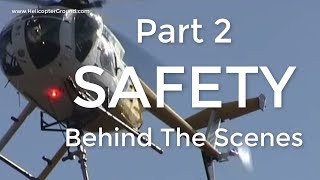
A filmed conversation (Kenny Keller with utility personnel) about helicopter-assisted tree sawing for power-line vegetation management. The speakers explain why helicopters are used (speed, reach, and reduced ground danger), outline preparatory logistics (scouting, mapping, dispatch coordination), list safety measures for the public (road closures, flaggers, driveway/house watchers, advance notifications, 200 ft rule), and describe crew/equipment support and maintenance cycles.
Questions this video answers
The helicopter doesn't fly within 200 ft of a house.
No — they do not fly during hunting seasons (to protect public safety).
627.9 miles.
Every four years.
Within 15 feet of the right-of-way.
Chapters
Ready to catch anything that falls in the road. And once it's all cleared up, we will reopen it to traffic so we can best set them up, Find the best plan of attack, where to put them, if it's not. If it's supposed to be bad weather and the roads are rough, we're going to put them on the off road pieces where we don't have to stop traffic. When the weather and roads are in good conditions, we're going to set up flagging operations, put signs out. We're going to have flaggers posted on each end, stopping traffic. The eagle will come in, do its work. Crews will be ready to pounce on anything that falls in the road, get it cleaned up, get traffic reopened, all just to keep the power on and safe.
Awesome.
Green back up and it'll just look like a nice trimmed hedge all the way up through there.
It's a pretty road right here. Oh, this is pretty cool.
Like that right there. That goes back up in there and goes up about three spans, turns to the left. Used to feed that coal mine.
There's a coal mine in there somewhere.
Up on top of that hill. It's a real old abandoned one. And it's still hot. The power's still up there. Just because he never took it down, it's still hooked up. And so we still have to maintain the lines. Go through there, trim all that stuff down, he'll pull back some of that overhang. What he's gonna do in about 15, 20 minutes in there would take probably about 10, probably about 20 hours worth of man.
Wow. Now there's the point right there. From all the people that say, oh, you send the guys out with a bunch of chainsaws, It'd be more effective than that. Yeah, that's exactly the point.
What he gets done back in there because we can't access equipment in 20 minutes, will take about 20 man hours. And those 20 man hours, putting the men on the ground in danger Whenever you work around the power lines is danger. So it's also from a safety standpoint, because the biggest thing, like I said yesterday, is to make sure the men go home at night to their families.
That's a perfect example. 20 hours of work, 20 hours of manpower, and the danger. 15 minutes in a helicopter.
Yep.
Nice reload.
In the past, you'd have it curving in at the top, but because they hit it with the helo, it goes straight up and down.
Gotcha.
Which prevents what we. That's referred to as overhang and overhang. Whenever they get snow or ice loads, they're liable to break off and fall on top of the power lines, taking them down, blowing the fuse, putting people out of power. And then when the power is out, we have to send linemen out, which is another added danger because we're putting the linemen at risk, which is why we're aggressive at maintaining the power lines. From a vegetation standpoint, it's all about safety and customer reliability. Trees are biologically set up to repair themselves after damage like this. Anything from a limb breaking off a saw cut. All the saw cuts we make are ISA certified, which the tree will regenerate and rebalance itself.
And that's the biggest objection to the first video that we did where people were saying, oh my God, you guys are just out murdering trees. And that is not the case by any means.
No, it's all about increasing electric reliability for customers and preventing safe environments. If a tree falls on the line, it's not safe for anybody. If there's a power line laying on the ground, a kid, an animal gets into it, they can put their life at risk. By eliminating these off right away. Hazards and any limbs that could come in contact with a conductor, we're alleviating potential risks to the general public.
Getting to be here behind the scenes and seeing everything that goes on is just amazing. And the amount of work that it goes, that goes into the whole operation. You know, people see a helicopter flying around cutting trees. They don't real. That's almost in the hundreds, right. Of people involved in the ground. For everything that goes on. For what you're doing, easily there's a couple hundred people probably at least, right.
We start man hour wise. It's incredible the amount of man hours that goes into preparing for the ELO and the man hours involved with the ELO on the ground is astronomical. We started having meetings about this months ago to prepare for it. I've had crews out driving out these lines, pinpointing exactly what needs done, finding any potential hazards out there so we can flag them. The line department is notified. I've spent hours behind the scenes letting the line department know what's going on. We have to log on to dispatch so they know we are out here so nobody else can come out and work on the power lines.
Yesterday you told me about how you sent out a mass phone call and it leaves a message to anybody in the area that what's going to be happening so that people aren't freaked out when the helicopter comes in the area and the crews come in, they. They've had A pre warning that you're coming in. So it's not just out of the bl. Yes.
A foam blast is sent out to everybody who lives in the area. And on the foam blast, we state the aerial salt will be in the area, the potential hazards, the work that will be performed to clean it up, and any safety information, such as staying away from the helicopter, not crowding the work zones.
And then earlier you were telling me about how you place people up around a home when it gets anywhere near a house. You've got ground crews standing there to make sure nobody comes walking out of their house and gets hit by flying debris or anything. Everybody on the ground is being taken care of.
First of all, the helicopter doesn't fly within 200ft of a house. And then if the power lines are within, let's say, a couple thousand feet of a house, we will send ground crews in to stand by the house to make sure no pedestrians come out. And because people are curiously interested in helicopters. It's human nature. Absolutely.
They always talk to. They flock to helicopter.
Absolutely. But we need. We have men there letting them know the potential dangers and to remain out of the work zone and in a safe area behind any house, structures, buildings, businesses. He'll cut these limbs back here. And then we're going to send ground crews to follow up to remove any woody species of brush which, as you can see, are growing up in the conductor. If they make contact with the conductors, they can become energized, which will present a safety hazard to anybody walking in that right away. Once again, it's all about public safety and increasing electricity reliability. That dead tree up there, which would be unsafe to put a man in, which will has the potential to fall into the power lines, taking out hundreds of people. The helicopter can come in, take the top out of that safely and effectively in a timely manner, saving. Saving the general public money and saving potential outages. There he is right there.
Nice. Oh, here he comes. That's cool. He just happened to come start working up there as we pulled up to look at it.
That dead tree right there is a prime example. You see the one I'm talking about?
Yep.
We can't put a man in that safely. We can't get equipment to that. The helicopter can take the top out of that.
Nice. So that was really cool. Just as we pulled up and he showed me the kind of stuff he's going to be cutting. Then all of a sudden, here he come up over the. Over the top of the hill. That's cool.
Right in the Middle of the right of way, the edge of the yard. There is a satellite dish right in the right of way.
Okay, I'll check it out. I might not even be able to get that close. We'll see. But yeah, I'll sink that way. Awesome. And this is where you're gonna be watching the house. Make sure nobody comes out. Or if they do, you can pre warn them that, hey, there's a helicopter out here.
I'm gonna stand and make sure the pedestrians don't get into the work zone.
Nice.
See where I'm at right now? On your right hand side of the line, there's a big dead tulip poplar. Can you anything with the top of that about halfway down this hill?
Yeah.
Thank you very much. Shooting in the middle. Get some road footage.
Season the jets in the background. I just wanted to catch how you're stopping traffic when you need to.
There's different types of foresters. I'm a utility forester. You got procurement foresters. You have city foresters. I'm a utility forester. We manage power line, any veg utility. We manage any vegetation around our power lines. Dead danger trees. Keeping our right of way maintenance, which every four years we come through on a cycle to trim out any trees growing within 15 foot of the right of way of the tree. We remove any brush growing under the trees. Under the trees. Sorry, I got distracted by the dirt too. Remove any brush growing under the right of ways in the right of ways which can potentially grow up in the the power lines. Like I said, anytime any tree or brush comes in contract with a conductor, it presents a huge safety hazard to the general public.
Well, it's incredible. I mean, I'm just thrilled to get to see all this behind the scenes. It's freaking amazing. Absolutely amazing.
It's cool stuff. And like I said, we started prepping for this weeks ago. We started preparing for it. I had guys out in this circuit last week, Walter and Dennis. They drove this whole thing out. They know this circuit like the back of their hand now. And the reason we prepared so thoroughly is I have guys walk in and drive in every bit of this line to look for any hazards that may exist that the pilot might not necessarily see from the air. We know about them on the ground. We have a map of the entire circuit and it's all mapped out and marked on there before he even gets on our property. The amount of ground crews we need, we always need ground crews for flagging, setting up signs and stopping roads. It varies the amount of ground crews we need varies day to day, depending on what we have planned for him to trim that day. If he's doing a lot of off road stuff where there's not as much maintenance, I mean not as much cleanup and shipping, that means we don't need as many crews. We have more crews out here today because he's doing a lot of road work where we need. As soon as it hits ground, we send crews in to clean up, clear the roads, chip any brush that may be in the road, clean up the yards, tidy everything up for the landowner so it looks good as well as so the quality of work looks good. And the general public is happy because customer service is number one.
How many people are out today supporting just today's tree sawing?
Today we have Dennis and Walter, who are we kind of call them our engine and caboose, kind of like on a train. They're kind of running the show, telling them where to go. And flag. We have three, we have two bucket trucks and one manual truck out. The manual truck has three men, it's going around and chipping all the stuff. The other two bucket trucks are helping chip where needed to help them flag and put up signs, move signs around.
There's a lot more to the safety end than what they see with. They just see a helicopter flying around cutting trees. They don't see all the behind the scenes safety stuff.
What you don't see is even though the road shut down any house, let's say the power line's running behind houses, near houses, we have the road shut down. We have a man in each driveway standing by the house to make sure any pedestrians stay out of the work zone. The helicopter doesn't fly or cut near houses. But we still put men out there. Just because people are curious of helicopters, we don't want them wandering into the work zone. We have eyes everywhere. People just see a helicopter flying. And what they don't see is a weeks preparing of guys walking these lines to look for any hazards. Deer stands, fence rows, swing sets, anything like that that may be out in the right of way. Right when you have a right of way running through the middle of the woods, you have a natural clearing. People do stuff in natural clearings. They put tree stands on the edge of right away, stuff like that. We have guys walking those right of ways before the helicopter even comes in to ensure safety around here. It's a big hunting. Hunting's big down here. We don't fly during hunting because of people in the woods. Right, There you go.
Because I know somebody made A comment before on our first video about, oh yeah, some poor deer hunters out in his tree stand and he gets sawed out of the trees. Somebody made that comment.
We do not fly during hunting seasons for the general public safety. Where we are flying is mainly off road where people hunt. So we do not put men or a helicopter in the woods during hunting season. We don't want to endanger our workers or we don't want to endanger the people hunting. How you want to look at it is cost per mile. For example, this year in my area, I have 627.9 miles of power lines we have to clear. Some of those miles are open, other miles are buried. We need to look at cost per mile, how much we spend per mile. And the stuff the Hilo is getting is the hardest, nastiest, unsafest stuff for the men to get right.
I can see that. I can absolutely 100 see that.
Like each week I figure out how much we spent per mile the previous week.
Levi's got a beacon now.
Well, you might see a logging road up there. And I do know you probably could get a pecan up to some of these.
What's your lip limit on that? You set it down.
I wish I went. No, can't do that.
No, no. You're doing a hell of a job, man. We appreciate it.
Yeah, no, I'm gonna go do it again.
11.
So that puts about 1231.
And then we'll have plenty of time.
To do a shitload of back. We're covering ground. So I'm stoked with just that huge off road section. There's like 22 spans or something up there. Yeah, that's a ton of work.
That's why we wanted to heal over this circuit safer. We didn't have men in those trees. Nope. Climbing around power lines is dangerous, especially dead trees.
And I just pounded them.
Yep.
So we got 22 spans. Took the fellas a week and some to work it. Last time I just knocked it out in two hours. Helicopter's worth it.
That's what he was telling me. 15 minutes saves 20 hours of work.
Every bit of it.
Every bit.
No one's hurt and safe hours safety. All right, after we do the road closure here, we're gonna. Once we bury it up, we're gonna send you up to the off road, set up. They did all that, cleaned up. I'll knock that out. They're not ready. I'll jump to this off road.
I'll have her man to each single face taps reading the house to make sure no pedestrians come out.
Perfect.
All right, Good work, boys.
Nice. It.










