#275 "adamant to get this thing airborne no matter what" - Coffee With Kenny
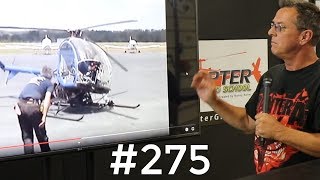
Kenny Keller (Coffee With Kenny, day 275) reviews a helicopter accident clip, praising contributors added to his “Hogs Wall of Fame,” then gives a chronological, safety-focused critique of the footage. He highlights concerning maintenance/ground-run practices (oil leaking, smoke, welded strut vs. oleo strut, vibration), risky crew/bystander behavior around spinning rotors, and the casual attitude heard on the audio. The host emphasizes proper preflight/run-up discipline and cautions against complacency, especially when filming or training.
Chapters
We're going to take a look at this accident in just a minute. We're going to watch a video of the events leading up to it. But first, I want to share a clip of this morning Heather putting up a big addition to the Hogs Wall of Fame. And this is it right here. She added all of the helicopter line ground school instructors, which she came up with that idea and I thought it was a great idea and it ties the wall together. So this area is all now complete. Now we're getting ready to move to another wall. How freaking cool is that? So thanks to Heather today on the Hogs Wall of Fame, we've added our instructors. We have Tannen Austin, who appears in our instrument online course. We have Holly Gardell, who is in a slope video, a weather video, and in some of our CFI training inside the certified flight instructor membership. And she's also one of our guest instructors, Dave Redmond, who appears in our aerodynamic videos. People absolutely love the presentations that Dave built. He has a real distinctive way of explaining things and people have absolutely loved his videos in the aerodynamics section. He also helps in the R22 preflight and he has a couple other videos that are really, really cool and really popular on manifold pressure. And one other one that are kind of very distinctive videos. Brian Rutledge, our operations manager, appeared in several videos including a presentation on double imc. Inadvertent imc. Chris Hauser, who trained with me for private commercial and certified flight instructor, now one of our guest instructors, appears in several of our videos, has been on live training Tuesday with us. We highlighted Chris in three videos during the Coffee with Kenny video series. And we have Dr. Nick, Gloria and myself, which Nick's not an instructor, neither is Gloria, but they're both important part of the videos. So they went along with me on the Hogs Wall of Fame. Nick owns the beautiful black instrument cream puff that we love so much. Then we have Dan Taz Christman, who I Keep bragging about 2018 Flight Instructor of the year in our instrument course. Currently building a new weather course. Just did a 45 minute presentation on selling of power that's going into online ground school. Austin BOA young man, double I. Really impressive. He's in the Robinson R22 videos. He specifically does the rotor system and is also appears in our aerodynamic videos. Super sharp young instructor. And we have CFI Sarah Green, who appears in videos in our certified flight instructor section, talks about the R22 specifically. And David Sipes, who also helped in the R22 pre flight videos. Those videos are amazing. David Austin and the other Dave Redmond did a phenomenal job on the Robinson R22 videos. So I have to thank all the Hogs instructors along with all of you viewers, members, followers, likers and commenters. So let's talk a little bit about this accident. And this is going to be kind of a, I guess a little bit of a review. And you can read down below this video what the author of the video says about that day. He was doing the filming. He did get hit by debris from the helicopter. He does in that description explain where it took place and a little bit about behind the scenes of what went on that day. I want to review just kind of at face value at what we see. I'm going to try and do it in good taste, but they're just, I want to point out the things at face value that I see that immediately make me go, what's going on here? So again, you can go down below to get the link for the original video and see what the creator of this video had to say. So the first shot, the guys out there wrenching in the hanger getting things ready to go. First thing I'm curious about and you can tell me if you know and I don't. You know, I've often checked leading Lagon blades for many years on instruments and Schweitzer's, but I never had anybody hold the tail rotor while moving the main rotor blades. Maybe that's, maybe that's something normal. I don't know. At least we are out here doing somewhat of a pre flight, looking at things, checking things over. So that's good, right? That's nothing really too scary there. I do want to say if you go visit the original video and listen to the audio, you'll hear some things that are said during this video before and after the crash that just make you kind of wonder why are people just so like lackluster and laughing and joking. It just kind of, when you hear it, you just kind of go, man, were these people taking this very seriously. Just my opinion. This first guy, he's up there talking to his buddy in the helicopter. Okay, cool. But when he walks away, isn't even duck. And I realize the blades aren't moving yet, but the engine is running and he's starting to run up. And just as he walks by, the blades start spinning just past. So yeah, they're not spinning yet, but just standing up upright, no kind of duck whatsoever. And they start moving immediately. That just looks a little off. I'm so paranoid. About rotor blades. And we've been doing these videos and talking about people getting hit in the head by rotor blades and tail rotor blades. And it's just a danger that I've been wanting to push because of. It does happen, and it usually happens from someone not thinking and happens with trained crew members, not alone the general public that don't know any better. This tail rotor back here gets invisible at some point. You can't even see it. So I'm gonna stop for just a second. And some of this point out in the comments, they've replaced the strut that normally goes here with a solid brace. Now, if that's acceptable, go ahead and tell me that that's an acceptable practice. I've never seen it, doesn't mean it's not. But the Enstroms and Schweitzers I've flown, they all have oleostruts and oleo struts are designed to work with the rotor system and the elastomeric dampers or hydraulic dampers, whatever any maker model has. But they all work together to make the helicopter operate. And we know if something is not right in the rotor system or in the oleo struts or with the frame of the aircraft, it could cause an imbalance and could cause ground resonance in a fully articulated system. So I do have to question, why do we have a welded strut? And I know it's in the comments below. If you're a maintenance professional and understand that, why they did this and why it's acceptable, sure, I'd love to hear about it, but just I've never heard of that, so I wonder about that. I will mention that everybody's okay in the end of the video. Nobody's injured, so that's good. Other than, I think, already mentioned, the photographer does get hit by flying debris, so that is a concern. But at least the guy's okay, right? I always want people to walk away as we get going. You'll notice there's a lot of vibration there on the ground. Now, like, the instrument will do that when you go to pick it up, but not just before you start getting light. It doesn't do that. So we've got a lot of vibration going on here. Right? No absorption struts down there. Okay. Right now we got one fire extinguisher out there, which is great, but it should be back a little bit with personnel, I would think. Not that close to the aircraft. Just saying, oh, there's two of them. So we got two. And everybody's hiding behind the wood over here. Okay, that's cool. But you can tell maybe they're being cautious, right? They're hiding and leaving the extinguishers out here. Alright, I'm letting some more time pass here in a video. And now we got smoke coming out. Okay, so first sign, when you do have mechanics watching, usually they're going, hey, hey, shut it off. Right? So we got smoke rolling off here. Now if you just had done an oil change or something. But look below on the ground. Okay, we're at 446. We've got oil on the ground and we've got smoke coming off the aircraft. I've done a lot of maintenance flights over the years and I've picked up helicopters of course, many times after maintenance and usually the helicopter mechanic will come out and usually you do a run up and usually they want to let you start it, warm the engine up, maybe sometimes shut it down, take a look in the engine compartment to see what's going on or at least be out there with you. Very common practice that we've done in the past is fire them up, warm them up, maybe even pick up the hover and set it back down and then shut everything down. Mechanic come out, open the engine compartments, take a look, see what's going on. So here's the first indication of a problem where we got smoke coming off and we got oil dripping on the ground. But we've got personnel around, right? And I'm assuming some of these people are maintenance personnel. So that's. This is at 4 minutes and 46 seconds where you first start to really see it while I let it roll. I know anybody can sit and critique a video, right? But this is why you got to be thinking about you should always be doing the right thing anyway. But especially do the right thing when cameras are around, we got more smoke blowing out, cameraman's gonna move and I'm sure he's wanting to get a look at that oil, okay? A really big puddle of oil on the ground at this time. And you got a guy over here looking at it, right? So this guy over here, he sees it. These other guys have to see it. This guy looks like he's gonna grab the fire extinguisher maybe. Okay, so we got at least one, two, three and a couple more people over here. We're still running 5 minutes and 26 seconds. So we're still running a minute later. Look at this smoke blowing out, oil blowing out. Why are we not done? What is the point? I know the origin or the creator of this video. Says in the comments that they all had the attitude that this thing was going to fly no matter what. Well, that would usually be kind of a dangerous attitude to have. So we got observers, and here goes the ground residents. And again, luckily, he's okay, right? I'm glad the guy's okay. But debris flies everywhere. There goes the big poof. Now we've just destroyed an aircraft. 6 minutes and 1 second did we have. Now let's go. Just. Let's all go walk up by the rotor blades and tell rotor. And then just hang there and watch. Little soon maybe. I mean, their friend's okay and I'm glad he's okay, but. And then this guy. Oh, I'm gonna come up and take a look. We got 1, 2, 3, 4. So we got at least five people out there and we're all watching the helicopter half hanging over. And I think he says, get away. I did hear it. You'll hear in the audio where at some point they say, get back. So let's all rush up to the helicopter that's half destroyed. Who knows what else may fly off. It just kind of makes you wonder. It just really kind of makes you wonder. So there's a few. Quite a few more minutes left of this video. They go out and they start talking about it, and there's a lot of laughing and joking going on. And, you know, maybe that was just, you know, relieving stress because people were stressed over it happened, but it sure doesn't sound like anybody really took it super serious. And I personally find helicopters a very serious business. Tail rotors and rotor blades spinning, Flying a helicopter after maintenance, flying a helicopter anytime. I think it's serious business. And if an aircraft was just destroyed, I'd highly doubt I'd be out laughing and making jokes and making light of it. Got a guy walk around the backside, the blades are still coming around. But I'm just always surprised the amount of people that have no problem getting up near a helicopter. And did you see the size of the oil spot? And in here, in the audio, you can hear them talking about, oh, yeah, well, this is where it was dripping from. And it was dripping down on here. And, you know, it's like, well, we all sound like we know what's going on, but why did anybody not just stop that? Why didn't they call it off? And I remember, I think even the audio, the. I don't think anybody let the pilot know that it was dripping oil like that, because I. If I remember right, I heard in the audio, like, well, yeah, you were dripping oil. He's like, what? So, all right, well, hopefully I wasn't too critical on that. I was just again calling out the things that caught my eye watching the video. Maybe there's good reasons behind everything that went on that I just don't understand. And if so, that's great. But the video again, has been out there for many years. I did try researching the accident report and I couldn't find it. But again, there is information in the description box below. I'll put the link below for the video. And of course you're welcome to read the comments yourself about what people are saying about that video. But I guess today I want to take away, you know, we know what the right thing to do normally is, right? And sometimes as human beings, may we ever cheat just a little if we think nobody's watching? Maybe some of us, maybe once in a great while you might sneak something past somebody, but we know that's not right. You should be a safe and prudent pilot all the time, no matter what, whether anybody's watching or not. But this is back in 2008, right? But they knew the camera guy was there. Obviously it was okay. So when you have an institution where they're doing training and you have a lot of people around and you've got a camera guy there that you're letting move around, would you not think that you would be on your absolute number one best behavior? And in this day and age, you all know what's going on. There's a cell phone in everybody's pocket. Smartphone, there's. There's a camera in everybody's pocket. So keep that in mind when you're thinking about pulling something off that you're hoping nobody's gonna see because you just never know. Alright, that wraps up day 275. Again, I'm using the Schweitzer cup today in honor of Dan Taz Chrisman, who is author of the Amazon bestseller top 10 checkride tips. Along with me, Kenny Keller, creator of Helicopter on Ground School. We're really proud of this book. If you're getting ready for checkride and you want the 10 best tips that we put together with our years of experience on things that we see people screw up, go down below and you can get it for just shipping and handling. And if you want some help preparing for written, oral or practical for private commercial CFI instrument, go to helicopterground.com below. Did I mention that this is Amazon, everyone bestseller? And that Taz Christmas 2018 Flight Instructor of the Year. Impressive stuff. I'm very lucky and honored that Taz has chosen to not only be my friend, but work with me with helicopter online ground school and prepare videos. And as I mentioned earlier in the video, he's doing a weather section right now. He has a new Selling of Power section that I'm editing and gonna be putting in the next few days. Lots of awesome stuff going on. Subscribe the channel. Click the bell so you'll be notified of our daily video. This was day 275. Tomorrow's 276. No sign of stopping anytime soon. We're having a blast. We enjoy it. Give us a comment. Subscribe, click the bell. We'll see you in day 260. 270, 276. It's getting hard to keep track at this point. All right, heading out. Peace out. It.










