#282 Helicopter Landing - 200 ft per minute or less, or your Fired!
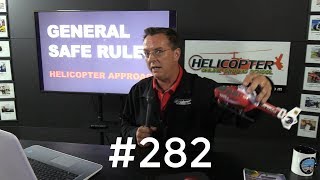
Kenny Keller explains how to avoid vortex ring state in helicopters: keep 30 knots airspeed until your descent rate drops below 300 feet per minute. Some EMS companies enforce an even stricter 200 feet per minute limit. The hazard happens when descent, power setting, and low airspeed combine.
Chapters
Day 282 copy with Kenny. Today I want to talk about the general safe rule for flying a helicopter approach. And this is a follow up from yesterday. Taz Christman, 2018 flight instructor of the Year, presented yesterday a big long presentation on selling the power vortex ring state Richard recovery technique and how different countries and different places use the terminology. And we went through, he went through all that stuff about a 45 minute presentation. It's really long, but there's a lot of really good information in there. So I wanted today to follow up with what you do to keep yourself out of these situations. If you learn the general safe rule, this will keep you out of these problems. So let's go through it real simple. A lot of schools are teaching this, A lot of people already know this, but I come across a lot of people that are out there, radio pilots that have never heard of this. So again, this is a general safe rule. This is something you can use, something you can use. And there is a fudge factor built into that. So just understand this is for those that want to be conservative and keep yourself out of trouble. So let's go through it. If you keep a minimum of 30 on your airspeed until your rate of descent is below 300ft per minute, this will keep you out of those dangerous situations we talked about in the beginning of the video. If you follow this general rule on your approaches, you will not get into selling with power or vortex ring state, whatever it is you call it in whatever area or country you're from, you will not get into it. So there's three situations combined together that you want to avoid. Number one, rate of descent, a 300ft per minute or greater when you're using 20 to 100% of available power and your airspeed is less than ETL effective translational lift. So real simply on the number one rate of descent, 300ft per minute or greater. So we're judging this by our VSI. So 300ft or greater is where this becomes an issue. If you're below 300ft per minute, you will not get into these dangerous situations greater than that 300ft per minute, possibly. Number two, using 20 to 100% of available power. So depending on what aircraft you're flying, there's different gauges, whether it's torque or manifold pressure or whatever. This is just in an instrument helicopter showing that we're using power. Number three, airspeed less than etl. ETL is effective transitional lift. The helicopter bible tells us it happens somewhere between 16 to 24 knots so if you're at zero airspeed or below 16 to 24, you have a high rate ascent and you're using 20 or more, you could get into it. So those three things combined together were covered yesterday in Dan's presentation. But the one thing he didn't cover was the general safe rule on how to avoid these situations. So if it makes sense to you on these approaches, keeping that airspeed above 30 until that rate of ascent is below 300, that is keeping you in a safe area with some fudge factor built in, that's going to help you avoid selling the power and vortex ring state. So again, a lot of you already know this. Love to hear about it. If your instructors are already teaching you this, I'd like to hear if you haven't heard this rule before, again, it's just a general safe rule. There's no reg that says you have to do this. And for the whiners that are going to give some reason why they hate it or don't like it, that's fine. This is a safe rule. I live by it, and that's why I live by the VSI on all my approaches. And I was just trained this way and I've always flown that way. And I can tell you it worked out really well in the EMS environment when the chief pilot walked into the room and said, all right, we're going to have a discussion here, we're going to tell you guys something. This was indoctrination to a new company. And they said, we're going to tell you something. And then I'm going to walk out of the room and let you guys discuss it. And then I'm going to walk back in the room in a little bit and we're going to talk about it. And he said, flying for us at this EMS environment, all of your approaches, and we don't care where they're at, hospital, wherever, airport, your approaches will be 200ft per minute or less. That's it. All right, I'm gonna give you guys time to talk amongst yourselves because I know this is going to be a heated conversation. So he leaves the room. Those of us taught with that super slow approach, we're all like, okay, yeah, we can do that. That's not a big deal. But then you got another part of the crowd trained differently who were upset about the fact that they wanted the approaches 200ft per minute or less. So we get our chance to, you know, talk amongst ourselves and argue back and forth, and we'll say 20 minutes later or so. Chief pilot walks back in and he's like, all right. And he give a couple people a chance to give their reactions to this rule. So gives the, you know, the pilots the opportunity to speak about it. And then after taking the, you know, opinions of several of the pilots in the room, as the chief pilot, he says, okay, here's the deal, guys. You will fly your approaches 200ft per minute or less, or you won't work for us. That's it. No arguing. That's the way it's got to be. See ya. And he walks out. 10 days of training. Chief pilot was there for one day and that's all he really talked to us about. Everything else was handled by Czech airmen. So it's pretty serious when the chief pilot comes in for one day of training and it just basically says, this is the way it is, guys. So just a little bit of backstory on how that super slow approach, the idea is, and in the EMS environment was if you're always at 200ft per minute or less, anytime you're coming in to an accident, a hospital, anytime you're landing anywhere, there's plenty of time for you as the pilot to see a danger. There's plenty of time for your crew member to call out wires, tree, obstacle, whatever. With a real slow approach, you could stop if you needed to, you could fly away. You could say, okay, yeah, oh, the tree on the right. Yeah, I got it, we're clear, we're still good to go, and then proceed on in. So there's a little bit of rule, a little bit of real world. I didn't make that up. That came from the chief pilot and one of the largest air medical providers in the world. And this is an argument that goes back and forth. Love to hear your comments down below because this ought to be a good one, because I know this can be a heated argument. I'm not arguing. I'm giving you the general safe rule for flying your approaches. So that presentation yesterday, that's Dan. Taz Christman. He co authored this book with me. Dan is such a great instructor and obviously is, or he wouldn't have won FAA National Flight Instructor of the Year. The presentation yesterday was really technical, but he also gave you a lot of just kind of laid back explanations on some of the things he talked about too. So go back and catch that from yesterday. Dan goes in depth to sign with power vortex ring state Richard recovery and talks about the differences between countries and the FAA and the military. And there is some confusion. I don't know if you want to call it confusion. There's just different ways the different agencies approach the whole selling of power vortex ring state. And we can hope that this is going to change in the future and everybody can kind of get on the same page and it'd be nice to get to where we all know exactly what it is and that most everyone agrees and hopefully we'll get to that point. So leave us a comment down below. Top 10 Checkride Tips Dan Crispin did that along with me and we're really proud of this book. You can get it link down below. We've already bought it. I still have a big pile. We order them every couple months we order a big shipment of both this and helicopter checkride and we keep them in stock. And then Heather usually works Monday through Thursday. That's her job. First thing her priority for each week is get book shipped. Any book orders that comes in, she takes the order. If there's any problems with addresses, she contacts people about their book and she actually emails everybody I believe and emails all new members to helicopter on ground school. So you can also go down below to helicopterground.com and go take our training for a test drive, private commercial, CFI or instrument. All those courses are down below and available@helopterground.com so again, top 10 checkride tips shipping and handling we ship you the book. All right. Subscribe to the channel. Click the bell so you're notified of our daily video. Day 282 Knocking the mic with the coffee cup. Still enjoying it? Put your comments down below. What else would you like to see? We've covered a lot of topics in 282 days. Not that I'm running out because I don't think I'll ever run out. There's always something to talk about. There's always something new and there's always something to talk about. Sometimes it's not new. Sometimes it's stuff that we just need to repeat and re renew in our minds some of these things that help us stay out of trouble when flying helicopters. So subscribe. Click the bell when you do to be notified of the daily video. Leave your comments down below. We'll see you in day 283. Peace out.










