#288 The Path to Professional Helicopter Pilot
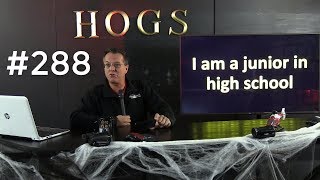
Kenny Keller outlines the path to EMS helicopter pilot: start with private pilot training, get an instrument rating (required for EMS jobs), then commercial pilot and CFI certification. Total cost runs around $100,000, and you'll need roughly 2,000 flight hours, which takes 3 to 5 years to build.
Questions this video answers
About $100,000 (conversational estimate).
About 2,000 hours (typical target).
Work as a Certified Flight Instructor (CFI) to build hours.
Instrument rating (required by most EMS helicopter pilot jobs).
Around 35 years of age (statistic cited conversationally).
Chapters
Welcome to day 288 Coffee with Kenny. I'm Kenny Keller, curator, Helicopter on Land Ground School. And we have an awesome question from a young lady just getting out of high school and interested in becoming a professional pilot. This is a great question because we need young, the younger generation to get into training because we need more helicopter pilots and there are a lot of opportunity for women as well. So let me get to the question. Hi Kenny, I just came by this channel and thought this was the perfect opportunity to ask some questions. I live in Ohio and I'm a junior in high school and I've been thinking about a future in becoming a helicopter flight care pilot. I want to know the steps I need to take to do so. What college do I need and what should I major in? What is the path I need to take to pursue my goal? All right, this is a great question because a lot of people that want to get into helicopters, they end up they want to be a flight care pilot or EMS helicopter pilot or life flight, a lot of different names, but basically in emergency medical services flying helicopters. It's a great dream and a lot of people want to do that. So for the first question, what college do I need? A lot of the jobs as of right now do not require college. However, I would still recommend it because it could be a good backup plan for you and it could be help, could help you become more marketable once you are going for that job. So not required, but a great idea if you can do it. So what should I major in? If your pure passion is aviation, you should do something aviation related. Wouldn't have to be. But if your real dream is to become a helicopter pilot, one of those aviation courses is going to be the best thing. But you also need to look at your passion. Is there something else that you're interested in getting in besides aviation? But that would be my first choice would be some type of an aviation degree. Next, what is the path I need to take first? I'm going to say start out with the private pilot because you have to become a private pilot first. We've been getting some questions where people say, well, I just want to go straight to commercial. If you're starting from off the street and you're not already a pilot in another form, like a fixed wing, you have to have the private before you can move on to commercial. So this journey of yours, going from off the street to eventually EMS pilot, private pilot is your first step. You're getting close to getting out of school. You're going to have to appropriate the money. Whether you have to save it and get it from family, borrow whatever the case is, it's going to be expensive and it's going to cost you somewhere in the area of probably $100,000 to get all the way through and get all the training you need. Could be less, could be more, but I'm throwing a number out there so you're prepared for. It's a large amount of money. So the first thing to do is to break it down. The private pilot's not going to be that much. You'll get overwhelmed looking at all the ratings and all the time. You're going to have to get become an EMS pilot. You're going to have to have probably 2,000 hours. It's going to take you four or five years to get to that 2,000 hours. Can be done faster. Probably not. That's more of the kind of the average three to five years to get to that 2,000 hours. So if you break it down, do the private pilot first, because then you're focusing on just the private pilot. And if you're young and you're getting out of school and you're looking at going to college, focus on the private first. You've got time, you're young enough. The great path would be get out of school, go to college, fly in the summertime, get your degree and keep pursuing that private pilot. So private pilot is first. Then to make use of your money, you should do the instrument pilot next. Because instrument pilot is required to become an EMS helicopter pilot. Most places in the US Most every single EMS helicopter pilot job is going to require the instrument rating. So if you do that between private and commercial, you're going to save some time. Because if you do it backwards like I did, I became a certified flight instructor. And then two or three years into my flight instructor career, I had to go get an instrument pilot rating. So it cost me more time and money. I could have done it in between private and commercial and saved money, built time, became a better pilot. So if you want the perfect choice, do college, do private, do instrument, and then your next step is going to be commercial pilot because you're going to have to become a commercial pilot in order to be paid now. So the next question how do you get to that 2000 hours? It's very hard as a new commercial pilot to get a job. And yes, that sucks. But that's the way the industry works. So the common route for people is they next go to certified flight instructor. As a certified flight instructor, you can Start building your experience, start building your time and other opportunities will, you will open up as you go further into it. And if you're brand new to this, people probably think, wow, I'm going to be a brand new commercial pilot and then a brand new instructor and I'm going to start teaching people. Industry's backwards. You think instructors would all be older with a lot of experience, but in the industry as of right now, that's the way it works. Most flight instructors are young people that just got through the training, got to their private instrument, commercial, get their CFI and they get out and start teaching. And that's going to be your best way to build time. There are other avenues, but they're not as frequent. The best way to start building your time is certified flight instructor. Now we have what we call the professional pilot course in the professional pilot course for our online ground school includes the private, the instrument, the commercial and the certified flight instructor training that can help you get all through your ratings and that's available for anyone. For a young person just starting out, I wouldn't recommend that yet. I would focus on getting your money together. I would focus on finding a flight school, I would focus on getting out there and getting an introductory flight. And getting started is the most important thing to do because if you wait too long, then it just becomes a dream that just lays there and you might not start till later in life, which you may have to because of the money. The average age of a new private pilot, last I saw the statistics, was around 35 years of age. And the reason is because a lot of people getting out of school, you may not have the money to get through all the training, but don't let that stop you. You're young, coming out of high school. Get started, get started on the dream. Pursue the private pilot and just get started. So all of our courses are all available@helopterground.com which that link is down below the video. And just so happens for anybody that wants to get started now, during our Halloween sale, we have a special code, Halloween 33 off. That code could be used to get a discount on any of our yearly or the big professional pilot membership. We're also going to put links down below this video where you can go direct to the sales page. For each one of those we have a monthly option, but the the sell isn't on the monthly option because it's really, really cheap to start with. So for someone starting out, that's also an option for you if you just want to sample the training, see what it's all about you can go in and do a month by month basis. So let's recap. For those wanting to become a professional pilot, you start out with the private pilot first. Then your next best bet is to do the instrument rating because it's going to save you time and it's going to make you more marketable later and you will need it for that helicopter EMS job. Then you become a commercial helicopter pilot and then you get your certified flight instructor rating. Get out in the world and start building your time. So to wrap up day 288, all of our courses are available down below and if you missed the Halloween sale, we're always willing to give discounts. If you email us, give us a little bit of your background and tell us what it is you're going for. We're always willing to send you a code for taking the time for watching one of our videos and sticking to the end and sending us a message. Tell us where you're at and what it is you're planning on doing. And we can always send you a discount for the yearly or the big professional pilot memberships. So subscribe to the channel. Click the bell when you do so you can be notified of our daily video. We do a video every single day. Talk about all kinds of helicopter training related subjects. So subscribe. Click that bell. See you in day two tonight. Peace out. It.










