#289 Spooked by an upcoming Check Ride?
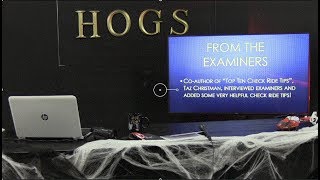
Kenny Keller (Coffee with Kenny #289) walks viewers through examiner-sourced tips to avoid failures on the flight portion of checkrides. Key practical advice: always time cross‑country legs and start leg timers; practice and be confident with radio calls, position reports and frequency changes; be ready to perform quick‑stops at non‑standard heights/airspeeds; train autorotations at varied angles/airspeeds (90°, 180°, 360° etc.) not just the PTS straight‑in/180°; perform mag checks and consider dynamic rollover risk during max‑performance takeoffs; and take slope landings slowly and methodically. The video also offers a free PDF of the “Top 10 Checkride Tips” (co‑authored with Taz Christman) and promotes HelicopterGround membership discounts (Halloween sale).
Chapters
Got a little green light on YouTube. We do. All right, the little green light says we're live. Heather's running controls today. Put your comments over there. It's day 289. Copy with Kenny. And today we're going to talk about some tips from the examiners. This is a little bit different because we're always talking about ground and the oral and how tough the oral is. These things are more of a flight situation. So from the book, top 10 checkride tips, we've talked about the book a lot and today you can get a free PDF right down below this, right below this video in the description box, right at the very top, there's a free PDF of this book. Cost you nothing. You got to give up your email for it, but you can immediately download the free PDF. So these are the things that Taz Christman went out and talked to examiners in the Las Vegas area where he flies Dan Taz Chrisman's number or I'm sorry, 2018 flight instructor of the Year. And he helped me co author this book. So I want to cover some of these things because this is some really good stuff. And again, this is for the flight portion, right? For 10 years I'm preaching ground, ground, ground, ground, ground and how tough the oral is. That's usually the problem. But occasionally people fail checkrides. So this is good stuff. So let's just kind of go over it. So the first thing he put in here, and as he said, no particular order from talking to the examiners, the first one that Dan listed is during the navigation portion. The PTS says the pilot must compute time to a waypoint and corrects for differences between pre flight fuel, ground speed and heading. They must do this within a three nautical mile of the plan route and within five minutes of eta. Okay. On almost every flight the applicant forgets to start the time for the legs of their cross country flight. So it makes it difficult to judge any correction if the student forgets to start their timer. This is a great tip. Okay, we have been harping a lot, even with the Coffee with Kenny videos, I've talked a lot about time. Whether you're keeping track of time on your watch or you're using the timer in the aircraft, just keeping time or keeping track of your air track. Flight time is tough, right? To make sure you note the time, you write it down, you start your timer. Whatever method you're using, it is very easy to forget. And if an instructor isn't making you do it from day one, it's hard to get you to do it later. So hopefully whoever you're flying with has got you down to keeping track of your time. So there comes to the cross country portion of the checkride from the examiners, people screwing up their time during the flight. So you're starting your timer when your flight begins. Then you're going to have to have a backup timer for when your cross country starts and to be able to time the legs separate from your total flight time and your fuel time. So this is a good one and I like this one. And it takes me back to my private pilot checkride. The second one, the first one I failed on the oral. When I went back and tested for the private the second time, I did great in the oral. But on the flight I took off on the wrong heading. And when I realized what I did, I went back and started over and the examiner let me keep going, but he said now you corrected your screw up. What did this just do to your time? Because of course we took off, had to turn on and come back. So all sudden that just changed my flight planning, right. And that changed my fuel. So the examiner during the flights going, okay, so how much time did you waste going back and starting over to get going again? What did that do to the time at your first stop? What did that do to the fuel, amount of fuel that you have on board? You know, what's that do to your fuel stop along the route? So you could see how not keeping track of your time could turn into a big problem. So when we talk about problems on checkrides are usually little, small things that turn into a big problem, not probably tracking your time. So that's a great one. All right, got any comments over there, Heather? Hey, Taz is there. All right, Amazon number one best selling author Taz Christmas with us. Hey Le, Taz is here. Jump in Taz, if you're still watching. Anything you want to throw in there. So the next thing he had in the book is, believe it or not, a lot of applicants have a tough time with radio communication and traffic pattern entry. This probably stems from the CFI doing too much for the student during dual flight instruction. And I totally get that. As instructors we have to teach you the first time around. And if we don't, it is very hard to go back and correct those problems. And the same thing happens, like if we have a student come to us that's been flying somewhere else, the things, the deficiencies always pop right out and you'll see immediately things that aren't right or aren't being Done correctly, it's very hard to take a person back and fix those problems. Again, I'm going to keep harping on that, and I think this probably is not probably. I'm sure this is a problem because as the cfi, a lot of times we're eager to help you out when you're in there. So in turn, you know, there are times where we should do a better job at putting more back on you. So know that this is coming from examiners, and this is recent info. People struggling with the radio communications. You got to think about the fact during the checkride, you're already nervous. Being nervous just compounds everything. And if you're not rock solid on the radio during your dual flight, getting ready for your checkride, you're sure not going to be confident in the aircraft with the examiner, because all of those flaws are going to come out, you know, doubled or tripled of the problem you might have. Just getting ready the day of. You are going to struggle. All right, so what do we got in the next one he talks about, particularly in the Vegas area, complicated airspace, like a lot of cities around the country, students only make one or two position reports or sometimes not at all. And in this one, they're talking specifically about a practice area. But you could take this through any phase of it. A student not properly changing frequencies and not reporting enough. So we just had a problem about communication, traffic pattern entry. Now we've got it again, a communication problem with students not making enough reports or not making a report at all. So, again, the examiner is paying attention to this, right? He's evaluating you. And TAS mentions in here. This is critical to flight safety. And these things fall under the special emphasis area. We just got a little volume popped up over here. All right, what do we got next? All right, she got it. What else? We got another example. Okay, here we go. Sometimes during the takeoff, the examiner may say, pretend a plane just pulled out in front of us and you need to do a quick stop. A lot of CFIs only teach quick stops at 4, 40ft and 40 knots. So the applicant continues to accelerate, which causes them to crash into the pretend plane. When asked why they continued accelerating. I'm sorry. When asked why they continue accelerating, when asked to do a quick stop, they answer, well, we do a quick stop from 40ft and 40 knots. This is great. And I like this. I'm one of those people that teaches it at 40ft and 40 knots or 40 mile an hour, 4 mile per hour as a standard. Right. Because when you're training Somebody for a check ride. You want to train to a standard. So 40 and 40 just works well. But in our training and inside helicopter online ground school, and when you're flying with me in the aircraft, I will always tell you there are a million ways of doing a quick stop. If you've watched very many of my videos, you've heard me say this. My examiners always said there's a million ways of teaching a quick stop. They can technically be done at almost any airspeed or altitude. You know, a quick stop can be gonna knock our webbing off here probably. But a quick stop could be just when you're kind of just getting a little bit of, a little bit of forward speed. You need a quick stop. It could be a little baby quick stop. It could be at the 40 and 40. It could be faster, it could be higher. A quick stop could be done at any speed. So this is a really good tip. And again, this is coming from recent feedback from examiners. So that's a good one for you to think about. If you're practicing at 40 and 40, that's great. Practice some at some other airspeeds and altitudes too. And be prepared on the checkride that he's probably not going to wait until you're right at 40 and 40 to have you do a quick stop. Maybe he'll just ask you to demonstrate one you don't really know. It kind of depends on the examiner. Okay, we got another one here. Maybe one more on the next page that I'm going to hit before we wrap it up. Even though the performance maneuvers listed in the PTS are straight in auto rotation and 180 degree auto rotation, it's important that CFI is also trained students to do 90 degree autos, 104 degree autos, etc. During the emergency operations, they will be tested on power failure at altitude. This is a good one. I like this one too. I like this tip because, you know, we know that going for the private, you're going to do straight ends, you're going to do 180s. I've always liked doing 90s. I like doing some 360s and yes, throwing some of these in there. You know, we have one of our most popular videos in 10 years is a video on top 10 checkride tips that I did. It's a really good video and people will get in the comments a lot and say, well, but that's not real world. And I always say, understand it's not real world, right? So you got to go out and practice autos to a standard for your straight ins and for your 180s. But then yes, you should be also getting dual instruction from your instructor or instructors. You should be doing other ones with your students. Do more than just a standard old straight in and 90 because. Or straight in and 180 because if that's all a person does, that's all they're going to normally do. So an examiner might give him a power failure at altitude where he wants them to turn 32 degrees depending on where the wind is at, to get turned to get into the wind. So that's a really good one. Keep that in mind that we train to straight ends in 180s for a standard to go take the test. But you should also be doing different airspeeds, different altitudes, whatever's safe and whatever you're comfortable with and what your CFI is comfortable with you teaching or what he's comfortable teaching you. But yes, we should break it up and do autos faster than 70, slower than 70, do them at different air speeds, different altitudes, turn in different directions. So that's a good one all the way around for for students to be aware of that. Maybe if your CFI is not doing any others, ask them, hey, can we do some other, you know, kind of real world type odd rotations? Any questions? Hi to Sarah and Neil. Awesome. From the uk. Sarah and Neil, Awesome. Awesome. Love the feedback. Day 289. This is a freaking blast. This is live, but if you catch the recording later, put your comments down below. I answer YouTube almost every single day. I try to keep up on them within 24 hours of the freshest video. Sometimes that might slip a little longer than that, but we try to answer every single person that asks a question or makes a comment. We try to get back to you. So we're gonna do one more and wrap it up. Everybody's got busy day and things to do. Finally, during the max performance takeoff, make sure to check the mags and talk about dynamic roller. Dynamic roller. Can you tell I was worked like 16 hours yesterday tired. Let's try this again. Finally, during the max performance takeoff, make sure to check the mags and talk about dynamic rollover. If at an airport off landing environment. If in an off airport landing environment. Slope landings are rushed a lot of time, so make sure you take your time. Now this is really good too and what I want to touch on here, depending where in the world you're flying, there are some different views on this. What we teach in this area here and is taught with the examiner that I've been using for 20 years. The mag check is good, but do it on the ground. Get everything ready to go, pick up to a hover, hover pre takeoff check, make sure everything's good, and then do your max takeoff. So there's different methods. Some people do them from the ground. I'm not going to say you can't. It depends on where in the world you're flying. Depends on the aircraft, depends on examiners, depends on the way people teach. Not going to argue the methods here, but understand that whatever you're doing, the hover pre takeoff checks, the mag checks, making sure that the aircraft is performing properly. Before you get into that, yeah, that's a good one. And slope landings, I remember slope landings for me was one of the hardest damn things there was to learn. I struggled with slope landings and I always teach those kind of at the end of private pilot training. Because I think until you have a really nice pickup and set down, I don't really want to be out there trying to do slopes when you're still struggling getting the thing on the ground. You know, you should be able to set it down nice and smooth before you start doing those slopes. So if you think about it during a check ride, when you are nervous and you're trying to get through this thing, a person would have a tendency to probably rush that slope landing during the flight. So everything during your checkride should be slow, smooth, methodical. Because the examiner is just looking at the totality of the circumstances. Right. He's not out to trip you up and fail you on one thing. He wants to say, see that you're going to be a safe and prudent pilot. That's what he's there for. That's what he's doing. Your instructors already recommended you to be a private pilot or commercial pilot. Whatever rating you're going for, the instructor says you're ready to act as a private pilot. It's the examiner's job to sit in there, be your passenger and observe how you fly. You've been taught, you've been trained. When you go to that test, you should be ready to go. And of course, when you're nervous, it's easy to get rushed and you got to remember to breathe in and out. And we bring this up a lot. It's amazing when you breathe and you just take a few seconds to slow down, take a big deep breath before performing these maneuvers. Because, yes, it is a checkride. So, you know, the idea of, oh, I have to react in a split second. Almost nobody reacts. In A split second. You need to take your time, think through it. Slow, smooth and methodical. So you can grab the free PDF right below description box. You can grab this as a free PDF. We also ship them that links down below the first PDF link. We also ship them to you for shipping and handling. Still only doing that for seven bucks around the world. We're getting ready to change that because we can't keep shipping these internationally. This is costing way too much internationally. So we're going to be changing that in the near future. But for the Halloween sale, we're gonna keep it seven bucks around the world. So we paid for the book, we pay for the shipping. I pay Heather to wrap it up for you, send you a nice welcome email and take your book off and ship it. And we got to mention now we're at the end Halloween sale. The Halloween sale ends Halloween night. And last year we did 30% off the yearly and professional, so we had to beat it. This year is 33% off. That's a huge savings on the yearly memberships or the big professional pilot membership. We do not discount the monthly option because I am a firm believer that it's too damn cheap. The amount of training that you get for say, the private pilot, at 49 bucks a month, 18 hours of video, 120 videos, a lot of stuff you can learn for just $49. And then if you're good to go, you can be done. Or if it's going to take you longer, you can keep it as long as you like. You can unsubscribe at any time and you can come back at any time. We have people doing that all the time where they come in, do the private for a few minutes, take a few months, take a break, maybe go build time for their commercial. And when they get ready for their commercial, they come back and join again as a commercial member. So remember, private is private. Commercial includes the private, CFI includes the commercial includes the private. And then we have an instrument course that, that also has monthly options that standalone. We don't discount those even during special sales because it's just too cheap. But we do have a discount for the yearly for any one of those memberships. And then the big professional pilot package, that saves you about 300 bucks because that's an expensive package. But it's all four courses. Private, commercial, CFI and instrument. It's all four of those together. It's unlimited. As long as ground schools alive, which we plan on being around for quite some time, the training is going to be there for you, there's no other purchase to make. There's nothing else for you to buy. You sign up one time, it's a one time fee and you keep that training. Lifetime access and the other beauty to that 30 day money back, no hassle, guarantee. You can take us up on this Halloween offer and if you ain't 100% satisfied, we'll give you your money back. And we don't argue. But that's 30 days, not day 41, not day 92, not day 196. Be fair with us. We're fair with our offer to you to give you a full 30 days access. If you decide the training is not right for you, you ask for a simple refund. We don't need any reasons, we don't need to know why. We're proud of our training. It's there if you're, if you want to utilize it and, and you see the value in it. If not, we part as friends. And you're welcome back anytime. All right, code actually below this video you can go directly to the links. But if for some reason you don't see them down below and you can't find them, if you go to helicopterground.com the code is Halloween 33 off. So spell Halloween out, the proper spelling, 3, 3 off. So you can go to helicopterground.com, we'll put it up here in the corner of the screen and you can use that code on any one of those memberships. Private, commercial, CFI, instrument yearly, or the big professional pilot package. And that expires midnight on Halloween. Of course it does. It's a Halloween cell. The big witching hour. Midnight Halloween. I think that's the time to do it. Any questions before we roll out? Thank you, Scott from Indy Orison. As always, ground school rocks. And we can prove it to you. Sign up. So those links below in the description box take you right to the right to the membership. It'll take you right to the private yearly, the commercial yearly, the CFI yearly, the instrument yearly. And it will also take you to the professional pilot link. No code needed. It'll take you to the page. You'll see the full price and you'll see the discount price. So as of today, you got, I think eight days left. Halloween. All right, we got to get rolling. So subscribe to the channel and when you do, click that little bell. That way you'll be notified of our daily training video. We do every single day talk about all kinds of stuff. So a little more coffee to wake up. Go finish the rest of the day. Leave us a comment down below. Subscribe. Click the bell, Heather. Wait just a few seconds and then you can click the off button. See you in day 290.










