3 Strikes And You're Out! Fatal Accident Prevention
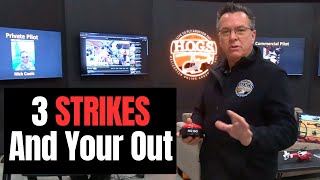
Kenny Keller explains Mike Patey's three-strikes rule for flying: each operational problem counts as one strike, and three strikes means you don't fly. Patey's engine failed because he ignored multiple warning signs. Keller shares his own near-miss where he almost made the same mistake.
Chapters
Are you serious about making a good no go decision and possibly saving your life, the lives of you and your passengers? I recently came across something that's really cool. An aviator who makes YouTube videos, very popular channel. And his name is Mike Patey. I got drawn in by I lost 4 friends in 60 days Aviation discussion by Mike Patey. I want to play a little bit of this for you and then I'm going to come back and tell you about how I could have applied his method of thinking to one of the stupidest things I've ever done in my top five that I've done in helicopters in over 20 years where I could have very well lost my life. And it was one of the scariest. I'll put in the top three scariest events I've ever had where I almost lost my life. And he talks about something called three strikes and you're out. I clicked on the video just recently because I saw I've lost four friends in 60 days. I've lost people I know in aviation. So I'm going to go ahead and play that for you now because I want you to hear direct from him. He came up with this and I think it's brilliant. There's something they call a risk assessment that we used in like ems and it's great, but it's really lengthy and complicated and you got a bunch of scores and numbers that you got to go through. What he has come up with I think is something that the average everyday pilot can use, not complicated. And I again, I think is absolutely brilliant. So I'm going to share it with you.
We have a three strikes, you're out. Maybe people have heard this before or done it. My three strikes are now. Anything is a strike and I don't fly. And that could mean that an instrument that is non critical to flight that's 100% legal for you to fly without isn't functioning. Strike one. Why do I make that a strike? Because I should have that thing fixed. So I need to strike. Guess what? Nighttime, beautiful stars are out. Sky, everything's perfect. Smooth sky would be a beautiful night flight. It's nighttime. That's a strike. Two things that are totally non critical. And it can be anything. I didn't get enough rest. I'm a little tired. Strike three. Anything can strike out. And Mark and I started realizing we were not. We were choosing not to fly a lot and then forcing ourselves to fix little items on the airplane about the rest the night before, about what we did in decision making. And I believe that's why I'm talking to you guys today. I lost an engine in my Lancair legacy on the way to Oshkosh. What people don't know is that I was scheduled to be there for an event the day before and work ran a little long and so I was gonna leave at night. Strike one. The weather was mild at best, but there was a tiny bit of weather, could have flown through it, over it. Strike two. And I was, believe it or not, I was tired. I had run, run. I don't sleep a lot anyway, and I run on an abnormally low amount of sleep. And I'm working on trying to be better at that, but I was a little bit tired. And I that night called up people that were counting on me to be at Oshkosh the day before for an event. And I said, guys, I can't come. Oh, something wrong with the plane? No, the plane's fine. Something wrong. What's up? And I said, I have a three strike policy. And I striked out. I'm not going. So I canceled an event. I let people down. And that's hard on me because I hate doing that. And got up the next morning and took off on that flight on a beautiful day. And then that engine quit. That engine, if you just were to look at the map, really just was a ticking clock. There's nothing the way I flew it, nothing about anything I was doing. It was a tired engine, should have been overhauled. We can't wait to see what the history was on it. It still had time left. It wasn't like a pastime engine that shouldn't be flying. It just had a history that isn't documented. Like the new aircraft where it tattletales when you do things wrong. And that engine quit on me. That engine would have quit on me in that little bit of weather at night. About the same location. Now, maybe I could have made it, maybe I couldn't. But I tell you what, when an engine goes off and shrapnel takes out your plane and the cabin fills with smoke and oil blasts over your windscreen, add night to that element in dead stick, 40 miles in IMC for an own made up spiraling descent to an airport, and then try and find that Runway in the black to line up with whatever all those lights are you're going to try and hit. I don't know. I don't know if I could have done it. So three strikes you're out. So let's talk about this time of year, guys. I'm sorry. I'm a little emotional and I hope and I'm normally just super happy, but it's. They asked me to talk about aviation safety right in the middle of one of my hardest losses of friends in aviation. So I'm going to be a little bit emotional about this topic.
So three strikes and you're out, I think.
Absolutely. I'll say it again, brilliant. I think it's absolutely amazing. And this video is really, really good. The discussion is really, really good and he talks about a lot of other things that are super important. So I was really drawn in. And again, if you want to go to YouTube and watch it. I've Lost 4 Friends in 60 Days by Mike Patey applying what he said. One of the biggest stupid things I've ever done, my flying career was I was working four and a half hours from home by car. I would drive four and a half hours on Monday morning, Friday night, drive four and a half hours back home to Indiana. And the owner of this company, second owner of this company had some airplanes and he'd let me take an airplane home on the weekends when the weather was decent, which was awesome, right? I'm turning a four and a half hour drive into a couple hour flight in an airplane. I have low time in airplanes. I still have low time in airplanes than I did back then and, and I wanted to come home on a particular weekend. The weather wasn't looking so great and it was going to turn into night by the time I got home. Thinking back about what he just said, here it's the end of my week. So I'd been there all week, Monday through Friday, Friday evening, of course I'm tired. This flight school was super busy. Worked long days Monday through Friday. So boom. Number one, I know that I'm tired. Number two, I'm low time in the.
Airplane, not highly experienced.
Number three, this is going to be a flight that turns into night. Boom, there's three already. And I had a fellow pilot there who was a helicopter pilot, did helicopters on his days off. He was a full time airline pilot and he was there as I was trying to make my decision about whether I was going to fly home or not. And he said, kenny, I would not do it. I know you want to get home and it's nice to take an airplane, but I'd either just stay or drive. I would not do this flight. Boom. There's enough warning signs already, right? If you would have start counting, boom. There's all the reason to not go. And you know, like I go on too long but here's the essence of what happened. You know, it's going to turn night on my trip. The airplane, it was an old airplane, didn't have any fancy gps, wasn't an instrument ship, all the reasons that I should have never even left. So I thought, well, you know, hey.
I can try it.
You know, I'm a helicopter guy, so I'm used to flying lower. Another mistake, right? I can stay down below the clouds. There's enough reasons already. But I, but I try it, right? I'm young, stupid, I want to get home, get home. Itis, you know, when I first take off, ah, it's not looking so bad, you know, I, and I'm checking along the route, I know it's not the greatest, but I'm thinking, ah, the clouds are going to be high enough that, you know, I can stay below the clouds and, and I'll be okay and.
Get to the airport.
I take off. I had a little bit of trouble with moisture on the windows because of the time of year and some moisture that was in the aircraft. So I turn around and came back, kept going. And as I continue to go, you know, the clouds get lower, the visibility gets lower. I'm getting nervous. There's some little airports along the way. Could have turned around anytime, could have landed a little airport, but who wants to do that, right? You're stuck somewhere in the middle of nowhere. You don't know if the FBO is going to be open. Is there going to be a courtesy card to get to a hotel? Are you going to be sleeping in an airplane or calling somebody to get you? Whatever the case is, there's all these reasons why, you know, we do this stupid stuff. This is one of the things that shaped me, right? Like spend years ago. But I think back about it and this is one of the big reasons why I'm so conservative now is ultimately I start getting in the low parts of the clouds. The ceiling keeps coming down lower than forecasted. I get kind of turned around on where I think I'm at. I end up landing at an airport and I, and I hate to admit this, I'm like 30 miles away from the airport.
I thought I was at, that's how.
Discombobulated I was, how screwed up with where I was. I'm trying to navigate old school, you know, it's 20 years ago, no chart or a chart, but no GPS, using landmarks and getting into bad weather. So ultimately I ended up on the ground at an airport and I sat and called one of my good buddies and he's like, you know, what are you going to do? I'll come get you if I need to. And I'm like, I'm just going to sit here and I'm going to just, you know, relax, right? I was so freaking scared, embarrassed. Felt so completely just stupid. And I sat there for. I can't even tell you for how long. I don't know, it's probably a couple hours. And the weather picked back up a little bit to where I could have some decent visibility and a decent ceiling. And I flew right back to the airport where I left from, and I stayed the weekend. Didn't even come home. You know, it sounds pretty bad when I'm sitting here telling the story. Makes me like, do I even want to upload this? But I'm being transparent, right? And I was young, I was stupid, and I don't. I don't even remember how many hours I had at the time. Let's say I had, I don't know, six or 800 hours, right? So when you apply what this gentleman said in his video, the three strikes and you're out, I think now with the experience level I have, it makes so much sense. It's simple, it's easy. It's not a complicated risk assessment. Like I said, those are used in ems, and I understand why they use it. And in that environment, that's probably the, you know, might be the best option for that environment. But I think for, you know, new pilots, pilots like me, that basically I don't. I fly as an instructor and I go on the pattern and I do stuff and occasionally like, ferry an aircraft for maintenance or something. But that's a pretty easy decision when you just decide, three strikes, I'm out. Some people will go, oh, you know, they might think that that's too conservative, right? But when you start adding up, you know, the bad judgment chain that. The one I just told you about, that I'm embarrassed to even really talk about, there was all kinds of the bad judgment chain there, right? There was one. One reason after another reason after another reason after another reason why I shouldn't have went. And if I would have lost control of it and crashed that night, that would have been completely 100% on me from that bad judgment chain, making one bad decision after another. All right, we'll wrap it up. We've been doing some videos here where, again, I'm being just outright and throwing.
Things out there because we've been talking.
About some different things and people have enjoyed it, right? Because I still think and I'll say it again. A lot of people don't come out.
And fess up to their mistakes.
They don't want to talk about the stupid stuff they've done. I'm going to talk about my accident here again soon. I've talked about it plenty in the past and I'm going to do another video on that here soon. So the next month of video is going to be just talking about things where something that I've done myself that was stupid or something I did with a student that was. Wasn't the smartest. Good news is I'm still here and I'm still learning. And I think that's how we can all be safe, is by learning how to make good weather decisions.
This is the HOGS wall of fame.
You see behind us here. Private instrument, commercial, cfi, all the customers rolling across the screen. And that stupid incident I just told you about, you know, again, has affected me ever since.
Right?
I did something really done. I survived it. The absolute scared out of me. And I never want to ever feel like that again. I never want to feel so stupid. And when I was flying ems, fellow EMS pilot, Vietnam veteran, taught me about the. He had an easy button at the EMS base. The weather's bad, you get a call, you check the weather, you make a decision, you decline the flight for weather. He'd hang the phone up and he would go, boom. He'd hit the easy button. And I go, that was easy. And it would make you chuckle and kind of laugh and it would make you feel better about making that no go decision. I stole that idea, you know, from this guy named Mike, who was an incredible pilot. I learned so much from him. And that's why we created the no go button. The no go button means you make a decision that you don't want to go. So we created something cool out of my experience with doing stuff that's dumb. Our members get these after they pass their checkride and send us a picture just to share a picture of their CheckRide and how hogs help them get through their ratings. And I'm gonna throw up. Since we're kind of going back in time, this is my first book, Helicopter Checkride. There's a free PDF down below. And then we send you this free paperback. And I talk about the icing video I just did a couple days ago. I talk about that in here and then there's tips and all kinds of different things in here. Basically stories, but of things that I've done and things that I've seen and it's not all dumb stuff. There's good stuff in here too. Free book. I'm gonna go back into time. I released that in 20002014 was really happy when I hit Amazon number one bestseller. So I'll put a link down again below for that free PDF or we'll send you for this to you for just shipping, handling. And there's a whole list down below of all of our courses, some other free PDF downloads. We have a maneuver guide, another book called Top 10 Checkride Tips. Our course links are down below. Hit the subscribe button and click that little bell so you can be notified of another 29 days of things that will hopefully be learning experience and help you move on with your flight journey, whatever that may be. And we'll see you next video. Peace out.
When you feel the pressure to fly, but know the right decision is to stay on the ground, hit the Hogs no go and live to fly another day.
Helicopter ground Yep, because that's why people get killed for making bad decisions and taking off and flying into bad weather when they shouldn't. Helicopter online ground school member as you see on the wall behind us here, these are all of our members that have passed checkrides. So they use our training to get through, let's say private pilot. Once they pass their checkride they send us in a picture. As you can see with their checkride helicopter, usually either they're with their instructor or maybe they're with the examiner. But when they send us a picture by the aircraft and we like them right after the checkride because that's when they're excited, right? They just got that certificate in their hand and a lot of these people have that in the pictures. You'll see when they send us a picture to tell us they passed. And they usually just write a sentence or two. We don't ask for a, you know, 10 paragraph story, we just say hey, how did hogs help you? And they'll usually say something like hey, couldn't have done it without hogs. You know, I could have never studied this big pile of overwhelming information on my own. Once they send that in there, then you Heather ships them the no go button. So how many no go's are you shipping today?
Today I am shipping six no go's. Where did the idea of the Hogs no go button even come from?
I like telling the story about the no go button. When I was flying ems, I was working with this guy's name was Mike Matera, Vietnam era pilot and I learned a lot of stuff from this Vietnam era pilot. It was cool working opposite him because I would learn lots of little things that shift change. And as an EMS pilot, a lot of time the pressure is to make the call. You get the phone call, you know there's a patient somewhere that needs transported from point A to point B. There's the pressures, either of your own pressure to go because you haven't flown.
In a while, or maybe you're feeling.
A little pressure from the hospital or the crew, which shouldn't take place, but in the real world, it does. Wherever that external pressure is, it's hard to make that decision sometimes. And especially, you know, the company I worked for five years, you could sleep at night. You could be in the middle of sleeping.
2Am the phone rings.
You have to take the call, check the weather, check the location, figure weights, how far do I got to go? Pull the helicopter out and be in the air in 10 minutes. So you have to make a decision really, really quickly most of the time. And there's pressure behind making that decision. So Mike had an easy button. A staple is easy button up on the shelf. And I can't remember if I witnessed him do it or he just told.
Me however it came about, he was using the staples easy button to break the.
I don't know the word I'm looking for. There's a lot of pressure to make that decision. So it was a way to relieve the stress. After example, you tell dispatch, I'm sorry, I'm going to have to decline this flight due to weather.
And he'd hang up the phone and he'd reach up, bam, he would hit the easy button.
And of course it says, that was easy. So to me, I thought it was great. It was cool because it was a.
Way to help you relieve the pressure of saying no.
Whether you want to go or somebody.
Else wants you to go, or you're.
Feeling the pressure of whatever the flight is. And ems, they try to pretend or try to not have those pressures.
But pressures come regardless.
Real world pressures are just something that happens. So it's the pressure of going, man, you know, you hate telling people no, regardless. And you can take this in your own. As a private pilot making the decision, you flew somewhere for lunch with your buddy and then you're getting ready to go back home and your son's playing ball that night, and then there's a storm.
You want to get home because you.
Want to go to your son's ball game. You don't want to disappoint your boy because you can't make it home. So you start going, well, maybe can I fly around this storm? Can I wait it out? What can I do? And so you have these pressures sometimes you might create on your own reason because you want to get home for a family event. It's the pressure to fly. And this is a way that an individual can use it in your own decision making.
And that's why it says no go.
Because when you make that decision, I'm not going.
You hit the button.
Live to fly another day. Helicopterground.com Nice.
So in essence, it's a visual cue, a visual reminder.
Perfect.
Can I have one for my flight school?
Can I have one for my flight school? Hmm, that's actually a good question. What we've done in the past is we've only sent them to members for passing a checkride with the exception of maybe twice when we were alive, we gave one away. However, since that's a question I wasn't prepared for, I would love to see some of these at a flight school. But I'd like some kind of guarantee that that's where it's going. So that is a great question that I need to ponder. I think maybe we should think about that.
Who could they get a hold of if they.
Heather helicopterground.com yeah, I think that's a grand idea. Preferably would be. We know we have flight schools and customers that send us members because they'll say, hey, where did you hear about us? And they might say Lone Star Helicopters or straight up aviation in Florida. We know and we hear when our members are referred by their flight school. We know that because they'll usually tell us because when you sign up for hogs, it's a requirement. Where did you hear about us? So many times they'll put in there my flight school or straight up or Lone Star, whoever. If you want to qualify your flight.
School to get a hugs no go.
Button, I say contact heatherelicopterground.com because I.
Would love to see these.
Well, that brings up that question. Brings up a good point. We recently had a member who not only sent in a picture, we had a member I think passed an additional.
Checkride and he already had a no go button.
And he said I have the first no go button I got at our flight school and we have a blast with it sitting around, live to fly.
Another day hitting the button.
So that kind of inspired us. It's like, you know what if they're having fun at a flight school sitting around, clicking the button, that's pretty huge because of the idea behind the no go button. So if people are hitting the button and they're talking about it, that's a good thing.
Perfect.
Can I get one now before passing my checkride?
Well, good question. We discussed this morning a limited time offer of selling them and we threw out a number like $49.95 and we did say us only. I kind of said let's think about it. And then we kind of thought, well, why not? Because in all transparency, we buy these 50 at a time. We buy a whole shipment of them and with buying them, getting them shipped here, and then shipping them to a member, we spend about half of a monthly membership. So recently our examiner who we just did the rotor tips with down at Expo, he said, man, if I was you, I'd start selling those because that way you could help offset the ones you're giving away for free. So I think if you're watching this video and you want one for a limited time only, we will ship you one within the US for $49.95. So I think I should build a link and put below this video where you can purchase your own Hogs no go while the offer last. Supplies are going to last because we're giving them away. And now that we've started started it, we can't stop. But I think the special offer to buy one should be limited time only and we'll decide later.
Can I send you a video of me utilizing the hogs no go button?
Absolutely.
We only have a few videos. We have a few, but we would like more. For example, one of our members sent in a picture or a video. He had his computer open looking at a storm and they had the no go button sitting there and he sent the video and said, well, look at the weather today. This was pretty easy.
Live to fly another day.
Helicopterground.com and he hit the button. We'd love to have videos of these because we have some pictures and we'd love more pictures of members that have a no go button. We'd love that because we should probably start a no go button wall for everybody that sends in a picture for their no go. I think we should.
That's an idea.
Did I answer your question?
Yes. Thank you very much.
Is that it?
Well, who can they send the video? If they utilize the hawk snow globe button, who do they send that video to?
Preferably heatherelicopterground.com Great, but me too, Kenny. Helicopterground.com But Heather or Kenny. Yep, because that's why people get killed for making bad decisions and taking off and flying into bad weather when they shouldn't. And you can even go beyond weather. In the beginning, we called it the weather no go button. And then we kind of thought, you know, we should just call it the hogs no go button. Because it doesn't necessarily be weather.
It could be you went on that.
Flight with your buddy, you get ready to go back home, and you have some kind of a maintenance issue that pops up and maybe you're scratching your head going, well, maybe we could make it. Or you start playing that game of, you know, in your gut, you. You should probably just stay put and get a mechanic to come out and you try to finagle. Well, it's. I could market, you know, inoperative, and I could do this or do that. A lot of times it's gonna be better just to take the safe route, stay on the ground and hit the no go. Or just say.
It's so funny. The reason I didn't ask you about where it came about is I. In my head, I was sure you.
Would get there on my own. Yep.
Okay.
Look at our clips.










